The Monkey Forest can feel like a mini safari. This full-day Ubud trip adds Goa Gajah and Tegalalang rice views, plus a hands-on canang sari offering workshop. I love how close you get to the macaques, and I also love the practical, daily-life angle of the offering workshop.
The trade-off: Monkey Forest is lively, and the monkeys are fast. If you carry tempting snacks or dangling items, you’ll want to keep them tucked away and stay alert.
In This Review
- Key Highlights You’ll Actually Care About
- A Day in Ubud That Mixes Wildlife, Worship, and Rice Views
- Value for $69: What You’re Paying For
- Timing and Group Size: Why It Feels Manageable
- Stop 1: Goa Gajah (Elephant Cave) and the Ancient Stone Entrance
- Stop 2: Sacred Monkey Forest Sanctuary and the Real-World Monkey Energy
- Stop 3: Ubud Palace for Classic Balinese Design
- Stop 4: Tegalalang Rice Terraces and the Green View Everyone Remembers
- Stop 5: Mengening Temple and a Quieter Purification Moment
- Canang Sari Offering Workshop: The Part That Sticks With You
- Transport and Comfort: The Stuff That Makes or Breaks a Long Day
- Guide Quality Matters: Names I Noticed in the Feedback
- Who Should Book This Tour (and Who Might Skip It)
- Should You Book This Ubud Monkey Forest, Rice Terraces & Sacred Temples Tour?
- FAQ
- FAQ
- What time does the tour start?
- How long is the tour?
- Is hotel pickup and drop-off included?
- Is this tour limited to a small group?
- Is there an English-speaking tour guide?
- Are entrance fees included?
- What’s included in the price besides transport and the guide?
- Do I get a mobile ticket?
- Is a canang sari offering workshop included?
- Is free cancellation available?
Key Highlights You’ll Actually Care About

- Small-group pace (max 20) with an English-speaking guide and air-conditioned comfort
- Monkey Forest access to hundreds of free-roaming macaques in a temple sanctuary
- Tegalalang rice terraces viewpoints at the time of day when the greens look especially crisp
- Goa Gajah (Elephant Cave) with carved stone features and ancient bathing pools
- Mengening Temple as a quieter purification stop, tucked into jungle surroundings
- Canang sari workshop so you’re not just watching Balinese rituals from the sidelines
A Day in Ubud That Mixes Wildlife, Worship, and Rice Views
Ubud does “culture and nature” in a way that’s hard to fake. On this tour, you get temple stops early, then rice terrace views later, and you finish with a purification temple experience that feels calmer than the big-name crowds. The format matters: you’re not hopping around on your own, with a guide translating what you’re seeing as you go.
For me, the best part is that it’s not only photo stops. You’re learning how daily Balinese life connects to places of worship. The canang sari offering workshop is a perfect example. Even if you only remember a few details, you leave with a clearer sense of why these ceremonies show up everywhere.
One more practical bonus: hotel pickup and drop-off mean you spend your energy on the sights, not on map apps and negotiating rides.
You can also read our reviews of more tours and experiences in Ubud.


Value for $69: What You’re Paying For
At $69 per person, the value comes from the way the day is bundled. You’re getting entrance fees, an English-speaking guide, hotel pickup/drop-off, and bottled water. On a self-planned day, these small costs usually creep up fast: transport, paid entry into multiple sites, and then the headache of figuring out where to go next.
This tour also includes an offering workshop, which tends to be extra on many experiences. And it runs for about 12 hours, so you’re not just doing one quick hit of Ubud. You’re getting a whole arc: morning temples, midday rice terraces, and a later, more reflective stop.
If you’re trying to make one day count in Ubud, this price is competitive because you’re not paying separately for every major stop.
Timing and Group Size: Why It Feels Manageable
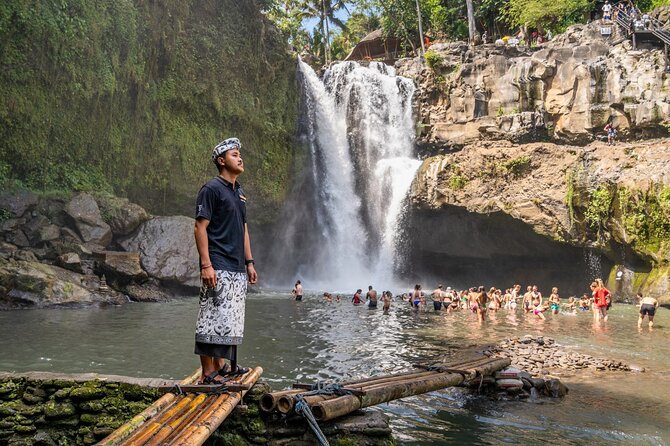
This tour starts at 9:30 am. Expect a long day—about 12 hours—but it doesn’t feel like a rushed checklist because you have vehicle time between sites. The group size caps at 20 people, which is big enough for variety but small enough that your guide can still explain things clearly.
You also have a mobile ticket, which makes check-in simpler once you arrive. And since you’re in an air-conditioned vehicle, you get breaks from the heat between stops.
If you dislike long days, this may be a stretch. But if you like seeing multiple sides of Ubud in one go, this pacing is a strong fit.
Stop 1: Goa Gajah (Elephant Cave) and the Ancient Stone Entrance
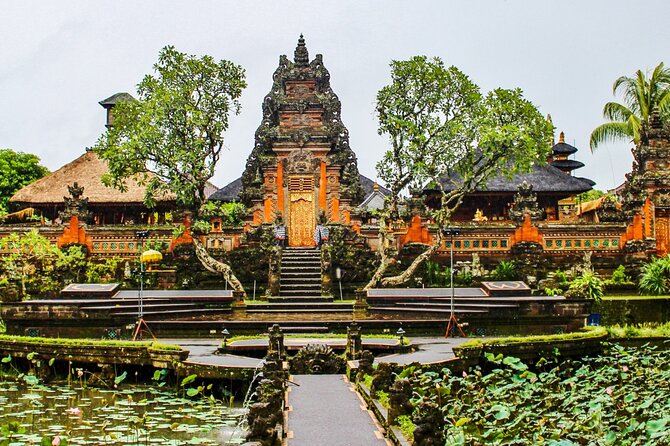
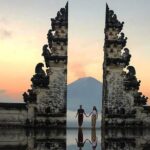
You begin with Goa Gajah, often called the Elephant Cave. This site stands out because it’s not just a temple you stroll past—it’s an archaeological landmark with carved stone details and the kind of dramatic entrance that instantly makes you slow down.
What I like about starting here is that it sets the tone. You get a sense of Ubud’s depth: places that aren’t only about today’s ceremonies, but also about how long worship and sacred use have existed in the area.
Practical note: this stop includes your entrance fee, so you won’t have to negotiate entry at the site. You’ll spend about an hour and a half exploring before moving on.
Stop 2: Sacred Monkey Forest Sanctuary and the Real-World Monkey Energy
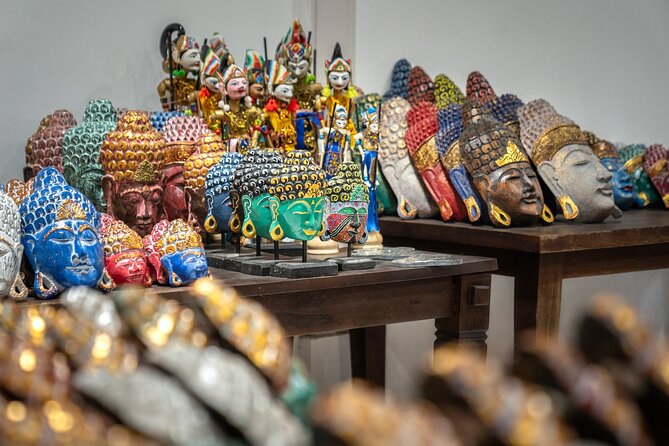
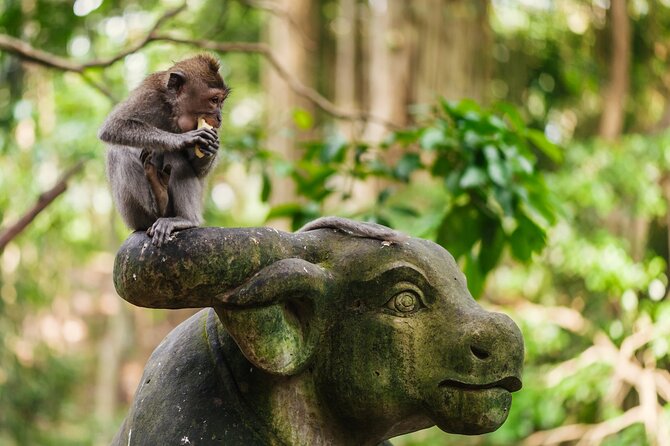
Then comes the part people talk about: the Sacred Monkey Forest Sanctuary. This isn’t a controlled zoo situation. It’s a sanctuary with moss-covered temples, carved stone details, and hundreds of free-roaming macaques moving through the paths like they own the place.
I love this stop because the monkeys feel present, not staged. They’ll pop into view when you least expect it, and the whole setting feels mystical in that jungle-temple way.
Here’s the consideration: monkeys are monkeys. They can be curious and quick. Keep small bags zipped, avoid waving food around, and watch your phone and any dangling items. If you go in with that mindset, the experience feels fun instead of stressful.
Also, wear shoes you trust on uneven ground. Temple paths can be slick, and you don’t want to worry about footing while your attention is naturally pulled toward the macaques.


Stop 3: Ubud Palace for Classic Balinese Design
Next is the Ubud Royal Palace, a recognizable landmark with traditional Balinese architecture. This is a good contrast after the monkey jungle. Where Monkey Forest is about motion and surprise, the palace is about form: gateways, courtyard spaces, and the feel of a designed cultural center.
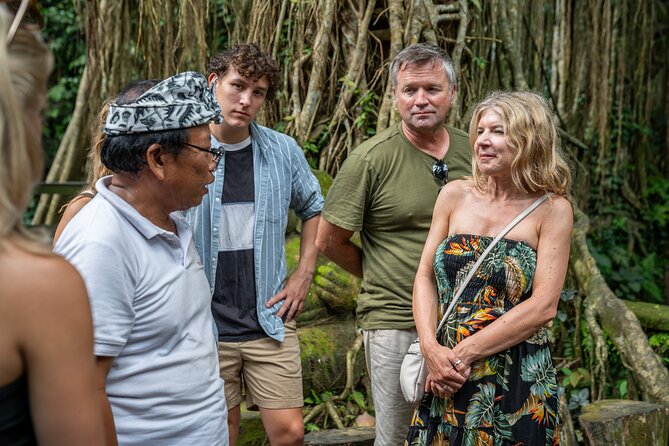
Your guide’s job here is important. Without context, you can miss how the spaces connect to daily life and ceremony. With an English-speaking guide, you’re more likely to understand what you’re looking at as you walk through.
The pace here is around 1.5 hours. It’s long enough to explore, but not so long that it turns into “one more courtyard.”
Stop 4: Tegalalang Rice Terraces and the Green View Everyone Remembers
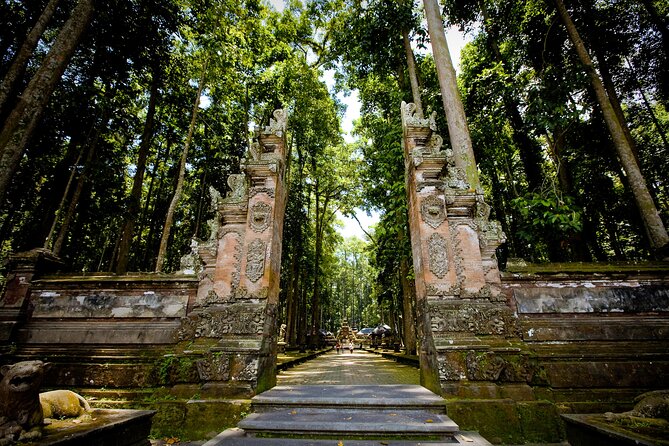
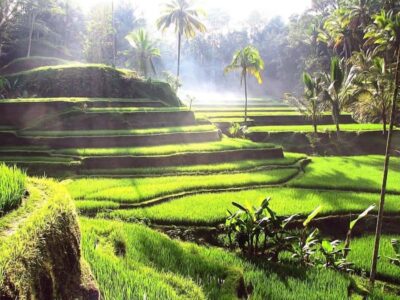
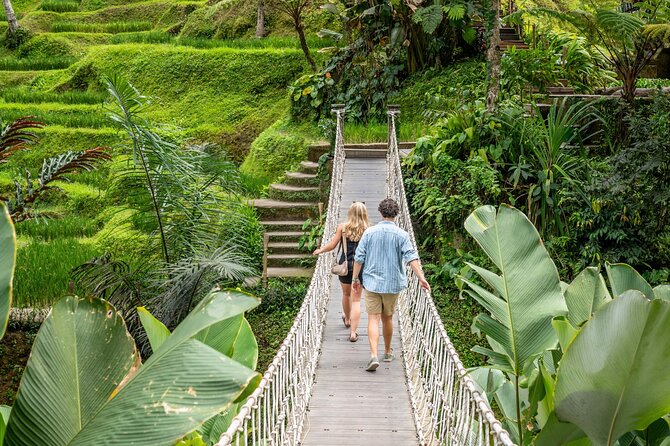
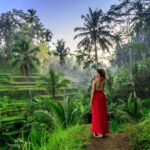
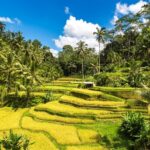
In the early afternoon, you’ll reach Tegalalang Rice Terrace, one of Bali’s most photographed views. The reason it’s so famous is simple: the hillside paddies create layered geometry, and the colors can look extra vivid from the viewpoints.
What makes this stop work on a tour is timing and logistics. You don’t need to fight for parking or guess the best vantage points. You get guidance to where the views make the most sense.
A quick reality check: this is a popular area. Expect foot traffic. If you’re sensitive to crowds, arrive with patience, and look for calmer edges of the viewpoints rather than the busiest center spots.
Also, bring a light layer. Late morning to early afternoon can be hot, but some people find shade helpful during the viewing breaks.
Stop 5: Mengening Temple and a Quieter Purification Moment
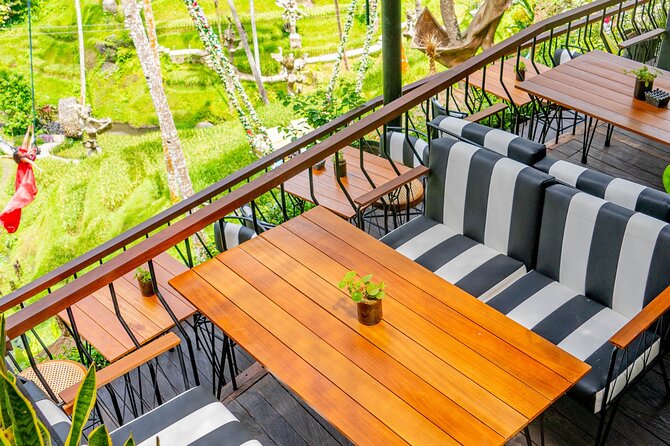
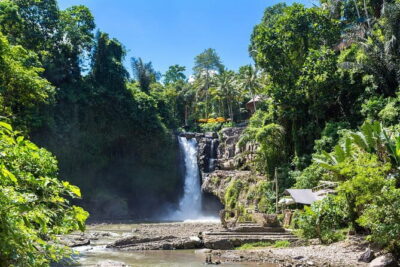
After the rice terraces, the day turns more intimate at Mengening Temple, described as a serene purification temple tucked into jungle surroundings. It’s quieter than Bali’s most famous temple circuits, and that quietness is the point.
This stop works well if you want one part of your day that feels less like sightseeing and more like witnessing. A purification temple context makes you slow down, even if you’re the kind of person who usually keeps moving.
You’ll have around two hours here. That’s helpful because it gives time for the ceremonial context to land, and for you to ask questions instead of just taking photos and rushing away.
Canang Sari Offering Workshop: The Part That Sticks With You
The included offering workshop is where this tour becomes more than a standard temple crawl. A canang sari is part of everyday Balinese life, and the workshop gives you a hands-on way to understand its meaning instead of treating it like a decorative souvenir.
Even if you don’t remember every step perfectly, you’ll remember what it feels like to create something meant for worship. That’s the best kind of cultural interaction: active, respectful, and tied to daily practice.
I also like that it’s included in the price, because workshops can become surprise add-ons on other tours. Here, you already have it planned.
Transport and Comfort: The Stuff That Makes or Breaks a Long Day
Because this tour includes an air-conditioned vehicle plus hotel pickup and drop-off, the long duration feels more manageable. You’re spending your time with the sights instead of negotiating rides between scattered sites.
Bottled water is included, which helps a lot in Ubud heat. Still, I’d treat it as “enough to get through,” not “an endless supply.” You’ll likely want to top up personal hydration.
You should also plan on a full day away from your hotel. Lunch isn’t listed among the included items, so if you want a predictable meal plan, you’ll likely need to buy food on your own during breaks.
Guide Quality Matters: Names I Noticed in the Feedback
This tour’s value is strongly tied to the guide experience. The feedback highlights guides who explain things clearly and calmly, and drivers who handle the road stress with patience.
I’ve seen names like Dan with driver Mariyasa, Ariana with driver Juliantara, and Laras with Nengah. There’s also Gunawan, plus Haris with driver Gus Alit. Across these accounts, the theme is consistent: you’re not left wandering; you’re given context and then guided to the next stop.
That matters because Ubud’s temples aren’t always intuitive to read on your own. With a good guide, you understand why a gate, a courtyard, or an offering matters. Without that context, it can still be beautiful—just harder to connect emotionally.
Who Should Book This Tour (and Who Might Skip It)
This is a strong match if you want one full day to cover major Ubud highlights without the stress of planning transport and entry fees. It’s also a good fit if you like cultural explanations and you’re curious about everyday practices like canang sari offerings.
You might consider something else if:
- You hate long days or don’t handle heat well.
- You prefer quiet, low-traffic places and know Monkey Forest’s energy could feel like too much.
- You want total freedom to linger longer at one site and skip another.
Should You Book This Ubud Monkey Forest, Rice Terraces & Sacred Temples Tour?
I’d book this if you want a well-structured day with real cultural practice (the offering workshop), plus the big Ubud signatures: Monkey Forest and Tegalalang rice terraces. For the money, the inclusion of entrance fees, guide, pickup, and workshop makes it a practical choice.
If your main goal is only photos and you’re not that interested in temple context, you might feel the day is more than you need. But if you want to leave with better understanding—not just more pictures—this tour is a smart buy.
FAQ
FAQ
What time does the tour start?
The tour starts at 9:30 am.
How long is the tour?
The duration is about 12 hours.
Is hotel pickup and drop-off included?
Yes, hotel pickup and drop-off are included.
Is this tour limited to a small group?
Yes. The maximum group size is 20 travelers.
Is there an English-speaking tour guide?
Yes. The tour includes an English speaking tour guide.
Are entrance fees included?
Yes. Entrance fees are included.
What’s included in the price besides transport and the guide?
Included are air-conditioned vehicle use, hotel pickup/drop-off, entrance fees, bottled water, and an offering workshop.
Do I get a mobile ticket?
Yes, a mobile ticket is provided.
Is a canang sari offering workshop included?
Yes. The offering workshop is included.
Is free cancellation available?
Yes. You can cancel up to 24 hours in advance for a full refund.