One day, Ubud’s best sights—without the stress. I like that you get private transport and admission fees included, so the day moves fast and you’re not hunting tickets. The trade-off is time is tight: most stops run about an hour, so you won’t have a long, slow wander in each place.
What makes this tour work well is the guide does more than point and smile. With an English-speaking guide who also drives, you get clear explanations as you go, plus a solid mix of Ubud staples: temples, craft village life, rice terraces, and the Sacred Monkey Forest Sanctuary. You’ll spend a lot of the day outdoors, so build in sun protection and a calm pace.
For the money, this is strong value if you want a guided route with fewer decisions. At about $51.65 per person for roughly 9 hours, you’re also getting bottled water, parking, and gas handled—so you can focus on the sights instead of logistics.
In This Review
- Key things that make this Ubud tour click
- Private pickup and a driver-guide mean less wasted time
- Celuk Village: gold and silver craft you can actually see up close
- Tegenungan Waterfall: a jungle stop that’s worth the detour
- Goa Gajah (Elephant Cave): temple storytelling with real context
- Tegalalang Rice Terrace: the viewpoint that does the talking
- Sacred Monkey Forest Sanctuary: see the habitat, not a staged show
- Ubud Traditional Art Market plus a flexible town break
- Optional add-ons if you have extra time
- Price and value: when $51.65 makes sense
- Timing and what to expect from the pacing
- Practical tips that make the day easier
- Should you book this Best of Ubud Highlights tour?
- FAQ
- What time does the tour start?
- How long is the tour?
- Is pickup and drop-off included?
- Does the price include admission tickets?
- What’s included in the tour cost?
- What’s not included?
- Are tickets handled digitally?
- Can I cancel for a full refund?
Key things that make this Ubud tour click
- Admission included at the main sites, so you don’t lose time in ticket lines
- Private pickup and drop-off from several Bali areas, not just Ubud
- One guide, one vehicle: English support while you travel between stops
- A well-matched mix of Ubud classics: Celuk craft village, waterfall, temples, rice terraces, monkeys
- Free time in central Ubud for a market break and a couple of nearby cultural sites
- Guides who actually talk: names like Dastra, Arde, and Tedek show up in standout experiences, with strong Q&A and temple explanations
Private pickup and a driver-guide mean less wasted time
Starting around 8:30am, you’re set up for an efficient day. You meet your guide in your hotel lobby and then head out in an air-conditioned vehicle, with pickup and drop-off available from Sanur, Ubud, Kuta/Legian, Seminyak, Canggu, Jimbaran, Nusa Dua, Benoa, and Denpasar. That matters in Bali, because your time gets eaten by traffic and figuring out routing—especially if you’re trying to hop between Ubud-area sights yourself.
I also like that your guide is not just along for the ride. They speak English and act as your driver, which usually means fewer awkward pauses where you’re waiting for someone else to translate or coordinate. It’s the kind of setup that helps you get your bearings fast and then enjoy the day instead of managing it.
Private tour setup also helps if you want a bit more flexibility. Even though the schedule is structured, you’re not negotiating with other groups or waiting on connections. And since it’s only your group, you can ask more direct questions—especially at temples and cultural sites where details matter.
You can also read our reviews of more tours and experiences in Ubud.


Celuk Village: gold and silver craft you can actually see up close
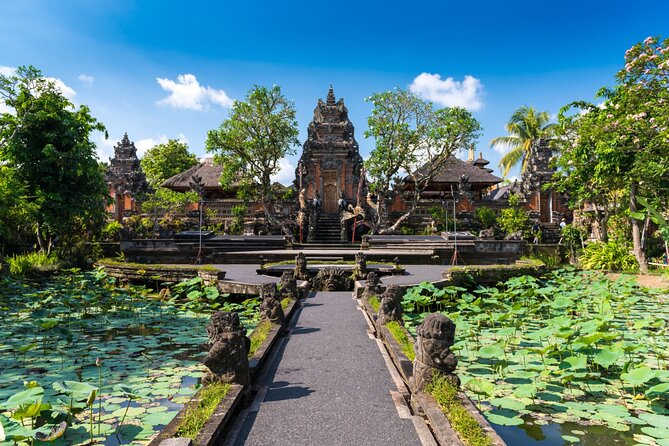
Celuk Village kicks off the day in a way that feels grounded and local. Celuk is known for gold and silver jewelry, and the stop gives you a look at how craft traditions show up as part of everyday life—not just as souvenirs.
This is a smart early choice. You’re fresh in the morning, and you can appreciate the artistry before the rest of the day piles on temples, monkeys, and water views. If you like handmade items, this is where you’ll spot the difference between “generic beach store” and real Balinese workmanship.
A possible consideration: if you’re not interested in jewelry or metalwork, you might want to treat this stop as a cultural sampler rather than a buying trip. You’ll still learn what makes Celuk distinct, but your time may feel better if you know what you’re hoping to get out of it.
Tegenungan Waterfall: a jungle stop that’s worth the detour
Tegenungan Waterfall is the kind of sight that does not need a long sales pitch. The setting is described as lush and green, with the water cascading as the centerpiece and a valley panorama all around.
This stop is also useful because it gives your day visual variety. After the craft village, you get movement, sound, and a different kind of scenery—more nature than culture buildings. It’s one of those locations where a guide’s role helps you not overthink where to stand and what you’re looking at.
The watch-out is simple: it’s an hour. That’s enough to enjoy the main viewpoint and take photos, but if you like hiking around or lingering for golden-hour light, you’ll feel the time limit.
Goa Gajah (Elephant Cave): temple storytelling with real context
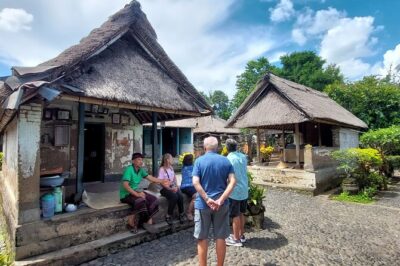
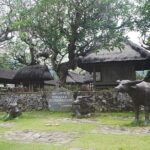
Goa Gajah, also known as Elephant Cave Temple, dates back to the 11th century, and that age shows in the feel of the complex. The site includes an ancient cave, a bathing pool, fountains, and stone-cut stupas—plus other carved structures that make it feel more like a whole ritual area than a single “photo spot.”
I like that a guided stop here changes how you experience the place. Without context, you might just see carvings. With the guide, you get the why behind the structures and how temples function in daily spiritual life. That’s the exact kind of thing that stood out in the experiences shared by visitors who highlighted temple explanations and Q&A.
This is also where the guide names from real experiences mean something. Dastra, Arde, and Tedek are praised for going beyond surface commentary—so if you want answers about how and why Balinese temples are used, this is one of your best moments in the day to ask.
Practical note: temple sites can require a sarong for entry at some stops. The tour’s details flag sarong requirements for certain temple visits, so it’s smart to plan for that in your day packing.
Tegalalang Rice Terrace: the viewpoint that does the talking
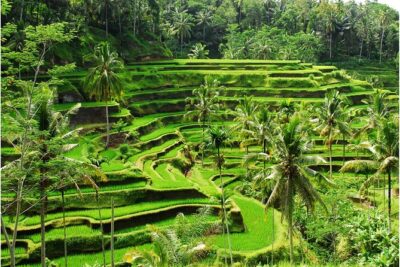
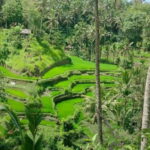
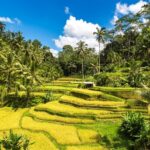
Then you hit Tegalalang Rice Terrace, one of Ubud’s most famous scenes. The description is clear: rice fields in a valley, with the terrace outlook stretching down and across the slopes.
This is one of those places where the “what to do” is easy. You show up, find a good viewpoint, and let the scale hit you. But the value of a guided day is that you can time your stop and move between sites without losing half your morning getting lost or waiting.
The time is again about an hour. For many people, that’s perfect: enough time to enjoy the view, take photos, and learn a few context points, without feeling like the day got stuck in one spot. If you’re a super-enthusiast photographer who needs long light changes, you may want a longer, separate rice terrace afternoon.


Sacred Monkey Forest Sanctuary: see the habitat, not a staged show
The Sacred Monkey Forest Sanctuary is where the tour gets playful. This sanctuary is described as the natural habitat of Balinese long-tailed monkeys, with over 1,049 monkeys living freely in the area.
A guided stop helps here because you’re not just wandering around trying to figure out what is notable. Your guide can point out what you’re seeing and tie it back to the sanctuary’s purpose. In real experiences, this is also the stop people often say they could have stayed at longer—because once you’re there, it’s hard to stop watching.
One practical consideration: this is active wildlife. Even if you don’t plan for anything elaborate, expect movement, noise, and lots of attention to whatever the monkeys decide to do. Plan for it as part of the experience, not a distraction.
Ubud Traditional Art Market plus a flexible town break
After temples and nature, you get a more human-paced stop: Ubud Traditional Art Market. You’ll have free time for about an hour at Ubud center for self-visit exploration.
This is a good design choice because not everyone wants the same thing at this point in the day. Maybe you want to browse crafts and small goods. Maybe you want a break from walking. Maybe you want to pop into nearby cultural spots listed in the tour details, like Puri Saren Palace and Saraswati Temple (noted as part of the area around your market time).
If you like structure, this is your balance point. Up to now, you’ve had a tight route and guide explanations. Then you get a chunk of freedom to choose what fits you best—without the pressure of having to map it all out.
A drawback to keep in mind: since it’s self-guided free time, your experience depends on your comfort walking around busy market streets and deciding what to prioritize. If you want a more guided market visit, you’ll likely get the most out of this stop by asking your guide for quick suggestions before you head out.
Optional add-ons if you have extra time
If the schedule has room, the day can expand beyond the core highlights. The tour details list several Ubud-area possibilities, which can be a nice way to shape the day around your interests.
Here are some of the add-ons explicitly mentioned:
- A Kajeng Rice Fields Walk loop of about 45 minutes
- Extra temple experiences, including a holy spring temple and an 11th-century rock-cut Candi site
- More scenic water stops in the Tegalalang area, including a smaller waterfall option
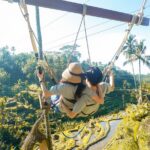
- A swing park with jungle-valley views (sarong rules may apply for temple-related stops, but the swing area itself is more about views and photos)
The practical angle: optional stops are only “optional” if you truly want to add walking and time. If you’d rather sit, snack, and recover, you can likely skip them and still enjoy the core Ubud highlights. Just be clear with your guide early in the day so they can keep the timing realistic.
Price and value: when $51.65 makes sense
At $51.65 per person, the big question is what you’re actually paying for. Here, the value is tied to four things:
First, admission fees are included for the major stops listed in the day plan. That’s often where cheap tours get slippery—costs pop up later. Here, the ticket burden is handled up front.
Second, you’re paying for private air-conditioned transport and driver-guide time across multiple sites. If you tried to do this on your own, you’d still spend money on transport and time, and you’d lose the guided explanations that help at temples and cultural areas.
Third, the tour includes bottled water, parking, and gas. That’s less glamorous than temples, but it keeps the day from turning into a string of small “pay this, pay that” moments.
Fourth, the schedule is built for efficiency: about 9 hours with multiple highlight stops rather than slow one-at-a-time exploring.
It may be less cost-effective if you travel as a solo person who’s comfortable self-driving and doesn’t care about guided context. But for couples, small groups, or anyone who wants to hit the highlights with less stress, this is an easy sell.
Also note: it’s a popular option, with an average booking window of about 24 days in advance. If your dates are set, booking ahead helps you lock in the route.
Timing and what to expect from the pacing
This is a full-day experience—about 9 hours—and each main highlight is roughly one hour. That pacing is ideal if you want variety and you’re okay with “see it, enjoy it, move on.”
Here’s how the rhythm typically feels:
- Morning start gets you to major sites before the day slips away.
- Midday includes nature and temple stops, where the guide’s explanations add value to your photos and observations.
- Later you get Ubud center free time so you can reset.
A possible drawback is fatigue. The day stacks outdoors time (waterfall, rice terraces, monkeys) with cultural sites (temples). It’s not a slow, museum-style pace. If you’re traveling with mobility limits, you’ll want to think carefully, because the schedule doesn’t mention accessibility accommodations and it does include walking inside and around sites.
Practical tips that make the day easier
A few simple moves can keep the day comfortable and enjoyable:
- Start your day with a plan for sun exposure since multiple stops are outdoors.
- Bring something light for temple visits if you’re asked to use a sarong at a temple entrance.
- Use the guide’s strengths early—ask a question at Goa Gajah or at the Monkey Forest Sanctuary and you’ll likely get more out of the rest of the route.
- If shopping is part of your mood, treat Celuk and Ubud Market as your main browsing windows rather than trying to buy everywhere.
Also, don’t underestimate how much your guide can shape the experience. Names like Dastra, Arde, and Tedek show up in high praise for friendly, attentive guidance and for answering lots of questions. If that’s your travel style, you’ll probably feel taken care of.
Should you book this Best of Ubud Highlights tour?
I’d book this if you want Ubud’s biggest hits—craft village, waterfall, ancient temple, rice terraces, and the Monkey Forest—without spending your day solving logistics. The combination of pickup, English guide support, and admission included is what makes it feel like real value rather than just “transport to some attractions.”
You might skip or look for a slower alternative if you want long stays, deep dives into one site, or lots of unstructured time. This day is designed to move, and most stops are about an hour.
If your goal is: see a lot of Ubud, learn just enough from a guide to make it meaningful, and still end the day happy instead of exhausted from planning—this tour fits.
FAQ
What time does the tour start?
The start time is 8:30am.
How long is the tour?
It’s listed as approximately 9 hours.
Is pickup and drop-off included?
Yes. Pickup and drop-off are included from Sanur, Ubud, Kuta/Legian, Seminyak, Canggu, Jimbaran, Nusa Dua, Benoa, and Denpasar.
Does the price include admission tickets?
Yes. The tour includes entry/admission fees for the stops listed in the plan.
What’s included in the tour cost?
Included items are private air-conditioned vehicle, English speaking guide (also driver), entry/admission fees, bottled water, parking fees, and gas/petrol.
What’s not included?
Food and drink are not included, and gratuities are optional.
Are tickets handled digitally?
Yes. The tour includes a mobile ticket.
Can I cancel for a full refund?
Yes, you can cancel for free up to 24 hours in advance for a full refund.