Your day starts with one massive staircase.
This is a practical, value-focused way to see Borobudur Temple plus the nearby UNESCO Buddhist sites, with the ticket to climb up included. I like that you’re picked up from many Yogyakarta hotels and handled with a private, air-conditioned car, so you’re not wasting time haggling or figuring out transport. I also like that you get an English-speaking driver and a guided element at the temple area so you’re not just walking in circles. The main thing to consider is that temple access and guidance can feel tightly managed on-site, with time and movement shaped by visitor rules.
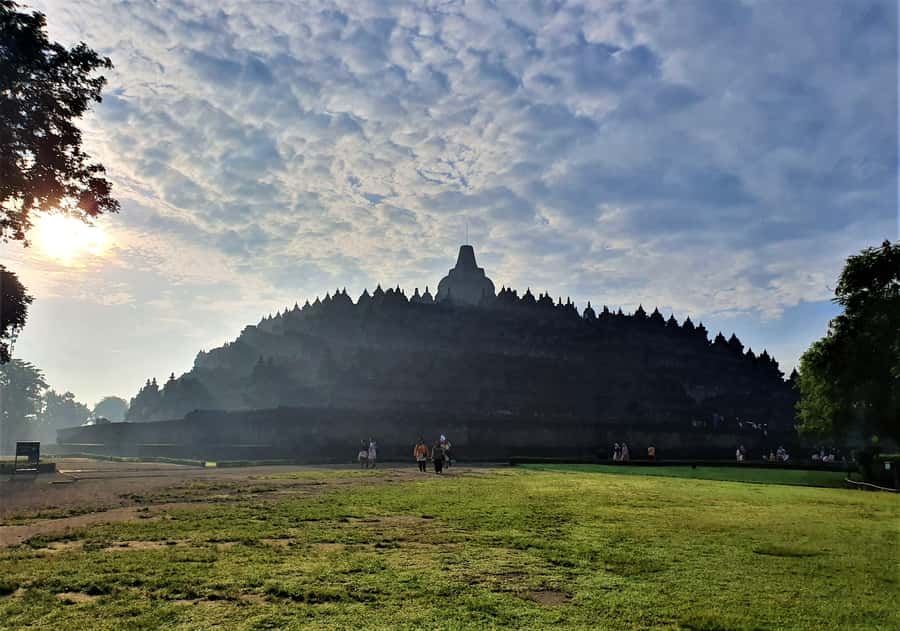
You’ll be looking at Central Java’s most famous Buddhist monument, constructed around 800 AD, and you’ll also get the context that Borobudur was once a major center for Buddhism in the region. On the same trip, you’ll pair it with Mendut and Pawon, which makes the story of the monuments feel less random and more complete. If you’re sensitive to stairs, expect that Borobudur’s climb is the whole point of the day.
In This Review
- Key things to know before you go
- Getting to Borobudur from Yogyakarta feels easier than you expect
- Borobudur climb: what included top access changes for your day
- Shared guidance and site rules: the real-world part
- Flip-flops and practical surprises
- The rest of Borobudur: why two hours is a good target
- Mendut and Pawon: the smaller temples that make the main one click
- Mendut Buddhist Monastery
- Pawon Temple
- Time on the ground: a 7-hour day that stays structured
- Price and logistics: what $78 buys you (and where it could feel tight)
- What’s not included
- A note on group structure
- Who this tour is best for
- Should you book this Borobudur Real Half Day Tour?
- FAQ
- How long is the Borobudur Real Half Day Tour?
- What temples are included besides Borobudur?
- Is the ticket to go up to Borobudur included?
- Do I have an English-speaking driver?
- What’s included in the price besides transport?
- Is food included?
Key things to know before you go
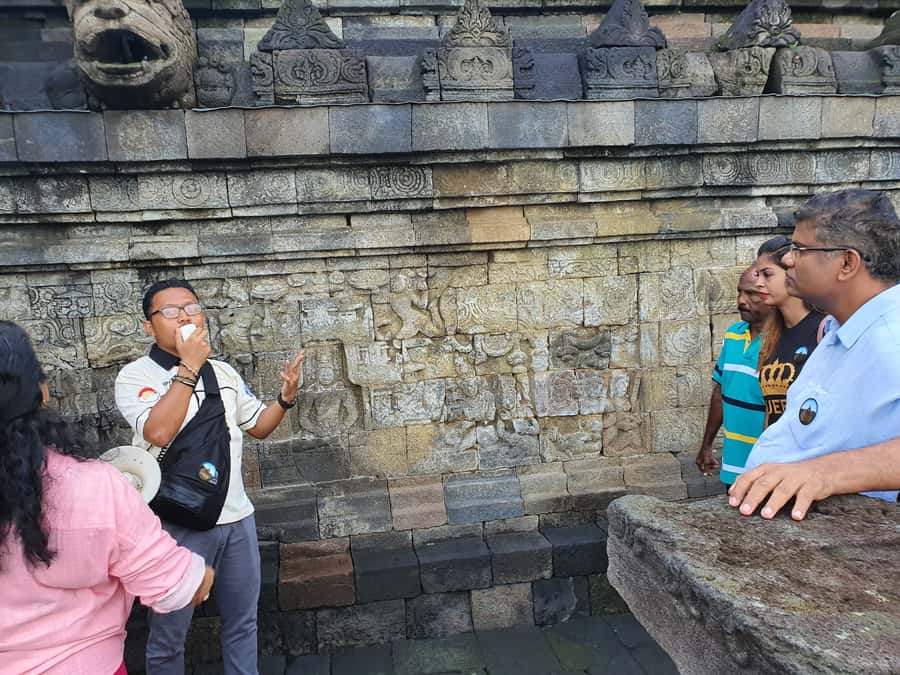
- Top access is included: you get entrance to go up to the temple area, not just around the outside.
- Private car + English driver: pick-up and drop-off are handled directly from your hotel area.
- You’ll visit 3 temples total: Borobudur, plus the smaller Mendut and Pawon.
- Guiding may be structured by rules: local guidance can be shared and time-limited inside the complex.
- Plenty of time for the main climb: plan for about two hours on the Borobudur visit window.
Getting to Borobudur from Yogyakarta feels easier than you expect
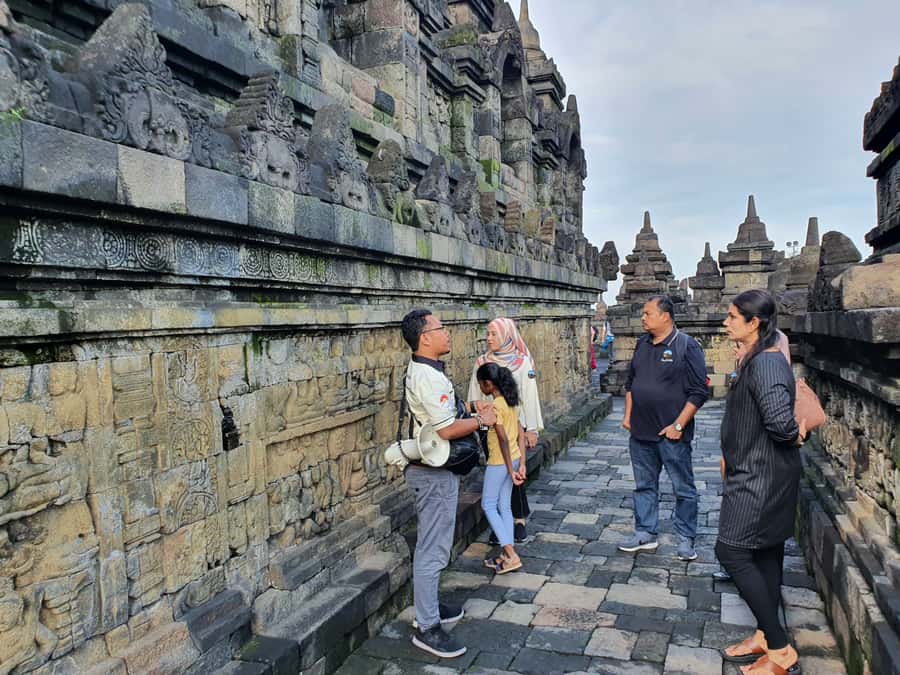
Yogyakarta is the smart base for Borobudur trips because you can do a single, focused day without turning it into a multi-hop hassle. This tour keeps that advantage by using a private air-conditioned car with an English-speaking driver who meets you in your hotel lobby. That little detail matters more than you’d think—especially when traffic or hotel entrances are a maze.
The ride itself also works as a decompression buffer. Between the drive and the way the day is paced, you arrive with enough time to switch gears from city mode into temple mode. And because hotel pick-up options are broad, you’re less likely to get stuck with a last-minute “meet somewhere nearby” scramble.
One practical consideration: you’re still doing a real trip out of town. Borobudur is about 40 kilometers northwest of where you’ll stay, so this is not a slow half-day stroll—it’s a full temple-focused block.
You can also read our reviews of more tours and experiences in Yogyakarta.

Borobudur climb: what included top access changes for your day
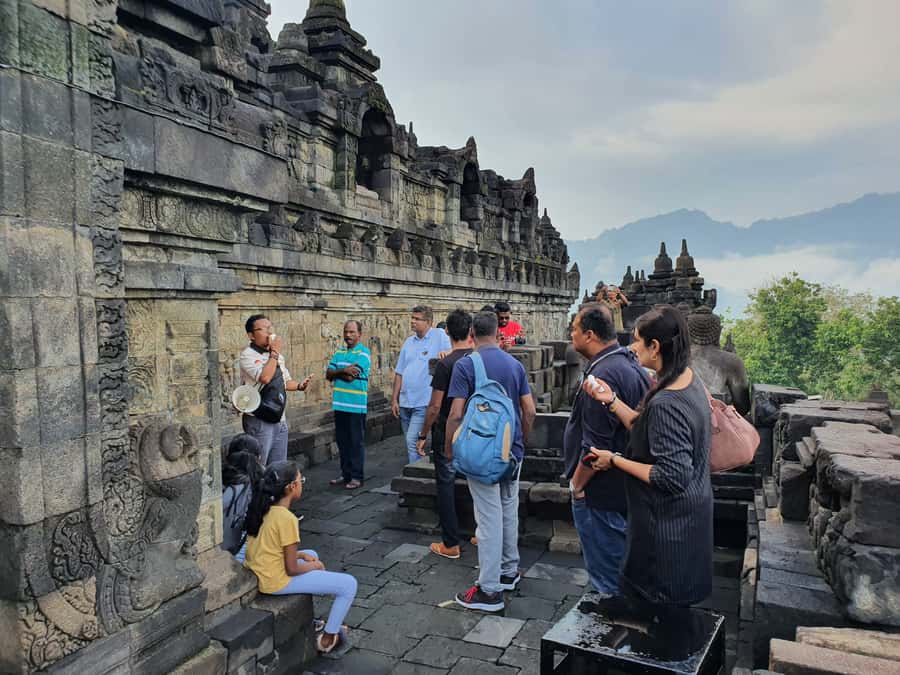
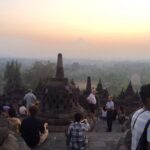
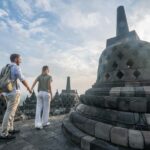
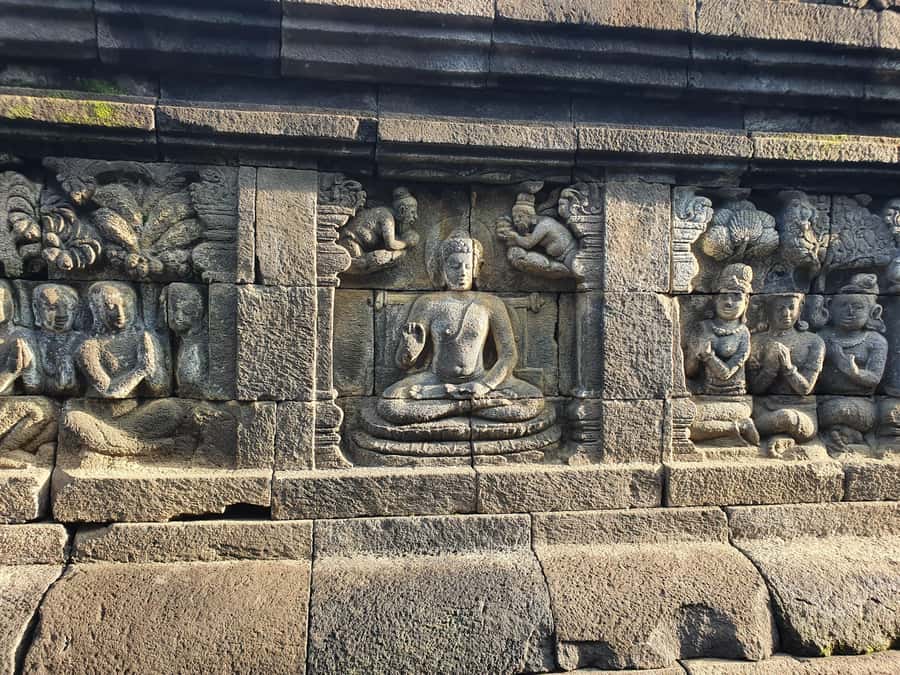
The star here is going up into the Borobudur complex. If you only visit from the ground level, you miss the real “wow” factor of how the monument is laid out and how the view and carvings change as you move higher. With this tour, your entrance ticket includes access up to the top of the temple area, so your visit follows the monument’s intended experience.
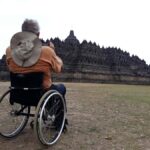
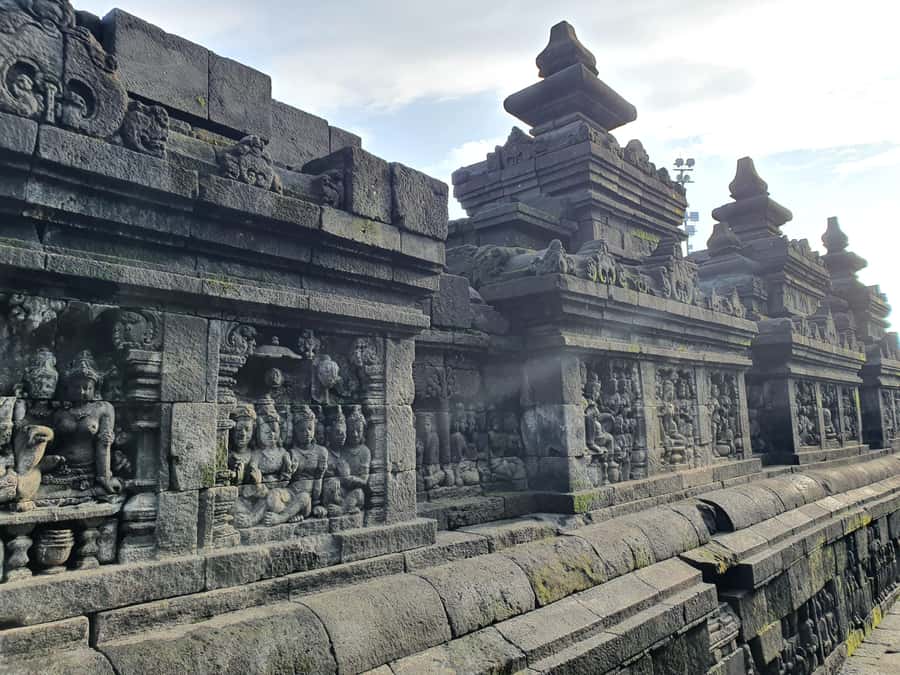
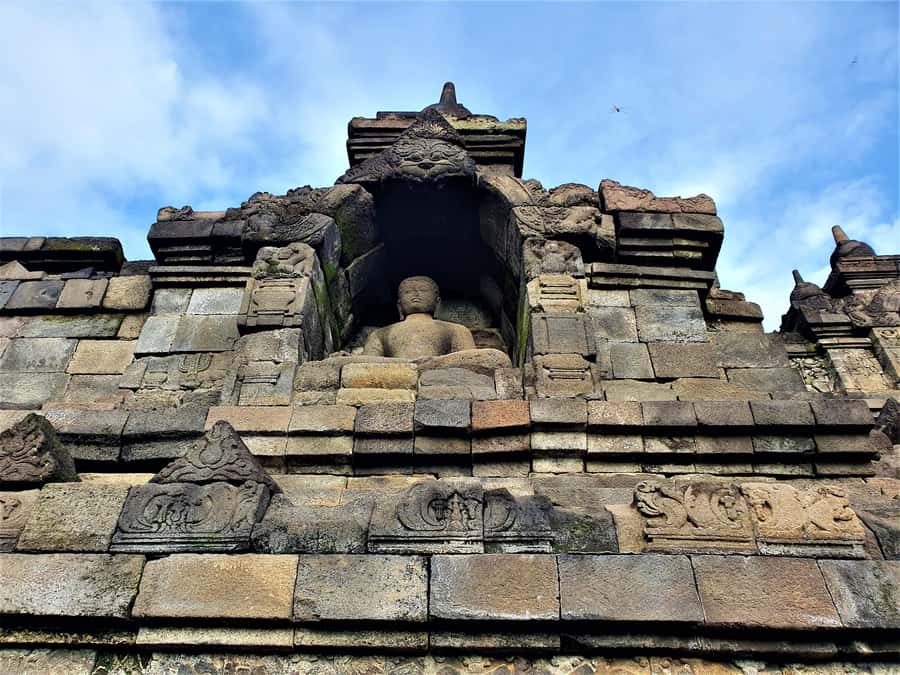
Borobudur is inscribed by UNESCO (1982), and it’s built as a Buddhist monument with terraces, galleries, and stupas that create a sense of progression. You’ll also hear how it was tied to the Buddhist faith in the region, which helps when you’re staring at stone reliefs and trying to make sense of what you’re seeing. Even if you’re not a religious history specialist, this context gives your photos and your eyes something to organize.
Shared guidance and site rules: the real-world part
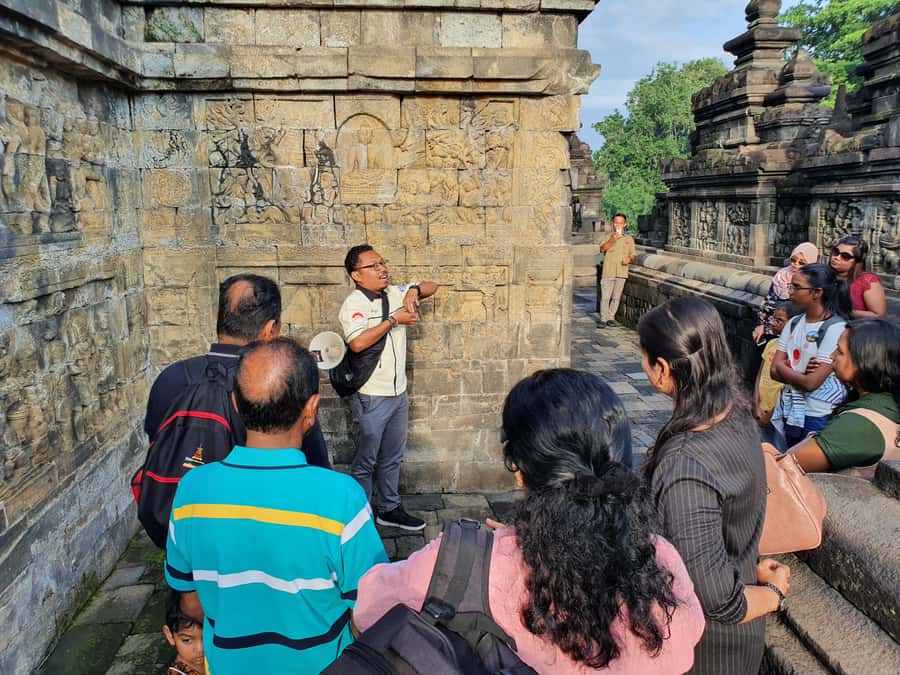
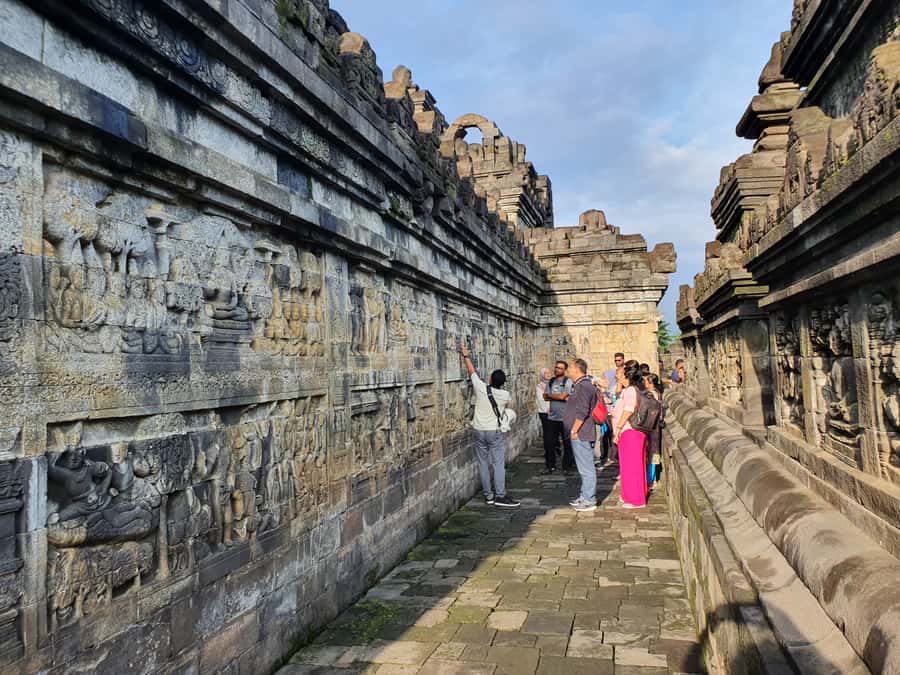
One thing to understand before you go: Borobudur is managed with strict visitor flow. In practice, this means your experience can be more structured than a casual private tour inside. You should expect a shared local guide for the temple-top portion, but movement and group sizes can be influenced by on-site regulations.
That doesn’t mean the experience is worse. It usually means you’ll get clear limits on time, and you’ll likely move with a group rather than roaming freely. A couple of things you can do to make this smoother:
- Wear comfortable footwear and plan for stairs you can’t really avoid.
- Go slower than you think you need to. The galleries and details reward patience.
- If your guide isn’t right at your shoulder at every moment, don’t panic. Use the moments when guidance is available to ask what to look for next.
Flip-flops and practical surprises
A helpful practical detail: you may be issued flip-flops for temple access, and you keep them. That’s a nice touch if you’re wearing shoes you don’t want to cram into a hot, dusty day. Just keep an eye on where they want you to store or switch footwear.
The rest of Borobudur: why two hours is a good target
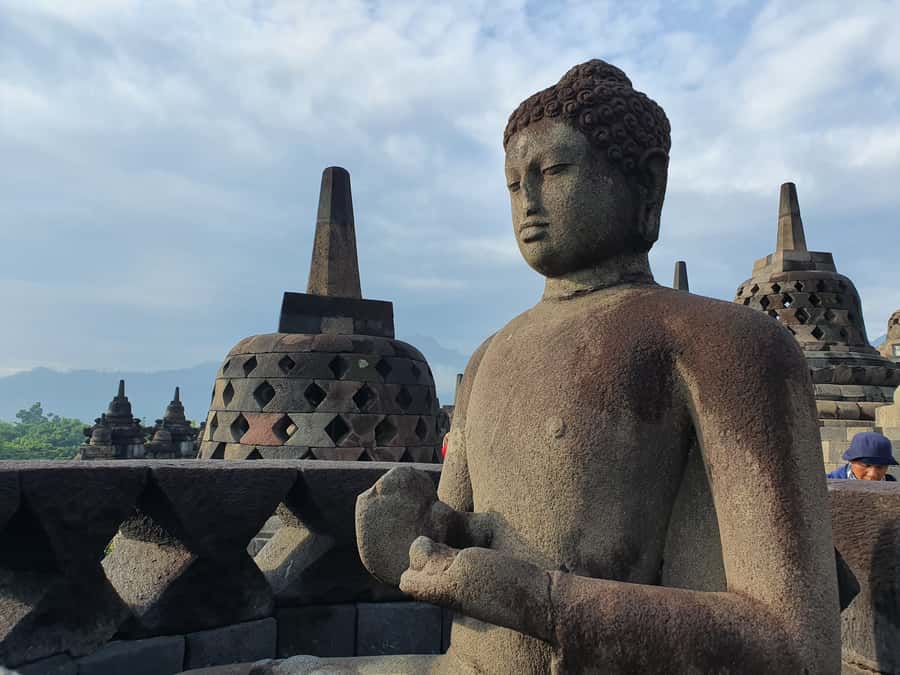
This tour builds in about two hours for the Borobudur visit, which is usually enough to do the key climb and still pause for carvings and viewpoints. Two hours also forces a good rhythm: enough time to feel the monument’s layers, without dragging your whole day into a slow grind.
What I like about a timed visit is that it keeps you from turning Borobudur into a checklist where you sprint past the exact parts you came for. Instead, you can pick a couple of “must-see” areas and let the rest become supporting context.
If you’re someone who loves details, you’ll probably wish you had more time. If you’re someone who prefers the big-picture experience, you’ll likely feel like this is the sweet spot.

Mendut and Pawon: the smaller temples that make the main one click
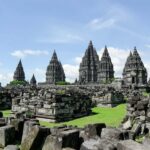
After the big climb, the tour doesn’t stop at Borobudur’s shadow. You continue to Mendut and Pawon, two nearby Buddhist monuments that help connect Borobudur to a larger sacred setting.
Mendut Buddhist Monastery
Mendut is shorter on time—about 30 minutes—but that can be a benefit. You get a focused stop where you’re not exhausted by the time you reach it. This is a place to slow down and compare scale and style against Borobudur. It’s also a good “mental reset” after hours of climbing and scanning reliefs.
Even if Mendut won’t feel as iconic as Borobudur, it adds credibility to what you’re learning. When monuments are spread across a region, they become part of the region’s story, not just individual landmarks.
Pawon Temple
Then you roll into Pawon for about 15 minutes. This stop is brief, but it gives you variety in a single day without stealing all your energy. Think of Pawon as the finishing note: another part of the temple cluster that reinforces why Borobudur isn’t an isolated site.
The practical upside of shorter temple stops is that you keep your day from collapsing into fatigue. The downside is that you have less time for lingering. If your goal is maximum time in each temple, you might wish the schedule allowed more breathing room.
Time on the ground: a 7-hour day that stays structured
Even though the name includes half day, the actual duration is 7 hours. That’s not a complaint—it’s just the reality of travel distance plus the main climb.
A structured day like this works well if you’re not traveling with unlimited energy or you don’t want to gamble on transport times. You’re picked up from your hotel, driven to the archaeological remains, then moved through the temple sequence, and returned to Yogyakarta for drop-off.
What makes this work is the pacing:
- Borobudur is your core event.
- Mendut and Pawon act like context stops.
- The final return keeps you from ending the day stranded or scrambling for transport.
Price and logistics: what $78 buys you (and where it could feel tight)
The price is $78 per person, and the biggest value point is what’s included. You’re not paying extra for the biggest line-item: entrance to go up to Borobudur. You also have admission fees for Pawon and Mendut and parking fees covered, plus mineral water.
You are paying for time-saving convenience: hotel pick-up and drop-off, a private car, fuel, and a driver who can communicate in English. For many people, that’s the real money-saver—less time negotiating, less uncertainty, and fewer “how do we get there” moments.
What’s not included
Food and beverages aren’t included. That means you’ll want to plan for lunch or snacks on your own, depending on your appetite and timing. Bring a small amount of your own water or budget for a meal when you’re back in town.
A note on group structure
Even though the day is private in the sense of car and your overall arrangement, temple movement can still be influenced by rules and shared management. That can limit how long you spend in one spot or how close you get to guidance at each second. It’s not a deal-breaker, but it’s the one place where this kind of tour can feel less flexible than people expect.
Who this tour is best for
This is a good fit if you want a temple-focused day with simple logistics and included top access. I’d especially recommend it if:
- You’re short on time in Yogyakarta and want a single strong monument day.
- You prefer a driver-handled plan rather than coordinating public transport.
- You want the value of included entrance fees and a guided element for the climb/top area.
It’s less ideal if you’re expecting full, free-roam wandering inside the complex for hours on end. Also note that it’s not suitable for people with recent surgeries and it’s not intended for people over 95 years old.
Should you book this Borobudur Real Half Day Tour?
If Borobudur’s climb is your priority, I think this is a strong “yes.” The math is usually favorable because the top-access ticket and temple admissions are included, and you’re buying yourself a smooth day: hotel pick-up, air-conditioned private transport, English communication, and guided support where it matters most.
I’d say go for it if you want a clean, practical itinerary and you’re okay with site rules shaping timing inside the temple complex. Skip it only if you want more unstructured time at each temple, or if you need a very flexible schedule that ignores managed visitor flow.
FAQ
How long is the Borobudur Real Half Day Tour?
The tour duration is listed as 7 hours.
What temples are included besides Borobudur?
You visit Borobudur and also stop at Mendut and Pawon temples.
Is the ticket to go up to Borobudur included?
Yes. Entrance ticket access to go up to the top of the Borobudur temple area is included.
Do I have an English-speaking driver?
Yes. The car includes an English-speaking driver, and the tour language is English.
What’s included in the price besides transport?
The price includes hotel pick-up and drop-off, a private air-conditioned car with fuel, mineral water, entrance fees for Borobudur (up to the top), and admission fees for Mendut and Pawon, plus a shared local guide to the top.
Is food included?
No. Food and beverages are not included, so you’ll need to arrange meals separately.