There’s something quietly powerful about seeing Bali from inside a family day. I love the hands-on village cooking with ingredients from the garden, and I love the temple-life moments like canang sari offerings and incense stick making. One thing to consider: this is a home-village experience, so if you’re very sensitive about hygiene, the rustic setting may not feel comfortable.
The best part is how personal it feels. You’re not just watching from the outside—you’re pulled into the steps of daily Balinese life with Wayan and his family, in a calm Candidasa setting away from the loud-tour bus rhythm. If you’re after polished, high-comfort tourism, this isn’t that.
Still, at about $55 for 5 hours, it’s strong value for a small group (up to 10) with round-trip hotel transfer and real participation, not just a slideshow.
In This Review
- Key points to know
- Why a village cooking morning matters in quiet Candidasa
- Hotel pickup and the traditional market stop
- Welcoming into Wayan’s family home and garden
- From canang sari to temple prayer: daily Balinese routines
- Wood-fired natural coconut oil: slow process, big payoff
- Cooking 5 Balinese dishes plus desserts with real ingredients
- Incense stick making for temple ceremony days
- Lunch and tastings: coconut coffee, cake, bananas, and young coconut
- Price, group size, and value at $55 for 5 hours
- Practical tips: what to bring and what to skip (especially if you’re over 70)
- Should you book Candidasa Hidden Activities?
- FAQ
- How long is the Candidasa Hidden Activities cooking and village culture experience?
- What is the price per person?
- Is hotel pickup and return transfer included?
- How big is the group?
- Is there an English-speaking guide?
- What food and drinks are included?
- What are the main activities during the 5 hours?
- What should I bring?
- Are there any restrictions on alcohol or other items?
- Is it suitable for everyone?
Key points to know
- Small group (10 max) with an English-speaking guide keeps it personal and practical.
- Wood-fired natural coconut oil uses the traditional method, not a shortcut.
- Canang sari offerings + temple prayer together shows the spiritual routine, not a performance.
- Incense stick making explains how daily ceremony items are made.
- Cooking 5 Balinese dishes plus desserts means you learn more than one recipe.
- Garden-to-plate ingredients like bananas, fresh young coconut, and coconut coffee tasting.
Why a village cooking morning matters in quiet Candidasa
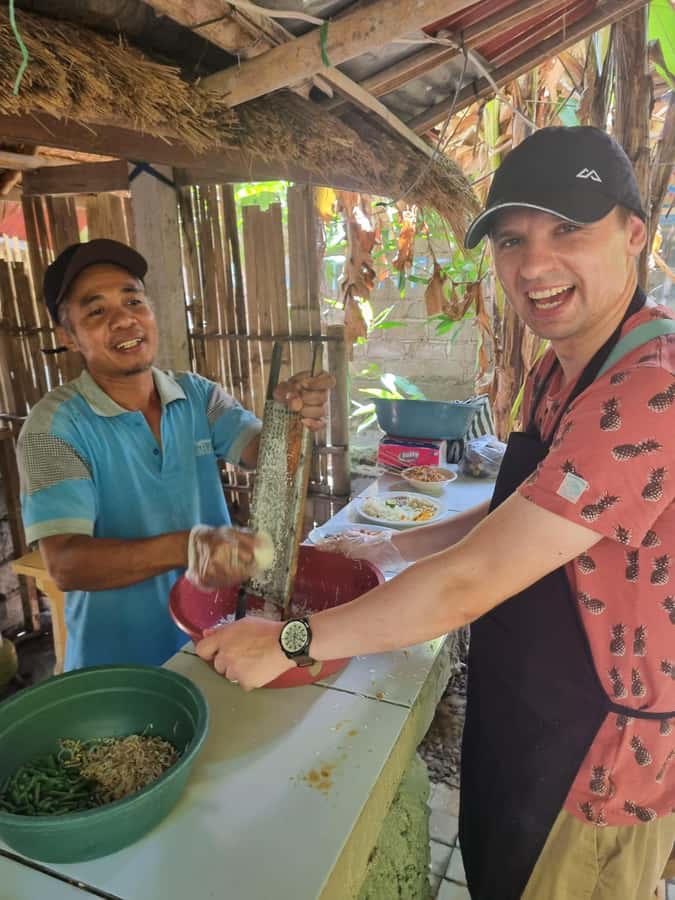
Candidasa is often marketed for beaches and day trips, but this kind of experience shifts the focus back to everyday life. You spend your time with a Balinese family, seeing how the household runs, where food comes from, and how religion shows up in daily routines.
What makes this day feel special is the mix: you get practical cooking skills and kitchen moments, plus the religious craft behind daily offerings. It’s not theory. You watch, you participate, and you leave with a clearer picture of how Balinese people live—quietly, routinely, and together.
The atmosphere also tends to be relaxed. With only about 10 people, you’re more likely to ask questions and actually understand what you’re seeing instead of trying to hear over a crowd.
You can also read our reviews of more tours and experiences in Karangasem Regency.



Hotel pickup and the traditional market stop
Your day starts with a free hotel transfer return, so you don’t lose time figuring out transport. After pickup, the drive takes you toward a traditional market. This matters because it sets up what comes next: many ingredients in Balinese cooking are chosen for freshness and local availability, and markets are where that logic becomes obvious.
At the market stop, you’ll be oriented to ingredients you’ll later use in the cooking session—things like tropical produce and local staples. Even if you don’t do lots of shopping, it helps you understand why the meal tastes the way it does.
One practical note: you’ll likely want cash on hand since the experience includes a reminder that souvenirs might cost extra. If you don’t want to buy anything, just keep a small amount for snacks or small items you might spot.
Welcoming into Wayan’s family home and garden
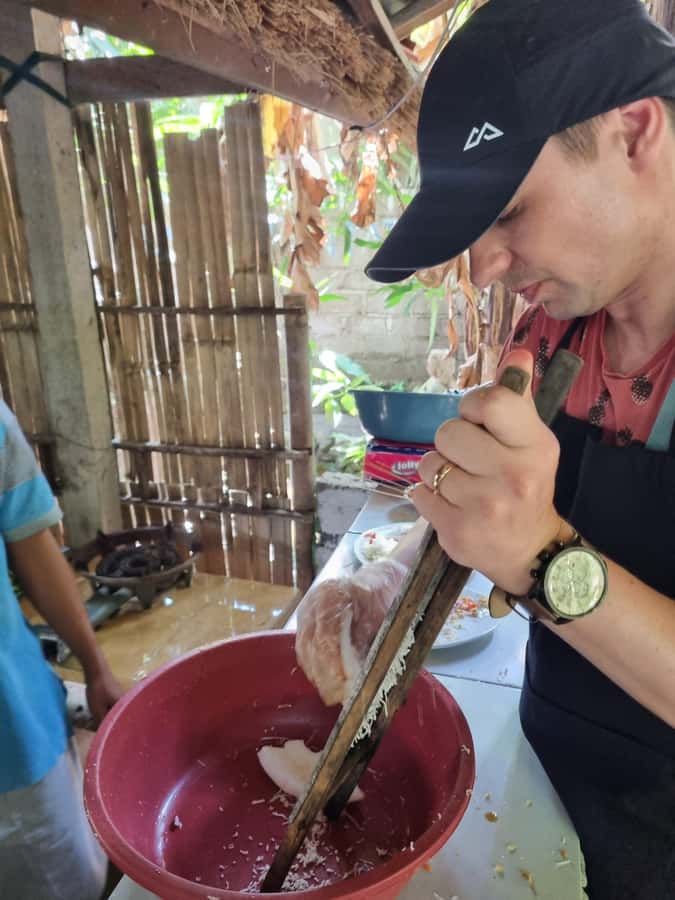
This is the heart of the experience. You’re introduced to Wayan’s family and brought into their way of living in the village. Instead of a studio kitchen, you’re in the setting where food, animals, and daily routines all share the same space.
You’ll get to see everyday details like well water straight from the ground, plus the family’s home environment—things like cows and chicken. It’s a useful contrast if you’re used to Bali as just a destination. Here, the “real Bali” is the household itself.
And then there’s the garden-to-plate part. You’ll taste tasting coconut coffee, plus Balinese cake, bananas, and fresh young coconut that comes directly from their garden. Those small tastings matter because coconut and banana aren’t just ingredients—they’re part of the rhythm of the home.
If you want to enjoy the day fully, come with curiosity and a willingness to slow down. This isn’t a rush-through attraction.
From canang sari to temple prayer: daily Balinese routines
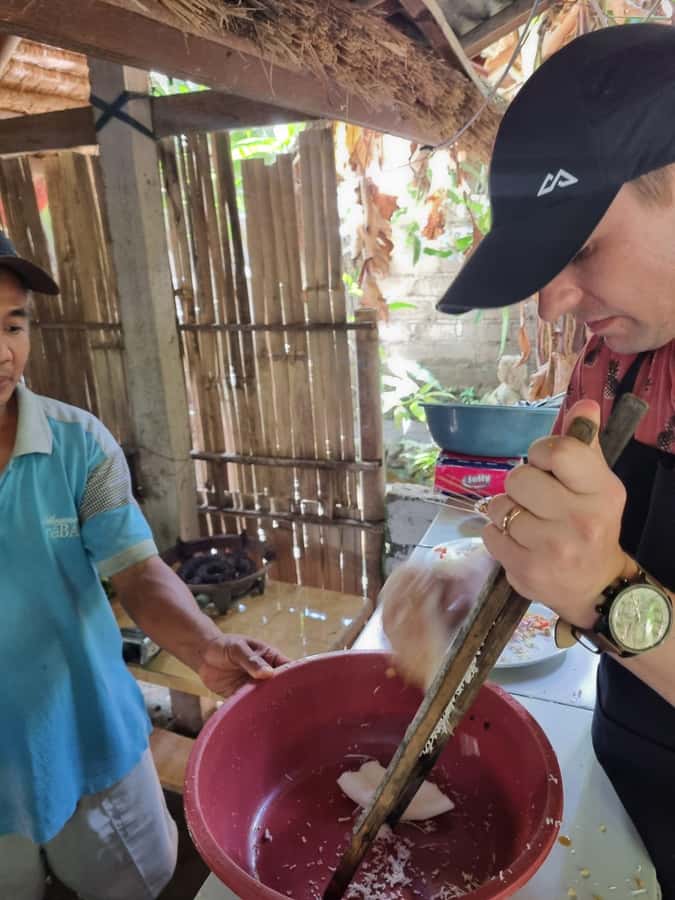
A big reason this tour gets such strong praise is how it treats spirituality as normal life. You’ll learn to make canang sari, the daily Balinese offering, and then you’ll pray together in the temple.
That can sound like a “watch this ritual” moment, but the value here is participation. You’re not just standing nearby; you’re working on the offering and learning what it represents in daily practice. You also get context for why these items matter so much—because they’re part of the household schedule, not a one-time event.
You’ll also see small shrines around the property. That detail helps you understand that religious life isn’t only in the big temple structures you might have seen on buses. It’s integrated right where people live.
One consideration: temple time means you’ll be paying closer attention. If you’re tired or expecting lots of downtime, plan for a steady flow of activity. Comfort comes from going with the pace.
Wood-fired natural coconut oil: slow process, big payoff
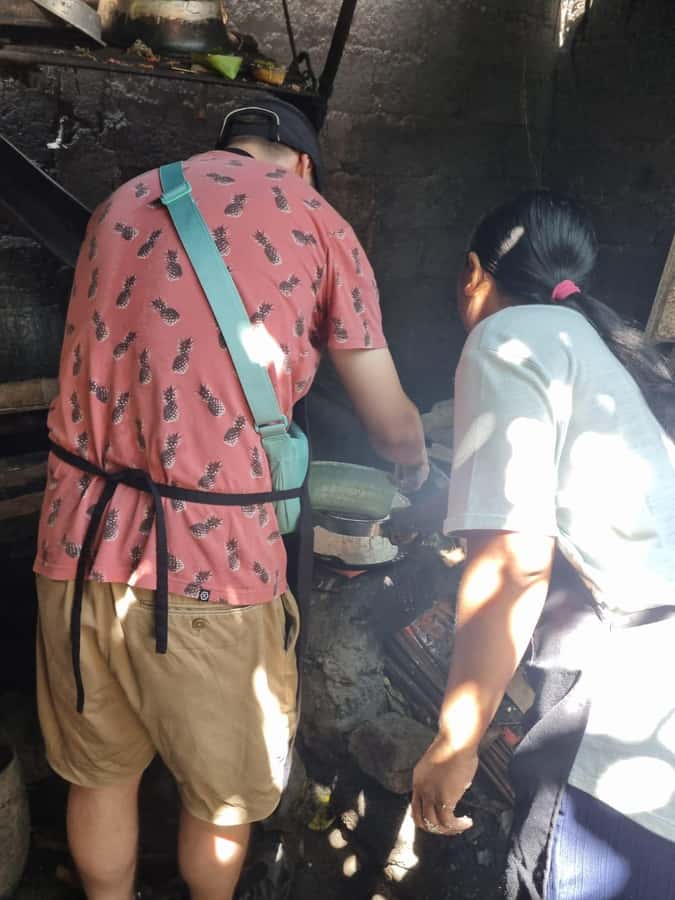
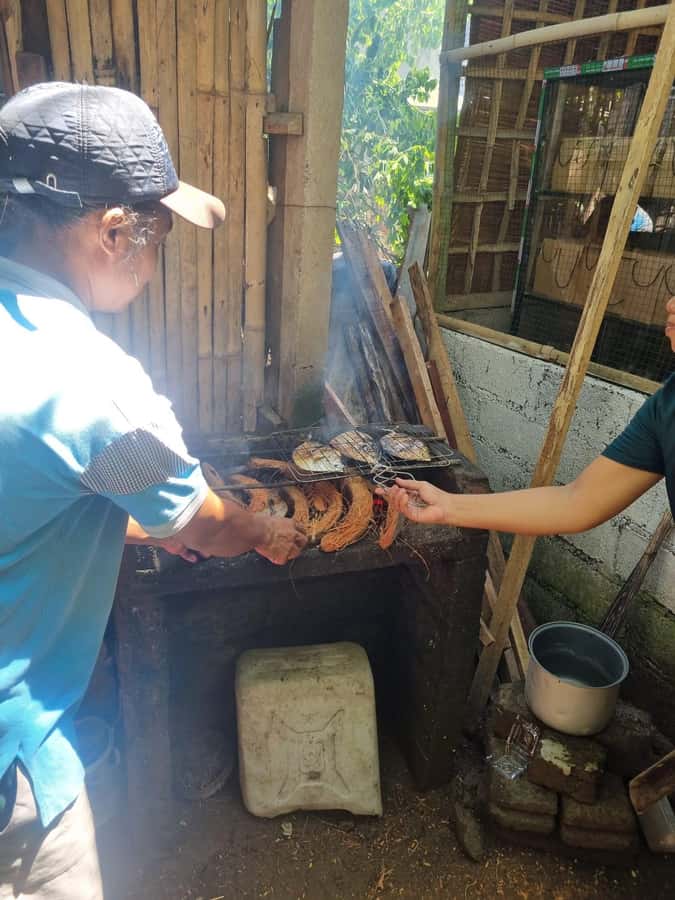
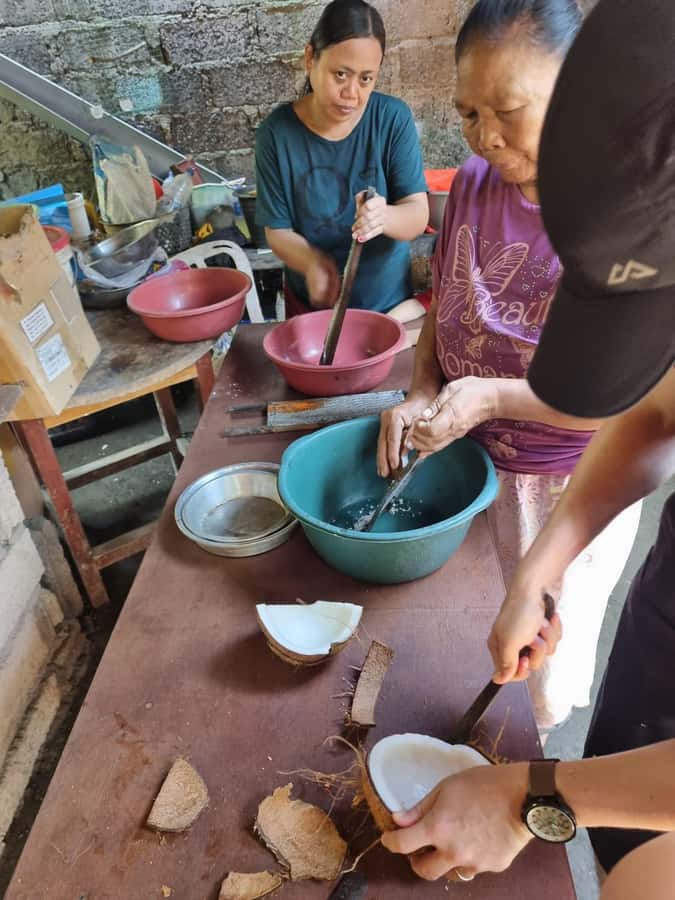
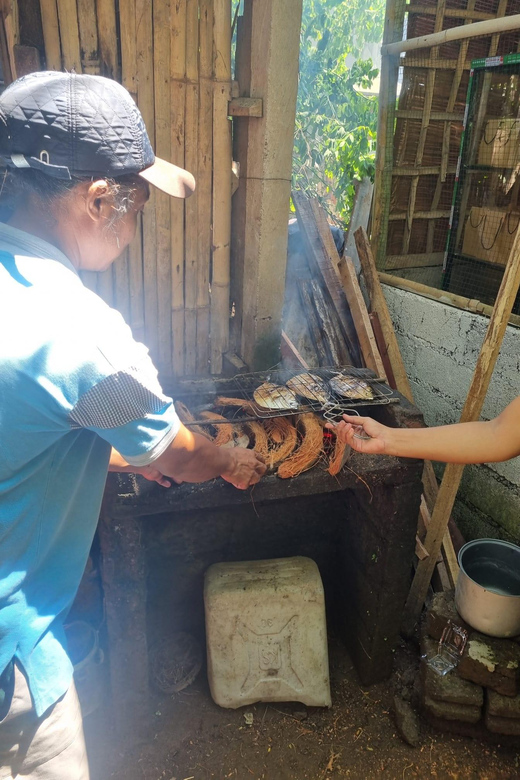
If you only remember one thing from the day, make it the coconut oil part. You’ll see the traditional process of making natural coconut oil cooked on a wood fire stove. This is the kind of activity that teaches you through observation—how the heat is managed, how ingredients transform, and how time matters.
You’ll also get to see the tools and process behind it, which is exactly what makes it more than a cooking class. Most visitors in Bali try coconut products made elsewhere. Here you see the starting point—how coconut becomes oil using local methods.
This also links back to the garden tastings. When you’ve tasted coconut coffee and young coconut earlier, the oil-making feels connected rather than random. You’re not learning coconut as a trend. You’re learning it as a real household practice.
And yes, the wood-fired process can be smoky and warm. If you’re sensitive to smoke, bring patience and plan to keep your breathing comfortable.



Cooking 5 Balinese dishes plus desserts with real ingredients
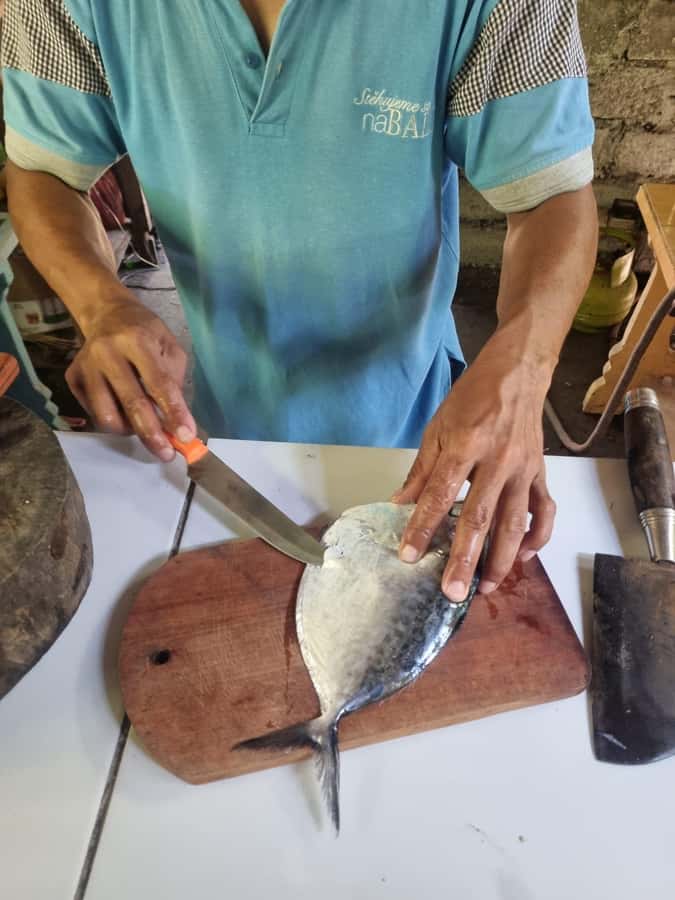
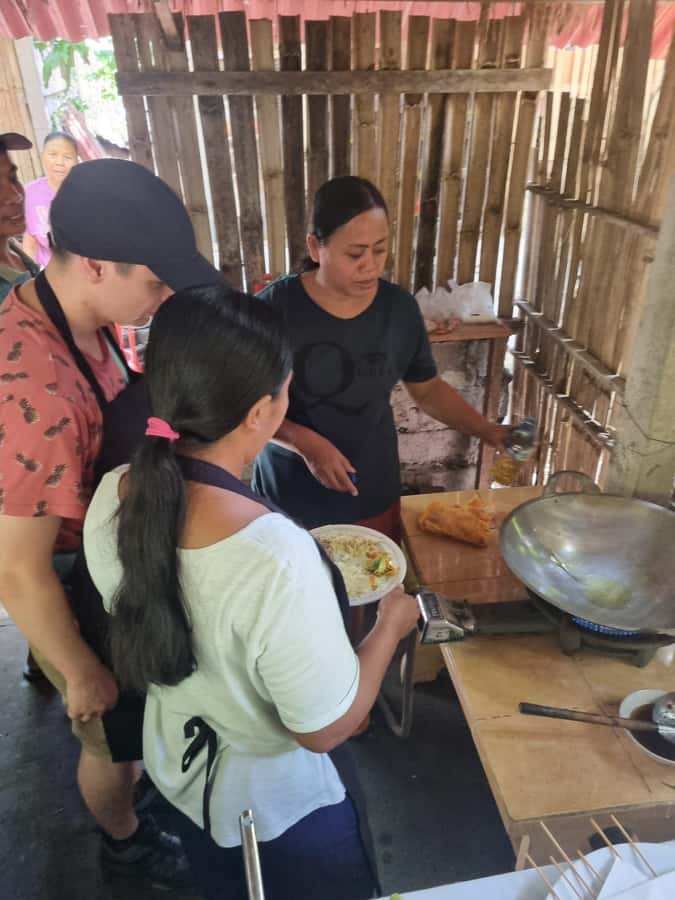
The cooking session is a true highlight because it’s not limited to one dish. You’ll do a cooking demonstration covering 5 different Balinese foods plus desserts, and you’ll be involved in preparing the meal.
What I like about this setup is that it’s structured enough to teach you, but not so formal that you feel like you’re in a classroom. You get steps, you learn what flavors come from which ingredients, and you see how local cooking techniques fit into Balinese tastes.
You also benefit from fresh sourcing. The day includes fruit and coconut from the family garden, plus ingredients that connect to the market stop. That means the food isn’t just “culturally themed”—it’s genuinely fresh and seasonal.
One more good sign: the guide and family are part of the process, not just the background. In past experiences like this, that’s where understanding grows. Here, the day tends to run with an English-speaking guide and family explanations, so you’re not left guessing.
Incense stick making for temple ceremony days
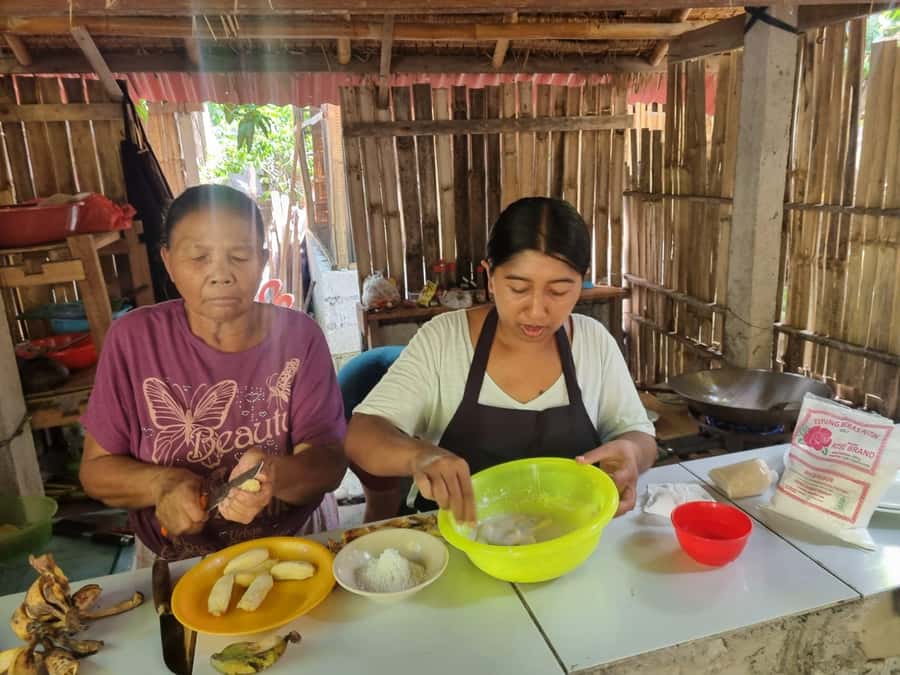
Balinese daily ceremonies rely on items made ahead of time, and incense is one of them. You’ll see the process of making incense sticks for the daily temple ceremony.
This is a smaller activity compared to cooking, but it’s memorable for the same reason the coconut oil is: you learn craft. You watch how the incense is prepared for use, and you connect it to what you saw during canang sari making and temple prayer.
For many visitors, it’s the first time they realize ceremony preparation is labor-intensive and done through habit. That changes how you view the incense you see at temples—suddenly it’s not just smell in the air; it’s something made at home.
If you enjoy making things with your hands and you like learning how routines connect to objects, you’ll appreciate this section.
Lunch and tastings: coconut coffee, cake, bananas, and young coconut
Lunch is included, and it’s not a generic buffet. You’ll eat as part of the cooking day, after the preparations and tastings.
Before the main meal, you’ll have multiple food moments: coconut coffee tasting, Balinese cake, bananas, and fresh young coconut. These are simple snacks, but they build the palate for the dishes later. It also helps you learn flavor without committing to one big meal too fast.
After cooking, the lunch becomes the payoff. You’ll taste what you helped prepare and understand how the flavors worked together.
Water is also included, plus mineral water is provided. That matters in Bali’s warmth and humidity—especially when you’re walking around and spending time outdoors.
Price, group size, and value at $55 for 5 hours
For $55 per person and 5 hours, this sits in a mid-range band for Bali activities. The value comes from what you actually get: return hotel transfer, an English-speaking guide, a small group capped at 10, and multiple hands-on activities in one day.
Many Bali experiences charge similar prices but give you mostly watching. Here you get participation: coconut oil making, incense stick making, canang sari making, and cooking 5 dishes plus desserts.
You also get the comfort of being moved around without hassle. The free pickup/return takes away the most annoying part of village tours: logistics. You show up, and the day is already flowing.
The not-included part is also clear: extra money for souvenir shopping. If you don’t shop, you’re likely fine. If you do, bring extra cash so you’re not forced into an awkward decision on the spot.
Practical tips: what to bring and what to skip (especially if you’re over 70)
Bring a camera and cash. You’ll also want to be ready for outdoor and home settings.
The experience has some clear boundaries: no alcohol and drugs, and no fireworks. That’s normal for respectful, family-run cultural activities.
One important suitability note: it’s not suitable for people over 70. So if you’re in that age range, skip this one and look for a less physically active option.
Also keep expectations realistic. This isn’t a hotel cooking workshop. You’re in a real home environment—so wear comfortable clothing, expect some warmth and possibly smoke from the wood-fired cooking, and keep a patient mindset.
Should you book Candidasa Hidden Activities?
I’d book this if you want a day that feels like you’re learning Bali’s rhythms, not just collecting photos. The combination of family welcome, temple offering participation, and hands-on coconut oil + cooking is exactly what makes it worth your time.
It’s also a great match if you like small groups and clear guidance in English, since a guide is with you the whole time and helps you understand what’s happening.
Skip it if you’re looking for luxury comfort, air-conditioned everything, or you have strong concerns about rustic home environments and hygiene. Also skip if you’re over 70, since it’s specifically noted as not suitable.
If you’re traveling through Candidasa and you want one activity that feels genuinely local, this is the kind of choice that gives you a story you’ll remember—and skills you can repeat.
FAQ
How long is the Candidasa Hidden Activities cooking and village culture experience?
It lasts about 5 hours.
What is the price per person?
The price is listed as $55 per person.
Is hotel pickup and return transfer included?
Yes. Round-trip hotel transfer is included.
How big is the group?
It’s a small group, limited to 10 participants.
Is there an English-speaking guide?
Yes. The tour includes a live guide who speaks English.
What food and drinks are included?
Included items include a welcome drink, mineral water, Balinese cake, and coconut coffee tasting. Lunch is also included, plus banana and fresh young coconut from the garden.
What are the main activities during the 5 hours?
You can expect a Balinese cooking demonstration with preparation of 5 Balinese foods and desserts, making canang sari offerings and praying together in the temple, making incense sticks for daily ceremonies, and making natural coconut oil cooked on a wood fire stove.
What should I bring?
Bring a camera and cash.
Are there any restrictions on alcohol or other items?
Alcohol and drugs are not allowed, and fireworks are also not allowed.
Is it suitable for everyone?
It’s not suitable for people over 70. It also isn’t described as a good fit for those who are very sensitive about hygiene.