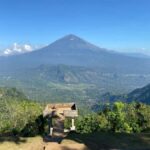
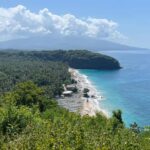
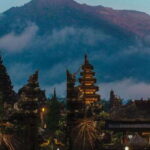
Mount Abang turns an early morning into a real Bali moment. I love the temple stops that give the hike a pilgrimage feel, and I love the English-speaking guides who keep things safe and moving. The main drawback is the super-early start: you’ll be up before 1 a.m., and it can feel chilly at the top.
What makes this trek special is the mix of scenery and culture. You climb through green tropical forest that’s been growing for hundreds of years, then you arrive at a summit with big-panorama sunrise views and a look down toward Abang village.
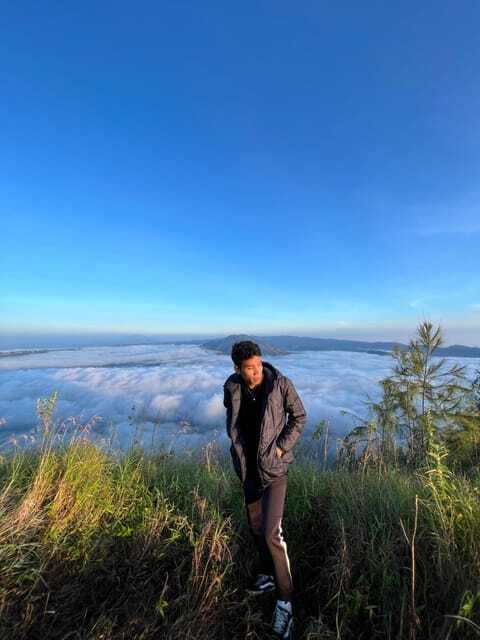
This is also a hike where what you wear matters. Hiking shoes, hiking pants, and warm layers are on you to bring since shoes/jacket aren’t included—so pack smart and you’ll enjoy it more.
In This Review
- Key highlights to look for
- Why Mount Abang feels different from a typical Bali hike
- The 1 a.m. start: logistics that make or break your day
- The climb through tropical forest (and the rhythm of the route)
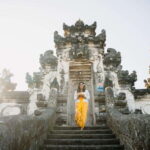
- Temple stops at Pesawat and Andong: where the hike gets meaningful
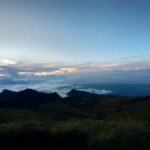
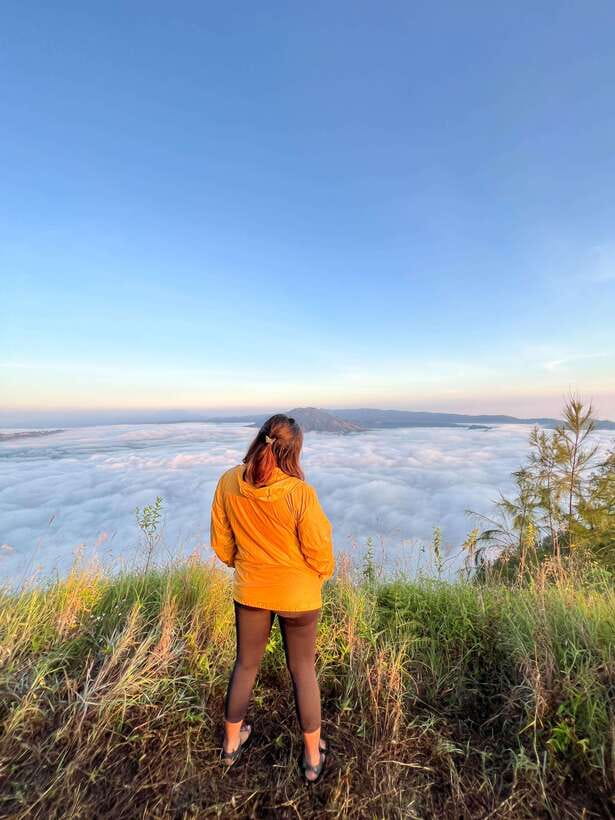
- Reaching the peak: waiting for sunrise with big volcano views
- After sunrise: plantations, village life, and what you do next
- Price and value: what $147 really buys you
- Comfort, safety, and the route question (main route vs overpass)
- Who this trek suits best (and who should skip it)
- Should you book Mount Abang trekking?
- FAQ
- Where are pickup and drop-off available?
- How long does the Mount Abang sunrise trekking tour take?
- What time does the pickup happen?
- Do I get an English-speaking guide?
- What is included in the price?
- What is not included?
- What should I bring with me?
- What items are not allowed during the trek?
- Is this tour suitable for pregnant women?
- What are the cancellation terms?
Key highlights to look for
- Temple breaks built into the route: stop at Pesawat Temple, then again at Andong Temple for drinking water.
- Guides who actively help you: some guides (like Dhikaa and Marta) are known for friendly pacing and photo help, plus extra support on steep spots.
- Flashlights and hiking poles included: you’re not stuck figuring out gear in the dark.
- A summit wait that’s worth it: sunrise timing gives you views toward Batur, Agung, and even Rinjani in Lombok on clear mornings.
- Tropical plantations at the top: after the peak view, you still get a strong sense of how the area is used and lived in.
Why Mount Abang feels different from a typical Bali hike
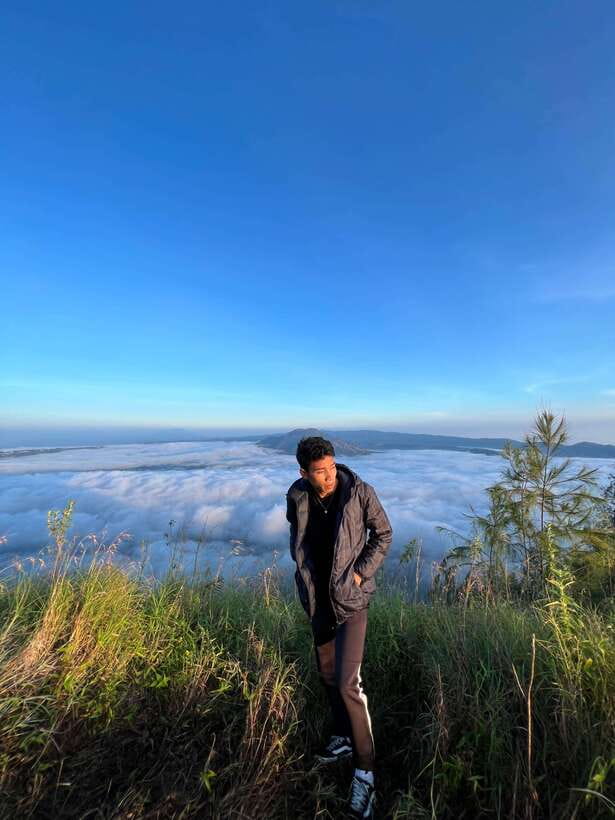
Mount Abang has a reputation in Bali as a very virgin mountain, and you’ll feel that tone in how the trek is framed. Instead of treating it like a workout only, the route leans into spirituality and tradition—prayer during the climb helps set the mood like a pilgrimage.
The payoff is the summit panorama. From the top, you’re watching green highland nature spread out below you, and on sunrise mornings the view can stretch toward other famous volcano areas. This isn’t a flat “walk to a viewpoint” situation. It’s an up-and-back mountain experience with a cultural backbone, which is exactly why it’s memorable.
You can also read our reviews of more tours and experiences in Karangasem Regency.



The 1 a.m. start: logistics that make or break your day
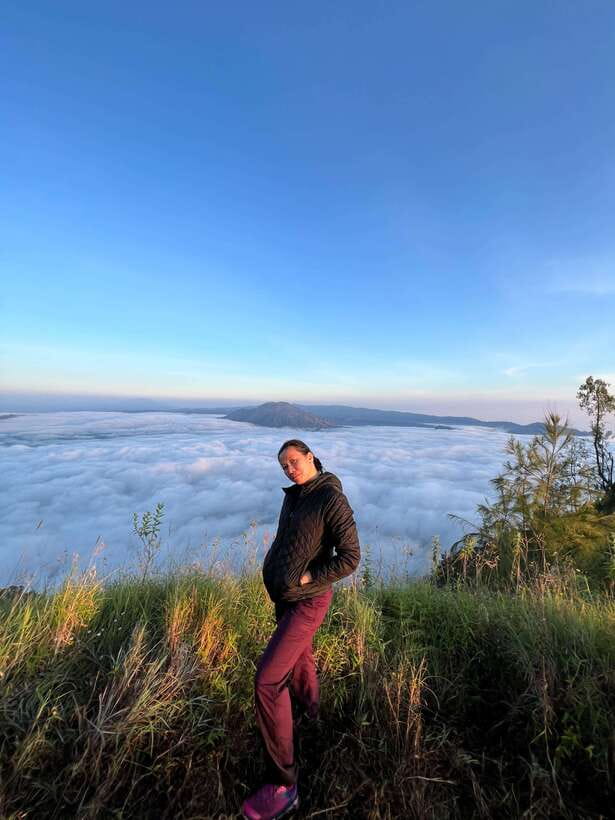
You start early—really early. Pickup typically happens around 01:00 to 01:30 a.m. from options including Denpasar, Ubud, Canggu, and Seminyak, using air-conditioned cars. You’ll be taken to a registration office before you begin the climb.
Why that matters: sunrise treks live and die by timing, and Mount Abang’s schedule is built around getting you to the summit area while the sky is still dark enough to make the sunrise moment count. If you’re the type who hates mornings, this will test you. If you like being out in the quiet hours, it’s fantastic.
One practical note: you’re likely to spend a long stretch waiting and standing at the peak while the sky changes. Bring layers and keep your energy steady—don’t treat it like one sprint.
The climb through tropical forest (and the rhythm of the route)
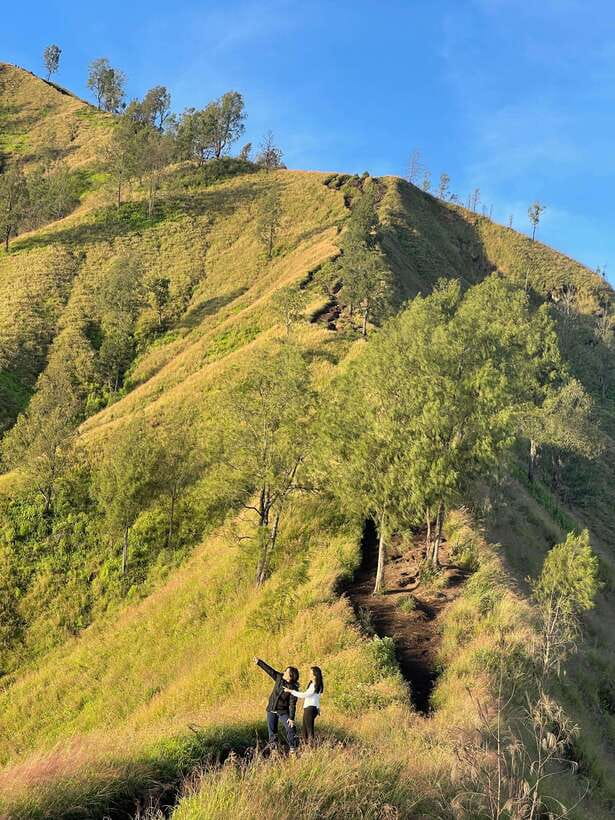
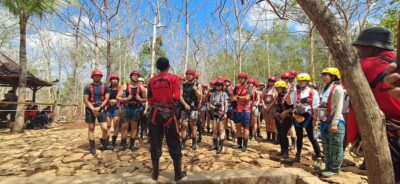
Once you’re dropped at the trail start, the climb begins with an experienced local guide. The trek passes through green tropical forest that has grown for hundreds of years. That kind of setting changes the feel of a sunrise hike. Instead of just looking for photos, you’re moving through cool, living shade for part of the climb.
The pace is also shaped by the spiritual rhythm of the route. It’s not just step-by-step instruction; it’s a guided experience with stops and short breaks that help you catch your breath and stay steady.
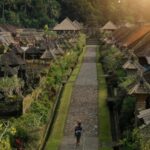
You’ll also get a sense of everyday Bali beyond the scenery. As you move around the mountaintop area and later in the descent, it’s not uncommon to notice tropical plantations and more of the local “how people use this land” picture than you’d see from a purely urban outing.
Temple stops at Pesawat and Andong: where the hike gets meaningful
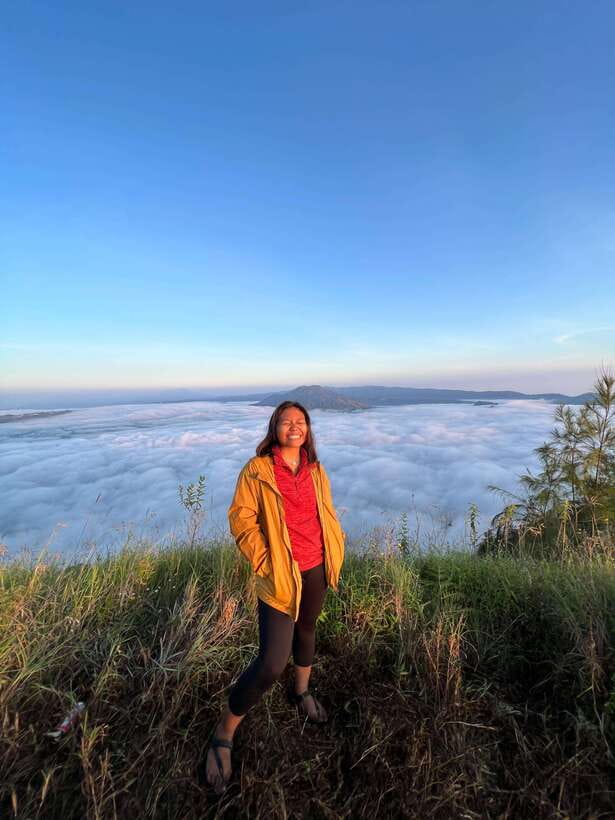
Two key breaks anchor the trek: Pesawat Temple and Andong Temple.
At Pesawat Temple, you get a short break. This is one of those moments that makes a sunrise hike feel less like a scramble and more like a ritual path. You’re still trekking, but the stop helps you reset your body and focus before the steeper push.
Then comes the Andong Temple stop, which is the hydration checkpoint. The plan includes drinking water here, which is important because it’s easy to feel less thirsty than you should when you’re climbing in early-morning cool air.
Practical tip: use these stops to check your footing. If the trail surface is slick (it can be), take your time. The trek includes flashlights and hiking poles, but good balance still comes from slow decisions.
Reaching the peak: waiting for sunrise with big volcano views
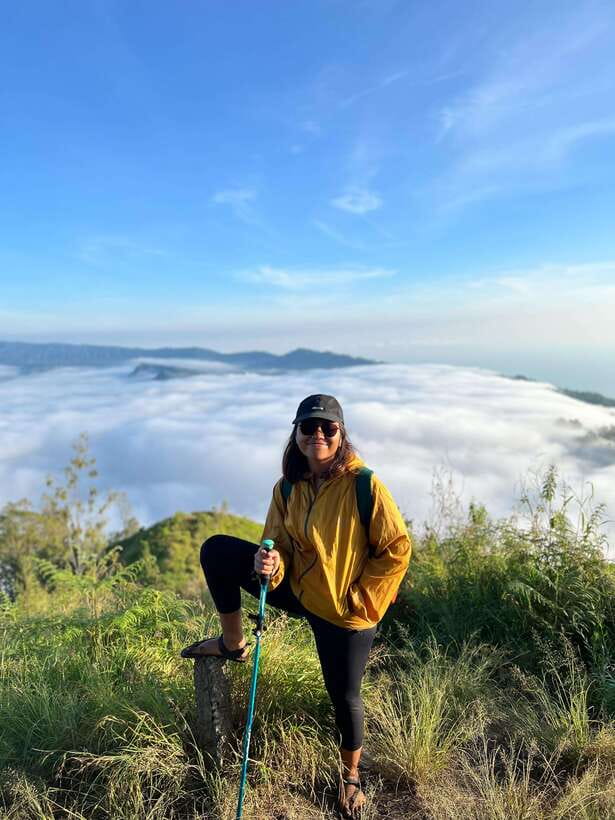
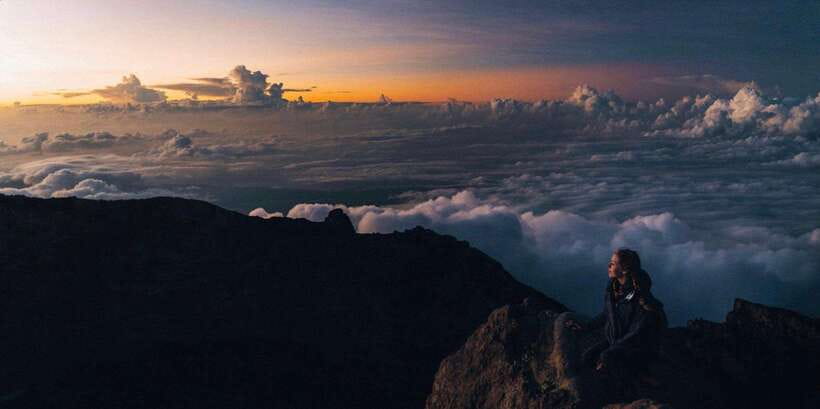
Around the time you arrive near the peak, you’re essentially in summit-wait mode. The schedule is designed so you’re already there by the time the sunrise moment hits, with a period where you’re waiting while the sky brightens.
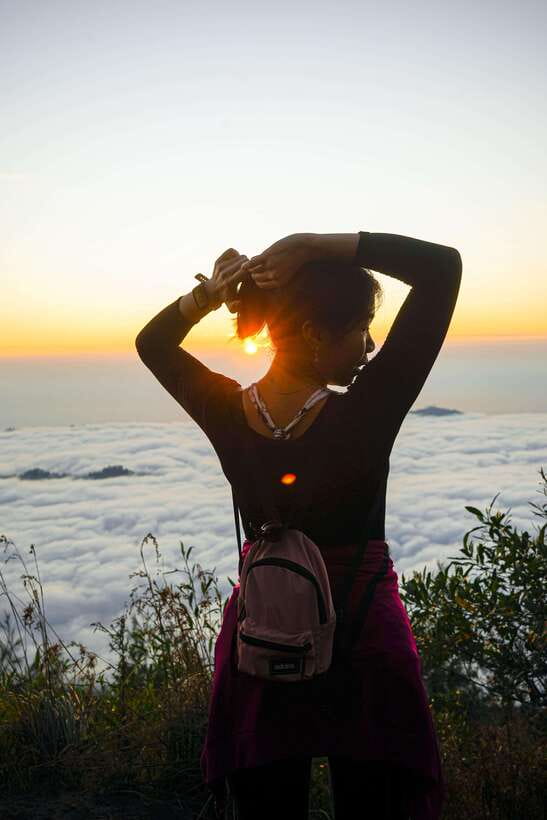
When the sun comes up, the view can include Batur Mountain, Agung Mountain, and even Rinjani in Lombok, assuming clear weather. You’ll also look down toward Abang village, which helps the panorama feel real rather than just far-away volcano lines.
Two comfort realities from experience with this kind of trek:
- It can get cold at the top. Bring a jumper or warm layer even if Bali feels hot later in the day.
- Your hands will thank you if you keep moving gently instead of freezing in place. Take a few steps, watch the horizon, then settle again.

After sunrise: plantations, village life, and what you do next
Once you’ve had the sunrise moment, the experience doesn’t end at a viewpoint. You’ll continue with the trek plan that includes seeing tropical plantations after reaching the peak area.
This part matters because it changes what you remember. Instead of only remembering a sunrise photo, you also remember how the mountain area looks and functions—green land used in daily life, not just scenery for tourists.
The tour is also framed to give you a window into Balinese daily life during the trek. Even if you’re focused on timing and views, the guide’s context (plus the route itself) tends to make this feel more grounded.
Price and value: what $147 really buys you
At $147 per person for a full 8-hour experience, the price makes the most sense when you compare what’s included versus what you’re responsible for.
Included:
- Hotel pickup and return in air-conditioned cars
- Experienced English-speaking guides
- Entrance fee to the Kintamani area
- Parking fee
- Breakfast
- Drinking water
- Flashlights
- Hiking poles
Not included:
- Hiking shoes
- Jacket
- Long pants
Here’s the value logic: many sunrise treks in Bali cost something similar once you add transportation, guide time, and basic safety gear. This one also includes flashlights and hiking poles, which can save you from renting or trying to improvise in the dark. Add breakfast and water at key points, and you’re not stuck managing everything yourself at 3 a.m.
Where you should factor extra cost: get shoes and long pants sorted. If you show up in the wrong footwear, the hike becomes more about survival than enjoyment.
Comfort, safety, and the route question (main route vs overpass)
Most of the trek is a guided climb with breaks and support. Flashlights and hiking poles are there for a reason, and guides are expected to manage steep and slippery moments.
One important consideration for your comfort level: route choice can change the difficulty. There’s a key warning worth taking seriously—if you’re not an advanced hiker, ask to follow the main ascent route to the summit rather than a more technical overpass/ridge option. On the harder route, some sections can be extremely steep and may require crawling on all fours. Even if it’s possible, it’s not a fun surprise on your first serious mountain trek.
How to handle this without drama:
- Tell your guide your comfort level at the start.
- If you’re offered a shortcut or alternate passage that sounds more technical, ask clearly what it means for the difficulty.
- If your priority is sunrise views, keep the plan straightforward and safer.
Also note the basic safety no-shows: no alcohol, no drugs, and jewelry isn’t allowed. That’s about keeping things simple and safer on the trail.
Who this trek suits best (and who should skip it)
This Mount Abang sunrise trek fits well if you:
- Like early mornings and want a real payoff at the summit
- Want both nature and culture, not just a workout
- Prefer an organized experience with pickup, guide support, and basic gear included
It’s not suitable for pregnant women. That’s stated clearly, and for good reason on a steep, early-morning mountain trail.
If you’re short on hiking experience, plan on taking it slow, using poles, and leaning on the guide’s pace. The route can get very challenging for people who expect an easy summit walk.
Should you book Mount Abang trekking?
Yes—if you want a sunrise hike that feels distinctly Balinese. The temple stops (Pesawat and Andong) give the climb meaning beyond photos, and the summit views toward Batur, Agung, and possibly Rinjani make the early start worth it. At this price, hotel pickup, guide support, flashlights, hiking poles, breakfast, and entrance fees are all baked in, which is good value.
I’d say don’t book (or at least don’t go blind) if you hate cold mornings, dislike steep trails, or aren’t comfortable hiking without the right footwear. If you’re not an advanced hiker, make sure you understand the route you’re taking to the summit and choose the main ascent option.
FAQ
Where are pickup and drop-off available?
Pickup options include Denpasar, Ubud, Canggu, and Seminyak. Drop-off options include Ubud, Denpasar, Seminyak, and Canggu.
How long does the Mount Abang sunrise trekking tour take?
The total duration is 8 hours.
What time does the pickup happen?
Pickup is scheduled between 01:00 and 01:30 a.m., depending on where you stay.
Do I get an English-speaking guide?
Yes. The tour includes a live tour guide in English.
What is included in the price?
Included are hotel pickup and return by air-conditioned car, an experienced English-speaking guide, entrance fee to the Kintamani area, parking fee, breakfast, drinking water, flashlights, and hiking poles.
What is not included?
Not included are hiking shoes, a jacket, and long pants.
What should I bring with me?
Bring a hat, camera, drinks, hiking shoes, and hiking pants.
What items are not allowed during the trek?
Jewelry, alcohol, and drugs are not allowed.
Is this tour suitable for pregnant women?
No, it is not suitable for pregnant women.
What are the cancellation terms?
You can cancel up to 24 hours in advance for a full refund. Free cancellation is listed, and there’s also a reserve now & pay later option.