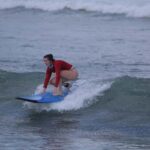
Learning to surf in Canggu is easier than it sounds. This 2-hour session blends 1-to-1 coaching with small-group energy (max 5), and it’s built for beginners through advanced riders. I like that the instructor’s approach is practical: check the forecast, tides, wind, then choose where you’ll actually get the best shots.
Two things I really like: first, the way beginner-to-advanced surfboards and coaching match your level instead of treating everyone the same. Second, the in-water guidance is focused and personal, with instructors like Curly (and instructors such as Galih/Galli and Jey in different sessions) helping you adjust what you do in real time. You’re not just getting directions—you’re getting corrections.
One consideration: you don’t need to be a pro swimmer, but you do need a working swimming and paddling ability. If you can’t swim, it’ll be hard to paddle a surfboard long enough to catch waves, even with great coaching.
In This Review
- Key things to know before you paddle out
- Why This Canggu Surf Lesson Works for All Levels
- Meeting at Canggu Beach: Quick Start, Less Guesswork
- The 2-Hour Flow: What Your Time Usually Looks Like
- Coaching in a Small Group: 1-to-1 Feel Without the Private Price Trap
- Gear and Included Extras: Less Hassle, More Wave Time
- Choosing the Right Spots: Canggu and Uluwatu Conditions
- Beginner Results: How First-Timers Actually Improve Here
- Intermediate and Advanced: Catch Better Waves, Not Just More Waves
- Price and Value: Why $36 for 2 Hours Can Be Smart
- The Human Side: Instructors Who Teach, Not Just Watch
- Who Should Book This (and Who Might Want a Different Option)
- FAQ
- FAQ
- How long is the Canggu surf lesson?
- How much does it cost?
- Is this lesson for beginners or all levels?
- How many people are in the group?
- Is the instruction available in English?
- What surf gear is included?
- Do I need to be a strong swimmer?
- Where do I meet for the lesson?
- Should You Book This Canggu Surf Lesson?
Key things to know before you paddle out
- Small group size (up to 5) so you get real attention, not a classroom vibe
- Level-matched surf coaching (beginner, intermediate, advanced) so the session stays useful
- Tide and wind checks before you go to improve your odds of catching waves
- Gear included: surfboard, rash vest, and sunscreen/zinc, plus water and a shower
- English instruction for clear explanations and safer technique tweaks
- Canggu and Uluwatu experience to help you ride the right conditions, not just the closest spot
Why This Canggu Surf Lesson Works for All Levels
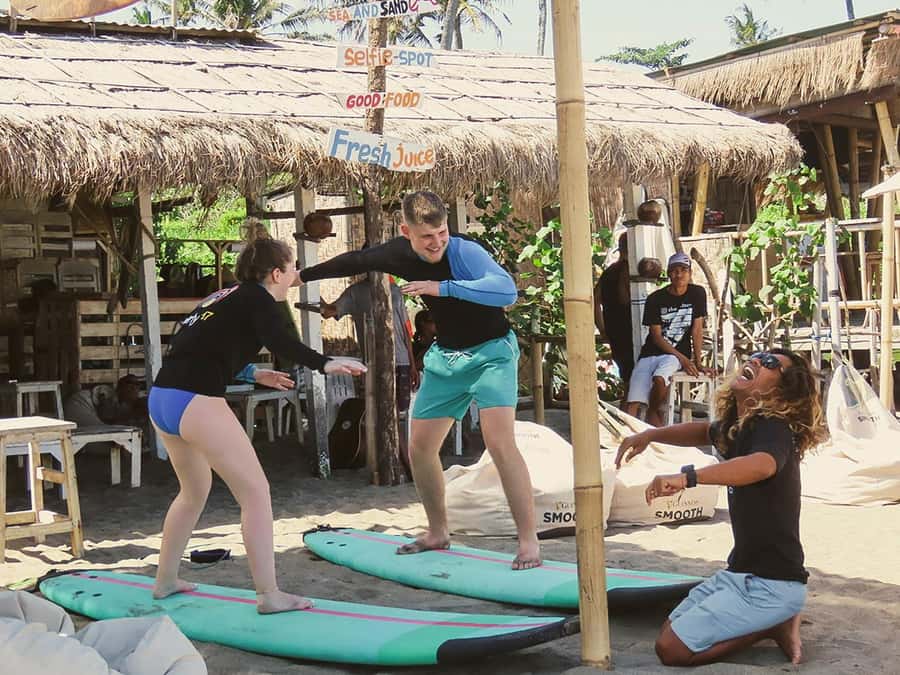
Canggu has a reputation. Some spots look friendly, then the ocean reminds you who’s boss. The value here is that the lesson doesn’t treat surfing like one size fits all. You’re coached based on what you can already do, and your surf time is aimed at improving—fast.
If you’re a true beginner, your goal is usually simple: learn how to get onto the board, paddle with purpose, pop up safely, and not waste the whole session face-first in the foam. If you’re intermediate, you’re probably ready to refine takeoff, positioning, and timing so you spend less time chasing and more time riding. If you’re advanced, you’ll want guidance on catching better and bigger waves, plus how to adjust when conditions change.
That mix is why the session stays interesting even if your friend is better than you. The coaching has range.
Also, the instructor culture matters. This is run as Curly 17 Surf School, and the vibe is “you belong here.” In multiple lessons, instructors like Curly are described as patient and calm with first-timers—exactly what you want when nerves are high and your legs are already questioning your life choices.
You can also read our reviews of more tours and experiences in Canggu.

Meeting at Canggu Beach: Quick Start, Less Guesswork
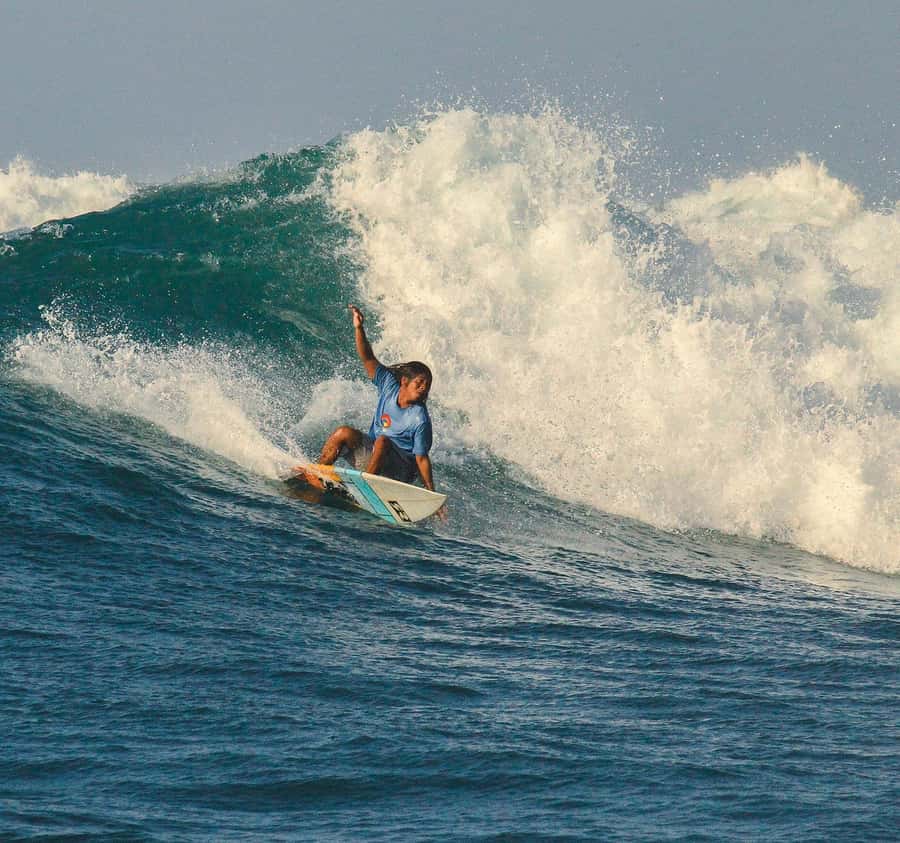
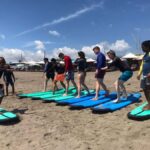
You meet at Canggu Beach. Before you even hit the sand, the instructor studies conditions—tides and wind and where the best area of the beach will be for your private or small-group lesson.
That prep is more than a detail. Surf lessons can fall apart when people scramble to find waves after everyone arrives. Here, the plan is to get you into the water at a time and spot that matches what you’re trying to do, which matters for both safety and progress.
Once you’re there, you’ll get set up with surf essentials. The included kit is a big convenience in Bali: surfboard, rash vest, sunscreen/zinc, water, and a shower afterward. That means you’re not juggling wet gear, guessing what board to rent, or spending your time negotiating rentals that may or may not fit your level.
The 2-Hour Flow: What Your Time Usually Looks Like
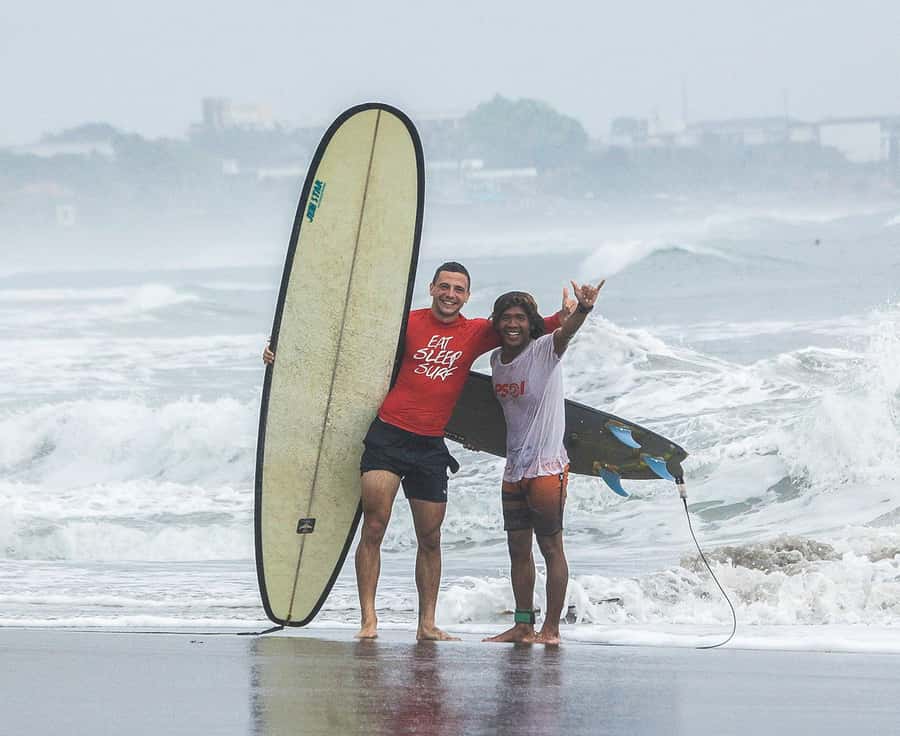
This is a 2-hour surf lesson, which is a sweet spot. Long enough to learn and repeat key moves, short enough that you can still enjoy the rest of your day in Canggu.
A typical flow looks like this:
- You meet at Canggu Beach and get briefed based on the day’s conditions.
- You’re equipped with a board and rash vest, plus sunscreen/zinc.
- You get coached on what to do in the lineup—paddling, positioning, and the takeoff you should use today.
- You go into the water with an instructor who stays focused on your technique.
- You finish with a shower so you’re not walking around Bali feeling like you just drank the ocean.
Since this lesson is designed for multiple levels, the coaching emphasis shifts. Beginners get more time on fundamentals and confidence. Intermediates spend more energy on improving timing and consistency. Advanced surfers can work on catching bigger waves when the conditions allow.
And yes, the waves and tide change day to day. The instructor builds the lesson around that reality, not around a fixed script.
Coaching in a Small Group: 1-to-1 Feel Without the Private Price Trap
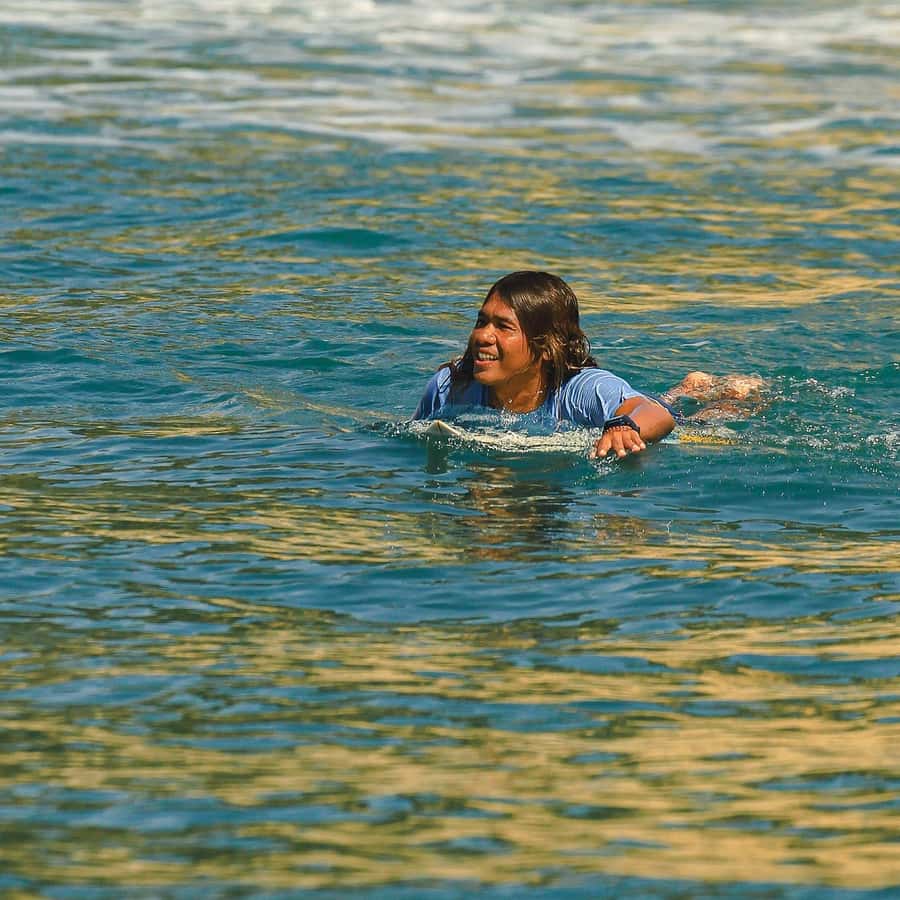
The highlights say 1-to-1 surf lesson, and they also mention a group up to 5. In practice, that usually means you still get close coaching even when there are multiple people.
For you, that matters because surfing is a “tiny feedback loop” sport. You do something—paddle, turn your board, aim, pop up—and then the ocean instantly tells you if it worked. If your instructor is far away or coaching five people at once, you lose the chance to correct the one thing that would’ve fixed your session.
The instructors mentioned in real lessons reinforce this style. Curly is repeatedly described as patient and guiding people step-by-step, including first-timers. Galih/Galli and Jey are also named as instructors who help pick the best waves and give specific improvements while you’re in the lineup.
If you want a session that feels personal but costs less than a true solo private lesson, a max-5 group is a strong middle ground.
Gear and Included Extras: Less Hassle, More Wave Time
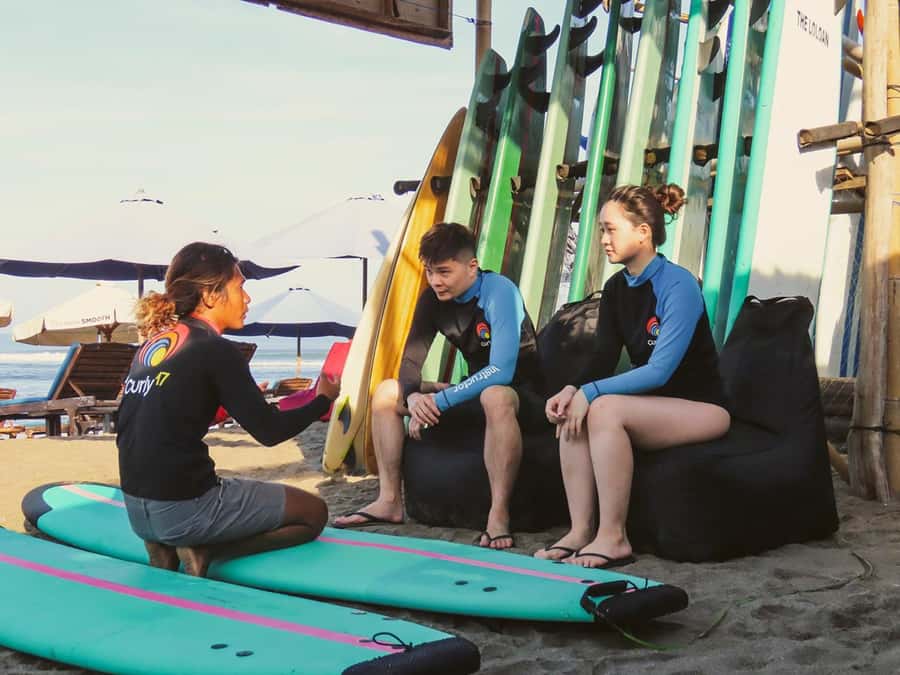
Bali surf lessons can become a mini-admin project: rent the board, find rash vests, buy sunscreen, bring water, then remember to shower afterward. This one cuts that friction.
Included are:
- Surfboard and surf equipment suited to your level
- Rash vest
- Sunscreen / Surfers Skin Zinc
- Water
- Shower
You can also bring your own gear or borrow theirs. The school offers surfboards across the spectrum, from beginner boards (more stable, easier to get moving) to boards for expert-level surfers. The point isn’t brand flex—it’s that the right board choice helps you spend more time practicing the skill you came for.
This is a small thing that adds up. If you’re a beginner on an advanced board, you’ll struggle for reasons that have nothing to do with technique. If you’re advanced on a beginner board, you might get less progression. Matching the board to your level keeps your learning efficient.



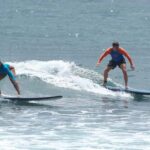


Choosing the Right Spots: Canggu and Uluwatu Conditions
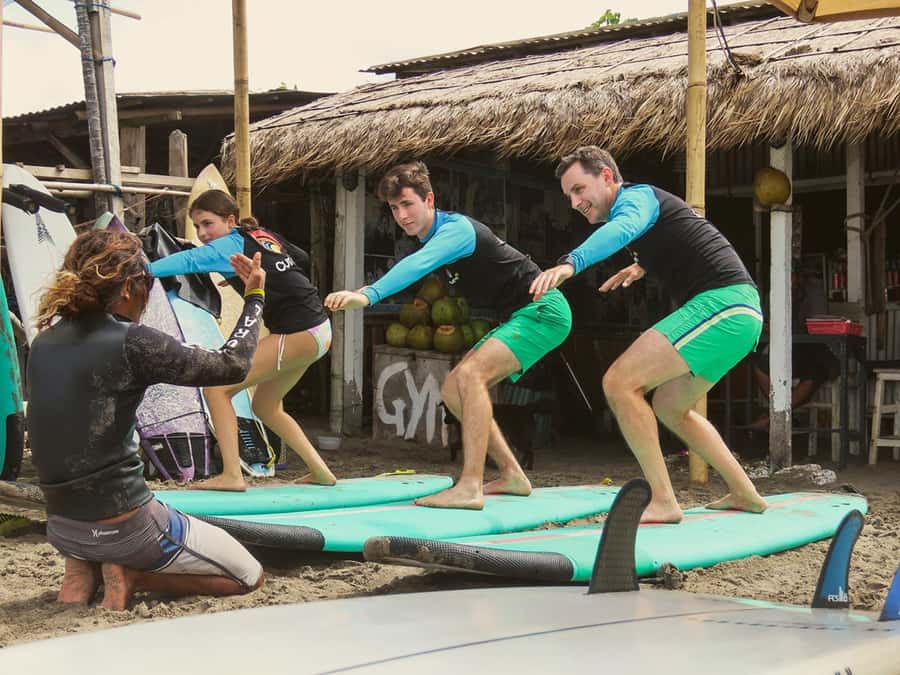
The school mentions coaching around Bali’s surf waves, including Canggu & Uluwatu. Even if you’re staying in one area, the key idea is that your instructor thinks in conditions, not just geography.
You’ll likely surf where the day’s wind, tide, and swell make sense for your ability. They study the forecast and decide the best time to surf—so you’re not paying money to stand around and wait for the ocean to behave.
One cool practical outcome: if you’re trying to catch better waves, your instructor can steer you toward the right peaks and angles for your current level. That’s where “I learned a lot” turns into “I actually stood up and rode.”
Beginner Results: How First-Timers Actually Improve Here
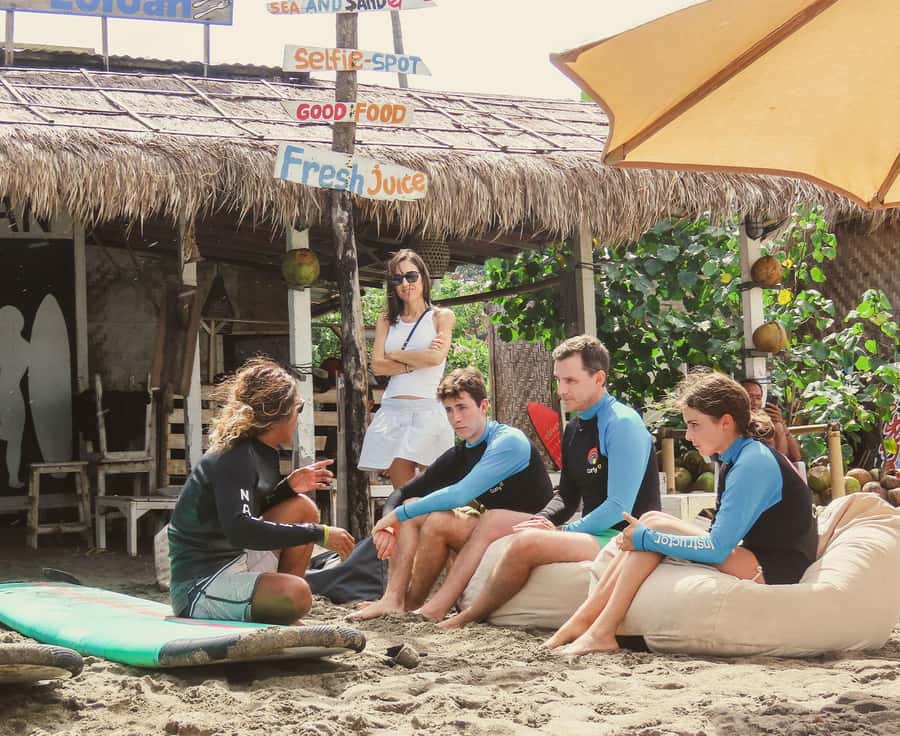
If you’ve never surfed, your biggest worry is often the same: will I be able to stand up?
This lesson is repeatedly described as working for absolute beginners. In multiple sessions, people talk about standing on the board during their first lesson. That doesn’t mean you’ll always stand instantly, but it does suggest the teaching method is built around success at your level—not ego on someone else’s schedule.
The patience piece is huge. Curly is repeatedly described as calming, supportive, and step-by-step. The coaching often feels like it’s aimed at confidence first, technique second, and speed third—because confidence makes you willing to try again.
If you’re a beginner reading this, here’s the real takeaway: choose a lesson where someone will actively guide you while you’re in the water. This one is set up that way, and you’ll get that direct attention in small groups.
Intermediate and Advanced: Catch Better Waves, Not Just More Waves
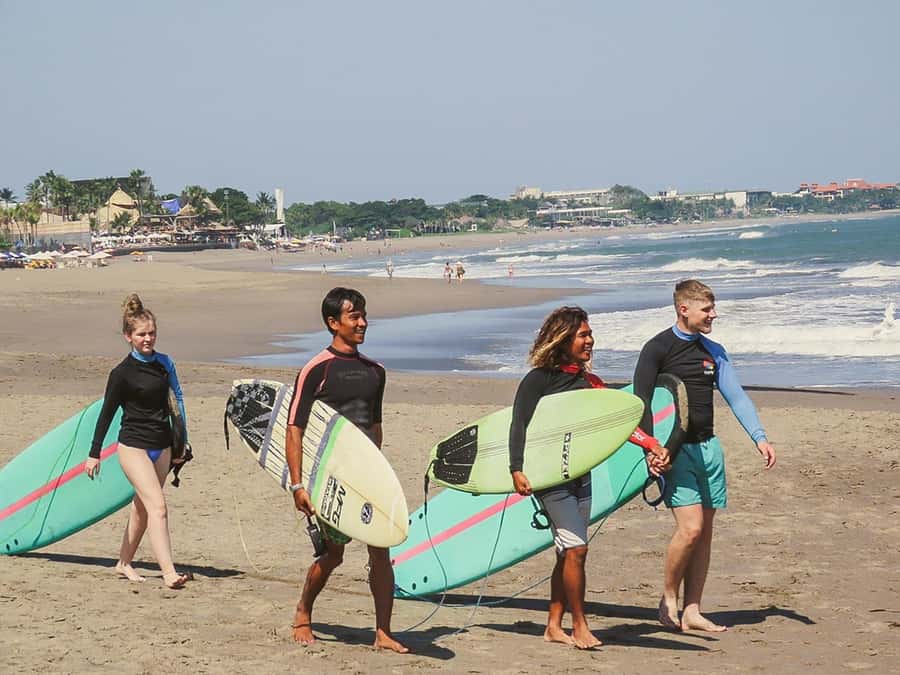
For intermediate surfers, “better” usually means consistency: more good takeoffs, fewer wipeouts, and rides that last longer than a few seconds. For advanced surfers, it can mean bigger, cleaner waves and smarter wave selection.
The school promises coverage across beginner to advanced, including improving your ability to catch better and bigger waves. That implies a lesson structure where your instruction adjusts to the day’s conditions and your skill.
Also, because they plan around tides, wind, and forecast, you’re more likely to surf in a window that suits your progression. It’s easy to get frustrated when conditions aren’t right. Here, the instructor’s job is to reduce that frustration by picking the best time and spot for your session.
Price and Value: Why $36 for 2 Hours Can Be Smart
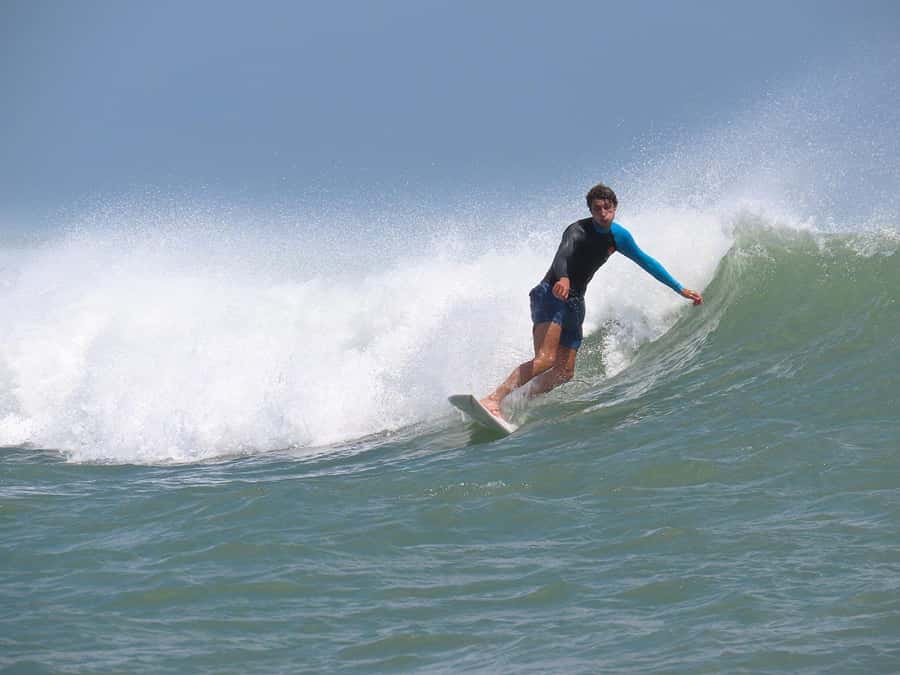
At $36 per person for 2 hours, this is priced in the “serious value” lane for Bali surf coaching—especially when you factor in equipment and basics like rash vest, sunscreen/zinc, water, and a shower.
Here’s how I think about it:
- If the lesson included only coaching, you’d still feel like it’s worth it if you’re progressing quickly.
- But here, the included gear reduces extra costs and wasted time.
- And small-group size matters for learning. Better feedback usually means you improve more per hour.
With a 4.9 rating from 44 reviews, this isn’t just a bargain price with shaky execution. The consistent theme is patient coaching and results—especially for first-timers.
The Human Side: Instructors Who Teach, Not Just Watch
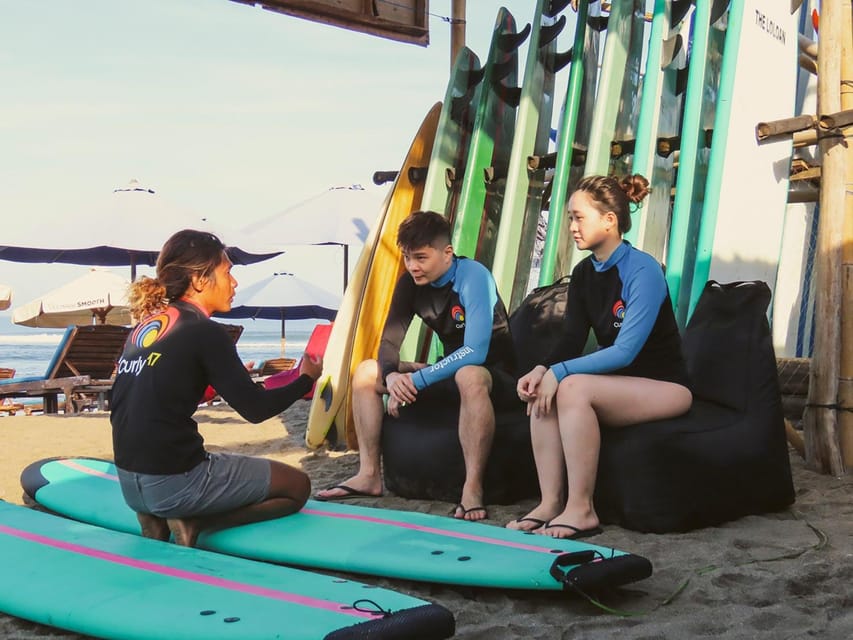
Surf instructors can fall into two camps: talk a lot and watch you struggle, or help you adjust in the moment. This school leans toward the second.
In different lessons, instructors are described as:
- Friendly and patient
- Focused on your technique in the water
- Able to explain clearly in English
- Supportive when you’re nervous
- Ready to reschedule when timing changes
One review also mentions that pictures are taken by someone who knows how to get good shots, with the option to buy them separately. That’s not a core part of the lesson (and you can skip it), but it’s a nice add-on if you want a souvenir that proves you got out there.
Who Should Book This (and Who Might Want a Different Option)
This is a great fit if:
- You want a beginner-to-advanced lesson and don’t want to waste time switching schools
- You prefer a small group (max 5) with real attention
- You care about English instruction and clear explanations
- You want equipment included so you show up and go
You might consider something else if:
- You don’t have enough swimming ability for paddling. This lesson explicitly notes that swimming ability matters because paddling is constant. If you can’t swim, you’ll likely struggle to paddle and catch waves.
- You want a very specific training style (like a heavy video-analysis coaching approach). The info provided doesn’t mention that type of format.
One more reality check: surf days depend on water conditions. The instructor handles that by checking forecast and conditions, but the ocean still sets the final terms.
FAQ
FAQ
How long is the Canggu surf lesson?
The lesson lasts 2 hours.
How much does it cost?
It’s priced at $36 per person.
Is this lesson for beginners or all levels?
It’s designed for all levels, including beginner, intermediate, and advanced surfers.
How many people are in the group?
The small-group format is limited to 5 participants.
Is the instruction available in English?
Yes, the instructor teaches in English.
What surf gear is included?
You get a surfboard and surf equipment, plus a rash vest. Sunscreen/zinc and water are included, and there is also a shower.
Do I need to be a strong swimmer?
You don’t have to be a pro-swimmer, but you do need a certain level of swimming ability. Surfing involves a lot of paddling, and without that ability, it will be difficult to catch waves.
Where do I meet for the lesson?
You meet at Canggu Beach.
Should You Book This Canggu Surf Lesson?
If you want an efficient, friendly way to learn surfing in Bali—without extra gear headaches—this is an easy yes. The coaching style is built for progress, including beginner confidence, and the small group size keeps attention close.
Book it if you can swim and you’re ready to learn in the water with direct feedback. If you want a lesson that adapts to your level and the day’s conditions, this one fits the bill.