Waking up for blue fire at 3 a.m. feels wild, but it works. This Mount Ijen trip is built around the one moment you can’t fake: the glow that shows up in the dark. I love the practical touches like a local guide and the included safety gear, because you’re not just dropped at a trailhead. The one thing to think about is crowding at the rim, since lots of people chase the same sunrise and flames.
You’ll start late at night from Bali, cross by ferry to Java, then hike up while East Java is still asleep. The payoff is twofold: the crater’s eerie turquoise lake at dawn and the chance to see sulfur-blue flames when visibility is low. Expect cold hands and cold air at the summit, so plan for layers.
One more reality check: the hike is rated moderately challenging, and the tour isn’t for everyone. If you have respiratory issues, altitude-sickness history, or lower fitness, you should skip this and look for an easier Bali volcano option.
In This Review
- Key things that make this Ijen trip work
- Why the Ijen blue fire is a time-sensitive spectacle
- Bali-to-Ijen timing: late pickup, ferry crossing, and sunrise rhythm
- The climb to the crater rim: what “moderately challenging” really means
- Blue flames and turquoise lake: the payoff moments you’ll plan around
- Safety gear, local guides, and what the small-group setup changes
- A real-world caution from past departures
- Getting the most value out of $133: what’s included and what you should budget
- What to bring (and what to skip) for a cold, dark crater morning
- Who should book this and who should skip Mount Ijen
- Should you book this Ijen crater blue fire tour?
- FAQ
- How long is the Ijen Crater to blue fire trip from Bali?
- What time do you get picked up from Bali?
- Do I need to be at the crater before sunrise?
- What is included in the price?
- What should I bring for the hike?
- Is there cold weather at the summit?
- How big is the group?
- Who shouldn’t take this tour?
Key things that make this Ijen trip work
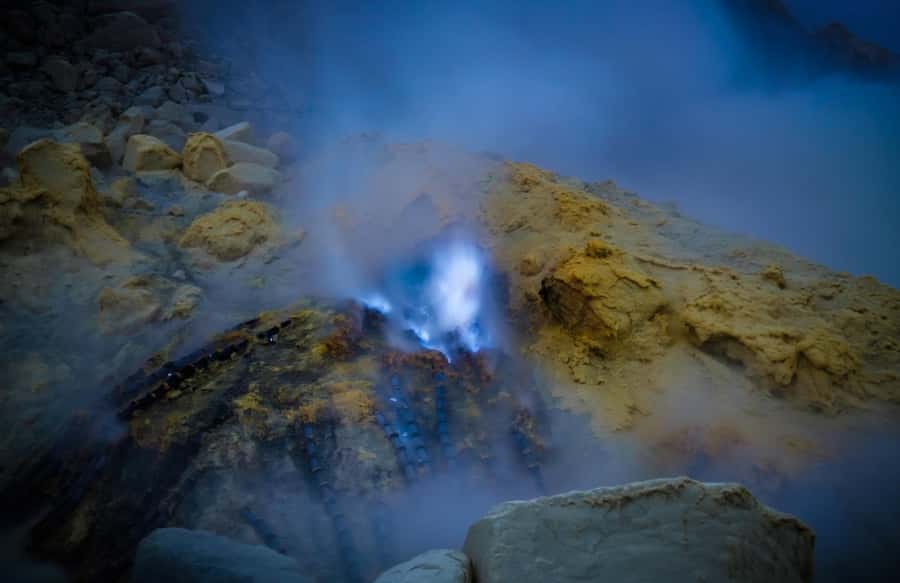
- Blue fire timing: the flames are visible only in darkness, so the schedule is built around a pre-dawn climb
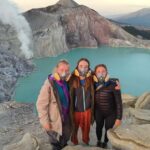
- Real crater visuals: expect the turquoise crater lake at sunrise and dramatic volcanic scenery from the rim
- Safety kit included: gas mask and flashlight are part of the package, not add-ons
- Miners on the route: you may see sulfur miners carrying heavy loads, giving context for the volcano’s human side
- Small group size: limited to 15 participants, which helps on tight trail sections
- You’re guided in English: a live local trekking guide leads the hike and briefing
Why the Ijen blue fire is a time-sensitive spectacle
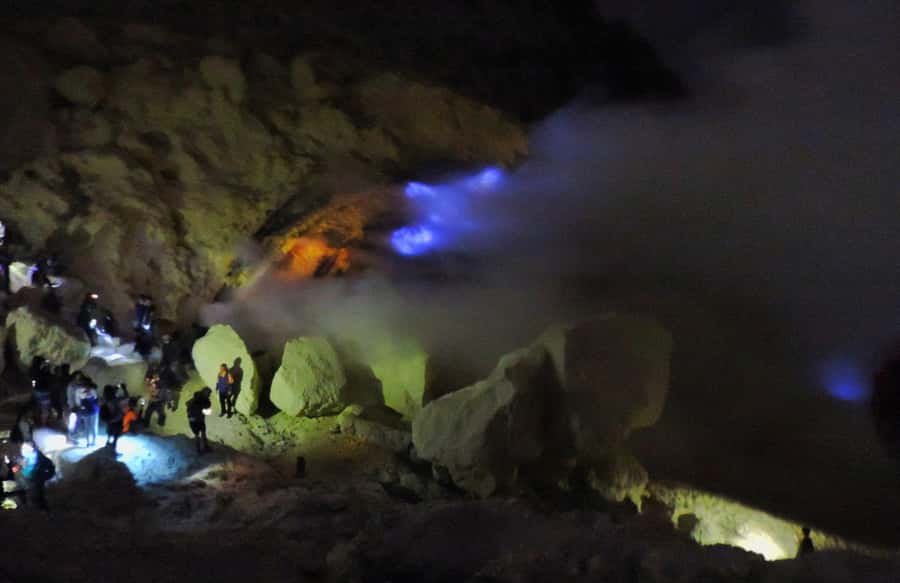
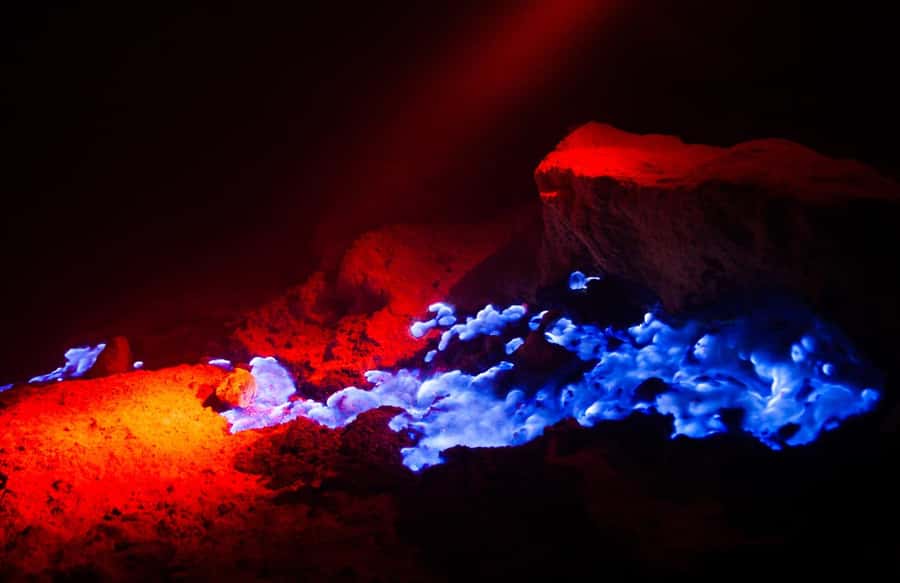
If you’ve seen photos, you know why Mount Ijen draws crowds. The blue flames near the crater rim are the star attraction, and the key point is simple: they’re visible in the dark. That’s why this isn’t a casual morning excursion. You’re up before sunrise, hiking when the sky is still black and the trail is quiet enough to focus.
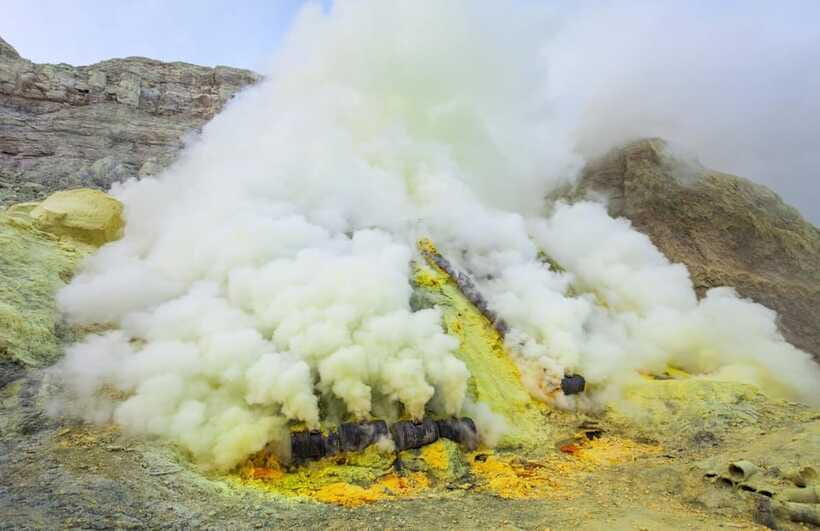
The rest of the experience isn’t just a wait-and-hope moment. As dawn arrives, the views shift. You’ll likely catch the turquoise crater lake as the light changes, plus that otherworldly volcanic setting around the rim. The crater lake is often described as highly acidic, and the tour’s design helps you see it in the moment when it looks most dramatic.
Also, you’re hiking at altitude. The summit area sits around 2,799 meters (9,183 feet). Even if you’re fit, the cold and thin-air feel can slow your pace, so the guide matters. A good leader keeps the group moving at a sustainable rhythm and explains what to expect so you’re not guessing in low light.
You can also read our reviews of more tours and experiences in Indonesia.
Bali-to-Ijen timing: late pickup, ferry crossing, and sunrise rhythm
This tour runs long, about 22 hours end to end. You’re doing it on purpose: a pre-dawn hike from East Java can’t happen without a ferry and a late-night drive.
Plan on this general rhythm:
- You get picked up late evening in Bali, with pickup times depending on where you’re staying (the window given is roughly 7:00 to 10:00 pm).
- You drive 3–4 hours to Gilimanuk Harbor on Bali’s west coast.
- Between 12:00 am and 1:00 am, you check in for the ferry.
- The Bali Strait crossing takes about 45 minutes to 1 hour, landing you in Ketapang (East Java).
- Then you continue by car to Paltuding (the Ijen basecamp area), arriving around 1:00 to 2:00 am.
After that, the hike schedule takes over. There’s a coffee break and safety briefing before you head uphill. You start the climb around 2:30 am, reach the crater rim roughly 1.5 to 2 hours later, and aim to experience the blue flames in the dark. As morning brightens, you’ll enjoy sunrise views and the crater lake from the rim.
One detail I appreciate in this timing plan: breakfast isn’t “later when you can.” You get a light breakfast at Paltuding after descending, so you’re not running on pure adrenaline and cold air for the whole day.
The climb to the crater rim: what “moderately challenging” really means
The hike to Ijen is described as moderately challenging, and the height does most of the work. The summit zone can feel very cold before sunrise, with temperatures around 5°C to 10°C (41°F to 50°F) reported for the summit area.
In practice, that means:
- Your breathing may feel faster than usual.
- Your pace matters more than speed.
- Warm layers beat one bulky jacket.
- Hands get numb quickly, especially if you stop for photos.
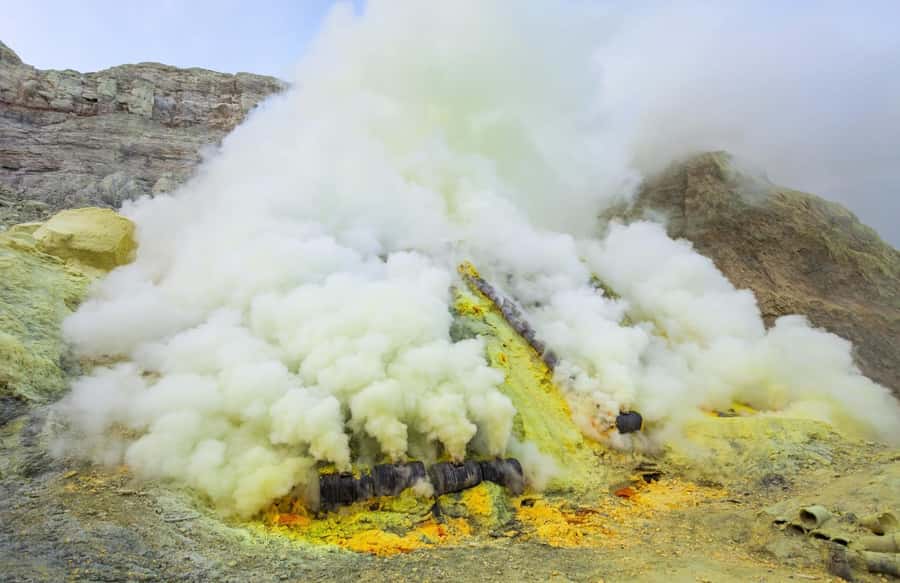
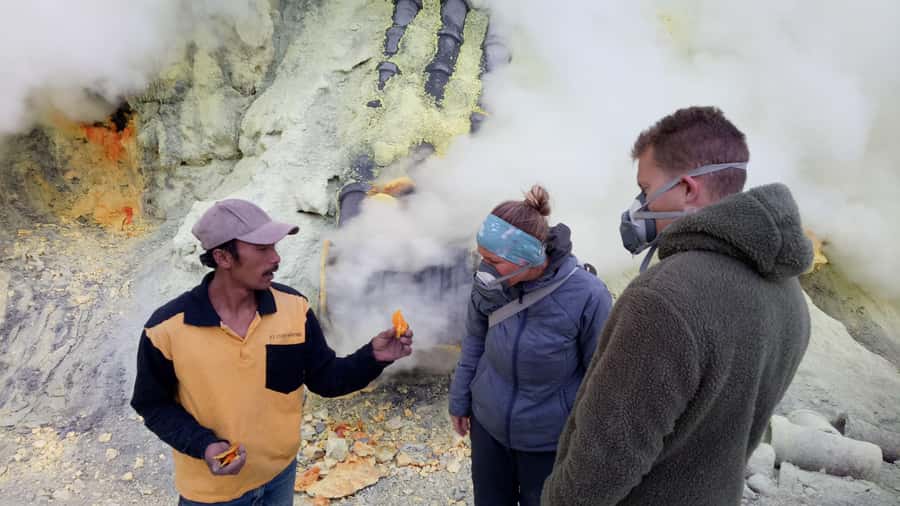
The route also comes with visual context. Along the way you may encounter sulfur miners carrying heavy loads from the crater. It’s not just a sightseeing hike; it’s a working volcanic landscape. Seeing miners up close helps you understand why a gas mask is included and why safety guidance is taken seriously.
The crater rim hike is long enough to feel like a commitment, but the tour is built around it. You’re not stuck wandering. The guide leads you to the right spots for the dark-to-dawn transition, then you head back down in time for breakfast and ferry return.
Blue flames and turquoise lake: the payoff moments you’ll plan around
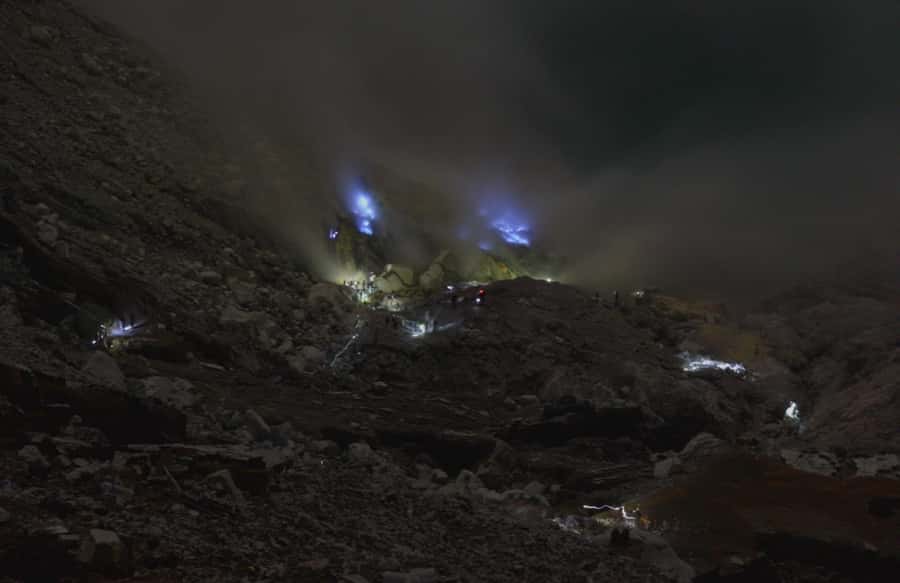
This is the part you came for. The schedule targets the window when the blue flames are visible near the crater rim, described as appearing in darkness. So you’ll arrive in time to watch the glow before the sky lightens.
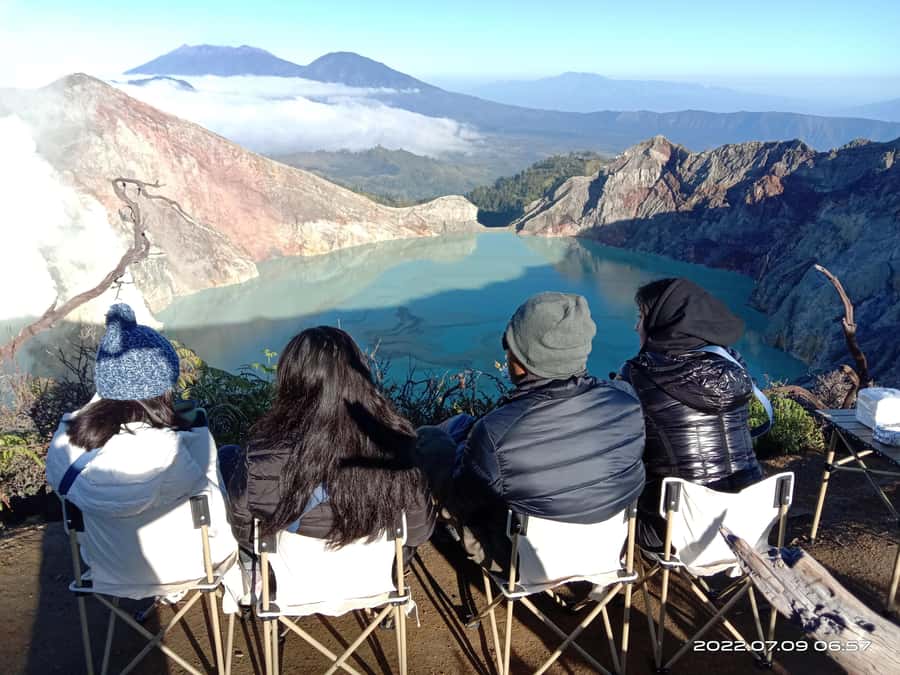
Then dawn changes everything. As sunrise approaches, the crater lake often looks like a striking turquoise bowl below the rim. The tour’s flow matters here: you’re positioned to see the contrast between dark volcanic stone, the glow near the sulfur areas, and the bright turquoise water once the light comes in.
You’ll also likely spend time capturing photos, watching the lake, and taking in the crater views. This isn’t a quick “walk-by.” It’s more like a guided observation stop with a clear purpose: see the flames, then shift your focus to sunrise and the lake.
Small note on expectations: you may share the rim with other hikers. One traveler flagged that there were quite a lot of tourists, which can make the photo moments a little tight. If you want a clean shot, be patient and work with your group so you don’t block others.
Safety gear, local guides, and what the small-group setup changes
The tour includes gas mask and flashlight plus bottled water and entrance fees. That matters because Mount Ijen is cold, dark, and chemically intense near the crater. You don’t want to improvise gear in the middle of the night.
The guide role is more than talking points. A live English-speaking trekking guide supports you with:
- a safety briefing before you climb,
- pacing through rugged paths,
- and guidance on where to stand as light levels change.
People have mentioned strong guide experiences. One verified booking noted a guide named Mufi as sweet and confident in navigating the route. Another mentioned a driver named Kymon who was genuine and shared personal insights into daily life in Indonesia while handling transport between stops.
Group size can also change how the hike feels. This is limited to 15 participants, which is helpful when paths narrow or when you need to stop frequently for safety checks and crater observations. With a larger crowd, you’d spend more time waiting. With a smaller group, you usually keep better flow.
A real-world caution from past departures
Two small issues came up in different experiences:
- One person said the driver collected a ferry ticket charge even though ferry tickets were listed as included.
- Another person said a guide requested about 10 dollars for a medical check at entry, even though it was described as included in the voucher.
You can’t control how every pickup or on-the-ground situation gets handled, but you can protect yourself. Before boarding, I’d confirm the ferry charge status with your driver and keep your voucher details visible. If anyone asks for extra cash, ask what it covers and compare it to what your booking already includes.
Getting the most value out of $133: what’s included and what you should budget
At $133 per person, the math looks better once you see what’s part of the package. You’re paying for a lot of moving parts that are hard to coordinate yourself:
- private round-trip transportation from Bali,
- ferry crossing tickets to Java,
- a professional local trekking guide,
- safety equipment (gas mask, flashlight),
- entrance fees to the Ijen crater,
- bottled water,
- a light breakfast after the trek,
- hotel pickup and drop-off,
- and insurance coverage.
That’s why this feels less like a “day trip” and more like a carefully scheduled overnight operation. If you tried to DIY it, you’d still face ferry timing, night transfers, gear prep, and a local guide’s knowledge of the best crater-rim viewing plan. Paying for the structure can be worth it, especially when you’re hiking in the dark and cold.
What’s not included is mostly personal spending. So budget for snacks you bring yourself if you want more than the light breakfast. Also consider the chance you’ll want extra drinks once you’re back from the hike, since you’re traveling for many hours.
What to bring (and what to skip) for a cold, dark crater morning
You’ll be outdoors in near-darkness, at altitude, and in cool temperatures. Pack like it’s an early-morning hike, not a beach day.
Bring:
- camera
- snacks
- water (even though bottled water is included, having more is handy)
- comfortable clothes
- flashlight
- charged smartphone
Dress in layers. Summit temperatures around 5–10°C mean a base layer, warm mid-layer, and a windproof outer layer can make the difference between “fine” and “miserable.” Closed shoes with good grip are smart on uneven volcanic ground.
Not allowed includes smoking and alcohol/drugs. That’s typical for safety-heavy outdoor tours.
If you get cold fast, plan to keep your core warm and your hands protected. You’ll be waiting in place near dawn as you watch the lake light up and the flames (when visible) do their thing.
Who should book this and who should skip Mount Ijen
This tour has clear limits. It’s not suitable for:
- pregnant women
- people with respiratory issues
- people with altitude sickness
- people with low fitness
- people over 95 years
- people over 70 years
Even if you’re healthy, be honest about the night hike and the cold. You’re going to move uphill in low light and return before mid-day. If you tend to struggle with stairs, steep trails, or cold outdoor waits, you’ll feel it here.
If you do fit the profile, this tour is ideal for you if:
- you want the blue fire and understand it requires darkness timing,
- you like sunrise moments tied to a specific natural phenomenon,
- and you’re comfortable hiking at altitude with layers and safety gear.
It’s also a good match for people who appreciate local context. The sulfur miners you may pass aren’t a staged backdrop. It’s real and it adds meaning to what you’re seeing.
Should you book this Ijen crater blue fire tour?
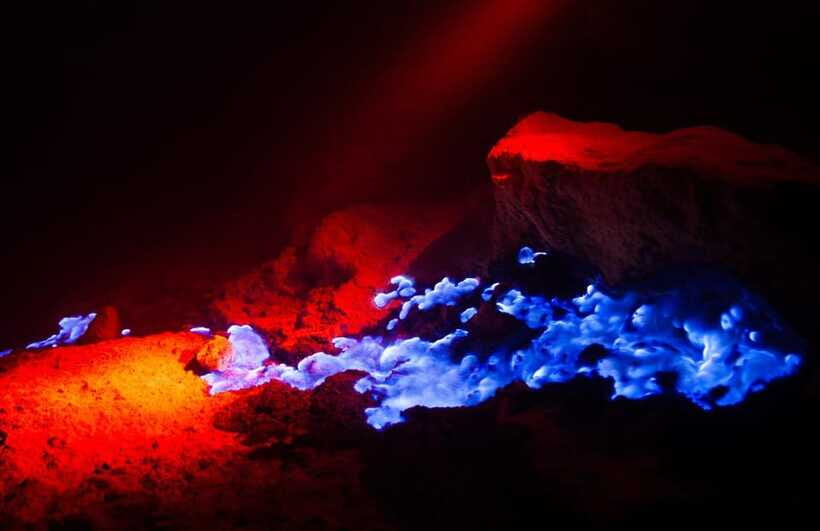
Book it if you want the most focused way to see Mount Ijen’s two big moments: blue flames in darkness and sunrise over the turquoise crater lake. The included guide, safety gear, and long schedule management are the real value here.
Hold off or ask extra questions before committing if you’re worried about cold-night hikes, low fitness, or any health risk related to altitude or breathing. And based on past experiences, I’d also double-check that ferry ticket charges stay consistent with what’s included, and that any medical-entry requests match your voucher coverage.
If you’re ready for a late-night start and a serious pre-dawn hike, this is one of those rare tours where the timing is the product. You’re not just visiting a volcano. You’re showing up for a moment that only happens when it’s dark.
FAQ
How long is the Ijen Crater to blue fire trip from Bali?
The total duration is listed as 22 hours.
What time do you get picked up from Bali?
Pickup times vary by location, typically in the 7:00 to 10:00 pm window.
Do I need to be at the crater before sunrise?
Yes. The blue flames are visible only in the dark, and the schedule is set up so you reach the crater rim before dawn.
What is included in the price?
Included items are private round-trip transportation, ferry crossing tickets, a professional local trekking guide, gas mask and flashlight, entrance fees, light breakfast, bottled water, hotel pickup/drop-off, and insurance coverage.
What should I bring for the hike?
Bring a camera, snacks, water, comfortable clothing, a flashlight, and a charged smartphone.
Is there cold weather at the summit?
Yes. Temperatures at the summit are reported around 5°C to 10°C, so layered clothing is advised.
How big is the group?
The tour is described as a small group, limited to 15 participants.
Who shouldn’t take this tour?
It is not suitable for pregnant women, people with respiratory issues, people with altitude sickness, people with low fitness, and people over 70 (with a higher limit listed at over 95 years).