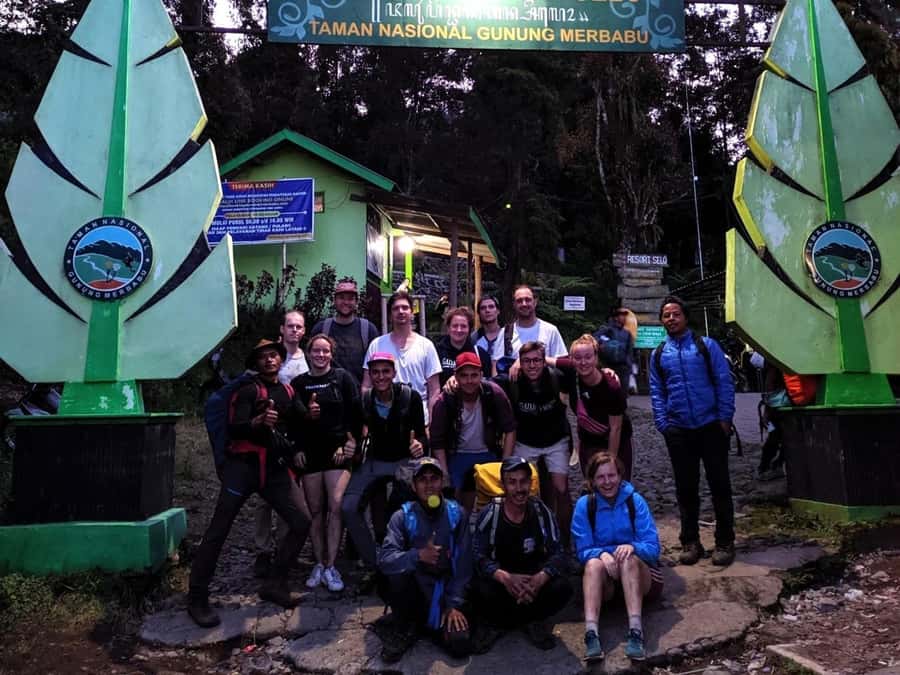
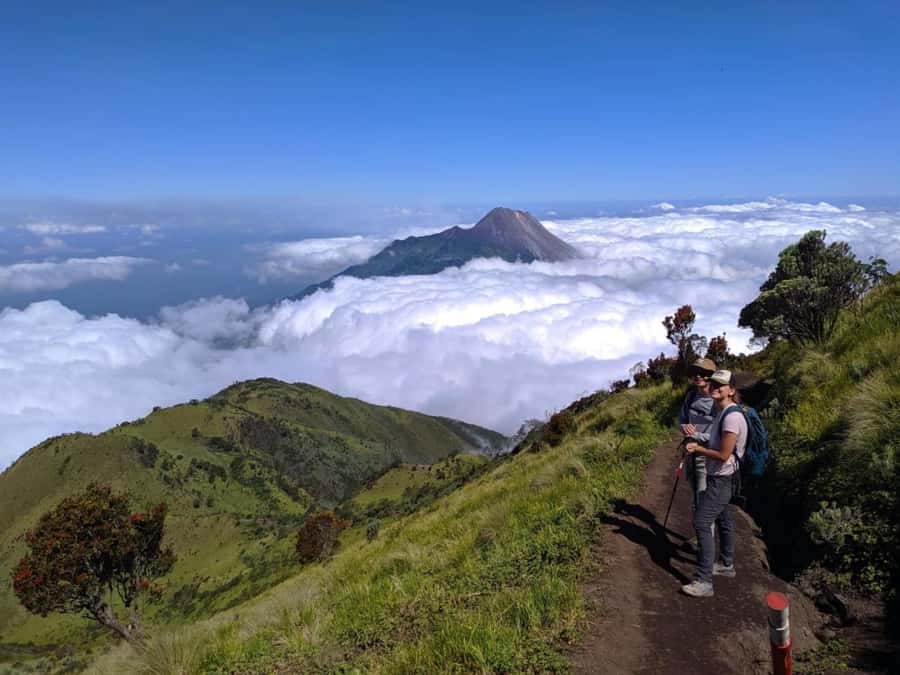
Merbabu is a long day, in the best way. This one-day hike from Yogyakarta (or Borobudur) walks you from tropical forest up into cooler air and volcanic viewpoints over 3,142m. You’re also close enough to spot Merapi Volcano, which adds extra payoff beyond the summit stamp.
What I like most is the support. In the feedback for this trip, guides such as Joko, Nico, Suyoko, and Ramli get praised for pace, safety, and being comfortable on uneven ground. That matters on a medium-difficulty climb where you want someone who can read the trail and manage the slow-but-steady rhythm.
The second big win is how easy the logistics feel. Drivers like Ferry, Dian, and Cahyo are repeatedly described as on-time and friendly, so the day doesn’t feel like you’re doing a scavenger hunt for the next step. One consideration: the Merbabu guide and entry ticket fee is not included and must be paid separately on the day of the tour (cash in IDR or USD), and you’ll need a passport copy for the ticket.
In This Review
- Key things to know before you go
- Why Mount Merbabu is a perfect one-day volcano fix from Yogyakarta
- The day at a glance: pickup times, drive, and the altitude rhythm
- Selo Village to Post 4: your tropical forest ascent
- Post 4 onward: when the trail opens into green savannas
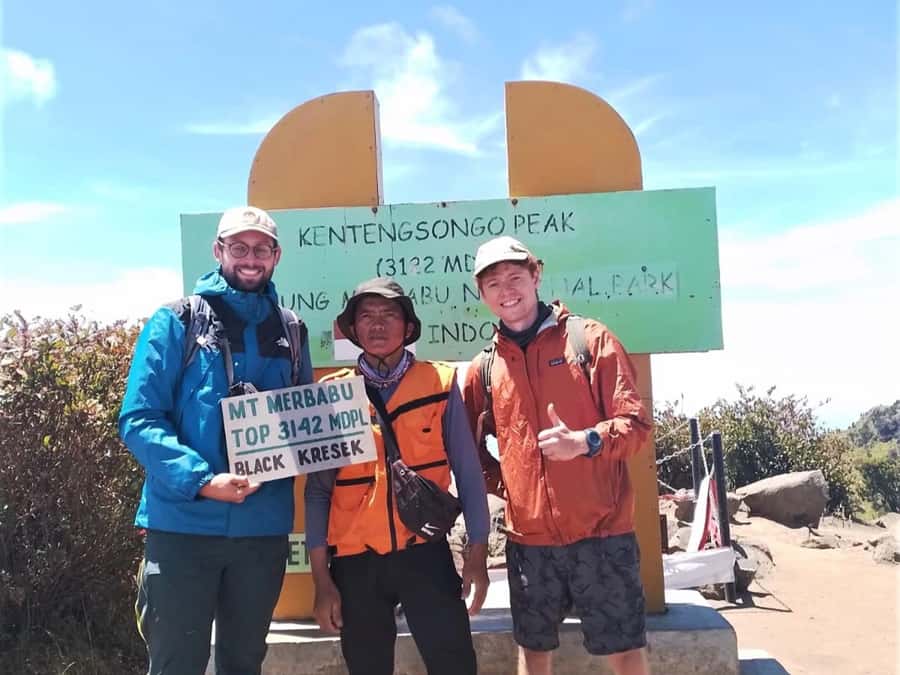
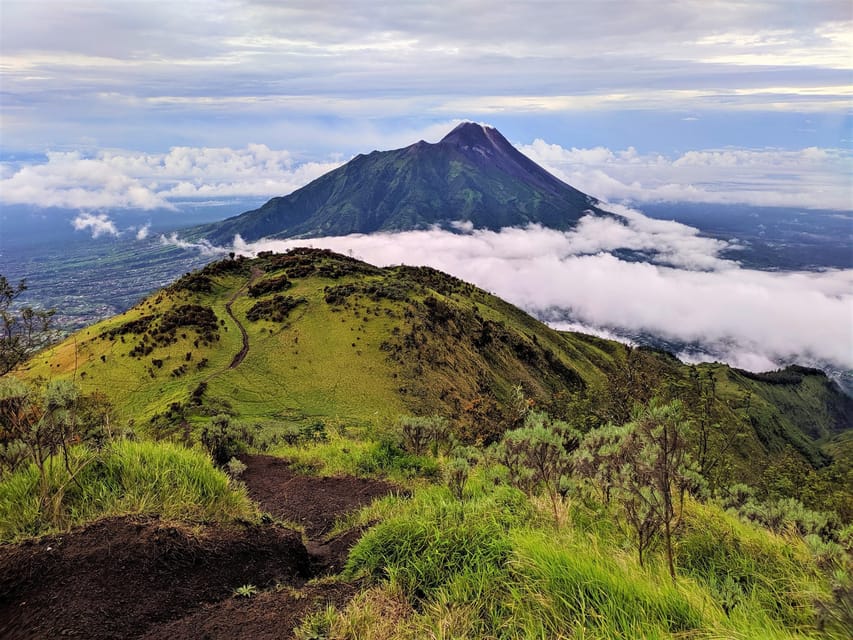
- Reaching 3,142m: summit break and the Merapi view from close by
- The descent is the real test of your ankles and shoes
- What you’re paying for: value, transport, and the guide you get
- What to pack for Merbabu’s changing weather
- Who should book this, and who should skip it
- Should you book the one-day Mount Merbabu hike from Yogyakarta?
- FAQ
- What time does the tour start from Yogyakarta or the Borobudur area?
- How long is the hike on Mount Merbabu?
- Where do you start the hike?
- What’s the summit altitude of Mount Merbabu on this route?
- Are hiking poles and raincoat included?
- Is a driver and guide included?
- What is the extra fee for the Merbabu guide and entry ticket?
- How do you pay the Merbabu guide and entry ticket fee?
- What do I need to bring for the hike?
- Are drones allowed?
Key things to know before you go
- Door-to-door pickup in the Yogyakarta and Borobudur area means less time fighting transport and more time on the mountain.
- Medium difficulty, long day: plan for roughly 5–6 hours up, then about 4 hours down.
- Big scenery change: forest gives way to cooler air and green savannas by mid-route.
- Summit altitude matters: you’ll reach 3,142m and get major volcanic views, including Merapi from close by.
- Slippery descent risk: good traction shoes and trekking poles can make the downhill feel calmer.
- Budget the ticket fee: Merbabu guide + entry ticket is an extra IDR 800,000 per person.
Why Mount Merbabu is a perfect one-day volcano fix from Yogyakarta
If you want a real Indonesian mountain day without committing to overnight logistics, Merbabu is a strong choice. You’re not just walking in one scenery type. The route transitions from steamy tropical forest to open green savanna, so the hike never feels repetitive.
This is also a mountain that rewards you with scale. At the summit, the view is the main event: Java’s volcanic terrain stretches out, and Merapi Volcano shows up from a relatively short distance. It’s one of those panoramas that makes you stop talking and just stare.
And because you’re doing it in a single push, the experience feels focused. The full day is built around the climb—wake early, drive up, hike, descend, and get back in time to sleep like a champion.
You can also read our reviews of more tours and experiences in Yogyakarta.

The day at a glance: pickup times, drive, and the altitude rhythm
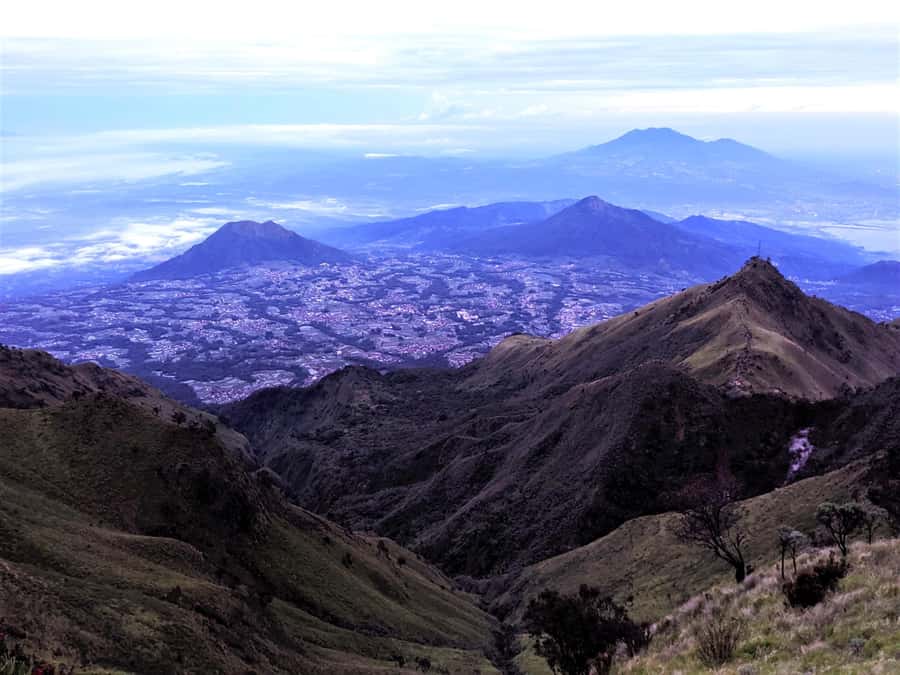
You start early, with pickup around 05:30 AM from the Yogyakarta City and Borobudur area. The van ride is about 2 hours to reach the trail-side starting point in Selo Village, which sits at 1,836m.
Once you arrive, you’ll take a short break before the hike begins. From there, your day follows a clear arc: a steady ascent for about half the trip, a summit break, then a return descent that takes close to another half.
The timing works like this: you typically hike around 5–6 hours from the base area up to the summit, then about 4 hours to descend back to the same basecamp. By late afternoon, you’re back at the starting area, and the van ride brings you home.
Altitudes are part of why this feels like a true mountain hike, not just a walk. You’ll hit Post 4 at about 2,770m, and from that point the environment starts to shift toward savanna and cooler air.
Selo Village to Post 4: your tropical forest ascent
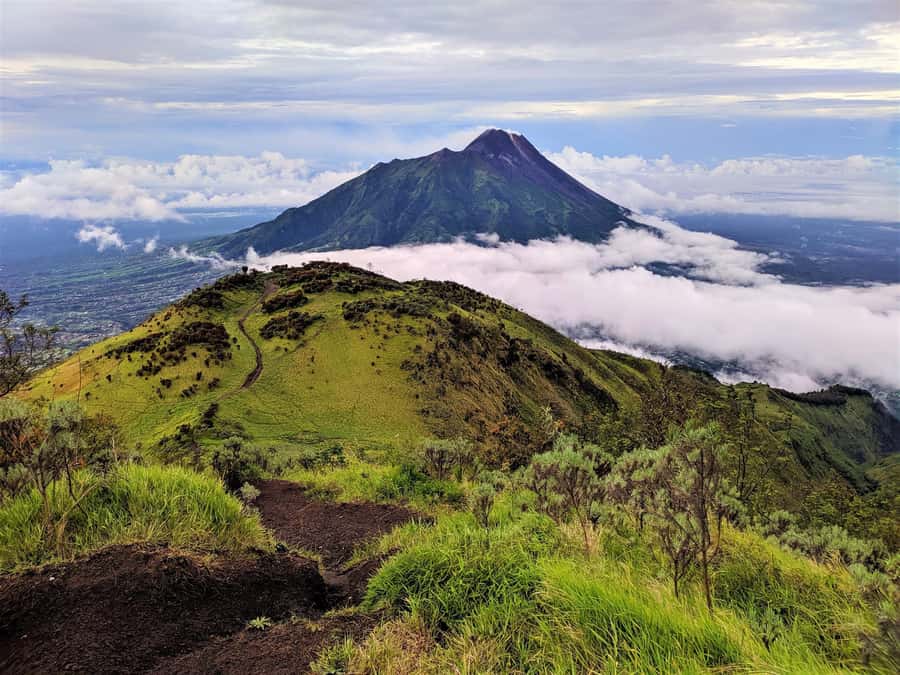
The first major section is the climb through lush tropical forest. Expect a lot of uphill effort right from the start, with the kind of uneven footing that makes trekking poles useful and shoes non-negotiable.
This is where wildlife moments can happen. You might see monkeys or colorful butterflies, but don’t plan your whole day around it. Even so, the forest keeps the hike interesting while your legs do the work.
The route is described as challenging enough to require medium fitness. That’s important: you should be prepared for sustained uphill. In one of the shared experiences, the ascent took roughly 3 hours for that group, but the trip data frames the overall climb to the summit as 5–6 hours, so treat your own timing as personal and plan to move at your own pace.
When you reach Post 4 (around 2,770m), that’s a mental checkpoint. You’re not at the summit yet, but you’re past the steepest “wall” of the day for many hikers, and you can start looking forward to the scenery shift.
Post 4 onward: when the trail opens into green savannas
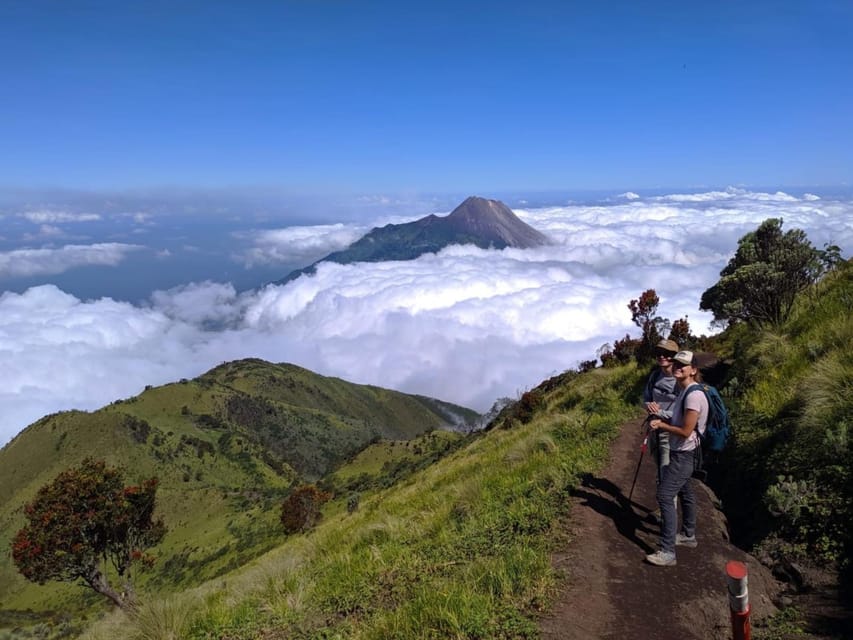
After Post 4, the forest gives way to green savannas. This is more than a scenery swap—it changes how the hike feels. Open terrain tends to be less humid and can feel cooler as you gain altitude.
You’ll also notice the vegetation becoming more spread out, and the walking rhythm often becomes a little different. On some days, trail conditions can be worn, and the path can look eroded in sections. That’s the kind of detail that changes how you walk: shorter steps, careful foot placement, and using poles on unstable ground.
If you like hiking days where the “middle section” is just as scenic as the start, this is the part that usually delivers. The savanna zone brings big sky and clear sightlines, which is a nice contrast after all the dense green.
And since you’re already tired by now, the cooler air and open views can be a morale boost. It’s when you start feeling like the summit is actually realistic, not just a dream.
Reaching 3,142m: summit break and the Merapi view from close by
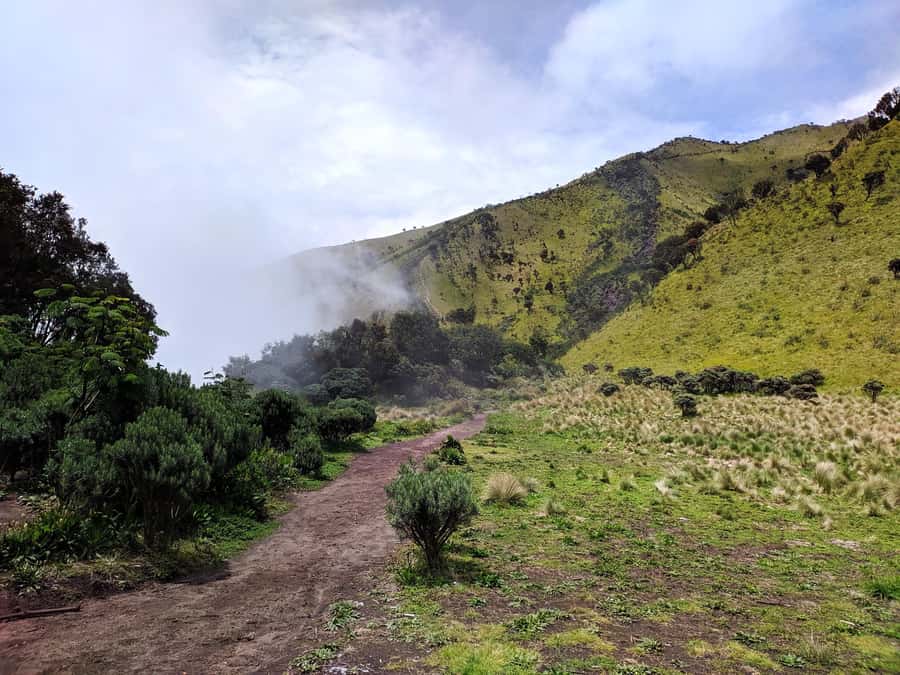
Your destination is the summit of Mount Merbabu at 3,142m. The summit is where the day earns its name as a “soul-stirring” hike, because you’re no longer working hard just to finish—you’re working hard to get to the viewpoint.
You should plan a real break when you get there. Take time to soak in the volcanic scenery stretching across Java, and don’t rush past the Merapi sighting. The trip highlights mention that Merapi Volcano can be seen from a short distance, so you’ll likely get a clear, meaningful view rather than only a vague silhouette.
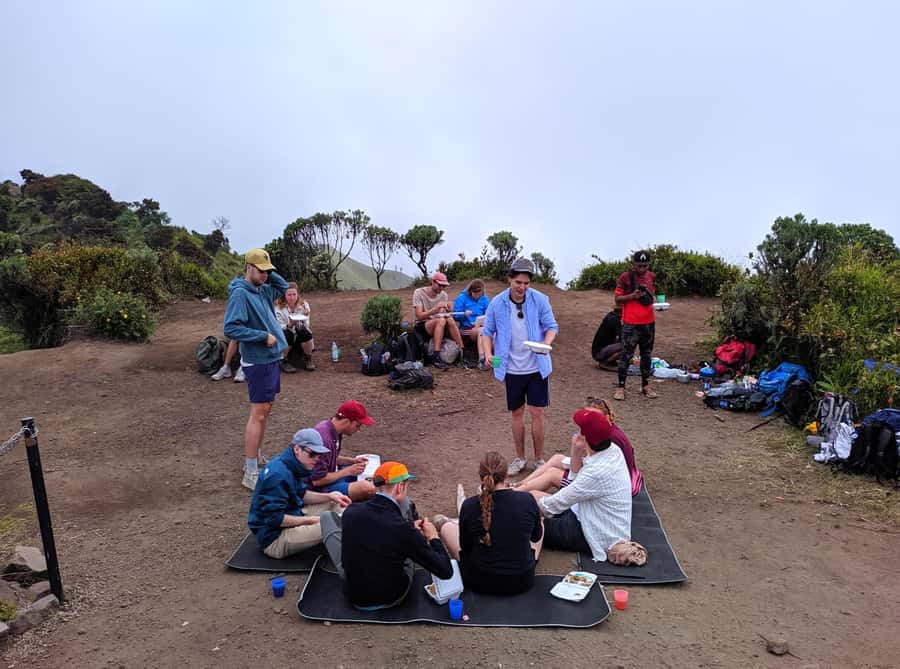
One practical detail: at the summit, you may be able to enjoy a simple meal provided during the day’s hike, such as rice and chicken mentioned in one experience. Don’t assume it will be the same for every group, but do expect that you’ll have time to eat and reset before heading down.
Also, be aware of summit conditions. Even on good days, higher altitude can feel colder than the base area. Bring a windbreaker and use it when the breeze kicks up.

The descent is the real test of your ankles and shoes
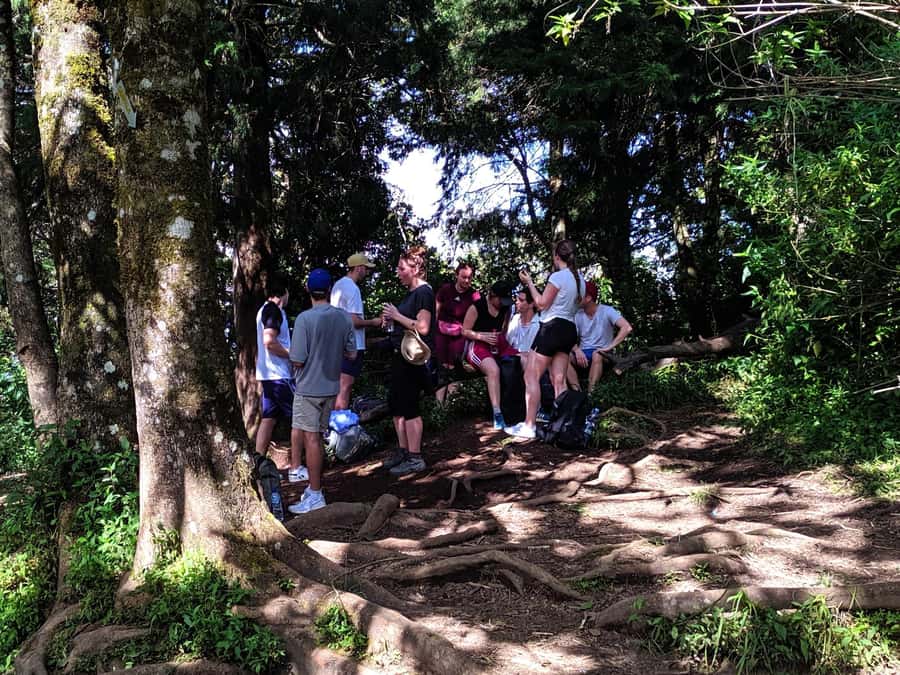
Going down is often described as more pleasant than the climb—until the trail turns slick. The descent on Merbabu is done via the same route, and the downhill sections can be glossy and slippery, especially if the ground is damp.
This is where good traction matters. I strongly recommend hiking shoes with grip and a closed, secure fit. Trekking poles help here too, because they reduce the strain on knees and help with balance.
One shared experience called out the usefulness of traction shoes because the descent can get very slippery. Another mentioned erosion on parts of the trail. Put those together and you get a simple rule: treat the downhill like a route with obstacles, not like an easy victory lap.
Time-wise, plan on about 4 hours to descend to the basecamp. The good news is that once you’re on the way down, you’re watching the same scenery return—forest to savanna to forest—so the hike doesn’t feel like you’re going through a tunnel.
What you’re paying for: value, transport, and the guide you get
The listed price is $61 per person, and that number covers a lot of the “friction” that can ruin hiking plans. You get a private air-conditioned vehicle, hotel pickup and drop-off, and an English-speaking driver. You also get hiking poles and a raincoat, plus mineral water and a packed lunch.
That’s good value if you’re staying in Yogyakarta or near Borobudur and want to avoid figuring out transport to Selo Village on your own. The early start is easier when someone is already handling the driving.
Two extra things to budget for, though. The Merbabu guide and entry ticket fee (IDR 800,000 per person) is not included. You pay that separately on the day of the tour in cash in IDR or USD. Also, the ticket requires a copy of everyone’s passport, so plan ahead and keep a digital scan ready.
Language support is another practical plus. You’ll have a live hiking guide with English, Malay, and Indonesian. In the feedback, multiple guides are highlighted as friendly and supportive, including Joko, Nico, Suyoko, and Ramli. That gives you a clue about what kind of experience to expect: someone who can explain the route and adjust to your pace.
What to pack for Merbabu’s changing weather
Merbabu’s weather can shift as you climb, even in a one-day window. Bring items that handle wind and cool air near the summit.
Pack these:
- Windbreaker (for higher, cooler sections)
- Hat (sun and glare on open savanna)
- Hiking shoes with good grip (descent matters)
- Hiking pants (comfort and protection)
- Personal medication (bring what you need for the full day)
What’s included:
- Hiking poles
- Raincoat
- Water and packed lunch
One rule to remember: drones are not allowed. If you’re thinking of filming from above, you’ll need to rethink that for this outing.
Who should book this, and who should skip it
This is classed as a medium difficulty hike. That’s true in the sense that the day is long and includes real uphill work, not just light walking. You’ll spend substantial time climbing toward 3,142m, then do a careful downhill return.
It’s not suitable for:
- Children under 4
- Pregnant women
- People with back problems
- People with low level of fitness
If you’re the type who likes a challenge but doesn’t want multi-day hiking, you’ll likely enjoy it. If you prefer a relaxed stroll, you’ll probably feel underprepared—this day is about effort and payoff.
If you do have any physical limitations, be honest with yourself. The hike is demanding enough that “I’ll just try” can turn into a painful experience for your body.
Should you book the one-day Mount Merbabu hike from Yogyakarta?
Book it if you want one day that mixes forest, savanna, a real summit at 3,142m, and a meaningful view of Merapi—all with door-to-door transport and a guide who knows how to keep you safe. It’s also a good fit if you like having a clear plan and you’re okay paying the separate Merbabu guide and entry ticket fee on the day.
Skip it if any of these are true: you don’t handle long uphill days well, you can’t manage a potentially slippery descent, or you’d rather not deal with passport-copy paperwork and cash payment for the ticket.
If you’re on the fence, here’s the deciding test: can you commit to hiking for roughly 9–10 hours total (up and down combined), and can you do it with traction shoes on? If yes, this is one of those Java hikes that gives you a lot of mountains-per-hour.
FAQ
What time does the tour start from Yogyakarta or the Borobudur area?
Pickup is scheduled in the early morning at 05:30 AM.
How long is the hike on Mount Merbabu?
From the base area to the summit, it takes about 5–6 hours, and the descent back to the basecamp takes about 4 hours.
Where do you start the hike?
The hike begins at the basecamp in Selo Village, at about 1,836m.
What’s the summit altitude of Mount Merbabu on this route?
The summit is 3,142m.
Are hiking poles and raincoat included?
Yes. Hiking poles and a raincoat are included.
Is a driver and guide included?
A driver is included (English-speaking), and there is a live hiking guide. Note that the Merbabu guide and entry ticket fee is paid separately on the day of the tour.
What is the extra fee for the Merbabu guide and entry ticket?
The fee is IDR 800,000 per person, paid separately on the tour day.
How do you pay the Merbabu guide and entry ticket fee?
You pay by cash in IDR or USD.
What do I need to bring for the hike?
Bring a windbreaker, hat, hiking shoes, hiking pants, and any personal medication you may need.
Are drones allowed?
No, drones are not allowed.