Food is the best way to read Bali.
This cooking class pairs a local market run with hands-on cooking in an open kitchen at a Balinese home, so you learn why the flavors work, not just what to make. You also get culture in small, practical pieces, like seeing the ingredients chosen fresh and understanding daily Hindu offerings alongside the cooking.
One thing to consider: timing. If you book an evening option, the market may be less cooperative than a morning start, so your day can shift a bit if certain places are already closed.
In This Review
- Quick Reasons You’ll Remember This Class
- From Warung JB to the Market: Choosing Ingredients Like You Mean It
- Rice Fields and Daily Rituals: What You See Before You Cook
- Inside a Balinese Home Open Kitchen: How the Cooking Class Works
- Lunch in the Garden: Tasting the Work You Actually Did
- Coconut Oil, Offerings, and Rindik Music: The Culture Add-Ons That Feel Real
- Price and Value for $34: What You’re Really Buying
- Timing Options: Lunch vs Dinner and How to Pick the Right Slot
- What to Expect on the Ground: Group Size, Comfort, and Etiquette
- Who This Cooking Class Is Best For (and Who Might Skip It)
- Should You Book Jambangan Bali Cooking Class?
- FAQ
- How long is the Jambangan Bali Cooking Class?
- Where does the tour start, and does it return you to the same place?
- Is lunch included, and can I choose dinner instead?
- Are the classes taught in English?
- How large is the group?
- What if I want to cancel?
Quick Reasons You’ll Remember This Class

- Market-to-kitchen flow: pick herbs, spices, and your main ingredients first, then cook with them right away.
- English-first teaching: the class is conducted in English, with the chefs talking clearly about Balinese food and culture.
- Family home setting: cooking happens in an open kitchen, in a real household setup (not a demo stage).
- Hands-on beyond the stove: you can try coconut oil processing and learn how simple offerings are made.
- Balinese music lesson: you get a chance to experience rindik, the bamboo music style linked to local life.
- Small group feel: capped at 15 travelers, which makes it easier to ask questions and move at your pace.
From Warung JB to the Market: Choosing Ingredients Like You Mean It
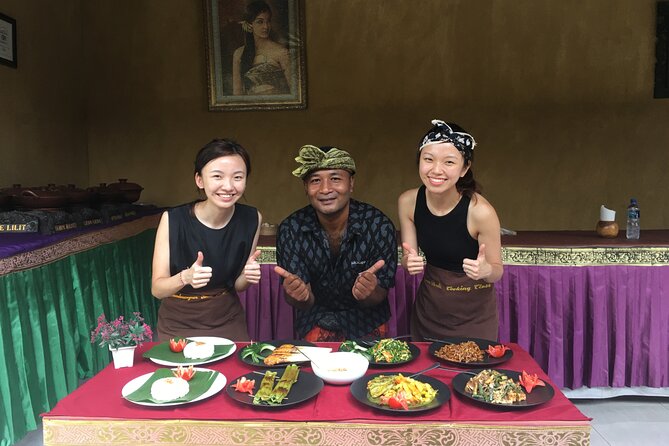
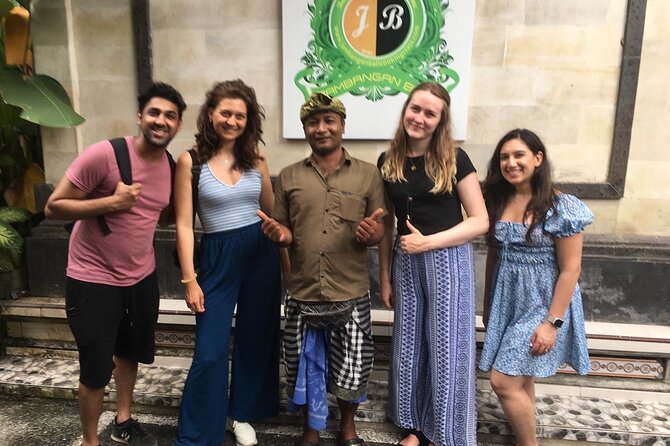
The day starts at Warung JB Jambangan Bali in Tegallalang, Ubud. From there, you head out early for the traditional market where food isn’t treated like a commodity—it’s treated like a craft. You’ll be able to pick fresh herbs and spices, and you can choose the cut of meat and the vegetables you want to cook with.
This market stop is more than a photo moment. It’s where you learn to recognize ingredients you may never buy at home, and how Balinese cooking builds flavor. Even if you feel confident in your cooking skills, you’ll likely notice that the market selection drives everything after that: you can’t replicate the results without the same ingredient choices and fresh balance.
Practical note: markets can be warm and lively, so go in with comfortable shoes and a bottle of water. Also, wear something you can move around in, since you’ll likely be walking and browsing at an active pace.
You can also read our reviews of more tours and experiences in Ubud.



Rice Fields and Daily Rituals: What You See Before You Cook
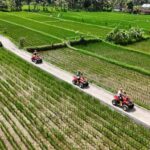
After the market, the schedule takes you toward the rhythm of rural Bali. You’ll see rice farmer activities as part of the day’s flow, giving you a quick reality check on where staples actually come from.
Then, you transition into the family home setting, where the culture part isn’t separate from the food part. You’ll witness a daily Hindu offering and learn how the household makes simple offerings as part of their routine. This matters because Balinese cuisine is tied to daily life. The flavors aren’t just about taste; they’re part of how people relate to the home, the day, and respect for what surrounds them.
If you like cultural experiences that stay practical—things you can understand without needing a guidebook translation—this section usually feels like the right kind of context. You’re not only told what’s important. You see it happening.
Inside a Balinese Home Open Kitchen: How the Cooking Class Works
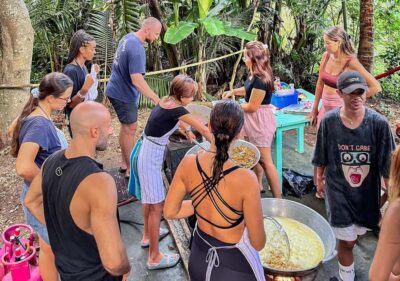
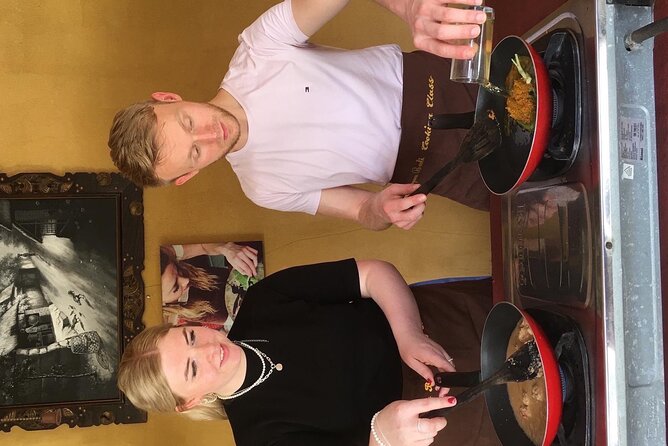
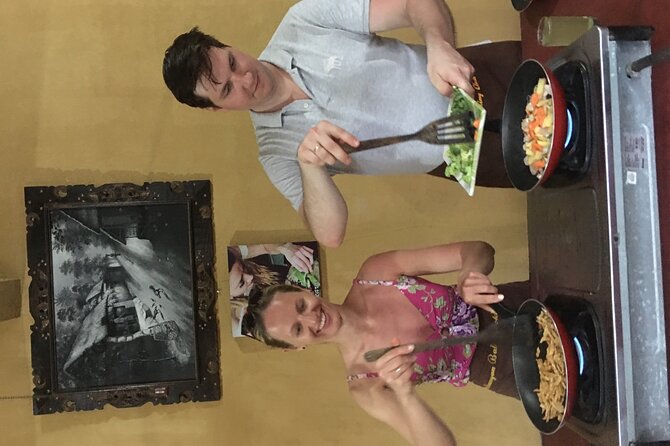
Once you’re in the home, the cooking happens in an open kitchen with a family feel and a beautiful setting. The teaching is led in English by Balinese chefs who are fully conversant with Balinese cuisine and culture. In past sessions, hosts have included chefs and family members such as Putu, Wayan, and Made, so it’s the kind of class where you may be taught by someone who can explain both the food and the background.
Here’s the key difference from a typical restaurant-style meal: you don’t just watch. You make the recipes yourself. That hands-on process is where the learning sticks. You’ll be working with ingredients you selected earlier, using equipment you might not have at home, and getting real-time guidance while you cook.
Also, because it’s set in a home rather than a showroom, the pace tends to feel human. You can ask questions as you go, and the environment encourages interaction—especially helpful if you’re traveling with family or you simply like a more personal class format.
Lunch in the Garden: Tasting the Work You Actually Did
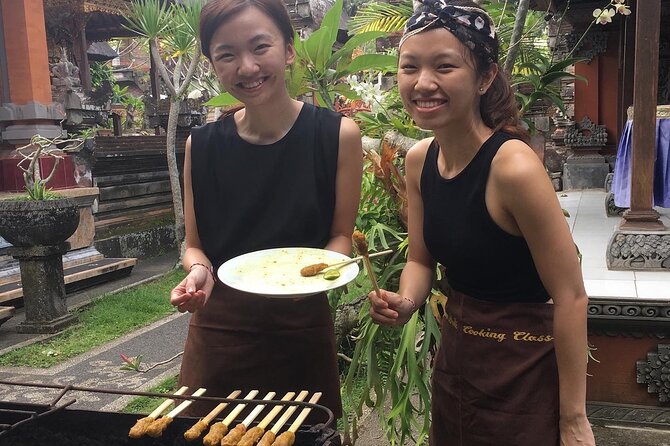
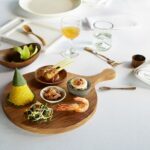
After you cook, you sit down to savor what you made. The class includes lunch, and it’s served in the garden setting—so you’re eating the food you worked on, not waiting for something to arrive from a separate kitchen.
This is where you’ll notice whether you truly understood the flavors. If you taste and immediately recognize what you did differently—more spice, different herb intensity, a balance change—you’ll know you can reproduce the technique later.
One more practical perk: you can take your learning home. Many participants report receiving recipe copies at the end, which helps you recreate the dishes once you’re back from Bali. Even if you don’t cook everything, the recipes are useful as reference points for spice blends and method.
A quick heads-up: alcohol isn’t included. If you want a drink with your meal, plan on bringing it up front with you or budgeting separately.
Coconut Oil, Offerings, and Rindik Music: The Culture Add-Ons That Feel Real
What I like here is that the “extra culture” isn’t tacked on randomly. It ties to everyday Balinese life.
You can experience authentic coconut oil processing, which is a hands-on look at how an ingredient you may associate only with sunscreen and hair products becomes part of real cooking and household use. It’s one of those experiences that helps you understand why coconut shows up in so many local uses.
You’ll also learn how to make a simple offering and witness the household daily offering. This teaches you the idea behind the rituals, without pretending you’re suddenly an expert. It’s more like: you see the rhythm, you learn the basic approach, and you understand that offerings are a normal, ongoing part of how the day runs.
And then there’s music. You get to experience playing Balinese rindik, a bamboo instrument-style music tradition. It’s short, approachable, and fun—often the kind of activity that breaks up the day nicely if you’re traveling with kids or you just want a playful moment after cooking.





Price and Value for $34: What You’re Really Buying
At about $34 for roughly 5 hours, this is priced like a value class, not like a luxury food tour. The real question is whether you’re getting enough substance for that cost—and you are, because the experience includes several elements that usually get charged separately elsewhere:
- Market time to choose ingredients
- A family-home cooking session with guided instruction in English
- Lunch included
- Cultural activities beyond cooking (coconut oil processing, offerings, rindik music)
You’re also getting a capped group size of 15 people. That small limit matters for value because it affects attention, interaction, and the odds that you’ll actually get answers instead of waiting your turn.
The main trade-off is that this isn’t a place where everything is automated or polished like a factory experience. If you want a super structured, high-comfort schedule with minimal human texture, a home cooking class may feel more “real” than “smooth.” But for most food lovers, that’s the point.
Timing Options: Lunch vs Dinner and How to Pick the Right Slot
You can choose between a lunch or dinner class. If you want the fuller market-and-field feel, a morning start tends to work best because markets are usually more active earlier in the day. One downside you should plan for: if your slot lines up with a market that’s already winding down, the day may shift, and your “ingredient picking” component could be less of a focus.
So, here’s the practical advice:
- If you care most about market selection and ingredient awareness, lean toward earlier timing.
- If you just want the cooking experience and don’t need the market as the centerpiece, either time can work.
Either way, you’ll still get cooking, and you’ll still spend time in the family home with the cultural add-ons.
What to Expect on the Ground: Group Size, Comfort, and Etiquette
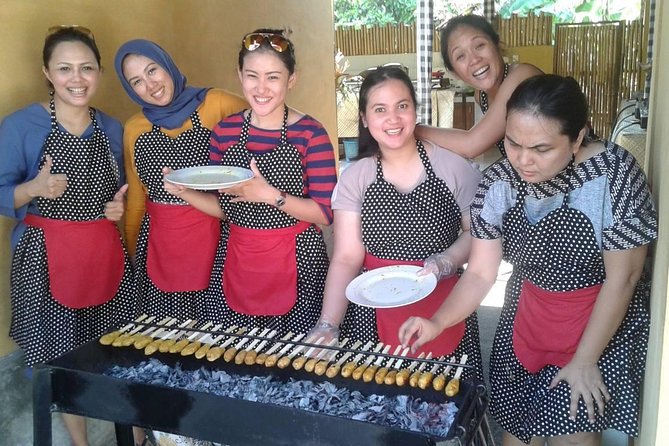
This is a family-friendly activity designed for food lovers, with a small maximum of 15 travelers. That means you can usually expect a more relaxed environment where people can ask questions and participate without feeling like they’re on display.
Comfort tips that actually help:
- Wear closed-toe shoes for market walking and kitchen work.
- Bring something light for sun and airflow; Ubud days can feel hot even when you’re moving slowly.
- If you’re sensitive to spice, tell your chef early. The class is interactive, so you’ll have a better chance of adjusting your final plate.
Etiquette-wise, you’re entering a real home. Keep it respectful, quiet when people are doing offerings, and follow the lead of the hosts. That’s the easiest way to have a good experience and learn properly.
Who This Cooking Class Is Best For (and Who Might Skip It)
This tour is a strong match for:
- Couples and solo travelers who want more than a meal and prefer hands-on learning
- Families who want an experience that includes culture and participation, not just sitting and watching
- People who want to cook Balinese food at home with recipes and techniques they can repeat
You might look for something else if:
- You want a class that never includes any real-world variability (like market timing or household schedules)
- You prefer a very formal restaurant-style meal experience without extra household activities
For everyone else, this is the kind of activity that makes Bali feel readable. You walk away understanding ingredients, methods, and the everyday rituals connected to food.
Should You Book Jambangan Bali Cooking Class?
If your goal is to learn Balinese cuisine in a practical way, I’d book it. The combination of market ingredient choice, cooking in an open family kitchen, and cultural activities like coconut oil processing and simple offerings gives you a lot of learning for the price.
Book it especially if:
- you want an English-led class with real participation
- you like small groups where questions are easy
- you’re excited to see daily life in Ubud beyond the main tourist stops
Just pick your time slot thoughtfully, since market access can shape the first part of the day. If you do that, you’re set up for a memorable half-day of food and culture that feels grounded, not staged.
FAQ
How long is the Jambangan Bali Cooking Class?
The class runs for about 5 hours.
Where does the tour start, and does it return you to the same place?
It starts at Warung JB Jambangan Bali on Jln kelabang moding no 713 in Tegallalang, Ubud. The activity ends back at the meeting point.
Is lunch included, and can I choose dinner instead?
Lunch is included. You can choose between a lunch class or a dinner class.
Are the classes taught in English?
Yes. The cooking classes are conducted in English by Balinese chefs.
How large is the group?
The experience has a maximum of 15 travelers.
What if I want to cancel?
You can cancel up to 24 hours in advance for a full refund. The experience also requires good weather, and if it’s canceled due to poor weather you’ll be offered a different date or a full refund.