Biking through old Jogja feels like time travel. This MOANA cycling tour strings together riverside Kalicode rides and the Sultanate’s historic grounds, so you see how power, tradition, and everyday life sit side by side in Yogyakarta. You’ll keep moving, but the stops are built for context, not just photos.
I also love how the route mixes street-level life with real culture moments, including market snacks at Tamansari and a hands-on stop called Masangin between banyan trees. One thing to consider: you’re riding about 11 km and you’ll be on city roads for part of the time, so bring shoes you trust and expect a bit of street reality. No pick-up or drop-off is included either.
In This Review
- Key highlights you’ll plan around
- Kalicode Riversides to Royal Grounds: The Route’s Real Value
- From MOANA Hub Prawirotaman to the First Turns
- Cycling the Riverside Kalicode: Where the City Breathes
- Inside the Sultanate Grounds and a Short Kraton Area Stop
- Chinese Temple Stop: Learning How Communities Shape Jogja
- Narrow Neighborhood Streets and Kampung Life Without the Rush
- Tamansari Culinary Market Break: Snacks That Actually Matter
- Masangin Between Banyan Trees: A Quick Tradition Moment
- How Fast Is This Ride, Really? Pace, Distance, and Bike Types
- Price and Inclusions: Why $45 Can Work for Real Travel Days
- Sustainability Touches Without Being Loud About It
- Should You Book This Cycling Tour in Yogyakarta?
- FAQ
- How long is the Jogja cycling tour?
- What distance do we ride?
- Are there different time options?
- Where do we meet?
- What bike types are provided?
- What’s included in the price?
- Is pick-up or drop-off included?
- What fitness level do I need?
- Can I cancel for a full refund?
Key highlights you’ll plan around
- Riverside Kalicode cycling that keeps the ride scenic and the pace relaxed
- Sultanate grounds and a short Kraton area visit for a direct look at Jogja’s royal world
- Chinese temple stop plus neighborhood streets that most people skip
- Tamansari market snack and drink breaks to taste the city’s daily rhythm
- Small-group cap (max 10) for easier conversation with your road captain
- Eco-string bag and sustainability action fund built into the tour package
Kalicode Riversides to Royal Grounds: The Route’s Real Value
The best part of this tour is that it treats cycling as a way to read the city. You’re not just getting from point A to point B; you’re traveling through layers of Yogyakarta, starting along the serene riverside Kalicode areas in the city center and then shifting toward the Sultanate’s historic grounds.
That shift matters. Yogyakarta isn’t a museum town where history is frozen behind rope. It’s still guided by a Sultan who serves as king and governor, which gives the whole royal area a living, practical feeling. Even if you’re only on the bike for a few hours, you get the sense of how the Sultanate still shapes daily life.
The ride also stays approachable. At roughly 3 hours and about 11 km, it’s long enough to feel like you explored, but short enough that you won’t hate your legs by the end. For me, that balance is the sweet spot for a first cycling tour in a new city.
You can also read our reviews of more tours and experiences in Yogyakarta.

From MOANA Hub Prawirotaman to the First Turns
You start near MOANA’s hub in Prawirotaman. The listed meeting point is Jl. Gerilya No.646, Brontokusuman, Kec. Mergangsan, Kota Yogyakarta. It’s also described as near public transportation, which helps if you’re staying without a car.
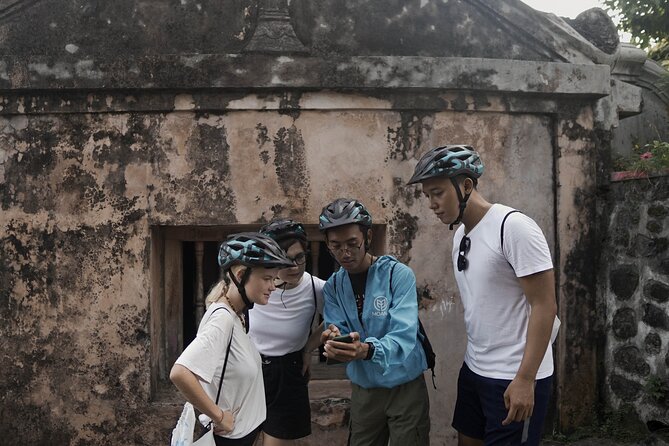
You’ll get a bicycle and a helmet, and the group rides with a road captain. That’s not a fancy phrase for this kind of tour—it’s the difference between a calm, organized ride and a stretched-out line of cyclists trying to guess what comes next.
Your timing options make planning easy too. There’s a morning slot from 07.00 to 10.00 and an afternoon slot from 14.30 to 17.30. If you prefer softer temperatures and less glare for photos, the afternoon can be a nice choice, but either time works if you dress for the weather.
One small practical note: because pick-up and drop-off aren’t included, you’ll want to build a little buffer so you arrive on time and ready to ride.
Cycling the Riverside Kalicode: Where the City Breathes
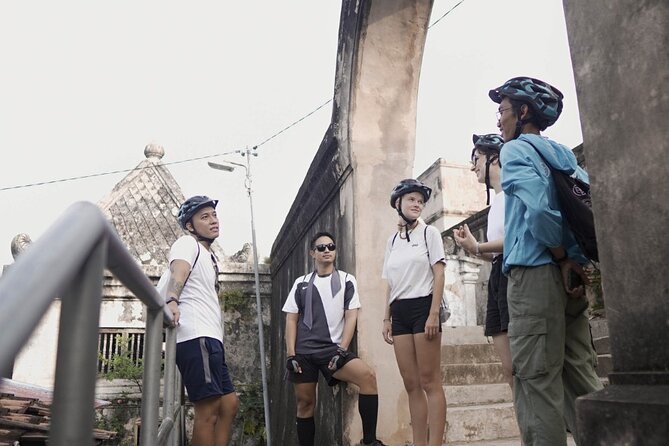
The tour begins along the riverside Kalicode areas of the city center. This is a smart way to start because the first part of the ride gets you oriented. You feel the rhythm of neighborhoods, the layout of streets, and how local movement looks when you’re not standing still.
Riverside cycling also helps with comfort. The route is designed to feel serene rather than stressful, which makes it easier to listen when your local guide explains what you’re seeing. You’re not stuck in a classroom. You’re hearing stories while rolling past everyday life.
And that’s key for value. A lot of tours in big cities feel like a parade of landmarks. Here, the early stretch sets a tone: you’re learning Jogja’s way of life as you go, including what “urban living” looks like when locals move through their own routines.
Inside the Sultanate Grounds and a Short Kraton Area Stop
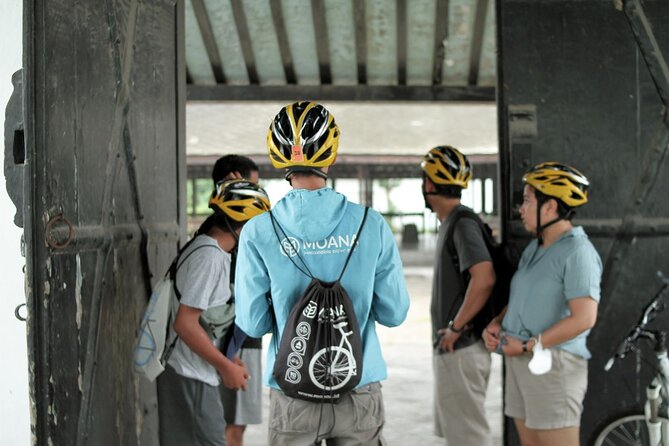
After the riverside section, the tour moves into the historic Sultanate world, including grounds associated with the royal family. The program frames the Sultanate as something still active in governance, not just a heritage site. That’s a helpful way to approach the area: look for continuity, not just architecture.
You’ll also have a short visit to the Kraton area. Even if the visit is brief, it’s placed where it makes sense in the route. You’re coming in after seeing the more everyday, street-level side of the city, so the contrast feels real.
This part of the tour is also where your guide’s local explanations make a noticeable difference. In past groups, riders highlighted that guides were strong on history and context, and that the royal areas felt more understandable because the stories were tied to what you could see and ask about.
A possible drawback: if you’re expecting lots of long, ticketed attractions inside multiple major sites, this is not that kind of day. It’s shorter and more route-based, with cultural focus rather than spending-heavy sightseeing.
Chinese Temple Stop: Learning How Communities Shape Jogja
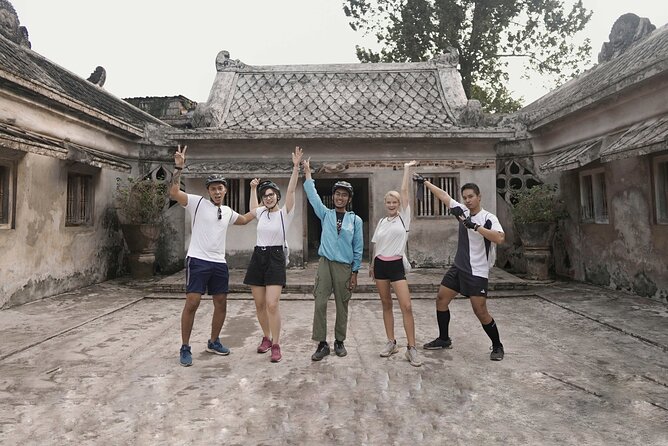
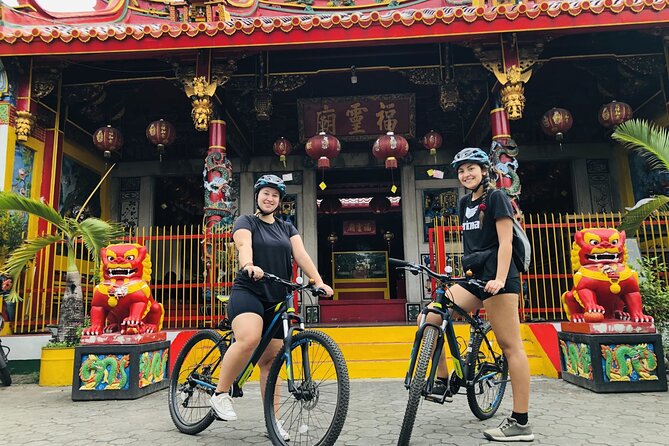
One of the more interesting route moments is a stop at a Chinese temple. This is a quick, targeted cultural viewpoint, but it adds variety to the day.
Why it’s worth it: Yogyakarta’s identity isn’t only Javanese royal tradition. It also includes different communities who have shaped life in the city over time. Seeing a Chinese temple during a cycling tour helps you connect that broader story to place, not just facts from a guidebook.
You can think of this stop as a reset. After the Sultanate-related sections, the temple visit gives you another lens. It also breaks up the ride with a pause where you can pay attention to details and ask questions.
If you enjoy tours that change pace and mood—royal grounds, then community spaces, then back into local neighborhoods—this is one of the parts that keeps the experience from feeling repetitive.

Narrow Neighborhood Streets and Kampung Life Without the Rush
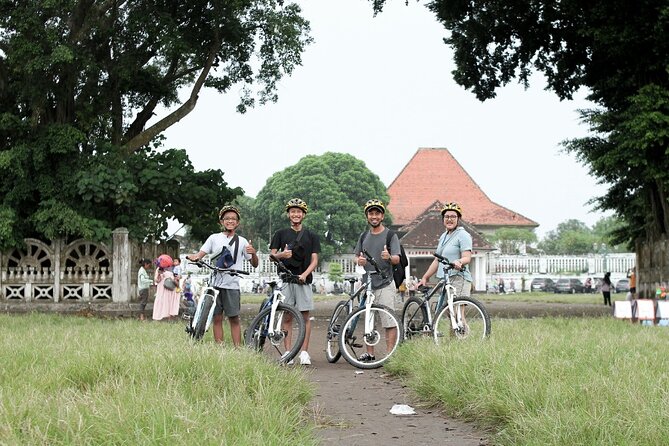
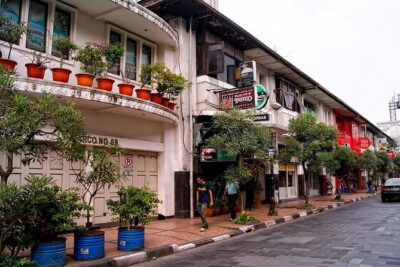
Between bigger landmarks, you’ll ride through areas that feel more like local life: neighborhoods behind small streets and places where people experience Jogja in daily rhythms.
This is where the tour earns its practical value. Cycling makes it easier to notice how a neighborhood functions. You see front porches, shop fronts, street corners, and how residents move through the day. It’s also easier to feel what’s normal here rather than treating the city like a set of backdrops.
In past feedback, riders liked the “kampung” angle—learning how people live and what daily life looks like when you’re not only following tourist routes. That kind of understanding comes from two things: the guide’s explanations and the fact that you’re actually traveling through the fabric of the area.
One consideration: these neighborhood sections can mean less predictable road surfaces than a smooth main road. You’ll still be on an organized route with a road captain, but you should keep your attention on riding.
Tamansari Culinary Market Break: Snacks That Actually Matter
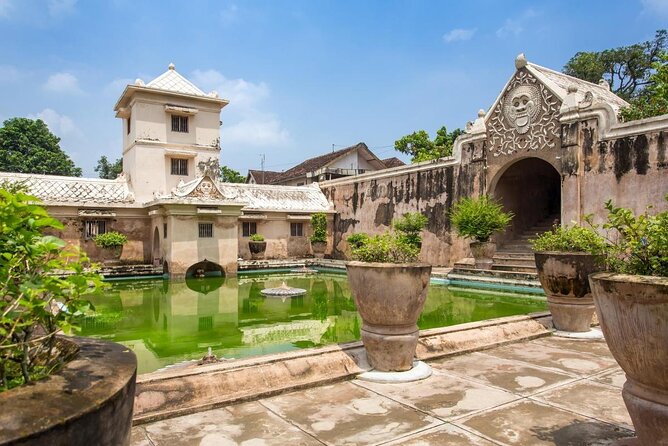
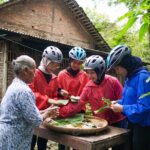
The tour includes a short visit to Tamansari, described as a traditional culinary market. This is not a long shopping detour. It’s timed to give you a taste of local flavors while keeping you moving.
You’ll also have local snack & drink time built into the experience. This is more valuable than it sounds because it turns culture into something you can do with your hands and your senses. You’re learning through what people eat and drink on ordinary days.
The Tamansari stop also gives you a real break from cycling. Market air, small stalls, and frequent passing conversations create a different kind of energy than the royal areas. It’s a good “human” moment in the middle of a route that otherwise has big historical themes.
If you’re the type who doesn’t want a full meal during a sightseeing tour, this works well. You’ll get enough variety to feel like you sampled the city, without losing hours.
Masangin Between Banyan Trees: A Quick Tradition Moment
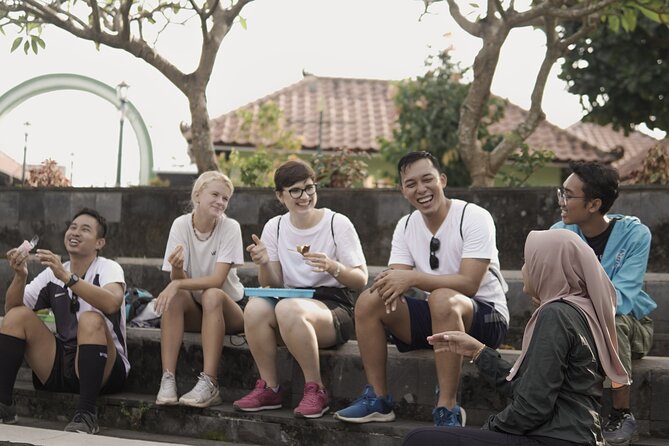
One of the tour highlights is Masangin between banyan tree. This is a specific cultural experience included in the route, and it’s exactly the kind of stop that can make a cycling tour memorable.
Because it’s short, it won’t consume your whole attention. Instead, it offers a pause—another lens on Jogja’s traditions—while still keeping the momentum of the ride.
What I like about stops like this is that they don’t require you to be an expert. You’re there to witness, ask, and learn from a guide who can explain what you’re seeing in plain terms. Even if you don’t know the tradition beforehand, the tour structure makes it easy to understand why it exists in that place.
How Fast Is This Ride, Really? Pace, Distance, and Bike Types
The tour runs about 3 hours and covers around 11 km. That translates to steady riding without being all-out. You should expect a mix of flat-ish city movement and short changes in feel as you turn through neighborhoods.
Your bike choice depends on what’s available: mountain bike or city bike. For most riders, either works well for city roads, but I’d choose based on comfort. If you want extra control over uneven bits, a mountain bike can feel more reassuring. If your priority is ease and comfort, a city bike makes sense.
Also remember: the tour lists a moderate physical fitness level. That’s the kind of wording that usually means you’ll be fine if you can handle an hour or two of active walking and some cycling, but you shouldn’t schedule it as your first activity after a night of zero sleep.
If you’re worried about comfort, bring water, wear breathable clothes, and use closed-toe shoes. You’ll be on your feet less than a walking tour, but you’ll still want to move confidently when you stop.
Price and Inclusions: Why $45 Can Work for Real Travel Days
The price is $45 for about 3 hours. For this kind of route, value comes from what’s included rather than from counting how many attractions you hit.
You get a bicycle and helmet, plus an eco-string bag. The tour also includes refreshing drinks/snacks, a local experience component, a road captain, and a sustainability action fund. Admission tickets are listed as free for what’s included, which matters because paid entries can quietly inflate many “cheap” tours.
To me, the biggest value is the combination: bike + local guide context + food breaks + a route that covers multiple parts of the city. It’s the sort of format that’s great if you want to feel like you explored without spending your day in queues or bouncing between far-apart locations.
A possible drawback for budgeting: since pick-up and drop-off aren’t included, you’ll want to factor in how you’ll reach the meeting point. Still, near public transportation is noted, which makes that easier.
Sustainability Touches Without Being Loud About It
The tour includes a sustainability action fund, and you’ll also receive an eco-string bag. That’s not just a nice-to-have line. It signals that the tour is trying to reduce small waste and make your experience feel more responsible.
You can treat these as practical, not preachy. The eco-string bag is something you can actually use right after the tour, whether you’re carrying snacks, a light layer, or a small camera bag. The sustainability action fund suggests your payment isn’t only covering operations—it’s also supporting something aligned with the tour’s stated values.
If you like travel that’s grounded in real behavior, these details add weight. They don’t replace the guide’s stories or the ride itself, but they make the experience feel more intentional.
Should You Book This Cycling Tour in Yogyakarta?
If you want a short, well-structured way to see Jogja beyond the obvious spots, I think this is a strong booking. The route is built for variety: riverside Kalicode cycling, Sultanate-related ground visits, a Chinese temple stop, neighborhood streets, Tamansari market snacks, and a specific tradition moment at Masangin between banyan trees.
Book it if you:
- like learning through movement, not just standing still
- want a guide who can explain history and daily life in plain language (guides like Alfat have impressed riders with that kind of context)
- enjoy food breaks that feel local and practical
Consider skipping or swapping to a different style of tour if:
- you want mostly indoor attractions with long time inside ticketed sites
- you’re extremely sensitive to uneven city roads or dust
- you need hotel pick-up included
FAQ
How long is the Jogja cycling tour?
It’s about 3 hours.
What distance do we ride?
The route is listed as approximately 11 km.
Are there different time options?
Yes. There’s a morning slot from 07.00 to 10.00 and an afternoon slot from 14.30 to 17.30.
Where do we meet?
The meeting point is MOANA Hub Prawirotaman at Jl. Gerilya No.646, Brontokusuman, Kec. Mergangsan, Kota Yogyakarta, Daerah Istimewa Yogyakarta 55153, Indonesia.
What bike types are provided?
You’ll get either a mountain bike or a city bike, and a helmet is included.
What’s included in the price?
Included are the bicycle, helmet, a free eco-string bag, local experience, refreshing drinks/snacks, a road captain, and a sustainability action fund.
Is pick-up or drop-off included?
No. Pick-up and drop services are not included.
What fitness level do I need?
The tour is described as requiring a moderate physical fitness level.
Can I cancel for a full refund?
Yes. You can cancel up to 24 hours in advance of the experience’s start time for a full refund.