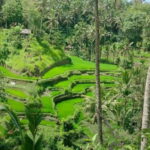
Rice terraces in Sidemen feel close-up. This easy, structured walk shows rural Bali life in a way you miss from poolside or beach strips. You start at the Sidemen market area, then move through village streets, rice paddies, and irrigation paths with Mount Agung watching from the distance.
I especially like how the route feels practical and local: narrow paths farmers use, a hanging wooden bridge built for people and motorbikes, and viewpoint stops that make the terraces look new. I also love the storytelling factor. Guides such as Adidas, Adi, Darya, and Wayan are described as funny and very good at tying rice farming, Hindu practice, and everyday village routines together.
The main thing to consider is balance. Even though this is not a hard hike, parts of the rice-terrace walk can be narrow, uneven, and sometimes slippery, so good shoes and steady footing matter.
In This Review
- Key things to know before you go
- Sidemen Trekking in 2 Hours: What This Walk Really Feels Like
- Meeting at Pasar Sidemen and Finding Upa Boga
- Market to Rice Terraces: The Route and the Views to Watch For
- Irrigation Lines, Narrow Paths, and the Hanging Wooden Bridge
- Temple Stops and Rice Farming Stories You’ll Actually Use
- Finish at Warung Ume Anyar: Turn the Trek into a Real Meal
- Price and Value at $13.75: What You’re Really Paying For
- What to Bring, and How to Avoid the Common Mistakes
- Who Should Book This (and Who Might Want a Different Bali Day)
- Should you book Sidemen Trekking?
- FAQ
- Where do I meet for the Sidemen Trekking tour?
- How long is the trek?
- What should I bring?
- Is hotel pickup and drop-off included?
- What’s included in the tour price?
- Where does the trek end?
- Is the trek suitable for everyone?
Key things to know before you go
- Local paths, not tourist routes: expect farmer-used shortcuts and viewpoints that are hard to spot alone
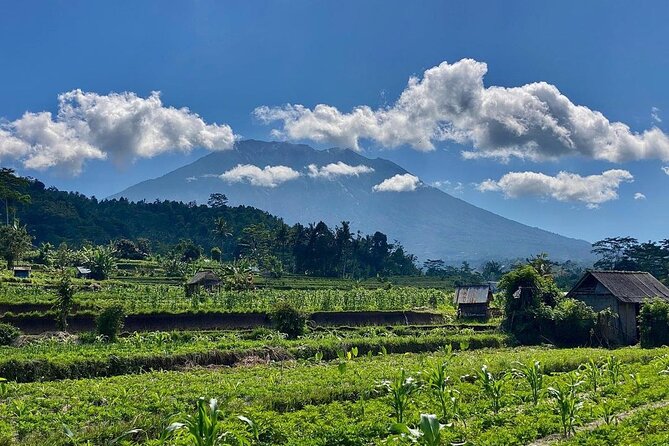
- Mount Agung views included: you’ll get sightlines you won’t get from the road
- A guide who connects culture to farming: rice process, offerings, and daily life explained along the way
- 2-hour time block: plan for about 2 to 2.5 hours, then you’ll finish at a restaurant spot
- Easy pace, but balance required: narrow terrace edges and irrigation waterways need care
- Small group size: capped at 10 travelers, which usually keeps the walk relaxed
Sidemen Trekking in 2 Hours: What This Walk Really Feels Like
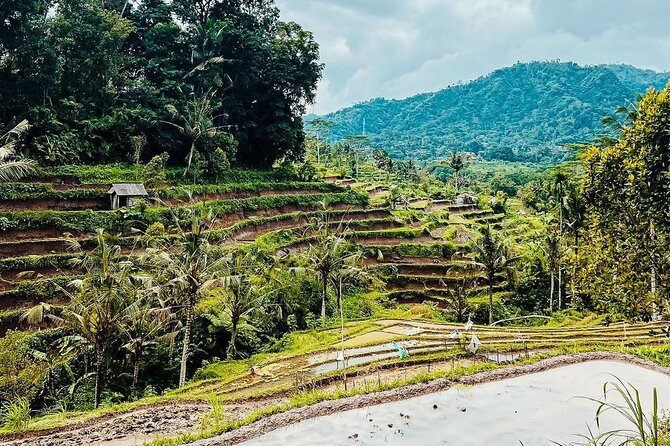
This tour is built for a real morning pace. You’re moving long enough to feel like you did something, but not so long that it becomes a slog. The whole point is perspective: seeing Sidemen rice terraces from the paths people actually walk for work and life.
The vibe is rural and grounded. You’re not just collecting photos of greenery; you’re passing paddies, water channels, and little neighborhood details like temples villagers use for prayer. The walk also naturally creates “slow windows” for viewpoints, so the scenery has time to land.
And yes, Mount Agung shows up often enough to keep you oriented. Instead of a single dramatic postcard moment, it’s more like a constant landmark that helps you understand where you are in the Sidemen valley.
You can also read our reviews of more tours and experiences in Ubud.


Meeting at Pasar Sidemen and Finding Upa Boga
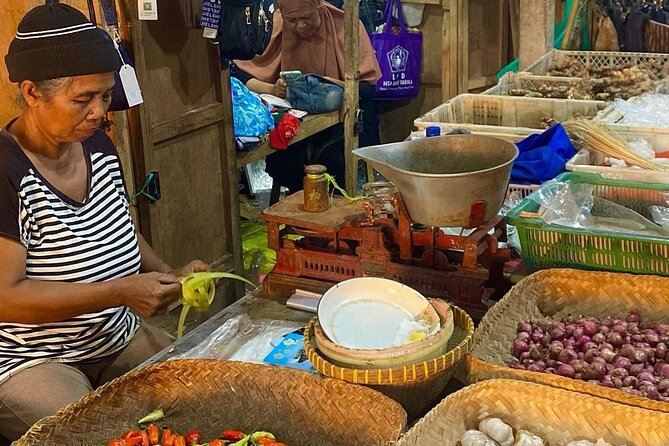
Your start is Pasar Sidemen (the traditional market) at the shop marked Upa Boga. This matters more than you’d think, because the market area has multiple entrances and side streets. If you’re arriving from elsewhere, give yourself a few extra minutes to confirm the exact shop sign before the group starts.
If you want to do market time first, this is the rare Bali activity that can match your morning energy. Pasar Sidemen is open from 5:00 AM to 10:00 AM, so a morning session gives you a chance to browse before walking.
Getting there is simpler if you’re already based in Sidemen. If you’re not, arrange a local driver or a pickup plan that doesn’t depend on Grab doing everything for you. After the trek, the area has limited Grab availability, and drivers sometimes request extra payment, so having transport arranged cuts stress.
Market to Rice Terraces: The Route and the Views to Watch For
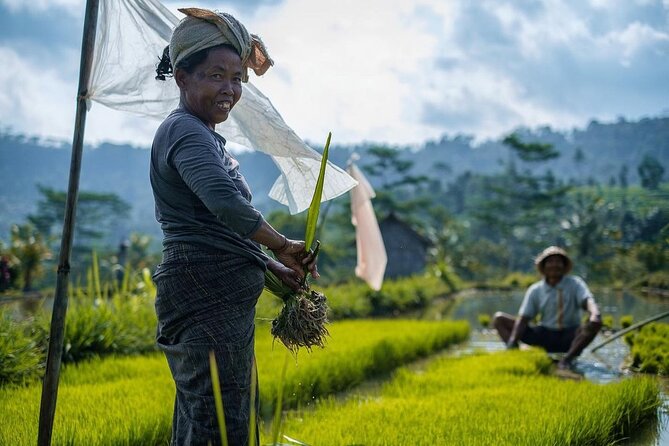
Right after meeting, the walk shifts from market life to village rhythm. You’ll head up from the market area and pass through Sidemen’s village streets, then transition toward the rice paddy landscape.
Expect changing terrain. There’s going up and down, and you’ll be stepping across paths that aren’t always wide or perfectly uniform. The good news is the pace is described as not taxing, but you should still treat this like a walk where your feet matter.
What makes the route special is the viewpoint logic. You don’t just look at terrace scenery from one angle; you get multiple perspectives. Guides often know where the rice terraces read best from a distance—and then they show you the closer, lower-level farmer paths where the texture of irrigation and cultivation becomes obvious.
If you like “how the place works,” this part delivers. One of the most praised aspects is how guides connect what you’re seeing to how rice farming actually functions in daily life.
Irrigation Lines, Narrow Paths, and the Hanging Wooden Bridge

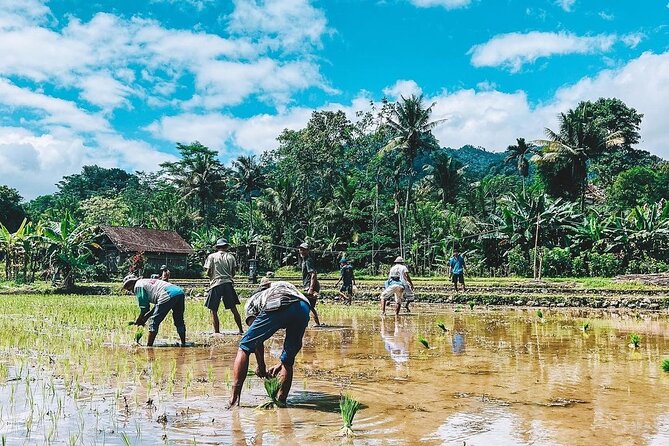
This tour has a signature feature: following irrigation lines through the paddies. You’ll walk along the water’s path, which gives you a clearer sense of how the terraces stay alive. Instead of imagining the irrigation system, you’re literally moving alongside it.
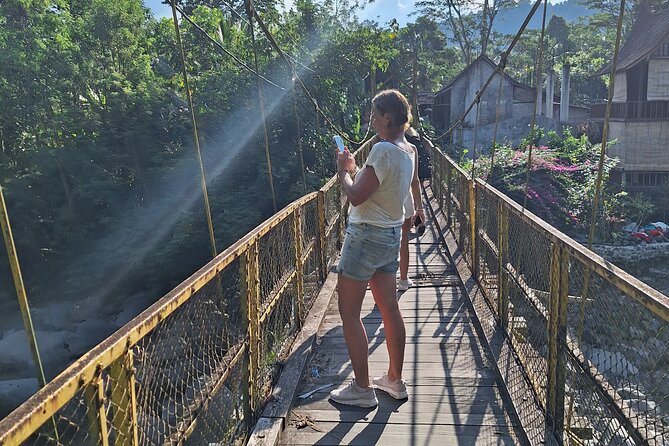
Then comes the hanging wooden bridge, described as being suitable for both motorbikes and humans. It’s one of those spots that feels small during planning and suddenly turns into a memorable landmark during the walk. It also helps break the hike into “sections,” so your brain has something to track besides just scenery.
Here’s the practical part: terrace edges can be narrow and the ground can be slippery. Even if the route is short (people mention it can feel like around 4 km), you’ll cover it with care. This is why the tour asks for hiking boots/shoes and why I’d call balance the key requirement, not fitness level.
Temple Stops and Rice Farming Stories You’ll Actually Use
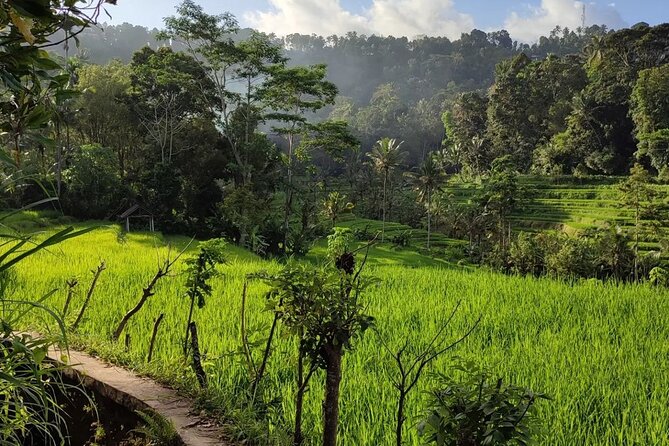
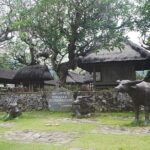
You’ll pass a temple used for praying by local villagers. Even if you’re not a religion-study person, seeing where worship sits inside daily agriculture makes the landscape feel like a living system. It’s not a “look at a building” stop; it’s more like a pause that explains why the area is set up the way it is.
The guides’ storytelling is a big reason people rate this so highly. Names that come up again and again include Adidas, Adi, Darya, and Wayan. They’re described as patient, funny, and knowledgeable, with an ability to explain the rice process in plain language.
You’ll also hear about how farming changes over time and how crops cycle through the year. One useful example: if you go in December, guides often talk about rice crops after harvest and what’s planted next. That kind of seasonal explanation turns the walk from generic scenery into something you can mentally map.
And because the route includes farmer-used paths, it feels less like a “tour bus day” and more like you’re walking through someone’s workday. That’s the authentic Bali feeling most people come to Sidemen for.



Finish at Warung Ume Anyar: Turn the Trek into a Real Meal
The trek ends at Warung Ume Anyar Restaurant in Ogang Village. This is a smart design choice because it gives you a built-in recovery option right after the walk.
Plan for transport around 2 to 2.5 hours after the trek starts. If you have a driver, ask them to meet you at the finish point around that time. If you rely on Grab, expect fewer drivers and possibly extra payment requests—so it’s worth organizing ahead.
This is also the moment to hydrate and reset before your next stop. Bottled water is included, but if you’re the type to order tea, coffee, or food after a walk, you’ll appreciate having a restaurant right at the finish.
Price and Value at $13.75: What You’re Really Paying For

At $13.75 per person, this price feels reasonable because you’re paying for more than a walking route. You’re getting a guide, a structured loop that connects village streets to rice paddies and irrigation paths, and bottled water included.
It’s also good value because the group stays small, up to 10 travelers. Small groups usually mean more flexible photo stops and less waiting in a line. And because the route is local-path focused, you’re less likely to spend your Bali time wandering in the wrong direction.
What you should budget separately: tips, and hotel pickup/drop-off. Bottled water handles the basics, but you’ll want your own snacks or a meal plan for after.
If you’re comparing this to expensive “view-only” Bali experiences, this one’s cheaper while offering more context. It’s the difference between seeing rice terraces and understanding how the terraces function.
What to Bring, and How to Avoid the Common Mistakes
Bring what the tour asks for: a sun hat, hiking boots/shoes, sunscreen, and sunglasses. This isn’t a shaded city walk. You’ll be out in daylight, and rice terraces don’t care if you forgot sunscreen.
Also bring practical expectations. Some paths may not be easy to spot, and the terrain can be uneven. If you show up in sandals, you’ll likely regret it once you’re on narrow sections near water channels.
For timing, plan the rest of your day with buffer time. The walk is about 2 hours, but the guidance suggests 2 to 2.5 hours for the full experience window. If you have a tight schedule after, you’re taking a risk.
If weather changes, the tour requires good weather. When weather is poor, you’ll be offered another date or a full refund—so you can usually reschedule without losing your money. Still, keep an eye on conditions the morning of.
Who Should Book This (and Who Might Want a Different Bali Day)
This tour is ideal if you want something more authentic than a photo pass. If you care about rural life, rice farming, and how Hindu practice blends into agriculture, you’ll get a lot out of it.
It also suits people who want a manageable activity. The walk isn’t described as taxing, and many people finish feeling like they did a nice morning experience rather than a workout.
The one group that needs to think carefully is anyone who struggles with balance. Narrow, elevated terrace paths and water-adjacent sections mean you’ll need steady footing and careful walking. If you’re elderly or not comfortable with uneven ground, you might find it stressful even if it’s not “steep.”
Should you book Sidemen Trekking?
Book it if you want rural Bali you can feel in your feet. You’ll get rice terraces close-up, a real village walk, and Mount Agung views that make the Sidemen valley feel understandable. The guides (including Adidas, Adi, Darya, and Wayan) seem to be a major highlight, especially when they explain the rice farming cycle and local practices in clear, human terms.
Skip it or choose another plan if you hate uneven footing or you’re looking for a fully flat, wide-path hike. The scenery is worth it, but this is still a walk where you’ll watch your step.
If you like small-group, guide-led experiences that trade spectacle for context, this one earns a place on a Sidemen morning.
FAQ
Where do I meet for the Sidemen Trekking tour?
You meet at Pasar Sidemen (Sidemen Traditional Market) at the shop with the sign Upa Boga.
How long is the trek?
The duration is about 2 hours (approximately). You should plan for roughly 2 to 2.5 hours total for timing after start.
What should I bring?
You must bring a sun hat, hiking boots/shoes, sunscreen, and sunglasses.
Is hotel pickup and drop-off included?
No. Hotel pickup and drop-off are not included.
What’s included in the tour price?
Bottled water is included.
Where does the trek end?
The trek ends at Warung Ume Anyar Restaurant in Ogang Village.
Is the trek suitable for everyone?
It’s for people with moderate physical fitness. You should also be comfortable with narrow paths and uneven footing in the rice fields.