Two hours in Jogja beats wandering blind. This walking intro is a fast, human way to understand Yogyakarta’s street culture and history, starting right at the Train Station Monument and ending at Kilometer Zero. I like that you don’t get a lecture; you get a route, plus context that makes the city feel less random and more readable.
What I really enjoy here is the stop-and-go mix: lively Malioboro street sights, history tied to everyday life, and a market break at Bringharjo where you can taste your way into the city’s rhythm. One watch-out: it’s a walking tour through busy areas, so expect crowds and a lot of steps, and rain can make the pavement feel slick.
In This Review
- Key highlights you’ll care about
- Start at the Yogyakarta Train Station Monument: Your route compass
- Walking Malioboro Street: Indie shops, cafes, and the history hiding in plain sight
- The Chinese-Indonesian gate: A quick stop with a big meaning
- Bringharjo Market break: Noise, music, and what to snack on
- Kilometer Zero finish: Turn the walk into a smart itinerary
- What you actually learn in 2 hours (and what it won’t replace)
- Price and value: Why $15 for a 2-hour walk can be a bargain
- Who this walking tour fits best in your trip
- A balanced look at drawbacks: walking, crowds, and outside-only sights
- Should you book this Yogyakarta city intro walk?
- FAQ
- How long is the Yogyakarta 2-hour crash course walking tour?
- Where do I meet the guide?
- Is the guide available in English?
- How big is the group?
- What should I bring for the walk?
- Is there free cancellation and can I reserve without paying right away?
Key highlights you’ll care about
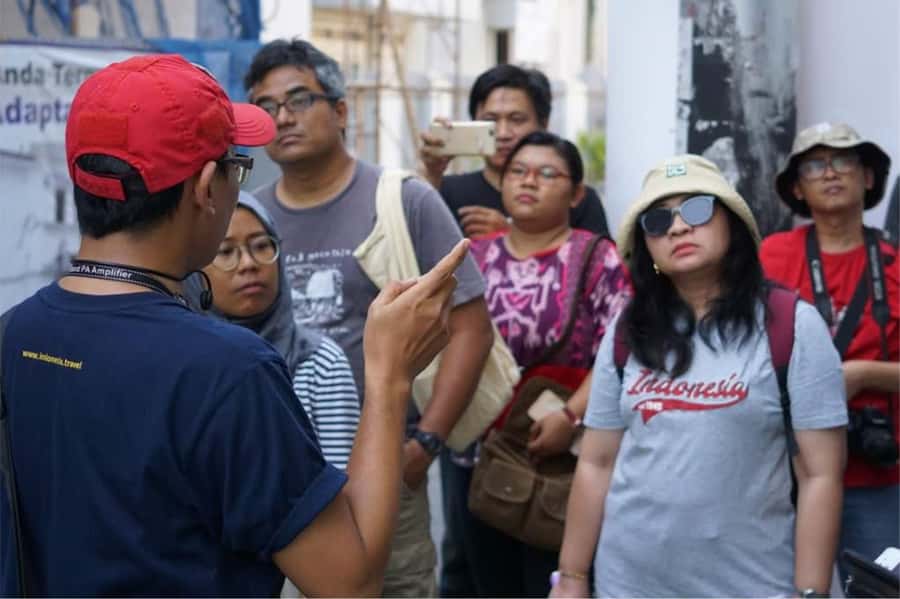
- Small group, real conversation: Limited to 8 people, so you can ask questions instead of just listening.
- Street-first orientation: Malioboro and the surrounding lanes show you where life happens, not just famous landmarks.
- History in everyday terms: Colonial-era stories, war-era impact, and why Yogyakarta became a special region in Indonesia.
- Multicultural heritage stop: You pass a gate connected to the Chinese-Indonesian community and hear what it symbolizes.
- Market time that isn’t just sightseeing: Bringharjo Market includes that music, noise, and food atmosphere that guidebooks can’t recreate.
- Finish where planning gets easier: Ending at Kilometer Zero helps you map the rest of your days.
Start at the Yogyakarta Train Station Monument: Your route compass
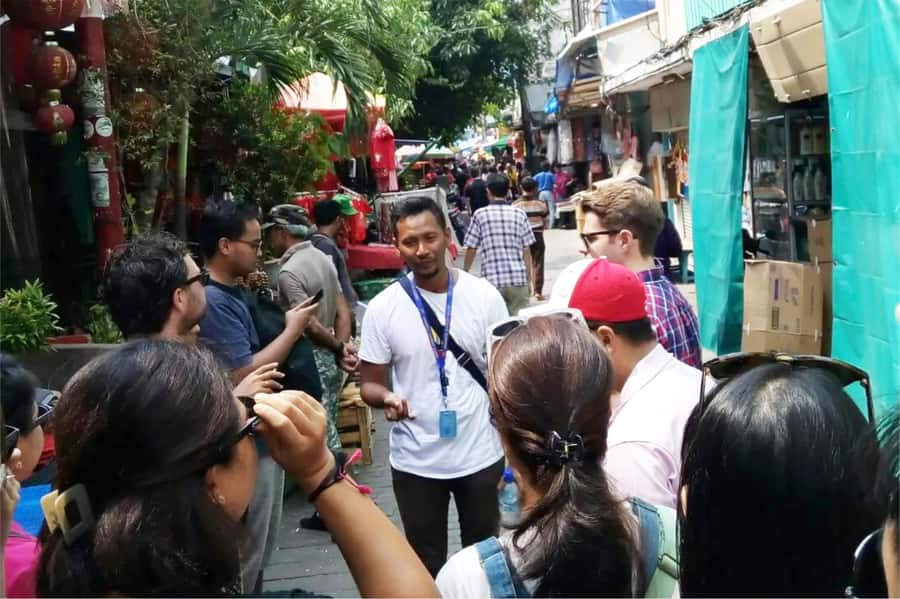
Meeting at the Yogyakarta Train Station Monument is a smart move. It’s easy to locate, and it puts you in the right mindset: you’re not starting with temples. You’re starting with the city’s real entry point—where people arrive, mingle, and get on with daily life.
From here, your guide sets the tone with practical orientation. You’ll learn the basics of timing, where to focus your energy, and how to move around without overcomplicating things. The walk also helps you understand where the city’s main energy centers are, so later, when you’re deciding where to stay or what to do next, you can make better calls.
The experience is designed for short stays. If you’re arriving in the afternoon and want a meaningful first evening, this kind of grounding walk saves you from the next-day frustration of asking yourself where everything is.
You can also read our reviews of more tours and experiences in Yogyakarta.



Walking Malioboro Street: Indie shops, cafes, and the history hiding in plain sight
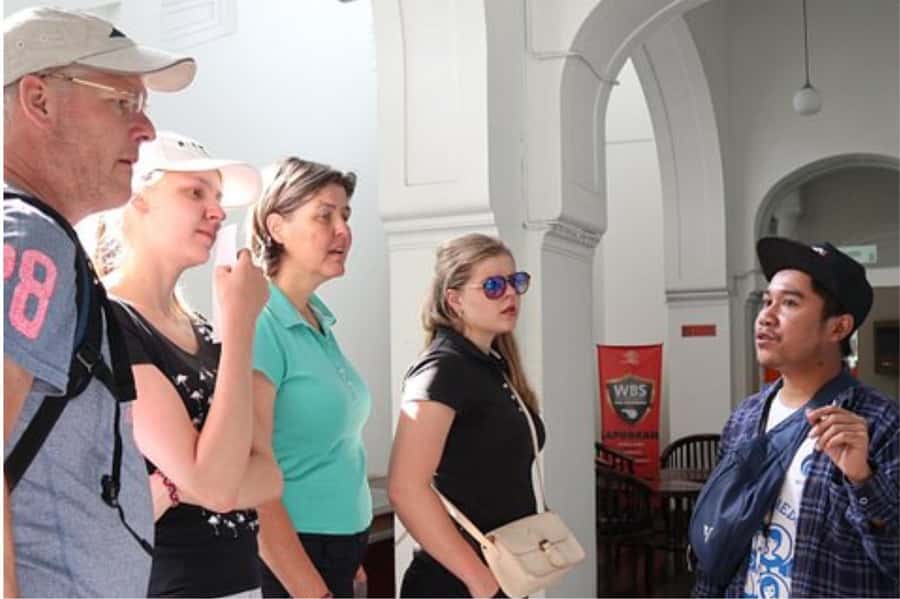
Malioboro is the street you hear about for a reason. On this walk, it’s not just shopping. It’s a live map of Yogyakarta’s social and economic pulse—indie boutiques, cozy cafes, hip places to eat, and loads of accommodations all rubbing shoulders.
What makes this section valuable is the way your guide ties the sights to stories. You’ll hear how merchants and salesmen lived in the colonial era, how poorer communities lived in the same urban ecosystem, and how those pressures shaped the city’s look and feel. You also get the war-era shift and what it meant for ordinary people, not just big events on a timeline.
There’s also a very practical angle here. When you walk Malioboro with a guide, you learn the little skills that matter in real life: how to cross busy roads, where foot traffic really flows, and how to read the street so you’re not constantly stopping and second-guessing. If you’ve ever spent your first day in a new city trying to translate everything while dodging scooters, you’ll appreciate the benefit immediately.
And yes, it can include little food and drink moments along the way. In past groups, guides like Kin have taken people to a wet market where they picked up something delicious to drink, and others have shared local drink stops that felt authentic rather than touristy.
The Chinese-Indonesian gate: A quick stop with a big meaning

As you move deeper into the walk, you pass the gate connected with the Chinese-Indonesian community. This isn’t a random photo spot. It’s a symbol of multicultural heritage, and your guide explains what that presence means in Yogyakarta’s broader social story.
I like this part because it turns a street scene into something you can actually interpret. Instead of memorizing facts, you’re given a framework for how Yogyakarta became tolerant and multicultural in the way people experience it today. That’s the kind of background that changes how you’ll notice the city after the tour—at mosques, at markets, in neighborhoods, and even in the way people mix in public spaces.
If you’re a history-minded traveler, this is the moment when the walk stops feeling like a “nice stroll” and becomes a short, usable education.
Bringharjo Market break: Noise, music, and what to snack on
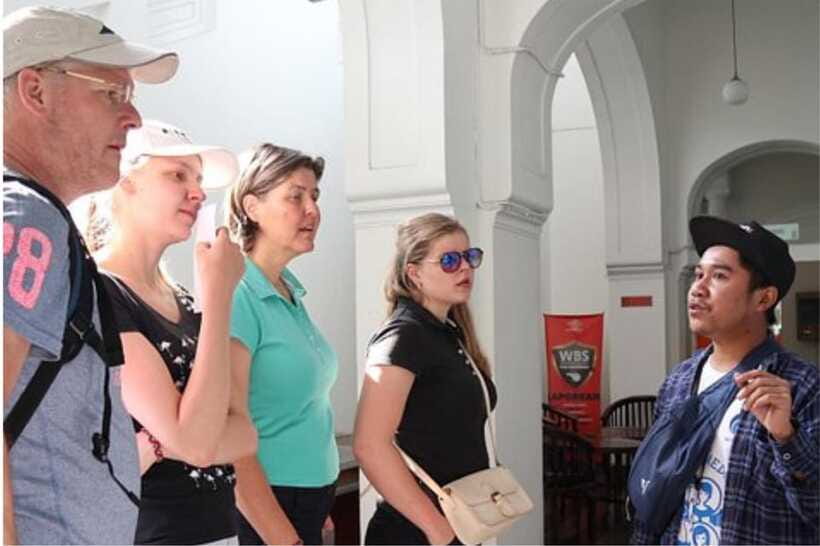
Bringharjo Market is where the tour gets fun in a very real way. You’ll reach it after the walk has already built up momentum, so you feel ready to slow down. Expect the place to be active—music, street performers, and that constant market buzz that makes you forget you’re on a schedule.
This is also where your guide helps you prioritize. The tour includes guidance on which foods you must try and which sights are worth targeting on your own. If you’re trying to avoid costly mistakes—like choosing something bland or something too complicated to order—this kind of direction pays off.
In smaller moments, different guides have added extra local flavor to the break. Some past groups have tried jamu with their guide, picked up sweet or refreshing fruit drink ideas, or used the market stop as a way to understand how locals shop, browse, and snack without making it feel staged.
One note: market areas can be crowded and loud. If you’re sensitive to noise, bring patience. The upside is that you’ll leave with a memory that feels like Yogyakarta rather than a generic tourist market.
Kilometer Zero finish: Turn the walk into a smart itinerary
You end at Kilometer Zero, a well-known roundabout and busy street where the city’s motion is obvious the second you arrive. Finishing here is practical. It’s not just symbolic; it helps you orient yourself to where you are in the city’s layout.
Your guide uses this ending point to share the kinds of tips that make your next day easier: best areas to stay, how to get around efficiently, how to budget, and how to spot deals without wasting time bargaining for the wrong things. You’ll also get advice on top attractions that you can discover independently, so you can build your remaining time around what you care about most—temples, crafts, day trips, or just more street life.
If you like planning, this wrap-up is the moment when the tour becomes a tool. Instead of returning to your hotel with photos and no plan, you should leave knowing what to do next and how to do it with less friction.

What you actually learn in 2 hours (and what it won’t replace)
This is a crash course, not a full master’s degree in Java. But it’s designed to give you durable context fast: why Yogyakarta became special, how historical conflict changed people’s lives, and why the city’s current tolerance and multicultural feel isn’t random.
I also like the emphasis on everyday understanding. Your guide explains how to use useful apps like a local does, which matters more than you’d think when your next stops are spread out. Even if you don’t memorize every tip, the mindset sticks.
Another strong learning element from past guides: they tailor the tone. People have walked with guides like Kin, Haidar, and Imam, and the experience tends to include lots of room for Q&A. In some groups, the conversation has expanded beyond street history to topics like surviving day-to-day logistics, restaurant choices, and how certain cultural details connect to what you’re seeing right now.
What it won’t replace: a deep temple day or a longer craft workshop. This walk is the front door. It prepares you to do the rest of the tour program more thoughtfully.
Price and value: Why $15 for a 2-hour walk can be a bargain

At $15 per person for a 2-hour walking tour with an English-speaking guide and a small group capped at 8, the value is about how you spend your time. In busy cities, the cost of getting lost, wasting a day, or misreading local customs can easily exceed the price of a guided intro.
The real value is the combination of:
- Orientation (so you can navigate the rest of your trip),
- Context (so you know what you’re looking at),
- Small-group access (so your questions actually get answered).
Guides in past groups have been patient, enthusiastic, and willing to chat about local life. People have also mentioned personal touches like additional drink stops or showing a wet market for coffee, which goes beyond a dry walk-and-point routine.
If you’re the type who likes to learn while moving, this price feels fair because you get structure and shortcuts. If you want private, door-to-door service, you might prefer something else. But for most first-time visitors, this is a smart use of two hours.
Who this walking tour fits best in your trip
This tour fits best if:
- It’s your first day in Yogyakarta and you want to reduce decision fatigue.
- You love street-level travel: markets, shopfronts, neighborhoods, and real public life.
- You’re interested in history, but you want it explained in a way that connects to the city you can see now.
- You want a guide who will answer questions and adjust to your interests.
It’s also a great choice if your schedule is tight. Several guides have helped people plan the rest of their stay, including what to check out independently. If you’re trying to balance temples with everyday Jogja, starting with this street orientation helps you avoid doing everything randomly.
A balanced look at drawbacks: walking, crowds, and outside-only sights
Here’s the honest consideration. This is a walking route through active parts of town. That means:
- You’ll deal with crowds at times, especially around Malioboro and market areas.
- Rain can change the feel of the walk, and you’ll want decent footwear.
- Some stops may feel more like streetscapes than big monument moments, depending on what you were hoping to see.
One past group highlighted that even when it rained most of the time, the experience still worked. That said, the city is still the city: you’ll be outside for most of it. If you hate walking, this won’t magically become a sit-down tour.
Should you book this Yogyakarta city intro walk?
I’d book it if you want your first hours in Yogyakarta to feel grounded, not guessy. The mix of Malioboro orientation, Bringharjo market atmosphere, and history tied to real life is exactly the kind of short tour that makes longer days afterward more fun and less stressful.
Skip it if you already know the city well, you want only major standalone sights, or you’d rather spend your limited time on a longer temple-focused day. Also skip it if you’re dealing with mobility limits; this is a walking experience, and comfort matters.
If your plan includes temples later, crafts later, or day trips later, this is a strong way to set up the rest of the itinerary. You’ll finish with a clearer sense of where you are in the city and what matters most next.
FAQ
How long is the Yogyakarta 2-hour crash course walking tour?
The tour lasts 2 hours.
Where do I meet the guide?
Meet at the Yogyakarta Train Station Monument (Monument Stasiun KA Yogyakarta).
Is the guide available in English?
Yes. The tour is led by an English-speaking guide.
How big is the group?
The group is limited to 8 participants.
What should I bring for the walk?
Wear comfortable walking shoes and bring a camera.
Is there free cancellation and can I reserve without paying right away?
Yes. You can cancel up to 24 hours in advance for a full refund, and you can reserve now and pay later.