Colonial Yogyakarta makes sense on foot. I like how this route turns Dutch colonial history into a clear story from 1811–1949, and I like that the English-speaking guide ties each building to the people affected by it. The one drawback to keep in mind: the tour uses local framing, so accounts of events can vary from other readings of the same past.
You begin at Tugu and finish at Titik Nol (Kilometer Zero), and along the way you get the kind of guided “why does this place matter?” explanation that’s hard to piece together on your own. On past tours, guides such as Hendra, Dora, Hery, and Ophan have been praised for crisp English and story-driven context, and Dora in particular is known for practical street advice too—like how to cross busy roads safely.
In This Review
- Quick hits you’ll remember
- Walking From Tugu to Kilometer Zero: how the colonial story is paced
- Tugu and Jalan Mangkubumi: starting with independence symbolism
- Hotel Toegoe, Yogya Kembali, and Ketandan: luxury, resistance, and multicultural complexity
- Grand Inna Malioboro, DPRD, and the meaning of governance
- Pasar Beringharjo and Monumen Ngejaman: how commerce and symbols carry colonial echoes
- GPIB Marga Mulya and Benteng Vredeburg: religion and control
- Kantor Pos, Bank Indonesia, and BNI Yogyakarta: money and information systems
- Monumen Serangan 1 Maret and Gereja Santo Fransiskus Xaverius: getting to 1949
- Price and value for a $18, 2-hour walking tour
- What I’d bring (and what I’d ask) to get more out of it
- Who should book this tour—and who should skip it
- Should you book? My practical verdict
- FAQ
- How long is the Yogyakarta Colonial Heritage Guide Walking Tour?
- Where does the tour start and where does it end?
- What’s included in the tour price?
- What language is the tour guide speaking?
- Is food included?
- Is it suitable for people with mobility impairments?
Quick hits you’ll remember
- Tugu to Titik Nol, all within a 2-hour story arc that follows the colonial period 1811–1949
- Press, churches, markets, and banks get explained as political tools—not just pretty stops
- Dutch-era governance and resistance themes show up again and again, so the “big picture” lands
- Local perspectives are part of the design, so you’ll hear more than one way to interpret events
- Extra practical value: you may get real-world tips, including safe street crossing and what to look for in street food
Walking From Tugu to Kilometer Zero: how the colonial story is paced
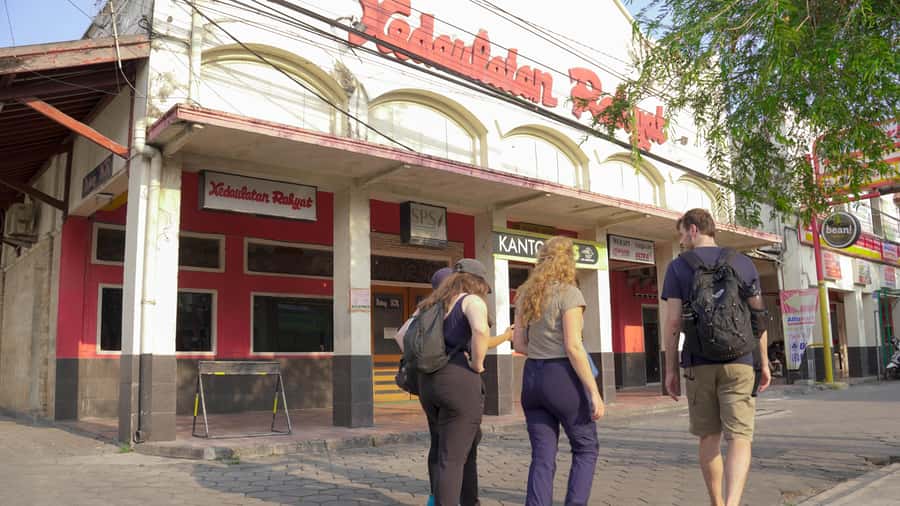
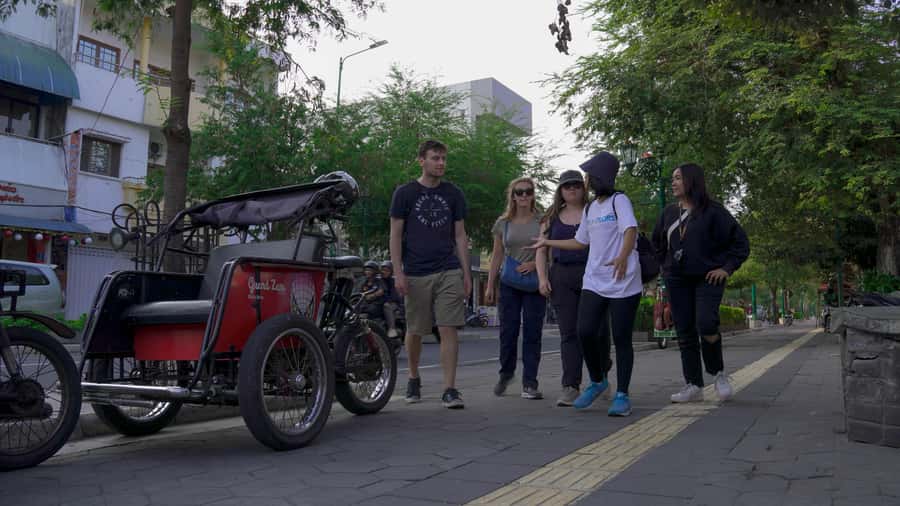
This is a compact, two-hour walking tour, and that timing matters. You’re not trying to read plaques for hours. Instead, you’re moving, turning corners, and letting a historical narrative “click” from one stop to the next.
The route starts at Tugu monument, tied to Yogyakarta’s foundation, and it steadily shifts toward the colonial era’s institutions—press, administration, religion, finance, and public control. By the time you reach Titik Nol, the point isn’t just that “Dutch people ruled.” The point is that the colonial system shaped everyday life, the built environment, and even what later generations chose to commemorate.
Because the tour’s framing is explicitly grounded in Indonesian perspectives, the story can feel nuanced rather than neutral. That’s not a flaw—it’s an invitation to think critically. Just be ready for the fact that history is told through viewpoints, and this tour leans into that reality.
You can also read our reviews of more tours and experiences in Yogyakarta.

Tugu and Jalan Mangkubumi: starting with independence symbolism
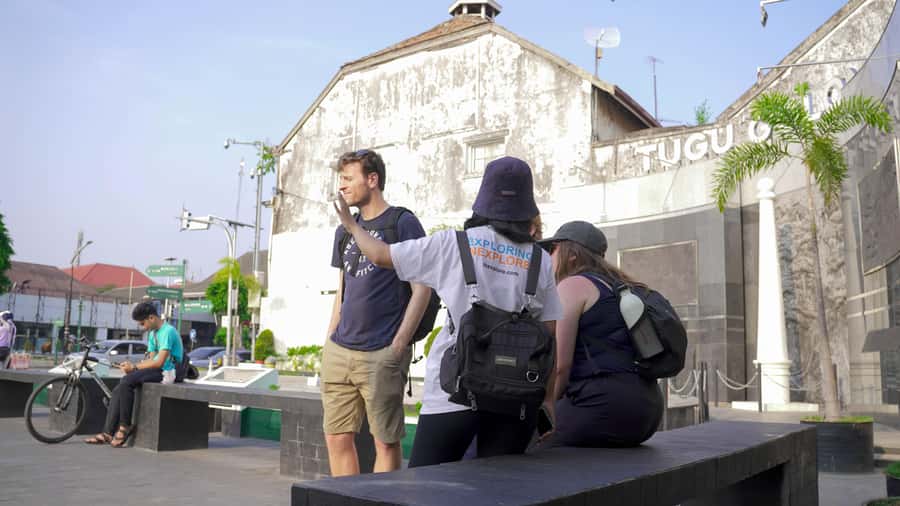
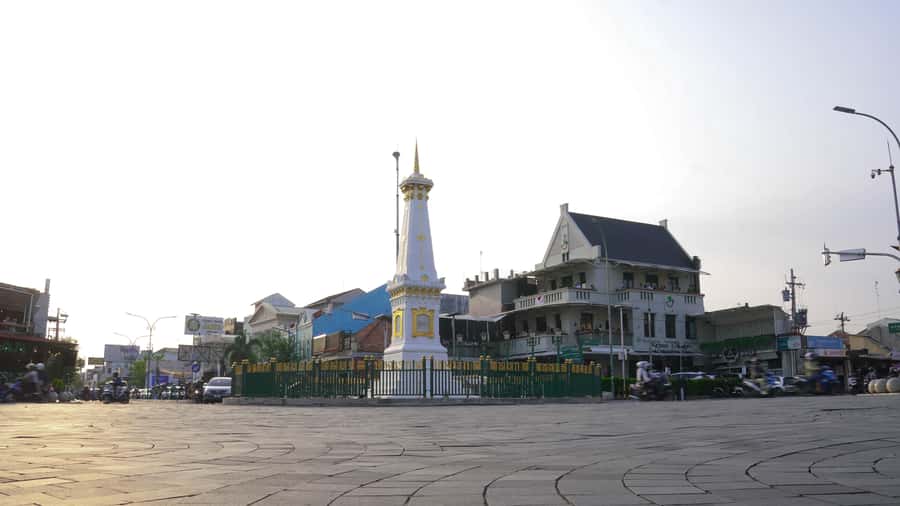
The tour begins at Tugu monument, which is more than a landmark. It’s tied to Yogyakarta’s identity and the city’s early political story—construction associated with Sultan Hamengkubuwono I. What you’re meant to notice is the meaning locals attach to it: Tugu is presented as a symbol of unity and resilience, and the spirit of independence is treated as part of Yogyakarta’s longer timeline, not just a post-colonial slogan.
From there you head down Jalan Mangkubumi, where the tour shifts from monuments to institutions. This is where the story becomes concrete: power isn’t just in palaces. It’s also in information.
One stop that turns this theme into something you can picture is Kantor Kedaulatan Rakyat, described as a key site connected to the press fighting for freedom. Even if you don’t know much about Indonesian media history, the guide’s job is to help you understand why journalism and public opinion mattered in anti-colonial struggle. It’s the kind of detail that makes you look at “public buildings” differently afterward—like they were machinery, not just architecture.
Practical note: since this is a walk through central streets, wear shoes you trust. You’ll be on pavement and navigating traffic crossings, especially later when you reach larger road junctions.
Hotel Toegoe, Yogya Kembali, and Ketandan: luxury, resistance, and multicultural complexity
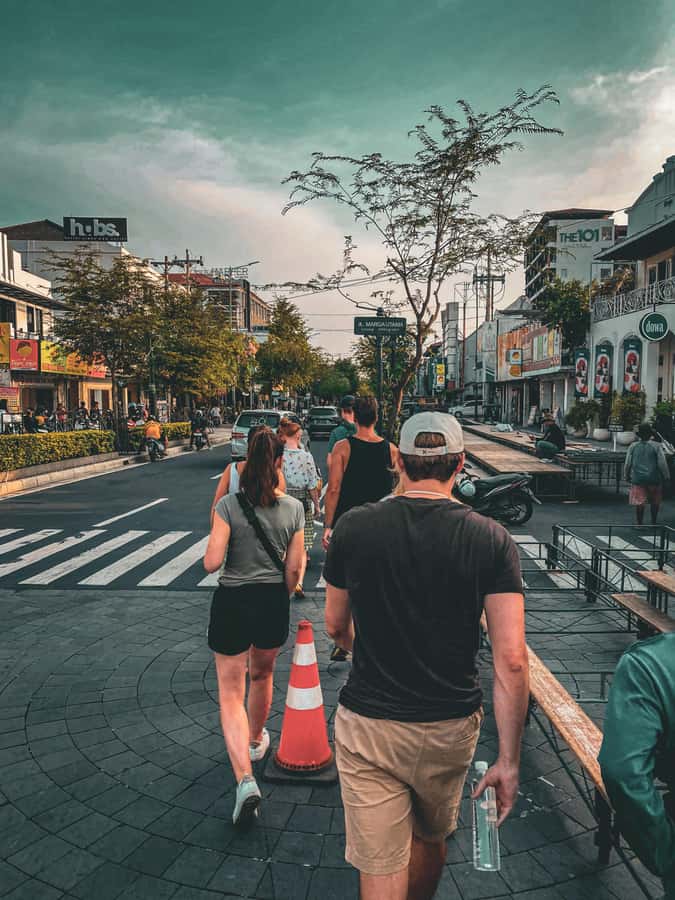
As you keep walking, the tour uses contrast on purpose. One example is Hotel Toegoe. You’re shown as a glimpse of the luxury reserved for Dutch officials during colonial rule—placed deliberately next to the realities of occupation. That contrast does real work: it helps you understand why “colonial comfort” wasn’t neutral. It was built into the system.
Next, you’ll come to Tetengger Yogya Kembali, a monument tied to Yogyakarta’s role in fighting colonial powers. The guide uses this to remind you that Yogyakarta wasn’t just a passive stage. It contributed to the struggle that shaped Indonesia’s later independence story.
Then comes an important cultural pivot at Gerbang Kampung Ketandan (a gateway tied to Kampoeng Ketandan). This is where the tour brings in a multicultural lens—especially the Chinese-Indonesian community and how Dutch colonial policies affected daily life. This stop is valuable because it keeps the narrative from reducing colonialism to only a Dutch-vs-Javanese storyline. Even when you’re short on time, the guide’s explanations make it clear that policies shaped multiple communities differently.
A potential consideration here is emotional tone. Colonial stories can feel heavy, particularly when you’re shown luxury alongside suffering. If you prefer a lighter introduction, you might find this section intense—but it’s also the part that makes the tour feel honest rather than postcard-like.
Grand Inna Malioboro, DPRD, and the meaning of governance
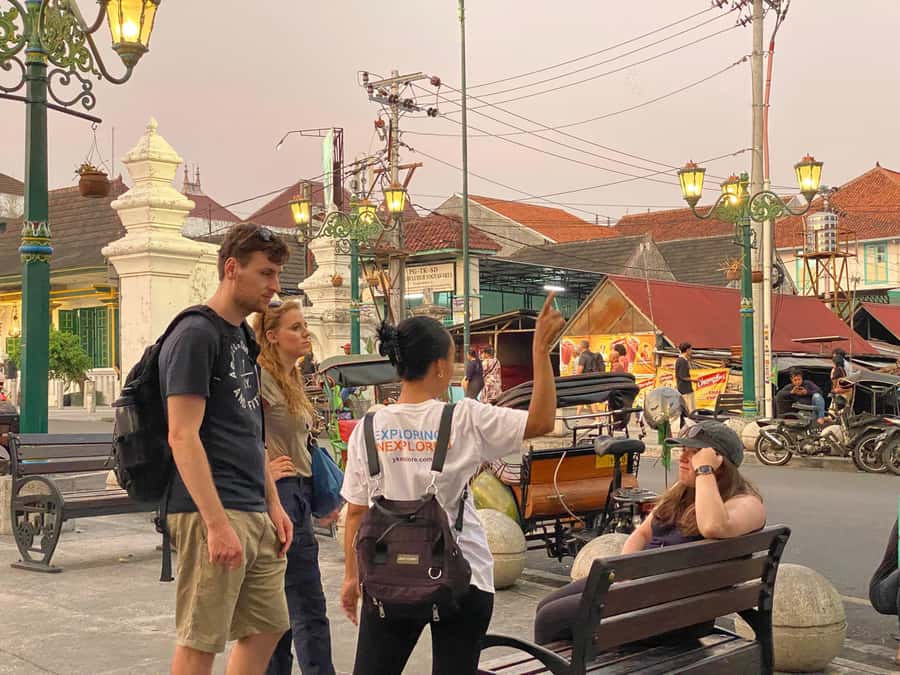
In central Yogyakarta, it’s easy to walk past buildings without asking who used them and why. This tour tries to fix that.
At the Grand Inna Malioboro Hotel and Gedung DPRD, the guide explains how colonial governance structures left traces in political life. Even if you’re not a politics person, you’ll likely appreciate the way this is framed: colonial rule didn’t only enforce labor and taxes; it also trained systems for administration and authority.
You’ll probably leave with a simple takeaway: institutions have memory. When the tour discusses governance, it’s not just about history—it’s about why certain structures and power relationships can look familiar later, even after a change in sovereignty.
Pasar Beringharjo and Monumen Ngejaman: how commerce and symbols carry colonial echoes
A great walking tour stops you from treating the city as a set of monuments. Here, the tour brings you into the everyday.
At Pasar Beringharjo, you’ll see how traditional Javanese life overlaps with the colonial economic system. Markets are where power shows up in daily choices: pricing, goods, who benefits, and what keeps moving. The guide’s job is to help you interpret that without turning the market into a classroom. You just walk, look, and get the context for how economic rules can shape livelihoods.
Then you’ll move to Monumen Ngejaman, also referred to as Wayah Titiyoni (clock monument). The tour connects this icon to colonialism and notes that it has a mixed reception by local Javanese society. That detail matters because it reminds you: public symbols don’t always get accepted. People can admire, reject, reinterpret, or argue about what a monument means.
This is one of those moments where you might pause and think, even after the guide moves on: “So the city doesn’t just remember the past quietly—it argues with it.”
GPIB Marga Mulya and Benteng Vredeburg: religion and control
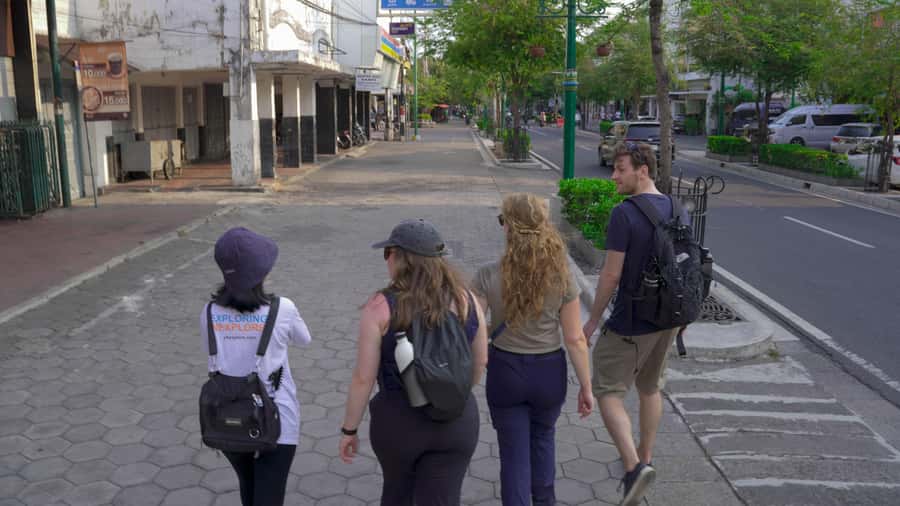
When the tour reaches GPIB Marga Mulya, it highlights the complex role religion played in colonial administration and local resistance. That complexity is a good reason to include this stop: it avoids the simplistic idea that religion was only comfort or only conversion. Instead, you get a sense of how institutions can be used and contested.
Next comes Benteng Vredeburg, a major highlight. You’re told it was originally built to monitor the Sultan’s court, and later it became a symbol of Dutch oppression in Yogyakarta. It’s the kind of place where the architecture almost explains the intent—watchfulness made physical.
If you like history that has spatial meaning, this is where the tour clicks for many people. You can picture the surveillance function: the idea that power didn’t just rule from paperwork; it also watched from walls.
Kantor Pos, Bank Indonesia, and BNI Yogyakarta: money and information systems
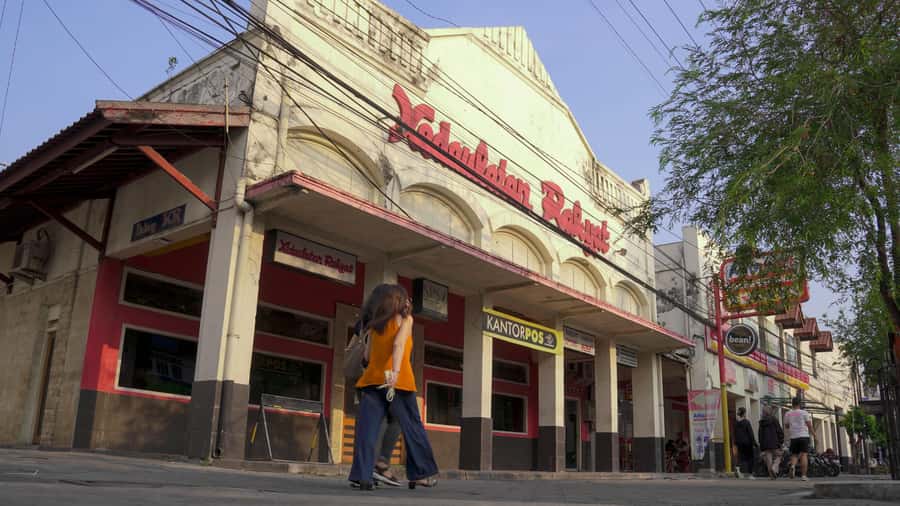
Colonial power relied on two big engines: control of communication and control of finance. This tour addresses both.
At the Kantor Pos Besar Yogyakarta (the central post office), you’ll hear how communication infrastructure supported colonial interests. Even if the building is now part of everyday life, the guide frames it as part of the machinery that connected the colony to decision-makers.
Then you visit Bank Indonesia and BNI Yogyakarta. The tour explains the economic systems that helped fuel colonial interests, often at the expense of local prosperity. This is where the story becomes sharp and practical: colonialism isn’t only banners and battles. It’s also budgets, lending, and what counts as “economic value.”
When you’re done with these stops, look at modern banks with a slightly more suspicious eye—in a respectful way. The buildings may feel official and stable, but the tour nudges you to ask who they serve and how money flows shape power.
Monumen Serangan 1 Maret and Gereja Santo Fransiskus Xaverius: getting to 1949
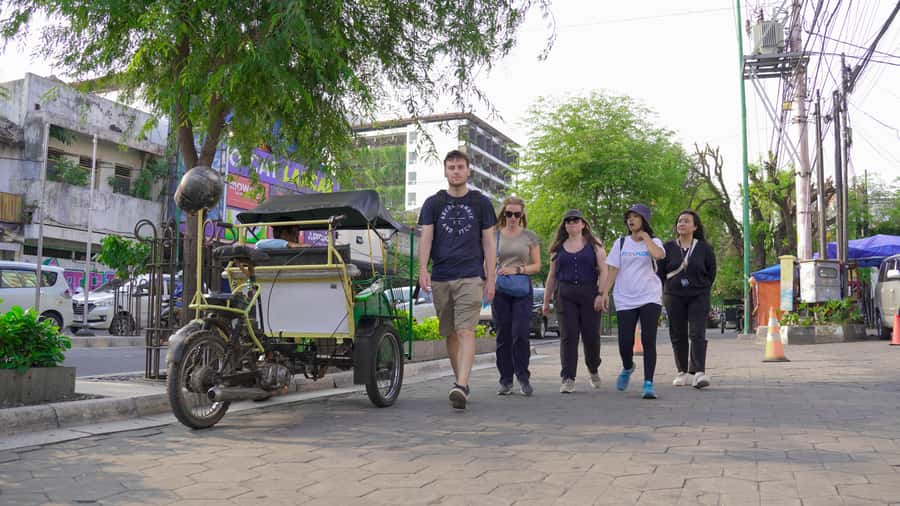
A good colonial tour should end with what changes after the era. Here, the guide brings you to Monumen Serangan 1 Maret, highlighting the Indonesian struggle to reclaim sovereignty during the Dutch reoccupation in 1949. This turning point gives the story weight: you’re reminded that independence didn’t arrive by luck. It came through conflict, resistance, and political pressure.
Finally, the tour concludes at Gereja Santo Fransiskus Xaverius. The guide uses it as a poignant reminder of Yogyakarta’s diverse colonial legacy. Churches, like other colonial-era institutions, can feel like part of the city’s fabric today—but the guide connects them to the era’s power structures and social changes.
At this final stretch, you’ll likely feel the tour’s core message: history is visible in ordinary places. Not just in museums—also in offices, markets, religious buildings, monuments, and the road names you walk past.
Price and value for a $18, 2-hour walking tour
At $18 per person for a 2-hour guided walk, you’re paying for three things:
- An English-speaking guide who can connect dates (1811–1949) to buildings and symbols.
- Convenience: a route that strings multiple stops together in a logical order, from Tugu to Titik Nol.
- On-the-ground interpretation, including context you probably won’t get if you stroll independently.
You also get water included, which is a small but real comfort when you’re walking in warm conditions.
What you’re not getting is food. The tour is designed for walking, story, and sightlines—not meals. If you’re hungry, plan to eat before or after.
Value-wise, the tour is strongest when you want meaning with your walking. If you’re the type who enjoys reading details quietly on your own, you might feel this is more “guided storytelling” than “museum time.” But if you like a guided narrative that teaches you how to notice what you’re looking at, $18 can feel like a fair trade.
What I’d bring (and what I’d ask) to get more out of it
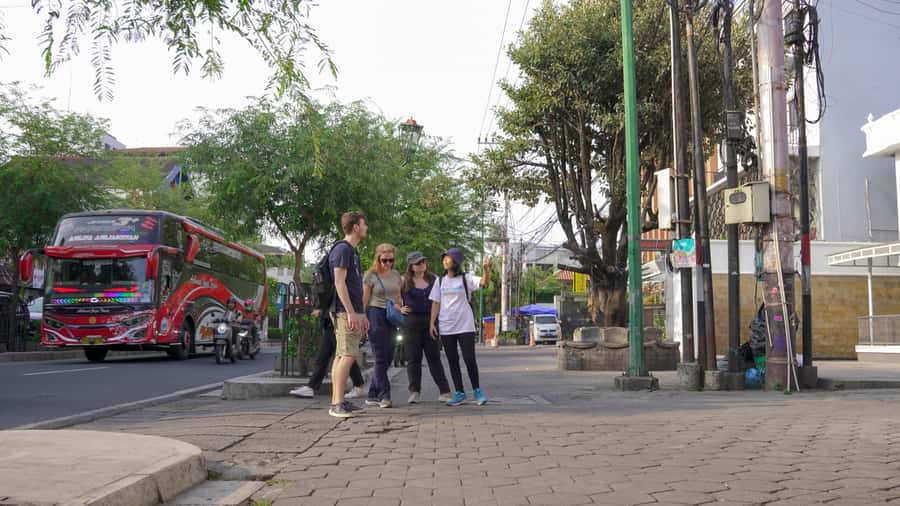
This tour covers many sites on foot, and the time between stops can be short. To make it work well, I’d do two simple things:
- Bring comfortable walking shoes and something for sun protection if you need it.
- Ask your guide questions at natural pause points—especially if you want clarification on why certain colonial-era symbols (like the clock monument) were received differently.
From past groups, guides have been praised for adding personal insights and responding to questions clearly in English. In one case, Dora was also known for safety tips for crossing busy roads and for pointing out street-food options. Even if street food isn’t part of what’s included, those comments can help you plan your next stop confidently.
Who should book this tour—and who should skip it
This tour is a strong fit if you want:
- A walkable overview of colonial Yogyakarta tied to real places
- A guide who can explain how press, governance, religion, and finance operated in the colonial system
- A story that includes local perspective, not just a one-size-fits-all European narration
It may be a poor fit if:
- You have mobility impairments. The tour is listed as not suitable for mobility issues.
- You prefer very neutral, textbook-only presentations. The tour note makes it clear that historical accounts can vary by cultural viewpoint, and the guide incorporates local insight—even when it differs from other interpretations.
Should you book? My practical verdict
If you’re short on time in Yogyakarta and you want the city’s colonial-era story explained in plain English, this is an easy yes. The route is built around meaning: Tugu starts the identity story, and the rest of the walk keeps returning to how power worked—through information, administration, banking, and public symbols.
I’d book it when you like walking + talking, and when you want a guide to help you read the city without getting lost in dates. I’d skip it if your mobility is limited or if you want a strictly neutral approach with no local interpretive framing.
If you go, keep one mindset: look at each building as a “system,” not just a landmark. That’s where the tour pays off.
FAQ
How long is the Yogyakarta Colonial Heritage Guide Walking Tour?
The tour lasts 2 hours.
Where does the tour start and where does it end?
It starts at the YKExplore Meeting Point sign in the Tokio District area, and it finishes at Titik Nol Yogyakarta (Kilometer Zero).
What’s included in the tour price?
The included items are an English-speaking guide and water.
What language is the tour guide speaking?
The tour is in English.
Is food included?
No. Food and drinks are not included.
Is it suitable for people with mobility impairments?
No, the tour is not suitable for people with mobility impairments.