One day, half of Bali’s best crafts and views. This private Ubud–Tegalalang–Kintamani loop strings together a batik factory, gold-and-silver workshops, and the big nature sights, with pickup and an air-conditioned ride. I like that the route cuts research time and keeps the pace efficient, and I like the human touch from guides who help with timing and photos. One watch-out: some major entrance fees are not included, so expect extra cash on the day.
You also get the practical stuff that matters on a long day: bottled water, an English-speaking driver, and a private setup where it’s just your group. It’s built for people who want a highlight reel without feeling like they’re doing a puzzle with maps and traffic.
If you hate back-to-back stops, this may feel like a lot. But if you want a structured day that hits Ubud’s crafts and Bali’s signature scenery, this is a strong value pick.
In This Review
- Key highlights worth your attention
- A smart route that gets you places fast
- Batubulan batik: wax-resist fabric art up close
- Celuk gold and silver: jewelry-making as a village craft
- Mas wood carving: a distinctive Ubud-style look
- Mount Kawi (Pura Gunung Kawi): temple carved into stone
- Kintamani lunch stop and Mount Batur views
- Tegalalang rice terraces: iconic, but still worth it
- Sacred Monkey Forest Sanctuary: temples plus lively macaques
- Price and ticket reality check: where the $30 really fits
- How the guiding feels in practice (and why it matters)
- Timing tips: plan for crowds, steps, and weather
- Who this Bali Ubud–Tegalalang–Kintamani tour suits best
- Should you book this tour?
- FAQ
- What is the duration of the Ubud to Tegalalang and Kintamani tour?
- Is hotel pickup and return transportation included?
- Is this a private tour or a shared group?
- Do I ride in an air-conditioned vehicle?
- Is bottled water provided?
- Are entrance tickets included?
- How much are the not-included entrance fees?
- How long do the craft and temple stops last?
- Is there an English-speaking driver?
- Do I need to pay tips?
Key highlights worth your attention
- Private transport with pickup so you’re not stuck coordinating rides between villages
- Batik, gold, and wood carving in one sweep for a real taste of Ubud-area craftsmanship
- Mount Kawi + Kintamani in the same day for temple archaeology and volcano caldera views
- Tegalalang and Monkey Forest for the classic Bali photo stops with a timed plan
- Guides with strong pacing (Wadi, Agung, and Gusti are named for great communication and helpful extra stops)
A smart route that gets you places fast
Bali is big, and the distances between Ubud-area sights add up fast—especially if you’re trying to plan around traffic and limited daylight. This tour is built to do the moving for you, using a private, air-conditioned vehicle and pickup and return transfers.
I like that it feels structured rather than chaotic. You get a driver who speaks English, bottled water for the ride, and a day plan with set time blocks at each stop. That means you spend more time looking around and less time figuring out what’s next.
The private format also matters. It’s only your group participating, so you’re not stuck waiting on strangers at every photo spot. If you’re traveling with family or want a calmer day, that’s a big plus.
You can also read our reviews of more tours and experiences in Ubud.

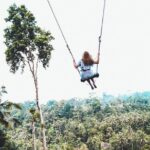
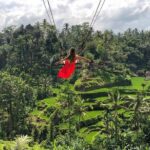
Batubulan batik: wax-resist fabric art up close
The day starts with batik at a weaving center in Batubulan Village (about 12 km from Kuta). Batik is traditional cloth decoration made with a wax-resist method: artisans use dots and lines from wax to create patterns, then dye the fabric. When the wax is removed, the design stays.
This stop is a real eye-opener for first-timers. Even if you’re not buying anything, watching the process helps you understand why batik is such a big deal in Indonesia. It also gives you a sense of Bali’s attention to detail—small lines and dots doing the heavy lifting.
Timing is short—about 30 minutes—and the admission ticket is noted as not included in the provided details. If you’re the kind of person who likes to read every label and ask lots of questions, you might want to move a bit slower than the schedule allows.
Celuk gold and silver: jewelry-making as a village craft

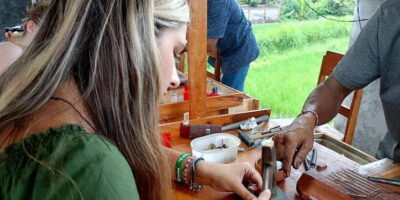
Next comes Celuk Village in Sukawati District, Gianyar Regency. This place is known for gold and silver handicrafts, with many families involved in the work. The production is serious and professional, and you’ll see a variety of items made for both souvenirs and export markets.
What I like about adding Celuk here is the variety. After batik, you get a different kind of craft—metalwork instead of fabric—so the day doesn’t feel repetitive. Expect to see jewelry styles like rings, necklaces, earrings, hairpins, and brooches.
Like the first craft stop, the time here is about 30 minutes, and the admission ticket is marked as not included. If shopping is on your mind, this is a practical place to browse early while you still have energy.
Mas wood carving: a distinctive Ubud-style look
Mas Village is known for wood sculptures, with a carving style described as a synergy of humanism and naturalism. Translation: you’ll see figures and forms shaped in a way that connects people with the natural world. It’s also in the broader Ubud district area, so it fits smoothly into the day.
This stop is another short one (about 30 minutes). That can be a drawback if you’re a serious art buyer, because you may want more time to compare pieces. Still, it’s useful for understanding local style fast—and grabbing small souvenirs without turning your day into an all-day shopping mission.
Admission is noted as not included, so plan for that. If you want to keep your spending under control, set a budget before you arrive, then stick to it.
Mount Kawi (Pura Gunung Kawi): temple carved into stone
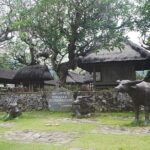
Mount Kawi is an archaeological site with a pretty unique look. Locally, it’s called Pura Gunung Kawi, and the temple includes antique candis carved into the face of a rocky mountain. The holy Pakerisan River flows through the main site.
This is one of those stops that feels different from the usual photo spots. It’s not about a scenic overlook as much as it is about the site itself—stone details, structure, and the sense of place. About 30 minutes is a reasonable window, as long as you’re okay with some walking and uneven terrain typical of older sites.
The admission fee is explicitly listed here: IDR 50.000 per person, and it’s also noted as not included. So budget for it when you’re thinking about total cost.
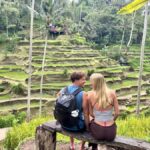
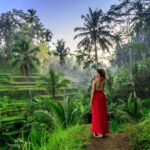


Kintamani lunch stop and Mount Batur views
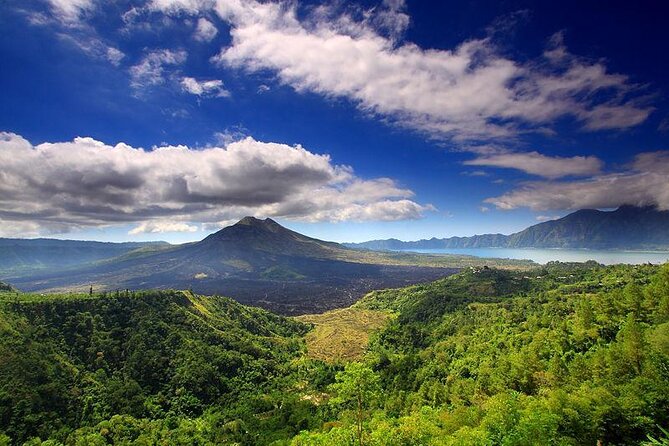
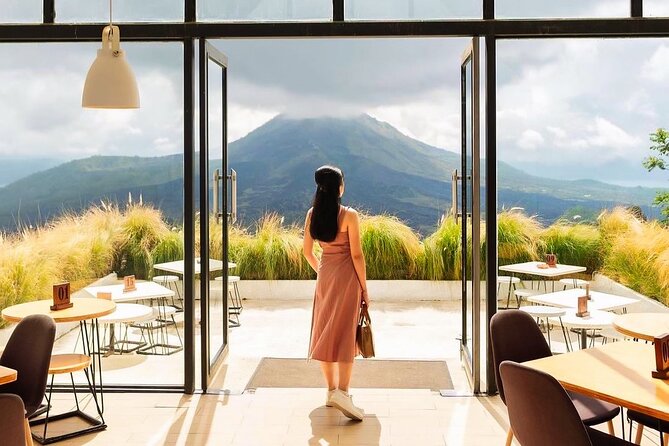
Then you move into the Kintamani highland area, near the active Mount Batur. The plan includes lunch around there (the cost of lunch isn’t clearly listed as included), and while you eat you can enjoy views of the caldera and the lake.
This is a great contrast to the earlier craft-focused stops. You go from details you can hold in your hands to a big, open view that makes the whole trip feel bigger. The area is also described as having a cooler climate, which is a welcome break from Bali’s warmer lower elevations.
The admission fee for Kintamani is listed as IDR 50.000 per person and noted as not included. If the weather is hazy, the caldera view might be less dramatic—so it helps to keep expectations flexible. The good news is the tour notes that the experience requires good weather, and adjustments can happen if conditions are poor.
Tegalalang rice terraces: iconic, but still worth it
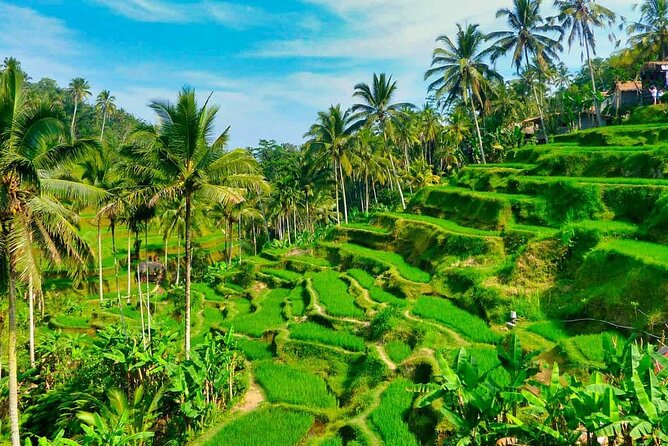
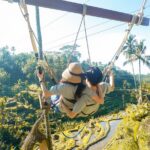
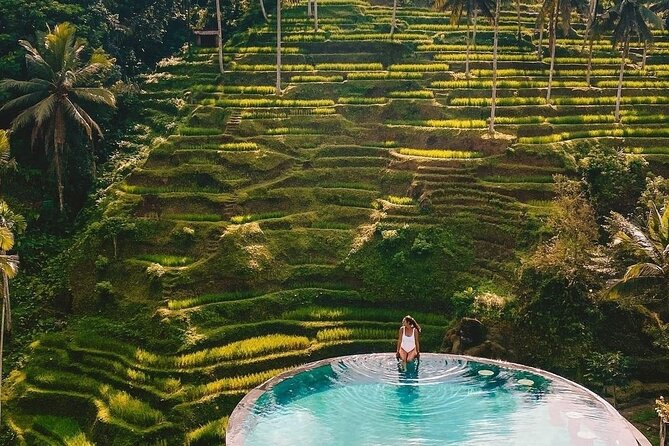
Tegalalang Rice Terraces are the Ubud-area scene you’ve probably seen everywhere in photos. Yes, it’s touristy. But the terraces are also genuinely beautiful, with dramatic steps and greenery that still look impressive even in a crowd.
The stop is about one hour. That’s enough time to do the main viewing areas and take photos without rushing, but it’s not enough time to wander forever. Wear comfortable shoes. The ground can be uneven, and the best photo angles often mean walking a bit.
The entrance fee is listed as IDR 20.000 per person and noted as not included. If you’re trying to keep your day tightly budgeted, this is one of the smaller ticket costs—still worth planning for.
Sacred Monkey Forest Sanctuary: temples plus lively macaques
The final main cultural stop is the Sacred Monkey Forest Sanctuary in Ubud. You’ll see carved artwork, sculptures, and a temple area while macaques are around freely.
This part of Bali can be surprisingly educational. You’re not just looking at monkeys—you’re also seeing how the site’s temple and artwork sit alongside the animals. The combination makes it feel like a living place, not just a staged attraction.
This stop runs about one hour. Admission is listed as IDR 80.000 per person and noted as not included. Since the sanctuary involves wild animals, it’s smart to follow your driver’s instructions closely while you’re there and keep your belongings secure.
Price and ticket reality check: where the $30 really fits
The price shown is $30 per person for a full day around 8 to 10 hours with pickup and return transfers, a private air-conditioned vehicle, bottled water, and an English-speaking driver. That structure alone saves time and hassle, especially if you’re staying in Ubud or nearby and want everything handled.
One key detail: the tour notes that admission tickets to attractions in an A price tier are included, but several major entrance fees are listed as not included. Specifically, the not-included tickets are:
- Gunung Kawi (Mount Kawi): IDR 50.000 per person
- Kintamani: IDR 50.000 per person
- Tegalalang Rice Terraces: IDR 20.000 per person
- Ubud Monkey Forest: IDR 80.000 per person
That’s IDR 200.000 per person in clearly listed entrance fees for those four stops. Tips and gratuities are also optional, and other personal expenses are not included.
So is it good value? Usually, yes—because the included part covers the hardest logistics: transport, time efficiency, and a guide/driver who helps you move between sites. Your real decision point is whether you’re comfortable paying the additional entrances at the big attractions.
How the guiding feels in practice (and why it matters)
A long day needs more than a vehicle—it needs someone who can keep timing realistic. In the feedback for this experience, guides like Wadi, Agung, and Gusti are named for professionalism, communication, attentiveness, and smart pacing.
I’d pay extra attention to that if you’re traveling with older parents or anyone who needs a kinder pace. Gusti is specifically praised for adjusting the rhythm for a mother who was a bit older, which is exactly what you want on a day with multiple stops.
Photography support also comes up. Wadi is singled out for being an excellent photographer, which matters at Tegalalang and the scenic highland areas where angles can make or break your photos. If photography is a priority, this kind of guide attention is more valuable than it sounds.
Timing tips: plan for crowds, steps, and weather
This tour runs 8 to 10 hours, so you’re committing to a full day. That usually means you’ll be exposed to heat in lower areas and then feel cooler up high around Kintamani. You’ll also do multiple short walks and viewing areas, so comfortable footwear is not optional.
The experience notes that it requires good weather. If conditions are poor, you should expect a date change or refund to be offered. In practice, that’s reassuring because it suggests the route depends on visibility for some of the big viewpoints.
If you’re sensitive to crowds, aim to be flexible about which photo spots you prioritize. Some of the iconic places like Tegalalang and Monkey Forest can get busy, so treat photos as a bonus, not the only goal.
Who this Bali Ubud–Tegalalang–Kintamani tour suits best
This tour fits best if you:
- Want a single-day highlights plan in and around Ubud
- Like craft culture (batik, gold/silver work, and wood carving) paired with scenery
- Prefer a private setup with pickup and an air-conditioned ride
- Would rather pay a fair price than spend your day arranging transport
It may not fit you as well if you:
- Want lots of free time at each stop (most are around 30–60 minutes)
- Don’t want to handle multiple entrance fees on top of the tour price
- Hate walking on uneven ground at temples and terraces
If you’re a first-time Bali visitor, this is a solid way to get your bearings fast—especially since it blends culture and nature in one loop.
Should you book this tour?
Yes, I’d book it if you want an organized Ubud-to-Kintamani day that tackles Bali’s main hits without stress. The combination of private transport, an English-speaking driver, and tightly planned time at each stop is the real value, and the extra guidance quality from named drivers (Agung, Wadi, Gusti) can make it smoother than a basic transfer.
I would hesitate only if entrance fees and a packed schedule feel like a bad mix for you. If that’s your situation, consider staying longer in fewer places instead. But if your goal is to see a lot, learn a little, and leave with strong photos and clear memories, this is a practical, good-value way to do it.
FAQ
What is the duration of the Ubud to Tegalalang and Kintamani tour?
It runs about 8 to 10 hours.
Is hotel pickup and return transportation included?
Yes. Hotel pickup and return transfers are included.
Is this a private tour or a shared group?
It’s private. Only your group will participate.
Do I ride in an air-conditioned vehicle?
Yes. The tour includes private transportation with an air-conditioned vehicle.
Is bottled water provided?
Yes. Bottled water is included.
Are entrance tickets included?
The tour notes admission tickets to attractions in price tier A are included, but several entrances are listed as not included. Those not-included fees are for Gunung Kawi, Kintamani, Tegalalang Rice Terraces, and the Ubud Monkey Forest.
How much are the not-included entrance fees?
They are listed as: Gunung Kawi (IDR 50.000), Kintamani (IDR 50.000), Tegalalang Rice Terraces (IDR 20.000), and Ubud Monkey Forest (IDR 80.000) per person.
How long do the craft and temple stops last?
Most craft stops are about 30 minutes, and Tegalalang and Monkey Forest are about 1 hour. Mount Kawi is about 30 minutes, and Kintamani is about 1 hour.
Is there an English-speaking driver?
Yes. An English-speaking driver is included.
Do I need to pay tips?
Tips and gratuities are not included and are optional.