Ubud has plenty of food tours, but this one starts where the flavors are grown: an organic farm and garden. You’ll learn how Balinese dishes rise from fresh ingredients, not shortcuts, with a focus on what’s growing and how it’s used.
I especially loved two things: the hands-on ingredient picking (staples pulled from the farm when it’s harvesting time) and the way the chef connects ingredients to real functions in Balinese cooking. The lunch you eat is what you make, so it feels earned, not just served.
One thing to consider: the class runs in an outdoor setting and requires good weather, so if conditions are poor, your experience may be rescheduled or refunded.
In This Review
- Key Highlights You’ll Actually Care About
- How This Organic Cooking Class Works in the Real World
- Pickup, Welcome Drink, and Meeting the Chef
- The Farm and Garden Lesson: Ingredients First
- Cooking in a Small Group With Mostly Manual Tools
- What you’ll likely be doing during cooking
- Eating Your Own Lunch (The Best Part)
- Optional Swing and Natural Waterfall Time
- Getting Back to Your Accommodation
- Price and Value: Is $47 Worth It?
- Who This Organic Cooking Class Fits Best
- Should You Book This Organic Cooking Class in Ubud?
- FAQ
- How much does the organic cooking class cost?
- How long is the experience?
- Where does the tour take place?
- Is pickup from my accommodation included?
- What does the class include?
- How large is the group?
- Are there optional activities besides the cooking class?
- Do I need good weather for the experience?
Key Highlights You’ll Actually Care About
- Farm pickup + drop-off in Ubud: You get transport to and from your accommodation as part of the experience.
- Welcome drink on arrival: A small but pleasant start before you start chopping or cooking.
- Garden-based ingredient learning: You move through a garden planted with herbs, spices, and staples used in the meal.
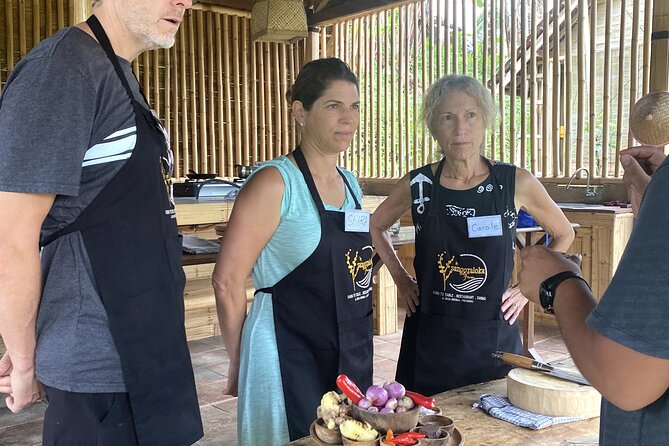
- Manual cooking tools: You’ll cook with mostly traditional, manual tools, which makes the pace slower and more hands-on.
- Small group size (max 10): Easier to ask questions and stay close to the instructor.
- Optional add-ons: A swing and a natural waterfall are listed as optional activities.
How This Organic Cooking Class Works in the Real World
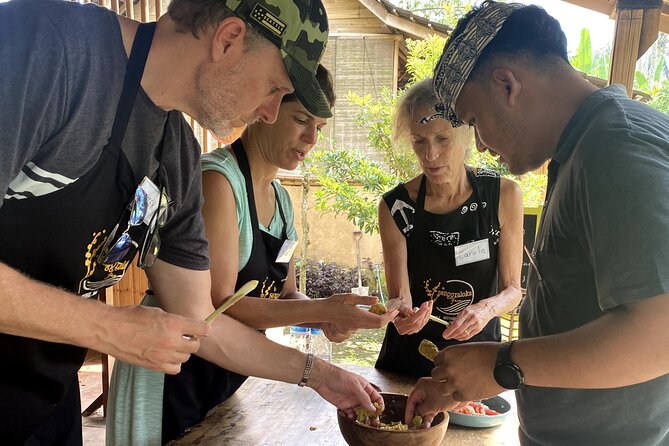
This isn’t a typical cooking class where you show up, follow recipes, and call it a day. The big idea here is organic ingredients from the farm, plus instruction that starts with the plant itself. For you, that usually changes everything: you pay more attention to taste, texture, and what an ingredient is doing beyond flavor.
Your day is built around three phases: getting to the farm, learning and cooking in the garden setting, and then eating the lunch you prepare. The format is designed so you’re not just watching. You’re picking, processing, and cooking with guidance.
The group stays small, capped at 10 people. That matters in Ubud, where popular classes can feel crowded. A smaller group also means the chef can slow down for questions, like what to look for when harvesting or why a certain ingredient is used in Balinese cooking.
You can also read our reviews of more tours and experiences in Ubud.



Pickup, Welcome Drink, and Meeting the Chef
The experience begins with pickup from your accommodation in Ubud. This is one of those practical details that instantly improves the whole day. You don’t have to figure out roads, parking, or timing, and you can arrive with less stress.
Once you’re collected, you travel to the farm. You’ll be welcomed with a drink, then your chef explains how the class will run before you start cooking. I like this approach because it sets expectations early. You know what you’ll be doing, you understand the focus on organic ingredients, and you’re more prepared for the garden portion that comes next.
A couple of reviews emphasized how friendly the driver was and how proud the team is of the family farm. That pride shows up in how they explain things, so the day doesn’t feel like a script read once and forgotten.
The Farm and Garden Lesson: Ingredients First
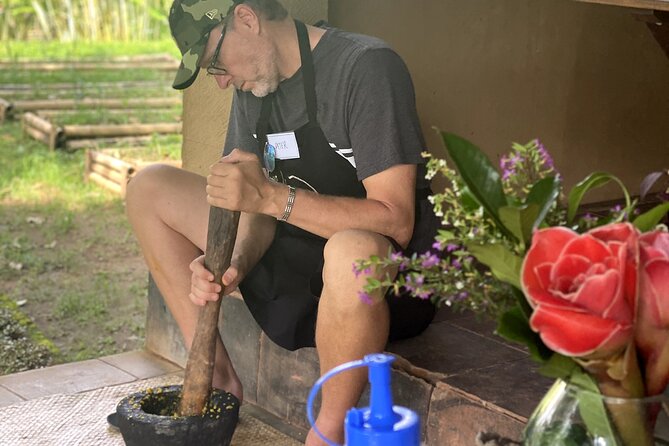
After the initial briefing, you head to the garden. This is where the class earns its name. The garden is planted with varieties of plants used as ingredients—especially spices and staple foods for cooking.
What stands out is the emphasis on direct ingredient sourcing. During harvesting time, you pick staples straight from the farm. Then the staples are processed in the kitchen area for the meal. That means you see the ingredients move from plant to usable cooking components without long delays.
From an experience-value standpoint, this is the part you’ll remember long after you forget which utensil you used. You learn to connect ingredients to their purpose: what they contribute to the dish and how they’re handled.
One review specifically mentioned that the teacher guided the group on ingredients, how to pick them, and even other medicinal uses. Even if medicinal uses aren’t the main goal for every part of the class, it tells you the instruction isn’t shallow. It’s ingredient-centered.
Cooking in a Small Group With Mostly Manual Tools
Then comes the cooking. You’ll work with tools that are mostly manual, which changes the tempo. You’re not speeding through with modern gadgets—you’re learning the rhythm of hands-on preparation.
The chef teaches Balinese food ingredients and their functions from the beginning, then guides you through turning them into a real meal. One review described a session where the group created six different dishes, with the teacher Ninek leading the instruction and the crew supporting the steps.
It’s a lot in a single morning or half-day, but the structure helps: ingredient learning first, then cooking, then lunch. If you’re the type who enjoys doing rather than just watching, this format fits you well.
What you’ll likely be doing during cooking
Because the exact menu isn’t listed, I’ll keep expectations practical rather than inventing details. What you can count on:
- Preparing ingredients you picked or learned about
- Following step-by-step guidance from the chef
- Cooking multiple Balinese dishes in a guided sequence
- Using mostly traditional tools rather than modern kitchen equipment
If you’re expecting a hands-off demo where you just stand around, this likely won’t be for you. If you want to cook with real involvement, it should feel satisfying.


Eating Your Own Lunch (The Best Part)
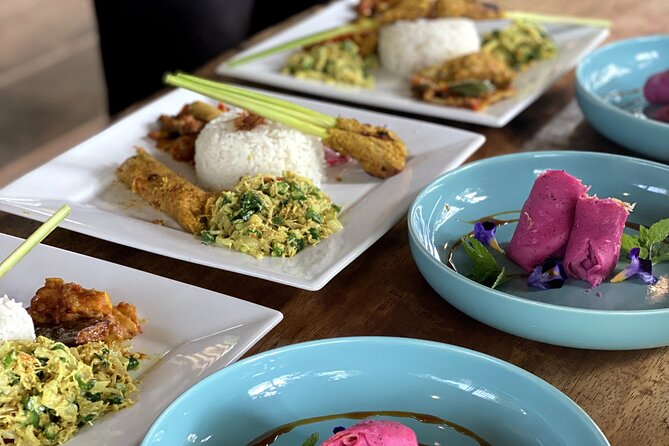
After cooking, you enjoy the lunch you made. This is a key value point. In many cooking experiences, you cook a small portion and then eat something separate. Here, you eat what you create, which makes the meal more meaningful.
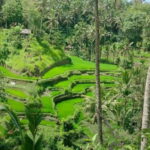
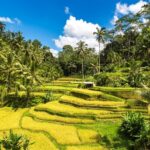
The setting matters too: the class is described as tied to a rice terrace view in the overall experience, and at least one review highlighted eating while overlooking rice terrace scenery. Even if your exact view angle varies by day, you should expect a pleasant outdoor atmosphere while you eat.
And since everything is tied to fresh, farm-based organic ingredients, the lunch tends to taste more like food you’d try to recreate at home. Not because you’ll replicate it perfectly—Balinese cooking has its own complexity—but because you’ll understand the ingredients better.
Optional Swing and Natural Waterfall Time
Some versions of this experience include optional add-ons: a swing and a natural waterfall are listed as possibilities. That’s a nice bonus if you’re pairing cooking with sightseeing goals in Ubud.
Just remember: these are optional. If your main priority is organic cooking and ingredient learning, you can keep your focus on the farm and skip the extras. If you’re the type who likes mixing activities in one morning, these add-ons can extend the fun without turning the day into a chaotic schedule.
Getting Back to Your Accommodation
At the end of the activities, you’re dropped back to your accommodation. That closes the loop nicely. Cooking classes often leave you stranded with a taxi problem. Here, transport is part of the package, which lets you plan the rest of your day without guesswork.
Also, because the experience requires good weather, it’s smart to keep your schedule flexible around it. If weather changes, your plan may shift.
Price and Value: Is $47 Worth It?
At $47 per person for about 4 hours, the value is strongest if you care about how food is made, not just tasting a meal.
Here’s what you’re getting for your money:
- Pickup and drop-off in Ubud
- A welcome drink
- Farm and garden ingredient education
- Organic-style ingredient handling (including picking during harvesting time)
- Guided cooking using mostly manual tools
- A lunch you prepare
- A small group size (max 10)
If you’ve done cooking classes before, you know the biggest cost is often the instruction time and the quality of ingredients. This one tries to justify that with real farm sourcing and hands-on learning. You’re also not paying extra to get the transport solved.
The one trade-off is that it can be weather-dependent and more active than a purely indoor class. If you want mostly sitting and eating, you might feel it’s too much movement. If you like learning ingredients firsthand, the price starts to make sense fast.
Who This Organic Cooking Class Fits Best
This class is a strong match if you:
- Want Balinese cooking taught from the ingredient source
- Like hands-on experiences (picking, processing, cooking)
- Prefer smaller groups with time to ask questions
- Enjoy learning how ingredients function in the dishes, not just following steps
It’s also a good choice for couples or friends who want a shared activity with a clear outcome: lunch made by you.
If you’re short on time in Ubud, plan your day carefully. It’s about 4 hours, plus you’ll have pickup timing. If you’re sensitive to outdoor walking or working near gardens, factor in comfort and mobility, since it’s part of the experience.
Should You Book This Organic Cooking Class in Ubud?
Yes, I’d book it if your idea of a great Ubud day includes farm-to-table learning and cooking with guidance in a small group. The organic angle isn’t just marketing here—it’s built into the flow of the class, from garden learning to picking staples during harvesting time, then cooking with mostly manual tools, then eating your results.
You might skip it if you hate outdoor settings or want a low-activity, purely indoor experience. Also, if you have strong dietary restrictions or allergies, I’d treat the class as something you should confirm in advance, since ingredients are fresh and sourced from the farm.
If you’re curious about how Balinese flavors come together and you like the feeling of making lunch yourself, this is the kind of tour that feels worth repeating the moment you get home.
FAQ
How much does the organic cooking class cost?
It costs $47.00 per person.
How long is the experience?
The duration is about 4 hours.
Where does the tour take place?
The cooking class takes place in Ubud, Indonesia.
Is pickup from my accommodation included?
Yes. Pickup is offered from your accommodation, and you’re also dropped off afterward.
What does the class include?
It includes a welcome drink, learning about organic Balinese ingredients, ingredient harvesting from the farm during harvesting time, a cooking session using mostly manual tools, and lunch that you cook yourself.
How large is the group?
The experience has a maximum of 10 travelers.
Are there optional activities besides the cooking class?
Yes, a swing and a natural waterfall are listed as optional activities.
Do I need good weather for the experience?
Yes. The tour requires good weather, and if it’s canceled due to poor weather, you’ll be offered a different date or a full refund.