Canang sari making turns culture into your hands. This 90-minute Ubud class is a gentle, hands-on way to understand the daily Balinese offerings you’ll see everywhere, while you build one of your own. I love that you learn the meaning behind the ingredients, not just the steps. I also love that you leave with a physical memento, since you make your own Canang Sari during the lesson.
The one drawback to plan for: this is tied to religious practice, so it’s not a casual “crafting only” stop. It’s not suitable for pregnant women, and you’ll also want to follow the no alcohol and no drugs rule while you’re there.
In This Review
- Key highlights worth your attention
- Why Canang Sari Is Everywhere in Bali
- The 90-Minute Flow: What You Actually Do
- Ubud’s Local Setting: Clothes, Calm, and a Neighborhood Feel
- Learning the Symbols: Flowers, Fruits, and Meaning
- Building Your Canang Sari Step by Step
- A Ceremony Moment (When Your Group Gets That Opportunity)
- Price and Value: Is $25 a Fair Deal in Ubud?
- Practical Tips: What to Wear and Bring
- Who This Class Suits Best (and Who Should Skip)
- How to Get More Out of Your Canang Sari Class
- Should You Book the Canang Sari Class in Ubud?
- FAQ
- How long is the Canang Sari class?
- What does the class cost?
- Where is this activity located?
- Is food included?
- What’s included in the session?
- What language is the instruction?
- What should I bring?
- Are there any rules about alcohol or drugs?
- Is there free cancellation?
Key highlights worth your attention
- Hands-on offering making with the equipment you need, plus a sarung-style outfit for the session
- English instruction that keeps the symbolism clear and easy to follow
- Meaning over memorization, so each element has a reason in Balinese Hindu life
- Personal participation (you’ll be guided to create your own Canang Sari)
- Possible ceremony moment, depending on the flow of your specific group
Why Canang Sari Is Everywhere in Bali
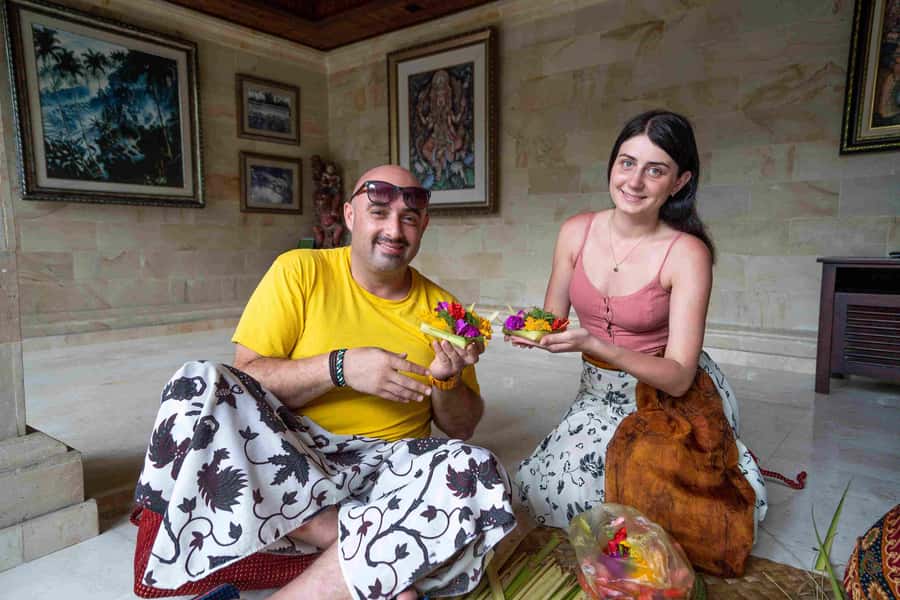
If you’ve walked around Ubud or any Balinese neighborhood, you’ve seen it: small offerings placed at doorways, along paths, and inside sacred spaces. Canang Sari is one of the most common forms you’ll spot, and it’s made from natural materials—often flowers and other symbolic items—assembled with intention.
What makes this class useful is that it doesn’t treat the offering as a tourist prop. You learn how the pieces connect to gratitude and devotion in Balinese Hindu ceremonies. That changes how you see the island. Instead of just noticing pretty little bowls of petals, you start understanding the everyday “why” behind them—how people recognize what supports life, and how they show respect through daily ritual.
The symbolism is the real payoff. You’re not studying from a book while a guide talks. You’re using your hands while the instructor explains what each element represents, which helps it stick.
You can also read our reviews of more tours and experiences in Bali.



The 90-Minute Flow: What You Actually Do
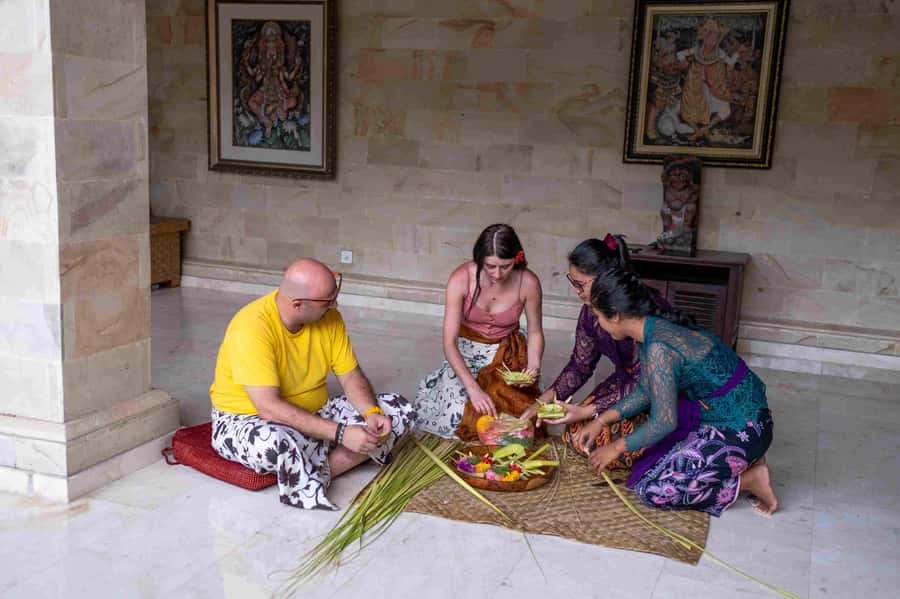
This is designed to fit into a normal day in Ubud. The total time is 90 minutes, with the main Canang Sari class clocking in at about 1 hour. That means you’re not rushed across the whole thing, but you also aren’t sitting around for long stretches.
A typical flow goes like this: you arrive, get settled, and receive the sarung/balinese clothes along with the materials and tools for the offering. Then the instructor introduces what you’re making and why it matters. After that comes the hands-on part—assembling, adjusting, and learning through doing.
You’ll likely spend most of your time building your own Canang Sari, while the instructor keeps you on track and answers questions in English. By the end, you’ve created something you can take home, which is a nice change from classes where you leave empty-handed.
Ubud’s Local Setting: Clothes, Calm, and a Neighborhood Feel
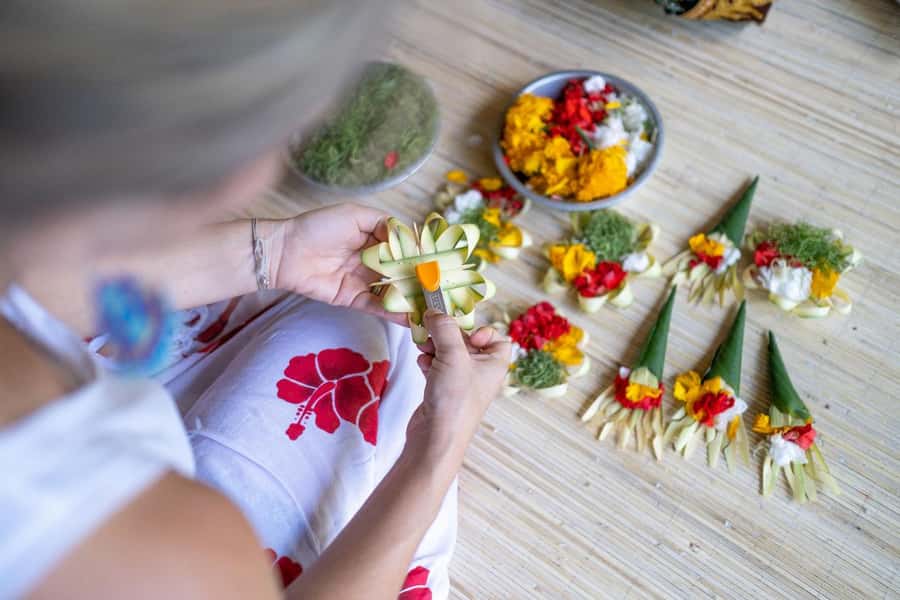
The session takes place in a local cultural setting in Ubud. One common venue that came up is Pondok Petak, a neighborhood cultural center that has a calmer, community vibe (and even a small library). It helps you avoid the “showroom workshop” feel you sometimes get on popular islands.
Getting into the sarung/balinese clothes is more than a photo moment. It signals that you’re stepping into a local ritual mindset. You’ll see that reflected in the pace—slower, quieter, more respectful than a typical souvenir shop stop.
I also like that the atmosphere seems built around conversation as much as crafting. In at least one experience, you get time to speak with the hosts—names that came up include Tutnick and Mama MeiMei—and that’s where you pick up the small human details that never show up in brochures.
Learning the Symbols: Flowers, Fruits, and Meaning
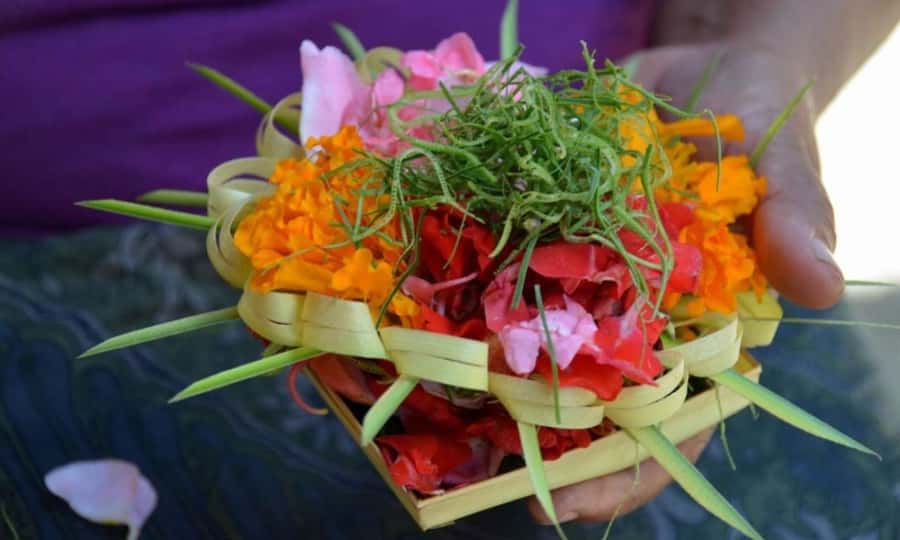
The most valuable part of this class is how the instruction is organized around meaning. Canang Sari is traditionally made from natural materials—primarily flowers and other symbolic items. You’ll hear what each part stands for in the context of gratitude and devotion, and why offerings are placed in temples, homes, and other sacred spaces.
What you’re building isn’t just decorative. It’s a small, practical bridge between the spiritual and the everyday. That’s why this class works even if you’re not religious. The teachings are practical and cultural: you’re learning what Balinese people do daily, and why it matters to them.
I’d pay attention during the explanation stage before you start assembling. Even if your hands learn faster than your brain, the “why” helps you make sense of what you’re doing while you work.
Building Your Canang Sari Step by Step
Once the basics are explained, it becomes a straightforward hands-on class. You receive the equipment, and you’re guided to create your own Canang Sari using the traditional materials.
The exact technique can vary slightly depending on the instructor and the materials provided, but the idea is consistent: you arrange components carefully, layer them with intention, and shape the offering so it looks right and feels right. Your class materials are provided, so you don’t need to bring tools or extra supplies.
In one experience, the instructor team was very patient and attentive, and the group ended up creating their own version together. The key is that the class is designed for people who are trying this for the first time. You’re not expected to already know how the offering is made.
You’ll also likely be able to keep your finished Canang Sari as a memento. That’s a great souvenir choice because it comes with context—so you’re not just buying something pretty, you’re taking home the reason behind it.






A Ceremony Moment (When Your Group Gets That Opportunity)
Some Canang Sari experiences include more than just crafting. In one account, the person was even allowed to offer their Canang Sari in a family temple, and they described having a small ceremony moment as part of the experience. Another highlighted a personal approach and a meaningful ritual feel beyond the workshop.
That said, you shouldn’t assume your session will include a temple or extra ceremony step every time. What you can count on is the making and the symbolism lesson. If your group has the opportunity to participate in a small offering moment, it’s worth leaning into—quietly, respectfully, and with curiosity.
This part is what makes the class feel more than a craft stop. You’re learning what the island’s daily rituals look like from the inside, not just watching them from the outside.
Price and Value: Is $25 a Fair Deal in Ubud?
At $25 per person, this class is priced like a mid-range cultural workshop, and the value is in what’s included. You get the professional instructor, the materials/equipment, and sarung/balinese clothes. You also get the main product: your own Canang Sari to take home.
What makes the price feel fair is that you’re not paying just for “time in a classroom.” You’re paying for guided symbolism plus instruction that turns into a real object you made yourself. Many Bali activities either focus on a performance or a viewing. Here, your hands do the work.
The one thing to note for planning: food is not included. If you’re doing this mid-day, you’ll want to factor in a meal either before or after.
Practical Tips: What to Wear and Bring
For this class, the basics matter more than fancy gear. Bring a camera if you want photos of the ingredients, the assembly process, and your finished offering. Wear comfortable clothes you can move in, because you’ll be sitting and working with materials.
Arrive 15 minutes early. It gives you time to settle, change into the sarung/balinese clothes, and get briefed without feeling rushed.
Also keep in mind the activity’s rules: no alcohol and drugs. Even if it’s tempting to plan a fun day with drinks, this is the kind of session where the respectful tone matters.
Who This Class Suits Best (and Who Should Skip)
This is a solid fit for people who like culture that’s hands-on and explained in plain terms. If you want to see beyond dance and temples on a checklist, and you’re curious about everyday Balinese Hindu ritual life, this works well.
It’s also one of the better choices if you enjoy learning from local teachers, since English instruction is available and the format encourages questions. In multiple accounts, participants highlighted the kindness and attentiveness of the instructors and described the experience as personal.
Skip it if you’re in one of the listed categories: it’s not suitable for pregnant women, it doesn’t work for babies under 1 year, and it’s not suitable for people over 95 years. If any of those apply, it’s better to choose another Ubud activity.
How to Get More Out of Your Canang Sari Class
A few small habits will make your time better. I’d treat it like a ritual lesson, not a DIY craft project. When the instructor explains why an element is used, listen closely before you start arranging materials.
Ask simple questions like:
- What does this ingredient symbolize in daily ritual?
- How is Canang Sari used at temples or homes?
- What should I remember if I place offerings when I’m back home?
You’ll also get more from the conversation. One of the more memorable parts in these sessions is chatting with the hosts—names like Tutnick and Mama MeiMei came up—because they answer in a human way, not a script.
And if you get even a small ceremony opportunity, follow the lead. Watch first, then participate when you’re invited. That’s how you get the meaning without turning it into a performance.
Should You Book the Canang Sari Class in Ubud?
I’d book this if you want a cultural activity that’s practical, respectful, and easy to fit into your schedule. For $25, you’re paying for guided symbolism, equipment, an outfit, and a real offering you make yourself—plus a chance to feel closer to daily Balinese Hindu life.
You might skip it if you’re looking for something more about spectacle than learning, or if you can’t do hands-on crafting in a ritual context. And if you need food included, plan your meal separately since food isn’t included.
If you’re in Ubud and you want your day to connect to real local rhythms, this is one of the calmer, more meaningful ways to do it.
FAQ
How long is the Canang Sari class?
The total activity time is 90 minutes, with a 1-hour Canang sari making class included.
What does the class cost?
The price is $25 per person.
Where is this activity located?
It takes place in Bali, Indonesia, in Ubud.
Is food included?
No. Food is not included.
What’s included in the session?
You’ll get a 1-hour Canang sari making class, a professional local instructor, Canang sari equipment, and sarung/Balinese clothes.
What language is the instruction?
The instructor speaks English.
What should I bring?
Bring a camera and wear comfortable clothes.
Are there any rules about alcohol or drugs?
Yes. Alcohol and drugs are not allowed.
Is there free cancellation?
Yes. You can cancel up to 24 hours in advance for a full refund.