Spices, mortar, and market morning. I like this Ubud cooking class because it starts with a market tour (for morning sessions) and then turns into real hands-on cooking you can actually learn from. I also like the small-group format (up to 15), which makes it easier to get help while you chop, grind, and cook.
One drawback to plan for: the included shuttle works for the Ubud area only. If you’re staying farther out (like Jimbaran, Nusa Dua, Uluwatu, Kuta/Seminyak/Canggu/Sanur), you’ll need to pay an extra car fee.
In This Review
- Key highlights worth knowing
- Why the Market-to-Kitchen Flow in Ubud Feels Practical
- Your First Stops: Traditional Market (Morning Only) and a Balinese Home
- The Farm Experience: Harvesting Spices You’ll Actually Use
- Cooking Lessons with Lesung: Hands-On Spice Work (and Real Help)
- A small pacing heads-up
- What You’ll Cook: Regular, Vegetarian, and Vegan Options
- Tip if you want maximum hands-on cooking
- The Setting in West Ubud: Countryside Calm with Air-Conditioned Transport
- Value and Price: Why $39.71 Can Make Sense in Ubud
- Transfers, Timing, and How to Choose Morning vs Afternoon vs Evening
- Who This Class Is Best For (and Who Might Want to Skip It)
- Should You Book This Balinese Cooking Class in Ubud?
- FAQ
- How long is the Balinese cooking class?
- Where is this cooking class located?
- Do you offer morning, afternoon, and evening classes?
- Do all classes include a market tour?
- Is pickup included?
- Are vegetarian and vegan menus available?
- What drinks and food are included?
- How large is the group?
- What happens if the weather is bad?
- What’s the cancellation policy?
Key highlights worth knowing
- Market stop is only for morning classes: you’ll see ingredients first-hand and buy spices locally.
- Balinese house tour: you get context on daily life and how homes are arranged.
- Farm harvesting: you pick spices used in the dishes you’ll cook.
- Traditional technique time: you’ll grind and process spices using a Lesung (mortar and pestle).
- Menu choices for different diets: regular, vegetarian, and vegan options are available.
- Up to 15 people: enough people for fun, not so many that you get lost.
Why the Market-to-Kitchen Flow in Ubud Feels Practical
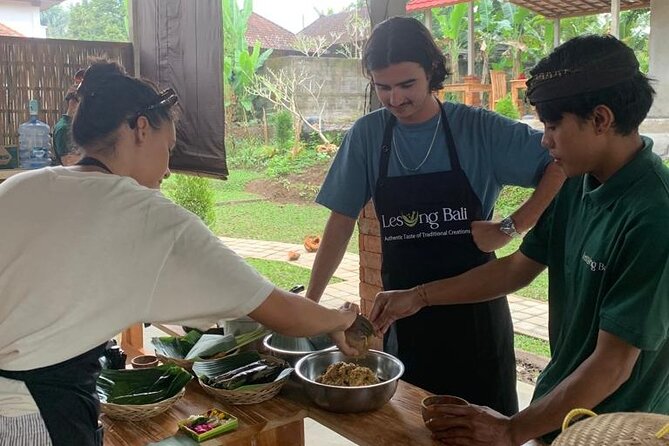
This class doesn’t treat food as a mystery box. It gives you the ingredients, the setting, and the technique in a logical order—so by the time you’re cooking, you understand what you’re making and why the flavors work together.
The value here is not just the final meal. You’re learning skills tied to Balinese cooking methods: how spices are prepped, how flavors are balanced, and how dishes are built around fresh ingredients. And because you’re in a group of up to 15, you can actually ask questions while you’re doing the work.
You can also read our reviews of more tours and experiences in Ubud.



Your First Stops: Traditional Market (Morning Only) and a Balinese Home
If you book the morning slot, your day starts with a traditional market visit. You’ll see the ingredients that make Balinese cooking what it is, then you get time to buy spices from local sellers. That alone helps you later, because you can connect what you saw with what you’ll cook.
After the market, the tour shifts to a traditional Balinese house. You’ll learn how the family compound is set up and how people live in that space. Many people leave this part of the experience with a clearer sense of how cooking connects to daily routines—food isn’t separate from culture; it’s part of it.
A bonus: the home visit includes coffee and/or tea plus small snacks. That’s not just a pause. It helps you reset before you move to the farm and start cooking steps that require focus.
The Farm Experience: Harvesting Spices You’ll Actually Use
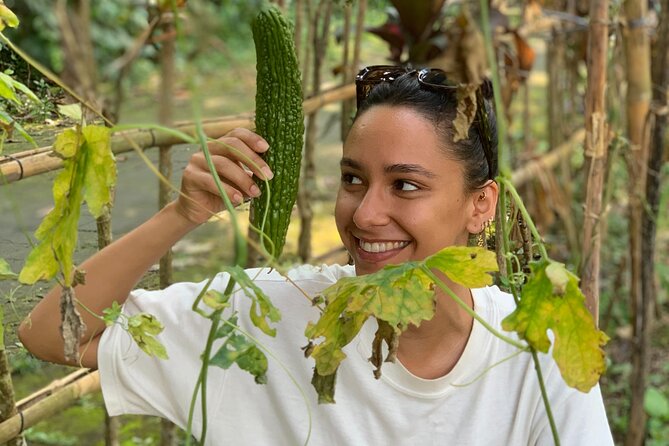
Then comes the farm, where you start the cooking prep in a more grounded way. You’ll decide on your menu, then you’ll explore the farm and harvest spices that will show up in the dishes you cook.
This is where the experience feels most “real world.” Instead of learning recipes made with pre-packed ingredients, you’re working with what’s fresh and seasonal. The farm setup also helps you understand the flavors you’re aiming for—earthy, fragrant, and spice-forward—because you’re picking the raw materials yourself.
One practical note: because this is an active stop, you’ll want comfy shoes and clothes you don’t mind getting a bit warm. The itinerary is designed to move, not sit.
Cooking Lessons with Lesung: Hands-On Spice Work (and Real Help)
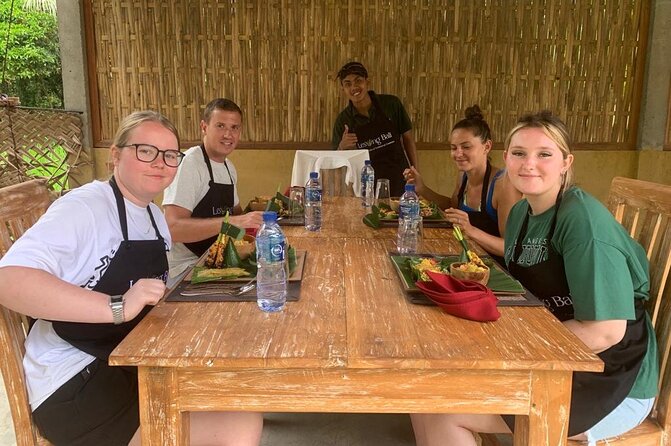
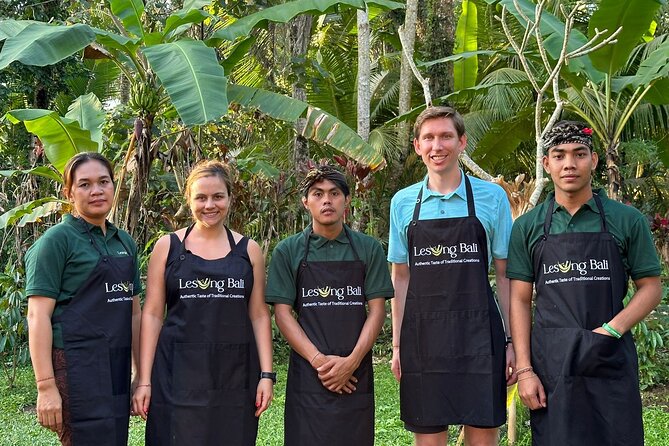
The cooking portion is the heart of the day. Your Balinese chef teaches you how to make authentic dishes with fresh ingredients you selected earlier.
A standout technique you’ll learn is using a Lesung (mortar and pestle) to chop and pound spices. This step matters because Balinese flavor comes from the way aromatics are crushed and combined. When you do it yourself, you stop guessing why one spice blend tastes right and another falls flat.
Instructors are also big on explaining what goes into the menu. You’ll learn what ingredients are used and how they’re combined based on the dishes you chose—plus how to follow the steps during active cooking, not just listen to theory.
From the experience feedback, chefs like Ron and Putri are often praised for being patient and clear, and hosts like Don and Gustie are described as friendly and engaging. Even if your cooking skills are basic, this format is built for learning by doing, with enough support to keep you moving.
A small pacing heads-up
The pace is often described as relaxed and enjoyable, not rushed. Still, some steps—like adding small spices at the right time—can happen fast during real cooking. If something tastes unfamiliar, ask what it is and when it’s added. That question helps you leave with skills, not just a meal.




What You’ll Cook: Regular, Vegetarian, and Vegan Options
One of the smartest parts of this class is the menu flexibility. You can choose regular, vegetarian, or vegan options, so you’re not stuck with a single default menu.
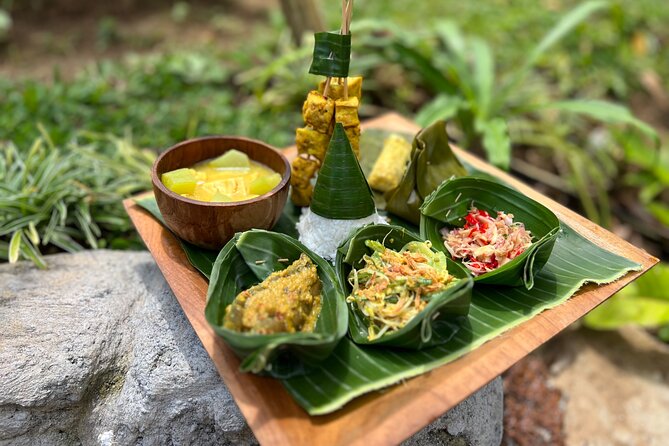
You’ll cook multiple dishes (many participants mention six dishes), and a Balinese dessert/cake element is included. In other words, this isn’t a tiny tasting session. You’re making enough food to actually feel like you ate a real meal—plus the “hands-on” part includes more than chopping garnish.
Also, part of the menu planning happens before farm harvesting. That means your ingredient choices line up with what you’ll cook that day, rather than being a random set of dishes. For you, that usually translates into better flavor consistency and a more satisfying learning experience.
Tip if you want maximum hands-on cooking
Cooking support varies a bit by station and dish. In one case, a participant noted that rice preparation wasn’t something they personally cooked. If doing every component yourself is your goal, ask your chef which steps are hands-on for your group and which steps are done ahead for timing.
The Setting in West Ubud: Countryside Calm with Air-Conditioned Transport
The cooking venue is on the west side of Ubud, in a greener, more countryside-feeling area. The atmosphere helps a lot. You’re not just spending time in a kitchen; you’re moving through market life, home life, and farm life, so the overall day feels connected.
Transfers use an air-conditioned vehicle, with mineral water provided. That matters in Bali, where the heat and travel time can wear people down quickly. You’ll spend less energy dealing with logistics and more on the actual experience.
Value and Price: Why $39.71 Can Make Sense in Ubud
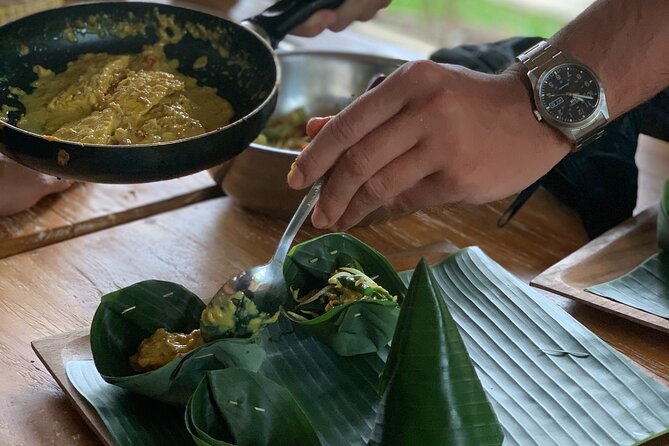
At around $39.71 per person for a roughly five-hour half-day, the value is strongest when you compare it to how much is actually included:
- Market or spice shopping (morning-only market visit)
- A Balinese home tour (with tea/coffee and snacks)
- Farm harvesting
- Hands-on cooking with a chef
- Mineral water and coffee/tea
- A Balinese cake/dessert element
For many people in Ubud, cooking classes often feel either too shallow (just tasting) or too scripted (watch, then eat). This one aims for a middle ground: structured instruction, traditional technique (including Lesung grinding), and a meal built from what you cooked.
The only “cost twist” is location. Shuttle service is included for the Ubud area only. If you’re outside that zone, extra car fees apply. So if you want the best value, plan to be in or near central Ubud, or budget for the pickup fee.
Transfers, Timing, and How to Choose Morning vs Afternoon vs Evening
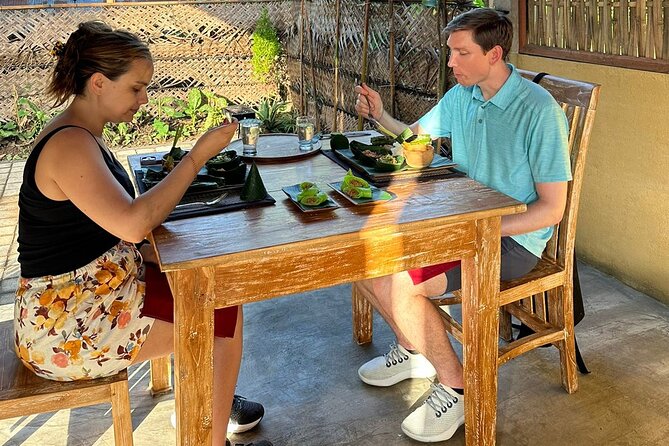
You can choose morning, afternoon, or evening classes. Morning gives you the market tour and spice buying, which is a big difference-maker. If your priority is seeing ingredients in context, morning is the easiest win.
Afternoon and evening keep the overall structure—house tour, farm, then cooking—but without the market stop. That can still be excellent if you already explored markets on your own or you prefer later-start pacing.
Pickup and drop-off:
- Included: shuttle/free within the Ubud area only
- Not included: pick-up/drop outside Ubud area, with extra car fees for certain regions (as listed in the tour details)
Who This Class Is Best For (and Who Might Want to Skip It)
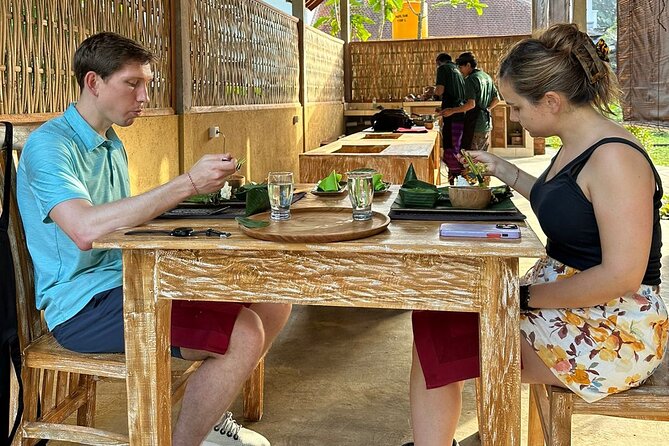
This is a great fit for:
- Food lovers who want more than tasting and want to learn the how
- People interested in Balinese culture, not only cuisine
- Couples and solo travelers who enjoy a small-group pace
- Vegetarians and vegans who want real menu choices rather than “adapted” dishes
It might be less ideal if:
- You’re short on time and want only cooking, no culture stops
- You need a specific ingredient list without any surprises (menu selection happens during the day)
- You’re staying far outside Ubud and don’t want to deal with added transportation costs
Should You Book This Balinese Cooking Class in Ubud?
If you want a half-day that feels grounded in local life—market ingredients, a Balinese home visit, farm harvesting, then traditional spice grinding and cooking—this class is easy to recommend.
I’d book it when:
- You’re in Ubud for a short stay and want a high “learning-to-meal” ratio
- You like hands-on cooking and want your questions answered while you cook
- You want vegetarian or vegan options built into the menu, not treated as an afterthought
Skip it if:
- You’re outside Ubud and don’t want extra car fees
- You only care about the cooking and would rather spend your time elsewhere with no culture stops
If you book, do one simple thing: come hungry. The experience is set up so you end with plenty to eat, plus dessert/cake included, not just a quick bite.
FAQ
How long is the Balinese cooking class?
The experience runs about 5 hours (approx.).
Where is this cooking class located?
It’s in Ubud, Indonesia, and the meeting point/venue is described as being on the west side of Ubud in a greener, countryside-style area.
Do you offer morning, afternoon, and evening classes?
Yes. You can choose morning, afternoon, or evening.
Do all classes include a market tour?
No. The traditional morning market tour and local spice buying are included for morning classes only.
Is pickup included?
Transfers/shuttle service are included within the Ubud area. Pickup outside of Ubud is not included and has extra car fees depending on the area.
Are vegetarian and vegan menus available?
Yes. The class offers regular, vegetarian, and vegan options.
What drinks and food are included?
Coffee and/or tea are included, along with mineral water. A Balinese cake is also included.
How large is the group?
This activity has a maximum of 15 travelers.
What happens if the weather is bad?
The experience requires good weather. If it’s canceled due to poor weather, you’ll be offered a different date or a full refund.
What’s the cancellation policy?
Free cancellation is available. You can cancel up to 24 hours in advance for a full refund. If you cancel less than 24 hours before the start time, the amount paid is not refunded.