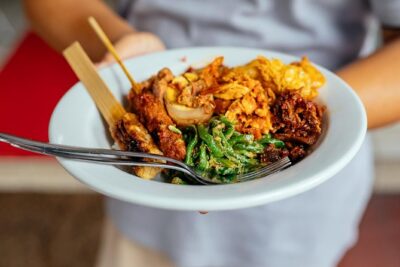
A Balinese cooking class beats another dinner. You’ll shop for real ingredients at a local fresh food market, then cook your way through classic dishes you can actually repeat at home, plus you get the full recipe booklet. I love the hands-on approach (everyone cooks, not just watches) and the market-to-menu flow that helps you understand what you’re tasting, not just how to make it. One consideration: the morning option includes the market visit, so if you prefer a slower start, the afternoon class may feel more your speed.
You’re covered with round-trip hotel transfer, an instructor who can explain in English/Indonesian/Japanese, and two different menu paths (normal or vegetarian). After you cook, you eat what you made together, which is the best kind of payoff.
In This Review
- Key things to know before you go
- A 6-hour Bali cooking day that starts with real ingredients
- Morning market shopping: what you’re really learning
- Pickup and timing: plan your day around the class window
- Cooking Balinese classics: hands-on steps with provided tools
- Your menu options: normal vs vegetarian, and what you’ll likely make
- The meal payoff: eating what you cooked together
- The instructor experience: clear explanations in multiple languages
- Price and value: why $35 can be a smart deal in Bali
- Who should book this cooking class (and who might not love it)
- Tips to get the most out of your class day
- Should you book Karisma Bali’s cooking class?
- FAQ
- What’s included in the Bali cooking class price?
- How long is the experience?
- What are the class time options?
- Do I need to bring cooking supplies?
- Is there a vegetarian option?
- Is the market visit included?
- Where do hotel pickups happen?
Key things to know before you go
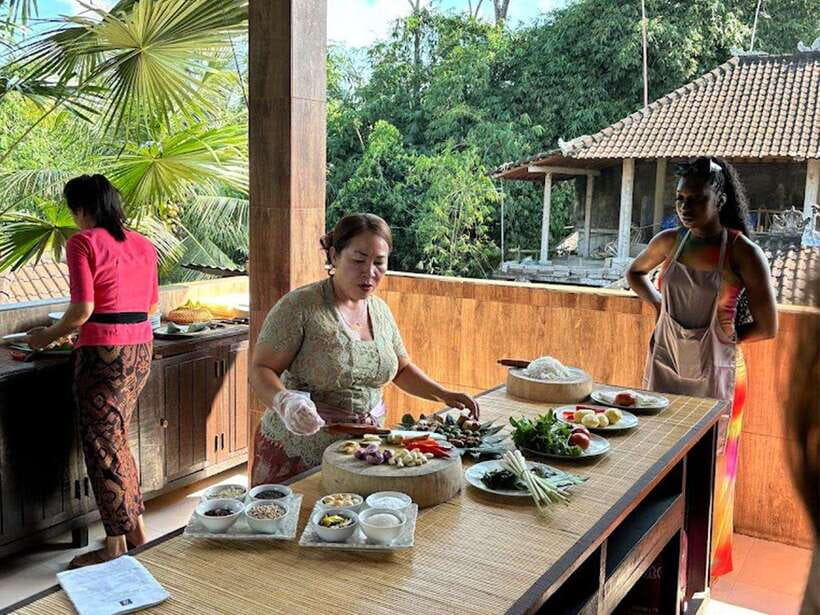
- Market-first morning option: morning classes include a local fresh food market ingredient hunt.
- You’ll cook, not just watch: everyone gets hands-on time and a meal from the results.
- Vegetarian is an easy choice: select the vegetarian menu ahead of time for the same full experience.
- A take-home recipe booklet: you’re not leaving empty-handed when you want to cook again later.
- Two daily time windows: morning pickup runs roughly 07:00–08:00, and afternoon pickup runs roughly 13:00–14:30.
- Round-trip hotel transfers: you’re not piecing together rides after a busy morning (or pre-dinner scramble).
A 6-hour Bali cooking day that starts with real ingredients
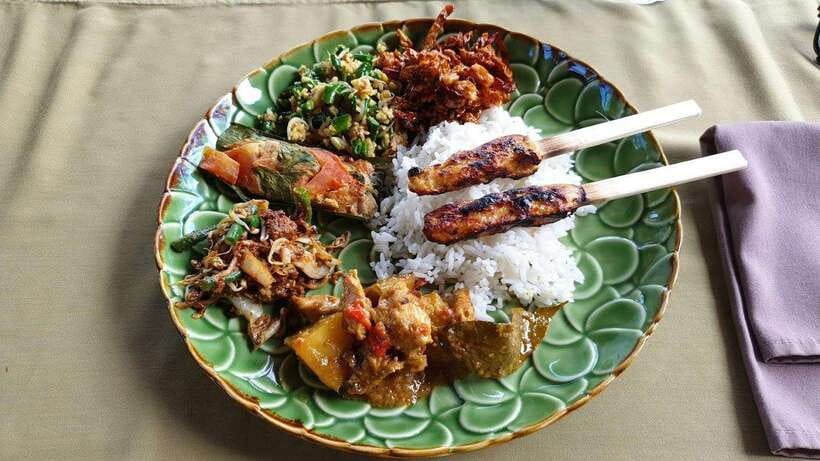
This is one of those activities that feels simple on paper but lands with a big payoff. You spend about 6 hours going from grocery shopping to chopping, stirring, and plating. If you’ve ever tried to recreate a dish later and realized you only remembered the taste, not the method, this class is built to fix that.
I like that the day is structured without being rigid. You’ll have clear steps, tools and materials are provided, and you can show up without needing to know anything about Balinese techniques. The goal is practical cooking you can repeat, not just a tourist performance.
The day ends the way it should: you eat your own food together. It’s not a quick snack and run. You’ll taste the dishes while they’re still fresh, and that matters because you learn what “right” should taste like in context.
You can also read our reviews of more tours and experiences in Ubud.



Morning market shopping: what you’re really learning
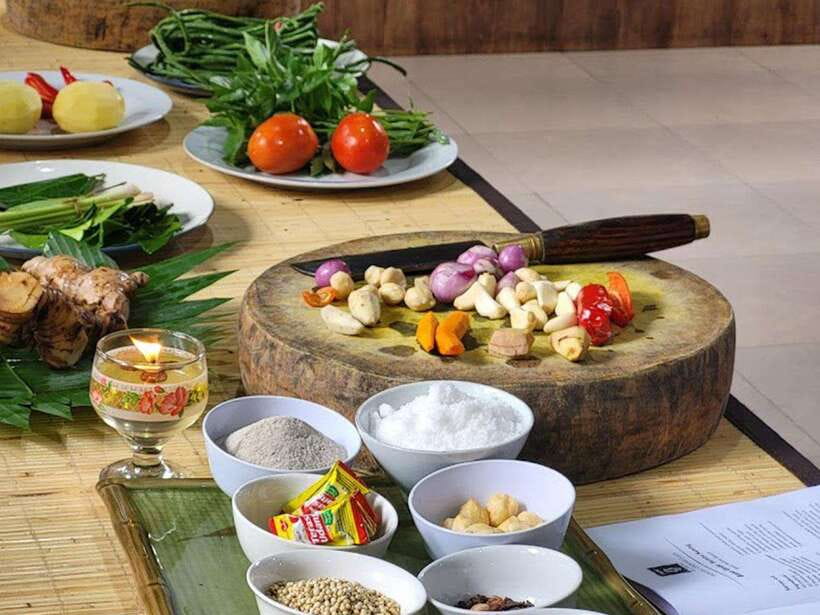
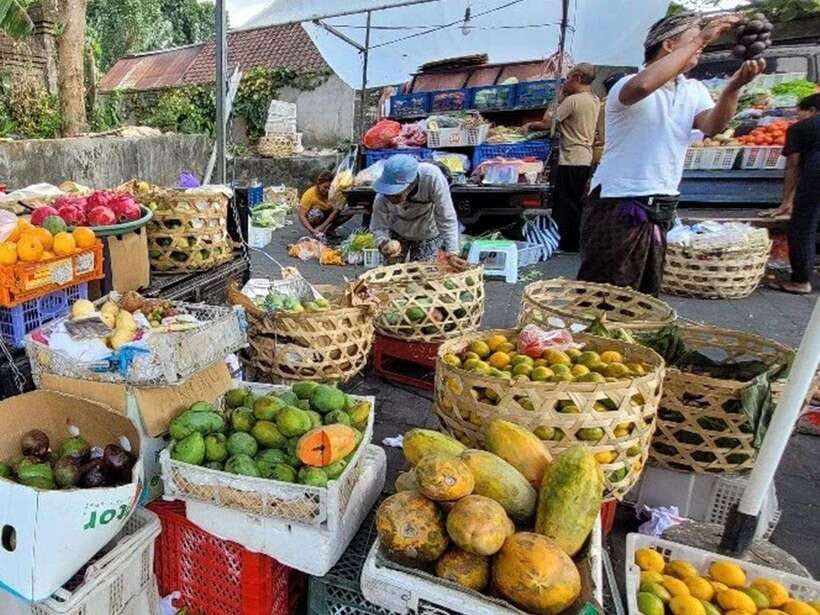
If you book the Morning Class/Lunch, your first stop is a local fresh food market. This isn’t just a photo stop. The point is to select ingredients for your dishes, including vegetables, fruit, herbs, meat, and spices.
Why this matters: Balinese cooking is all about balance. Once you see the ingredients in their fresh form, you start to understand why flavors layer the way they do. You also notice that many “special” flavors come from herbs and spices you might not use often at home. Seeing them together helps you build a shopping plan for later, not just chase a single ingredient.
In the market portion, expect you’ll be looking for items that match your menu choices. Then you head into cooking with a clearer idea of what each ingredient contributes. If you’re the type who likes to know what’s in your food before you cook it, the market-first format is a win.
If you’re short on time or you’d rather skip early market energy, the afternoon option runs a different flow (you still cook and eat, but the market visit is specifically described for the morning class). Pick based on your vibe.
Pickup and timing: plan your day around the class window
You’re picked up from select Bali areas, including Nusa Dua, Jimbaran, Kuta, Legian, Seminyak, Kerobokan, Canggu, Sanur, and Ubud. Morning pickup is listed around 07:00–08:00, and afternoon pickup is listed around 13:00–14:30. After the tour, you’re transferred back to your hotel.
This is worth planning for because you’re committing about half a day. The 6-hour duration is long enough that you’ll feel it in your schedule, especially if you stack other activities the same day.
Practical tip: try to keep meals light before pickup, especially if you’re doing the morning class. You’ll be hungry after cooking, and you’ll enjoy the meal more when your appetite is actually awake.
Cooking Balinese classics: hands-on steps with provided tools
Once you’re at the cooking school, you’ll start cooking almost right away. The activity is designed so that anyone can enjoy it, even if you’ve never cooked Balinese food before. All materials and tools are provided, so you won’t be hunting down utensils or special equipment.
What you’ll do is learn the dishes’ key flavor components: spice mixes, coconut-based elements, herb-forward combinations, and the way Balinese recipes balance sweet, savory, and aromatic heat.
From a “how I’d want to learn cooking” standpoint, I love that the class is built for participation. The best results come when you repeat the process with your own hands. And the good news is that the structure pushes you into that role. Several people highlight that everyone gets an active role at the cooking station, not just a spectator’s view.
The instructor is described as thorough and personable, which matters because Balinese cooking can feel unfamiliar if you’re not used to certain ingredient pairings. When someone can explain in a way you understand, you leave with methods you’ll actually use again.
Your menu options: normal vs vegetarian, and what you’ll likely make
You can choose between normal and vegetarian. That’s a big deal for value, because it means vegetarians are not just offered a token substitution. You still get a full cooking and eating experience.
Your menu list includes these dishes, and your specific set depends on your class selection and what you choose:
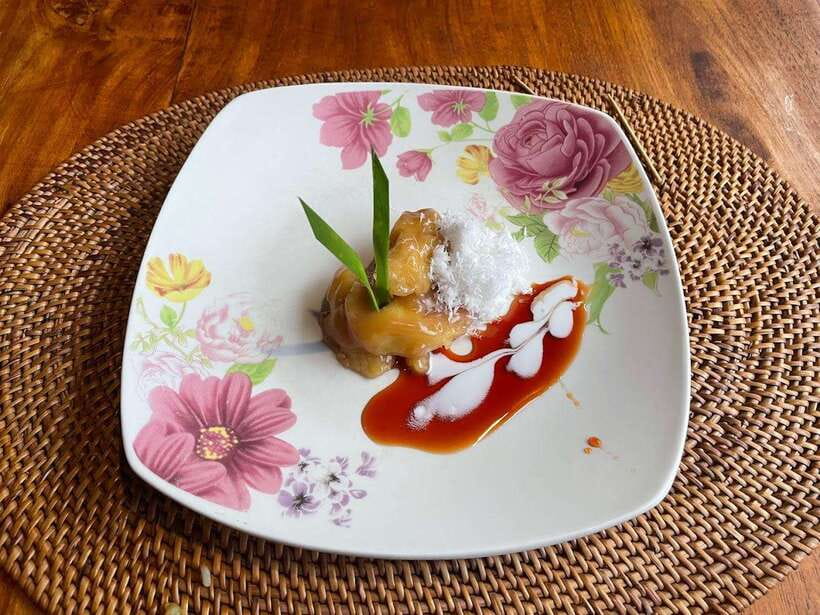
- Kolak Pisang (Banana Compote)
- Bumbu Kuning (Yellow Spices)
- Sup Jamur (Mushroom & Vegetable Soup)
- Kare Ayam (Chicken Coconut Curry)
- Pepes Ikan (Steamed Fish Wrapped in Banana Leaves)
- Jukut Urab (Coconut and Snake Bean Salad)
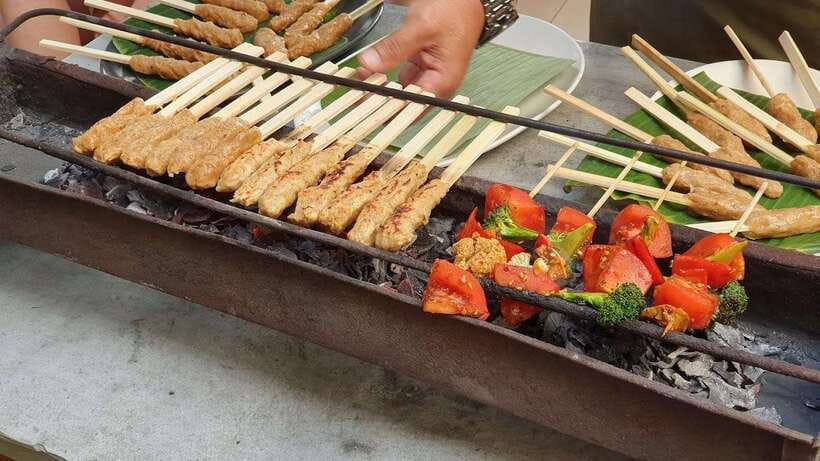
- Sate Lilit Ayam (Grilled Fish Meatball Skewers)
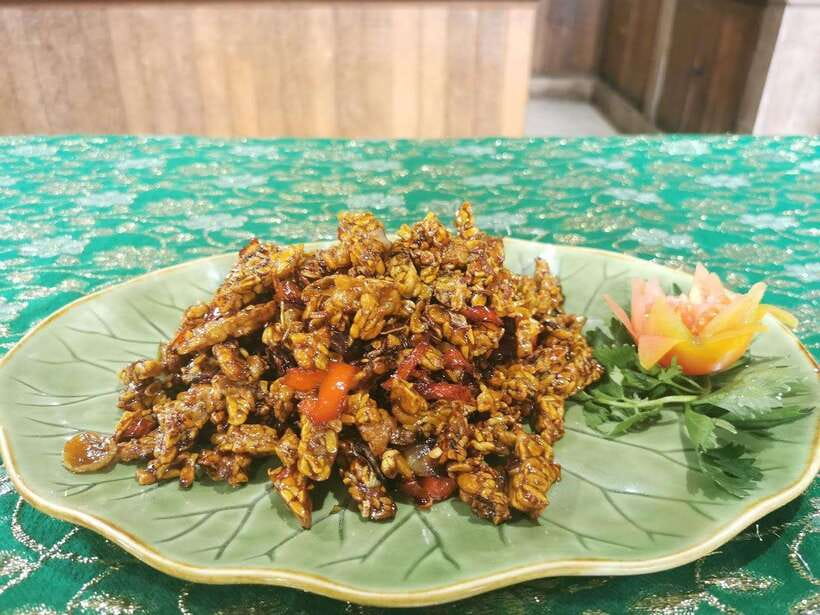
- Tempe Kering (Sweet and Salty Tempeh Stir-Fried)
- Gado Gado (Warm Vegetables with Sweet and Spicy Peanut Sauce)
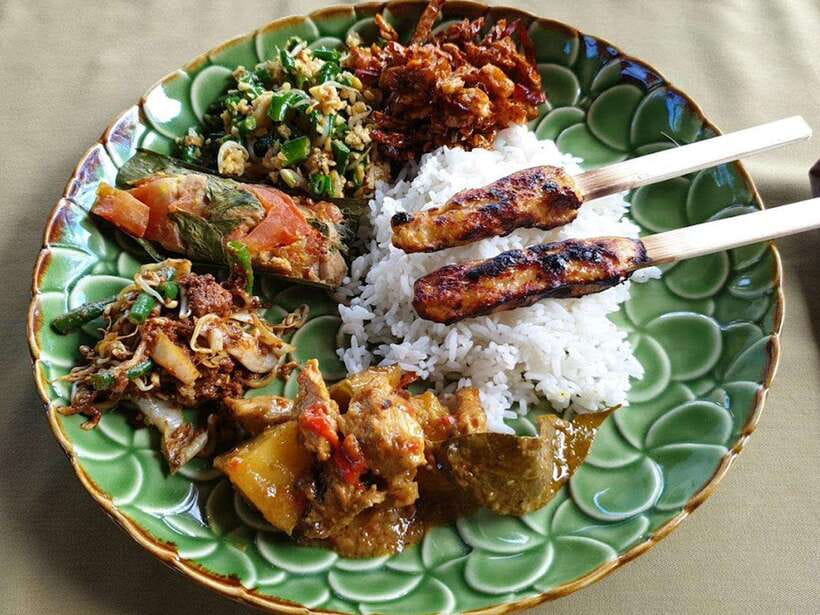
A few of these are especially memorable because they teach “technique,” not just “flavor.” Banana leaf wrapping (for pepes) shows how steaming stays fragrant. Peanut sauce with warm vegetables (gado gado) teaches how creamy sweetness can work without being heavy. And a spice base like bumbu kuning is the kind of building block you’ll want to understand if you’re going to cook more than once at home.
If you choose vegetarian, your menu will still cover a similar range of textures: soups, salads, curry-style flavors, stir-fries, and sides with sauces. That variety helps you recreate a full meal, not a single dish.





The meal payoff: eating what you cooked together
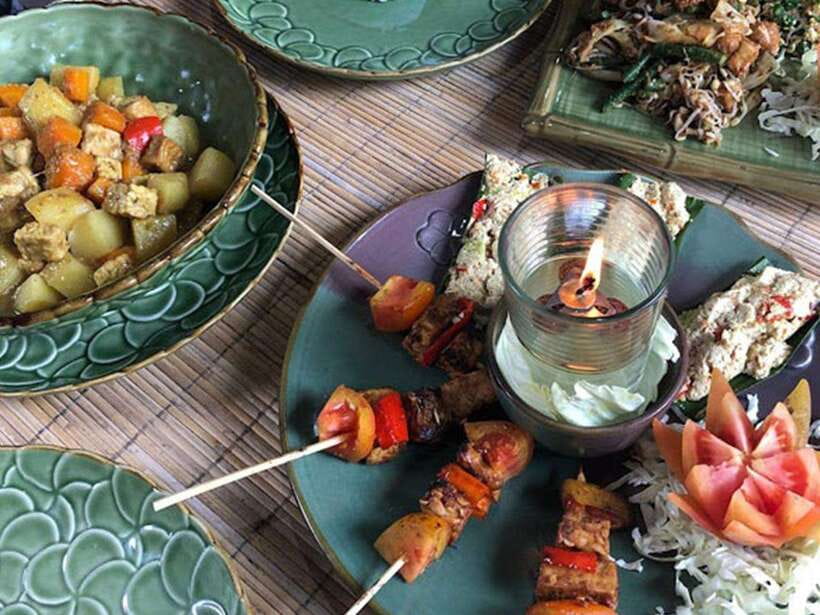
After cooking, you’ll eat the food you prepared. This is one of the most satisfying parts because you’re not waiting for a buffet that someone else assembled. You taste the results while the flavors are still at their best, and you’ll notice what you nailed and what you’d adjust next time.
People also mention that the overall food quality feels phenomenal and that the cooking setup is comfortable. The patio where you cook is described as cool, which is exactly what you want in Bali heat. You’ll enjoy the day more if you’re not constantly fighting the weather.
One extra plus: you receive a recipe booklet to take with you. That turns the class into a long-term resource, not a one-day memory. If you’ve ever taken photos of food but wished you had the steps, this fixes that problem.
The instructor experience: clear explanations in multiple languages
You’ll be working with an instructor who can speak English, Indonesian, and Japanese. Even if you don’t speak those languages, the presence of a multilingual instructor usually means lessons are communicated clearly and patiently.
From the feedback, the teaching style seems thorough and personal. That’s what makes cooking classes worth paying for. Anyone can hand you a chopping board. A great instructor helps you understand timing, spice balance, and why the recipe works.
Also, the group isn’t huge in a typical setup like this (and there’s an option for private groups), so you’re more likely to get real attention when you need it. If you like asking questions while you cook, this is the kind of class where your questions won’t feel like an interruption.
Price and value: why $35 can be a smart deal in Bali
At $35 per person, this class can be great value if you compare it to what you’d spend for a full day out plus a meal. You’re getting:
- Cooking school fees
- An instructor
- A hands-on class with ingredient work
- A meal you helped create
- A take-home recipe booklet
- Round-trip hotel transfer
In Bali, transportation is usually the thing that quietly inflates costs. Here, that part is handled for you. Add in the market portion for the morning class, and the day becomes more than just “come cook and eat.” You’re learning how to choose ingredients and how the dishes fit together.
If you’re traveling with family or friends, the value gets even better. You all eat the same meal you cooked, which makes the experience feel shared, not like you’re taking turns with strangers.
Who should book this cooking class (and who might not love it)
This is a strong fit if you:
- Want a hands-on food experience rather than a sit-and-watch tour
- Like learning recipes you can cook later (with a written booklet)
- Travel with friends or family and want an activity where you all participate
- Prefer a clear, structured half-day plan with transportation included
- Are vegetarian and want a proper vegetarian menu option
It might be less ideal if you:
- Want an extremely flexible schedule with minimal time commitment (this is a full 6-hour block)
- Don’t like early pickups (morning class starts around 07:00–08:00)
- Prefer very independent travel where you plan each step yourself (this is guided and structured)
Tips to get the most out of your class day
- Choose your menu path (normal or vegetarian) early so you feel settled.
- If you do the morning class, have a light breakfast and stay hydrated before pickup.
- Wear comfortable shoes you can stand in, and plan for kitchen work where you may get a little messy.
- Go in with one goal: learn at least one dish method you want to recreate at home, not just “taste everything.”
And if you want to impress yourself later, focus on the base components like spice mixes and sauce logic. Once you understand the “why,” the recipe becomes easier to repeat.
Should you book Karisma Bali’s cooking class?
I’d book it if you want a real skill you can bring home. The combination of market ingredient selection (for the morning option), hands-on cooking, a shared meal, and a recipe booklet makes this more than a fun afternoon. Plus, the hotel pickup and drop-off reduce stress, which is a bigger deal than most people admit when they’re traveling.
If you’re looking for something different from beaches and temples, this is a calm, flavorful day that teaches you how Balinese home cooking tastes when it’s made the way locals do it.
FAQ
What’s included in the Bali cooking class price?
The price includes cooking school fees, an English/Indonesian-speaking driver, and round-trip hotel transfer. You also cook and eat the dishes you prepare, and you receive a recipe booklet.
How long is the experience?
The duration is about 6 hours.
What are the class time options?
You can choose between Morning Class/Lunch (with a market visit) or Afternoon Class/Dinner. Pickup windows are listed around 07:00–08:00 for morning and 13:00–14:30 for afternoon.
Do I need to bring cooking supplies?
No. All materials and tools are provided, so you can participate empty-handed.
Is there a vegetarian option?
Yes. You can choose between normal and vegetarian.
Is the market visit included?
The local fresh food market visit is described as part of the morning class only.
Where do hotel pickups happen?
Pickup is listed for areas including Nusa Dua, Jimbaran, Kuta, Legian, Seminyak, Kerobokan, Canggu, Sanur, and Ubud. Other areas may require contacting the operator.