Nine dishes, one serious appetite.
If you like your food adventures to come with real context, this Ubud cooking school hits the sweet spot: you learn nine Balinese dishes and you also get a guided market + rice-field peek before you cook. I like that the class uses ingredients and tools that don’t usually show up in your home kitchen, so the flavors make more sense. I also like the variety: soup, satay, stews, spicy sambal, and even klepon dessert. One thing to consider is logistics: pickup is only included within Ubud, and if you’re staying farther out you may deal with extra transport time and extra cost.
This experience runs about five hours and keeps things hands-on without requiring any cooking background. Choose the morning option if you want the traditional market visit (with guide help on what you’re seeing and buying), and choose the regular or vegetarian menu depending on your preference.
In This Review
- Why this is more than a one-afternoon cooking class
- Quick hits: what you’ll do and why it matters
- Entering the morning flow: Ubud Palace to market and rice fields
- A note on the afternoon option
- The kitchen setup: you cook, but the guide keeps you on track
- The nine dishes: what you’ll learn to make (regular and vegetarian)
- Why this dish mix is smart for learning
- A realistic expectation on spice
- Lunch, tastings, and the payoff at the end
- Price and logistics: is $58 actually fair?
- Who should book this (and who should skip it)
- A practical packing list for a smoother day
- Should you book the 9-dish Ubud cooking and market tour?
- FAQ
- How long is the Ubud cooking school tour?
- Is pickup included?
- Does the price include the market visit?
- Can I choose a vegetarian menu?
- What dishes will I cook?
- Is there tastings during the tour?
- What do I get to take home?
- Can I cancel and get a full refund?
Why this is more than a one-afternoon cooking class
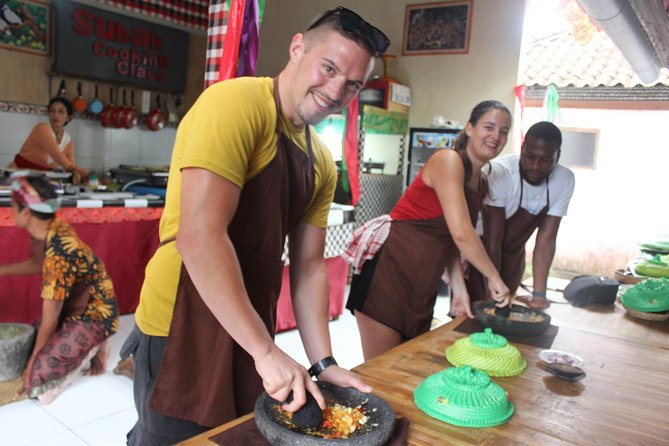
Most Bali cooking classes teach you a few recipes and call it a day. This one is built around a larger goal: you’ll prepare at least nine Balinese classics, then eat what you made for lunch or dinner buffet-style. That matters because Balinese food is not just “hot and sweet” in a generic way. It’s layered: spice pastes, fresh aromatics, banana-leaf steaming, and a lot of balance between richness, acidity, and heat.
The other difference is the way the tour frames the cooking. You’re not only tasting finished food. You’re learning where the ingredients come from and how locals shop for them. That usually makes your cooking at home simpler, because you know what to substitute and what you should try to find.
The class is also run by a local team with strong English support in the kitchen. Names you might hear include chef Yogi, guide Tata, and driver Harry, depending on your group and schedule. Some groups are led with humor and an easy pace, and the kitchen setup is designed so you can cook without feeling lost.
Quick hits: what you’ll do and why it matters
- Nine recipes, not three: you’ll work through multiple stations and finish with a full meal you helped make.
- Morning market visit: you can see how people buy fruit, vegetables, spices, and sweets with your guide guiding what’s what.
- Rice paddies + local house visit: you get a food connection to how rice is grown and how ingredients fit into daily life.
- Two menu choices (regular or vegetarian): you still cook the core Balinese flavor set without fish or meat where you don’t want it.
- Recipes to take home: you leave with copies, so your next attempt at home isn’t a blind replay.
You can also read our reviews of more tours and experiences in Ubud.



Entering the morning flow: Ubud Palace to market and rice fields
Most days start from Ubud Palace (the meeting point). From there, you’ll get picked up and transferred around the Ubud area only. In real terms, this means your schedule stays efficient if you’re based in central Ubud, and it can get slower if you’re outside the zone (extra charges apply if you need pickup beyond Ubud).
If you choose the morning class, you’ll do a traditional market stop before you cook. This is one of the most useful parts for me, because it teaches you how ingredients are presented and sold locally. You also get sampling along the way, which helps you recognize Balinese flavors even before the kitchen steps begin. Some people end up trying fruits and sweets they’ve never seen before, so come with an open mind and ideally a bit of hunger.
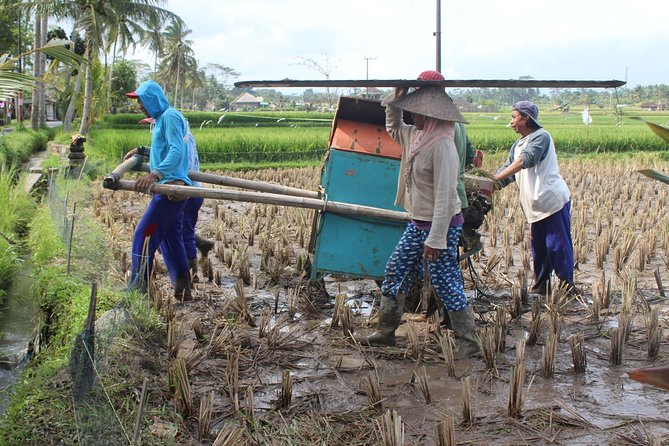
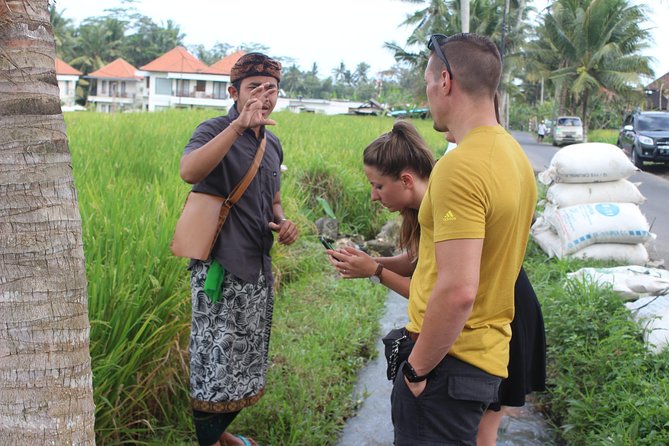
After the market, the program typically moves to rice paddies for a short visit and photos. You’ll learn basics about rice types grown in Bali and how harvest timing works. The point isn’t academic trivia. It’s to connect why rice is treated as a foundation food and how “local ingredients” aren’t just a marketing phrase here.
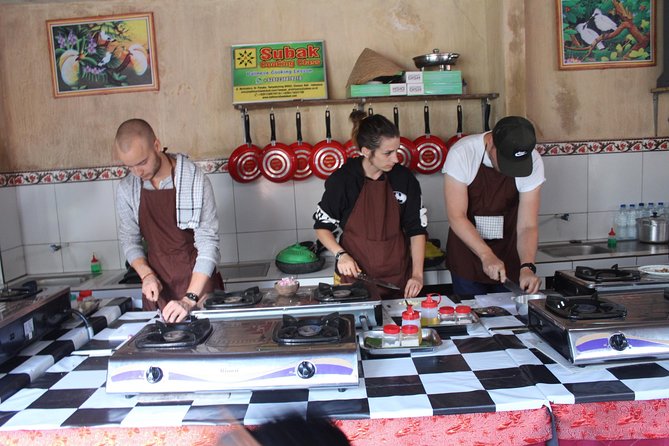
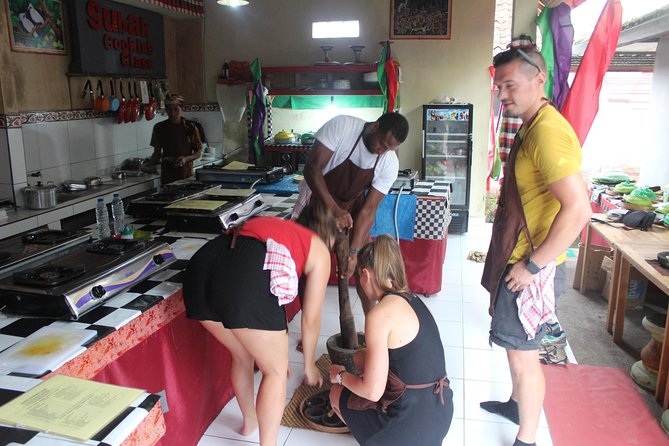
Then you’ll head to the cooking school area. Many groups experience it as a well-organized local setup rather than a random kitchen stop. The cooking space uses multiple stations so you can actually cook, not just watch.
A note on the afternoon option
If you don’t want the morning market, you can choose the other timing. The data for the experience specifically notes that making Balinese offering is an afternoon-only component. The traditional market visit is morning-only. So pick your timing based on which cultural piece you care about most: market shopping or offering-making.
The kitchen setup: you cook, but the guide keeps you on track
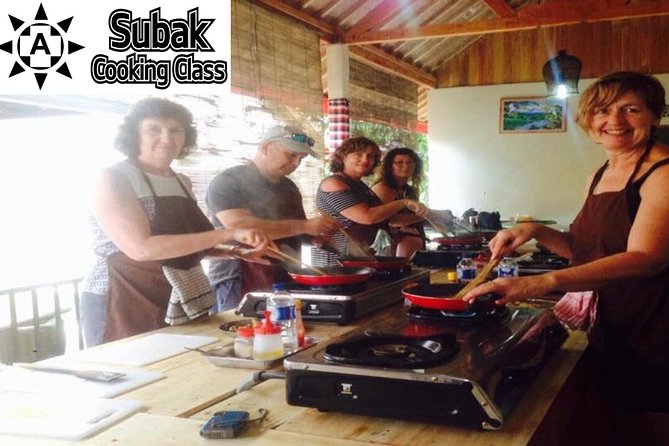
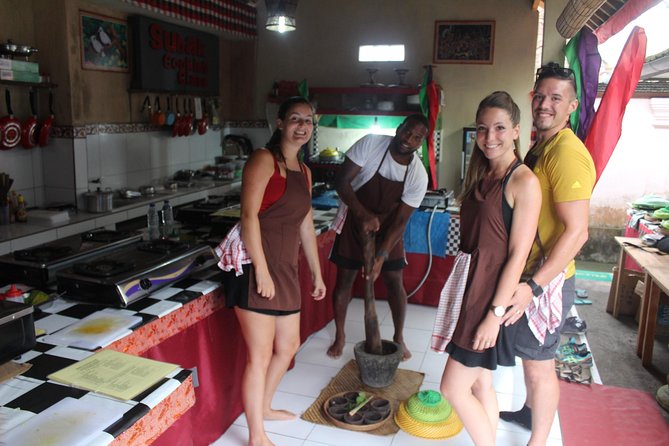
This is billed as a hands-on class, and that’s accurate. You’ll cook in a structured way with a Balinese chef teaching step by step. The goal is that you can reproduce the process at home, even if your spice shelf looks different.
That said, don’t expect a totally DIY experience. The kitchen is organized to keep the day running smoothly with nine dishes. In a perfect world, that means you still get plenty of hands-on cooking with enough prep support to keep things moving. In a less perfect world (rare, but it’s possible), you might notice that some components are already prepared to save time. If your dream is hands-on from raw start to finish for every element, you may want to ask what’s prepped vs what you’ll chop and mix.
The good news: group size is capped at 14 travelers, so the class doesn’t feel like a cattle call. Also, the kitchen staff provide support during cooking, and the process is explained in clear English by the chef or instructor on duty.
The nine dishes: what you’ll learn to make (regular and vegetarian)
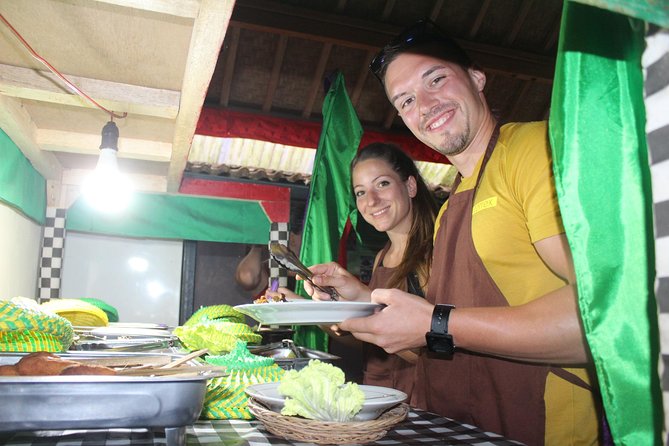
The menu is the heart of the value here. You’re not just learning how to cook one “signature” Balinese plate. You’re practicing a range of techniques and flavor systems. Your final lunch or dinner includes the dishes you make, served with white rice for the main courses.
Here’s the Regular menu of the nine items:
- Soup Sayur Bali (Balinese vegetable soup)
- Ayam santan bumbu Bali (Balinese fried chicken with coconut milk)
- Tempe Manis (sweet fried tempe)
- Sate Lilit Bali (Balinese chicken satay)
- Pepes Ayam (grilled and steamed chicken in banana leaf)
- Lawar Bali (mix vegetables with Balinese spices)
- Sambal Matah (raw spices with coconut oil)
- Base Gede (basic spice paste)
- Klepon Cake (boiled sticky flour circles with palm sugar)
And here’s the Vegetarian menu, built to keep the Balinese structure while swapping proteins:
- Soup Sayur Bali
- Tofu Bumbu Bali (fried tofu with basic sauce)
- Tempe Manis
- Sate Tempeh with peanut sauce (Balinese soybean cake skewers)
- Pepes Tofu (grilled or steamed tofu in banana leaf)
- Lawar Bali
- Sambal Matah
- Base Gede
- Klepon Cake




Why this dish mix is smart for learning
If you only cook one dish, you memorize that recipe. With this menu, you learn recurring flavor building blocks:
- Base Gede gives you the idea of a “spice paste backbone.”
- Sambal Matah teaches a raw-acid, aromatic style rather than cooked heat.
- Banana-leaf cooking with pep es shows you why scent and moisture matter.
- The mix of soup, satay, and sweets teaches you how Balinese meals often move from savory to balanced to lightly sweet.
Klepon is also a useful win if you like dessert that isn’t overly complicated. It’s chewy, sweet, and palm-sugar focused, and it gives you one more texture skill to take home.
A realistic expectation on spice
Balinese food can be spicy, but your guide may help you adjust. Since the class includes multiple dishes with fresh ingredients, you’ll have chances to taste and calibrate. If you’re sensitive to heat, say so early so the team can guide you on what to reduce.
Lunch, tastings, and the payoff at the end
Before your main meal, there are food tastings built into the tour. During the market visit, tasting often happens naturally, and in the kitchen you’ll also sample while you go. This is one of the best ways to learn: you connect ingredients to final flavor while it’s still fresh in your mind.
Then comes the payoff: a lunch or dinner buffet with the dishes you cooked. The main courses are served with white rice, and the rest of the plates come in as the meal components. Some people end up taking extra food back to their hotel because nine dishes is a lot to finish in one sitting. So plan for leftovers.
Price and logistics: is $58 actually fair?
At $58 for about five hours, this tour is priced like a serious value if you compare it to three things you’d otherwise pay for separately: a cooking class, a market guided visit, and a meal with fresh ingredients.
What you’re getting that’s hard to replicate:
- pickup/drop-off within Ubud area
- kitchen equipment and ingredient prep support
- copies of recipes to take home
- tastings and a full lunch/dinner buffet
- a local host/guide plus rice paddies visit
- bottled water
If you stay inside Ubud, the logistics stay simple. If you stay outside Ubud, you should expect additional charges for transport and possibly extra time.
Also, note the mobile ticket and that you’ll be asked to show your booking reservation. Bring your camera, and bring cash for any extra transport costs if you’re outside Ubud. It’s a small thing, but it prevents a frustrating end-of-day scramble.
Who should book this (and who should skip it)
This is a great match if you:
- want to cook multiple Balinese dishes, not just one
- care about seeing ingredients through a local shopping lens (market visit in the morning)
- like structured teaching, with step-by-step help
- want recipes you can realistically repeat at home
You might skip this if you:
- hate longer drives or you’re staying far from Ubud and don’t want extra transport costs
- expect every step to be fully raw-and-restrained, with no pre-chopping or prep support
A practical packing list for a smoother day
Keep it light:
- wear normal clothes or a practical outfit for cooking (you’ll be working at a station)
- bring a camera if you want photos at the market and rice fields
- bring cash for any extra transport outside Ubud
- come ready to eat, because nine dishes is not a snack-sized experience
Should you book the 9-dish Ubud cooking and market tour?
I’d book it if you’re food-first and you want more than a cooking demo. The combination of market learning, rice-field context, and nine real dishes is the reason this class feels like a full day of value rather than a quick activity. Vegetarian diners also get a proper menu swap, not a token side dish.
Book with extra attention to timing if you care about the market: the traditional market visit is a morning-only feature. And if you’re outside central Ubud, check pickup needs early so you’re not surprised by additional transport.
If your goal is to leave Bali with actual flavor knowledge you can recreate, this is the kind of cooking class that gives you a real shot.
FAQ
How long is the Ubud cooking school tour?
It runs about 5 hours, approximately.
Is pickup included?
Pickup and drop-off are included only for the Ubud area. If you stay outside Ubud, additional transport charges apply.
Does the price include the market visit?
Yes, the market visit is included for the morning option. The traditional market visit is morning-only.
Can I choose a vegetarian menu?
Yes. You can choose Regular or vegetarian.
What dishes will I cook?
You’ll make nine Balinese dishes. The exact lineup depends on Regular or vegetarian menu choice, but it includes items like base gede (spice paste) and klepon cake.
Is there tastings during the tour?
Yes. Food tasting is included.
What do I get to take home?
You receive copy recipes to take away.
Can I cancel and get a full refund?
Yes, free cancellation is available. You can cancel up to 24 hours in advance for a full refund. If you cancel less than 24 hours before the start time, the amount paid is not refunded.