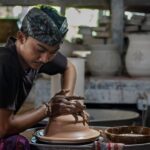
Batik makes slow art feel fun. In a mellow studio just outside Ubud, I really liked the hands-on wax-resist technique and the option to work more independently or with the tutor—so beginners don’t feel lost. You’ll also get a look at how a Balinese artist works from their family compound, which turns this from a craft class into a small window into everyday creative life.
One heads-up: batik is more difficult than it looks in the moment. You’ll want patience, because wax placement and dye choices take some practice (and that’s where the fun comes from).
In This Review
- Key Highlights You’ll Care About
- A 3-Hour Batik Class Outside Ubud: What You Really Get for $29
- Arriving at Five Arts Studio: Calm Setting and Real Local Rhythm
- Pick Your Motif and Sketch Your Design (Then Make It Yours)
- Wax and Dye 101: The Part That Makes Batik Batik
- Color Your Fabric: Choosing What Gets Dyed (and What Stays Protected)
- Take Home a One-of-a-Kind Souvenir (Not a Print)
- How to Schedule It: A Calm Half-Day on Your Bali Calendar
- Should You Book Five Arts Studio’s Batik Workshop?
- FAQ
- How long is the batik painting workshop?
- Where is the meeting point?
- What is included in the price?
- Do I need to bring lunch or snacks?
- Can I work independently or do I need help?
- What’s the maximum group size?
- What is the cancellation policy?
Key Highlights You’ll Care About
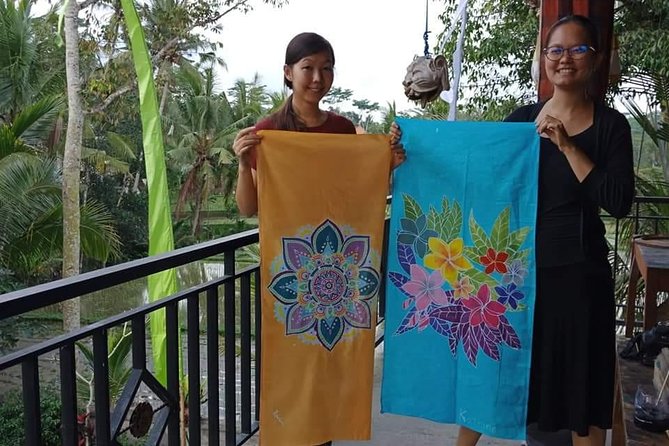
- Wax-resist process: hot wax blocks dye, and the pattern shows up when you wash it off
- Work your way: choose solo creativity or closer guidance from the tutor
- Family-compound studio: you’re working in a real living art space, not a sterile workshop
- Unique souvenir: you take home a one-of-a-kind fabric piece you made yourself
- Friendly, patient instruction: instructors help you get unstuck without making it awkward
A 3-Hour Batik Class Outside Ubud: What You Really Get for $29
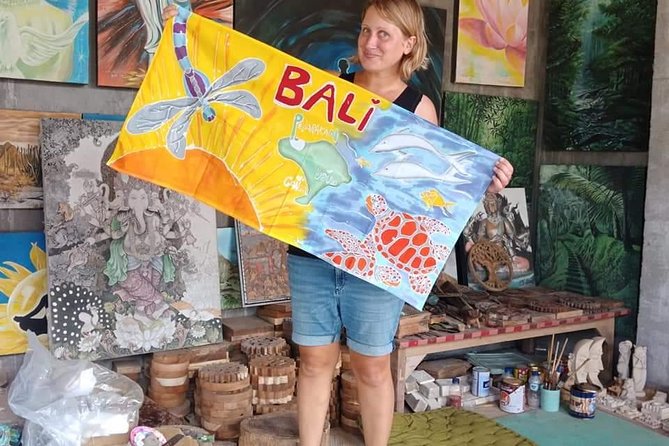
This is a straightforward, hands-on workshop priced at $29 per person. For that, you’re not just watching someone demonstrate. You’re given the materials and you work through the full batik process yourself, which is exactly why the value feels so high.
The class lasts about 3 hours, and it caps at 30 people, so it has room for real help when you need it. It’s also held in a relaxed studio setting outside central Ubud, in a family compound atmosphere. That matters because batik is slow craft work. In other words: you get better results when the environment doesn’t feel rushed.
You’ll also receive practical basics that make the session easier to enjoy: snacks, coffee and/or tea, and mineral water. If you’re planning a full day, there’s lunch you can order locally on-site, and alcohol is available to purchase (so you’re not stuck planning meals around the class).
Finally, this is a “take-home” experience in the best way. The goal isn’t a disposable souvenir. It’s a piece of hand-painted batik fabric art you make from scratch—after sketching, waxing, dyeing, and washing the wax off.
You can also read our reviews of more tours and experiences in Ubud.



Arriving at Five Arts Studio: Calm Setting and Real Local Rhythm
You meet at Five Arts Studio, Jl. Raya Keliki, Keliki, Kec. Tegallalang, Kabupaten Gianyar, Bali 80561, Indonesia. The location is noted as near public transportation, which is helpful if you don’t want to rely entirely on a private driver.
What makes the arrival phase feel worth it is the vibe inside. Several learners describe the studio as calm and comfortable, with a team that greets you warmly and keeps things patient. One class experience even included arriving early and getting tea before the official start, which is the kind of small detail that makes craft time feel less like a schedule and more like a visit.
The workshop is run by a master artist and a team who guide you through each step. You’re not thrown in blind. If you want to copy a motif or stencil style, there’s support for that. If you want to freestyle ideas, you can also bring your own motif and make it your own.
One more practical point: the activity info lists that you should have a strong physical fitness level. That doesn’t tell us exactly what you’ll be doing physically, but it does suggest you’ll be moving around on the compound and spending time working seated and standing as the process requires. If you’re dealing with mobility limits, it’s worth checking before you book.
Pick Your Motif and Sketch Your Design (Then Make It Yours)
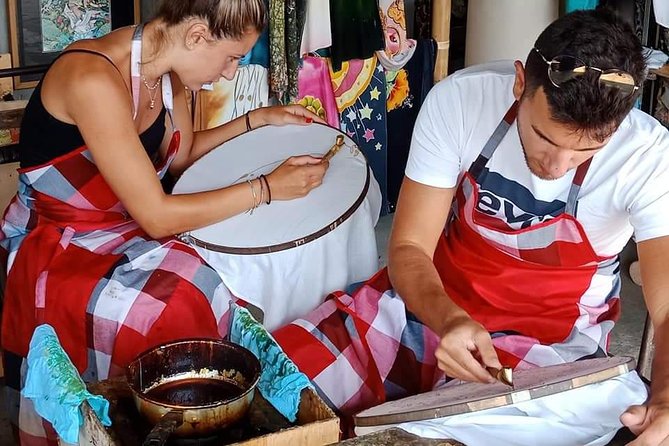
The class starts with planning your design. You’ll sketch out your design, then draw it onto the fabric using the batik process.
What I like about this step is that it sets your expectations correctly: batik looks free-form and artistic, but it’s built on careful choices. You’re deciding where lines go, what gets protected by wax, and what areas will end up dyed later. That’s why patience helps—your first sketch doesn’t have to be perfect, it has to be workable.
You also get options. Some people prefer to work more on their own. Others want closer help from the tutor. The structure lets both styles work. In the classroom atmosphere, instructors are supportive even when students feel they’re messing up.
Two guide names show up in learner experiences: Dika and Agong. Dika is described as helpful and fun to work with, and Agong is specifically noted for guiding through the process, including helping a 6-year-old. That gives you a strong clue about teaching style: it’s hands-on, encouraging, and tuned to different comfort levels.
Wax and Dye 101: The Part That Makes Batik Batik
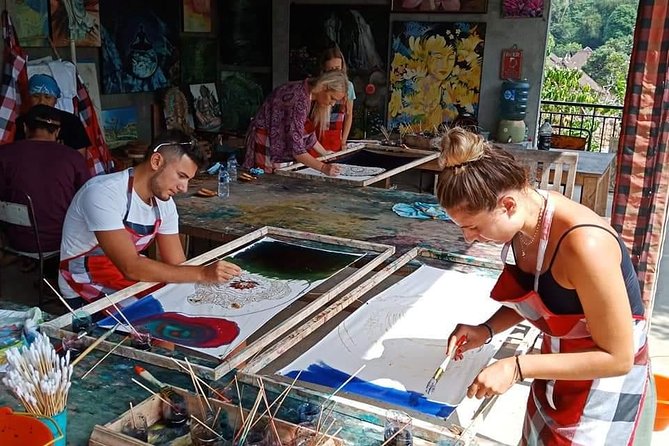
Here’s the core technique you’re learning: batik uses hot wax as a resist. You apply the wax to the areas you want to keep their original color. Then you dye the fabric—only the areas not covered by wax absorb color.
After the dye step, the wax gets washed off. That’s when the pattern becomes clear: the outline stays in the original color, and the dyed areas form your finished design.
If you’ve ever seen batik photos, you might assume the magic is in the final colors. In reality, the magic is the wax decisions you make up front. Wax is the blueprint. If your wax lines land a little off, you’ll still learn something—often the hard way, and then the fun way.
That’s where the class reputation holds up: instructors are patient and guide you step by step. Several learners highlight that batik is harder than expected, but they still end up proud of their work because the team helps them adjust instead of letting mistakes spiral.
Practical tip: don’t aim for perfection on the first pass. Aim for a clear plan. Batik rewards calm, not speed.
Color Your Fabric: Choosing What Gets Dyed (and What Stays Protected)
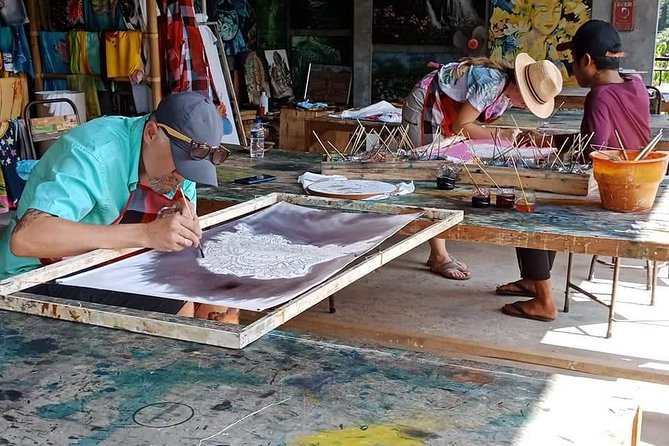
Once your design is marked in wax, you move into dyeing. This part is where your creativity starts to show visually.
You’ll use colorful dyes and paint selectively—because the wax blocks dye in protected areas. Depending on your design, you may choose lighter vs. darker intensity in different sections. Learners mention being able to use color blending, and they also point out that the dyes can produce a lot of character even when you’re not “naturally artistic.”
What’s useful here is that you’re not just following a recipe. You’re learning how batik structure affects the final look. If you wax a border, that border becomes a color boundary. If you leave certain spaces open for dye, those areas become your strongest color shapes.
And yes, accidents happen. One learner even talked about dropping wax where they didn’t mean to—then ended up calling those moments part of the process. That’s a great mindset for this class. Batik looks structured, but the process has enough handmade variability that you should expect a few happy surprises.






Take Home a One-of-a-Kind Souvenir (Not a Print)
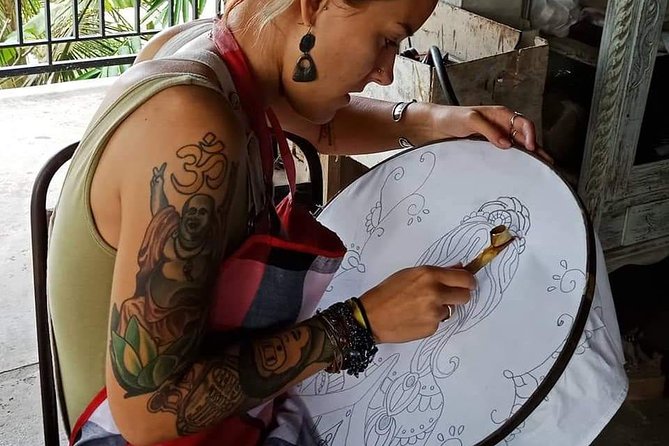
By the end of the workshop, you leave with your finished batik fabric art. That’s a big deal in Bali, where “souvenirs” can sometimes blur into mass-produced items.
The reason this one feels special is simple: you made the design choices. Even if you use suggested motifs or stencils, your wax lines and dye placement are still yours. Learners talk about the finished piece as a memorable artifact—something they can point to later and say, I did that.
This workshop also includes the cultural context you’d hope for with a technique like batik. The material describes batik as a vital part of Indonesian culture and explains how the wax-and-dye method works. In practice, you get both the how (process steps) and the why (the cultural meaning).
One more quiet benefit: you’ll gain respect for how long batik takes to do well. Even in a 3-hour class, you can feel the time and care required for the technique. That often turns a souvenir purchase into something deeper: a skill you understand, not just a product you buy.
How to Schedule It: A Calm Half-Day on Your Bali Calendar

The class runs about 3 hours, so it fits cleanly into a half-day plan. The setting is outside Ubud, so give yourself buffer time for transport and finding the studio at Jl. Raya Keliki.
If you’re trying to avoid decision fatigue, pick a time when you’re not rushing to your next stop right after. Batik isn’t a sprint. It’s wax. It’s dye. It’s washing and waiting. When you give it room, your results feel better and the process feels less stressful.
Food-wise, you’re covered for basics during the session with snacks plus coffee/tea/water. If you want lunch, it’s available to order locally, and alcohol is available to purchase. So you can stay nearby and make it a low-effort break in your day.
Also, note the practical group limit of 30 travelers. In a smaller-to-mid group setting, instructors can still help when someone gets stuck on a step.
Should You Book Five Arts Studio’s Batik Workshop?
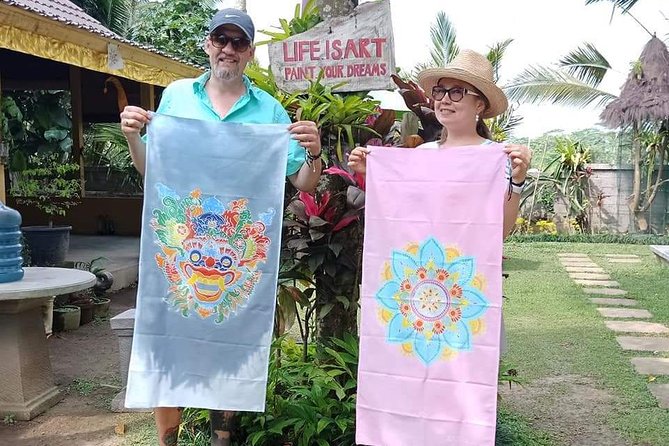
I think you should book this workshop if you want a hands-on cultural craft with strong instruction and a realistic chance of making something you’ll actually keep. The combination of included materials, the wax-resist technique, and a relaxed family-compound studio makes it feel like a genuine experience rather than a rushed tourist demo.
It’s also a good choice if you’re a beginner or not “naturally artsy.” Many class experiences emphasize patience and step-by-step guidance, and you’ll have the option to work independently or get closer help. Even learners who found batik harder than expected still rated it extremely highly because the team helped them correct course.
The one reason to think twice is simple: if you hate slow, detail-based work, batik may test your patience. Wax work takes care, and results come from doing the steps properly, not from being quick.
If that sounds like your kind of challenge, this class is excellent value at $29—especially for a take-home souvenir that’s truly yours.
FAQ
How long is the batik painting workshop?
The class runs for about 3 hours.
Where is the meeting point?
The meeting point is Five Arts Studio, Jl. Raya Keliki, Keliki, Kec. Tegallalang, Kabupaten Gianyar, Bali 80561, Indonesia.
What is included in the price?
Your ticket includes all materials, plus snacks, coffee and/or tea, and mineral water.
Do I need to bring lunch or snacks?
No. Snacks and drinks are included. Lunch is available to order locally if you want it, and alcohol is available to purchase.
Can I work independently or do I need help?
You can choose how you want to learn—either work more independently or work more closely with the tutor.
What’s the maximum group size?
The workshop has a maximum of 30 travelers.
What is the cancellation policy?
You can cancel for a full refund up to 24 hours before the experience starts. If you cancel within 24 hours of the start time, the amount paid is not refunded.