Morning in Bali can be quiet. This Ubud e-bike tour takes you through the famous Tegallalang rice terraces and into traditional villages, with a guide who explains how everyday Balinese life fits around the fields. I like that the ride is easy thanks to electric assist, so you can focus on the scenery and the culture instead of working the pedals nonstop. I also like the small-group feel and the fact that the route goes where cars don’t really manage. One thing to consider: the tour meeting place can take some effort to find, and timing instructions can vary, so give yourself a little buffer.
You’ll spend real time outside, moving slowly through paddies, lanes, and village areas. The payoff is simple: you get a human-scale view of Ubud, not just a quick photo stop. The only real watch-out is meeting point logistics, especially if you’re trying to arrive from the center of Ubud without planning for travel time.
In This Review
- Key things that make this tour worth it
- Ubud on an electric bike: why this format works
- Cretya Sunset safety briefing: quick prep before you roll
- Tegallalang rice terraces: the ride through Subak-style farming
- Village stops and local homes: culture you can see up close
- How the timing and route actually feel in real life
- E-bikes, lockers, showers, and comfort after the ride
- Food and drinks: optional meal, simple additions
- Price vs value: is $25 a good deal?
- The most praised parts: what I’d pay attention to
- Who should book this Ubud e-bike tour (and who shouldn’t)
- Should you book: my honest recommendation
- FAQ
- How long is the Ubud Rice Terraces & Traditional Villages e-bike tour?
- Where does the tour start?
- What is the first on-tour stop?
- Is it a small group tour?
- What language is the tour guide?
- What’s included in the price?
- Do I get a meal?
- Where are the drop-off locations?
- What are the height, weight, and age requirements?
- What types of travelers should not book?
Key things that make this tour worth it

- Electric assist makes rice-terrace riding feel doable for more fitness levels
- Tegallalang rice terraces plus village stops lets you see the whole Ubud rhythm, not just scenery
- English live guide with practical explanations as you ride
- Small group (max 10) helps the ride feel personal
- Built-in comfort extras like towel, locker, and a private shower room after the ride
- Route choices aim for sights that cars can’t easily reach
Ubud on an electric bike: why this format works

Ubud’s famous for views, sure. But on foot or by scooter, you can burn energy fast and miss the details. On an e-bike, you’re in control: you pedal when you want, and the motor smooths out the slower, bumpier parts. You still get outside and get moving, but the experience stays more about where you’re going than how hard you’re working to get there.
This matters in practice because the tour is designed around a mix of rice fields, village lanes, and short walks. Some parts are scenic and flat-ish. Other parts can include turns, uneven ground, and small changes in elevation. Electric assist helps you keep your balance and keep your eyes up for photos and explanations from your guide.
Price-wise, $25 per person is a reasonable mid-range for Bali considering what’s included: an e-bike, insurance cover, mineral water during the ride, plus a guide. You’re also not just paying for the bike—you’re paying for a planned route that links the terraces with human-scale village life.
If you’re wondering whether this is too touristy: it’s not a bus loop. The route includes areas that are harder to access by car, and the structure feels more like a slow circuit with stops than a nonstop “see everything fast” checklist.
You can also read our reviews of more tours and experiences in Ubud.


Cretya Sunset safety briefing: quick prep before you roll
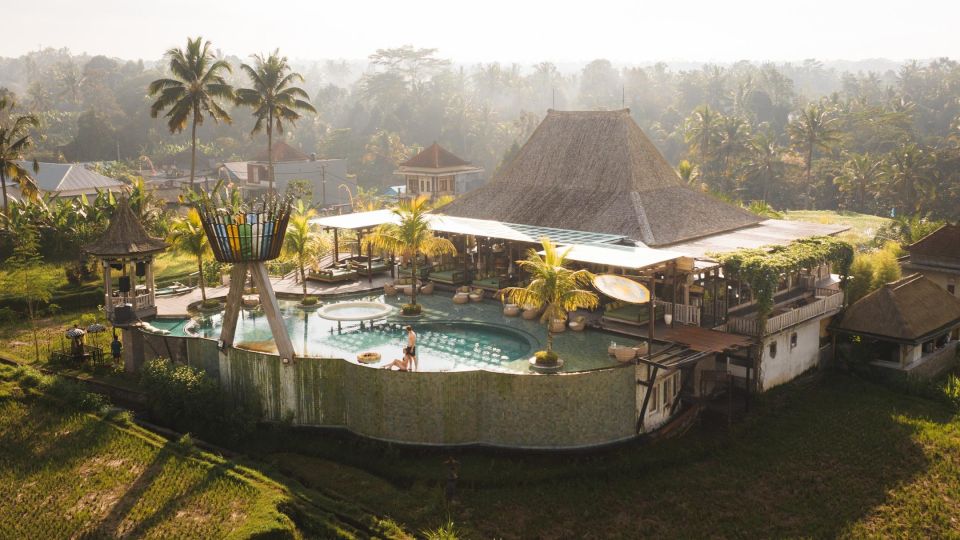
Your tour starts with pickup depending on the option you choose. After that, you’ll head to Cretya Sunset for a safety briefing, about 15 minutes.
This short start is important. E-bikes are simple, but you still want to get comfortable with how your bike responds at low speeds and on gentle turns. You’ll also get the basics you need for road manners and group spacing—because the ride includes both sightseeing stops and moving segments.
Practical tip: if you’re coming from farther out, plan to arrive early. People have had trouble locating the meeting place, and you’ll want extra time to orient yourself. Bring your patience, not just your camera.
Once you’re briefed, the ride transitions from instructions to scenery fast. That’s when the tour’s “easy movement + good viewpoints” formula really kicks in.
Tegallalang rice terraces: the ride through Subak-style farming
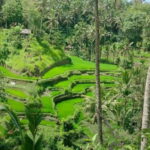
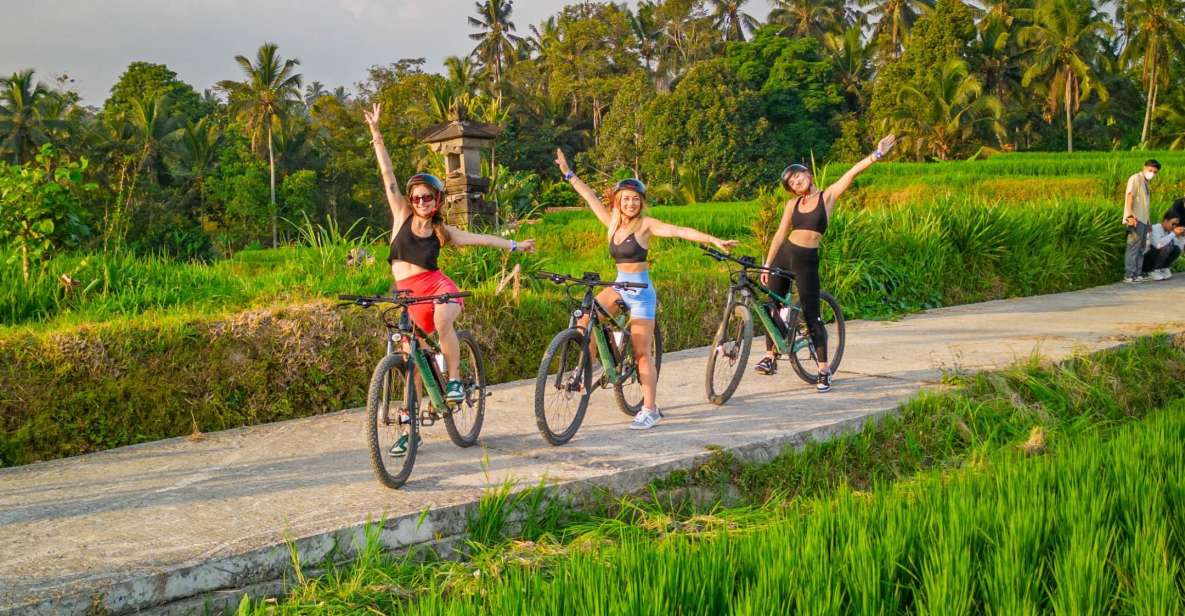
The heart of this tour is the cycling time around Tegallalang, where you get the iconic layered look of Ubud’s rice terraces. You’re not just looking at the paddies from a viewpoint. You move along paths close enough to notice how water and farming shape the whole area.
What I like here is that you learn what you’re seeing. The rice system in Bali is closely tied to local irrigation practices, and your guide explains the Subak irrigation system so the terraces feel more than just pretty geometry. When you understand the water logic, the terraces stop being a postcard and become a living system.
You’ll also get time for sightseeing and a bit of walking along the way. That matters because some of the best photo angles are reached by short foot segments, not just from the bike saddle. So keep your camera ready, but also keep your pace calm—this is the kind of ride where you’ll enjoy watching how the light changes across the paddies.
One more plus: some people describe this as especially peaceful early in the day. That’s when the terraces can feel quieter and less rushed, and you’ll get softer light for photos. If your schedule allows an early start, it’s worth aiming for it.
Village stops and local homes: culture you can see up close
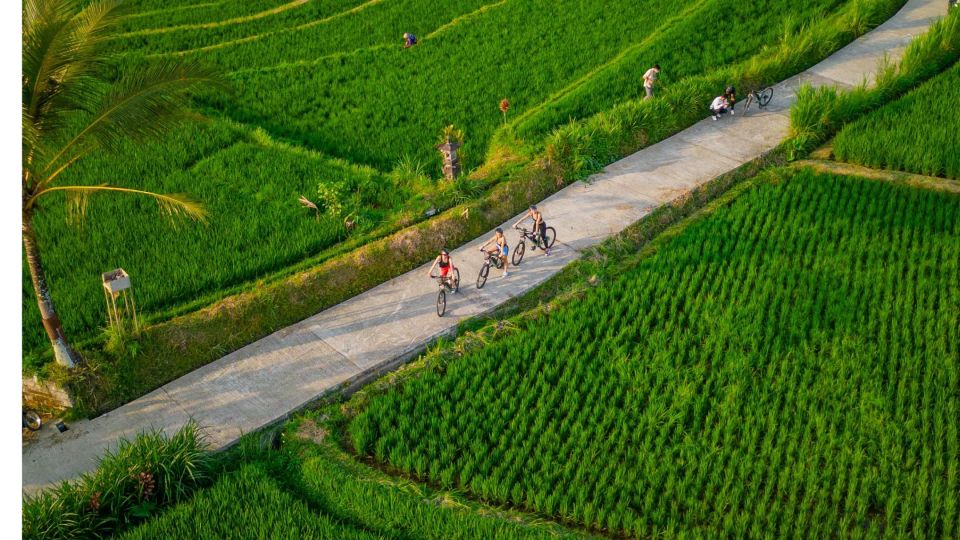
After the terraces, you shift from fields to village life. This is where the tour earns its name “traditional villages,” because you’re not only driving past houses—you’re spending time in areas where daily life is the main event.
Your guide may introduce you to local craftsmen and artisans (based on what the tour includes), and you’ll get explanations about daily rhythms and cultural heritage. The goal is to help you connect what you learned in the fields to what people do every day in their communities.
In the ride experience, you may also meet people in family settings connected to art or village life. For example, one guide named Harry has been praised for arranging encounters that made the trip feel personal—like meeting local artists at a family compound, and even meeting people from his village while working fields were being harvested. That kind of access isn’t guaranteed on every tour, but the lesson is consistent: the tour is built to put you near real people, not behind a fence.
What to do as a visitor:
- Be curious, not performative. Ask simple questions and listen.
- Keep an eye on where you’re stepping. Village lanes and edges of fields can be uneven.
- Treat small interactions like gifts: you’ll get more out of them when you stay respectful and patient.
This is also a good place to mention the tour’s group size limit of 10 participants. A smaller group makes it easier for your guide to manage conversations and move you along without rushing the human parts.
How the timing and route actually feel in real life
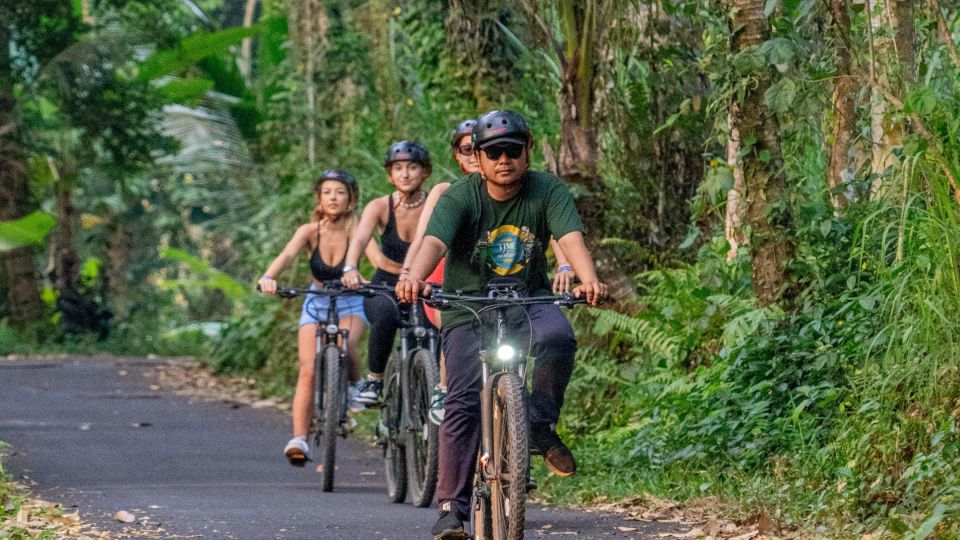
The overall duration is listed as 1.5–2 hours, but the itinerary shows a longer block of time assigned to Tegallalang. That doesn’t mean you’re guaranteed a mismatch, but it does mean you should check the exact schedule when you confirm your start time.
In practice, here’s what the flow tends to feel like:
- Short briefing and setup
- Main riding segment through Tegallalang with stops for sightseeing and photos
- Village time and cultural explanations
- Drop-off at multiple locations
The tour also includes 9 drop-off locations, which is handy if you’re staying around Ubud, Seminyak, Canggu, Sanur, Kuta, Payangan, Mengwi, Tegallalang, or similar areas. It means you’re less likely to end up far from home after the ride.
If you’re sensitive to schedule changes, the best move is to ask for your exact confirmation details before you leave. People have had trouble with meeting time instructions, including confusion about the correct start time. A quick message to confirm goes a long way.
And remember: this ride is worth slowing down. The main value is what you notice when you’re not racing between stops.



E-bikes, lockers, showers, and comfort after the ride
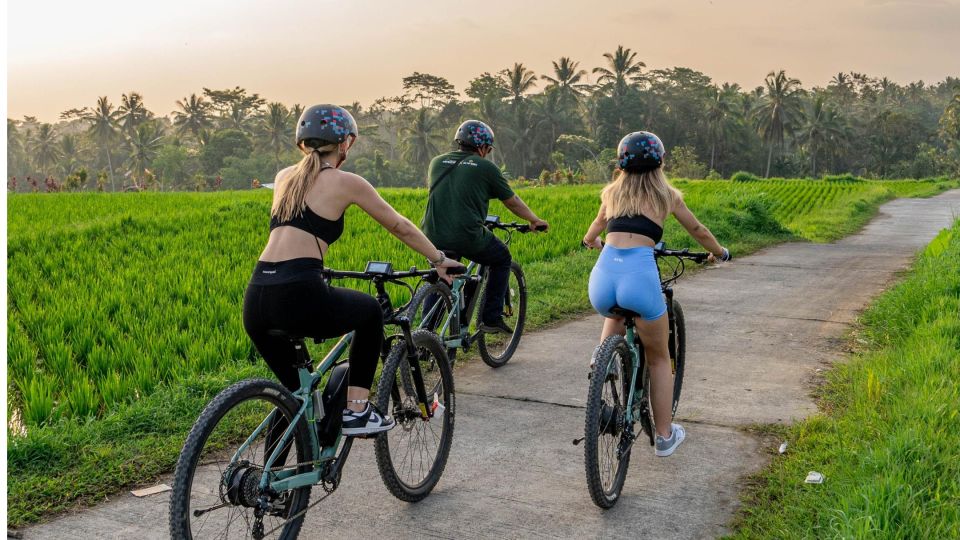
The tour provides:
- E-bike
- Mineral water during the ride
- Towel and locker
- A private shower room
- Insurance cover
- Local guide
That mix is more useful than it looks. Bali afternoons can get hot fast. A shower after cycling lets you stay out for dinner or a walk without feeling gross. The locker and towel are especially helpful if you’re carrying a day bag.
As for the bike: the electric assist means you’re not locked into a hard workout. The goal is to make the ride accessible, so you can enjoy the terraces and villages without exhausting yourself on every slight incline.
Limits are clearly listed too:
- Minimum height 160 cm, maximum height 195 cm
- Maximum weight 120 kg
- Minimum age 16
- Not suitable for pregnant women
- Not suitable for people with back problems
- Not suitable for children under 6
- Not suitable for people over 70
If you’re on the edge of the height/weight limits, don’t assume your bike will fit. Confirm when booking, because a good fit changes everything for balance and comfort.
Food and drinks: optional meal, simple additions
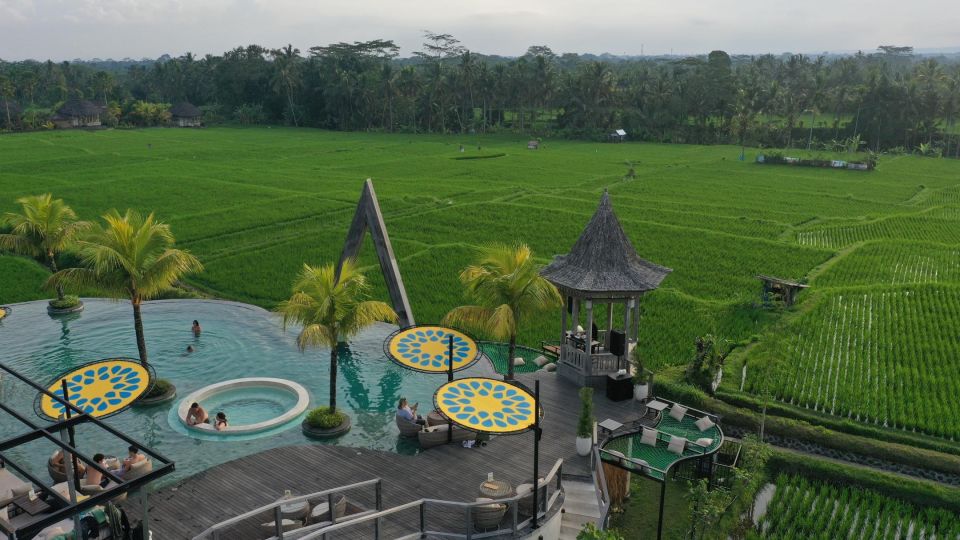
The tour can include a meal if you choose the meal option. If you don’t, you still get mineral water during the ride.
The listing doesn’t go into details about what’s served, so don’t assume it’s a full restaurant experience. But you should expect something traditional and filling enough to tie the tour together, especially if you’re riding before or around lunchtime.
If you’re picky about timing, plan your own snacks as backup. The tour itself is short enough that you don’t want to gamble on being hungry afterward—unless you picked the meal option.
Price vs value: is $25 a good deal?

At $25 per person, the real question isn’t whether it’s cheap. It’s whether you’re getting the right mix of:
- access (terraces + village interaction)
- guiding and explanation
- a vehicle that lets you cover the area without major strain
- included extras (water, insurance, shower, locker, towel)
For this type of experience, $25 feels fair because a big part of the cost is the guide and the route planning that links the fields with village life. You’re not paying only for bike rental.
Also, the tour is small group and guided in English, which makes the cultural stops more meaningful. If you’re traveling with a basic level of Indonesian, an English guide can be the difference between “pretty place” and “I understand what I’m seeing.” People praising the tour often focus on how much they learned, especially about rice growing/harvesting and local life—so your guide’s role is central to the value.
The most praised parts: what I’d pay attention to

From the strongest feedback, two themes rise fast.
First: the ride through the rice fields early feels calm and memorable. People describe a quiet experience in the morning and a sense of seeing the terraces at their best.
Second: the guide experience matters. A guide named Harry has been specifically praised for making the trip memorable, explaining rice growing/harvesting, and arranging time with local people connected to village life and art. If you care about cultural context, choose this tour because it’s set up to give you conversation, not just motion.
There’s also a recurring practical note: meeting point clarity. You’ll want to double-check the address and your pickup timing, because the meeting location can be outside central Ubud and may take about 45 minutes to reach without heavy traffic.
In short: you should expect a worthwhile guide-led experience, and you should prepare for logistical “work” on your side—just a bit.
Who should book this Ubud e-bike tour (and who shouldn’t)
This tour fits you if:
- you want Ubud rice terraces + village life in one guided outing
- you like cycling but don’t want a hard athletic workout
- you enjoy learning practical context, like how rice is grown and harvested
- you want small group pacing and a calmer ride
It may not fit you if:
- you don’t handle uneven paths or short walks well
- you have back issues (it’s not recommended)
- you’re pregnant (not recommended)
- you need fully flexible mobility support
- you’re traveling with young kids or seniors beyond the stated limits
Also, if you’re the type who hates any uncertainty, plan extra time for meeting point and start time confirmation. This isn’t a “walk out the door and it’s perfectly obvious” type of tour for everyone.
Should you book: my honest recommendation
Book it if you want a genuinely guided day that connects Tegallalang rice terraces to real Balinese village life, with an e-bike that keeps the ride comfortable. At $25, the included shower, towel, locker, insurance, and guide time make it feel like a good value, not a basic rental.
Skip or reconsider if you’re very sensitive to meeting point confusion or you can’t handle short walks and the general movement of cycling through rural lanes. Also, don’t book if you fall into the stated “not suitable” categories.
If you do book, do one smart thing: confirm your exact pickup time and exact meeting point details before you head out. Then bring your camera, wear something breathable, and let the morning light do the work for your photos.
FAQ
How long is the Ubud Rice Terraces & Traditional Villages e-bike tour?
The duration is listed as 1.5 to 2 hours, with starting times based on availability.
Where does the tour start?
You’ll begin with a starting/pickup location that depends on the option you select.
What is the first on-tour stop?
There is a safety briefing (about 15 minutes) at Cretya Sunset.
Is it a small group tour?
Yes. It’s limited to 10 participants.
What language is the tour guide?
The live tour guide speaks English.
What’s included in the price?
Included items are the e-bike, mineral water during the ride, private shower room, towel, locker, insurance cover, and a local guide. A meal is included only if you choose the meal option, and hotel transfers are included only if you choose the transfers option.
Do I get a meal?
You get a meal only if you select an option that includes one. Mineral water is provided during the ride either way.
Where are the drop-off locations?
Drop-off locations include Gianyar, Canggu, Kuta, Sanur, Payangan, Ubud, Seminyak, Tegallalang, and Mengwi.
What are the height, weight, and age requirements?
Minimum height is 160 cm, maximum height is 195 cm, maximum weight is 120 kg, and the minimum age is 16.
What types of travelers should not book?
It’s not suitable for children under 6, pregnant women, people with back problems, or people over 70.