Blue flames start after midnight. This Bali-to-Java trip is built around seeing Mount Ijen’s blue fire and the crater’s acid lake at first light.
What I like most is the tight guiding plan around that short blue-fire window, plus the fact you don’t just wander in the dark—you hike with a local who’s used to this terrain and timing.
I also really like the private round-trip transfer plus ferry setup, because it keeps the day from turning into a patchwork of taxis and guesswork. When the guide hands you safety gear like a gas mask and flashlight, it’s a strong sign the whole thing is run with real-world logistics in mind.
One drawback to know up front: this is a long overnight haul. Between the pickup in Bali, the ferry to Java, and the night ascent, you’ll feel tired in a “no time to rest” way, even if everything goes smoothly.
In This Review
- Key things you’ll notice on this Blue Fire run
- Leaving Bali at night: why the timing matters more than the distance
- Crossing to Java via Gilimanuk ferry: what you’re really signing up for
- Paltuding base camp: coffee, briefing, and getting suited up
- The Ijen Crater trek at night: 3 km that feels like more
- Blue fire timing: seeing the flames means planning your position
- Sunrise over the acid lake: turquoise views and miner life nearby
- Descending, breakfast at Paltuding, then ferry back to Bali
- Price and value at $136: what you get for a long, guided overnight
- Who this suits best: fitness for the climb, comfort with cold, and respect for safety
- Should you book this Bali Ijen Blue Fire tour or skip it?
- FAQ
- What time do you get picked up from Bali?
- How long is the tour?
- How do you get from Bali to Java?
- Do you have a guide for the crater trek?
- What safety equipment is provided?
- Is entrance to Ijen included?
- Is a health certificate required?
- What should I bring?
- What is not allowed on the tour?
- Who should not do this tour?
- Is free cancellation available?
Key things you’ll notice on this Blue Fire run
- Overnight pacing tuned for the blue-flame window and the sunrise over the crater lake
- Small group (max 15) with a professional local trekking guide at your pace
- Safety gear included: gas mask and flashlight, plus a safety briefing before you start
- Ferry transfer from Bali to Java that’s built into the schedule, not bolted on later
- Cold hike + sulfur environment means warm layers and following the guide matter
- Acid lake views after the climb make the effort worth it for most people
Leaving Bali at night: why the timing matters more than the distance
The whole trip starts with an evening pickup in Bali, and that timing is the point. You’re traveling after dark to reach East Java before the crater hike starts, so you can climb in the night and be in position for sunrise.
Pickup times vary by area, so you’ll want to double-check your hotel location during booking. For example, Uluwatu pickups can be as early as 6:00 pm, while Lovina is listed around 9:30 pm. If you’re staying in Bali’s south or western side, plan on a longer drive before you even touch the ferry.
The overnight feel is real: you’re not doing “a quick tour.” You’re doing a long day with an early end point in mind—blue fire first, sunrise second. That’s why I think the value here comes from running the schedule as one system: pickup, ferry, transfer, hike, and return.
Even with private round-trip transportation, you should expect the ride time to Java’s staging area to be meaningful. One review experience from Uluwatu included roughly 6 hours of driving plus ferry time and then another transfer drive to get up near Ijen. Translation: this isn’t a sit-and-sleep type of outing.
You can also read our reviews of more tours and experiences in Bali.
Crossing to Java via Gilimanuk ferry: what you’re really signing up for
You’ll drive from Bali to Gilimanuk Harbor, then take a ferry crossing to Java (about a one-hour transit). On paper that sounds manageable. In reality, it sets the rhythm for the whole day: wake up less, sleep less, move more.
Once you arrive in Banyuwangi, you’ll meet up with a local driver for the ride to the Ijen base area. The itinerary lists a night drive through quieter countryside before you get to Paltuding base camp. This part matters because it gets you close to the start of the hike when your legs are fresh enough to handle the first stretch.
Banyuwangi acts like the “switch” point: Bali to Java, ferry to foothills, car time to foot time. If you’re the type who hates arriving somewhere without a plan, you’ll probably appreciate that the driver and the guide are aligned with the timing for the trek and sunrise.
The other hidden benefit of ferry + transfer being included: you don’t have to coordinate schedules with multiple operators. When you’re climbing at night, small timing slips can become big problems.
Paltuding base camp: coffee, briefing, and getting suited up
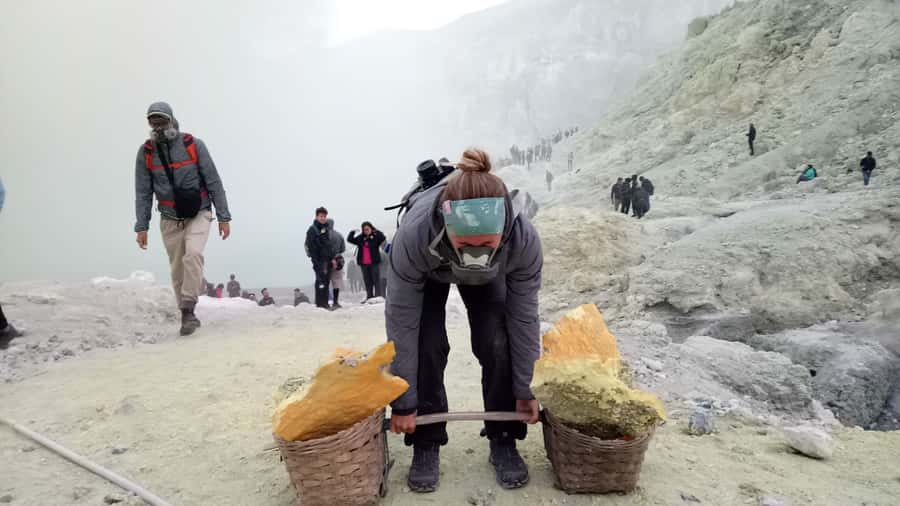
At Paltuding, you’ll get a coffee/tea break and a safety briefing before you start the trek. This is not just a feel-good stop. It’s when you set yourself up for the cold and the altitude-adjacent conditions around active volcanic terrain.
You’ll also receive safety equipment. The essentials listed are a gas mask and flashlight. If you’re sensitive to strong smells or dust, you’ll be glad you don’t have to figure out gear on your own at the last minute.
The trek begins after a night drive and arrival, with the itinerary showing a start around 1:00–2:30 am. That timing is common for Ijen because you need to reach the crater rim before the sunrise run-up and the blue fire window.
The practical mindset here: dress for cold and dark, then manage your energy for a steady ascent. You’re moving in the early hours when temperature swings can feel sharper than you expect.
Warm layers are a big deal. The “what to bring” list calls out warm clothing, comfortable clothes, a camera, and snacks. One review even mentioned renting jackets and pants due to the cold on the climb, so don’t assume you’ll be fine in just a light layer.
The Ijen Crater trek at night: 3 km that feels like more
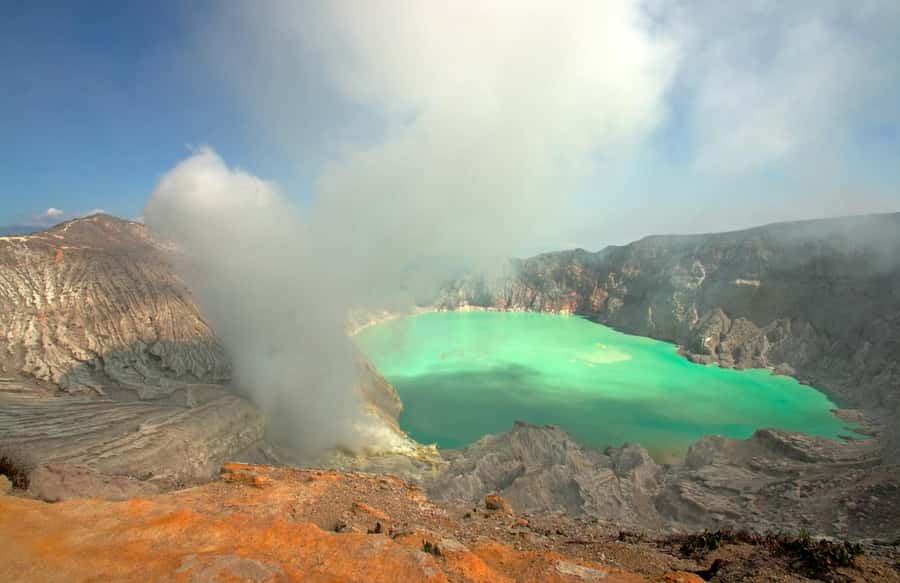
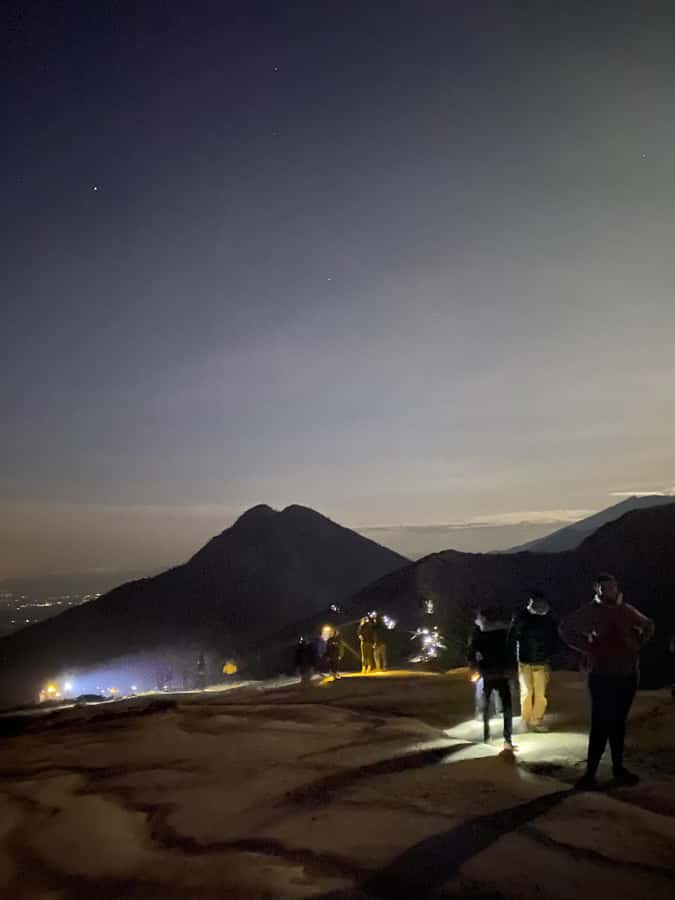
The ascent is listed as about 3 kilometers and roughly 2 hours to reach the crater area. That doesn’t sound huge. But night hiking on uneven volcanic ground can feel longer because your attention stays on footing and breath.
You’ll climb through volcanic terrain under the stars, guided by a professional local trekking guide. The guide’s job isn’t just storytelling. It’s pacing, route guidance, and keeping you from rushing into fatigue at the wrong moment.
You should expect a workout. The tour notes the hike can be challenging, and one review called out that it’s strenuous if you’re not relatively fit. I’d treat this as a real climb, not a scenic stroll.
A flashlight helps, but your eyes also adjust as you go. Still, your pace matters more than speed. Guides often encourage breaks along the way, especially if you’re slower or you need a moment to catch your breath.
And yes, you’re hiking at night with sulfur activity around you. That’s why following guide instructions around the gas mask and where to stand isn’t optional—it’s part of the experience’s safety.
Blue fire timing: seeing the flames means planning your position
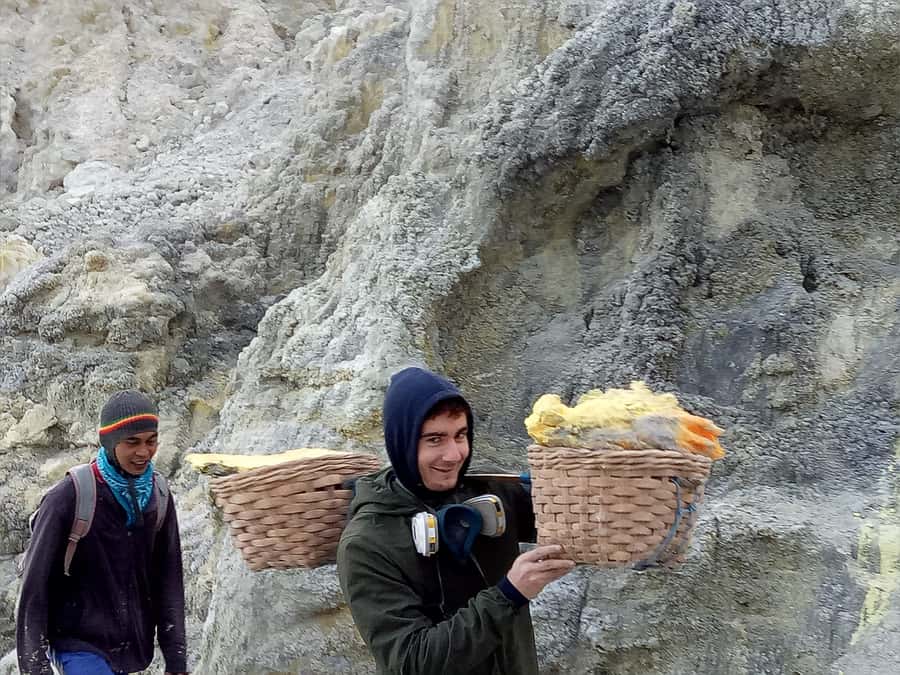
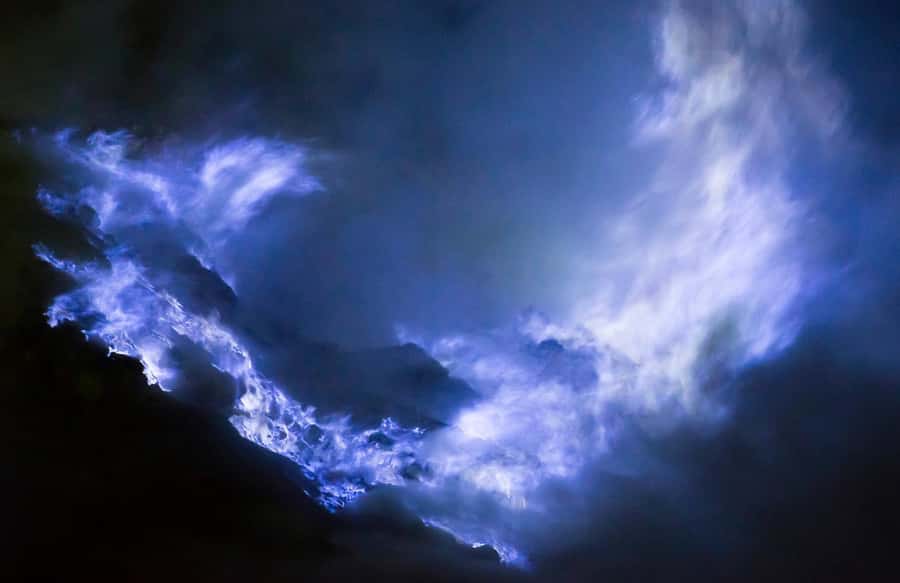
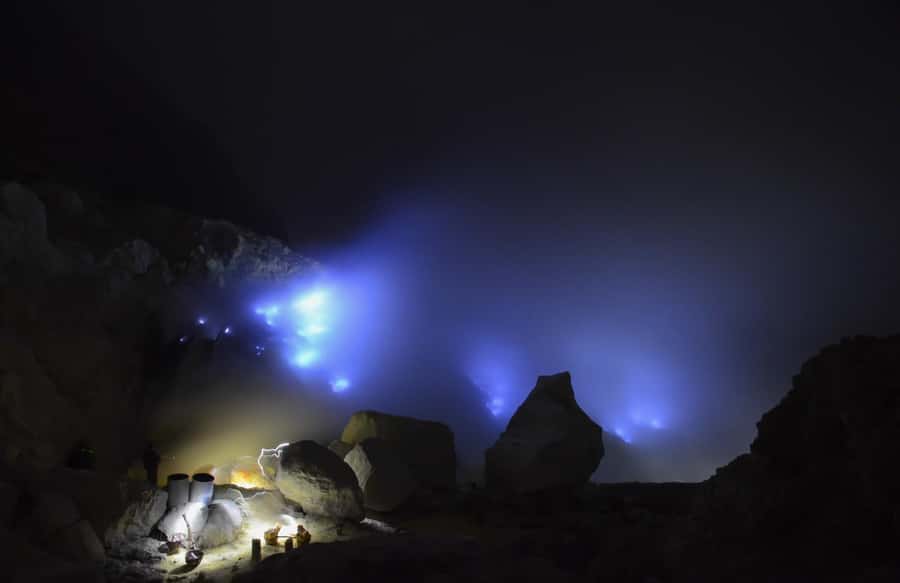
The itinerary sets a dedicated window for the blue fire phenomenon, around 3:00–4:00 am. This is when you’re closest to the moment that most people come for: blue sulfur flames driven by gases and combustion near the crater.
A key detail: the phenomenon is linked to conditions, timing, and where you stand. You’re not just watching from one random angle. The guide’s ability to get you into the right spot before crowds thicken can make a difference.
One review advice I’d take seriously: if seeing the flames is your top priority, you might need extra time on the crater slopes. The reason given was crowding on a narrow path. Practically, that means you should be mentally ready for more walking if the group moves slower or if the best viewpoint is farther down.
Don’t treat this part like a photo-only mission. It’s also a safety mission. You’ll be near active sulfurous gases and challenging footing. Your best “success” comes from staying calm, following the mask guidance, and not sprinting for a perfect angle.
If you’re chasing sunrise photography and blue fire photos, come prepared for lower energy and cold hands. Warm layers plus a camera strap can save you from fumbling your gear.
Sunrise over the acid lake: turquoise views and miner life nearby
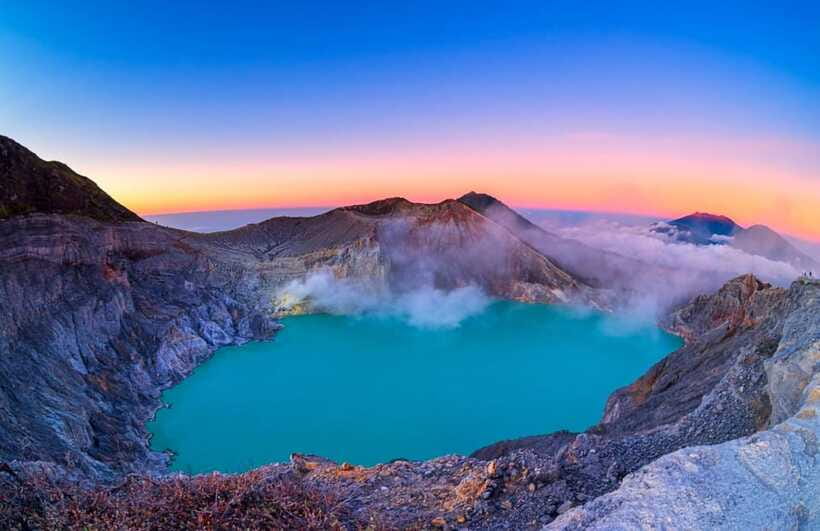
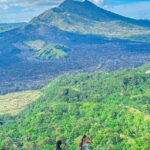
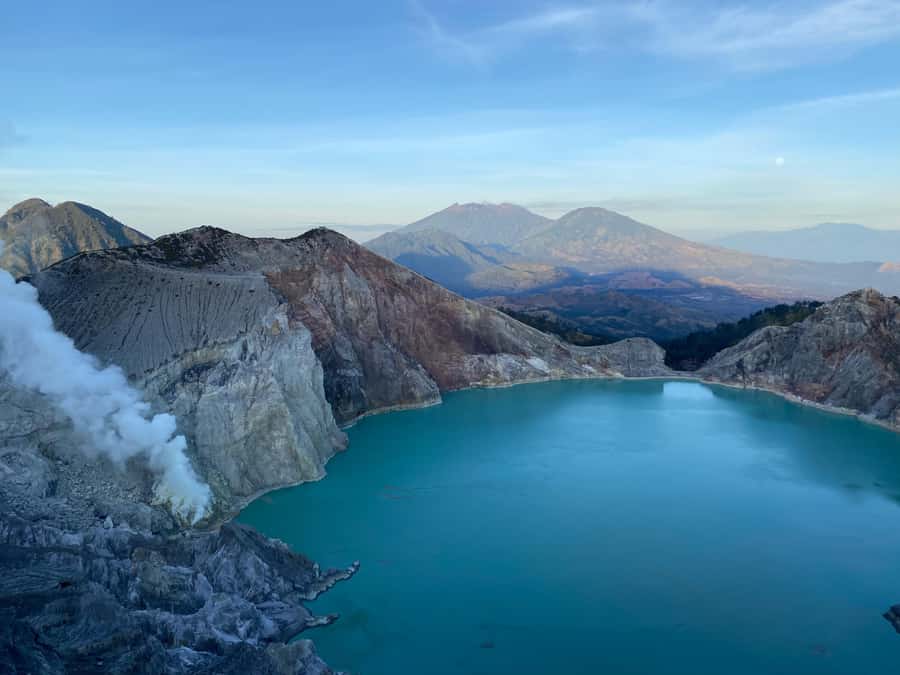
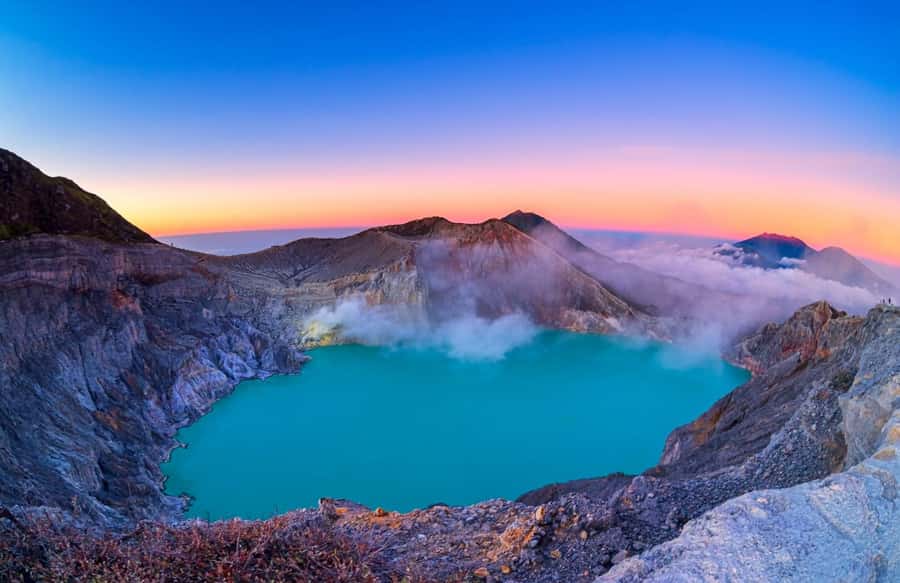
After the blue fire moment, you shift focus to sunrise. The itinerary calls for sunrise around 5:00–6:00 am, with views of a turquoise crater lake surrounded by rugged volcanic cliffs.
This part is where the experience often flips from “intense hike” to “holy wow.” The combination of early light, the unusual crater colors, and the fact you’re above a volcanic system that locals work around creates a strong sense of place.
The tour description also highlights the miners who work in this environment. Even if you’re not staying long enough to watch their full routines, the setting is clear: Ijen isn’t a staged theme park. It’s a working landscape where sulfur extraction happens.
Photography is a big part of sunrise time, but don’t ignore what the guide is telling you about where it’s safe to stand. One thing I’ve learned from similar volcano experiences: the best photos often come from being where you’re told, not where your instinct says you should be.
Once sunrise happens, you’ll have time to take it in before the descent begins (the itinerary shows descent from around 6:00–7:00 am). That means you don’t rush straight into leaving the crater right after the moment. There’s a small window to settle your senses.
Descending, breakfast at Paltuding, then ferry back to Bali
After sunrise, the descent gets underway, and then the schedule moves toward recovery. The itinerary has you returning to Banyuwangi after the hike, then transferring back to the ferry.
A light breakfast is included after the trek. The food here is practical fuel, not a gourmet meal. Still, it matters because you’ll be colder, tired, and running on limited sleep.
The return ferry ride is again about one hour. Then you’re back to Bali in the late afternoon, with drop-off to multiple areas listed up to around 4:00 pm. This gives you a full day with an end that feels “return to normal,” even if you’ll still be wiped out.
One small reality check: the return day is long, even with the included transfers. Expect to feel sleepy on the ferry and in the car ride, especially if you’re sensitive to motion or low sleep.
Price and value at $136: what you get for a long, guided overnight
At $136 per person, you’re paying for more than a trek. You’re paying for the logistics of Bali-to-Java overnight movement and the crater experience being handled as a package.
Here’s what that price covers, based on what’s included:
- private round-trip transportation from Bali
- ferry crossing tickets
- professional local trekking guide
- safety equipment (gas mask, flashlight)
- entrance fees to Ijen Crater
- light breakfast and bottled water
- hotel pickup and drop-off plus insurance coverage
If you tried to assemble this on your own, you’d likely spend time coordinating ferry schedules, drivers, guides, and gear at odd hours. That’s time you don’t have when you’re starting the hike in the dark.
Small group size (limited to 15) also matters for value. A small group tends to move more smoothly and gives the guide a better chance to manage pacing and viewpoint selection.
So when I look at the $136, I see it as paying for time saved and risk managed more than paying for comfort. Comfort is there, but the real product is the timing plus guided, safety-forward access to Ijen.
Who this suits best: fitness for the climb, comfort with cold, and respect for safety
This tour is best for people who can handle early mornings, uneven walking, and cold night conditions. The trek is challenging by design, and the tour explicitly lists not suitable groups such as:
- pregnant women
- people with back problems
- people with respiratory issues
- people with altitude sickness
- people with low level of fitness
- people over 95 years
- people over 70 years
If you’re generally fit and comfortable hiking for hours in the dark, you’ll probably find the structure and guide pacing helpful. Reviews also mention that guides can go at your pace, and that you shouldn’t panic if you need breaks.
You should also be comfortable with a sulfur environment. The gas mask is included, and the whole point of the trip is a phenomenon powered by gases.
Health document note: for Ijen activities, a health certificate from a doctor/clinic/hospital is required, issued the day before the activity. If you’re not able to get that, you’ll want to plan ahead so the certificate doesn’t become a last-minute roadblock.
Finally, check your weather flexibility. The tour notes variable weather, so layered clothing is a must.
Should you book this Bali Ijen Blue Fire tour or skip it?
Book it if you want a structured, safety-minded way to see the blue fire and then watch the crater lake at sunrise. The combo of ferry + private transfer + guided trek is exactly the kind of setup that makes an overnight volcano mission feel manageable, even when the climb is tough.
I’d also lean toward booking if you like having a guide who can manage timing. Blue fire viewing depends on conditions and viewpoint, and the experience is designed around that short window.
Skip it if you know you can’t do early, cold, uphill night hiking. Also skip if you’re in any of the listed not-suitable categories, or if getting the required health certificate the day before isn’t realistic for you.
If you’re on the fence, one practical test helps: ask yourself whether you’re willing to move through discomfort (cold, steep ground, and strong conditions) for a once-in-a-lifetime natural show. If yes, this tour’s setup is built to deliver.
FAQ
What time do you get picked up from Bali?
Pickup times depend on where you’re staying. The listed examples are: Uluwatu 6:00 pm, Kuta 6:30 pm, Sanur 6:30 pm, Jimbaran 6:30 pm, Ubud 7:00 pm, Canggu 7:00 pm, Seminyak 7:00 pm, Munduk 9:00 pm, and Lovina 9:30 pm.
How long is the tour?
The duration is listed as 22 hours.
How do you get from Bali to Java?
You drive to Gilimanuk Harbor and take a ferry crossing to Java (about one hour).
Do you have a guide for the crater trek?
Yes. A professional local trekking guide is included, and the live tour guide listed is English.
What safety equipment is provided?
You get safety equipment including a gas mask and a flashlight.
Is entrance to Ijen included?
Yes. Entrance fees to Ijen Crater are included.
Is a health certificate required?
Yes. A health certificate from a doctor/clinic/hospital is required for Ijen activities, and it must be issued the day before the scheduled activity.
What should I bring?
Bring warm clothing, a camera, snacks, water, comfortable clothes, and a flashlight.
What is not allowed on the tour?
Alcohol and drugs are not allowed, and swimming is not allowed.
Who should not do this tour?
The tour lists it as not suitable for pregnant women, people with back problems, people with respiratory issues, people with altitude sickness, people with low level of fitness, people over 95 years, and people over 70 years.
Is free cancellation available?
Yes. You can cancel up to 24 hours in advance for a full refund.
—
If you tell me your Bali area (like Ubud vs Seminyak) and your hiking comfort level, I can help you sanity-check whether the overnight climb will feel exciting or like a long slog.