That blue fire is real and nearby. This organized 24-hour trip to Kawah Ijen combines a night hike with dawn views that feel otherworldly: blue fire from sulfur gases and sunrise over the huge acid lake. The tradeoff is a long travel day plus steep, gritty hiking in the dark, so you need good grip shoes and patience.
What I like most is how practical it feels once you’re in the crater zone. You’re given the right gear for the hazard—gas mask, headlight, and gloves—and the guides (including people like Hari, Pur, and Harry in real outings) coach you through the climb with calm focus on safety and timing.
In This Review
- Key points before you go
- A Night Hike With a Very Specific Goal: Kawah Ijen at Dawn
- The Drive-Ferry-Overnight Rhythm That Makes the Timing Work
- What the Climb Feels Like (and How the Gear Changes Everything)
- Entering the Crater: Acid Lake Views and Sulfur Mine Reality
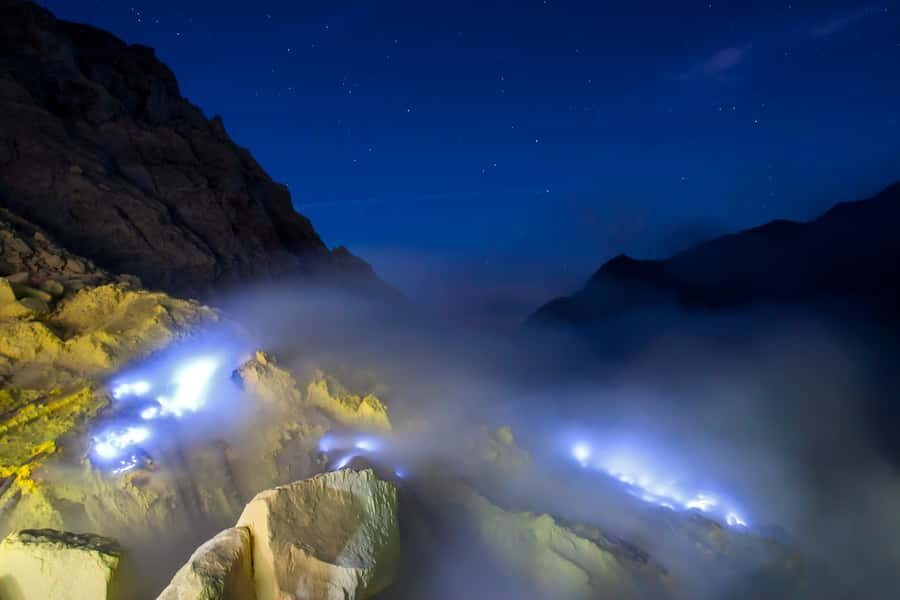
- The Blue Fire and the Acid Lake at Sunrise
- What You Eat: Dinner First, Then the Javanese Breakfast You’ll Be Thinking About
- Transfers, Ferries, and the Reality of a 24-Hour Loop
- Price and Value: What $128 Covers (and Why It Adds Up)
- Who This Tour Suits Best (and Who Should Skip It)
- Small Tips That Make a Big Difference on Ijen
- Should You Book This Trip?
- FAQ
- What is the departure time from Bali?
- How long is the tour?
- Where does the tour start and end in Bali?
- What’s included for the volcano hike?
- What meals are included?
- What should I bring?
- Is this tour suitable for people with mobility impairments?
- Are there any restrictions on what I can bring?
Key points before you go
- Blue fire is a crater-floor moment: you’re not just looking at Ijen from a rim.
- Safety kit is included: gas mask, headlight, and gloves are part of the plan.
- Guides with hands-on experience: some guides are ex-miners, which matters when routes get steep.
- You’ll get proper meals to match the effort: dinner on the Java side, then a hearty Javanese breakfast after.
- It’s a full travel day: van rides, a ferry crossing, and a short sleep make it a true 24-hour circuit.
A Night Hike With a Very Specific Goal: Kawah Ijen at Dawn
Kawah Ijen is not your casual sunrise hike. The reason people sign up is simple: the crater is one of the few places on Earth where you can see the eerie blue sulfur flames, lit by chemical reactions in the volcanic gases. That’s the headline, but the rest of the scene is what keeps it from feeling like a one-note photo stop.
This tour is built around the timing. You leave Bali at 1:00 PM, then you’re positioned in East Java so you can climb in the dark, descend into the crater area, and still be there when the light shifts. When sunrise finally hits the crater floor, the acid lake and the mining activity become visible in a way that makes the whole hike feel like it all added up.
The most important thing to know upfront is that the day demands effort, not just enthusiasm. Expect steep sections, a cold climb at higher elevation, and a descent that asks for careful footing.
You can also read our reviews of more tours and experiences in Bali.
The Drive-Ferry-Overnight Rhythm That Makes the Timing Work
The route is long. You don’t just “get there” and hike. You’re in transit most of the afternoon and evening, then you reset and do it again in the early hours.
Here’s the rhythm in plain terms:
- A long van ride from Bali toward East Java.
- A ferry crossing (about 75 minutes) that breaks up the journey.
- More van time to reach the East Java area.
- Overnight rest (about 6 hours) so you’re not hiking on zero sleep.
- Then a short van hop to the Ijen area for the climb.
This pacing is a big part of the value for a one-day trip. Going DIY means you’d have to solve transport, timing, gear, and entrance logistics while also trying to hit dawn. This tour handles the choreography so you can focus on walking.
One thing to mentally budget for: you may spend extra time waiting while the pickup lineup gets assembled. It’s not a “sleeps-in and stroll” kind of trip. It’s more like a relay—jump in, move fast, rest when you can, then climb.
What the Climb Feels Like (and How the Gear Changes Everything)
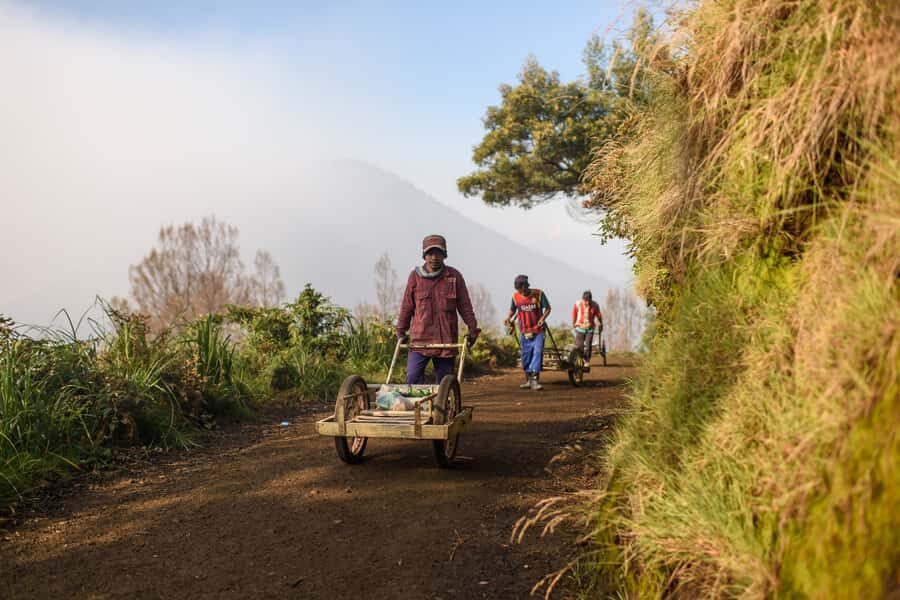
You’re dealing with a proper volcano trail. The volcano sits at about 2,370 meters (the rim elevation matters), and the hike has steep, uneven moments. The good news is the trail is guided and managed; you’re not guessing your way up.
You’ll start at night with a headlight and a guided pace. That headlight isn’t a luxury. It’s your control. Several people mention that the hike can be steep at points, and the small pauses/rest points help you avoid burning out too early.
Shoes matter a lot. Bring shoes with real grip. Even in good conditions, the ground can be rough and gritty. If you’ve ever tried walking on volcanic rock, you already know the vibe: it’s not a smooth sidewalk.
Clothing matters too. The trip info recommends warm layers, a raincoat, and a cap. One review specifically noted that at the summit it can feel around 12°C in January—so even if the weather in Bali feels tropical, plan for cold on the climb.
Entering the Crater: Acid Lake Views and Sulfur Mine Reality
The crater is where this tour stops being a scenic hike and becomes a working volcanic environment.
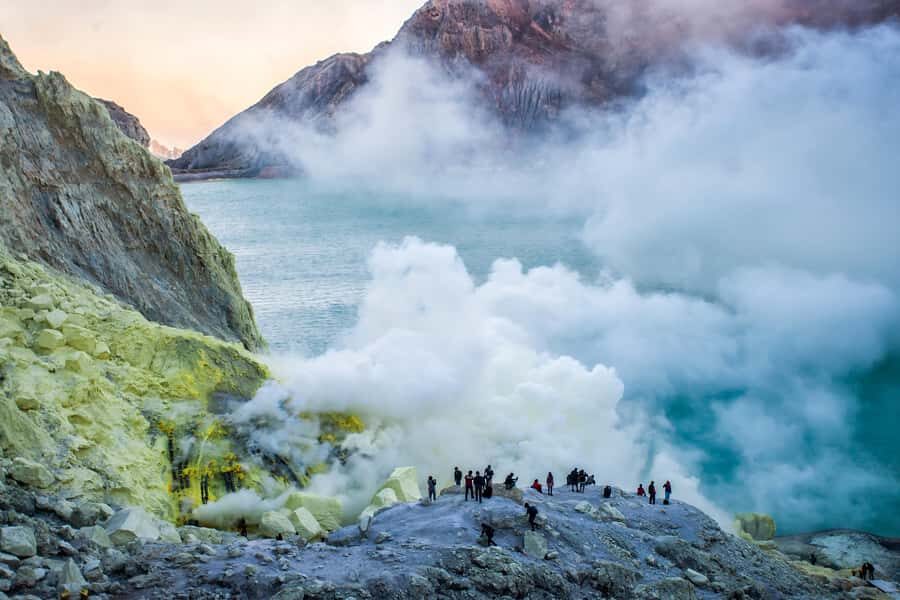
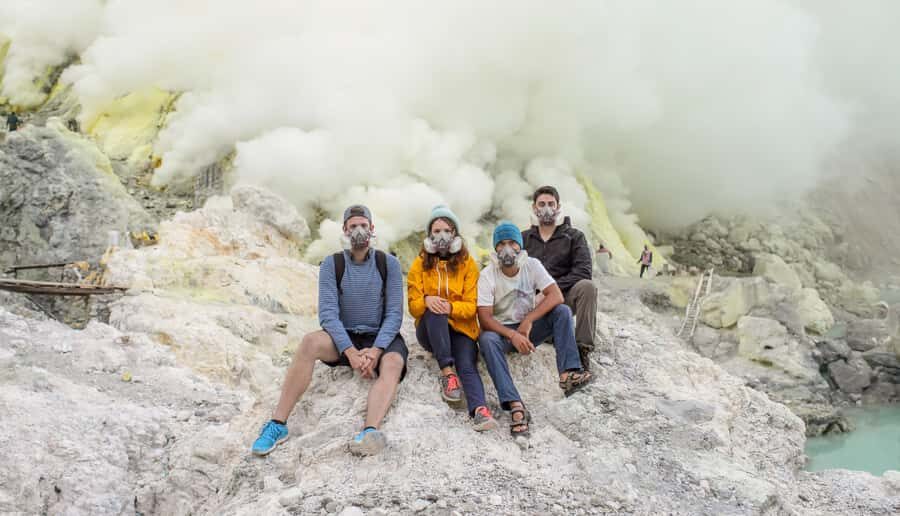
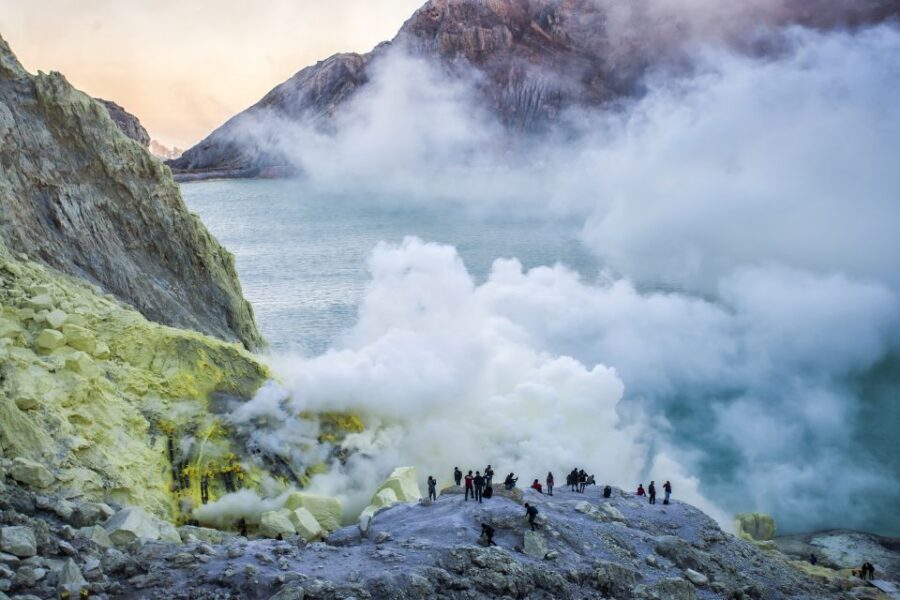
After you climb to the rim, you descend toward the crater floor. This is also the only area where the blue sulfur flames are seen clearly. The tour includes a gas mask, which is not just for show. You’re in an area with volcanic gases, and the mask helps you stay focused on the view and the task rather than the fumes.
Inside the crater zone, you’re also watching the sulfur mining work up close. You’ll walk in and see miners harvesting sulfur—an active, physical job done in a place that looks surreal. This is the part that makes Ijen feel different from a typical “look at the view” volcano.
One of the quietly useful details: guides who’ve worked the area before tend to move you with confidence. People have singled out guides like Pur and Hari as especially attentive on route safety, and one person even noted that Pur gave Bahasa names for plants around Ijen. That kind of small interaction turns a long night hike into something more human.
The Blue Fire and the Acid Lake at Sunrise
Sunrise is the payoff, but the trick is understanding what you’re actually watching.
The blue fire isn’t a campfire glow or a trick of camera filters. It’s tied to sulfur gases and combustion, which means the flames show up in the crater area where the gases and conditions line up. Your route puts you in the right spot at the right time, which is why this tour is organized around dawn.
Then there’s the acid lake. The tour describes it as the biggest acid lake in the world, and the value here is scale and contrast. You’ve got glowing mineral chemistry, workers in action, and a sunrise light that turns the scene from “strange” into “this is real life and it’s wild.”
This moment is also why the climb timing matters so much. If you arrive too late, the crater floor can still be impressive, but you miss the dramatic light shift that makes it feel cinematic.
Also: clouds and smoke can affect visibility. One person said they didn’t see the flames due to smoky conditions, but they still went inside to see the sulfur mining. In other words, you should go for the full experience, not just one single visual.
What You Eat: Dinner First, Then the Javanese Breakfast You’ll Be Thinking About
After you reach East Java, you get local dinner and a room to rest for a few hours. That meal matters because the night climb is fueled by a decent dinner and not by vending-machine snacks.
The plan includes a Javanese breakfast buffet on the return side. This is one of the smartest choices for a hiking day like this. Breakfast is not a random add-on; it’s recovery fuel after cold air, steep walking, and crater descent.
People describe the food as tasty and home-cooked, and one solo traveler even mentioned feeling well taken care of with vegetarian meal options. You should still confirm dietary needs with the operator if you have strict requirements, but the overall pattern is that meals are part of the plan, not an afterthought.
Transfers, Ferries, and the Reality of a 24-Hour Loop
This is not a slow travel day. It’s a loop: Bali → East Java → Ijen → East Java again → Bali.
The included transport is where you save time and decision stress. You get:
- pickup and drop-off from Bali (meeting back at Gusto gelato cafe, Jalan Mertanadi, Seminyak/Kerobokan)
- van transfers in multiple segments
- return ferry (75 minutes each way)
If you’re tempted to DIY, remember that even with a good driver, you’d still need to coordinate schedules to match the sunrise window. The ferry timing is also a factor—miss it and the whole plan slips.
The main downside of the loop is simple: fatigue. Even if you sleep in a room for about 6 hours, you’ll still wake up early enough to feel it in your legs and brain. Hydrate, keep snacks small and accessible, and plan to sit quietly on the long return ride.
Price and Value: What $128 Covers (and Why It Adds Up)
At $128 per person, you’re paying for a lot more than a guided hike.
Your included costs cover:
- Bali pickup/drop-off plus all major transport legs
- ferry crossing back and forth
- local dinner
- accommodation for the rest window
- entrance fees to Kawah Ijen
- an English-speaking guide
- safety gear: gas mask, headlight, and gloves
- Javanese breakfast (buffet)
That’s the value equation. DIY might look cheaper on paper, but once you add transport from Bali, ferries, entrance fees, guiding, and gear rentals/purchases, the savings shrink quickly. For a one-day trip, convenience is not fluff—it’s how you make sunrise actually happen.
So I’d frame the price like this: you’re buying a managed schedule plus safety-focused equipment, not just access to a volcano.
Who This Tour Suits Best (and Who Should Skip It)
This trip fits best if you:
- enjoy hiking with real effort
- can handle steep sections and uneven ground
- want a guided, timed plan to catch dawn
- care about the blue fire and sulfur mining, not just generic viewpoints
It’s also a good option if you don’t want to puzzle out transport logistics across islands. The whole format is built for travelers who want a serious experience without spending a week coordinating.
It’s not suitable for people with mobility impairments, based on the tour details. The hike and crater descent are too demanding.
If you hate early mornings, rough footing, and cold wind at altitude, you might find this tour exhausting rather than rewarding.
Small Tips That Make a Big Difference on Ijen
Here are a few practical things that will help you enjoy it more:
- Wear sport or trekking shoes with grip. If you only change one thing, make it this.
- Bring warm layers even if the weather in Bali is warm.
- Use the kit properly. The gas mask is part of staying comfortable and safe.
- Keep your small backpack light. You’re hiking, and you don’t want extra weight.
- Expect photos. The guides are often helpful with getting shots, and the headlight plus sunrise light makes it easier to capture the crater scene.
If you’re worried about timing due to weather or volcanic conditions, keep flexibility in mind. One group reported heavy volcanic activity and an adapted outcome. Nature calls the shots sometimes, and the best teams adjust.
Should You Book This Trip?
Book this tour if Kawah Ijen is on your list and you want the full, guided crater experience—blue fire, the acid lake at dawn, and the sulfur mining views—without having to plan transport across Bali and Java on your own.
Don’t book it if you’re looking for a relaxed day, you struggle with steep hikes, or you can’t manage cold and darkness. This is an early-start workout dressed as a once-in-a-lifetime volcano show.
If you do book, go in with the right mindset: expect effort, respect the gear, and let the dawn moment do what it does best—make the whole hard day feel worth it.
FAQ
What is the departure time from Bali?
The trip departs Bali at 1:00 PM.
How long is the tour?
The duration is listed as 1 day, with starting times depending on availability.
Where does the tour start and end in Bali?
It starts at Gusto gelato cafe, Jalan Mertanadi, Seminyak Kerobokan and ends back at the same meeting point.
What’s included for the volcano hike?
The included items for the crater area are an English-speaking guide, gas mask, headlight, and gloves, plus entrance fees to Kawah Ijen.
What meals are included?
You’ll have local dinner and a Javanese breakfast (buffet).
What should I bring?
Bring a passport or ID card, comfortable trekking shoes, and a camera. You’ll also need warm clothes, a raincoat, a cap or hat, and a small backpack.
Is this tour suitable for people with mobility impairments?
No. The tour is listed as not suitable for people with mobility impairments.
Are there any restrictions on what I can bring?
You can’t bring luggage or large bags. Alcohol and drugs are also not allowed.