Cold stars, steep steps, and sunrise on Rinjani. This 2-day trek focuses on the classic route from Senaru/Sembalun up to the volcano summit, with a night camping at Pelawangan Sembalun—so you get big viewpoints without cramming everything into one day. I love the way the climb is broken into clear stages with rests at the posts, not one nonstop grind. One possible drawback: the top can get very cold and windy, and you’ll want proper gloves and warm layers ready for the final push.
You’ll also appreciate the hands-on feel of this trip—guides and porters keep things moving and set you up with the gear that makes a huge difference at altitude. In the field, guides like In and Joko are described as patient and experienced, and that matters when you’re trying to keep a steady pace. I especially like that you’re not stuck planning camp comfort yourself: you’ll have head lamps, trekking poles, and proper camping setup, plus meals that are described as plentiful.
Small group (up to 10), early-morning summit timing, and crater-rim sleep make this trek feel organized—but you still need the fitness and clothing to match.
In This Review
- Key Highlights You’ll Feel From Day One
- Plan on Permits First: The 240/Day Reality at Rinjani National Park
- Senaru to Sembalun Village: Getting Started at 1,051 m
- Day 1 Climb to Pelawangan Sembalun: Posts, Lunch, and a Crater Rim Night
- Day 2 Summit Push From 02:30: Reaching 3,672 m (and Coming Back Safely)
- The $183 Value: Guides, Porters, Food, and Camp Comfort
- Group Size, Guides, and Why Small Teams Feel Safer
- What to Pack for a Windy, Cold Summit Day (Under 5 kg)
- Who This Trek Suits (and Who Should Skip It)
- Should You Book This 2-Day Rinjani Trek to the Summit?
- FAQ
- FAQ
- How do I register for Mount Rinjani permits?
- What time does the summit trek start on Day 2?
- Is the national park entrance fee included in the price?
- What gear is included, and what do I need to bring?
- Who is this trek not suitable for?
- What’s the cancellation and payment policy?
Key Highlights You’ll Feel From Day One
- Permit limits shape your whole plan: only 240/day for Rinjani National Park access, so registration needs to happen early.
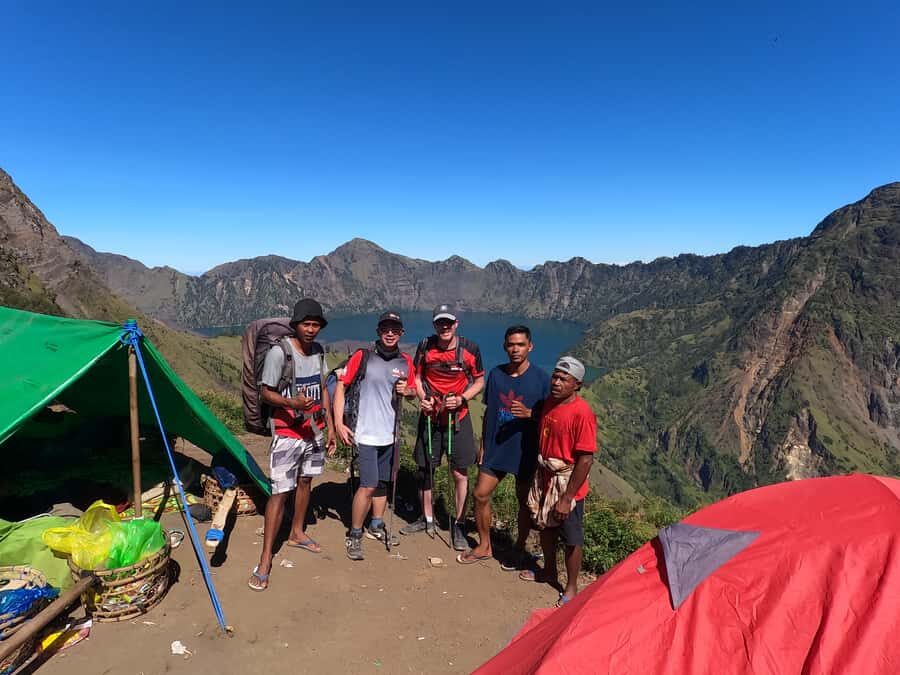
- Crater rim camping at Pelawangan Sembalun: sleep under the stars near Segara Anak views and watch sunset/sunrise.
- 02:30 wake-up on summit day: you start the climb around 03:00 for the 3,672 m summit window.
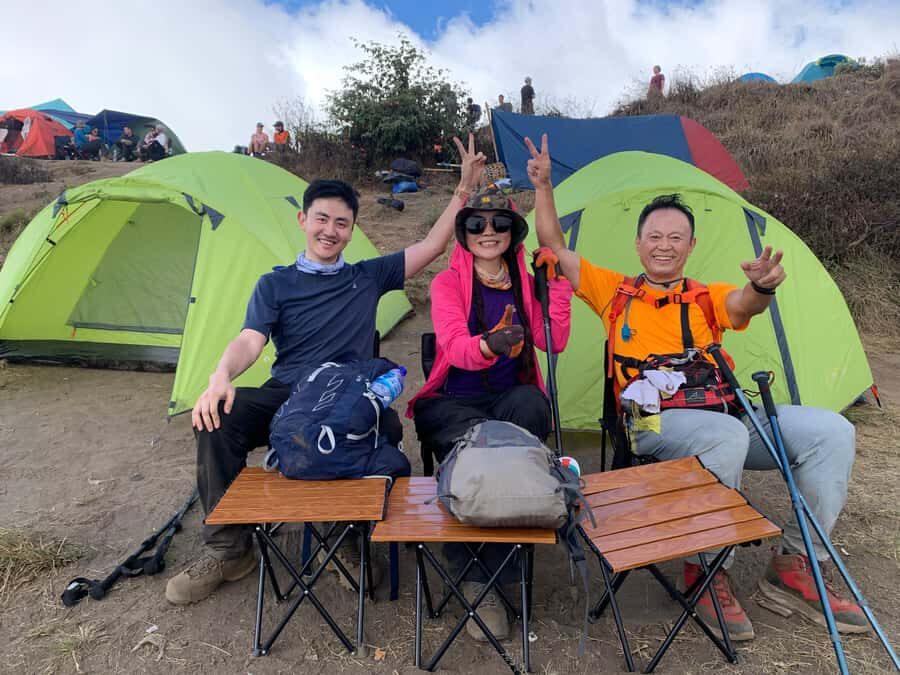
- Cold-ready camp setup: head lamps, camp chairs, tent, sleeping bags, and even camp comforts like a simple dinner table.
- Guides that pace you: experience and patience come up repeatedly, including guides named In and Joko.
- The last hour can test you: loose stones and steep ground mean slow, careful footwork.
Plan on Permits First: The 240/Day Reality at Rinjani National Park
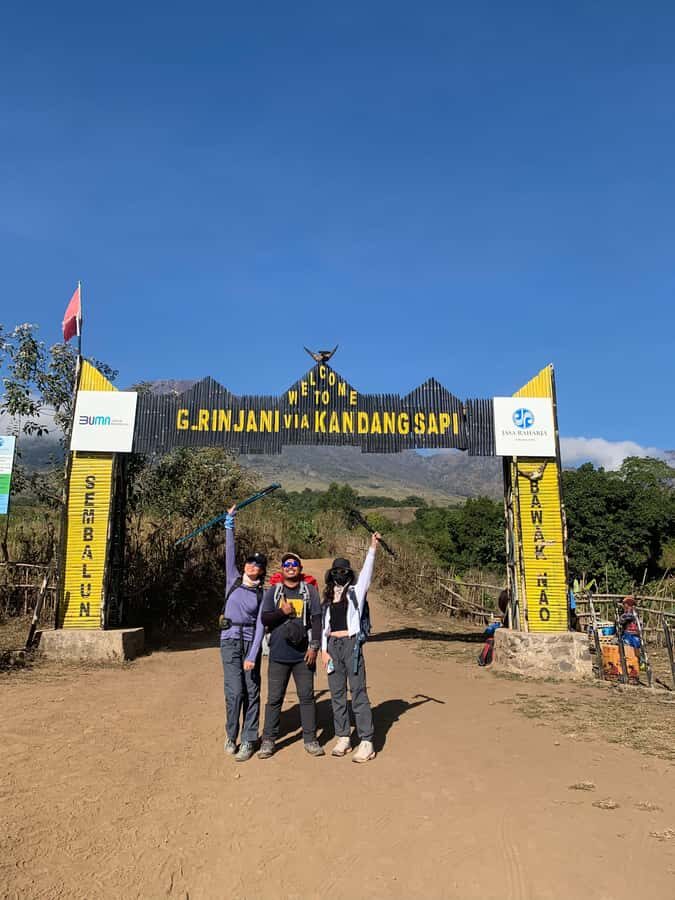
This trek lives or dies on access. Rinjani National Park permits are limited to 240/day, and if the quota is gone you can’t just show up and start—the day becomes a reschedule situation. That’s why you should treat permit registration as step one, not paperwork you do “when you have time.”
You can register through the ERinjani app with member details including passport number, full name, birthday, weight and height, and nationality. After filling in the data, you pay directly via an Indonesian bank transfer to the government account, at Rp 250K/person/day. If you’d rather avoid the app process, a local guide can help with registration because the quota is limited and timing matters.
Also note a key line in the pricing: the national park entrance fee is not included. So even if the trek price looks straightforward, you should still budget for permit/entry costs.
You can also read our reviews of more tours and experiences in Senaru.
Senaru to Sembalun Village: Getting Started at 1,051 m
Your first morning begins with a transfer from Senaru to Sembalun village by mountain car, taking about 45 minutes to 1 hour. The arrival is timed for roughly 08:00, and from there the trek becomes a mix of walking and logistics: you’re not just climbing—you’re also checking in at key points.
At this stage, the elevations are already doing their job. The Rinjani Information Center (RIC) sits at 1,051 m, and then you move toward Post 1 at 1,300 m. That first section is described as taking about 2 hours, which is a smart warm-up: you’re testing your pace and breathing before you get deeper into the day.
This is also where you’ll learn your trekking rhythm. Expect short breaks, including a 5–10 minute rest at Post 1, before continuing to Post 2 (Tengengean) at 1,500 m about an hour later.
Day 1 Climb to Pelawangan Sembalun: Posts, Lunch, and a Crater Rim Night
Day 1 is built like a staircase. After Post 2 (about 1 hour), there’s another short 5–10 minute break, then you continue to Post 3 (Pada Balong) at 1,800 m for around 1 hour. These posts aren’t just timestamps; they’re your chance to regroup, drink water, and check your gear before the steeper section later.
The big time stop is at Post 3. You rest for about 2 hours while guides and porters prep lunch and a hot drink—options listed include tea, coffee, hot chocolate, or lemon tea. That matters because you’ll want warm calories and comfort before the final push toward the crater rim.
Then comes the heart of Day 1: the trek to Sembalun Crater Rim (Pelawangan Sembalun) at 2,639 m. Plan for about 3 hours, and yes, it includes a prolonged steep climb. This is where trekking poles earn their keep, especially if your legs are already tired from the earlier posts.
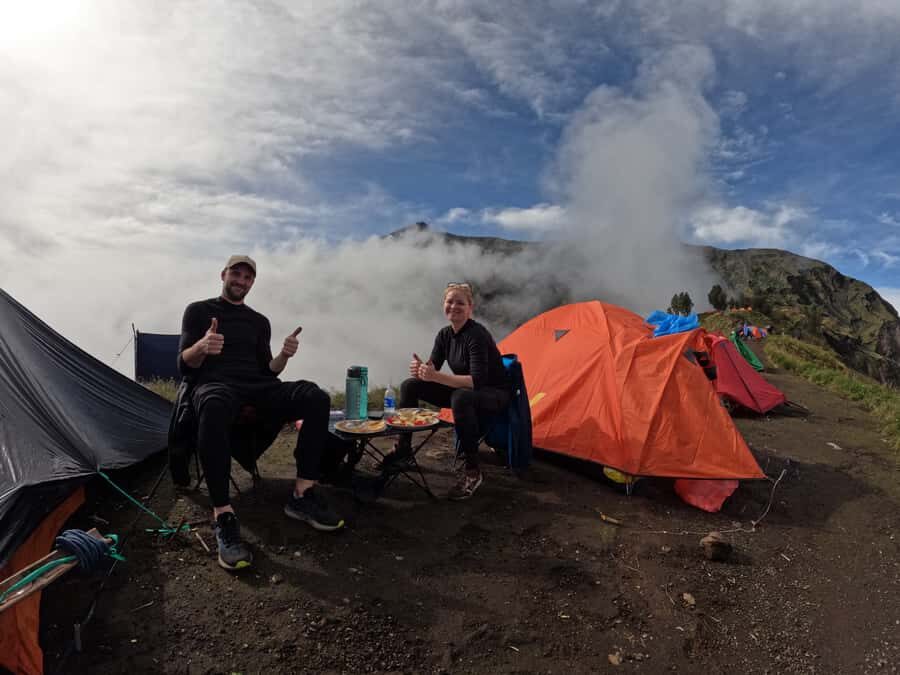
Once you reach camp, you’re in for the best kind of tired: the views payoff. The itinerary is designed so you can enjoy sunset and sunrise from the rim, plus sightlines toward Segara Anak lake, Sembalun village, and even half of Lombok’s north side. You’ll sleep under the stars at the campsite by the crater rim, and that night’s comfort is a big part of this operator’s value.
Day 2 Summit Push From 02:30: Reaching 3,672 m (and Coming Back Safely)
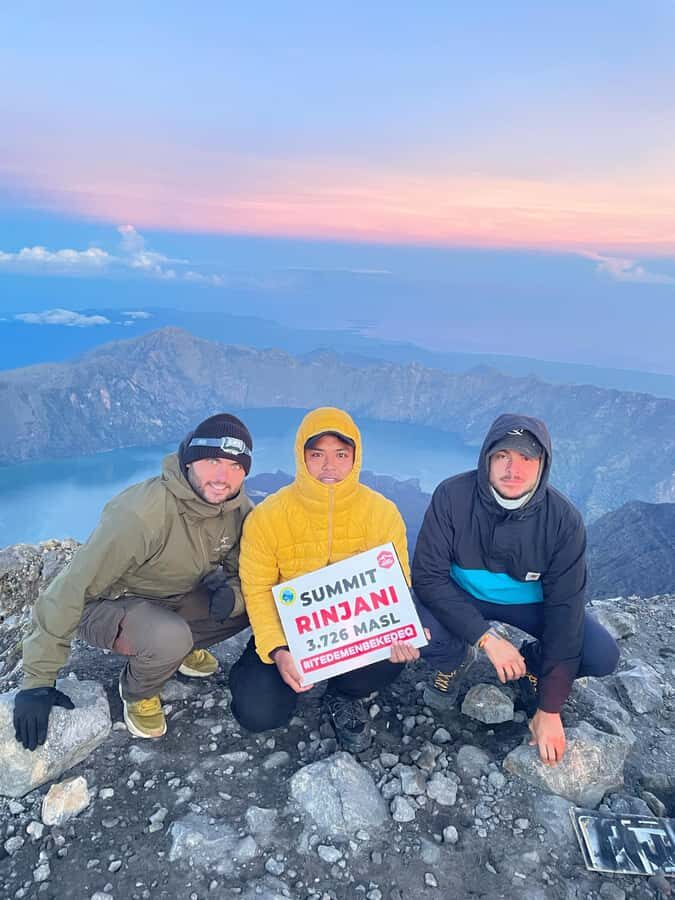
On summit day, the schedule turns serious. You’ll wake up around 02:30 am so you don’t miss sunrise, with a light breakfast first. The summit trek starts at about 03:00 am, and it takes roughly 3 hours 30 minutes in total to reach Mount Rinjani 3,672 m.
The climb is staged:
- First, a moderate ascent for about 2 hours.
- Then a fairly easy but long trek.
- Finally, the last hour is steep and difficult, with lots of loose stones—so your steps need to be deliberate, because slipping backward can happen fast when footing is uneven.
From the summit, you’re looking across major island geography: Lombok, Bali, and Mt. Tambora in Sumbawa, plus Segara Anak lake. Sunrise is part of the plan, and the timing is set so you can enjoy it before heading down.
After sunrise, you go back to Sembalun Crater Rim for breakfast and rest. Then the descent starts—about 4–5 hours down to Sembalun village (around 1,150 m). There’s time to grab lunch at Post 3 or Post 2, and you should arrive around noon.
Finally, the car is waiting to bring you back to Senaru, ending the trekking portion. If you want a “complete loop feel,” this one delivers: you climb, you camp, you summit, then you come back down to daylight logistics.
The $183 Value: Guides, Porters, Food, and Camp Comfort
Let’s talk money in a practical way. The price is listed at $183 per person for 2 days. What you’re paying for isn’t just “a guide to walk with you”—it’s a package of labor, gear, and meals that would otherwise be a headache to arrange yourself.
Included items cover the real burdens:
- Trekking guide
- Porter to carry camping equipment
- Meals and drinks: breakfast, lunch, dinner
- Safe drinking water
- Camping equipment: double-size tents, camp chairs, toilet tent, sleeping bags, pillows, and mattress
- Head lamp, trekking poles/sticks, and a rain coat
- Insurance
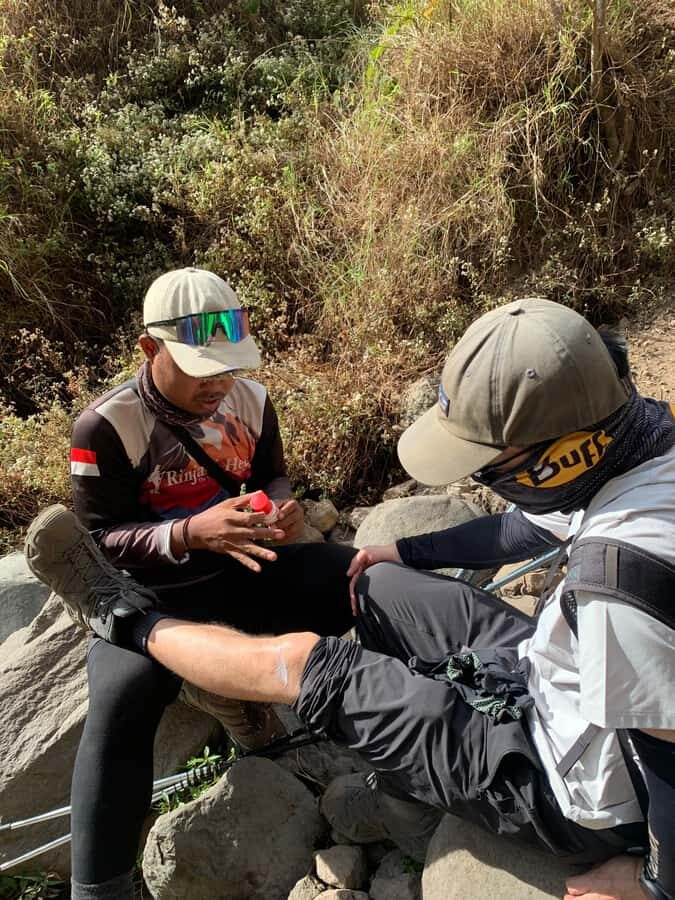
One highlight is camp setup comfort: you even get chairs and a dinner table, so you’re not eating dinner like you’re in a survival film. Review feedback also points to meals being generous, and that’s important on a summit schedule where calories matter and sleep is short.
Just keep two things clear:
- The Rinjani National Park entrance fee is not included.
- You’ll carry your own small items in a day pack (the tour notes a small backpack up to 5 kg).
In short: at $183, you’re buying convenience and safety support more than you’re buying “luxury.” And for many people, that’s exactly what a volcano trek should cost.
Group Size, Guides, and Why Small Teams Feel Safer
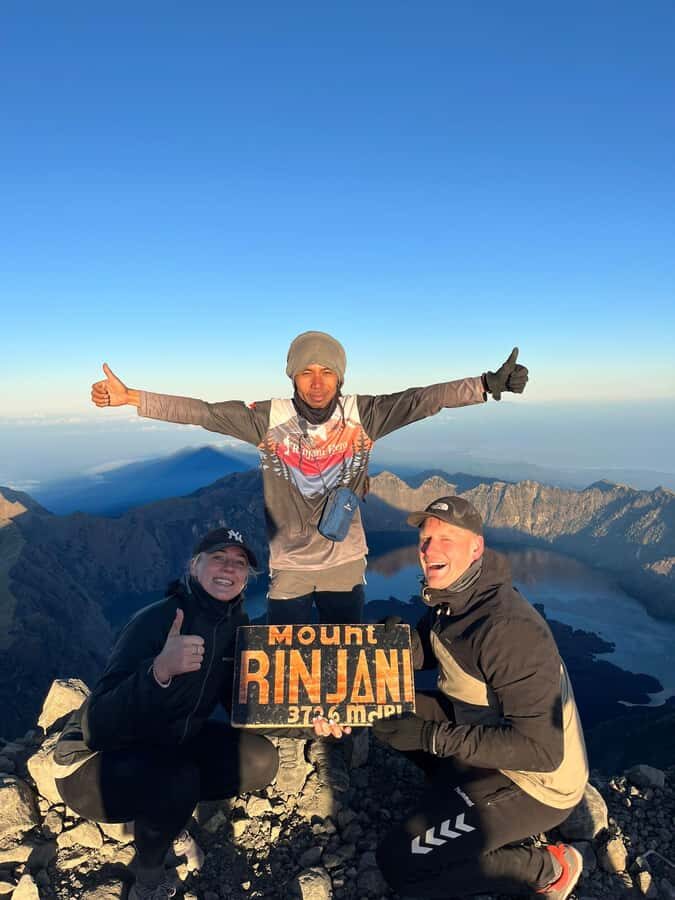
This is a small group trip limited to 10 participants. Smaller groups often mean less traffic on the trail and more individualized guidance when the pace needs adjusting.
Guide quality shows up strongly in feedback, with named examples like In and Joko. The descriptions focus on patience and adapting to walking rhythm—exactly what you need when altitude and fatigue start to shuffle your legs around.
Porters are also part of why this works. They carry camping equipment, which means you can focus on staying steady and not burning your energy on weight management. That’s not just comfort; it’s how you keep the climb safer and more enjoyable.
One more note from real-world experience: transportation to and from the trek can vary in quality. If you’re picky about safety—seatbelts, driving speed, and how you’re seated—ask questions before you go. The trek itself is well supported; just don’t assume the car transfer will be perfect without clarification.
What to Pack for a Windy, Cold Summit Day (Under 5 kg)
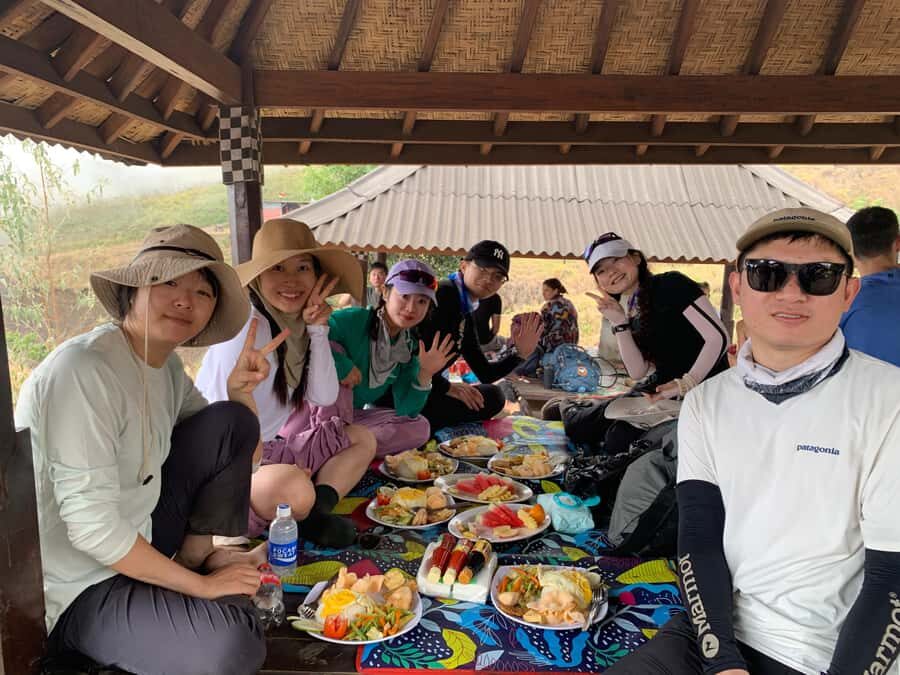
This trek gives you a lot of gear, but you still need the right clothing. The tour specifically says you should have good fitness and the ability to walk long distances, and it warns that people who suffer from altitude or mountain sickness are not allowed. People afraid of heights also can’t join—because the final stages and steep sections require calm focus.
What you bring:
- Hiking shoes
- Gloves
- Long pants
- Cash
- Charged smartphone
- Collared shirt
Your pack strategy matters. You’re told to pack items in a small backpack of no more than 5 kg. That means you’re choosing essentials only: trekking shoes, toiletries, personal medication, sunscreen, insect repellent, camera, a small towel, several cotton t-shirts, long trek pants, windproof jacket, shorts, sandals, and swimwear (optional).
Cold at the top is not a theory on Rinjani. Even in the feedback, the message repeats: gloves and warm layers are critical for the last part of the hike when wind shows up. If you only pack a light sweater, you’ll likely feel it.
Also bring the practical stuff:
- A plan to keep your smartphone charged (you’ll want photos on summit day)
- Clothes you can layer fast
- Something windproof in your small pack
Who This Trek Suits (and Who Should Skip It)
This is not a casual hike. The tour asks for a solid fitness level and long-distance walking ability. If you’ve never trained for sustained elevation, this will feel punishing fast.
It’s not suitable for:
- Children under 4
- Pregnant women
- People with heart problems
- People afraid of heights
- People with diabetes
- People with altitude sickness
- People without experience
- People with low fitness
- People over 70
If you tick the fitness box and you can handle early mornings, this trek suits you because it’s structured and supported: guided route, porters, and camp gear reduce the logistical stress.
Should You Book This 2-Day Rinjani Trek to the Summit?
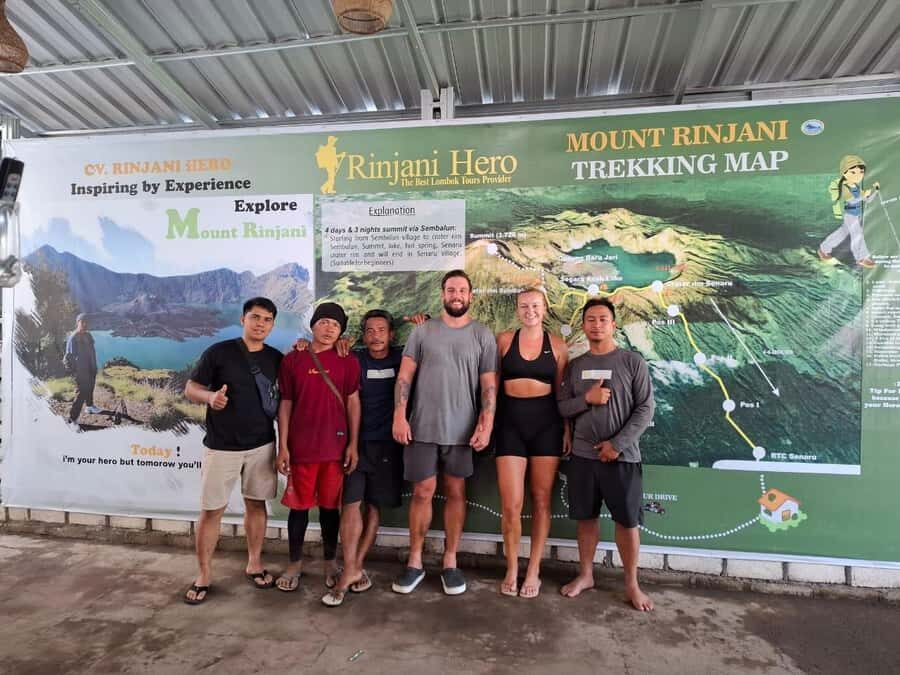
Book it if you want a real summit challenge in just 2 days, and you’d rather rely on a guided, gear-supported setup than DIY your way through permits and camping logistics. I’d also say go for it if you care about comfort at camp—chairs, proper tents, and a dinner table turn the crater-rim night into more than just “survive and sleep.”
Think twice if you’re not ready for cold weather and windy conditions at altitude. If you don’t have gloves and warm layers, or if the idea of steep, loose-stone climbing makes you tense, you’ll likely struggle—especially in that last hour on summit day.
FAQ
FAQ
How do I register for Mount Rinjani permits?
Permit registration can be done through the ERinjani app using details like passport number, full name, birthday, weight and height, and nationality. You then pay to the government account by Indonesian bank transfer at Rp 250K per person per day. Since permits are limited to 240 per day, you should register early, or ask a local guide to help.
What time does the summit trek start on Day 2?
You’ll wake up around 02:30 am for a light breakfast, and then start the trek toward the summit at about 03:00 am.
Is the national park entrance fee included in the price?
No. The Rinjani National Park entrance fee is listed as not included, even though the trek package includes the guide, porters, meals, camping equipment, and other items.
What gear is included, and what do I need to bring?
Included gear covers trekking guide and porters, meals and drinks, safe drinking water, camping equipment, head lamps, trekking poles, insurance, and a rain coat. You still need to bring hiking shoes, gloves, long pants, cash, a charged smartphone, and a collared shirt, plus pack items in a small backpack (up to 5 kg).
Who is this trek not suitable for?
It’s not suitable for children under 4, pregnant women, people with heart problems, people afraid of heights, people with diabetes, people with altitude sickness, people without experience, people with low fitness, and people over 70.
What’s the cancellation and payment policy?
The tour offers free cancellation up to 24 hours in advance for a full refund. It also offers a reserve now & pay later option so you can book first and pay later.