Spice, rice paddies, and real cooking lessons. This Ubud class mixes local-market sights with hands-on Balinese cooking led by Wayan Aris, so you see ingredients, learn the flavors, and end up eating what you make. You’ll also get a recipe PDF copy so the meal doesn’t fade the moment you get back to your hotel.
What I like most is the focus on how the food is built. You practice making a Balinese spice paste as a base, then cook 9 Balinese recipes with support from the guide, in a group capped at 12. I also really enjoyed the human side of it, like meeting people at the Tampaksiring market stop, where Wayan seems to know everyone.
One consideration: the cooking can be very spicy, and the lesson pace may feel quick to some people. If you’re heat-sensitive, tell the team early and plan to ask about spice levels as you go.
In This Review
- Key things to know before you go
- Price and logistics: is $58 a good deal?
- Meet your guide (Wayan Aris) and the small-group setup
- The morning path: Tampaksiring market and rice paddies (Subak-style stop)
- Market stop: what you’ll actually get
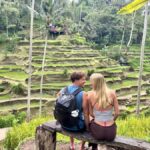
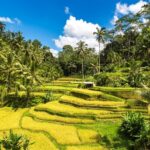
- Rice paddies: the scenic breather
- The afternoon path: making canang offerings instead of the market
- From spice paste to a full cooking run: how the lesson works
- Why spice paste is such a big deal
- Your 9-dish cooking lineup
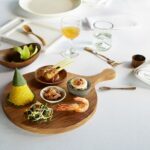
- Eating what you made: buffet meal and tastings
- Recipes you can take home: the PDF copy
- The spice and pacing reality check
- Pickup/drop-off boundaries in Ubud center
- What to bring (and what to skip)
- Who this is perfect for (and who should think twice)
- A simple “should I book” checklist
- FAQ
- Is the market visit included?
- Do you pick up from hotels in all of Ubud?
- How many recipes do you cook?
- What dishes are included?
- Can I request a vegetarian option?
- Can I cancel for a full refund?
Key things to know before you go
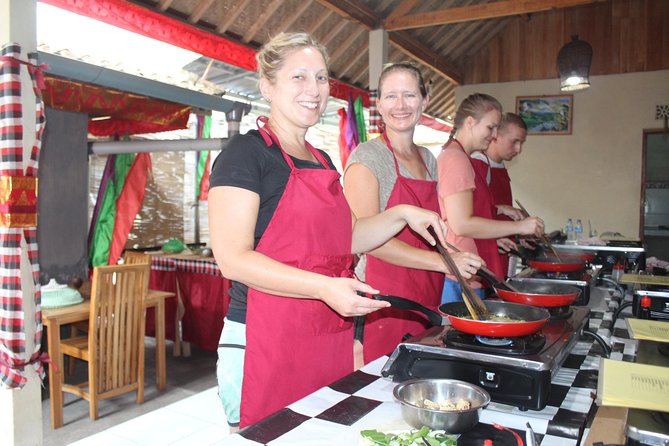
- Small group (max 12) keeps the cooking instruction from turning into a lecture.
- Spice paste practice is the skill that helps you understand multiple dishes, not just one recipe.
- Morning vs afternoon options change the key stops: market and rice paddies in the morning, canang offering work in the afternoon.
- Buffet meal after cooking means you eat your results, not just sample small bites.
- Ubud center pickup/drop-off is included, but outside Ubud costs extra.
Price and logistics: is $58 a good deal?
At about $58 for roughly 5 hours, this lands in the mid-range for Ubud cooking experiences. The value comes from three places: you get market/field time (morning class), you cook a full set of 9 dishes, and you leave with a PDF recipe copy you can actually use later. Add included bottled water, an air-conditioned vehicle, and hotel pickup/drop-off in the Ubud center, and the price starts to make sense for a stress-free half-day.
The main thing to watch is location. Pickup and drop-off are included only for the Ubud center. If your hotel is outside that area, there’s an additional transport charge unless you request pickup in advance. Also, the tasting and buffet meal mean you’re not just paying for cooking instruction; you’re paying for a full food experience.
You can also read our reviews of more tours and experiences in Ubud.



Meet your guide (Wayan Aris) and the small-group setup
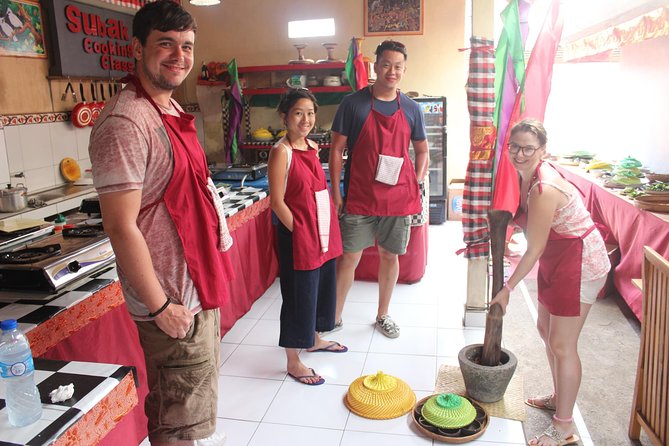
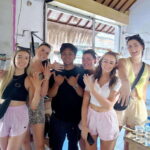
This experience is run by Wayan Aris, with a driver and a local guide included. The group size matters: no more than 12 people, which typically means you can ask questions while you’re working, not after the pot has cooled.
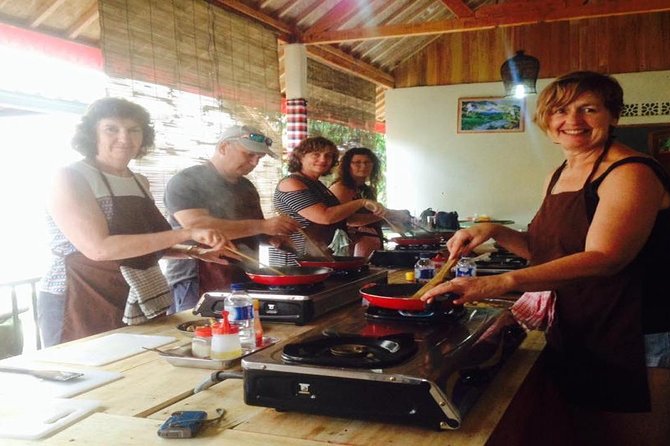
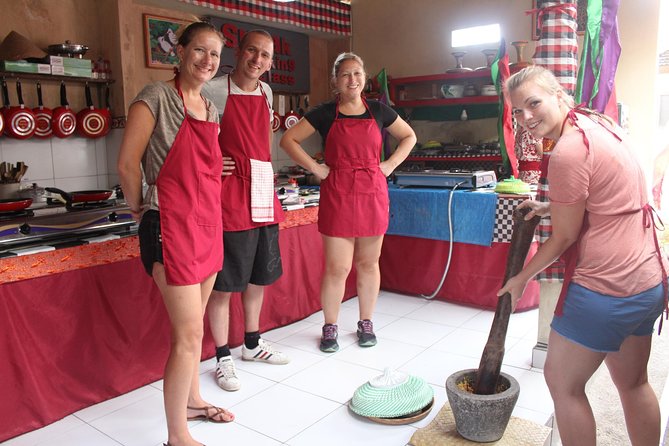
You’ll start with a pickup from your hotel, then get a welcome drink (cold ice tea). From there, the day shifts into practical mode. The lesson style feels geared toward getting your hands moving: making paste, chopping, seasoning, and cooking in the kitchen area where you can see what’s happening.
If you like learning by doing, this setup tends to work well. If you prefer a slower, more narrated approach where you just watch first, you might feel the pace is a bit intense once the cooking starts.
The morning path: Tampaksiring market and rice paddies (Subak-style stop)
If you book the morning class, you get the full “ingredients first” arc. You’ll visit a morning local market in the Tampaksiring village area, then head to rice paddies (a stop tied to the Subak cooking class theme).
Why this matters for you: Balinese cooking is built on flavor layers, and you’ll understand those layers better when you can point to the ingredients before they hit the cutting board. Markets also make your food knowledge feel less like memorizing and more like pattern recognition.
Market stop: what you’ll actually get
At the market, you’re not just browsing. The guide helps you understand what things are, why they’re used, and how they connect to the dishes you’ll make later. In one of the most memorable moments of the day, Wayan seems to know people, which gives the visit a personal feel instead of a quick photo stop.
Practical tip: wear shoes you don’t mind getting scuffed. You’ll likely be walking around enough to make comfort matter.
Rice paddies: the scenic breather
The rice paddies stop adds a calmer visual break between browsing and cooking. It’s a good reset for your senses before you start handling spices and working around heat.



The afternoon path: making canang offerings instead of the market
If you take the afternoon class, the “trade ingredients first” part shifts. You won’t do the morning market and rice paddies as part of the core schedule. Instead, you’ll spend time making canang offerings (canang is part of the afternoon option).
This is a nice choice if you’re more interested in culture as a hands-on practice than as a roadside sight. Even if you don’t consider yourself “religious,” learning a craft like this tends to feel grounded and real, not staged.
From spice paste to a full cooking run: how the lesson works
Once the day is underway, you’ll move into the main skill: Balinese spice paste. The guide builds it as a base used across multiple dishes. That one step is the bridge between “I watched a recipe once” and “I understand what makes these flavors work.”
Why spice paste is such a big deal
Many people remember the final dish—tempe or chicken or soup—but forget the foundation. When you learn the paste technique, you can reuse the logic: flavor structure, aroma balance, and seasoning timing. It also helps you adjust when you taste as you cook.
Your 9-dish cooking lineup
You’ll cook a total of 9 Balinese recipes. Some specific dishes you’ll make include:
- Fried tempe
- Balinese chicken
- Vegetable soup
The class also includes additional local dishes beyond those three, and the day is designed so the buffet meal comes from what you produce. That’s one of the best parts: no wasting your effort. You cook, you taste, and then you eat a buffet.
Eating what you made: buffet meal and tastings
Food tasting is part of the experience, and you’ll also enjoy a buffet meal at a Balinese house after cooking. The schedule mentions buffet lunch in the flow of the day, while the included list also references a buffet dinner/dinner wording—so what you eat may vary by class timing. Either way, the key point is consistent: the meal ties directly to your dishes.
This is where you’ll learn quickly if you got the seasoning balance right. It’s also where you get to slow down and talk with the group in a way that’s harder during active cooking.
Recipes you can take home: the PDF copy
You receive a PDF copy of the 9 Balinese recipes. This is more useful than a quick handwritten note because you can refer back to the dish list and recreate the workflow later.
If you’re the type who likes cooking at home, you’ll appreciate this. If you’re not, the PDF still helps you remember what you ate and what ingredients to look for next time you’re shopping.
The spice and pacing reality check
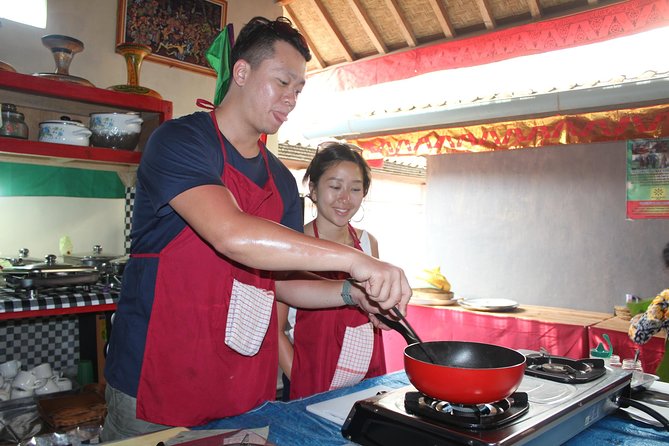
Here’s the honest part: Balinese food can be very spicy. One downside noted by previous participants is that even people who enjoy spice had trouble eating everything comfortably. Another concern is that for some, the presentation felt rushed or overly mechanical.
So do this: manage expectations and communicate. If you’re sensitive to heat, tell the guide early that you want milder seasoning or less chili. Cooking class formats move fast, so being clear sooner is better than trying to renegotiate halfway through.
Pickup/drop-off boundaries in Ubud center
Pickup and drop-off are included, but only for the Ubud center area. If you’re staying farther out, you may need to pay extra transport charges unless you requested pickup beyond the core area.
This matters because you’re already budgeting time for a 5-hour experience. When timing is tight, a long transfer can eat into the cooking window. If you’re in a border neighborhood outside central Ubud, confirm your pickup point during booking so the day stays on track.
What to bring (and what to skip)
The experience includes bottled water and a welcome drink, so you’re set on basic hydration. You’ll still want to show up prepared for active cooking and walking.
Bring:
- A camera (the program notes bringing one for pictures)
- Cash for possible extra purchases or additional transport if you’re outside Ubud center
Also note: you’re told to wear a normal uniform (so think comfortable, practical clothing you can cook in). If you have dietary preferences, plan ahead: if you want the class adjusted for vegetarian, you need to request it 1 day before.
Who this is perfect for (and who should think twice)
This is a strong match if you want:
- A hands-on Balinese cooking experience with real instruction
- A morning option that includes Tampaksiring market and rice paddies
- A small group setting where you can ask questions while cooking
- Something you can repeat later thanks to a 9-recipe PDF
It may not fit as well if:
- You avoid spicy food and hate adjusting seasonings on the fly
- You dislike fast-paced formats and prefer slower explanations
- You need a very quiet, observation-only experience (this one is built around cooking participation)
A simple “should I book” checklist
Book it if you like the idea of learning a flavor system (the spice paste base) and then translating it into multiple dishes that you actually eat. I’d also book it if you want that morning “ingredients to dish” flow: market first, then paddies, then cooking.
Skip or choose carefully if you’re heat-sensitive or you’re staying well outside central Ubud without planning for extra transport. In those cases, the experience can still be great, but you’ll need to communicate clearly and confirm logistics so your day doesn’t get squeezed.
If you want, tell me whether you’re considering the morning or afternoon option and where you’re staying in Ubud. I can help you pick the better fit based on what matters to you most.
FAQ
Is the market visit included?
Yes, but only for the morning class. The traditional market stop is part of the morning experience.
Do you pick up from hotels in all of Ubud?
Pickup and drop-off are included only for the Ubud center. If you’re outside the Ubud center area, additional charges may apply unless you request otherwise.
How many recipes do you cook?
You make 9 Balinese recipes, and you receive a PDF copy of those recipes.
What dishes are included?
The class includes specific dishes such as fried tempe, Balinese chicken, and vegetable soup, plus additional Balinese dishes as part of the 9-recipe set.
Can I request a vegetarian option?
Yes. If you want a vegetarian version, you need to put in your request 1 day before the class.
Can I cancel for a full refund?
Yes. You can cancel up to 24 hours in advance for a full refund. If you cancel less than 24 hours before the start time, you won’t get a refund.