Taste Bali by cooking it yourself. In Ubud, Kadek & Putu take you to the Gianyar Market first, then back to their family compound to cook Balinese dishes from scratch. You’ll learn how ingredients turn into meals you can actually recreate at home, not just watch from the sidelines.
I especially like the market part: you’re shown regional fruits, vegetables, and herbs used in Balinese cooking, so the food has a real source behind it. I also like the hands-on cooking flow—chop, cook, and then sit down to eat right away, including dessert-style dishes like black sticky rice pudding or fried banana when they’re in season.
One consideration: pickup and drop-off are only included for hotels inside Ubud. If you’re staying outside the area, you’ll need an extra transport charge, so factor that into the real price.
In This Review
- Key things to know before you go
- Where the tour starts: Ubud pickup and a real family pace
- Gianyar Market: herbs, fruit, and the stuff behind Balinese flavor
- Optional garden stop: how produce becomes a daily habit
- Back to the family compound: where the real cooking teaching happens
- The menu: what you’ll likely cook and why it matters
- Common dishes you may make
- Vegetarian and dietary needs
- Eating the results: sitting down with what you made
- Price and value: what $80 really buys you
- Who this suits best (and who might feel out of place)
- Simple tips to get the most out of it
- Should you book Kadek & Putu’s Gianyar Market cooking class?
- FAQ
- What’s included in the Gianyar Market visit and cooking class?
- How long does the experience take?
- Do you offer vegetarian options?
- What dishes will we cook and eat?
- Is pickup available from hotels outside Ubud?
- Is this a private experience?
Key things to know before you go
- Gianyar Market ingredient shopping with fruits, vegetables, and herbs that match Balinese cooking
- Family compound cooking with Kadek and his sister Putu, plus other family members
- From-scratch meals you can copy at home, not just a single demo dish
- Dessert options tied to season, such as black sticky rice pudding with coconut cream or fried banana with palm sugar
- Optional garden time and fresh juice if you’re interested in how local produce is grown at Kadek’s home
- Private, host-led experience with pickup/drop-off within Ubud hotels, plus a mix of meat and vegetarian options when requested
Where the tour starts: Ubud pickup and a real family pace
This is built around a simple idea: start with ingredients you can identify, then transform them into traditional dishes in a home kitchen. You’ll get pickup from your Ubud hotel, head out toward Gianyar, and spend the morning/afternoon meeting ingredients and learning how they’re used. The vibe is relaxed but focused—there’s no rushing you through “see and go.”
Because it’s private (only your group participates), you don’t have to share the kitchen space with strangers. That matters if you’re the type who asks a lot of food questions—like why a herb is used in one dish but not another. It also makes the market walking more comfortable, since your host can steer you through what’s relevant.
A practical point: the tour is about 4 hours, so it’s not a full-day cooking immersion. That’s a plus if you want a meaningful experience without tying up your entire afternoon. It can feel short if you want deep practice on every single technique, so go in ready to learn the core dishes and methods.
You can also read our reviews of more tours and experiences in Ubud.



Gianyar Market: herbs, fruit, and the stuff behind Balinese flavor
The Gianyar market stop is more than a photo-op. Kadek shows you the kind of fruits, vegetables, and herbs that show up repeatedly in Balinese home cooking, and he explains what they’re for as you look. This is one of the best parts of the experience because it connects the flavors you taste later to their origins.
What I like about this approach is that you’re not memorizing a list of ingredients after the fact. You’re seeing them in context—what they look like, how they’re chosen, and how they fit into Balinese meals. That’s how you end up with recipes you can actually reproduce later.
And yes, you’ll likely taste along the way. If you’re interested, Kadek can also show you how he grows local fruits and vegetables at a home nearby. During that garden walk, he may offer a fresh juice squeezed from just-picked seasonal fruits—options you might find include mulberry, passion fruit, papaya, mango, or jackfruit. Even if you skip garden time, the market alone gives you plenty to talk about at the table afterward.
Optional garden stop: how produce becomes a daily habit
If you choose to add the garden portion, you get something many cooking classes skip: a glimpse of how local produce is grown. Kadek shows you the garden at his home, a few doors down from his sister’s place, and it’s a nice bridge between “where food comes from” and “how food becomes dinner.”
The fresh juice idea is a small moment, but it helps set the tone. You’re not just learning recipes; you’re learning the relationship between seasonal fruit and Balinese eating. That matters when you get home and your ingredients won’t match exactly—you’ll understand what to substitute based on the role each ingredient plays.
Timing note: since the tour is about four hours total, the garden stop works best if you’re comfortable with a little extra walking and a couple more questions. It’s optional, so you can still focus on the cooking if you want to keep it simple.
Back to the family compound: where the real cooking teaching happens
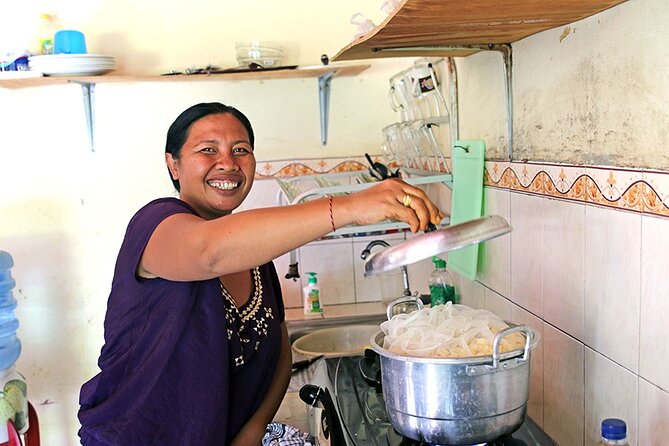
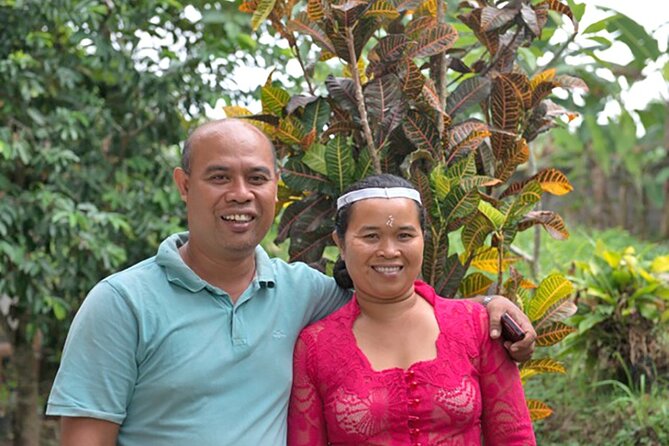
After the market, you return to Kadek and Putu’s family compound to cook together. This is the “kitchen classroom” part of the day, and it’s where the tour earns its value. You’re guided by Kadek, with Putu and family members involved, and the focus is on cooking traditional Balinese dishes from scratch.
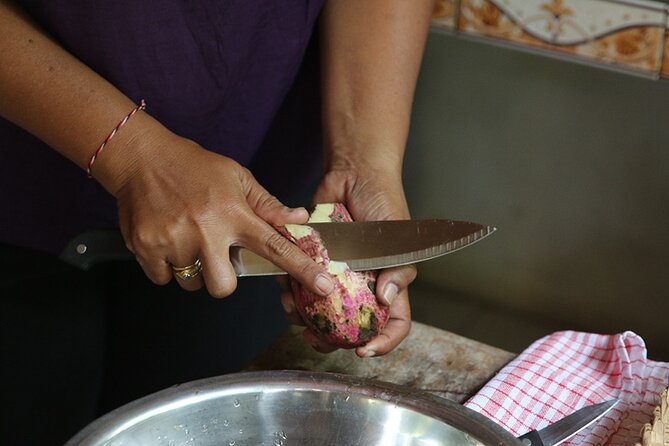
From what you’ll experience, the teaching style is practical. The process tends to start with a breakdown of ingredients—what they are and what they do—before you start chopping. That ingredient-first approach is a big deal if you’re trying to recreate dishes later, because it helps you understand the logic rather than just copying steps.
The kitchen setup also encourages you to participate. You’ll chop and cook as a group, then sit down to eat. I like that structure because it keeps everyone engaged. No waiting all day while someone else does everything.
The menu: what you’ll likely cook and why it matters
The exact menu can vary by season, which is smart in Bali because produce and ingredients shift throughout the year. Still, the dishes are traditional and recognizable, and you’ll usually get a mix of savory plates, mains, and dessert.





Common dishes you may make
You’ll likely cook dishes such as:
- piquant chicken satay
- fresh vegetable soup
- stir-fried vegetables
- steamed fish
- rice
- dessert options like black sticky rice pudding with fresh coconut cream, or fried banana with grated fresh coconut and palm sugar
Even when you don’t get the exact same menu every time, the set of dishes tells you what Balinese cooking often aims for: a mix of spice, fresh aromatics, and comfort foods that balance the meal. You’ll come away with methods you can reuse—how to approach satay-style seasoning, how to build flavor in vegetable dishes, and how to handle rice and desserts in the same sitting.
Vegetarian and dietary needs
If you need vegetarian food, that’s available—just advise at booking. The tour also includes alcoholic beverages, so if alcohol isn’t your thing, you’ll want to mention that preference when you book. If you have allergies or other dietary restrictions, you’ll be asked to share them ahead of time, which is the responsible move for a hands-on cooking day.
Eating the results: sitting down with what you made
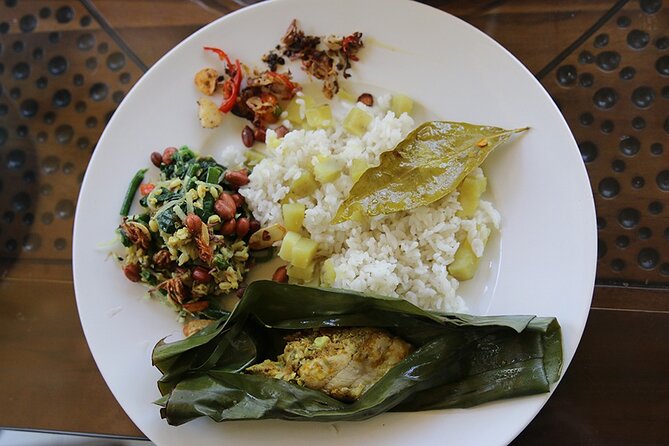
After cooking, you get to eat a homecooked Balinese meal. This is one of those rare activities where the “reward” is built in. You don’t rush through the experience and then wander off to find your own food.
I like the way this turns the class into a full-cycle experience: market → kitchen → table. You’ll taste dishes while the flavor lessons are fresh, and it’s easier to remember what worked and what you’d do differently next time.
The meal is also where the day’s teaching becomes real. You’ll notice how herbs and produce chosen earlier show up in the final plates. And since you’ll likely have multiple savory dishes plus dessert, it’s not just a single taste—your brain gets the full picture of how Balinese meals tend to flow.
Price and value: what $80 really buys you
$80 per person can sound like a lot at first, but here’s why it’s priced the way it is. You’re paying for:
- a private, host-led market tour
- a private cooking class with Kadek and Putu
- homecooked lunch/dinner-style meal
- pickup and drop-off within Ubud hotels
- alcoholic beverages included
It’s not just a cooking demo, and it’s not just a casual market walk. You’re getting both the ingredient sourcing and the recipe practice in one package. Also, because the class is private to your group, you’re not stuck competing with other people for time, attention, or kitchen space.
If you’re comparing to cooking classes that only cover one dish, this one feels more complete because you’re making several dishes and then eating them. And because the menu may vary seasonally, you’re more likely to learn what’s actually practical with local ingredients.
For best value, I’d book this if you genuinely want food you can replicate. If you’re only after scenery or entertainment, you might prefer a lighter food tour. But if you love cooking, this price starts to make sense fast.
Who this suits best (and who might feel out of place)
This tour fits best if you:
- like cooking or you want to level up from simple home meals
- enjoy markets and want to learn ingredients, not just browse
- want an authentic family-run experience rather than a big production
- prefer a structured day where you go from shopping to eating
It may feel less ideal if you:
- want a long, slow cooking session (this is about four hours)
- have tight mobility needs for market walking and kitchen time
- are staying outside Ubud and don’t want to add transport costs
For couples, this is a strong choice because the private format keeps the experience personal. Solo travelers also do well, since you’re working directly with the hosts in the kitchen rather than being one of many faces.
Simple tips to get the most out of it
- Come with questions. Ask what each herb or fruit is used for, and how to swap ingredients when you’re back home.
- Pace yourself. Market walking plus cooking can be active, especially if you’re taking notes.
- Mention preferences clearly at booking—vegetarian needs, allergies, and any food rules should be told upfront so the menu can be adjusted.
Should you book Kadek & Putu’s Gianyar Market cooking class?
If you want a Bali experience that’s practical, tasty, and tied to real ingredients, I’d book this. The strongest selling points are the Gianyar Market ingredient education and the chance to cook traditional dishes from scratch with Kadek and Putu, then eat right away at the family table.
Skip it only if you mainly want a sightseeing activity or you’re staying outside Ubud and don’t want to deal with the extra transport cost. Otherwise, this is exactly the kind of cooking class that gives you something lasting: the methods, the flavors, and the confidence to make Balinese-style meals again later.
FAQ
What’s included in the Gianyar Market visit and cooking class?
The tour includes a private market tour and cooking class with Kadek and Putu, a homecooked Balinese meal, alcoholic beverages, and pickup and drop-off to Ubud hotels only.
How long does the experience take?
It runs about 4 hours.
Do you offer vegetarian options?
Yes, a vegetarian option is available. You should advise at the time of booking if you need it.
What dishes will we cook and eat?
You can expect traditional Balinese dishes, with menu items that may vary by season. Examples include piquant chicken satay, fresh vegetable soup, stir-fried vegetables, steamed fish, rice, and desserts like black sticky rice pudding with coconut cream or fried banana with coconut and palm sugar.
Is pickup available from hotels outside Ubud?
Pickup and drop-off are included only for hotels in Ubud. If your hotel is outside Ubud, there’s an additional transport charge.
Is this a private experience?
Yes. It’s private and only your group will participate.