Temples with breathing room, not tour lines. This private temple circuit in Yogyakarta is built for people who like archaeology and architecture, with stops that feel quieter than the usual big-name rush. I love the English-speaking driver who can also act as your guide, and I love the private group setup that keeps the day calm and flexible. The main tradeoff is simple: it’s a long 10-hour outing starting at 8:00 am, and at least one temple is on a hill, so you’ll want comfortable shoes and a decent pace—also, the tour requires good weather.
What makes this route especially appealing is how each site tells a different story. You move through Hindu and Buddhist spaces from the 9th century and beyond, with a mix of underground remains, collapsed-and-recovered structures, hilltop views, and reliefs that explain moral teachings. You’ll also get practical touches like pickup options and a mobile ticket, so the day runs with less fuss than you’d expect for a full-day temple hop.
If you want a temple day that feels like learning on the go rather than checking boxes, this fits well. It’s also ideal if you prefer calm photo stops and time to look closely at design details, not just quick glances before the next van.
In This Review
- Key things I’d plan around
- How the 10-Hour Temple Day Works (8:00 AM Start)
- Price and Value: What $45 Gets You (Tickets Included)
- Sambisari Temple: A 9th-Century Hindu Shrine Beneath Your Feet
- Candi Banyunibo: A Buddhist Temple Rediscovered After Collapse
- Ijo Temple on the Highest Hill: Hindu Temple Views Over Yogyakarta
- Barong Temple and the Medang Kingdom Connection
- Sojiwan Temple: Buddhist Reliefs With Moral Teachings at the Base
- Plaosan Temple: Hindu and Buddhist Together as a Long-Ago Message
- Who This Temple Tour Suits Best (and Who Might Prefer Something Else)
- My Practical Verdict: Should You Book This Temple Day?
- FAQ
- What time does the Hidden Gems Temples Tour start?
- How long is the tour?
- Is pickup available?
- Are admission tickets included?
- Is this tour private?
- Do I get a mobile ticket or do I need to print?
- How many temple stops are included?
- What language support do I get during the tour?
- Is the tour dependent on weather?
- What is the cancellation policy?
- How far in advance is this tour commonly booked?
Key things I’d plan around
- Private group pacing: You’re with only your group, not a mixed crowd.
- English-speaking guide support: Your driver can communicate and explain along the way.
- Admission tickets included: Each temple stop includes admission, which helps the value.
- A mix of site types: Underground, rediscovered ruins, hilltop views, reliefs at the base, and a Hindu-Buddhist blend.
- A full 10-hour day: Expect a steady schedule and plan for a long morning into the afternoon.
How the 10-Hour Temple Day Works (8:00 AM Start)
This tour starts at 8:00 am, which I actually like. An early start helps you get to temple sites before the day feels crowded and hot. You’re on a structured schedule too—each stop is about 1 hour 30 minutes, so you get enough time to see the main features without losing the whole day to one location.
Pickup is available, and you can customize it in advance. That matters because temple hopping in Yogyakarta can eat time if you’re arranging transportation on the fly. With pickup and drop-off handled, you can focus on the temples instead of coordinating rides between stops.
You’ll travel with an English-speaking driver who can guide you. That’s a big deal at sites that are fascinating but may be hard to interpret if you don’t have context. Even if you only get short explanations at each stop, having someone who can translate what you’re looking at makes the ruins and temples feel more meaningful—and more memorable.
This is also a private tour/activity, meaning you’re not sharing the day with other groups. In practice, that often changes the feel of the visit: fewer interruptions, more control over where you pause, and a better chance of enjoying the atmosphere at each site.
One more practical note: this experience requires good weather. Since temples are outdoors and at least one is on a hill, you’ll want to plan for weather that allows safe walking and comfortable viewing.
You can also read our reviews of more tours and experiences in Yogyakarta.

Price and Value: What $45 Gets You (Tickets Included)
At $45 per person, this is priced like a budget-friendly full-day tour—but the value comes from what’s included. Admission tickets are included at every stop, and you’re getting a full route rather than one or two temples. For many people, that’s the difference between a cheap day that still costs extra at the gate versus a day that feels complete.
The math works better when you consider the structure: 6 temple stops, each with a 1 hour 30 minutes visit window, plus travel time across the day. A route like this can be hard to replicate cheaply if you’re arranging transportation and tickets separately.
There’s also the added value of the guide-style support from your driver. Even without a formal guidebook in hand, you’ll get explanations tied to what you see—like why a temple is underground, why another was rediscovered later, or what kind of relief program you can look for.
One small consideration: at $45, you should still go in with realistic expectations. This isn’t a full museum-day with deep lectures. It’s a temple circuit that gives you time on-site, context from your driver, and included admissions so you can spend your money on the experience instead of logistics.
Finally, this tour is often booked ahead—on average 93 days in advance. If you have a specific date, it’s worth locking it in early rather than waiting for last-minute flexibility.
Sambisari Temple: A 9th-Century Hindu Shrine Beneath Your Feet

Stop 1 is Sambisari Temple, an underground Hindu temple built in the 9th century by Rakai Grung king. The underground setting is the first thing that makes this stop feel special. Instead of looking at a temple from a distance, you get a sense of how different eras and discoveries can change what you’re able to see.
Because it’s under the ground, the experience tends to feel more enclosed and atmospheric. I like that contrast: you’re not only learning about a temple’s religious identity; you’re also learning about how archaeological remains can be hidden, preserved, and later revealed.
You’ll spend about 1 hour 30 minutes, and admission is included. That amount of time is helpful here because underground sites can be visually intense. You can look around, absorb the structure, and still have breathing room to understand what you’re seeing rather than rushing.
A practical consideration: underground spaces can affect lighting and walking comfort. Wear shoes that are secure and expect uneven ground. If you’re someone who likes to stop and read details slowly, this is one of the stops where your time on-site actually pays off.
Candi Banyunibo: A Buddhist Temple Rediscovered After Collapse
Next up is Candi Banyunibo, a Buddhist temple from the 9th century in the ancient Mataram kingdom era. What makes Banyunibo different is the way it was found again: it was rediscovered in 1940 in a collapsed condition, covered under the ground.
That story adds weight to the site. Instead of being purely a living, fully intact temple you can compare to a brochure image, Banyunibo carries the feel of a recovered ruin. You’re not just seeing a structure—you’re seeing the result of time, collapse, and then renewed discovery.
Expect the same 1 hour 30 minutes visit window, with admission included. For me, the value of time here is simple: rediscovered sites need extra patience. You’ll likely want to spend time orienting yourself—figuring out which elements are structural, which are remnants, and what the shape suggests about the original design.
The possible drawback is that a collapsed or partially covered site can feel less dramatic if you’re only looking for big, intact buildings. But if you like archaeology and want to understand the reality of preservation and rediscovery, Banyunibo is exactly the kind of stop that turns a temple day into a learning day.
Ijo Temple on the Highest Hill: Hindu Temple Views Over Yogyakarta
Stop 3 takes you to Ijo Temple, a Hindu temple built in the 9th century. This one sits on a hill and is described as the highest temple in Yogyakarta, with nice scenery and city views.
If you’re choosing temples for photography and atmosphere, this is your natural break. Being up on the hill changes the whole experience from the earlier underground and ruin-like stops. Even if you focus mostly on architecture, the setting helps you understand how the temple fits into its environment—spatially and visually.
You get about 1 hour 30 minutes here, and admissions are included. That’s long enough to take in the view, then come back to the temple structure and details after your eyes have adjusted to the height and light.
The main consideration is physical. Hilltop temples often involve stairs or uneven ground, and weather can change conditions quickly. Since the tour requires good weather, plan on a day where the view is actually worth it and footing is safe.
If you’re traveling with mobility limits, this is the stop where you’ll want to use your judgment early. If you can handle hills, you’ll likely love it. If hills are tough, consider discussing pacing and comfort with your driver from the start.

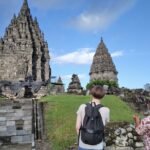
Barong Temple and the Medang Kingdom Connection
After the hilltop view, you shift back into the realm of 9th- to 10th-century temple context with Barong Temple. This temple is thought to have been built around the 9th and 10th centuries AD, connected to the Medang Kingdom from the Mataram period.
Barong Temple was rediscovered at the beginning of the 20th century, which again brings in that idea of time layers. You’re not only looking at what survived—you’re also seeing the historical moment when it came back into visibility.
Like the rest of the route, this stop is about 1 hour 30 minutes, with admission included. Ijo gives you the dramatic scenery; Barong often provides the more grounded, architectural “read.” If you enjoy comparing what Hindu temple traditions look like across different sites and periods, this is a good place to do that.
A gentle caution: because the timing and details of rediscovered ruins can be less straightforward than fully restored landmarks, your time here benefits from having your English-speaking driver explain what to notice. If you care about the symbolism or the kingdom connection, ask questions as you walk.
Sojiwan Temple: Buddhist Reliefs With Moral Teachings at the Base
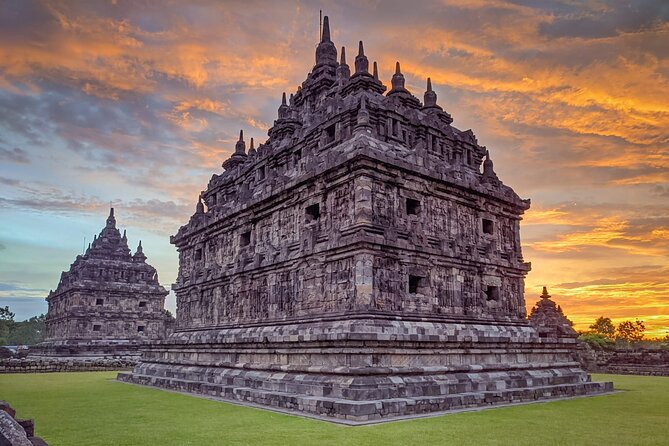
Stop 5 is Sojiwan Temple, a Buddhist temple built between 842–850 M. One of the most specific and practical reasons to like this stop is the relief program: there are around 20 reliefs at the foot of the temple, and they tell stories connected to Buddhist moral teaching values that are described as still relevant today.
Reliefs are perfect for visitors who enjoy visual storytelling. Instead of just admiring a temple silhouette, you can actually study scenes at eye level. That makes Sojiwan feel active, even though it’s an ancient site.
You’ll spend 1 hour 30 minutes here, with admission included. That’s the right amount of time for people who want to pause and interpret. If you’re the type who likes to understand what you’re looking at (not just take photos), this is one of the best stops on the day.
The only drawback I’d flag is that moral teaching reliefs can feel dense if you don’t have context while looking. Your driver’s English explanations help, so don’t be shy about asking what the main scenes are about, or what theme connects the set.
Plaosan Temple: Hindu and Buddhist Together as a Long-Ago Message
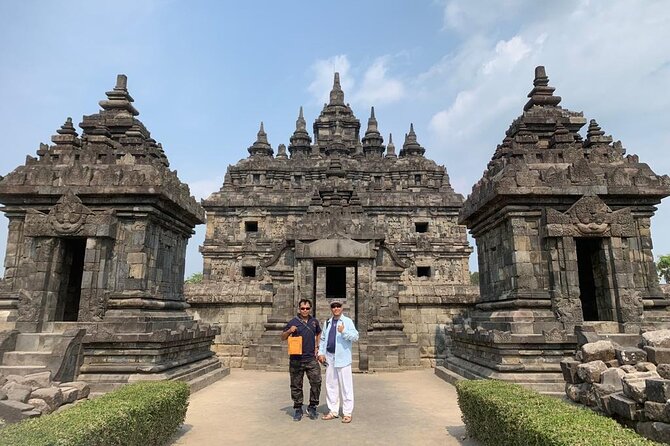
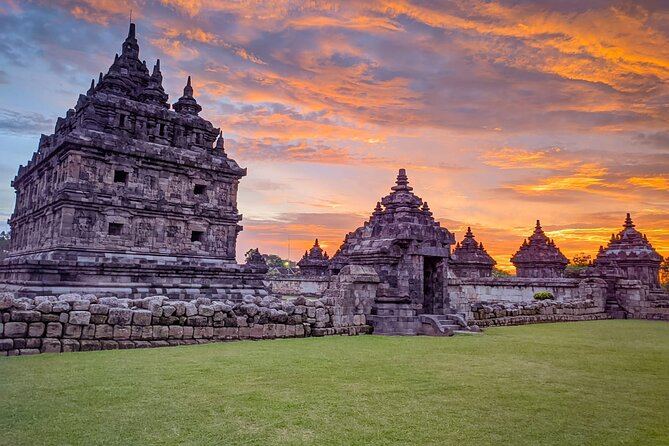
The final temple on the circuit is Plaosan Temple, described as a combination of Hindu and Buddhist temple structures in one location. The tour notes it as a symbol of harmonization and tolerance, and it also mentions a connection between Prambanan and Buddhist temples.
This is where the day’s themes start clicking together. Earlier stops lean into a single tradition or a specific site story (like being underground or rediscovered in 1940). Plaosan offers a different angle: coexistence in built form. Even if you don’t know every architectural term, you can sense the intent of the arrangement—different belief systems shown side by side.
You get about 1 hour 30 minutes, with admission included. That gives you time to look for the way the complex is arranged and how the Hindu and Buddhist elements relate within the same space.
One practical consideration: as the day goes on, you might feel your energy dip. If you care about details, plan your attention here. Don’t rush Plaosan just because it’s last. This stop is the payoff for anyone who wants their temple day to include ideas about culture, not just structures.
Who This Temple Tour Suits Best (and Who Might Prefer Something Else)
This tour is a strong match if you fall into any of these categories:
- You like architecture and archaeology and want a day that feels like structured site visits, not random wandering.
- You prefer fewer crowds, calm pauses, and a private group schedule.
- You want English explanations while you’re there, especially at sites where the context isn’t obvious on the spot.
- You enjoy variety: underground remains, rediscovered collapse, hilltop views, relief storytelling, and Hindu-Buddhist combinations.
It might be less ideal if:
- You want a short outing. This is about 10 hours, so it’s for people who can handle a full day.
- You dislike walking over uneven ground or hills. Ijo Temple on a hill is the biggest likely challenge.
- You hate weather uncertainty. The tour requires good weather, and outdoor ruin conditions matter.
If you’re traveling as a couple, with friends, or as a small family group, the private format can feel like a big quality upgrade. If you’re solo, you can still benefit from the English-speaking driver and the calm pace, though you may want to check that your own travel style matches a full-day itinerary.
My Practical Verdict: Should You Book This Temple Day?
I’d book this tour if you want your Yogyakarta temples to feel like a coherent story instead of a list. The route covers different kinds of sites—underground, rediscovered, hilltop, and relief-focused—so you don’t get the same visual experience six times in a row. Add in admission tickets included, a private group setup, and a driver who can explain in English, and the $45 price stops looking like a bargain and starts looking like good sense.
The decision hinges on two things: your comfort with a long day and your willingness to go with the weather. If you can handle early starts and some walking, you’ll likely come away with more than photos—you’ll have a clearer understanding of how these places were built, lost, recovered, and interpreted over time.
FAQ
What time does the Hidden Gems Temples Tour start?
The tour start time is 8:00 am.
How long is the tour?
It runs for approximately 10 hours.
Is pickup available?
Yes. Pickup is offered, and you can customize pickup and drop-off by informing the provider in advance.
Are admission tickets included?
Yes. Admission tickets are included for all the listed temple stops.
Is this tour private?
Yes. It’s a private tour/activity, so only your group participates.
Do I get a mobile ticket or do I need to print?
You receive a mobile ticket.
How many temple stops are included?
The tour includes six temple stops: Sambisari, Candi Banyunibo, Ijo, Barong, Sojiwan, and Plaosan.
What language support do I get during the tour?
You’ll have an English-speaking driver, and they can also act as a guide.
Is the tour dependent on weather?
Yes. The experience requires good weather. If it’s canceled due to poor weather, you’ll be offered a different date or a full refund.
What is the cancellation policy?
You can cancel for a full refund up to 24 hours before the experience’s start time. If you cancel less than 24 hours before, the amount paid won’t be refunded.
How far in advance is this tour commonly booked?
On average, it’s booked about 93 days in advance.