The rice terraces look better at bike speed. This tour pairs e-bike comfort with a small-group local guide, so you spend less time getting there and more time noticing how people actually farm. The main trade-off: it’s only about an hour, so don’t book if you want a long ride or a slow, deep hike.
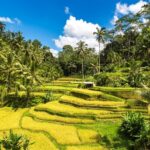
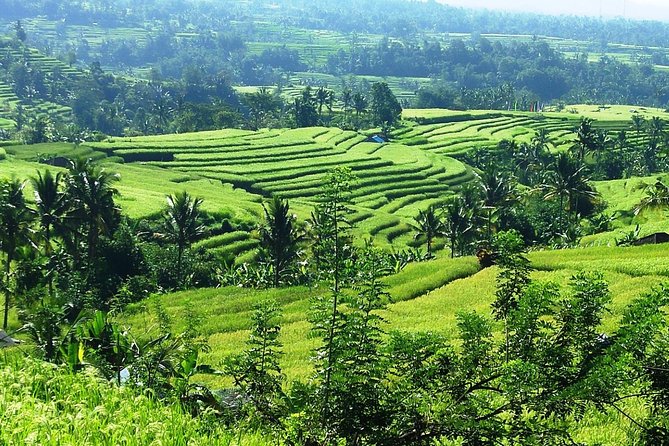
I like that you’re not just looking at pretty fields from a distance. You roll through Jatiluwih’s terraced paddies in the valley of four extinct volcanoes, and the route threads through bamboo forest, lush jungle edges, and little rivers and streams.
You’ll also get the practical safety basics handled: you use a helmet, you’re covered by included insurance, and bottled water is part of the package.
In This Review
- Key things to know before you ride
- Why Jatiluwih on an E-Bike Feels Different
- Getting to Green Bikes Bali and What Happens Before You Ride
- Entering the Valley of Four Extinct Volcanoes (Jatiluwih Terraces)
- Bamboo Forest, Streams, and Temple-Spotting Along the Way
- The Pace, the Group Size, and Your Local Guide
- Price and Value: Is $24 Worth It?
- What to Bring and How to Get the Most From Your Hour
- Who This Tour Suits (and Who Should Skip It)
- Should You Book This Jatiluwih E-Bike Tour?
- FAQ
- How long is the Jatiluwih e-bike tour?
- How much does the tour cost?
- What’s included in the price?
- Do I need to bring my own helmet or bike?
- Is hotel pickup included?
- What is the minimum age?
- Where do I meet for the tour?
Key things to know before you ride
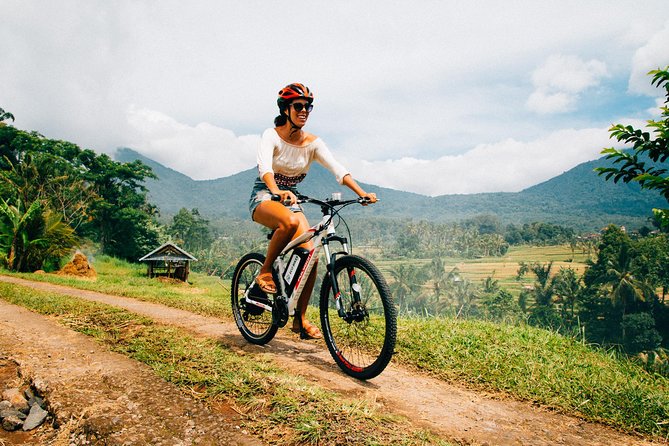
- An e-bike makes Jatiluwih doable even if you’re not a road cyclist
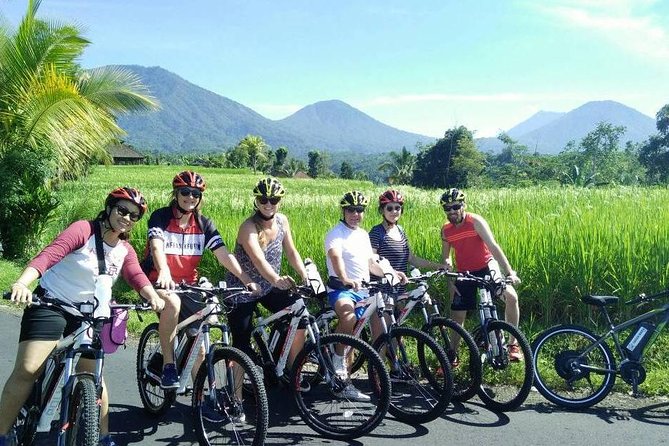
- A local guide in a small group keeps the pace friendly and the stops thoughtful
- UNESCO rice terraces in the valley of four extinct volcanoes set the scene fast
- You pass real farming life, not just viewpoints, with a chance to see farmers at work
- Helmet + insurance are included, so you can focus on the ride
Why Jatiluwih on an E-Bike Feels Different
Jatiluwih is the kind of place where the details matter. If you only walk along the most obvious paths, you can miss the rhythm of the place: the way terraces step down, how water moves through the paddies, and how farmers use the land every day.
An e-bike changes that equation. The electric mountain bike takes the sting out of the effort, so you can keep a comfortable pace and still look around. In an hour, that means you cover enough ground to feel like you explored, without ending up exhausted or rushed.
What I find especially appealing here is the angle the tour takes: it’s not just about taking photos of the terraces. You’re guided through agricultural areas where traditional farming still shows up clearly—people tending rice plots using traditional methods, and animals cared for as part of everyday Balinese life. One review summed it up well: by bike, you go beyond the parts where visitors are limited on foot, and you get a more authentic feel for how locals use the land.
There’s also a temple element that’s easy to miss when you’re on foot. The ride gives you frequent opportunities to spot small sacred spaces tucked into the terraced setting, so you’re seeing the area as a living landscape, not a postcard.
You can also read our reviews of more tours and experiences in Ubud.

Getting to Green Bikes Bali and What Happens Before You Ride
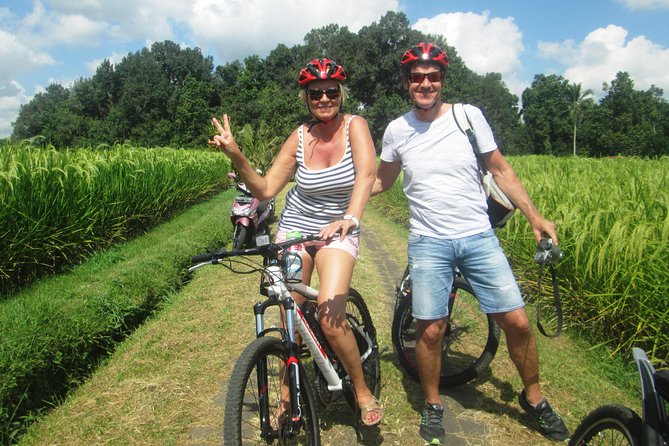
Your tour starts at Green Bikes Bali Jatiluwih (e-bike tours) on Jl. Batu Luwih Kawan, Senganan, Kec. Penebel, Kabupaten Tabanan, Bali 82152. The good news: the meeting point is local and straightforward, and the activity ends back at the same place—so you don’t need to plan a separate return.
Before you head out, you’ll be issued the essentials. You get bottled water, a helmet, and the e-bike itself (they provide electric mountain bikes). Insurance is also included, which matters more than people think. It’s one less thing to worry about when you’re riding on rural roads and paths.
Dress for comfort, not style. You’re advised to wear comfortable clothes and comfortable shoes, and you’ll want sunscreen. In practice, that means breathable tops and shoes you can trust if the ground gets a bit uneven around the terraced edges.
This isn’t a high-tech, complicated ride where you need to master special controls for hours. The goal is to get you moving safely and smoothly so you can enjoy the views and the farming scenes without constantly thinking about your bike.
Entering the Valley of Four Extinct Volcanoes (Jatiluwih Terraces)
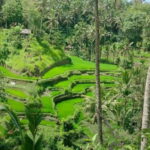
Once you roll out, the terraced setting comes in fast. You’re riding through the UNESCO rice terraces of Jatiluwih in a valley known for four extinct volcanoes. That matters because it helps explain why the terrain looks the way it does—layered, carved, and designed for water management over generations.
As you cycle, you pass through a mix of environments that keeps the scenery from getting repetitive:
- rice paddies in terraced layers
- bamboo forest stretches
- lush jungle-style greenery
- small rivers and streams
The route also has a clear human element. You’re close enough to farming life to notice details like the way people work the paddies and the way animals fit into daily routines. You might even see farmers working their plots or handling produce—small moments, not staged theater.
Here’s the practical benefit of biking through this area: you’re not stuck at one viewpoint. In a short time, you get to experience the terraces from multiple angles—up, level, and down—so your mental map of the place actually forms. With a one-hour format, that’s the difference between feeling like you just glanced at Jatiluwih and feeling like you understood how it’s laid out.
Bamboo Forest, Streams, and Temple-Spotting Along the Way
One of the best parts of this ride is how it moves between “open view” and “surprise view.” Rice terraces give you the wide, iconic shape. Then the route shifts into bamboo and greener corridors where the path feels more tucked away—so you feel like you’re traveling deeper into the area, not just circling the main highlights.
The streams and small rivers add another layer. Even if you don’t stop to photograph them for long, the sound and motion help reset your senses. It makes the ride feel less like a sightseeing sprint and more like a guided route through countryside.
And then there’s the temple factor. At least one strong review noted the feeling of finding a temple in the terraces area—something that can feel almost hidden if you’re only moving on foot along the most tourist-heavy stretches. With the e-bike pace, you tend to notice more “in-between” features: small sacred spots along the walls, signs of worship mixed into the farming area, and the way the terraced geometry frames these places.
A quick note on expectations: you won’t be doing a long, slow exploration. This is designed to fit an hour. So think of the temple and “scattered local scenes” as part of the ride experience, not the main event you’d build a whole day around.
The Pace, the Group Size, and Your Local Guide
This tour runs as a small group, with a maximum of 10 travelers. That size is a big deal in rural areas. It keeps the ride feeling calm, and it gives the guide enough time to respond if you have questions—especially since the guides are local.
The guide team comes from the area and grew up around here, which changes the kind of information you hear. Instead of generic facts, you get a more lived-in explanation of how farming traditions shape daily life in Bali. You can ask things and get answers that feel connected to the place, not just pulled from a guidebook.
The guides are also positioned as safety-first. You’re provided helmet use and insurance, and the tour is explicitly built around safety. That doesn’t mean it feels stiff. It means you’re less likely to feel like you’re guessing your way through unfamiliar roads or paths.
What I think works best for this tour is the blend of structure and freedom. You follow the route, but the bike keeps you from lagging behind. If you want to look longer at something—terrace steps, a farming activity, a water channel—you can usually slow your observation without dragging everyone into a full stop.


Price and Value: Is $24 Worth It?
At $24 per person for an electric bike tour lasting about 1 hour, the value comes down to three things: what’s included, what you actually see, and how much effort the e-bike saves.
Included items are solid and practical:
- use of an e-bike
- helmet
- bottled water
- local guide
- insurance
That’s not a bundle of tiny extras. It’s the core stuff you’d otherwise have to arrange yourself—especially bike logistics and safety equipment.
The biggest value angle is the “guided + covered ground” combo. Jatiluwih’s terraced farming system is beautiful, but it’s also spread out. Walking only tends to bottleneck you to a smaller portion of the area. The e-bike lets you cover more terrain in the same time window, and the guide helps you notice what you’d otherwise miss—like the rhythm of working paddies and the way the environment changes as you ride.
Also, the timing matters. This is about an hour, so it fits into a busy Ubud base day. You don’t need a half-day commitment to get a meaningful experience here.
If you’re deciding based on budget, I’d put it this way: you’re paying for a guided electric ride through UNESCO terraces, with safety and equipment handled. For many visitors, that’s a fair trade when you compare it to the cost and hassle of cobbling together transport, a bike, and a local explanation.
One more planning detail: the experience is often booked in advance (on average 22 days). If your dates are fixed, it’s smart to lock it in early rather than assuming a last-minute slot will be easy.
What to Bring and How to Get the Most From Your Hour
This tour is simple, but your comfort will make or break the experience. Here’s what you should do with the guidance you’re given:
- Wear comfortable clothes you don’t mind getting a little dusty.
- Wear comfortable shoes with grip. Terraced areas and rural paths can be uneven.
- Use sunblock. It’s outdoors, and the ride format doesn’t give you endless shade time.
- Bring your own water only if you like to be extra prepared, but the tour includes bottled water.
If you’re the type who stops often for photos, you’ll enjoy it more if you keep your stops intentional. The route is designed for the full hour, so don’t treat it like an all-day trek. Instead, pick a few photo moments and let the rest of the ride be about observing—farmers working, bamboo and jungle edges shifting around you, and the way streams cut through the scene.
Also, arrive ready to ride. The shorter duration means there’s less time for awkward transitions. Good shoes and a relaxed mindset help you enjoy the experience instead of managing discomfort.
Who This Tour Suits (and Who Should Skip It)
This is a good fit if you want:
- a short, guided experience of Jatiluwih without committing to a full day
- to see more than one viewpoint in a tight time window
- the chance to spot everyday farming life in rice terrace country
- a ride that’s easier than it would be on a non-electric bike
It’s also a smart pick if you’re based around Ubud and want something more authentic than just a scenic walk. The way the route goes beyond the most obvious foot paths is a big part of why people rate this so highly.
The key limitation: minimum age is 14 years. So if you’re traveling with younger kids, this one won’t work.
It also isn’t built for people who hate riding on rural paths or who want a long, slow hike. If you need a full half-day or you dislike biking entirely, look for a different format.
Should You Book This Jatiluwih E-Bike Tour?
If your goal is to experience Jatiluwih’s UNESCO terraces with less effort and more “real place” moments, I’d say yes. The combination of an electric mountain bike, a local guide, and the fact that you’re limited to a small group (max 10) makes this feel more personal than many big-ride options.
Book this if:
- you want an hour-long window that still feels like exploration
- you like rural context—farmers, animals, and day-to-day traditions
- you value safety basics like helmet use and included insurance
Consider skipping or switching tours if:
- you’re expecting a long ride or a deep, multi-hour trek
- you’re traveling with someone under 14
- you really dislike riding even short distances on mixed terrain
For most visitors, $24 for a guided e-bike session through rice terraces is a fair value—especially when you’re getting the equipment, safety items, and local knowledge handled for you.
FAQ
How long is the Jatiluwih e-bike tour?
The tour runs for about 1 hour.
How much does the tour cost?
The price is $24.00 per person.
What’s included in the price?
It includes bottled water, a local guide, use of the e-bike, use of a helmet, and insurance.
Do I need to bring my own helmet or bike?
No. The tour provides the helmet and the electric mountain bike.
Is hotel pickup included?
No, hotel pickup and drop-off are not included.
What is the minimum age?
The minimum age is 14 years.
Where do I meet for the tour?
You meet at GREEN BIKES BALI JATILUWIH (e-bike tours), Jl. Batu Luwih Kawan, Senganan, Kec. Penebel, Kabupaten Tabanan, Bali 82152, Indonesia, and the tour ends back at the meeting point.
Would you like me to tailor the advice for your exact day in Ubud (what time you plan to go and what other stops you want nearby)?