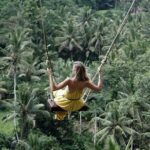
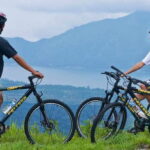
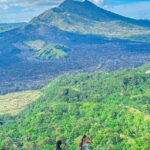
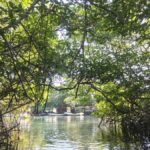
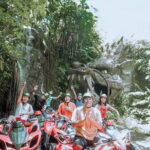
Rice terraces on an e-bike? Yes, please. This 2-hour Jatiluwih UNESCO tour turns a famous patch of green Bali into an active day: you glide through jungle shade, giant bamboo, local villages, and wide rice-terrace views with a guide who explains what you’re seeing.
I really like two things about this experience. First, the setting is hard to beat: Jatiluwih’s rice terraces sit across 300+ hectares of tropical scenery, and you get to ride right through the UNESCO core rather than just look from one spot. Second, the route is made for real riding comfort—an e-bike plus an experienced local guide means you can enjoy the hills without showing up as a sweaty disaster.
One thing to consider: e-bike tours are only as good as the bikes and the safety setup on the day. Based on feedback, some groups have had issues with bike reliability and safety around wet rice areas, so I recommend doing a quick equipment check and taking the riding stops seriously.
In This Review
- Key things that make this tour worth a look
- Why Jatiluwih Works So Well on an E-Bike
- Batukaru Temple Area Meeting Point: Quick Start, No Temple Visit
- The Ride In: Jungle Shade, Bamboo Walk-By Moments, and Village Life
- Inside the UNESCO Core: Rice Terraces, Water Systems, and What the Guide Tells You
- Between Four Extinct Volcanoes: How the Valley Shaped the Views
- Lunch After the Ride: Indonesian Food in the Valley Air
- E-Bike, Helmets, and Safety: A Quick Checklist Before You Go
- Price and Value for $69: What’s Included (and What That Means for You)
- What to Wear and Bring for a Comfortable Ride
- Who This Tour Fits Best (and Who Should Skip It)
- Should You Book This Jatiluwih E-Bike Tour?
- FAQ
- Where does the tour start?
- Do we visit Batukaru Temple during the tour?
- How long is the e-bike cycling tour?
- Is lunch included?
- Is admission to Jatiluwih included in the price?
- Are e-bikes and helmets provided?
- Does the tour include a guide and language?
- Is pickup from a hotel available?
- Is the tour suitable for everyone?
Key things that make this tour worth a look
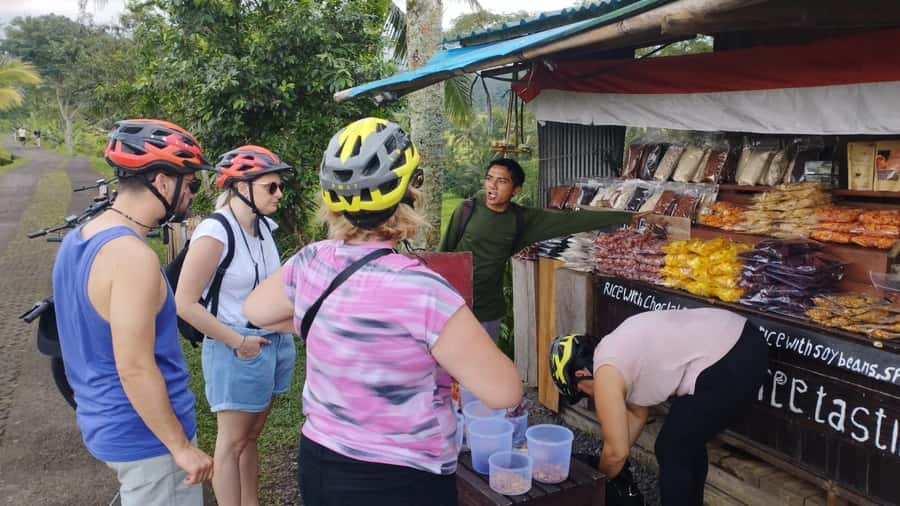
- UNESCO Jatiluwih by bike, riding to the center of the protected site
- A change of scenery route, from Batukaru area scenery to jungle, bamboo, villages, then terraces
- Family-farm context from your English-speaking local guide, including how the water system works
- Lunch included after the ride, served in the natural surroundings nearby
- Small group size capped at 12, which usually means less waiting and more attention
Why Jatiluwih Works So Well on an E-Bike
Jatiluwih is the kind of UNESCO site that can feel “look only” if you do it the usual way. You stop, take photos, move on. Here, you slow down in a different way—by riding. The e-bike keeps the experience fun even when the route gets hilly, so you’re not forced into a purely workout mode.
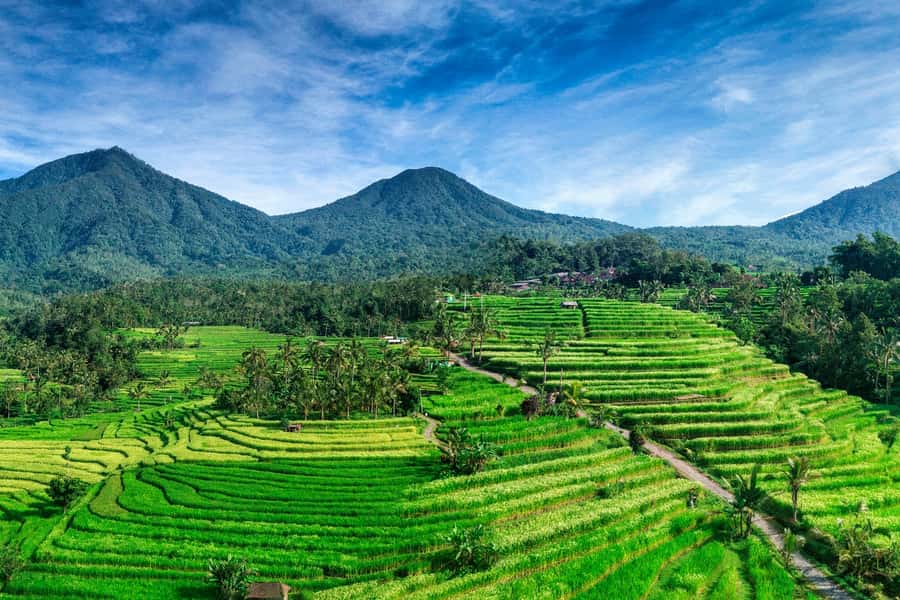
What you’ll notice right away is how the views change as you go. The trail isn’t one long straight line of terraces. Instead, you pass through dense jungle and a giant bamboo forest, then you roll by local villages, and only later do you hit the classic rice-terrace panoramas. That mix matters because it gives you a sense of place, not just a single postcard moment.
Also, you’re not just riding past Jatiluwih’s edges. The tour takes you to the center of the UNESCO area, which is where the “why people care” part really lands. You get that wide valley feeling, with terraces stretching across a large protected region, instead of only peeking at the scenery from a viewpoint.
You can also read our reviews of more tours and experiences in Bali.


Batukaru Temple Area Meeting Point: Quick Start, No Temple Visit
The tour meets in the Batukaru Temple area, but there’s no actual temple stop. You’ll meet the operator with their electric bikes near a pool before you’d enter the temple grounds.
That detail is useful for planning. If you’re expecting to pack in Batukaru Temple as part of this same experience, you’ll want to schedule that separately. The advantage here is time focus: your ride begins with the countryside route, and the tour stays centered on Jatiluwih rather than splitting attention between a cultural stop and a bike stop.
If you’re staying outside the meeting area, confirm your pickup timing if you select hotel transfers. Optional pickup is available from your lobby (hotel or villa), but the start can still feel tight if your driver is juggling multiple stops or you’re coming from farther across the island.
The Ride In: Jungle Shade, Bamboo Walk-By Moments, and Village Life
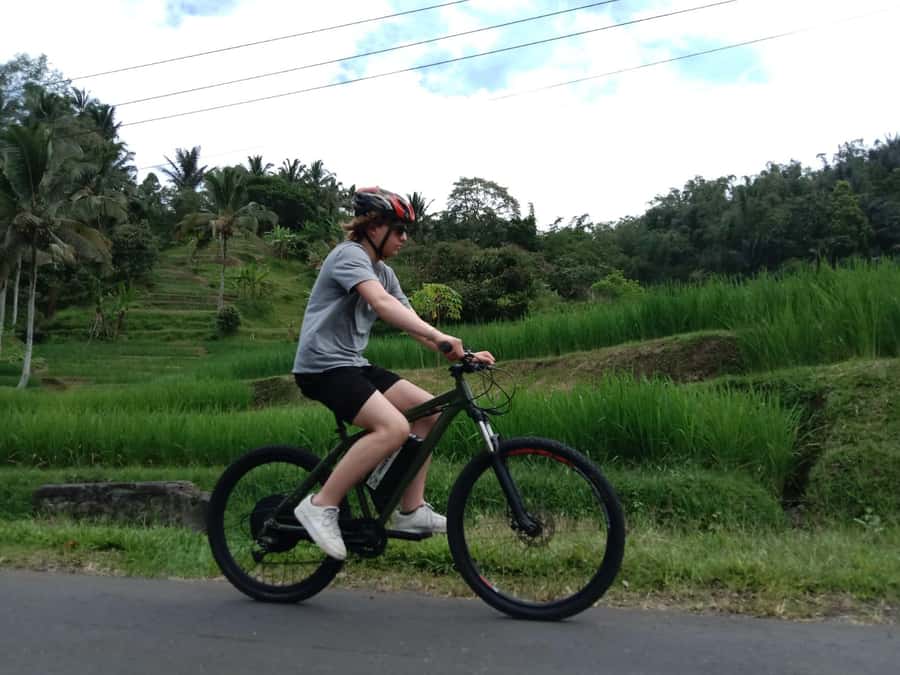
The route from Batukaru toward Jatiluwih is described as scenic but different from the central Jatiluwih area. Think of it like a warm-up for the main event.
Here’s what you can expect to roll past:
- Dense jungle sections where you’ll feel the shade and cooler air
- A giant bamboo forest stretch that visually changes the whole tone of the ride
- Local villages and everyday roadside life
- Valley sections that open the view so you’re not always staring at the ground
This is the part of the tour where the pace tends to feel more like “cycling with stops” than “riding non-stop.” That’s not a bad thing. In Bali, the value is often in watching daily rhythms—how people move, how farms sit around homes, and how the terrain shapes what gets grown where. When you’re on an e-bike, you can still cover distance, but you’re also able to pause without losing the whole day.
Practical tip: ride like you’re on wet stone. Even if the route looks dry, rice-field edges can get muddy and slick. That matters because you may not always be on perfectly paved paths.
Inside the UNESCO Core: Rice Terraces, Water Systems, and What the Guide Tells You
Once you reach Jatiluwih itself, the tour is about more than scenery. You ride to the center of the protected area, and your guide provides commentary about what makes it UNESCO-listed.
The big idea you’ll likely hear is how Balinese rice farming works with water. One of the standout bits from guide commentary in this general area is Subak, the traditional irrigation system managed by local communities. The point isn’t just to name it. It helps you understand why terraces exist in the first place, and why the terraces look the way they do—layered and connected by canals and flows.
You may also hear about farming choices and how families protect their land. For instance, at least some guide talk includes the idea that families work to keep the land pesticide-free across generations. Even if you don’t memorize every detail, those explanations change how you see the view. You stop thinking of terraces as decoration and start seeing them as an active system of farming and water management.
And yes, you still get those classic wide terrace views. The ride brings you close enough to appreciate the patterning—paths, embankments, and the way the terraces step down through the valley.
Between Four Extinct Volcanoes: How the Valley Shaped the Views
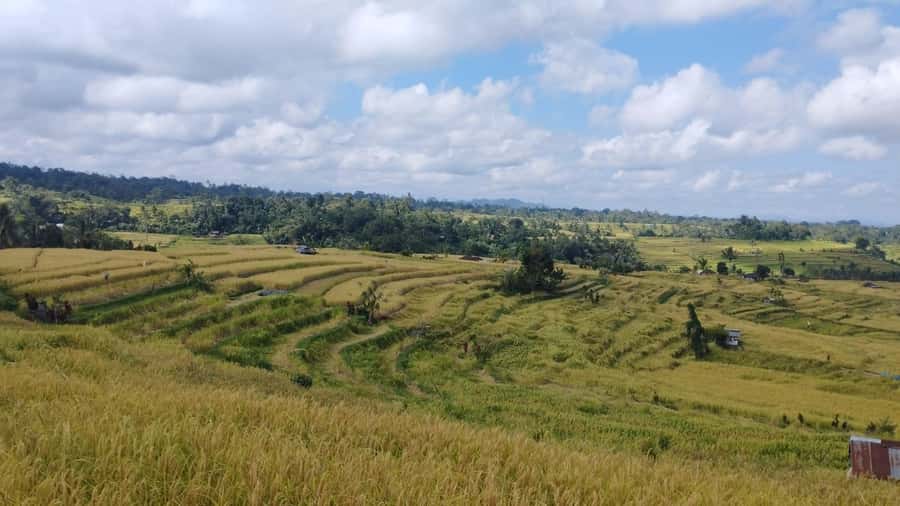
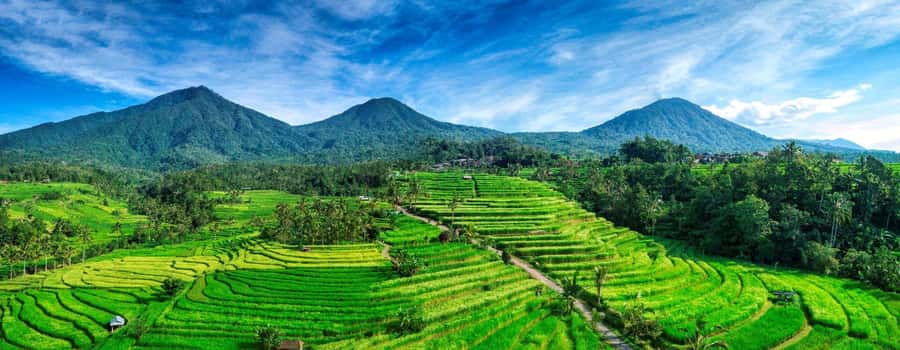
One of the tour highlights is that the area sits in a valley set between four extinct volcanoes. That’s not trivia for trivia’s sake. It helps explain why the region looks the way it does.
Volcanic landscapes tend to mean fertile soil and distinct drainage patterns. In Jatiluwih, that translates into long-lasting green terraces rather than temporary patches of scenery. It also means you’re likely to feel the “ride between viewpoints” feeling—rolling sections that open into broader valley views.
If you like geography, this is one of the moments where it becomes more than pretty. Your guide’s explanations (especially around irrigation and farming) connect the landforms to everyday life. You’ll feel the logic behind the terraced hillsides: water flow, soil type, and the way communities built farming steps into the terrain.

Lunch After the Ride: Indonesian Food in the Valley Air
After the cycling portion, you’ll enjoy a lunch at a nearby restaurant. The lunch is described as authentic Indonesian, and it includes free-flow water, coffee, and tea.
What to expect in the real world: this kind of lunch is designed as a reset, not a food-tour tasting menu. You’ll likely get a plated Indonesian meal such as nasi (rice) alongside typical sides. Some feedback has been positive about the taste and simplicity, especially when paired with the setting and the fact that you’re riding right beforehand.
A balanced caution: at least one group found the lunch bland and not up to the usual standard they were used to elsewhere. That doesn’t mean you’ll have that exact experience, but it’s fair to keep your expectations practical. This is a bike-and-scenery tour first; lunch is there to refuel you afterward.
If you’re sensitive to timing, remember you’re on a 2-hour tour total. The ride and stops can take longer than you think once you factor in photo moments, terrain shifts, and guide explanations.
E-Bike, Helmets, and Safety: A Quick Checklist Before You Go
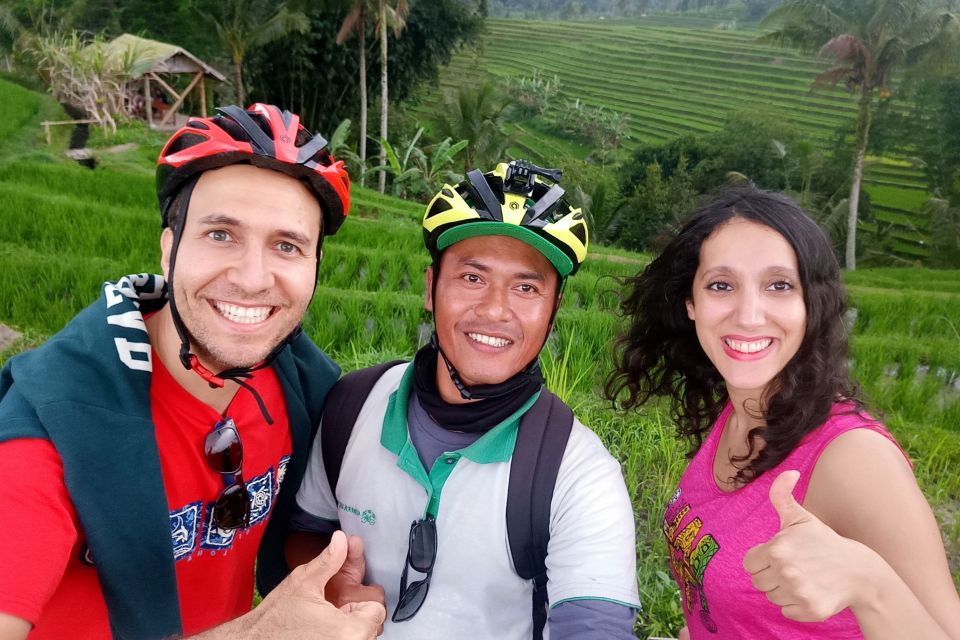
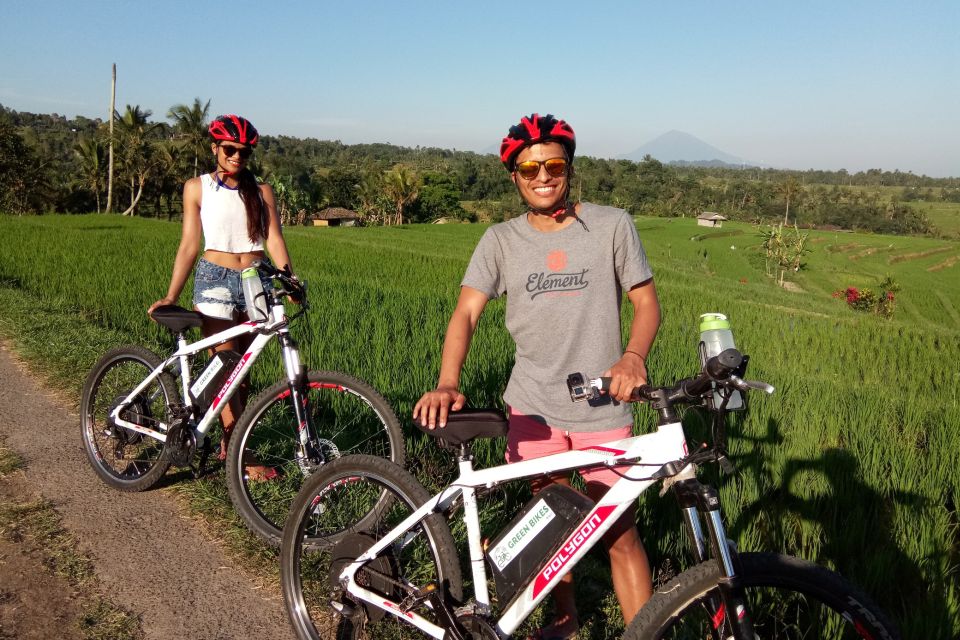
This is the part I want you to treat seriously. The tour includes an e-bike and helmet, plus a guide and insurance. It also includes water and a cold towel at the end of the ride, and a raincoat when needed.
Still, the on-the-ground reality depends on the day. Some feedback points to bikes having technical problems and a few falls, including falls into rice areas that led to wet, muddy conditions and even one reported injury. Even if those incidents weren’t the majority of experiences, you should plan as if the route could get slick.
My practical checklist:
- Ask the staff to confirm your helmet fits properly before you start riding
- Do a quick ride-in test: brakes feel solid, battery assist works, and the bike tracks straight
- Watch your speed near rice edges and any wet soil
- Listen for instructions on how to handle stops and starts on uneven ground
- Wear sport shoes with grip, not flip-flops
If you can’t ride a bike confidently, skip this one. The tour also isn’t suitable for people over 260 lbs (118 kg) or under 4 ft 8 in (145 cm), based on the operator’s guidelines.
Price and Value for $69: What’s Included (and What That Means for You)
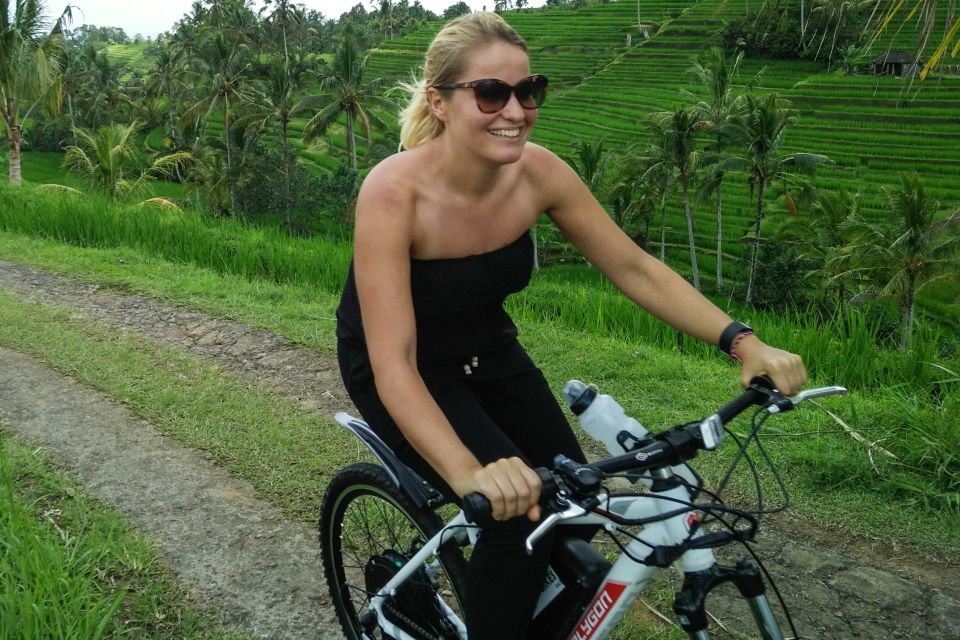
At $69 per person for a 2-hour experience, you’re paying for more than just a rental bike. Your price covers:
- E-bike and helmet
- Admission to Jatiluwih
- Professional cycling guide (English)
- Insurance
- Water plus a cold towel at the end
- Lunch with free-flow water, coffee, and tea
- Raincoat if needed
- Optional hotel transfers
That bundle is where the value comes from. Many Bali day tours charge extra for admission, guide time, and food. Here, those elements are packaged. If you’re staying in Bali and you want a structured experience without hunting down entry tickets and negotiating lunch logistics yourself, this format can be efficient.
The counterpoint is quality control. If the bikes malfunction or if the ride pace feels shorter than you expected, you’ll feel the price more sharply. If you’re the type of traveler who wants two hours of continuous pedaling, you might find the actual moving time less than the total duration.
My way to frame it: this tour is best for people who want scenery + guidance + an easy ride, not a hard-core cycling session.
What to Wear and Bring for a Comfortable Ride
The operator’s basics make sense in real life:
- Sport shoes (grip matters)
- Comfortable clothing
- Sunglasses and sunblock
- Hat or cap
- Camera
Also, treat this as a “weather-ready” outing. Raincoats are included when needed, which is a relief in Bali where sudden showers happen. Even without rain, bamboo-and-jungle routes can feel humid, so lighter layers help.
If you’re prone to getting splashed or you don’t like wet clothes, keep in mind that rice areas can be muddy if conditions are wet. That’s not guaranteed, but it’s smart to plan for the possibility.
Who This Tour Fits Best (and Who Should Skip It)
This is a good match if you want a guided way to see UNESCO-listed Jatiluwih without committing to a strenuous ride. The e-bike format helps on hills, and the small group size (up to 12) keeps it from feeling like a parade.
You’ll likely enjoy it most if you care about:
- Rice terraces and valley views
- Cultural context (especially irrigation systems like Subak)
- A day that mixes nature and village life
Skip it if:
- You can’t ride a bike
- You’re outside the operator’s size limits
- You’re very uncomfortable with uneven terrain or the chance of wet, muddy edges
If you’re traveling with older knees, very new cyclists, or anyone who panics on unpaved surfaces, consider another way to experience Jatiluwih.
Should You Book This Jatiluwih E-Bike Tour?
I’d book it if you’re after a practical, guided way to experience Jatiluwih’s rice terraces and valley scenery with an e-bike that makes the hills manageable. The included admission, lunch, and guide time give it a solid “all-in” feel for $69.
I’d pause and ask extra questions before booking if bike reliability and safety are your top concerns, or if you want guaranteed long riding time with minimal stops. In that case, confirm how bikes are maintained, how helmets are handled for every rider, and what the guide’s plan is for wet or muddy sections.
If you’re the kind of traveler who likes real scenery, village edges, and learning why the terraces matter, this tour is likely to land well—just go prepared to ride smart, not just ride fast.
FAQ
Where does the tour start?
The meeting point is in the Batukaru temple area, near the pool where the operator waits with their electric bikes before entering Batukaru temple (the temple itself is not visited).
Do we visit Batukaru Temple during the tour?
No. You meet near the Batukaru temple area, but there is no temple visit.
How long is the e-bike cycling tour?
The tour duration is 2 hours.
Is lunch included?
Yes. Lunch is included after the cycling portion, and it includes free-flow water, plus coffee and tea.
Is admission to Jatiluwih included in the price?
Yes. Admission to Jatiluwih is included.
Are e-bikes and helmets provided?
Yes. The tour includes an e-bike and helmet.
Does the tour include a guide and language?
Yes. A live cycling guide leads the experience in English.
Is pickup from a hotel available?
Pickup is optional. The driver can pick you up from the lobby of your hotel or villa.
Is the tour suitable for everyone?
No. It is not suitable for people who can’t ride a bike, and it has limits of over 260 lbs (118 kg) and under 4 ft 8 in (145 cm), based on the operator’s information.