Kota Gede hits different when you pedal it. This 3-hour cycling tour in Yogyakarta mixes old-town streets, local snacks, and visits tied to the Mataram Kingdom. You’ll move at human speed, so the sights, smells, and everyday life actually register.
I love two things in particular: the route is built for real neighborhoods, not just photo stops, and the tour includes local food and drinks at the right moment—during the market wandering, when it feels natural to eat. It’s also a small group (up to 10), so your guide can keep you on track in the tight lanes.
One consideration: this is not a kid-friendly ride. Expect narrow footpaths, uneven surfaces like cobblestones, and a mix of main roads and side alleys—so you’ll want solid bike control and comfort in city traffic.
In This Review
- Key highlights to look for
- Kota Gede by bike: old-town streets with real human scale
- What you’ll do in 3 hours: the Kota Gede loop plan
- The market stop: when the ride turns into eating and people-watching
- Mataram Kingdom tombs: history on foot-bike scale
- How the guide makes narrow lanes feel manageable
- Cycling reality check: cobblestones, footpaths, and traffic mix
- Bike types, helmets, and what comfort to expect
- Price and value: is $57 a fair deal?
- Sustainability and the community donation angle
- Who should book this tour (and who should skip it)
- Should you book the Kotagede Royal Route cycling tour?
- FAQ
- FAQ
- How long is the Kotagede Royal Route cycling tour?
- What distance do you cycle on this tour?
- What time slots are available?
- Where do you meet and where do you end?
- What bike types are offered?
- Is the tour suitable for kids?
- What cycling skill level do you need?
- What is included in the price of $57?
- Can I cancel for a full refund?
- Is there a limit on group size?
Key highlights to look for
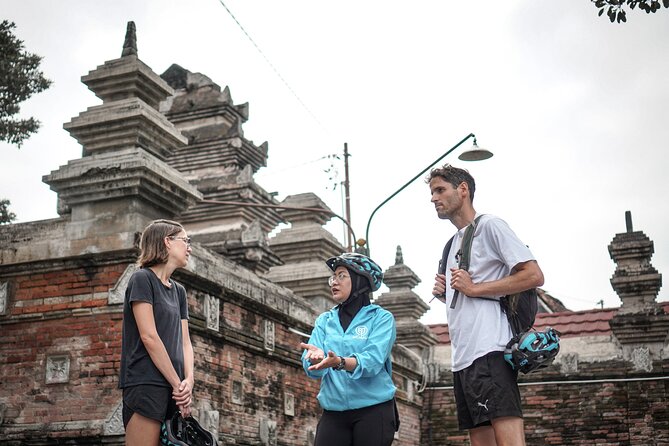
- Kota Gede’s labyrinth of streets on mountain or city bikes
- Market time for local snacks and Indonesian food breaks
- Mataram Kingdom tomb visits to see history up close
- A small group (max 10) for a more controlled route
- Sustainability plus a community donation built into the experience
Kota Gede by bike: old-town streets with real human scale
If your idea of Yogyakarta is big monuments and long walks, Kota Gede surprises you. This part of town is made of small lanes, turns you can’t fully predict, and buildings that feel like they’ve been standing in the same spot for decades. On a bike, the pace is perfect: you get close enough to notice details, but you still cover ground without tiring out.
I also like how the tour doesn’t treat history like a lecture. The guide’s job is to connect what you’re seeing to how people live nearby. That’s why the experience feels less like sightseeing and more like moving through a living city—stop after stop, with short explanations that make the next street make sense.
And since the route is designed to get you into the tight network of roads, you end up seeing parts of old Yogyakarta that most people simply pass by from a distance.
You can also read our reviews of more tours and experiences in Yogyakarta.


What you’ll do in 3 hours: the Kota Gede loop plan
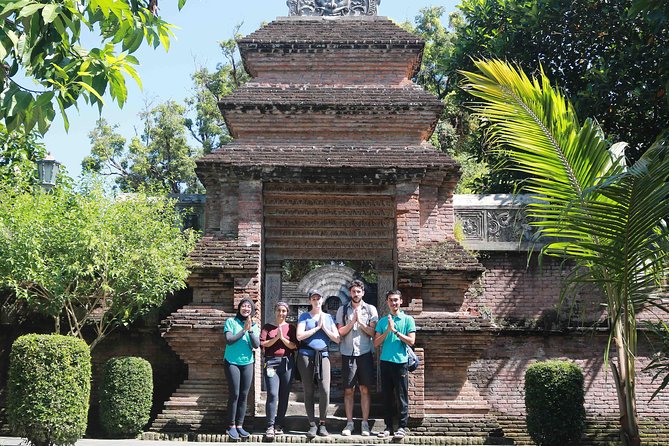
The tour runs about 3 hours and covers roughly 12–15 km. You can choose the morning slot (07.00–10.00) or the afternoon slot (14.30–17.30). You’ll start at MOANA Hub Prawirotaman (Jl. Gerilya No.646, Brontokusuman, Kec. Mergangsan, Yogyakarta) and return to the same meeting point.
Here’s how the half-day usually unfolds:
You’ll begin with a guided ride through Yogyakarta’s old-town area around Kota Gede. Expect lots of turns and lane changes, because the whole point is the labyrinth-like street pattern. The guide points out standout architecture and temples as you pass, so you get context without waiting in lines.
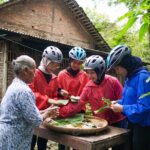
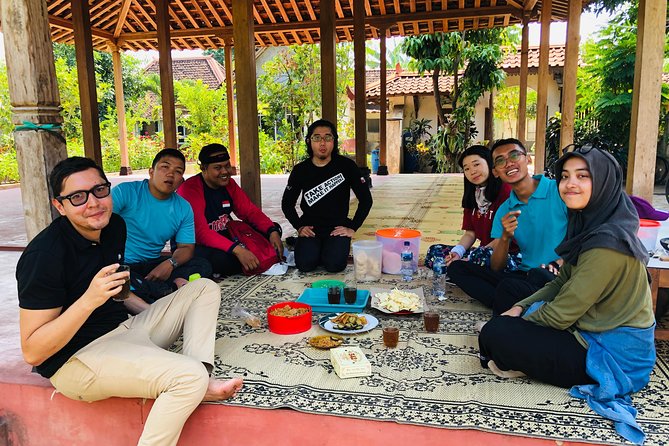
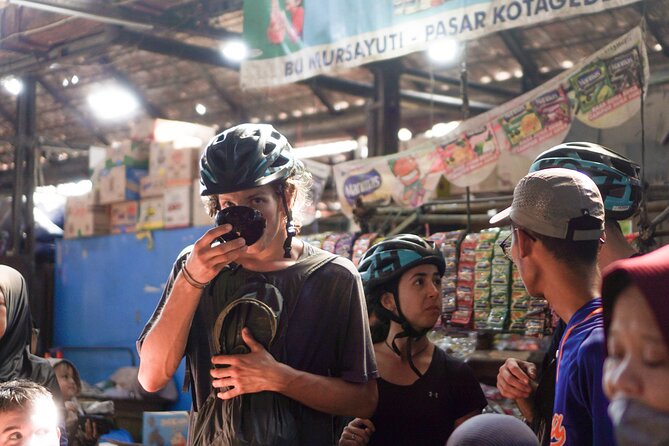
After that, the route brings you to a traditional market area. This is where the tour shifts from “look around” to “taste and interact.” You’ll get time to grab snacks or a local-style meal, plus refreshing drinks.
Then the tour moves toward the more formal historic part of the experience: cycling onward to the tombs of the Mataram Kingdom. Along the way, you’ll pass street scenes tied to daily life—market corners, local businesses, and neighborhood streets that show how the city actually works.
One small practical bonus: your guide knows where to lead the group so you don’t feel stuck fighting traffic the whole time. The ride is still real city riding, but the route planning matters.
The market stop: when the ride turns into eating and people-watching
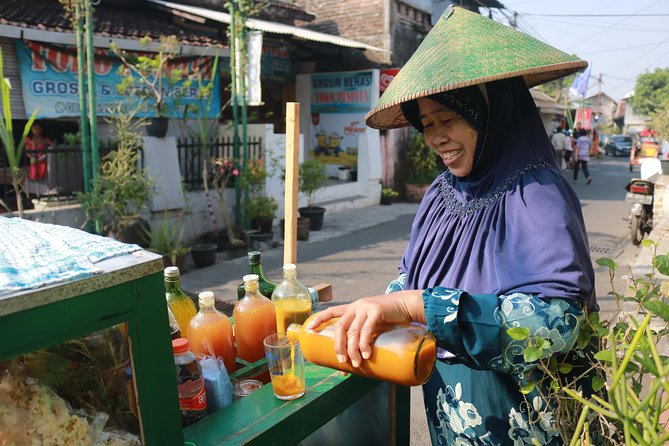
A good city cycling tour needs a food moment that doesn’t feel forced. Here, the market visit is built into the experience so you can refuel while you’re already surrounded by the sights and sounds of local commerce.
You’ll stop at a traditional market, with chances to try local snacks or Indonesian food. The tour also includes refreshing local food and drinks, so you’re not trying to guess what to buy or where to eat while navigating traffic.
What I like about this approach is timing. If you eat too early, the rest of the ride can feel like a digestion marathon. If you eat too late, you’re too tired to enjoy the visit. This market stop lands during the cycling loop, when you’re at a natural break point and can experience the market as part of the day, not a detour.
Also, market time is where the tour shifts from “heritage sightseeing” to “how people live.” You’ll get a closer look at everyday details—things you usually miss when you’re rushing between major attractions.
Mataram Kingdom tombs: history on foot-bike scale
The highlight that gives this tour its name is the visit to the tombs of the Mataram Kingdom. This is the part of the tour where the vibe goes from street life to more focused heritage viewing.
On the bike, you’re not just arriving at a single spot—you’re traveling through the neighborhood streets that connect it to the rest of the city. That matters because it shows how history sits inside the modern town grid, rather than being cut off behind gates miles away.
You’ll also have chances to learn more from the guide as you go—how the past connects to present-day local roles. The tour description includes meeting the sultan’s servants, which is the kind of detail that turns a site visit into a more human story.
If you’re into understanding how old kingdoms shaped modern places, this stop is the anchor. You’ll leave with a clearer picture of why Kota Gede and surrounding areas became so important, not just what you saw.
How the guide makes narrow lanes feel manageable
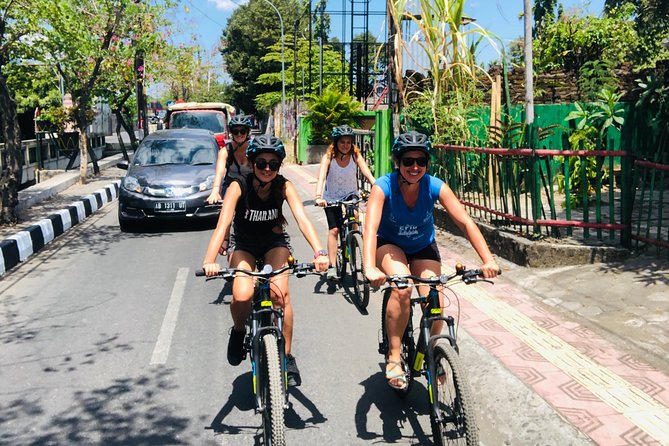
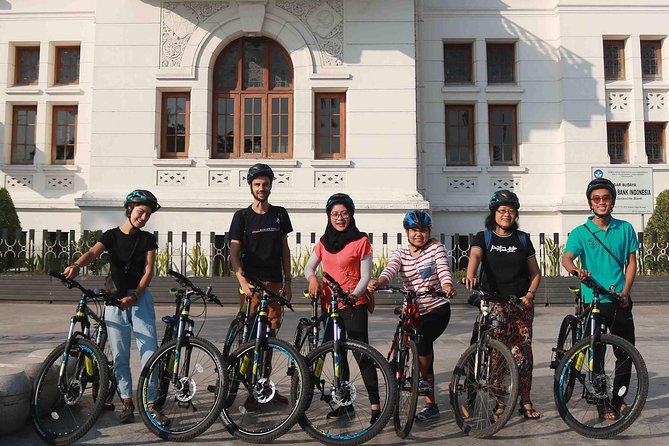
The quality of a cycling tour often comes down to one thing: route choice. The MOANA team is built around sustainable cycling and local guidance, and the guide is a big part of why this tour works.
You’ll be led through quiet alleys and side streets at points, instead of spending the whole time stuck in busier traffic. The guide also helps you interpret what you’re seeing—architecture, temple features, and local street life—so you don’t just pedal past things without understanding why they matter.
What I’d recommend for you: treat the guide like your moving GPS. If you’re unsure about where to look next, glance at the guide, copy the line through the lane, and listen when the explanation starts. It speeds up your comfort fast, especially when streets get tight.
And since the group size caps at 10, your guide can keep an eye on everyone’s pace and spacing. That’s not a small detail; it makes the ride feel more controlled on narrow paths.
Cycling reality check: cobblestones, footpaths, and traffic mix
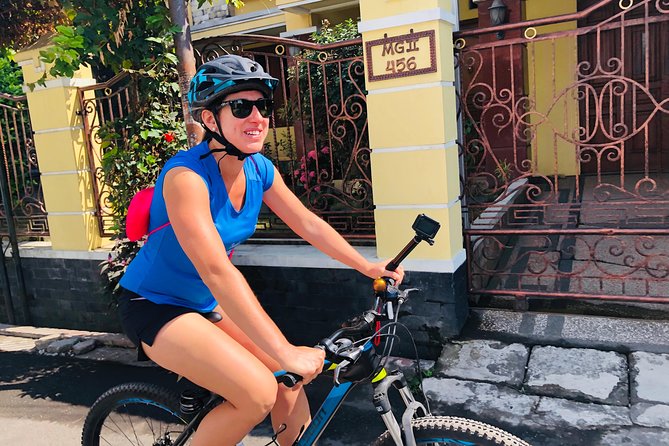
Let’s be honest so you can plan smart. This tour involves urban cycling with narrow footpaths and uneven surfaces like cobblestones. It’s also a medium cycling skill ride, and it’s not for kids.
You don’t need to be a road-racing pro, but you should have these basics:
- You can brake smoothly and hold a straight line at slow speed
- You feel comfortable riding through tight alley space
- You can pay attention for potholes or uneven stones
One review-style piece of advice worth repeating: don’t show up thinking it’s a casual “cruise around town.” The roads can be a mix of main streets and smaller lanes, so your confidence matters.
If you’re a strong rider who’s calm in city cycling, you’ll likely find it fun and rewarding. If you’re nervous with traffic or unfamiliar with uneven pavement, consider another option or bring extra caution in your choice of bike (see the next section).
Bike types, helmets, and what comfort to expect
You’ll choose from mountain bike or city bike types. Bike rental is included in the price, so you’re not stuck arranging your own ride.
Helmets are provided if you desire, which is a good option—especially given the cobblestone and narrow-lane feel. If you’re the type who prefers to wear your own gear, you might bring it, but the tour already covers the main safety item if you want it.
Since the route covers 12–15 km in about 3 hours, you should expect a steady effort rather than constant stops. It’s not a full-day ride, but it’s long enough to matter if you’re not used to bike pacing.
The small group size helps comfort too. You won’t be pedaling around a huge pack. Instead, you can settle into the rhythm the guide sets and focus on enjoying the streets.
Price and value: is $57 a fair deal?
At $57 for about 3 hours, this tour is priced like a budget-friendly guided activity—especially because a bunch of the practical costs are already handled.
Here’s what’s included:
- Bike rental
- Experienced guide
- Refreshing local food/drinks
- Donation to local community
- Sustainability action fund
- Entrance fees on sites following the program (if any)
- Helmet if you want it
And what’s not included:
- Tips (only if you’re satisfied)
- Transport to the meeting point
So the real value equation is simple: you pay for one guided ride that gives you a bike, local meals/snacks, and access where needed. For many visitors, that saves time and reduces decision fatigue—especially when you’re learning a place by street, not by map.
Also, the tour mentions group discounts and a mobile ticket, which can help if you’re traveling with others. If you’re traveling solo, you’ll still get the benefit of a small-group experience.
Sustainability and the community donation angle
This is a low-carbon way to see the old town—cycling instead of motorized transport—and the tour ties that directly to community support.
You’ll get a community donation included in the experience, plus a sustainability action fund. Even if sustainability isn’t your main travel motivation, I find this matters because it turns the tour from pure consumption into something with a visible local connection.
It’s not just a marketing line. When the money is bundled into the experience, you don’t have to figure out where the donation goes yourself. You also get a tour format that inherently reduces emissions compared with hopping around by vehicle.
Who should book this tour (and who should skip it)
This tour fits best if you:
- Like seeing neighborhoods, not just major attractions
- Feel comfortable cycling on uneven city surfaces
- Want a guided introduction to Kota Gede and Mataram-area heritage
- Enjoy local markets and snack breaks
- Prefer small group dynamics (max 10)
You should skip or rethink it if you:
- Are traveling with kids (it’s not for children)
- Don’t feel confident riding in traffic or on cobblestones
- Want a fully flat, easy pedal with minimal lane changes
If you’re an average adult cyclist who rides regularly or has toured cities by bike before, you’re probably in the sweet spot.
Should you book the Kotagede Royal Route cycling tour?
If you want a short, high-impact way to understand Yogyakarta beyond the obvious landmarks, this is a strong choice. The combination of Kota Gede lanes, a traditional market food break, and the Mataram tombs gives you variety without dragging the day into something exhausting.
I’d book it if you’re ready for real city biking—narrow footpaths, cobblestones, and a mix of roads. I wouldn’t book it if you’re hoping for a gentle, stroller-friendly sightseeing stroll by bike.
One more smart move: pick the time slot that matches your energy. The morning ride can feel easier to manage in terms of heat and momentum, while the afternoon slot may suit you if you prefer a later start.
FAQ
FAQ
How long is the Kotagede Royal Route cycling tour?
It runs for about 3 hours.
What distance do you cycle on this tour?
You’ll cover roughly 12–15 km.
What time slots are available?
There’s a morning tour from 07.00–10.00 and an afternoon tour from 14.30–17.30.
Where do you meet and where do you end?
You meet at MOANA Hub Prawirotaman, Jl. Gerilya No.646, Brontokusuman, Kec. Mergangsan, Kota Yogyakarta. The tour ends back at the same meeting point.
What bike types are offered?
You can ride a mountain bike or a city bike.
Is the tour suitable for kids?
No. It is not suitable for children.
What cycling skill level do you need?
Medium cycling skill is needed.
What is included in the price of $57?
Bike rental, an experienced guide, local food and drinks, a community donation, a sustainability action fund, entrance fees on sites in the program (if any), and a helmet if you want one.
Can I cancel for a full refund?
Yes. You can cancel up to 24 hours in advance for a full refund. If you cancel less than 24 hours before the start time, the paid amount is not refunded.
Is there a limit on group size?
Yes, the tour has a maximum of 10 travelers.