Bronze myths and temple steps. This Myth of Pejeng walk is interesting because it combines sacred sites with real stories, plus a bit of access you normally don’t get. I like the special access element, and I also love how the stops move from Hindu-era beliefs to pre-Hindu artifacts in one smooth morning plan.
Do note one potential drawback: the route includes uneven temple stairs, steep bits, and patchy sidewalks. You’ll be walking around an urban area for up to about 2 hours, and it’s rain or shine (unless there’s severe weather).
In This Review
- Key highlights you’ll actually feel during the walk
- Why the Myth of Pejeng walk is a smart use of your morning
- Price and value: what $21.40 really covers
- Meeting point in Bedulu: keep it simple, arrive early
- The walk level: temple stairs and slopes are part of the deal
- Stop 1: Pura Penataran Sasih and the bronze kettle drum moment
- Stop 2: Pura Pusering Jagat and the island-center concept
- Stop 3: Kebo Edan Temple and the Bhairawa statue story
- Stop 4: Arca Building Archaeological Museum and pre-Hindu sarcophagi
- Sarong etiquette and what you should wear
- Guides, group size, and the kind of questions you can ask
- Coffee, tea, snack, and the reusable bottle push
- Timing, weather, and why early might help
- Who should book the Myth of Pejeng walk
- Should you book this tour?
- FAQ
- How long is the Myth of Pejeng walking tour?
- Where do I meet, and what time does it start?
- Do you offer pickup or drop-off?
- Is the walking part difficult?
- What happens if it rains?
- Is sarong clothing provided?
- What is the cancellation cutoff for a full refund?
Key highlights you’ll actually feel during the walk
- Exclusive temple access: You get in for a closer look at a major bronze kettle drum at Pura Penataran Sasih.
- Myth-focused storytelling: The guide ties locations to Pejeng legends, including moon-of-Pejeng style lore.
- Four-stop structure: Short, timed visits keep the pace steady instead of turning into a half-day hike.
- Pre-Hindu stop at Arca Building: You’ll see large sarcophagus-style forms in an open courtyard.
- Small group (up to 8): Easier questions and less waiting at temple gates.
- Included refreshment: Balinese coffee, tea, and a snack keep you going without hunting for food first.
Why the Myth of Pejeng walk is a smart use of your morning
If you’re based in Ubud, it’s easy to over-plan and accidentally spend your day in crowds. This walk is a calmer change of pace. It runs from 8:30 am for about 2 hours, and it targets the Pejeng area around historic sacred landmarks.
I like tours like this when they feel focused. You’re not bouncing between random stops. You’re moving from one themed site to the next, with enough time to look, listen, and ask questions without rushing.
And because the group is capped at 8 people, it stays conversational. Guides can adapt to your pace, and you won’t feel like you’re just being marched from photo spot to photo spot.
You can also read our reviews of more tours and experiences in Ubud.



Price and value: what $21.40 really covers
At $21.40 per person, the headline cost looks modest. The real value is what’s bundled in.
You get an English-speaking local guide, temple donations (Rp 60,000), and admission tickets for each of the temple stops. You also get Balinese coffee, tea, and a snack, plus sarongs and sashes to meet temple dress rules. There’s even special access to a Balinese compound as part of the visit.
So you’re paying for more than movement. You’re paying for context, access, and the little practical items that save you from scrambling at the last minute.
If you care about religion and history but don’t want a long, exhausting day, this is the kind of tour that fits. It’s short enough to pair with lunch plans back in Ubud, but structured enough to feel like you learned something real.
Meeting point in Bedulu: keep it simple, arrive early
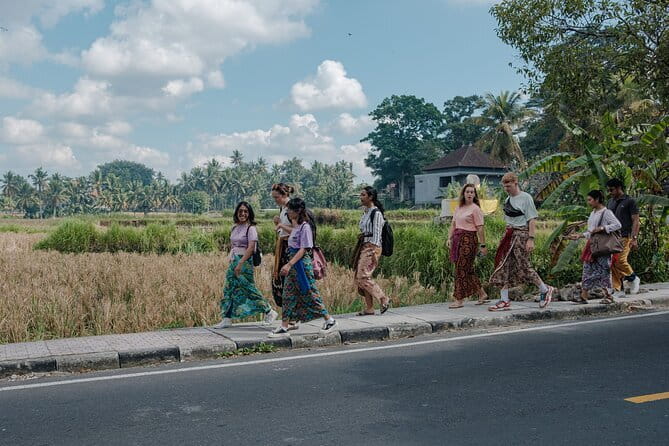
The meeting point is at Indomaret Pejeng, Jl. Raya Dr. Ir. Sukarno No. 552, Bedulu (Blahbatuh), Gianyar. The tour ends at Museum Arkeologi (around F7JV+563 in Bedulu area).
There’s no pickup or drop-off from your accommodation, so you’ll want to plan your own ride. The good news: it’s near public transportation, so you’re not completely stuck if your driver isn’t available.
A small but useful tip: start thinking about what you’ll do before the walk. One person’s advice that I like—go early and check out the local market before the tour starts. If you like breakfast stalls and a slower look at daily life, that’s a nice add-on.
The walk level: temple stairs and slopes are part of the deal

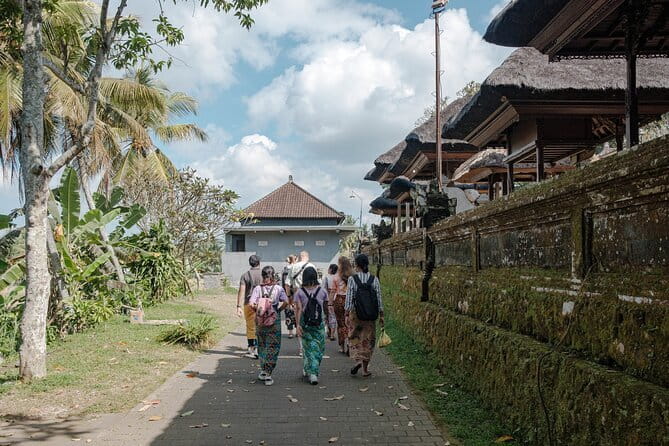
This tour does not promise flat ground. It specifically notes uneven temple stairs, steep gradients, and patchy sidewalks around historic sites.
That doesn’t mean it’s a hardcore trek. It does mean you should show up ready to climb steps and keep moving for up to about 2 hours around an urban setting. Wear shoes you trust on stone and uneven surfaces.
If you want a completely smooth, accessible route, you may need to pick a different kind of Bali outing. But if stairs don’t scare you and you’re steady on your feet, this walk is doable.
Stop 1: Pura Penataran Sasih and the bronze kettle drum moment

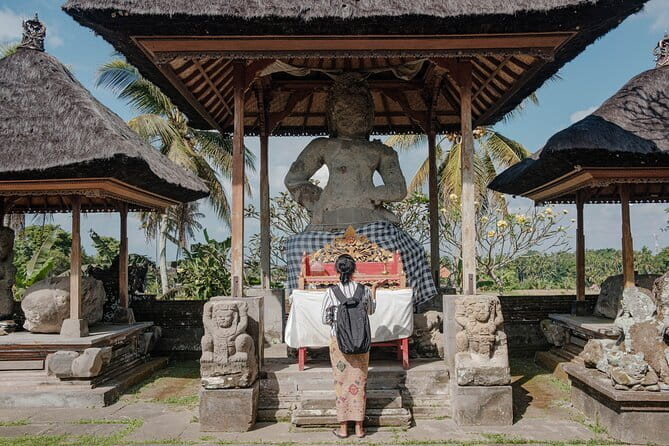
Your first stop is Pura Penataran Sasih. You’ll enter wearing traditional attire—sarongs and sashes—and that matters here. Temples are sacred, so dressing right sets the tone immediately.
This is also where the tour’s “wow” factor hits. You’ll get exclusive access to what’s described as Southeast Asia’s largest bronze kettle drum. It’s the kind of object that’s hard to fully appreciate without being there in the right setting.
What I like about this stop is the way the guide frames it as part of local myth and belief, not just as a random artifact. You’re not only looking. You’re learning why it’s meaningful to people.
Time at the stop is about 20 minutes, with admission included, so you can see what you came for without turning it into a long temple marathon.






Stop 2: Pura Pusering Jagat and the island-center concept
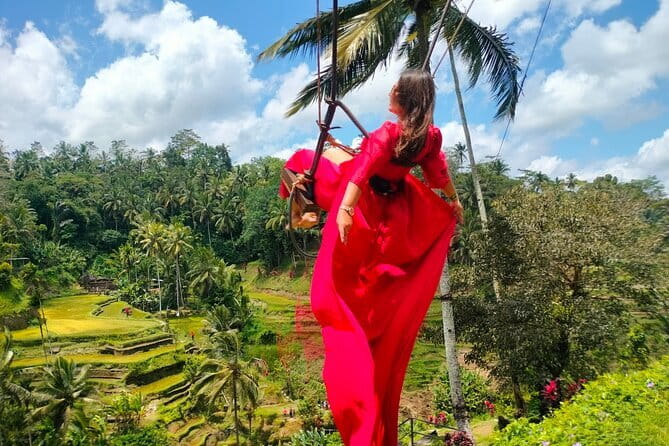
From there you head to Pura Pusering Jagat, described as one of Bali’s six main Kahyangan (directional) temples. The idea is tied to where the island is believed to center spiritually.
This stop is another around-20-minute visit, still paced for a small group. You’ll spend time exploring the sacred temple complex and listening to what the guide explains about carvings and the beliefs attached to the location.
I like this stop because it helps you understand how Bali’s temples aren’t just pretty buildings. They’re tied to directions, cosmology, and the way people make sense of the world.
If you’re the type who likes to connect “what you see” with “what it means,” this stop delivers.
Stop 3: Kebo Edan Temple and the Bhairawa statue story
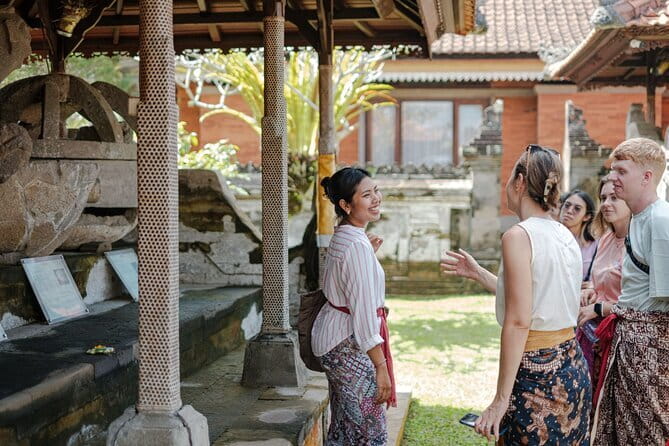
Next is Kebo Edan Temple, also called the Temple of the Crazy Buffalo. Here the focus becomes the statue story.
You’ll view an imposing 13th-century Bhairawa statue that was recovered from nearby rice fields. The guide then walks you through theories about where the statue came from and why its unusual history matters.
This is one of those temple stops where the myth and the physical object are tightly linked. It gives you something to think about while you’re looking—rather than only taking photos and moving on.
Again, the stop is timed at about 20 minutes, so it stays lively and doesn’t drag. Admission is included, so you’re not paying extra at each phase.
Stop 4: Arca Building Archaeological Museum and pre-Hindu sarcophagi

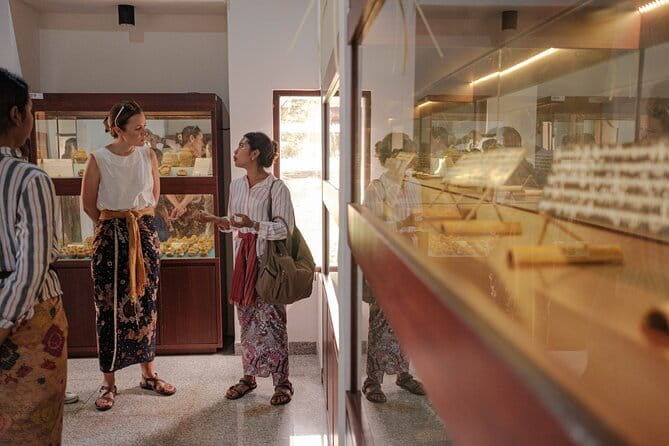
The final stop shifts the conversation to older layers: pre-Hindu Bali. You’ll visit Arca Building Archaeological Museum and explore giant sarcophagus-style forms in an open courtyard.
This is the “different gear” moment of the day. Up to this point, the walk centers on temples and living belief spaces. At Arca Building, it becomes more about what came before—how people lived, what objects survived, and what archaeologists and locals interpret from them.
Time here is about 30 minutes, which gives you a little more breathing room than the earlier stops.
If your Bali travel is heavy on modern Ubud and you want at least one outing that reaches further back in time, this is a strong way to do it without committing to a full museum day.
Sarong etiquette and what you should wear
Temple etiquette is clearly part of the experience. Both men and women must dress modestly, and you’ll need a sarong that covers the legs below the knee.
You can bring your own sarong, or you can use the sarong and sash provided as part of the tour. Either way, it’s worth dressing with ease in mind. Choose clothing that you can layer under temple rules without stress.
Also remember: these are religious and sacred places. Ask your guide how to behave if you’re unsure, and keep your movement respectful. Most of the tour’s “smoothness” comes from how well you follow those norms.
Guides, group size, and the kind of questions you can ask
This tour runs with a local English-speaking guide. There’s also an Indonesian guide available, depending on the group setup.
From past tours, the names Joe, Bagus, and Win have shown up as guides. I mention these names because they hint at the style you’ll likely get: friendly, talkative, and willing to answer questions that go beyond the script.
That’s one reason I like the small-group cap of 8 people. If you’re curious about myths like the moon of Pejeng or how ideas like tantra get explained in everyday temple storytelling, you’ll have room to ask.
Coffee, tea, snack, and the reusable bottle push
The tour includes Balinese coffee, tea, and a snack, which is genuinely helpful. You’re out in the morning, and even a short walk can make you grateful for a quick break that’s already planned.
There’s also a simple environmental note. The operator wants to reduce plastic in Bali’s rivers, so they ask you to bring a reusable bottle for water refills. It’s one of those small things that costs you little and helps more than you might expect.
If you’re prone to forgetting water, set a reminder the night before. It’ll make you feel prepared instead of rushing.
Timing, weather, and why early might help
The walk is rain or shine. If conditions are severe—like an intense downpour—they’ll contact you before the start time. So you should check your phone close to morning.
One scheduling tip I like: arrive early enough to settle into the area before the tour begins. One suggestion that fits the vibe is visiting the local market before your 8:30 am start. It’s a low-effort way to feel like you’re in the real Pejeng rhythm, not only in and out of temples.
There’s also a chance you might see a local ceremony during the visit if your timing lines up. That kind of moment can make temples feel more alive, with people moving with purpose and the site looking its best. Even if it doesn’t happen, you still get the planned access and guided context.
Who should book the Myth of Pejeng walk
You’ll probably like this tour if you want:
- Temple context without a full-day plan
- A walk that’s short but story-driven
- A mix of temples and older artifacts (bronze drum to pre-Hindu sarcophagi)
- A guide-led format where questions are welcome
It’s also a good fit if you’re staying near Ubud but want to spend time outside the busiest parts of town. Pejeng has a quieter feel than central Ubud, and the route helps you experience that change.
You might want to skip it (or pick something else) if you need completely flat ground, have limited mobility with stairs, or you’re sensitive to uneven footing. The tour is built around historic landmarks with steps and slopes, so that part isn’t optional.
Should you book this tour?
If you want a smart, budget-friendly way to understand Bali beyond generic viewpoints, I’d say book it. For $21.40, you’re getting guided temple access, admissions, attire help, and a pre-Hindu stop that many quick Ubud routines miss.
I’d book it especially if you like stories with physical anchors: a bronze drum you can see in place, a recovered statue with theories behind it, and sarcophagus forms that shift your perspective backward in time.
If you’re unsure about the walking and stairs, check your own comfort first. The tour is manageable for many people, but it does require real step-climbing and steady walking on uneven surfaces.
FAQ
How long is the Myth of Pejeng walking tour?
It runs for about 2 hours (approx.). The visit is split across four stops, with shorter temple segments and a longer final museum stop.
Where do I meet, and what time does it start?
You meet at Indomaret Pejeng on Jl. Raya Dr. Ir. Sukarno No. 552 in Bedulu (Blahbatuh), starting at 8:30 am. The tour ends at Museum Arkeologi in the Bedulu area.
Do you offer pickup or drop-off?
No. The tour does not provide pickup or drop-offs from your accommodation.
Is the walking part difficult?
The route includes uneven temple stairs, steep gradients, and patchy sidewalks. You should be physically capable of climbing steps and walking around an urban environment for up to about 2 hours.
What happens if it rains?
The tour operates rain or shine. If conditions are severe, such as an intense downpour, the operator will call you before the start time.
Is sarong clothing provided?
Yes. Men and women must dress modestly with a sarong covering the legs below the knee. You can bring your own, or use a sarong and sash provided by the tour.
What is the cancellation cutoff for a full refund?
You can cancel for a full refund up to 24 hours before the experience’s start time. Changes made less than 24 hours before start time aren’t accepted, and cancellations within 24 hours are not refunded.