Cooking in Bali feels like a shortcut to understanding flavors.
This private Balinese cooking class takes place in Santika’s family home in Pesalakan village, surrounded by rice paddies and just about a 20-minute drive from central Ubud. You’ll learn how everyday Balinese dishes are put together, with local ingredients and spices you can actually name and use next time.
I especially like two parts: the market option (you can see ingredients first, not just taste them later), and the hands-on structure where you get your own cooking area and follow Santika step by step. If you cook at home, you’ll appreciate that it’s not just watching someone else—your hands are in it.
One thing to consider: hotel pickup is included only for Ubud hotels within a 10km radius. If you’re staying farther out of central Ubud, expect an extra transportation charge.
In This Review
- Key highlights worth planning for
- From Ubud pickup to Santika’s home kitchen in rice country
- The optional market tour: where Balinese ingredients start making sense
- Your cooking station: hands-on meals in Santika’s open kitchen
- What Santika is likely to teach you
- What you’ll cook: Balinese daily dishes built from local produce and spice
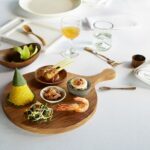
- The meal you make: sit down and eat the results
- Dietary needs: easier than you think when you ask early
- Price and value: what $68 per person buys you in Ubud
- When the price might feel less fair
- Timing, pacing, and how to make the most of 3 hours
- Who should book this cooking class (and who might skip it)
- Should you book Santika’s Private Balinese Cooking Class?
- FAQ
- How long is the cooking class in Ubud?
- Is hotel pickup and drop-off included?
- What’s included in the price?
- Do you visit a market?
- Can the class accommodate dietary restrictions?
- Is the experience private?
- Will the menu be the same every time?
- What is the cancellation policy?
Key highlights worth planning for
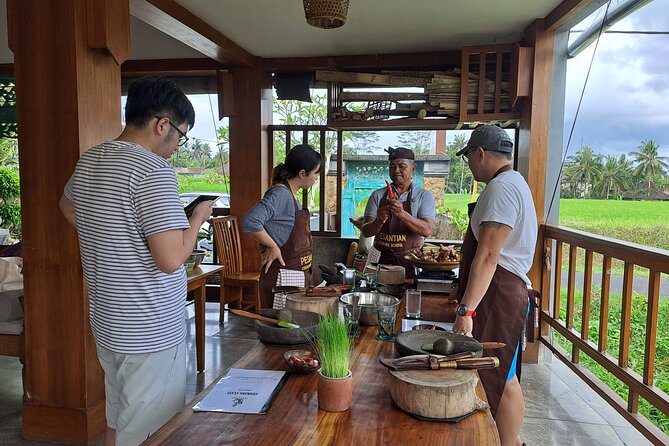
- Chef Santika teaches from his home kitchen in Pesalakan village, near rice fields
- Optional market tour to find key produce and spices before cooking
- True hands-on time—you cook alongside Santika, not from the sidelines
- Your own work area with tools set up so you can chop and prepare as you go
- Dietary options available including vegetarian, vegan, lactose-free, and gluten-free (on request)
- Private class for your group even though the property can host others
From Ubud pickup to Santika’s home kitchen in rice country
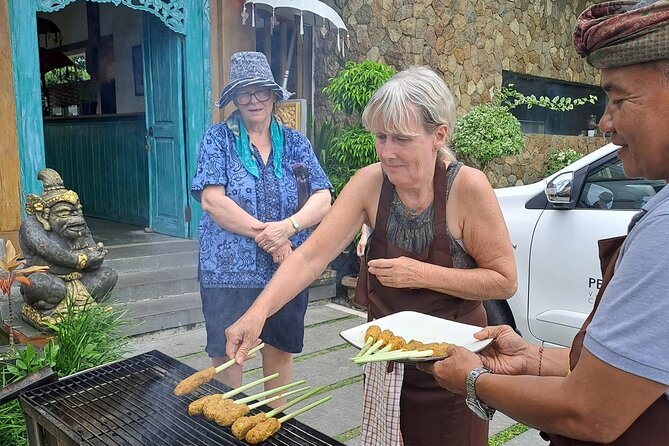
The day starts with convenience: hotel pickup and drop-off from central Ubud hotels (within a 10km radius). Then you head to Pesalakan village, a calmer pocket of Ubud about 20 minutes from town, where the setting already signals what the class is about—food grown and flavored locally, not imported and packaged.
Santika’s home is an actual homestay setup, with an open kitchen where your group will cook. Even if other guests are on the property, the cooking experience is described as private: only your group participates in the class. That matters because it keeps the pace comfortable, and it’s easier to ask questions without feeling like you’re sharing the room with strangers.
Practical tip: if your hotel is outside that central Ubud 10km zone, factor in the additional transport charge. You don’t want to assume “pickup” means everywhere in Ubud.
You can also read our reviews of more tours and experiences in Ubud.



The optional market tour: where Balinese ingredients start making sense
If you choose the market + cooking option, you’ll visit a local market before heading to Santika’s home. This is where the class turns from enjoyable to really useful, because you see the raw materials that shape typical Balinese meals.
You’ll walk through what’s available—local produce such as cassava, ferns, lemongrass, and various bananas. You might also get a chance to buy seasonal spices or a few vegetables that can later show up in what you cook. Even if you don’t buy anything, the market stop gives you names, shapes, and context. That’s huge later, because Balinese dishes often build flavor from fragrant aromatics and greens that don’t always show up in standard restaurant menus.
A drawback to know up front: since it’s a market, the selection depends on what’s in season. The menu in the cooking class can vary seasonally too, so don’t expect a rigid “same dishes every day” promise.
Why this is good value: for $68 per person, the market stop adds real context without adding a full extra day. It’s still all folded into an approximately 3-hour experience.
Your cooking station: hands-on meals in Santika’s open kitchen
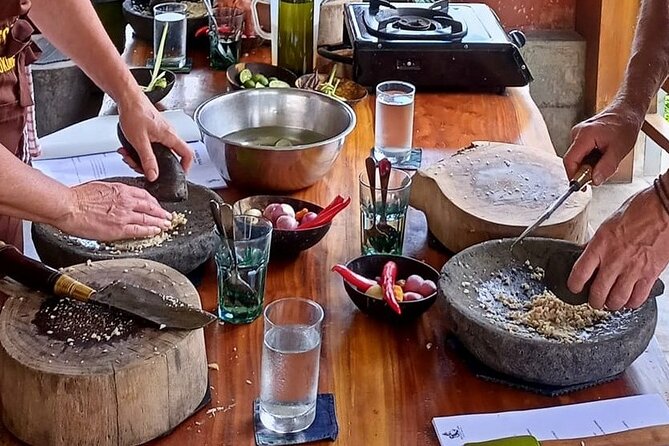
Once you arrive, you’re not just in a demo kitchen. You’re in Santika’s open setup, and the class is built around you cooking alongside him. Expect to join his workflow with your own area, including a chopping board and a prep tool described as a motor and pestle station (used for pounding and crushing). There’s also a stove setup so you can follow recipes in real time.
This is also where the private nature helps. In a group class, you can get stuck waiting your turn. Here, you’re part of the process—chopping, preparing, and cooking—so the class becomes a repeatable skill, not just a one-time performance.
What Santika is likely to teach you
The class focuses on Balinese cooking fundamentals and daily dishes. You’ll get an introduction to:
- Balinese ingredients (what’s used and why)
- Culture around the cuisine (how daily life and cooking connect)
- Spices and combinations that shape the final flavor
If you like to cook after a trip, this is the difference between tasting and learning. You’re not just collecting memories—you’re collecting methods.
Quick mindset shift for best results: you’ll learn faster if you treat this like a kitchen workshop. Ask questions while you’re chopping or pounding. The instructor is right there, and you’ll get clarity before the next dish moves ahead.
What you’ll cook: Balinese daily dishes built from local produce and spice
The menu can vary with the season, so you won’t be stuck with a scripted list of ingredients. But the class is clearly framed around traditional Balinese daily dishes using local ingredients and spices.
From the market tour and ingredient examples, you can expect flavors anchored in things like:
- Lemongrass (a common fragrant base)
- Cassava (a starchy local crop that appears in Balinese cooking)
- Ferns and other greens (adding earthiness and texture)
- Bananas (often used in sweet or savory preparations depending on the dish)
Balinese cooking is rarely about one ingredient doing everything. It’s about building. You’ll likely see how herbs, aromatics, and ground spice blends come together, and then how those flavors get carried into finished dishes using typical home-kitchen techniques.
Balanced expectation: since the menu varies, don’t plan this as a “try dish X for sure” outing. Plan it as a hands-on learning session for how Balinese flavors work in real life.




The meal you make: sit down and eat the results
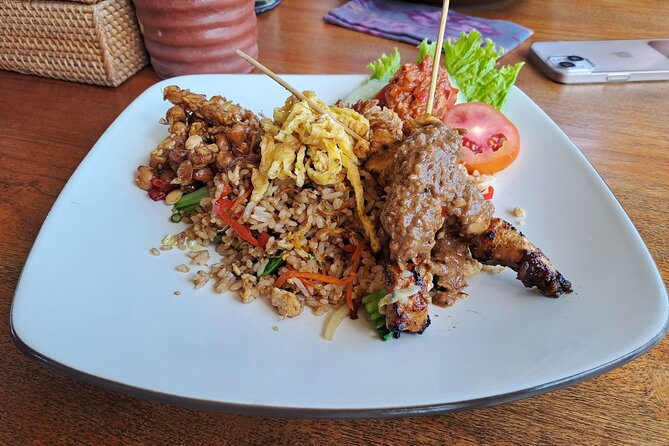
After about 1.5 hours of hands-on cooking, you eat the meal you prepared. This part sounds simple, but it’s often the best payoff: you get to taste what you created while the cooking lesson is still fresh in your head.
You’ll eat homecooked Balinese food, served as the meal of the class (not a separate restaurant stop). Since the cooking is guided and structured, you can usually expect the flavors to come together instead of feeling like you’re tasting an unfinished experiment.
If you’re wondering whether this is a “light bites” class or a real meal: it’s positioned as a full cooking experience where you enjoy the food at the end, and the class is described as focused on learning and then eating together as a group activity.
Dietary needs: easier than you think when you ask early
This is one of the most practical parts of the experience: vegetarian, vegan, lactose-free, and gluten-free options are available on request. That doesn’t mean every single ingredient will automatically swap perfectly for every dish, but it does mean the host is set up to accommodate common restrictions.
When you book, make sure you clearly state allergies, dietary restrictions, and cooking preferences. The class notes that you should advise at time of booking if anyone in your group has allergies or dietary needs, which is the right way to handle it.
Real-world advice: if you have a serious allergy (not just preference), be extra specific in your notes. Ask for confirmation that your request can be supported. Cooking class kitchens still use multiple ingredients, so clarity matters.
Price and value: what $68 per person buys you in Ubud
At $68.00 per person, this class sits in the midrange for private cooking instruction in Ubud. Here’s where the value comes from.
You’re paying for:
- A private, personalized experience with your host Santika
- A cooking class in a local home kitchen (not a storefront studio)
- Hotel pickup and drop-off from central Ubud hotels within 10km
- The meal you cook
- Gratuities included
- A mobile ticket, and confirmation at booking
For a lot of people, the “private” part is the main value driver. You get more attention, faster feedback, and better chances to adapt dishes to your tastes or dietary needs.
When the price might feel less fair
If you’re outside central Ubud (beyond that 10km radius), transport may cost extra. Also, if you’d rather just eat Balinese food than learn techniques, a cooking class may feel like more effort than you want.
Timing, pacing, and how to make the most of 3 hours
This experience runs about 3 hours. That’s a good length for a day in Ubud because it doesn’t consume your entire schedule.
The pacing typically follows a simple rhythm:
1) Pickup from central Ubud (if within the radius)
2) Market tour first if you choose that option
3) Drive to Pesalakan village and arrive at the open kitchen
4) About 1.5 hours of hands-on cooking
5) Eat the meal you made, then return
Because it’s short, you’ll get the best results if you arrive ready to cook. Wear clothes that can handle food smells and a little mess. You don’t want to spend the class worrying about your shirt.
Who should book this cooking class (and who might skip it)
Book it if:
- You want hands-on cooking instruction rather than a quick food tour
- You’re curious about Balinese ingredients and spice blends
- You’d like a class that can work for families and kids (one class highlight mentions children enjoying it)
- You have dietary needs and want a class that can handle requests
Consider skipping if:
- You dislike market stops and prefer direct-to-kitchen experiences
- You’re staying far outside central Ubud and don’t want to add transportation costs
- You’re looking for a long, multi-hour deep history lesson (this is more hands-on and food-focused)
One more practical thought: the setting is a home environment. That’s part of the charm, but it also means the experience is more personal than “touristic.” If you like real life over polished production, you’ll probably enjoy it.
Should you book Santika’s Private Balinese Cooking Class?
I think this is a smart pick when you want more than a restaurant meal. Santika’s class is built around a real home kitchen, a market-to-cooking workflow (if you choose it), and hands-on stations that help you learn how Balinese daily dishes get made.
Choose it if your goal is to leave with skills you can repeat. The strong full 5-star rating and consistent recommendation rate suggest people usually leave happy and satisfied—not just fed.
If you’re in central Ubud and your group includes at least one person who wants to cook, the value stacks up quickly at $68 per person. And if you have dietary needs, the fact that multiple options are explicitly available is a big deal.
If you want, tell me your travel dates and whether you’ll pick the market option. I can help you decide which choice fits your schedule and appetite.
FAQ
How long is the cooking class in Ubud?
The experience is about 3 hours total, with around 1.5 hours of hands-on cooking.
Is hotel pickup and drop-off included?
Pickup and drop-off are included for central Ubud hotels within a 10km radius of Santika’s home. If your hotel is outside that area, there may be an additional transportation charge.
What’s included in the price?
You get a private cooking class with Santika, the homecooked Balinese meal, hotel pickup and drop-off (within the stated radius), gratuities, and a mobile ticket. If you select the market + cooking grade, your market tour is included too.
Do you visit a market?
You can choose a market + cooking option. If you select it, the experience includes a local market visit before heading to Santika’s home.
Can the class accommodate dietary restrictions?
Yes. Vegetarian, vegan, lactose-free, and gluten-free options are available if you request them at booking. If anyone has allergies, you should advise the host at time of booking.
Is the experience private?
It’s private for your group. The class itself is private, even though Santika also runs a homestay and there may be other guests on the property.
Will the menu be the same every time?
The menu can vary depending on the season.
What is the cancellation policy?
Free cancellation is allowed up to 24 hours in advance for a full refund. Changes within 24 hours of the start time aren’t accepted, and late cancellations aren’t refunded.