Something about monkeys always changes your mood. This private Ubud tour strings together the sights most people rush through, but here you get a full-day route with an English-speaking guide and tickets handled for you. You’re also not stuck guessing where to go next, which matters a lot in Ubud traffic.
I especially like two parts: the Sacred Monkey Forest Sanctuary for its mix of animals and old temples, and the Tegalalang rice terraces for how clearly you can see traditional Balinese farming at work. One thing to keep in mind: the timing is tight, and the Monkey Forest has limited hours, so you’ll want to treat the schedule seriously.
In This Review
- Key highlights you’ll actually care about
- How the 10-hour Ubud route stays doable
- Sacred Monkey Forest Sanctuary: temples, macaques, and timing
- Tegalalang rice terraces: what you’re seeing (and why it matters)
- Tirta Empul: holy spring water and the rules you must know
- The coffee plantation stop: a short agricultural detour
- Tibumana waterfall: the payoff at the end of the day
- Price and value: is $24 per person a good deal?
- Private guide benefits (and what to ask them)
- Women, temples, and planning around access rules
- Reliability note: what to do if the car doesn’t show
- Who should book this Ubud private tour
- Should you book this private Ubud tour?
- FAQ
- How long is the private Ubud tour?
- What time is hotel pickup?
- What’s included in the tour price?
- Is lunch included?
- Are there any activities included like a swing?
- Do I need a minimum number of people?
- Can women visit Tirta Empul during menstruation?
- Is the guide available in English?
Key highlights you’ll actually care about
- Sacred Monkey Forest Sanctuary: long-tailed macaques plus three temple stops (Pura Dalem Agung, Pura Beji, Pura Prajapati)
- Tegalalang rice terraces: stepped paddies near Ubud, tied to the traditional subak irrigation system (with roots to the 9th century)
- Tirta Empul: a religious site where you can witness Balinese Hindu traditions focused on holy spring water
- Coffee plantation stop: an agriculture break centered on coffee plant cultivation and production
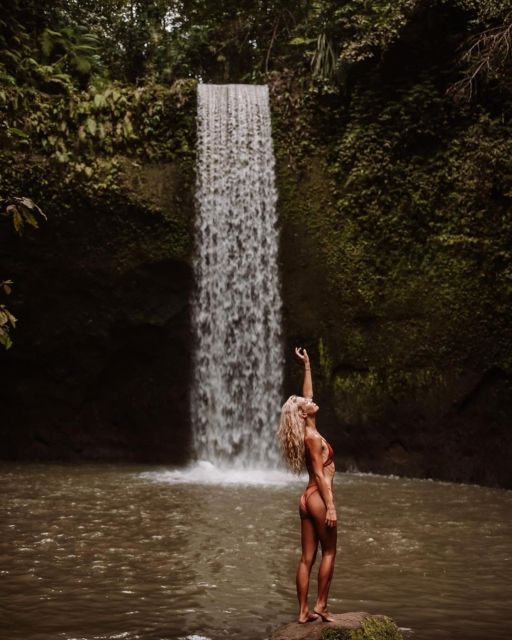
- Tibumana waterfall: a proper waterfall outing with its own entry ticket so you can spend time there without scrambling
How the 10-hour Ubud route stays doable
This is a full-day private itinerary built around five big visual hits, plus temple and culture stops that give the scenery meaning. You’ll start with hotel pickup at 8:30 AM in Ubud or 8:00 AM if you’re staying around Seminyak, Canggu, Nusa Dua, or Sanur. The tour runs about 10 hours, and the exact starting times can vary, so check availability before you lock in plans.
For your day to feel smooth, think of it like this: you’ll begin with something energetic (monkeys), shift into iconic Ubud nature (rice terraces), then get into the spiritual side (Tirta Empul), and finally end with waterfall scenery (Tibumana). Lunch is not included, so you’ll want to either eat on your own at the right time or ask your guide what’s best in the flow.
Since this is a private or small-group format, you’re not stuck behind a giant crowd moving as one unit. That’s a real quality-of-life improvement in Ubud.
You can also read our reviews of more tours and experiences in Ubud.


Sacred Monkey Forest Sanctuary: temples, macaques, and timing
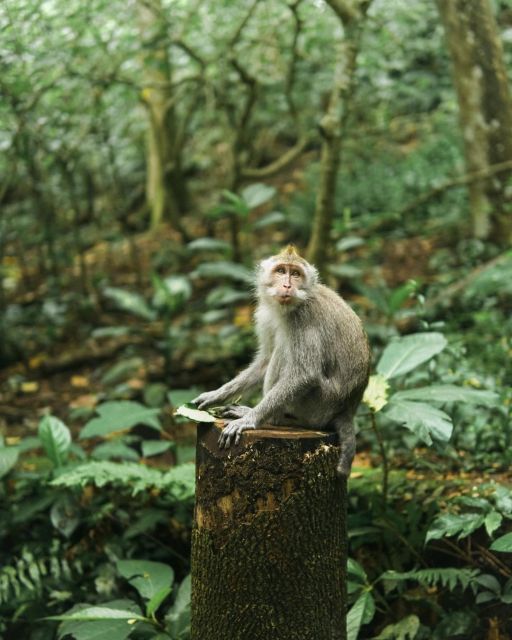
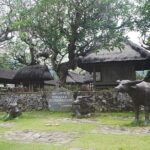
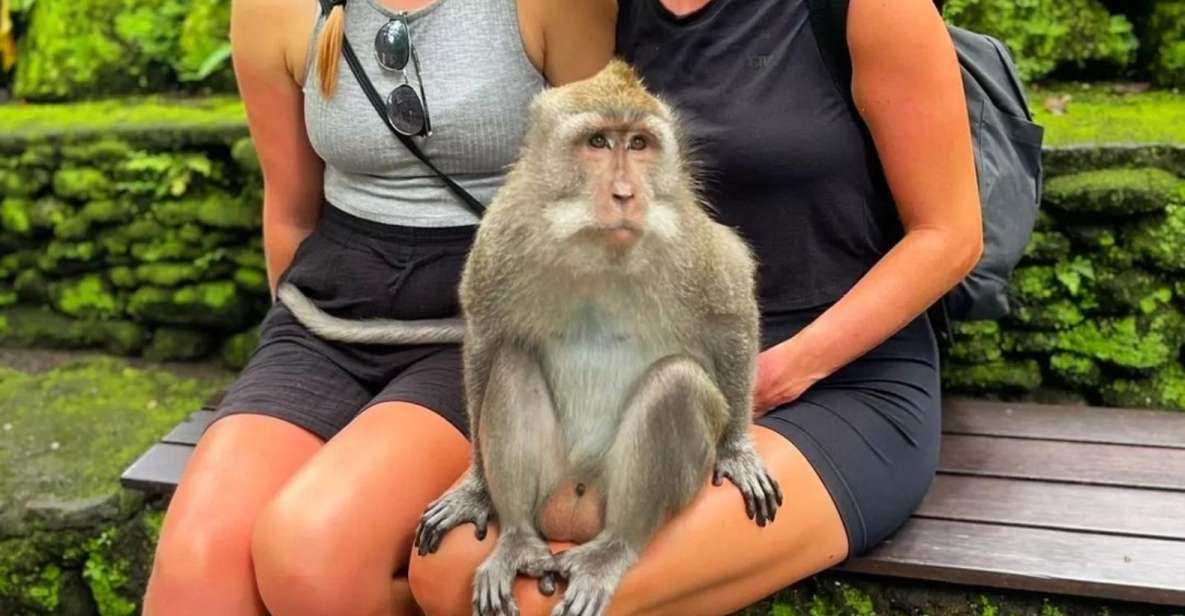
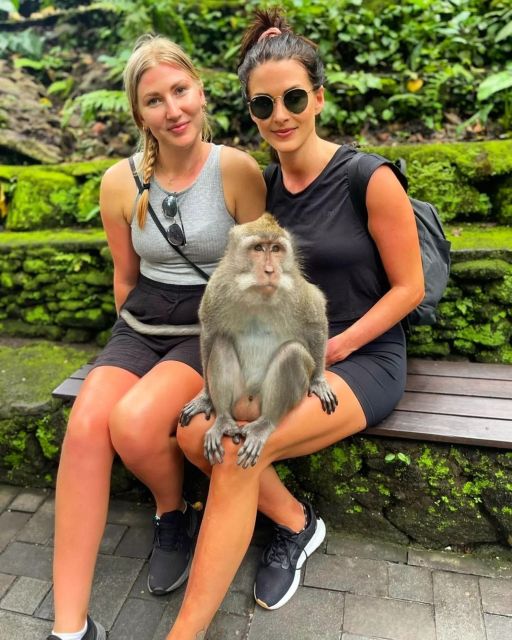
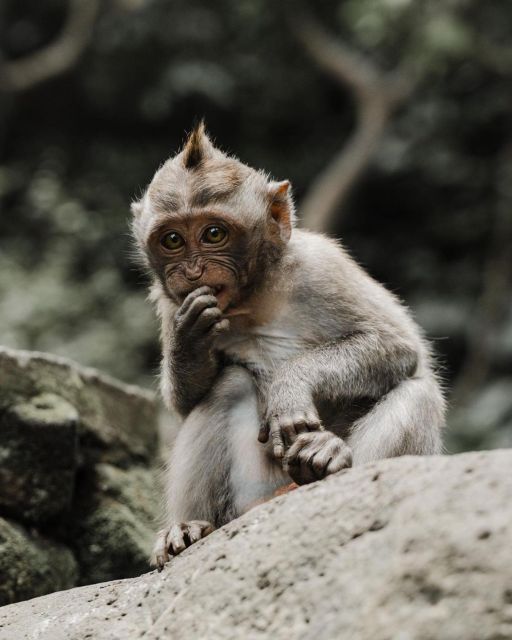
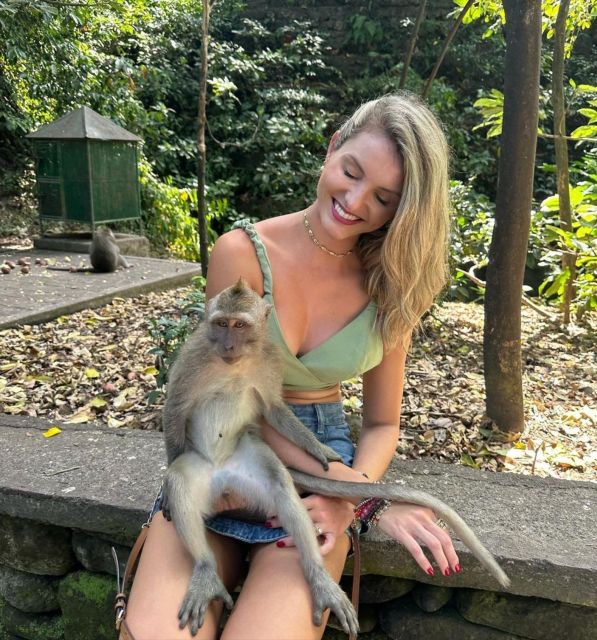
The first stop is the Sacred Monkey Forest Sanctuary, officially the Sacred Monkey Forest Sanctuary area in Ubud. It’s a nature reserve and temple complex where you can observe over 700 long-tailed macaques. You’re not just looking at monkeys from far away; it feels alive. Also, yes, they can be bold. Keep your eyes on bags and anything dangling.
What I like is that this isn’t only a zoo-like experience. Inside the forest, you’ll also find three ancient temples: Pura Dalem Agung, Pura Beji, and Pura Prajapati. The mix of carved stone details, shrines, and dense greenery makes the area feel more layered than the typical photo stop.
Practical tip for your visit: go in with a light routine. Wear something you can move in, use secure storage for valuables, and don’t plan on lingering too long if you’re aiming for everything else on the route. One key consideration is that the Monkey Forest closes relatively soon, so your guide’s timing matters. If you treat it like a quick walk, you’ll miss the temple parts; if you treat it like a full-day hangout, you may stress the rest of the schedule. Aim for steady, not rushed.
Tegalalang rice terraces: what you’re seeing (and why it matters)
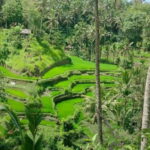
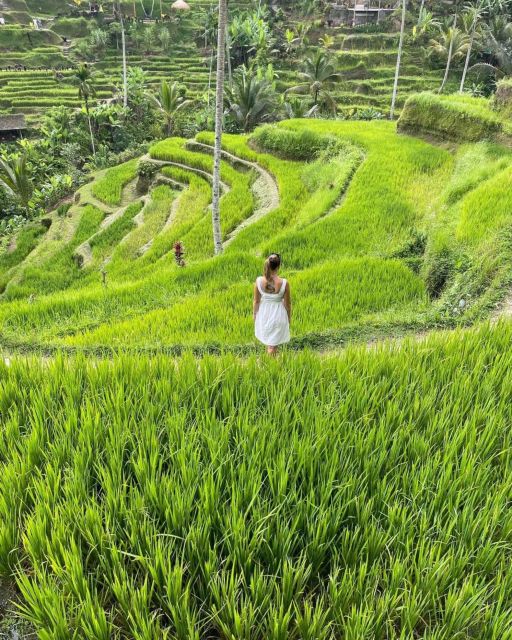
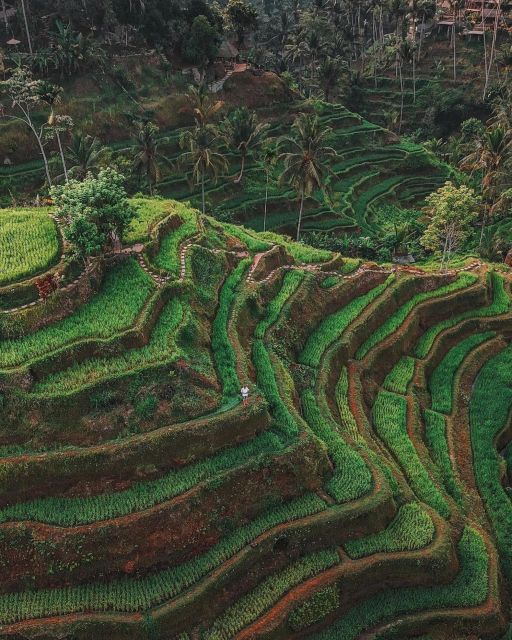
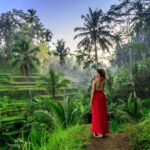
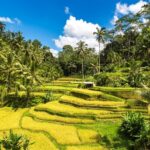
Next up is Tegalalang Rice Terrace, one of the most famous stepped rice paddy scenes near Ubud. The visual is instantly recognizable: layered green terraces that follow the slope, giving you that classic Ubud viewpoint feeling.
But the value here isn’t only the view. The terraces are a strong example of traditional Balinese irrigation through a cooperative system called subak, with roots dating back to the 9th century. In plain terms: this is landscape you can read like a living system. When water is managed the right way, rice grows. When it’s not, the whole rhythm changes.
That history is part of why this stop feels more meaningful than a simple viewpoint. You’re seeing a tradition that’s tied to community management, not just a scenic spot for photos.
A quick reality check: rice terraces are best when you manage your time and expectations. You may be walking on uneven ground, and there can be crowds in peak hours. Going with a guide helps because you spend less time trying to figure out where you’ll actually get the best angle without burning half your day on detours.
Tirta Empul: holy spring water and the rules you must know
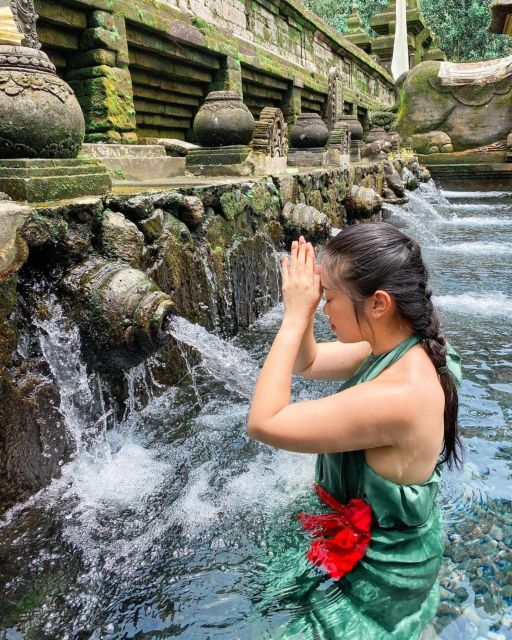
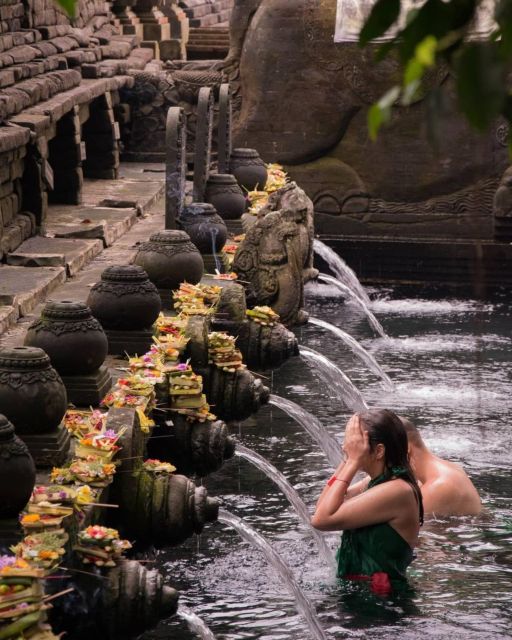
Now for the culture anchor: Tirta Empul Temple. This is both a religious site and a cultural landmark tied to Balinese Hindu traditions involving holy spring water. The big idea is water used for purification and ritual practice, not just a pretty temple pool.
When you’re there, the atmosphere shifts. You’ll notice people treating the place with care, and your guide can help you understand what’s happening around you. Even if you don’t participate in the water ritual, you’ll likely find it compelling to watch how the space is used.
Important consideration you should plan around: women during menstruation are not allowed to visit the temple. If anyone in your group falls under that rule, you’ll need to adjust your day accordingly. This is one of those situations where it’s better to know the policy early than to scramble at the gate.
Dress and behavior matter here more than at the terraces. Wear respectful clothing and be ready for quiet moments. A private guide is helpful because you get guidance without having to piece everything together yourself.
The coffee plantation stop: a short agricultural detour
The itinerary includes a coffee plantation visit. The tour description keeps it straightforward: it’s an agricultural establishment dedicated to cultivation of coffee plants, typically for producing coffee beans.
In practice, this stop is usually a breather between temple time and waterfall time. It’s a chance to learn how coffee plants are grown and how the basic production idea works. Don’t expect this to replace a full coffee-tasting experience unless your guide adds detail during your visit, but it’s still a nice break if you enjoy agriculture and want a different angle on Bali besides temples and scenery.
If you care about coffee, ask questions. Guides often explain what’s typical for the region and how coffee cultivation fits into the local economy.


Tibumana waterfall: the payoff at the end of the day
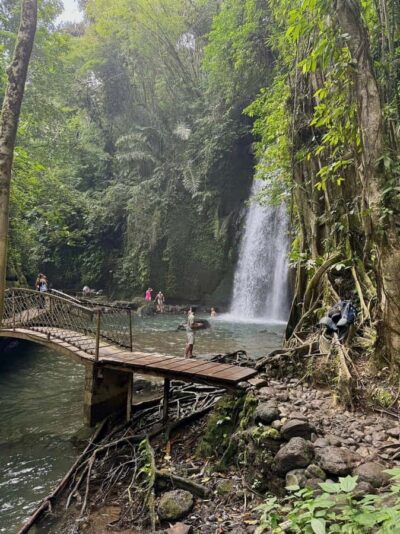
The last major nature stop is Tibumana Waterfall. It’s described as one of Bali’s beautiful waterfalls, and the reason it’s a popular spot is simple: you get a dramatic waterfall view set against lush surroundings, and it’s easy to take strong photos there.
This is the portion of the day where you’ll be glad you didn’t cram in something too exhausting. A waterfall stop works best when you’ve saved some energy for walking a bit, pausing for photos, and just enjoying the sound of water. Also, this stop includes an entry ticket, so you’re not left trying to figure out payments at the last minute.
If you’re sensitive to stairs or slick paths, wear shoes with grip. Even when you’re not climbing high, waterfall areas can be uneven or damp.
Price and value: is $24 per person a good deal?
At $24 per person for about 10 hours, the value depends on what you compare it to. If you were to do this day on your own, you’d pay separately for entrance tickets at each stop, spend time coordinating transport, and likely lose a lot of that valuable day to figuring out logistics.
This tour includes Sacred Monkey Forest Sanctuary entry, Tegalalang rice terrace entry, Tirta Empul entry, Tibumana waterfall entry, and a coffee plantation visit, plus a guide/driver and mineral water. That inclusion list is the real reason the price can work well.
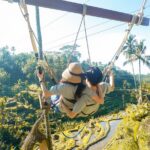
What’s not included matters too: lunch and swing. If your plan includes a swing activity, you’ll pay extra separately. And for lunch, you’ll want to budget for it so you don’t end up hungry while waiting for the next stop. A simple packed snack can also save your mood if the timing runs a bit.
Bottom line: if you want a structured day that hits multiple top Ubud locations with tickets handled, this price can feel like good value. If you want total freedom with zero schedule, you might prefer going independently.
Private guide benefits (and what to ask them)
A private setup isn’t only about comfort. It’s about control. You can move at a pace that fits your group, and your guide can help you focus on what you care about most.
I’d use your guide time to ask practical questions like:
- What’s the best order if we want fewer crowds at each stop?
- Are there parts of Tirta Empul where visitors should just observe?
- What should we watch for with the monkeys so we don’t waste time?
Also, the tour is English-guided, which helps a lot at religious sites. You don’t have to guess what you’re seeing, and that makes the day feel less like a photo checklist.
Women, temples, and planning around access rules
One policy point is non-negotiable: women during menstruation are not allowed to visit the temple. The temple named in this route is Tirta Empul.
That means you should plan for how your group will handle it. If someone can’t enter, you might consider whether you want an alternate arrangement during that part of the day. The tour description doesn’t spell out alternate options, so you’ll want to confirm with the provider in advance before you decide.
It’s one of those travel “know before you go” items that keeps your day smooth and avoids awkward gate drama.
Reliability note: what to do if the car doesn’t show
The overall rating is decent, but one serious issue stands out: there was at least one case of a driver no-show with no response to calls. That’s not the norm implied by the rest of the information, but it’s important enough to plan around.
My advice: don’t rely on hope. The moment you book, save the provider contact details and confirm your pickup time the day before. If you can, set an alert for the morning pickup window so you aren’t rushing or waiting indefinitely outside.
You can also make life easier for yourself by having your hotel ready with the pickup point. This small effort often prevents delays and confusion.
Who should book this Ubud private tour
This experience fits best if you want:
- Top Ubud highlights in one day without stitching together a dozen bookings
- A guide who can explain the meaning behind Tirta Empul and what you’re seeing in the rice terraces
- Nature stops that still connect back to culture and local life
It may be less ideal if:
- You hate structured time and want to wander freely all day
- You need a big lunch stop (lunch isn’t included)
- Your group needs temple access accommodations due to the menstruation restriction
If you’re doing a first-timer Ubud visit and want a full sweep—monkeys, farming tradition, temple rituals, and a waterfall—this is a sensible way to spend your day.
Should you book this private Ubud tour?
Yes, I’d consider booking it if you want a guided, ticket-included day that covers Ubud’s most requested sights in a logical order. The best reason is simple: you’re not wasting your time sorting transportation or entrance fees, and you get a coherent mix of nature and culture.
Skip it or think twice if you know you’ll struggle with schedule timing—especially at the Monkey Forest—because the route works only when you respect those hours. And if reliability is a top concern, confirm pickup details early and keep contact info handy.
If your goal is a smooth, scenic Ubud day that doesn’t feel like a chaotic scavenger hunt, this tour is a strong candidate.
FAQ
How long is the private Ubud tour?
The tour duration is listed as 10 hours.
What time is hotel pickup?
Pickup starts at 8:30 AM in Ubud and 8:00 AM in Seminyak, Canggu, Nusa Dua, and Sanur. Starting times can vary, so check availability.
What’s included in the tour price?
Included are the Sacred Monkey Forest Sanctuary entry ticket, Tegalalang rice terrace entry ticket, Tirta Empul entry ticket, coffee plantation visit, Tibumana waterfall entry ticket, a guide/driver, and mineral water.
Is lunch included?
No. Lunch is not included.
Are there any activities included like a swing?
A swing is not included.
Do I need a minimum number of people?
Yes. The tour has a minimum booking of two people.
Can women visit Tirta Empul during menstruation?
No. Women during menstruation are not allowed to visit the temple.
Is the guide available in English?
Yes, the live tour guide is listed as English.