The Beji Griya Waterfall ceremony feels very real. I love the step-by-step temple guidance and the chance to let go in a way most Bali tours never attempt. You’ll also like the practical convenience of hotel pickup and drop-off built into the $59 price. One thing to consider: the ritual includes loud emotional moments, so if you’re shy about crying or screaming, you might feel awkward.
This is a private outing with a set rhythm, so you’re not just wandering a waterfall and hoping it works out. It runs close to half a day, and you’ll be in and around cool water, so pack for comfort and quick changes. Also note the temple rule: women who are menstruating can’t participate for safety reasons.
In This Review
- Key Things to Know Before You Go
- Getting to Beji Griya: The Pickup That Keeps It Easy
- Before the Water: Prayer, Offerings, and the Temple Pace
- Walk Through the Narrow Canyon: Your First Holy Bath
- The Second Holy Bath: Cleansing for Happiness and Luck
- Letting It Out at the Waterfalls: Cry, Then Smile
- Final Blessing with Coconut Holy Water
- What’s Included, and What You’ll Need to Plan Yourself
- Price and Value: Does $59 Make Sense?
- Timing: How Long This Actually Takes
- What to Bring: Your Checklist for a Smooth Ritual Day
- Guides, Moments, and the Little Details That Matter
- A Note on Respect and Practical Expectations
- Who Should Book This Holy Bath in Ubud
- Should You Book Purification Holy Bath at Beji Griya Waterfall?
- FAQ
- How long is the purification holy bath?
- Is pickup from my hotel included?
- What does the ceremony include from start to finish?
- Is the holy bath suitable for everyone?
- What should I wear and bring?
- Are food and drinks included?
- Is this a private tour?
- Can I cancel for free?
Key Things to Know Before You Go
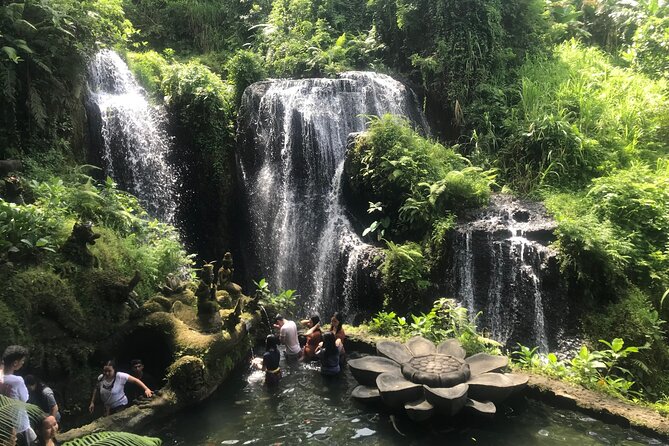
- A priest leads your first prayer/meditation before you enter the bathing steps
- Two different holy baths: one for balance and one to cleanse your aura
- Emotional release is part of the script, including screaming/crying at the first waterfall and smiling/laughing at the second
- Your finale is holy water from green and yellow coconut, given as a last blessing
- Cold water is part of the deal, so bring a swimsuit and expect to feel it
Getting to Beji Griya: The Pickup That Keeps It Easy
Most people come to Ubud for beaches later or temples today, which means you want one plan that stays simple. This experience starts with hotel pickup in Ubud, then transfers to Beji Griya Waterfall in about 30 minutes to 1 hour depending on where your hotel is and traffic. Since you’re not driving yourself, you can focus on arriving calm instead of juggling directions.
Once you reach the area, you’re met by an authorized guide who stays with you through the whole holy bath. That matters because the ceremony is structured. You don’t just follow a crowd; you follow the steps, with an explanation of what you’re doing and why.
It’s a private experience for your group. Even with group discounts available, the key comfort is that you’re not stuck waiting your turn while a busload does the same ritual in parallel.
You can also read our reviews of more tours and experiences in Ubud.


Before the Water: Prayer, Offerings, and the Temple Pace
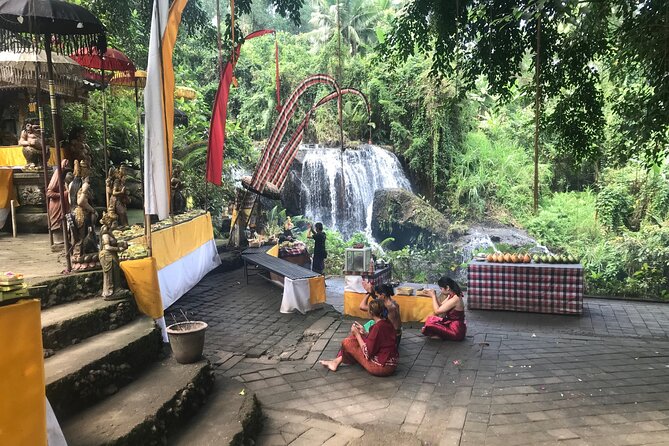
The ceremony has a “slow start” that I think makes the whole day work better. Before any splashing, you’ll meditate or pray with a temple priest. This first stage sets the tone, and it also helps you understand the rest of what you’ll do.
You’ll use offerings during the ritual, including incense sticks, and you’ll receive a special sash/cloth for the holy bath. These details aren’t just decoration. They signal that you’re stepping into a local spiritual practice with real rules and real context.
If you’re the type who likes to know what’s coming next, you’ll probably appreciate how the guide moves you from one step to the next. It also reduces the awkwardness of not knowing where to stand or what to do with your hands.
Walk Through the Narrow Canyon: Your First Holy Bath
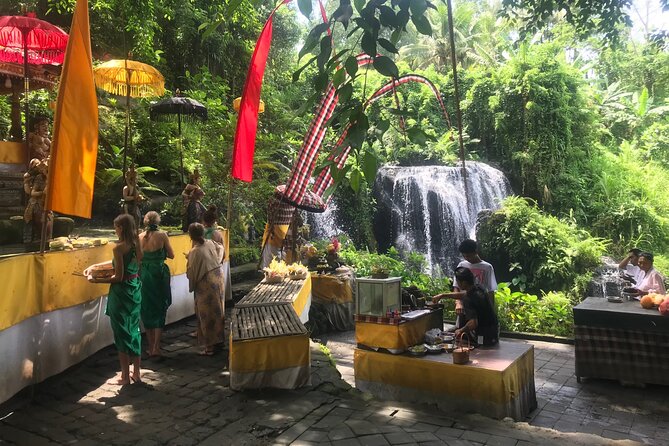
The first holy bath starts after you walk through a narrow canyon area. Then it’s time for your first dip, done with the purpose of bringing balance to your health.
This is one of those parts where expectations matter. The water can feel cold, and you’ll be dealing with real physical sensation, not just a photo moment. Think of it as “body wakes up, mind steadies,” even if your brain was hoping for warmer water and an easy photo line.
Practical tip: plan to keep your balance and move carefully. The canyon walk is narrow by description, so treat it like a stretch of terrain where you don’t want to rush.
The Second Holy Bath: Cleansing for Happiness and Luck
After the first ritual, the ceremony continues to a second holy bath at a small well. This one is described as cleansing your aura so you can attract happiness and luck.
Even if you don’t tie spiritual meaning to the words, I like that this step gives the experience a “second chapter.” The guide helps you understand the intent, and you get a different physical action and a different moment to reset.
In many people’s minds, the first bath is the dramatic one. The second helps you feel like you’re moving forward rather than just repeating the same thing twice.
Letting It Out at the Waterfalls: Cry, Then Smile
This is the part that surprises many first-timers, and it’s also where people tend to feel the most release.
At the first waterfall, you’re encouraged to release anxiety, tension, and sadness by screaming or crying as loudly as you can. At the second waterfall, the ritual switches to expression of happiness, with smiling and laughing as loudly as you can.
There’s a real logic here. The ceremony goes from heavy emotion to light emotion, and it gives you permission to show both. It can feel cathartic, especially in a place where everyone is being guided through the same process.
Potential drawback: if you’re uncomfortable making noise in public, or you’re worried about how it looks, this part might feel intimidating at first. My suggestion is to treat it as a guided exercise. You don’t have to perform for others; you’re doing it for the ritual, and the guide will keep the day moving.

Final Blessing with Coconut Holy Water
The ceremony ends with a last blessing from the priest. You’ll receive pure holy water, taken from green and yellow coconut water.
This closing step matters because it turns the experience from “something you did” into “something you carry.” The blessing is brief, but it’s the symbolic finish line.
If you like clear endpoints, you’ll appreciate that the ritual has one final step, then you’re done. No wandering around wondering what comes next.
What’s Included, and What You’ll Need to Plan Yourself
This tour includes more than the entrance ticket feel. You get:
- Private hotel pick up and drop off
- Local authorized guide who stays with you and explains the steps
- Parking fees
- Offerings needed for the holy bath, including incense sticks
- Special sash/cloth for the holy bath
Not included:
- Food and drinks
- Other personal expenses
That means you should plan snacks or a plan for a meal after. If your stomach gets grumbly around the time of the ceremony, you don’t want that distraction on top of cold water and emotional release.
Price and Value: Does $59 Make Sense?
At $59 per person, this isn’t the cheapest thing in Ubud, but it also isn’t just a ticket to a waterfall. You’re paying for the guided ceremony structure: pickup, guide support through multiple ritual steps, offerings, and the sash/cloth.
In practical terms, it can be good value if you’d otherwise struggle with:
- how to participate respectfully in a temple-style ritual
- figuring out timing and instructions
- arranging transport and a guide so you don’t waste your day
Also, people tend to book this in advance, with an average booking window of about 34 days. That’s often a sign that the experience is popular and not something you want to leave to last-minute uncertainty.
Timing: How Long This Actually Takes
The ceremony itself is listed as 3 to 4 hours. But from pickup to drop-off, plan for around 5 hours total, depending on hotel location and traffic.
That “total half day” framing is important. If you’re stacking this with another Ubud activity, give yourself breathing room afterward. You’ll want time to change, dry off, and regroup before your next stop.
What to Bring: Your Checklist for a Smooth Ritual Day
The advice is straightforward because your comfort affects everything.
Bring:
- Light, comfortable clothing
- Swimsuit
- Change of clothes
- Sunscreen, sunglasses, and a hat (caps help)
- Water bottle and snacks
- Camera
- Some petty cash
One more practical note: expect to handle wet moments. A small towel or simple packable cover-up can make the transition easier, even though it’s not listed. If you already travel with one, this is a day it will earn its keep.
Guides, Moments, and the Little Details That Matter
The experience lives or dies on the human support around it. In the feedback shared for this tour, pickup drivers and guides are consistently praised for being friendly, punctual, and helpful, with names like Vito and Pandu showing up as people who made the experience feel smooth and welcoming.
What you’ll want from your guide is not just translation, but also timing and guidance. The ceremony steps are specific: prayer, first bath in a canyon area, second bath at a well, emotional release at each waterfall, then the final coconut-water blessing. When a guide keeps it flowing, you stop worrying about what to do and start being present.
If you’re hoping for photos, it helps to know the guide can help capture moments. Just remember you’re there for the ceremony first. Photos come second.
A Note on Respect and Practical Expectations
This is described as a spiritual purification ceremony with temple involvement. That means you should treat the mood with care:
- follow instructions closely
- participate in the steps as guided
- be ready for physical cold water moments
- keep an open mind about the emotional shouting/laughing parts
Also be aware that some people feel there can be a more commercial side in the area, with product-selling behavior if you don’t purchase. If you want a smoother experience, bring small cash for offerings or incidental needs, and don’t feel pressured into buying anything beyond what the ceremony requires.
Who Should Book This Holy Bath in Ubud
I think this tour fits best if you:
- want a structured, guided spiritual experience rather than a casual waterfall visit
- like cultural practices that have clear steps and temple-style meaning
- don’t mind doing an emotional release ritual in a group setting
It might not be ideal if you:
- hate cold water dips
- need a quiet, laid-back day (there’s loud emotional participation)
- can’t follow the temple participation rules
Temple safety rules also limit participation: the minimum age is 10 years old and the maximum is 60 years old. Women who are menstruating can’t participate for safety reasons.
Should You Book Purification Holy Bath at Beji Griya Waterfall?
Yes, if you want more than scenery and you’re okay with a ceremony that asks you to participate fully. For $59, the value comes from the full package: pickup/drop-off, an authorized guide, offerings, required ritual items, and the step-by-step flow that helps you do it correctly without guesswork.
If you prefer quiet nature time, skip this. The holy bath is not a passive activity. You’ll walk through a canyon, get into cold water, and do the scream-and-smile emotional portions.
My decision rule is simple: if you’re craving a reset that’s physical and emotional, book it. If you’re traveling for only photos and relaxation, you’ll probably feel out of place.
FAQ
How long is the purification holy bath?
The activity itself is listed as about 3 to 4 hours. Including pickup and drop-off, plan around 5 hours total, depending on your hotel location and traffic.
Is pickup from my hotel included?
Yes. You get private hotel pickup and drop-off in Ubud.
What does the ceremony include from start to finish?
You’ll start with prayer or meditation led by a temple priest, then do two holy baths (first for health balance, second to cleanse your aura), followed by emotional release at the waterfalls and a final blessing with holy water from green and yellow coconut water.
Is the holy bath suitable for everyone?
Most travelers can participate, but women who are menstruating are not allowed to do the holy bath for safety reasons. The minimum age is 10, and the maximum age is 60.
What should I wear and bring?
Wear light, comfortable clothing. Bring a swimsuit and a change of clothes, plus sunscreen, sunglasses or a hat, a water bottle, snacks, a camera, and some petty cash.
Are food and drinks included?
No. Food and drinks aren’t included, so you’ll want to plan a meal or snacks for before or after.
Is this a private tour?
It’s listed as private, meaning only your group participates.
Can I cancel for free?
Yes. You can cancel up to 24 hours in advance for a full refund. Within 24 hours, the amount paid is not refunded.