Spice hunting beats just watching a show. In Ubud, this small-group farm-to-table experience with Kadek takes you to an organic farm to gather ingredients, then moves to a traditional outdoor kitchen where you cook your meal and eat it right away. You’ll also leave with a Balinese recipe book for easy repeats at home—but since it’s a working farm, expect heat and some muddy, earthy walking.
I like that the structure is hands-on and practical: you do the ingredient picking first, then you learn a focused set of dishes (usually 2–3) in a real community-style cooking setup. The cooking time is about two hours inside an outdoor kitchen area, and the whole experience runs around five hours with pickup available for many Ubud hotel locations—plus straw hats, a refreshing drink, and wet towels to reset you before you cook.
In This Review
- Key things to know before you go
- Ubud Farm-to-Meal Flow: From muddy beds to your plate
- Walking the organic farm with Kadek: what you’ll gather and why
- Traditional outdoor kitchen class: 2–3 Balinese dishes with real technique
- The meal, the offering ritual, and why Kadek doesn’t sit with you
- Price and transfers: how $49 can work in your Ubud day
- What to pack and how to handle the heat on a working farm
- Who should book this Ubud cooking class with Kadek?
- Should you book this farm tour & Balinese cooking class in Ubud?
- FAQ
- How long is the farm tour and cooking class in Ubud?
- What does the cooking class include?
- Are hotel pickup and drop-off included?
- Is this class private?
- Is there a vegetarian option?
- What dishes might I cook and eat?
- What should I wear or bring?
- What happens if the weather is bad?
Key things to know before you go
- Ingredient gathering first: you walk the farm, pick spices and produce you’ll actually cook with, then get cleaned up with a drink and wet towels.
- A kitchen class you can repeat: you’ll learn a small number of dishes step-by-step, then get a recipe book to recreate the flavors later.
- Small group size (max 10): you’re not lost in a crowd—this format keeps the attention more personal, especially with the lead instructor Kadek in the kitchen.
- Balinese dishes with clear variety: expect a mix of rice, savory mains, vegetables, and a sweet finish like kolak.
- Local pickup in Ubud: round-trip transfers are included only for specific Ubud hotel areas; outside those zones you’ll meet at the Maybank Gianyar area instead.
- Outdoors means bring comfort basics: sunscreen, bug spray, and proper shoes matter because you’ll walk and cook in the heat.
Ubud Farm-to-Meal Flow: From muddy beds to your plate
This is one of those Bali experiences that makes sense fast. You’re not just learning recipes in a classroom. You’re starting with the ingredients where they grow, then turning them into a meal, then sitting down to eat what you made.
The pacing works well if you want a full day moment without feeling dragged. The farm tour is about 30–45 minutes, then you shift to cooking for about two hours, and you’ll finish with the meal and drinks (often Balinese coffee or lemongrass tea). Overall, you should plan for about five hours.
What makes it feel especially “worth it” is the cause-and-effect: you gather ingredients like beans or lemongrass, you learn how they behave in cooking, and then you taste the result while it’s still tied to that original flavor source. It’s a simple idea, but it’s the difference between memorizing a recipe and understanding it.
One more nice touch: you’ll be provided straw hats for the farm walk. That small detail matters when the sun is high and you’re moving slowly through uneven ground.
You can also read our reviews of more tours and experiences in Ubud.



Walking the organic farm with Kadek: what you’ll gather and why
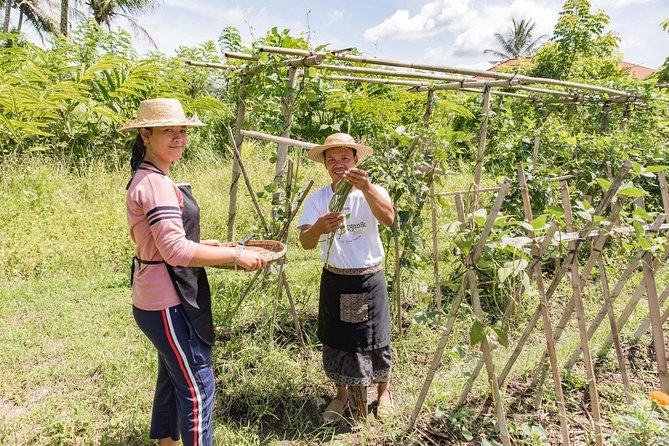
The farm portion is where the experience earns its name. Your host Kadek leads you through a working property, and you gather ingredients that show up in the dishes you’ll cook later. You’ll walk through tall bushes and muddy patches, so it helps to think of this as a light hike with a purpose, not a stroll on a tidy path.
During this segment, you’ll be picking produce and spices used in Balinese cooking. Specific ingredients you might gather include things like beans and lemongrass, and the overall goal is to make you notice the building blocks of flavor.
You’ll also get a reset before cooking. After the walk, expect a refreshing drink and wet towels to wipe off sweat and grime. That’s more than comfort—it helps you switch modes from outdoor foraging to careful chopping and mixing without feeling grimy.
Practical tip: if you’re the kind of traveler who hates getting shoes dirty, this may feel like too much. But if you’re okay leaning into the real-farm feel, this part turns the cooking class into a story you’ll remember.
In the more personal side of the day, guides and hosts can make it feel like a conversation. In one example, Apung was named as the guide for the day, with Kadek leading in the kitchen—so even with a small group format, you’re not treated like a number.
Traditional outdoor kitchen class: 2–3 Balinese dishes with real technique
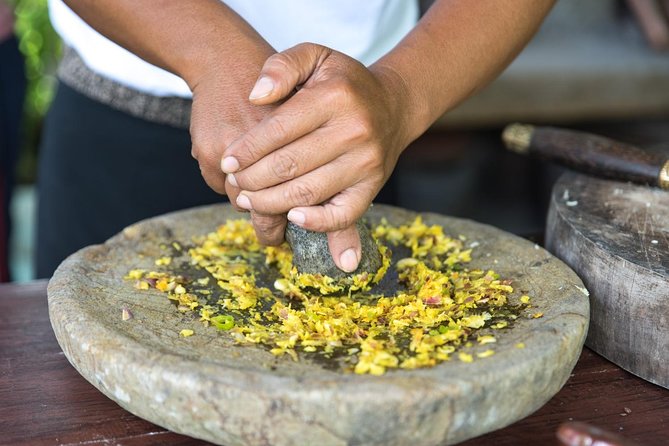
Once you’re cleaned up, you shift into the cooking lesson in a traditional Balinese style outdoor community kitchen. This is one of the best parts for me: you’re learning how dishes come together in a space that looks and feels like local daily life, not a staged show kitchen.
You’ll learn 2–3 authentic dishes during the class, which keeps the lesson focused. Trying to learn seven things in a short time usually turns into confusion. Here, the smaller dish count means you can actually taste your way through the process.
Your final menu might include dishes like:
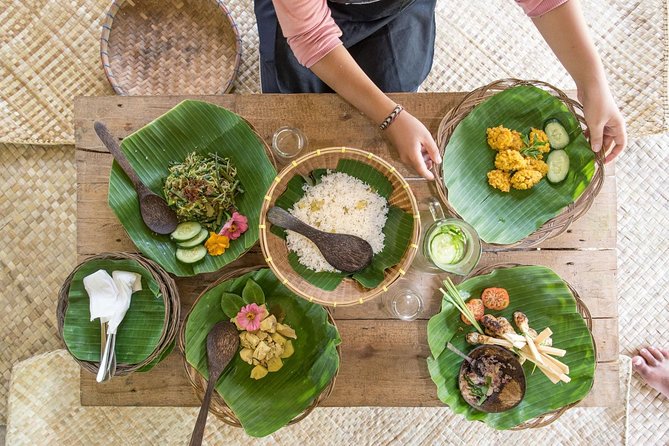
- Nasi sela (rice with sweet potato)
- Garang asem (chicken cooked with Balinese spices)
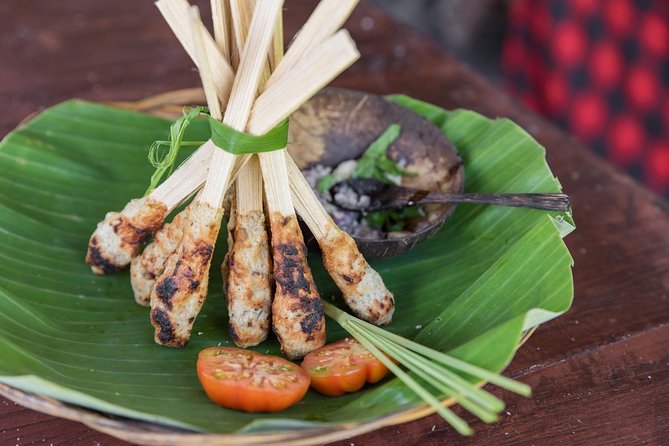
- Tuna satay (fish kebabs)
- Sayur urab (green vegetables with coconut and spices)
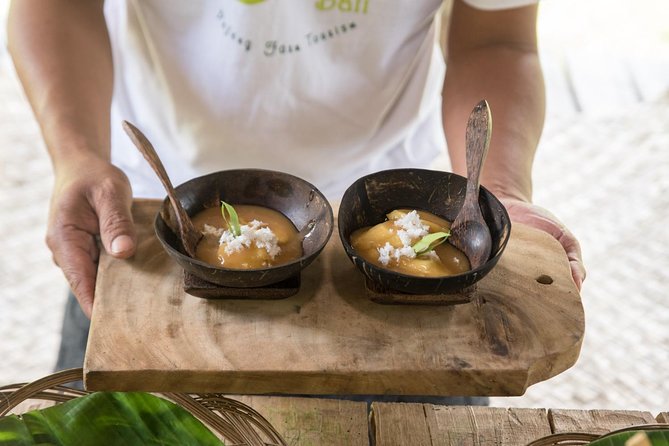
- a sweet ending with kolak (banana dessert)
- and a Balinese finish with coffee or lemongrass tea
Even if you don’t cook every ingredient perfectly, you’ll come away with two valuable skills: (1) understanding the flavor direction of Balinese spice blends and (2) knowing the practical steps that make those dishes manageable at home.
Also, it’s designed for real-world cooking. The dishes are presented as easy-to-make in a class setting, and you’re working with ingredients you just gathered. That helps you connect the “why” behind the cooking steps.
Dietary needs are handled thoughtfully. There’s a vegetarian option available—just tell the operator at booking if you need it. If you have allergies or specific restrictions, you should also flag them when you reserve so you don’t get surprised later.
The meal, the offering ritual, and why Kadek doesn’t sit with you
Cooking is one thing. Eating the meal you made is where the day becomes more than instruction.
You’ll sit down to enjoy what you cooked, plus kolak for dessert and Balinese coffee or lemongrass tea. The food isn’t just a reward; it’s proof-of-process. You can judge spice balance, texture, and whether the method you learned actually delivers the right outcome.
One detail that’s important culturally: Kadek won’t join you for the meal right away. He first offers the food to mother nature and prefers you don’t wait until that ritual is complete before starting to eat. You’ll still be served and can begin enjoying the meal on time, while the offering happens as part of the ceremony.
If you’re sensitive to cultural rhythms, this is actually a good sign. It means the host treats the ritual as real, not as an optional side scene for tourists. It also helps the flow—your meal starts without delay, which keeps the day comfortable and on schedule.
Price and transfers: how $49 can work in your Ubud day
At $49 per person, this sits in the “more than a snack, less than a full-day tour” range. For that price, you’re getting a farm walk, a cooking lesson, the meal, a recipe book, and transfers that can save you time and hassle.
Here’s where the value really shows up:
- You’re paying for participation, not just tasting. You gather ingredients and cook multiple dishes.
- The meal is included, including dessert and coffee/tea.
- You get a take-home recipe book, so you can replicate the experience later instead of just taking photos.
- Hotel pickup/drop-off is included if you’re in Ubud, which removes the biggest friction point of food tours.
Transport coverage is specific. Round-trip transfers are included if you’re staying in Ubud hotel areas such as Hanoman street, Monkey Forest street, and Jl. Raya Ubud. If you’re staying outside those areas, your pickup point shifts to the area in front of Maybank Gianyar (Jl. Raya Ubud No.115, Petulu, Kecamatan Ubud, Kabupaten Gianyar, Bali 80571).
Also, the group size is small—maximum 10 travelers—so you’re not paying for a big bus experience. The pricing works best when you’re in a convenient Ubud location and you want an active, skills-based food day.
One small thing to consider: the experience runs about five hours, so it’s a meaningful chunk of your day. If you only have half a day in Ubud, this might feel long. If you’re already doing other sightseeing nearby, the farm walk + cooking combo can anchor your schedule nicely.



What to pack and how to handle the heat on a working farm
This is outdoors, so plan like you’re going to work up a little sweat. Straw hats are provided, but you still want sun protection and bug defense.
Bring:
- Sunscreen
- Bug spray
- A hand towel or tissues
- Closed-toe shoes you don’t mind getting dirty
You’ll get wet towels after the farm tour, but that doesn’t replace the need for decent footwear. The farm walk includes muddy ground and uneven surfaces, so flip-flops are a gamble.
If you’re sensitive to strong smells from spices or are cautious about skin contact with plant juices, wear comfortable long sleeves if that helps you feel safe. The class is hands-on, so you’ll be touching and working with ingredients.
Finally, go in expecting you’ll be outside part of the time. That changes how you dress and how you pace yourself. If you’re the type who likes fast, indoor activities, this might test your patience. If you enjoy real-world travel, it adds the right kind of texture to the food lesson.
Who should book this Ubud cooking class with Kadek?
I’d book this if you want more than a demo and you like learning by doing. This fits particularly well for:
- couples who want a memorable, hands-on honeymoon-style activity (the day has a reputation for feeling like a standout moment)
- food travelers who want a practical recipe outcome, not just an Instagram-worthy meal
- people who enjoy cultural context, including food offerings before the meal is served
- visitors staying in central Ubud who can use the included pickup/drop-off
It may be less ideal if:
- you strongly prefer dry, tidy sightseeing routes
- you don’t like getting a bit dirty on purpose
- you want to watch while someone else cooks rather than actively participating
The small group size helps. You still feel like you’re part of a group, but the experience isn’t huge, so instructor attention stays more practical.
Should you book this farm tour & Balinese cooking class in Ubud?
Book it if you want the kind of Ubud food experience that gives you skills, not just samples. The combination of ingredient gathering on an organic farm, a hands-on outdoor cooking class, and a shared meal you can actually taste makes the day feel coherent. Plus, the included recipe book means your memory doesn’t fade after you leave Bali.
Skip it if you’re trying to avoid outdoors heat and messy ground. This is a working farm day, so comfortable shoes and a good attitude matter more than fancy planning.
If your goal is a flavorful, culturally grounded cooking class that you can repeat at home, this is a strong bet for Ubud.
FAQ
How long is the farm tour and cooking class in Ubud?
The experience is about 5 hours in total. The farm tour lasts around 30–45 minutes, and the cooking class runs for about 2 hours.
What does the cooking class include?
You’ll learn to make 2–3 Balinese dishes in a traditional outdoor community kitchen, then you’ll eat the meal you cooked. You’ll also take home a small cookbook.
Are hotel pickup and drop-off included?
Pickup and drop-off are included only if you’re staying in Ubud hotel areas such as Hanoman street, Monkey Forest street, and Jl. Raya Ubud. If you’re staying outside those areas, the pickup point is in front of Maybank Gianyar on Jl. Raya Ubud No.115 in Petulu, Ubud.
Is this class private?
It’s described as a small group experience with a maximum of 10 travelers, and it also notes personalized instructor attention. The day is organized to keep the class feel more individualized than a large group setting.
Is there a vegetarian option?
Yes. A vegetarian option is available if you request it at the time of booking.
What dishes might I cook and eat?
The dishes can vary, but examples include nasi sela (rice with sweet potato), garang asem (spiced chicken), tuna satay (fish kebabs), sayur urab (green vegetables with coconut and spices), kolak (banana dessert), and Balinese coffee or lemongrass tea.
What should I wear or bring?
Because it’s outdoors and on a working farm, wear clothes and shoes suitable for walking and cooking in hot conditions. Bring sunscreen, bug spray, and a hand towel or tissues. Straw hats are provided, and you’ll also get wet towels after the farm tour.
What happens if the weather is bad?
This experience depends on good weather. If it’s canceled due to poor weather, you’ll be offered a different date or a full refund.