Learning to surf on Gili feels fast and doable. This semi-private surf lesson on Gili Trawangan gives you real coaching in the water, not just a quick demo, and it’s priced as a solid value at $55 for about two hours. I also like that the school supplies the essentials, so you can show up without hunting down rentals first.
The one thing to keep in mind is timing: lesson start and even the flow of the session can shift based on tide and safety (especially for beginner lessons). So if you have a tight schedule that morning, build in a little cushion.
In This Review
- Key things that make this Gili surf lesson worth your time
- Gili Trawangan surfing: why this spot works so well
- Price and value: how $55 adds up in real coaching time
- The real schedule: what happens in the 2-hour lesson
- Semi-private coaching: why 1 instructor to 4 students matters
- Gear included: what you should (and shouldn’t) bring
- Where you’ll meet and how easy it is to find
- Safety and tide timing: why beginners get schedule flexibility
- The biggest payoff: skill practice you can feel
- Who should book this Gili surf lesson
- Practical tips to get more out of your 2 hours
- Should you book Kubu Surf School on Gili Trawangan?
- FAQ
- How long is the surf lesson?
- What does the lesson cost?
- Is surf equipment included?
- Do I need to bring a wetsuit?
- Are reef shoes included?
- What group size will I be in?
- Is the lesson only for beginners?
- Will the lesson start time always be the same?
- Where do we meet?
- Is transportation included?
- FAQ
- Can I cancel for a full refund?
- Is there a mobile ticket?
- Is there an option to buy multiple lessons?
- Is it a private tour for just my group?
Key things that make this Gili surf lesson worth your time

- Small coaching ratio (1 instructor to up to 4 students) so you get feedback you can actually use
- All gear provided including surf equipment, a wetsuit, and reef shoes
- Two structured surf blocks (60 minutes, break, then another 60 minutes) instead of one rushed try
- Beginner-to-advanced adaptation so the lesson isn’t one-size-fits-all
- Safety-first scheduling with changes based on tide and best beginner wave conditions
- Meeting starts near Central area and includes a short bike ride to the surf spot
Gili Trawangan surfing: why this spot works so well
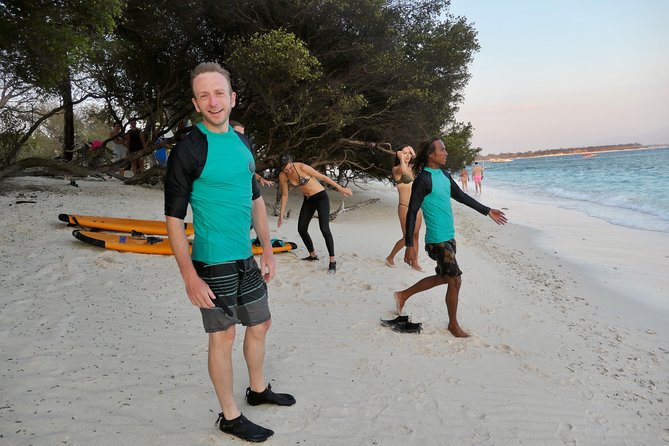
Gili Trawangan sits off Lombok, just a few hours from Bali, and it’s known for swell and wave variety. People often describe Lombok surf as world-class, and one reason I like recommending Gili is that it can feel less hectic than Bali while still delivering surf sessions you can build skills on.
What matters for you, though, is not just that the water is good. It’s that your lesson is built for progress: you get basic coaching on shore, then two dedicated time blocks in the water. That structure helps you connect the theory to what your body feels on the next wave.
This is also a practical choice if you’re juggling a trip. At roughly two hours, it fits cleanly between island exploring, sunset spots, or a day trip by boat. You’re not signing up for a half-day commitment that hijacks the whole itinerary.
You can also read our reviews of more tours and experiences in Gili Trawangan.



Price and value: how $55 adds up in real coaching time
$55 for a two-hour surf lesson can be a great deal, mainly because you’re not paying for a big group where half the time is waiting. The lesson is semi-private, with one instructor paired with up to four students. In practice, that means you’re more likely to get specific corrections during the session rather than generic encouragement from the beach.
Also, the lesson includes what normally adds up fast:
- surf equipment
- wetsuit
- reef shoes
- all fees and taxes
- a qualified surf instructor
If you’ve ever rented gear on vacation, you know the cost can creep up quickly. Here, that part is handled for you, so you’re really paying for coaching time and wave practice. If you’re considering a three-lesson package, the value logic gets even stronger because you build consistency—learning isn’t just one good attempt.
The real schedule: what happens in the 2-hour lesson

The session has a clear rhythm. Here’s the breakdown you can plan around (with the note that tide can shift timing for beginners):
- Meet and get to the surf spot (about 15 minutes by bicycle)
You’ll meet at the listed start point on Jalan Pantai Gili Trawangan, then head to the surf area by bike from the Central area (about 15 minutes).
- Surf basic theory (around 5 minutes)
This is not a lecture. It’s quick, practical coaching: the lesson is trying to get your brain lined up with what you’ll do next—stance, where to look, how to approach the takeoff line, that kind of stuff.
- Beach practicals (about 10 minutes)
This is where you translate the theory into movement. Think positioning and board setup. It helps you avoid the most common beginner mistake: rushing straight into the water without getting your body mechanics sorted.
- Surf lesson block #1 (about 60 minutes)
Then you’re out there for focused wave time. For beginners, this tends to be about catching manageable waves and building confidence. For more advanced surfers, expect skill work that matches your level.
- Break time (about 15 minutes)
You’ll catch your breath, recover your energy, and reset. This matters because surfing is draining—especially in a wetsuit in tropical sun and salt air.
- Surf lesson block #2 (about 60 minutes)
The second hour is where progress often clicks. By then, you’ve learned what the first block taught you and you’re more ready to adjust on the next set.
A small but important detail: beginner lesson schedules may change depending on tide and safety wave choice. That’s not just a rule for the operator—it’s how you reduce the chance of being shoved into conditions that make learning harder.
Semi-private coaching: why 1 instructor to 4 students matters
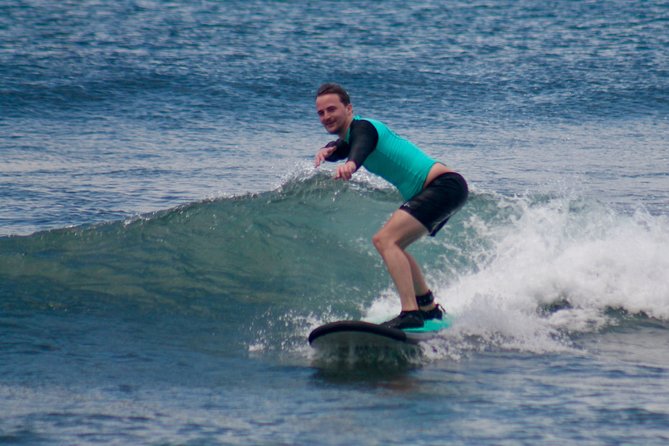
A lot of surf lessons look good on paper but feel like chaos in the water. This one is designed around a tight coaching ratio: one instructor paired with up to four students.
That affects your experience in three practical ways:
- You get feedback you can act on immediately
Instead of hearing advice after the wave is already gone, you’re more likely to get corrected while you’re still in the flow of learning.
- Your instructor can watch what matters
When the group is small, the coach can spot whether your takeoff is early or late, where your eyes are landing, and how your weight transfers.
- The session stays moving
You spend less time waiting and more time actually surfing. One of the best parts I’ve seen with lessons like this is that you keep catching waves until you’re properly tired, not left with a handful of attempts and a polite thumbs-up.
Also, the lesson is adapted for beginner, intermediate, and more advanced surfers. So the coach isn’t just giving one track. They’re shaping feedback to your level so you still feel challenged without being overwhelmed.
Gear included: what you should (and shouldn’t) bring
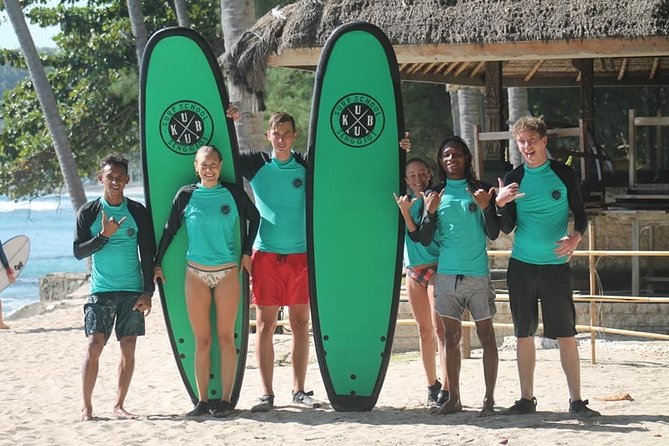
The lesson supplies your surf essentials:
- surf equipment
- wetsuit
- reef shoes
That’s a big practical win. Reef shoes are especially helpful because many surf zones have rough edges and coral-like surfaces. You can show up and focus on learning instead of shopping for rentals.
What you should bring yourself (common-sense prep):
- a towel
- sunscreen
- a small dry bag for your phone and wallet
- a change of clothes for after
One note: the included gear is enough for the lesson, but conditions can vary. If you run cold easily, bring layers for right after you get out of the water so you’re not shivering during the bike ride back.






Where you’ll meet and how easy it is to find
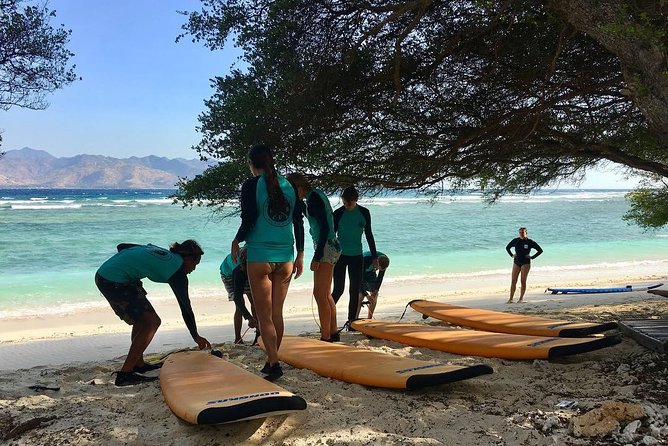
The start point is listed on Jalan Pantai Gili Trawangan. The end returns you back to that same meeting point.
In one early-morning session, the location was near Enjoy Life Bar, and the start time was 8 am. That’s a useful clue for people figuring out where to gather, but it’s still smart to check your confirmation message so you show up at the exact spot for your date.
Since it’s near public transportation, you’re not trapped if you’re not taking private transport. The lesson doesn’t include transportation, but getting to the meeting area is usually manageable from where you’re staying on the island.
Safety and tide timing: why beginners get schedule flexibility
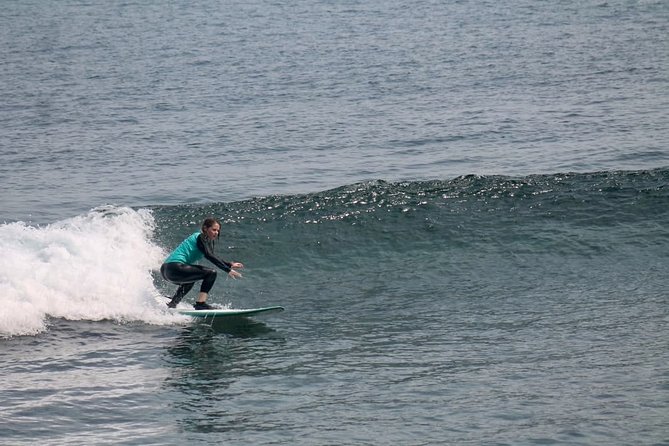
You’re told clearly that beginner lesson times may change for safety reasons, depending on tide. That’s a good sign. Surf learning depends on wave size, wave shape, and how the water is breaking at your spot.
Here’s what that means for you:
- If the ocean looks different than expected, the school may shift timing to match safer, learnable conditions.
- Your instructor will choose what they consider the best beginner-friendly waves rather than forcing the original plan.
This is one of the best reasons to book a structured lesson with a real surf school. The goal isn’t just to get you wet. It’s to get you practicing in conditions that make skill-building possible.
The biggest payoff: skill practice you can feel
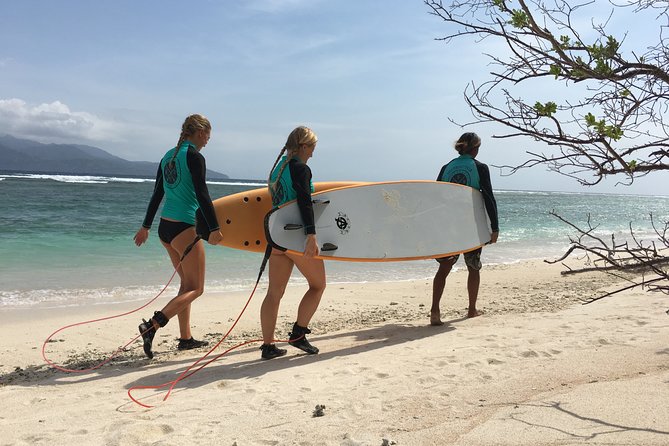
The most praised aspect in the lesson experience is the instructor quality. When coaching is strong, you feel it right away: better wave selection, faster setup, and quicker fixes that help you catch more waves.
In at least one session, the coaching pushed the group to keep catching waves until the student was dead tired—in a good way. That’s a sign the instructor isn’t holding back the lesson; they’re using the time to keep you engaged and practicing, and they’re giving tips that help you immediately.
So what should you expect by the end?
- You’ll understand how to approach the surf and where to focus attention.
- You’ll likely have caught more waves than you expected going in.
- You’ll leave with a few corrections you can remember for your next try.
Who should book this Gili surf lesson
This lesson fits best if you want:
- structured progress with hands-on coaching
- gear supplied, so packing is simpler
- a semi-private setup (small group) instead of a crowd
- a lesson that adapts to your level
You’ll especially like it if you’re a beginner and want to feel safe while learning. You’ll also like it if you’re intermediate and want feedback that tightens technique without feeling like you’re stuck repeating the same errors.
If you’re an advanced surfer hoping for a hard-core training plan, the lesson will still be useful—but make sure you pick the right level and pay attention to how the coach adapts the session. The info provided says the lesson is adapted for every surfing level, but it doesn’t promise a specialized advanced program beyond standard adaptation.
Practical tips to get more out of your 2 hours
Here’s how to make your lesson work harder for you:
- Arrive early enough to relax. Surf is physical. If you show up rushed, your first hour gets harder.
- Listen on the beach practicals. That 10-minute portion is short, but it’s where most people can fix the biggest beginner mistakes before the water.
- During the break, hydrate. A 15-minute break isn’t long. Use it to reset your body, not just scroll on your phone.
- Ask for one correction at a time. With semi-private coaching, you can request a focused takeaway instead of trying to change everything.
- Wear something you can get sandy/wet. After you’re done, you’ll want a clean outfit ready for the ride back.
And because tide can change timing, keep your morning schedule flexible. A surf lesson is one of those activities where the ocean gets the final vote.
Should you book Kubu Surf School on Gili Trawangan?
If you want a surf lesson that mixes skill coaching with a small group—and you don’t want the stress of renting gear—this is a strong pick. The biggest reasons to book are the up-to-4-student coaching, the equipment-and-wetsuit inclusions, and the fact that the lesson is organized into two concentrated surf blocks with a break in between.
It’s also a good value at $55 for the time and support you get, especially compared to paying separately for rentals and then getting stuck in larger group instruction.
The main reason to hesitate is the tide-dependent scheduling for beginner lessons. If your day is locked down to the minute, you may feel the pinch. If you can keep the morning flexible, you’ll get far more from it.
FAQ
How long is the surf lesson?
Each surf lesson is about 2 hours.
What does the lesson cost?
The price is $55.
Is surf equipment included?
Yes. Surf equipment is included.
Do I need to bring a wetsuit?
No. A wetsuit is provided.
Are reef shoes included?
Yes, reef shoes are provided.
What group size will I be in?
It’s a semi-private setup with 1 instructor paired with up to 4 students.
Is the lesson only for beginners?
No. It’s adapted for beginner, intermediate, and more advanced surfers.
Will the lesson start time always be the same?
Not always. For beginner lessons, timing may change for safety depending on the tide.
Where do we meet?
The start location is Jalan Pantai Gili Trawangan, Gili Indah, Kec. Pemenang, Kabupaten Lombok Utara, Nusa Tenggara Bar. 83352, Indonesia. The activity ends back at the meeting point.
Is transportation included?
Private transportation isn’t included.
FAQ
Can I cancel for a full refund?
Yes. You can cancel up to 24 hours in advance for a full refund.
Is there a mobile ticket?
Yes. The tour uses a mobile ticket.
Is there an option to buy multiple lessons?
Yes. There’s an option to purchase a 3-lesson package.
Is it a private tour for just my group?
The activity is described as private, meaning only your group participates.