Bali painting, minus the tourist script. At WS Art Studio Balinese Handicrafts in Ubud, you practice traditional Balinese 2D motifs with a real local teacher, and you leave with a tangible piece of art. I especially liked how the class stays friendly in a small group (up to 10), and how clear the teaching felt even with zero experience. One thing to consider: the session runs a full 3 hours, and on some days ceremonies can affect teacher availability.
This is the kind of activity that turns art from a nice photo into something you actually understand. You sketch a traditional motif, then use the classic Balinese approach—repeating figures and a distinctly two-dimensional look—using the kinds of natural colors available on the island.
In This Review
- Key Takeaways Before You Paint
- Where You’ll Paint in Ubud: WS Art Studio and a Calm Start
- 3 Hours of Balinese 2D Painting Basics (No Experience Needed)
- Pak Sulendra and Your Motif Sketch: Where Confidence Starts
- Natural Colors, Repeating Figures, and the Real Meaning of 2D
- What You’ll Create and How to Think About Your Finished Painting
- Price and Value: Why $24 Can Feel Fair (Even in Ubud)
- Who This Painting Class Is Best For (and Who Might Want Something Else)
- Practical Tips for Your Day: What to Bring and How to Get More Out of It
- Quick Decision Guide: Should You Book This Painting Class?
- FAQ
- How long is the Balinese painting class in Ubud?
- Where do I meet for the workshop?
- How much does it cost?
- Is the class suitable for beginners?
- What’s included in the price?
- Are alcoholic beverages included?
- Is the class wheelchair accessible?
Key Takeaways Before You Paint
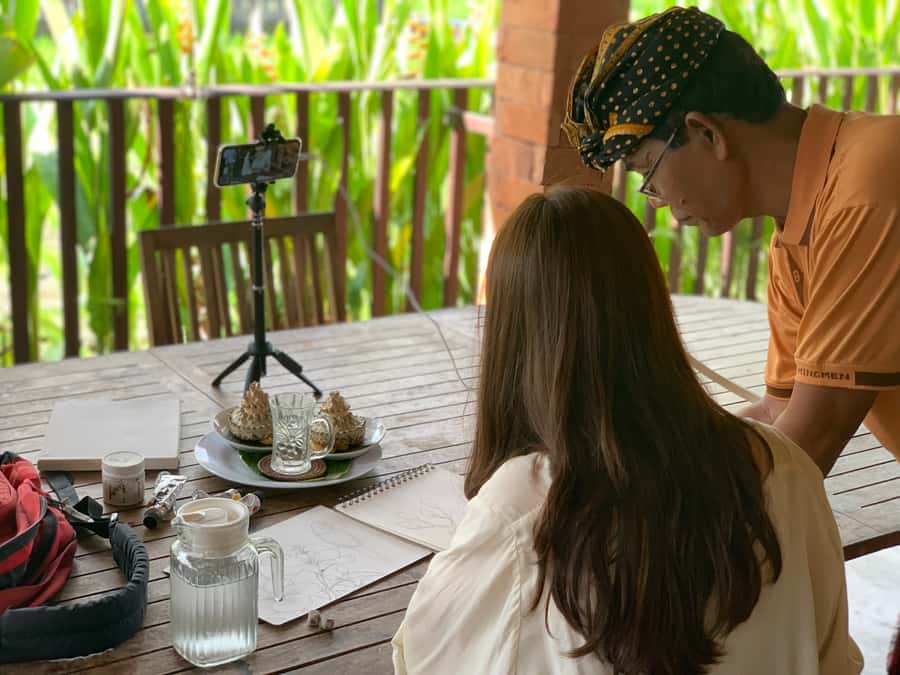
- Pak Sulendra helps you sketch a traditional motif on canvas (or you can bring an inspired idea)
- Learn the Balinese 2D “world” where repeating figures carry meaning from natural, historical, and religious themes
- All tools and materials are included, so you’re not hunting for supplies
- Small group size (up to 10) keeps the attention on you and your questions
- Snacks and a welcome drink (coffee, tea, or water) make the long stretch feel easier
- 3 hours is long enough to finish something satisfying, but plan your energy accordingly
Where You’ll Paint in Ubud: WS Art Studio and a Calm Start
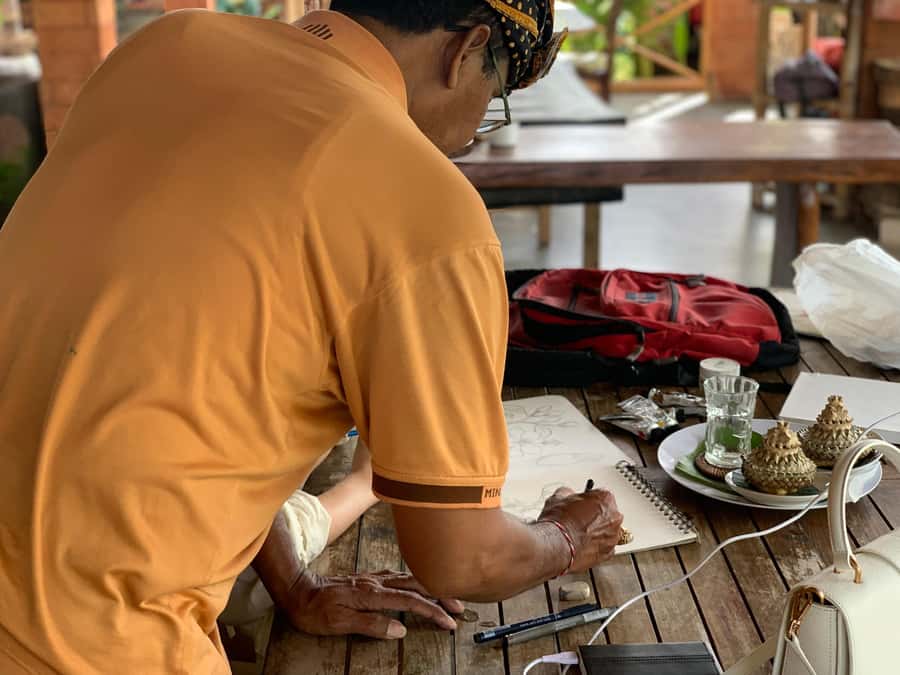
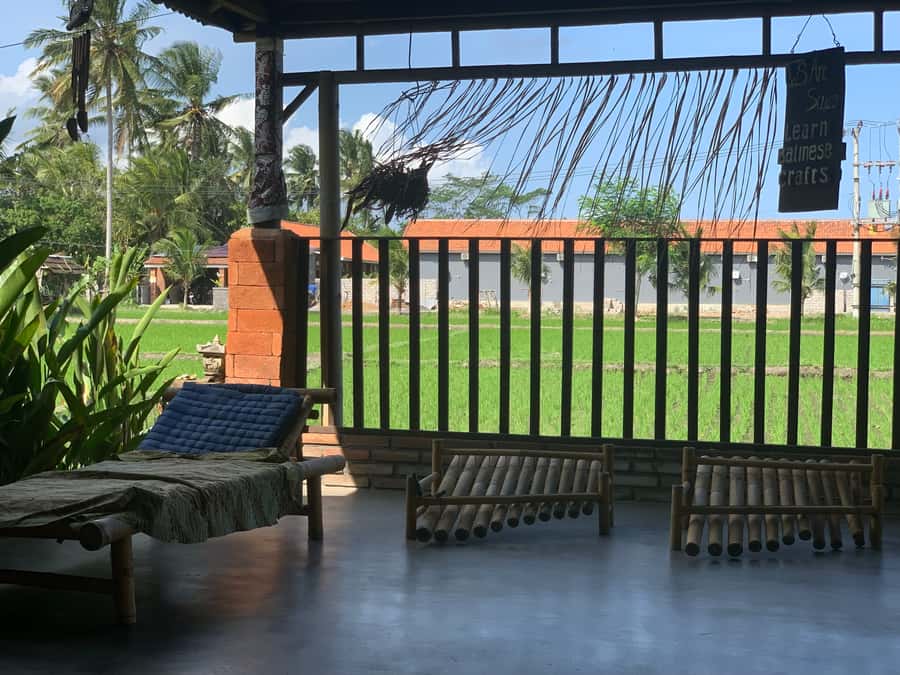
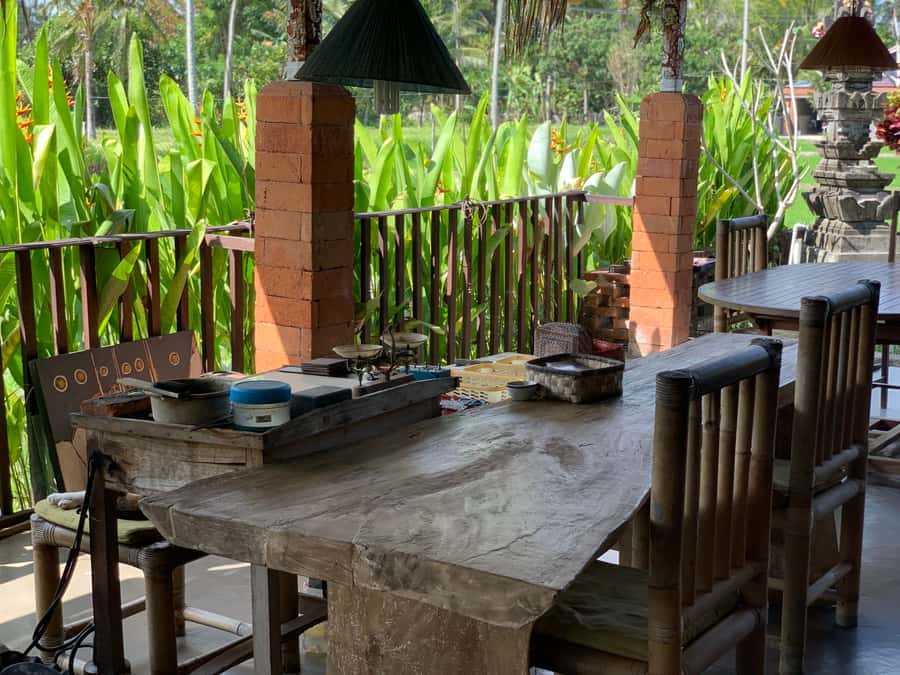
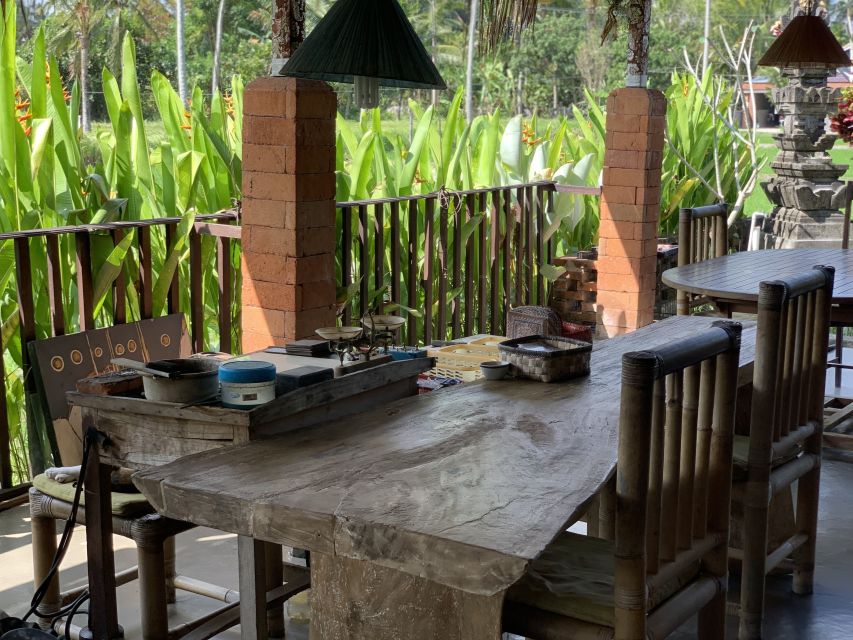
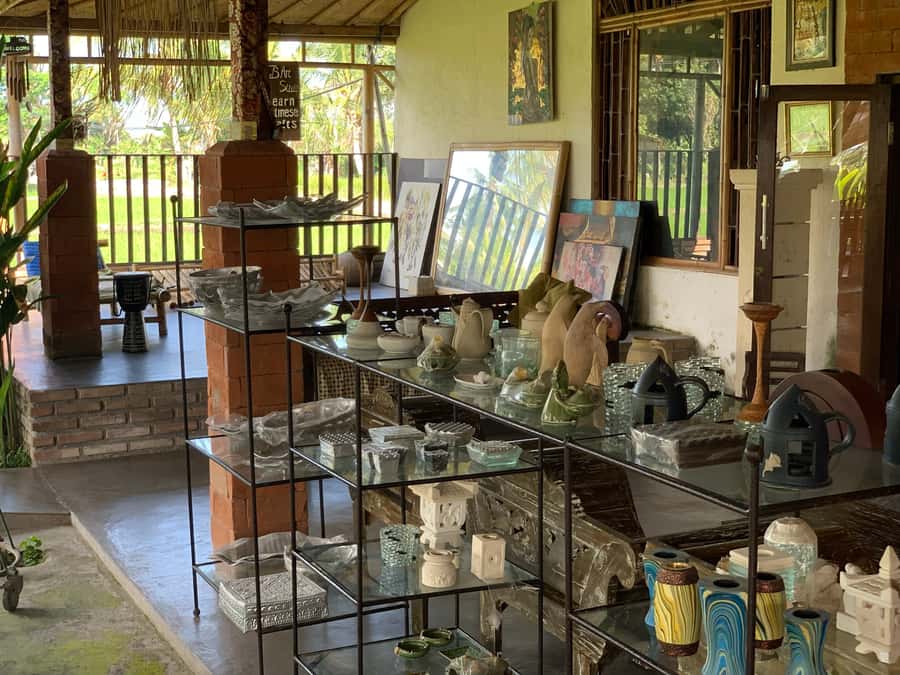
You meet at WS Art Studio Balinese Handicrafts. This matters because it’s not one of those “meet somewhere vague” situations. It’s a real studio setup where you can walk in, settle down, and focus on creating.
Before you even start painting, you get a welcome drink—coffee, tea, or water—and small snacks. The snacks listed are Balinese fried pineapple and fried banana with palm sugar. It’s a small thing, but it helps a lot in a class that lasts 3 hours. You’ll feel the time less, and you won’t start thinking about lunch five minutes in.
The studio vibe is also part of why this works for beginners. The room isn’t trying to impress you with fancy equipment. It’s geared toward teaching: a clear setup for drawing, coloring, and stepping through the basic techniques at your own pace.
You can also read our reviews of more tours and experiences in Bali.



3 Hours of Balinese 2D Painting Basics (No Experience Needed)
This class is built for all ages and abilities, and you really can show up with no background in art. That’s not marketing fluff here—the structure is simple: you’ll go from sketch to color, with guidance the whole way.
Here’s what that means in practice:
- You start with a traditional motif sketch (either guided or based on your own inspired idea).
- Then you move into coloring using the traditional Balinese approach.
- Along the way, your teacher explains the “why” behind the style, not just the steps.
Balinese painting has its own logic. You’re not trying to make everything look like a realistic 3D scene. Instead, you’re building a two-dimensional world with repeating figures and stylized patterns. If you’ve ever wondered why Balinese art can look both simple and strangely mesmerizing, this is your chance to understand the rules.
Pak Sulendra and Your Motif Sketch: Where Confidence Starts
The teacher named in the class description is Pak Sulendra. In the workshop, he helps you draw a sketch of a traditional motif on canvas. If you have your own idea, you can bring that too and use it as a starting point.
This part is where you get the most value, even if you’re not confident. The sketch stage is basically your “permission to try.” You’re not expected to produce a masterpiece from scratch. You’re expected to follow the method, get feedback, and learn what makes a traditional motif look like a traditional motif.
One practical tip that comes directly from how the class is described and how teachers behave in real-world workshops: be upfront about what you want to do yourself versus what you want the teacher to do for you. The class is set up to guide you through the process, but the level of hands-on help can vary. If you say you want more independence, you’ll likely get it.
Natural Colors, Repeating Figures, and the Real Meaning of 2D
This is the “mystery and romance” piece of Balinese painting, and it’s also the most interesting part to learn. The class focuses on the two-dimensional approach—a style that often uses repeating figures drawn from natural, historical, or religious themes.
A key idea you’ll pick up is that you’re not painting only what’s in front of you. You’re painting a system of patterns and symbols. That means the final look comes from:
- how figures repeat,
- how themes are arranged,
- and how the painting stays within that Balinese 2D style language.
You’ll also learn that traditional Balinese painting uses a limited palette. The class description notes that the island has only a few natural colors available. That constraint is part of the charm. It forces the style to rely on pattern, contrast, and technique instead of endless shades.
And yes, you’ll still make something visually strong. The goal isn’t “watercolor therapy.” The goal is an artwork with the depth that comes from proper technique and the right balance of colors—even when you’re working in this 2D framework.
What You’ll Create and How to Think About Your Finished Painting
At the end of the session, you’ll have a painting you made yourself. You also get a class certificate, which is a nice souvenir if you want a record that you actually did the workshop and not just the sightseeing version of it.
What to expect in your final piece:
- It will follow a traditional motif structure.
- It will use the Balinese 2D method your teacher explains.
- Your painting will reflect your own choices during the sketch and coloring stages.
If you’re worried you’ll create something that looks too “beginner,” don’t. The workshop is designed so the teacher can guide you to the right proportions and rhythm. You’re learning a technique, not attempting a random art project.
Also, take a moment before class to decide what you want your painting to communicate. Even if the theme comes from a traditional motif, you can still make choices about how you place elements and how you approach the coloring stage. Those choices show up in the final result.






Price and Value: Why $24 Can Feel Fair (Even in Ubud)
The price listed is $24 per person for a 3-hour class. That’s one reason this feels good value: you’re not paying just for “watch the teacher paint.” You’re paying for guided instruction plus all the materials.
Included items:
- All tools and materials
- Small snacks (fried pineapple and fried banana with palm sugar)
- A welcome drink (coffee, tea, or water)
- A class certificate
Not included:
- Alcoholic beverages are available for purchase
If you’ve done other art experiences in places like Bali, you know supplies and instruction can get pricey fast. Here, the math is simpler. You show up, and the workshop provides what you need to make a real product. That’s what keeps the price from feeling like a souvenir shop fee.
The only “value tradeoff” is time. Three hours is enough to learn and finish something. But if you hate long sittings, plan for it. Consider this more like a focused afternoon workshop than a quick activity between stops.
Who This Painting Class Is Best For (and Who Might Want Something Else)
This works great for:
- Art beginners who want a structured lesson
- Families or mixed-age groups, since it’s described as suitable for all ages and abilities
- Solo travelers who want a small-group activity with real interaction
- People who love Balinese culture and want to understand why the art looks the way it does
You might consider a different option if:
- You only want a short, casual 45–60 minute activity (this is 3 hours)
- You want a totally hands-off class where the teacher does almost everything (the workshop is meant to guide you through your own creation)
- You’re traveling on a schedule where a ceremony-related change would throw off your day
There’s one caution worth mentioning because it shows up in real-world situations: ceremonies can affect teacher availability on some days. On those occasions, the class may shift to a different related art option. If you’re very strict about doing this exact painting session only, build in a little flexibility.
Practical Tips for Your Day: What to Bring and How to Get More Out of It
Bring a camera. That’s explicitly listed. You’ll likely want photos of the steps you learned, plus your finished piece.
Before you go, decide one thing: will you follow the traditional motif closely, or will you steer toward your own inspired idea? Either is supported. When you show up with at least a rough preference, it helps the teacher tailor the pace.
During the class, ask questions early—don’t wait until the last 30 minutes. You’re learning the technique and the logic of the 2D style, so the earlier you understand the approach, the better your final painting tends to look.
Finally, remember you’re in a small group. With up to 10 participants, you’re not lost in a crowd. Use that. If you don’t understand a step, ask. If you want to do more yourself, say so.
Quick Decision Guide: Should You Book This Painting Class?
Yes, I’d book it if you want a hands-on Balinese art experience in Ubud that’s beginner-friendly and actually results in something you made. The value is strong at $24 because you get instruction, materials, snacks, a welcome drink, and a certificate—all in one 3-hour session.
I’d hesitate only if your schedule is tight or you’re hoping for a short activity. And if you’re the type who needs zero surprises on the day, keep your expectations flexible, since ceremonies can affect how teaching runs.
If you want a classic Ubud cultural activity that goes beyond photos and turns into skill and understanding, this one makes sense.
FAQ
How long is the Balinese painting class in Ubud?
The class runs for 3 hours.
Where do I meet for the workshop?
You meet at WS Art Studio Balinese Handicrafts.
How much does it cost?
It’s $24 per person.
Is the class suitable for beginners?
Yes. No experience is needed.
What’s included in the price?
All tools and materials, small snacks (fried pineapple and fried banana with palm sugar), a welcome drink (coffee, tea, or water), and a class certificate.
Are alcoholic beverages included?
No. Alcoholic beverages are available for purchase.
Is the class wheelchair accessible?
Yes, it is wheelchair accessible.