Ready to stand on a board? This beginner surf class at Legian Beach gives you a clean path from first paddle to first pop-up, with coaching geared for real conditions. I love the experienced, friendly instruction and the small-group setup that keeps you from getting lost in the crowd. One thing to plan around: the start time shifts with tides and weather, so you’ll want flexibility.
You’re learning on a classic sand beach in Kuta, with the lesson meeting right in Legian, opposite Pullman Hotel. I love the value at about $12 for 2 hours when surf equipment and a rash guard top are included. The only practical drawback is that there’s no shower/toilet provided by the school, so you’ll rely on nearby public facilities.
In This Review
- Key takeaways before you go
- Legian Beach meets Kuta waves: where this beginner class happens
- Malu Surf setup: equipment, rash guard top, and getting kitted fast
- The 2-hour beginner flow: safety, etiquette, pop-ups, and wave riding
- Why this lesson structure helps you actually learn
- Good waves for learners: why tides and weather change your lesson time
- Small groups and friendly instructors: how to get the coaching you paid for
- Price and value: about $12 for two hours of surf training
- What to bring: the short list that keeps your lesson smooth
- Where to wait and recover: parking, cafes, and warungs nearby
- Who should book, and who should skip this class
- Should you book Surfing Class for Beginners at Legian Beach?
- FAQ
- Where is the meeting point for the beginner surf class?
- How much does the surfing class cost?
- How long is the lesson?
- Is transportation included to get to the activity?
- What’s included in the price?
- What should I bring to the beach?
- Is the class suitable for beginners?
- How are lesson times decided?
- Are there any important restrictions on who can join?
Key takeaways before you go
- Beginner-first coaching: instruction focuses on standing up, paddling, and ocean awareness without assuming experience.
- Small groups: adults run at up to 1:3, and kids get a tighter 1:1 ratio.
- Good waves for learning: you’ll start with basics on suitable beginner waves, and intermediate surfers may work small blue waves.
- Convenient beach area: close to parking, cafes, warungs, and public toilet/shower options nearby.
- Everything you need to surf: board + rash guard top come with the class; you just show up ready to swim.
Legian Beach meets Kuta waves: where this beginner class happens
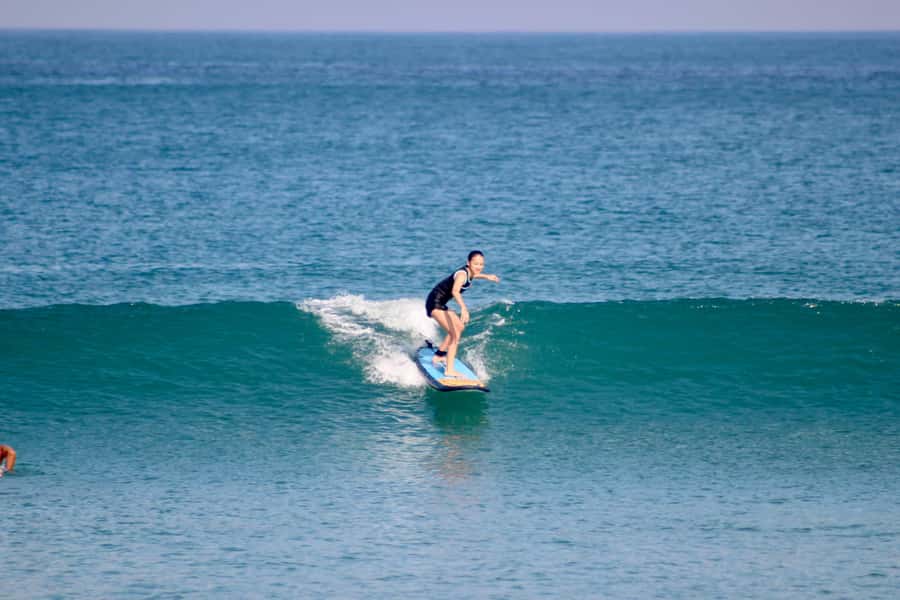
This lesson takes place at Kuta Beach, but your meetup is in Legian Beach, right on the opposite side of Pullman Hotel. That mix matters because it keeps things simple: you don’t have to hunt for the “real” surf spot once you’re in the neighborhood.
Kuta is well-known for beginner-friendly learning because it’s active, accessible, and set up for day-after-day surf sessions. For a first lesson, that’s gold. You want predictable logistics while you’re busy building muscle memory and figuring out how ocean timing works.
Also, the beach setting is straightforward: sand under you, water in front of you, and space to practice. That calm, practical environment is exactly what you want when your goal is to stand up before sunset becomes a factor.
You can also read our reviews of more tours and experiences in Indonesia.


Malu Surf setup: equipment, rash guard top, and getting kitted fast
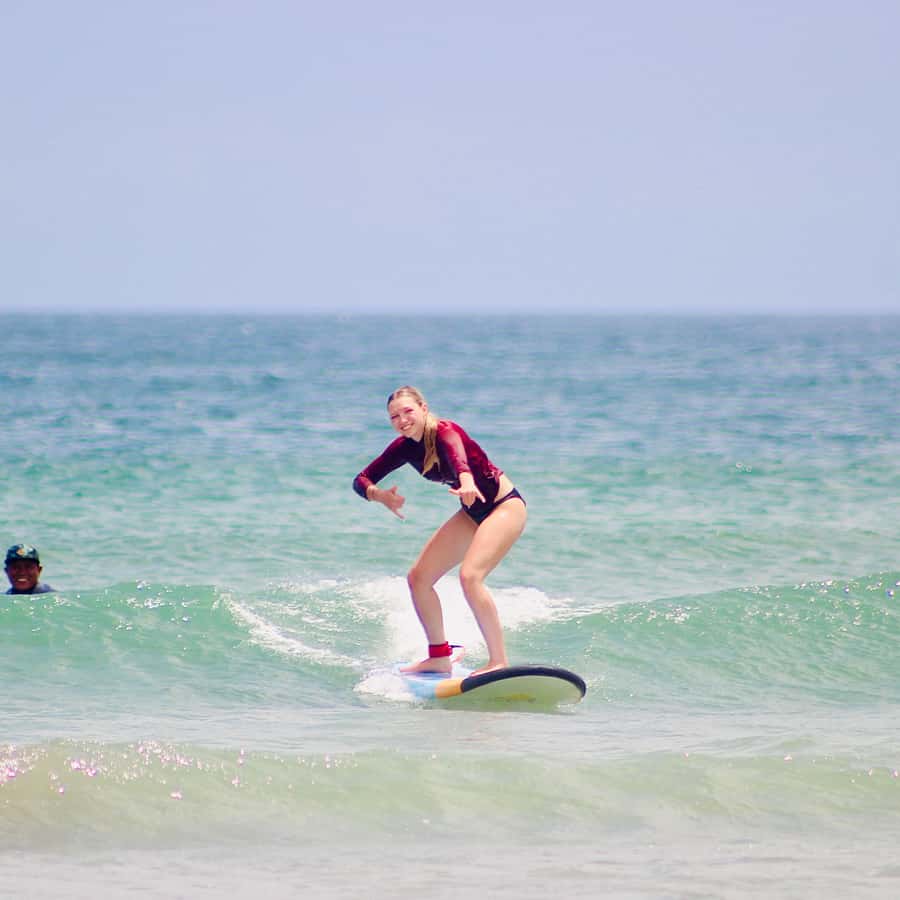
You meet the instructors at Malu Surf Bali, a surf school on Kuta Beach. From there, they get you ready with the surfboard and a rash guard/swimsuit item (you’ll get a rash guard top).
Here’s why this matters for value and comfort:
- You don’t need to rent or bring a board, which saves time and hassle.
- A rash guard helps you get through the session without worrying as much about skin irritation from sun and salt.
- You can keep your plan simple: bring swimwear, towel, sunscreen, and cash—that’s it.
The lesson also runs with instructors who can work in English and Indonesian. That’s useful if you’re learning terms like positioning on the board, paddling technique, or what proper surfing etiquette means in real surf.
And one more nice detail: based on the way sessions are run, there’s often a chance to get photos after you surf. If you care about documenting your first wave, this setup is the kind that makes it possible without you having to bring a camera into the water.
The 2-hour beginner flow: safety, etiquette, pop-ups, and wave riding
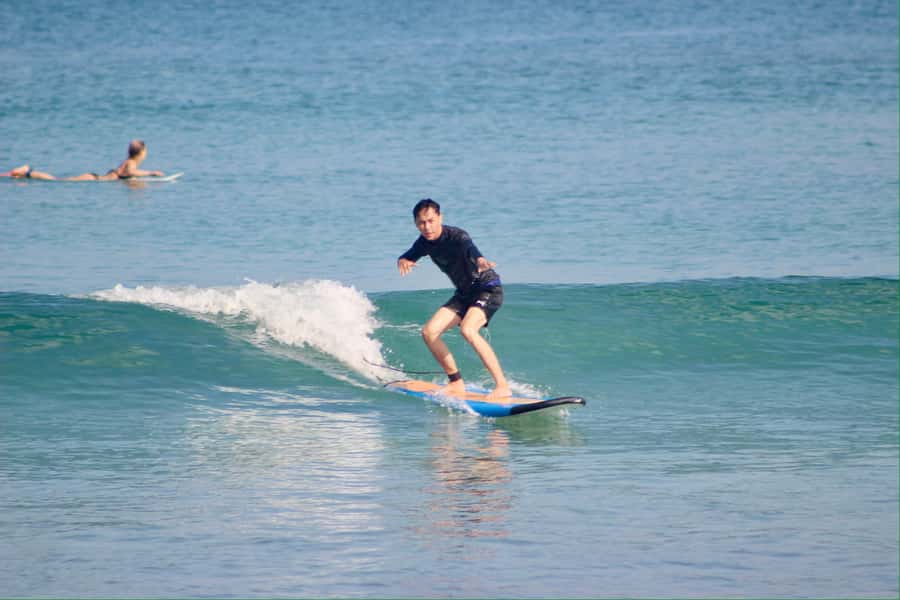
The class is about 2 hours, and it’s designed as a step-by-step surf lesson rather than a “good luck out there” experience. You’ll start with basics on the beach and then move into water time.
A typical flow looks like this:
- Meet and gear up at Malu Surf.
- Go to the beach and begin with fundamentals: how to get positioned on the board and how to paddle effectively.
- Learn to stand up: not just the idea, but the mechanics—where your feet go, how to shift your weight, and how to avoid losing balance at the pop-up moment.
- Safety and ocean knowledge: you’ll get taught safety rules, ocean awareness, and how to handle common situations without panic.
- Surf etiquette and positioning: this is the part many first-timers skip, but it’s where you learn how not to endanger yourself or others.
- Ride small beginner waves: once you’re comfortable with the pop-up and paddling, you’ll try riding.
If you already have some experience, your instructor adjusts. The lesson can include polishing your skills on smaller blue waves, which is helpful because small waves are where you can refine technique without fighting giant energy.
Why this lesson structure helps you actually learn
Surf lessons can fail for one reason: too much time standing around while the ocean does its own thing. This one is built around the actions you need—paddle, pop-up, balance, and safe positioning—so you spend your effort on skills that transfer directly into riding.
Good waves for learners: why tides and weather change your lesson time
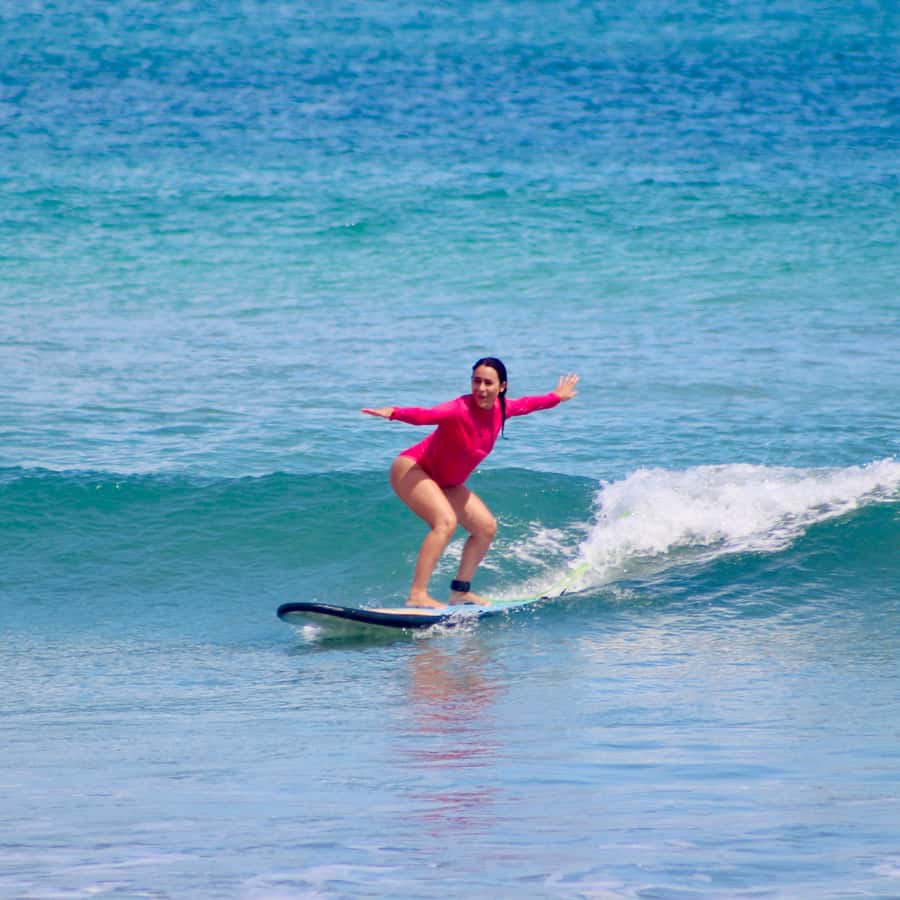
Lesson times depend on tides of the ocean and weather, which means you should expect schedule shifts day to day. That’s not a problem with the school—it’s surf reality.
The practical move for you: before booking, contact the provider for the best time for surfing. If you’re on a tight itinerary, flexibility helps. Early sessions often mean more predictable conditions, but the real answer is what the tide and weather look like that day.
In water, the instructor will guide you toward what works for your level:
- Beginners focus on the waves that let you practice standing and riding safely.
- Intermediate surfers may get small blue-wave practice to sharpen control.
Also, because this lesson is anchored in the Kuta Beach area, you benefit from a setup where the surf school can adjust quickly based on conditions. For first-timers, that adaptability is a huge part of why the class works.






Small groups and friendly instructors: how to get the coaching you paid for
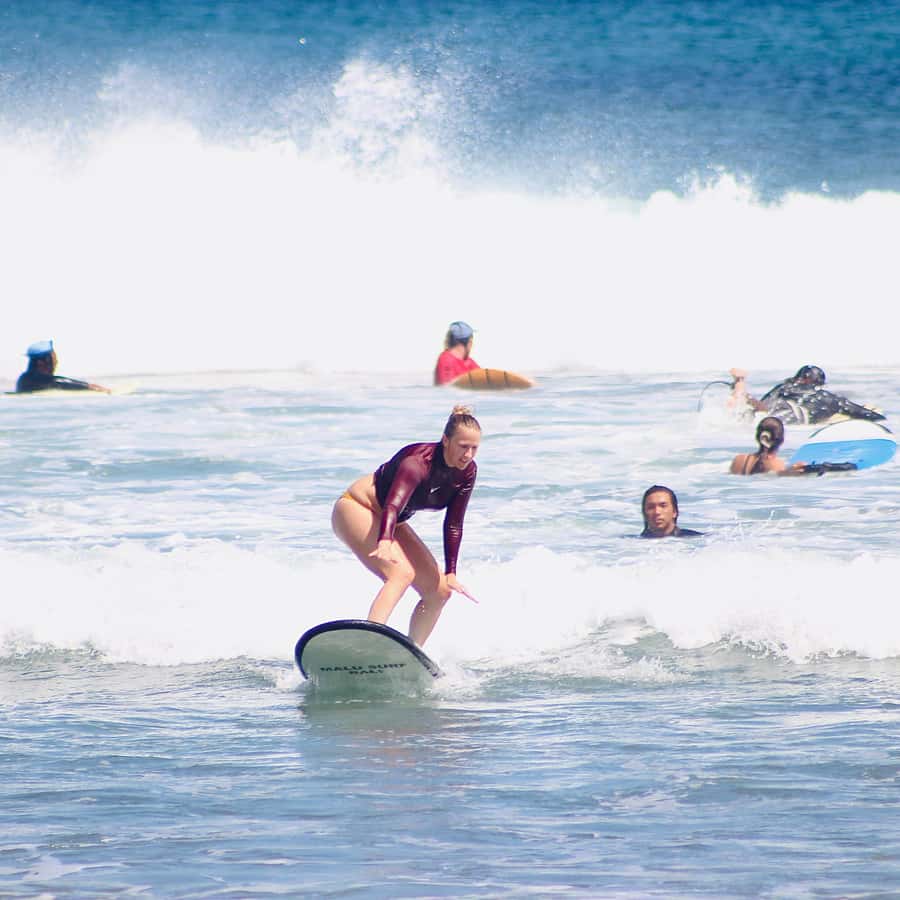
This class is built for attention. Adults are capped at a maximum ratio of 1:3, and kids get a maximum ratio of 1:1. That changes everything.
With a smaller group, you’re more likely to:
- Get quick corrections on your pop-up position and balance.
- Receive safety guidance based on what you’re doing in the water, not just a general talk.
- Get confidence faster because you’re not repeating mistakes in silence.
In the same spirit, the instructors are described as friendly and clear. Clear cues matter in surfing because one small misunderstanding can wreck your timing—especially when you’re trying to stand up as the wave lifts you.
There’s also a confidence boost that comes from the way feedback is delivered. One surfer’s experience described getting solid tips and then being trusted to try more on their own. That’s ideal for adults too: you want coaching, but you also want room to test what you learned.
Price and value: about $12 for two hours of surf training
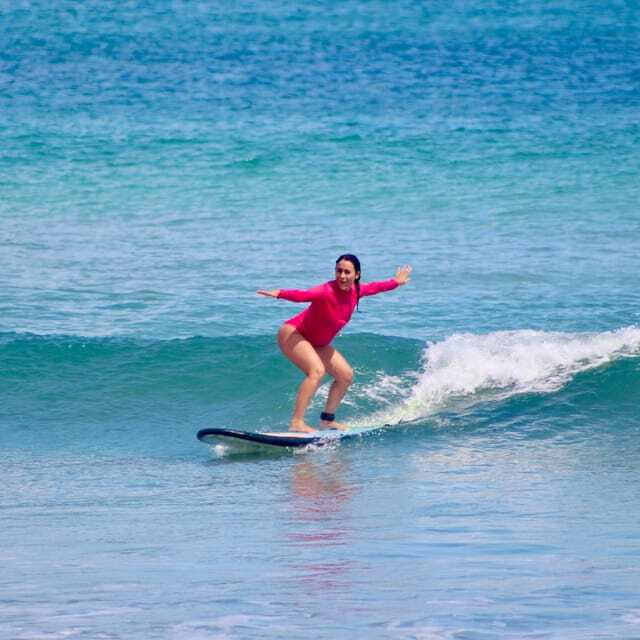
At $12 per person for 2 hours, this class sits in the budget-friendly zone for Bali, especially because it includes equipment and instruction rather than just a guided beach walk.
Here’s what you’re really paying for:
- Surf equipment (board) and a rash guard top
- Instructors who teach stand-up basics, paddling, etiquette, and safety
- A learning environment designed for small groups
What isn’t included is also important to factor in:
- Transportation to the activity location
- Meals and drinks
- Personal insurance
- Shower/toilet provided by the school
When you add those up, you’ll see the $12 price makes sense because the expensive part—equipment + trained instruction—is included. For most people, the only extra cost is how you get there and what you eat afterward.
What to bring: the short list that keeps your lesson smooth
Don’t over-pack. You need:
- Swimwear
- Towel
- Sunscreen
- Cash
Why cash? The activity info specifically asks for it, so I’d bring it and keep it simple.
Also bring common-sense beach items:
- If you’re thinking sunglasses, put them on before you enter the chaos of your first session.
- If you hate sand in your bag, bring a small zip pouch for valuables.
One more practical note: you won’t get a shower/toilet as part of the lesson, but public facilities exist nearby. Plan a quick rinse or change, especially if you’re heading out for lunch or dinner afterward.
Where to wait and recover: parking, cafes, and warungs nearby
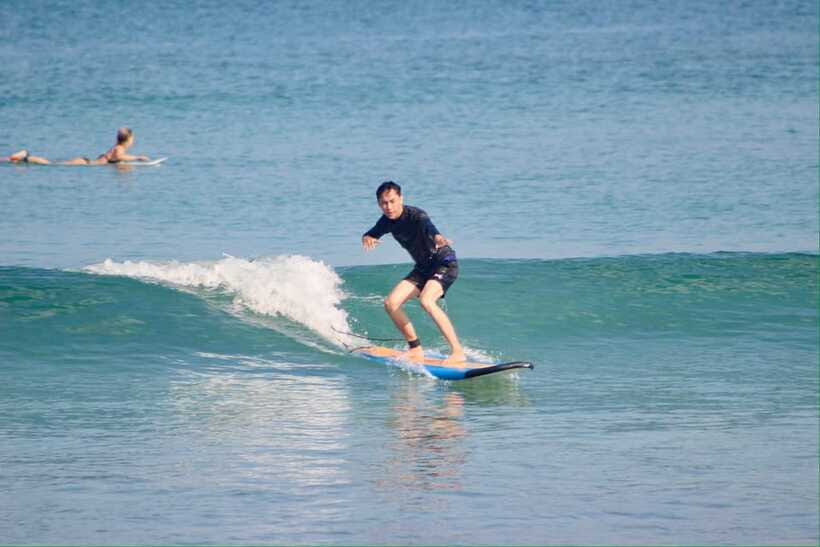
A big reason this surf lesson works well on a travel day is the surrounding beach neighborhood. The area is close to parking, a cafe, public toilet/shower, and warungs (small local eateries).
That helps in two ways:
- You can grab a snack or drink before your session without turning it into a mission.
- After surfing, you can cool down and eat without waiting around for transport.
It’s also a decent setup for doing this with friends or family. The lesson has a bonding vibe because everyone learns something together, and the group format keeps the experience social even when you’re in the water.
Who should book, and who should skip this class
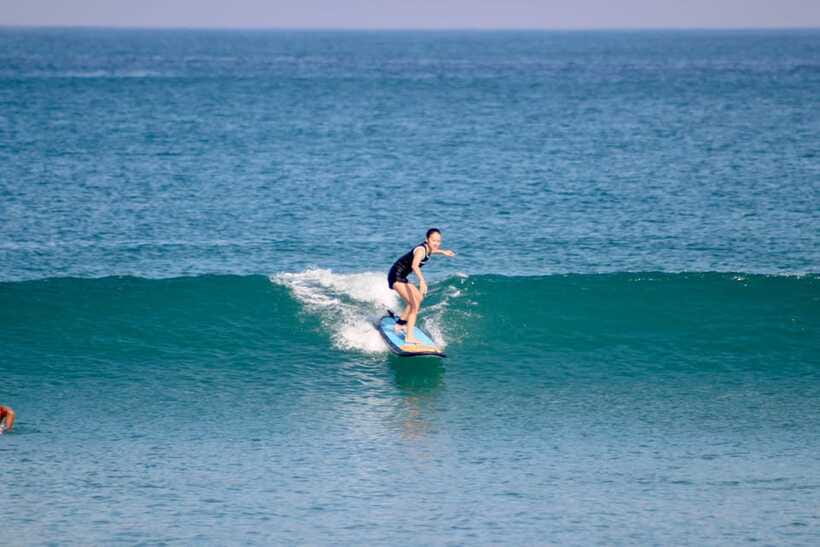
This is suitable for:
- Beginners (no prior experience needed)
- Intermediate surfers who want help refining on smaller conditions
- People who want a straightforward 2-hour activity without bringing gear
It’s not suitable for:
- Children under 5
- Pregnant women
- Wheelchair users
- People over 70
If any of those apply, it’s better to choose a different kind of beach activity where safety and comfort are easier to control.
Should you book Surfing Class for Beginners at Legian Beach?
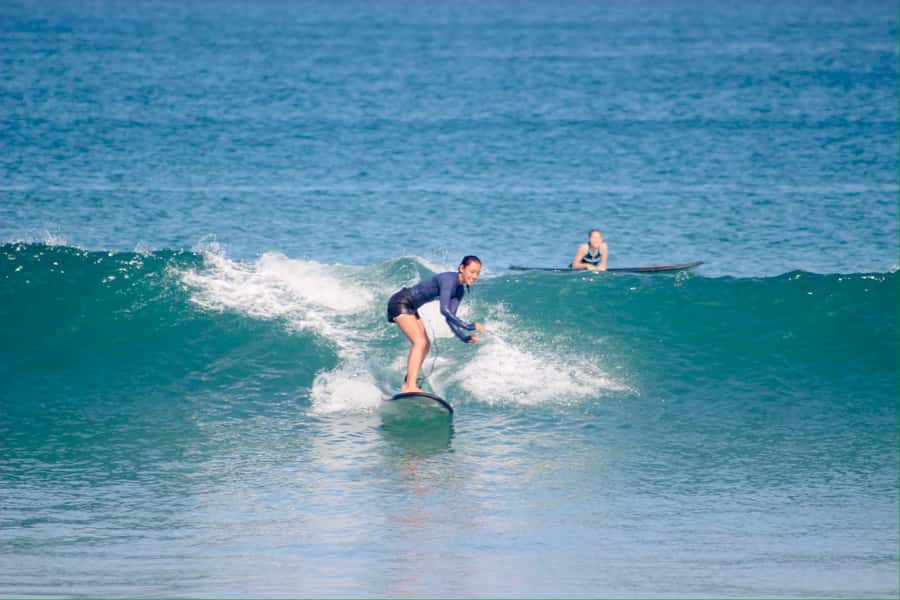
Book it if you want a short, focused, beginner-level surf lesson with real coaching, equipment provided, and a small-group ratio that makes corrections possible.
Skip it (or at least reconsider timing) if your schedule is locked down. Because lessons depend on tides and weather, you’ll want room to shift your day slightly. Also, if you need guaranteed shower/toilet access from the operator, plan for nearby public facilities instead.
Overall, for the price, the structure is the main win: learn the basics—paddle, stand, safe positioning, and etiquette—then actually try riding. If that’s your goal in Bali, this is the kind of class that gives you a solid start without turning your first surf session into a stressful guessing game.
FAQ
Where is the meeting point for the beginner surf class?
The lesson meets in Legian Beach, right on the opposite side of Pullman Hotel.
How much does the surfing class cost?
It’s listed at $12 per person.
How long is the lesson?
The duration is 2 hours.
Is transportation included to get to the activity?
No. Transportation to the activity location is not included.
What’s included in the price?
You get surf equipment, instructors, and a rash guard/swimsuit top.
What should I bring to the beach?
Bring swimwear, a towel, sunscreen, and cash.
Is the class suitable for beginners?
Yes. It’s designed for beginners, and no prior experience is needed. It’s also suitable for intermediate surfers.
How are lesson times decided?
Lesson times depend on ocean tides and weather, so the start time changes daily.
Are there any important restrictions on who can join?
It’s not suitable for children under 5, pregnant women, wheelchair users, or people over 70.