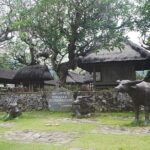
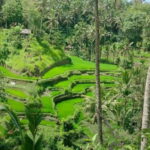
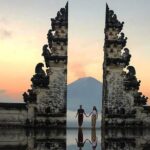
Three temples, one clear philosophy of balance.
I love how this experience ties Tri Hita Karana to real places you can walk through, not just theory. I also really like the early stop in Manukaya, where you meet a Balinese family and see Lontar script and traditional Topeng masks up close.
One consideration: the Tampaksiring holy-spring moment includes an optional bathing ritual, so plan for that if you’re uncomfortable getting wet in a sacred setting.
In This Review
- Key highlights worth planning around
- Why this tour feels like cultural education, not a temple checklist
- The philosophy lesson: Tri Hita Karana, subak irrigation, and daily balance
- Manukaya start: backroads, a family welcome drink, and cultural details
- Stop 2: Ancestral temple roots and the 8th-century thread
- Tampaksiring water temple: holy springs, sarong help, and a meaningful stop
- The largest Buddhist stupa on Bali: Hindu and Buddhist iconography together
- Lunch with your hosts: included food, slower pacing, real conversation
- Price and value: $98 for a private, belief-focused day
- Who this tour suits best (and who should skip it)
- What to expect on the ground: timing, pace, and comfort
- Should you book the Essence of Bali tour?
- FAQ
- What’s the duration of the Essence of Bali tour from Ubud?
- Where does the tour start, and when does it end?
- Is pickup available?
- What does the tour include?
- Is the tour private?
- What is the cancellation policy?
Key highlights worth planning around
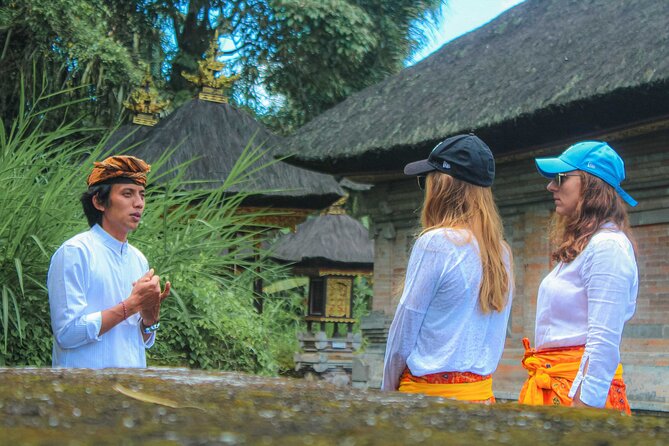
- UNESCO-listed Pakerisan River Valley context that frames the day before you enter temples
- Manukaya family compound stop with Lontar writing and Topeng mask culture
- Tampaksiring water temple visit with sarong and towels provided for the holy springs
- A mix of animist, Hindu, and Buddhist influences explained through what you see
- Lunch with your hosts included, so you’re not hunting food between sites
- Private, small-group feel so questions and slower pacing actually happen
Why this tour feels like cultural education, not a temple checklist
This is the kind of day that starts with the big ideas of Balinese life, then shows you the physical proof. You’ll hear how ancient animist beliefs and Hindu-Buddhist influences came together on the island, and how that blend still shapes community routines today.
The Pakerisan River Valley area (north east of Ubud) was listed as a UNESCO Cultural Heritage area in 2012, and that matters because it sets a tone: you’re not just ticking off shrines. You’re stepping into a landscape of ancestral sites that date back roughly from the 8th to the 12th centuries, where belief systems became part of how people farm, pray, and build.
If you like history that you can touch—stone, water, offerings, architecture—this tour should hit the sweet spot. If you want a purely photo-driven schedule of the most famous Instagram stops, you may find it calmer and more community-minded than you expect.
You can also read our reviews of more tours and experiences in Ubud.

The philosophy lesson: Tri Hita Karana, subak irrigation, and daily balance
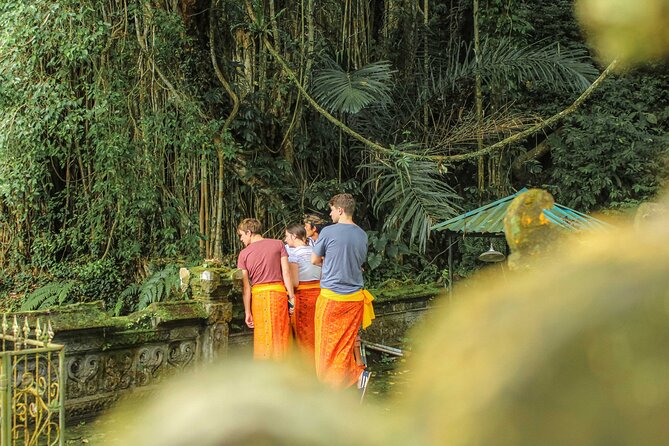
Before you rush from one site to the next, you get the “why” behind Bali’s sacred patterns. A major theme is Tri Hita Karana, a philosophy about maintaining balance between the natural world, physical life, and spiritual life. It’s easy to say. It’s more interesting when you see how people treat water, worship, and place as one system.
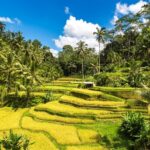
You’ll also learn about the irrigation system known as subak—the way rice-growing communities manage water together. That’s not just agriculture trivia. It’s a window into how spirituality and community planning overlap in Bali.
On top of that, you’ll connect the dots between Balinese architecture and the island’s outlook on life. The best part is how the story stays practical: the guide doesn’t only name beliefs; they show how those beliefs guide everyday decisions.
Manukaya start: backroads, a family welcome drink, and cultural details
The day begins with a drive through backroads to Penempahan village in Manukaya. It’s a simple part of the schedule, but it’s where the tour starts feeling personal. You’re not instantly herded into a temple line.
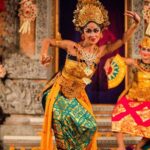
At a Balinese family compound, you’ll get a welcome drink and see cultural items that are usually skipped on fast tours. You’ll learn about Lontar—Balinese script—and you’ll also be shown Topeng (mask) traditions. Even if you only catch a few minutes of explanation, it’s a strong early signal: this isn’t only about monuments. It’s about how culture is preserved inside family life.
Stop 1 is short and calm. The ticket for that component is listed as free, so you’re not carrying extra costs for a quick introduction moment.
Tip: This is a great time to ask how the masks or writing relate to daily belief. If you’re curious, start here before the temples take over the day.
Stop 2: Ancestral temple roots and the 8th-century thread
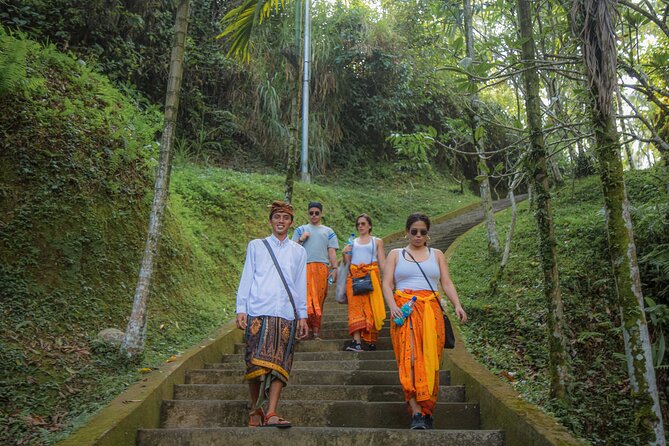
Next you visit an ancestral temple dating back to the 8th century. This is where the day’s UNESCO framing starts to make sense. You’re in an area with deep roots, and the temple setting gives you a tangible sense of time depth.
What I like about starting with this kind of site is pacing. Instead of jumping straight to water and big structures, you begin with an older foundation. From there, the spiritual story can feel like it grew rather than appeared out of nowhere.
You’ll also hear how early belief systems in Bali interacted with Hinduism and Buddhism over time. The tour specifically connects those influences to transmission through Javanese kingdoms, which helps you understand Bali as part of a wider cultural network—not an isolated island that invented everything on its own.
Tampaksiring water temple: holy springs, sarong help, and a meaningful stop
Then comes the sacred water temple at Tampaksiring, with origins dating back to the 11th century. This part is special because you’re not only observing. You’re near a ritual space tied to purification.
Devotees come to spiritually cleanse themselves by bathing in the holy springs. You’re welcome to join in, and sarongs and towels are provided. That detail matters because it lowers the barrier for most visitors—you don’t need to figure out the logistics on your own.
Even if you choose not to bathe, you can still watch the ritual context and understand how water is treated as sacred in Balinese life. The tour’s focus on balance and spiritual alignment makes this stop feel like more than a tourist diversion.
Consideration: This is a wet, sacred setting. Wear what you’re comfortable getting damp in, and plan to handle towels/supplies as instructed. If you’re not excited about bathing, you can still participate in the spiritual atmosphere through observation.

The largest Buddhist stupa on Bali: Hindu and Buddhist iconography together
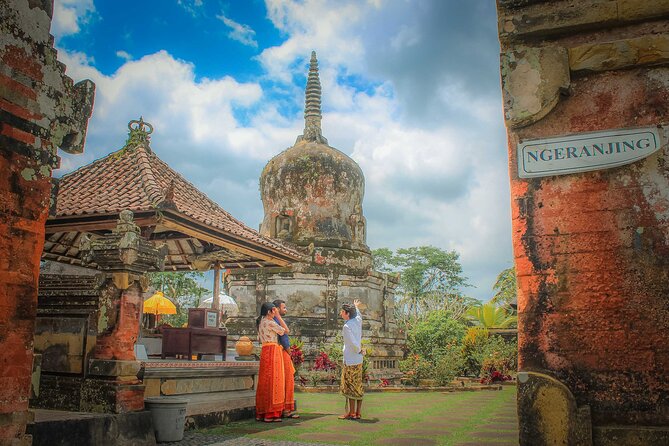
The day ends the temple portion at the largest Buddhist stupa on Bali, where Hindu and Buddhist iconography are combined. That fusion is one of the most useful “Essence of Bali” lessons you can get in a few hours: Bali often expresses spiritual ideas through shared visual language and overlapping devotion.
You’ll see dedication tied to Hindu and Buddhist cosmology. In other words, this isn’t just two religions shown side-by-side like separate exhibits. The tour frames it as a combined expression of belief—an idea that echoes the earlier explanation of how animist foundations and Hindu-Buddhist influences unified over time.
This stop is also a strong payoff for your earlier context. When you’ve heard about the island’s spiritual blend, the shared symbolism becomes easier to read.
Lunch with your hosts: included food, slower pacing, real conversation
Lunch is included, hosted as part of the experience. This matters more than it sounds. Many half-day temple tours scatter you between sites with snack stops and quick meals. Here, the schedule includes an actual break, plus time to talk with your hosts.
I like using lunch as a question window. Ask what parts of the belief system people follow most today—especially the ideas around balance and water. If your guide explains subak or Tri Hita Karana, lunch is the moment to ask how people keep those values in daily life when there’s a workday, family obligations, and modern pressures.
This is also when the tour can feel least “touristy.” Family-run hospitality tends to be less scripted, and you get a calmer rhythm before returning.
Price and value: $98 for a private, belief-focused day
At $98 per person for about 5 hours, the value depends on what you want from Bali. If you’re looking for a fast checklist of temples, this might feel like a lot. If you want a guide who connects belief systems to real places, it can feel fair—and in many cases, excellent.
Here’s why the cost makes sense for the right traveler:
- Private transportation is included, which saves time and stress in Ubud’s area
- The temple portion has admission included (and the family compound stop is listed as free)
- Lunch is included, so you’re not paying extra for a full meal
- You get more than “see this, then go.” The tour explains irrigation, architecture, and philosophy
Also, the tour is private, so it’s only your group. That usually makes a difference for questions, pace, and comfort around sacred sites.
On the downside, alcohol and snacks are not included. If you know you’ll want drinks, budget for that. If you’re the type who needs constant snacking, plan a little extra so the lunch break doesn’t feel too far away.
Who this tour suits best (and who should skip it)
This fits best if you want to understand Bali through faith, architecture, and community systems. If you’re the kind of person who asks why something is built the way it is, this tour gives you reasons you can actually use.
It also suits people who enjoy being with local hosts and prefer a respectful pace over big-tour energy. Many of the guide names praised in connection with this experience include Gede, Eka, Nyoman, and Ari, often paired with drivers like Wayan. The common thread is clear: they share culture and explain belief without treating it like a performance.
I’d suggest skipping (or at least tempering expectations) if you want only famous landmarks, nonstop action, or a purely photo-heavy day. This is more thoughtful than hectic.
What to expect on the ground: timing, pace, and comfort
The tour starts at 9:00 am. The full duration is listed as about 5 hours, and the main temple exploration component is about 4 hours. You’ll drive between sites, learn along the way, stop for the Manukaya family compound welcome, then move through temple visits and lunch.
Because it’s private, the pace will usually be determined by your group and guide, not a mass schedule. That’s useful in sacred spaces where you’ll want a moment to pause.
You also get a mobile ticket and pickup is offered. The tour is near public transportation, but if you want the day to feel easy, lean into pickup.
Should you book the Essence of Bali tour?
If you want Bali that feels grounded—belief systems, water rituals, architecture, and community balance—I think you should strongly consider booking. This tour connects the dots instead of tossing you into one temple after another with no context.
Book it if you like:
- a calmer, community-centered feel
- learning about Tri Hita Karana and subak in real locations
- visiting multiple sacred sites in a coordinated, respectful way
Consider alternatives if you want a fast hit of the biggest postcard temples only, or if you’d rather avoid the holy-spring bathing option entirely.
If you’re on the fence, decide this way: do you want to understand how Bali works? If yes, this is a great match.
FAQ
What’s the duration of the Essence of Bali tour from Ubud?
It runs for approximately 5 hours.
Where does the tour start, and when does it end?
The activity starts at Bali Pure Tour in Banjar Penempahan, Jalan Melati, Desa Manukaya, Tampaksiring, Manukaya, Kec. Tampaksiring, Kabupaten Gianyar, Bali 80552, Indonesia. It ends back at the meeting point.
Is pickup available?
Pickup is offered.
What does the tour include?
It includes coffee and/or tea, lunch, and private transportation. Admission tickets are included for the 4-hour portion, and the Manukaya stop is listed as free.
Is the tour private?
Yes. It’s a private tour/activity, and only your group participates.
What is the cancellation policy?
Free cancellation is available up to 24 hours in advance for a full refund. If you cancel less than 24 hours before the start time, the amount paid is not refunded.