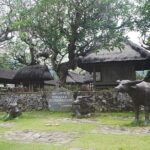
This dinner feels like a family key. You get picked up in Ubud, visit Dewa and Jero’s traditional walled home in the terraced hills north of Ubud, and then enjoy a homecooked spread that tastes deeply local. I love the herb-and-spice introductions (galangal, cloves, cacao, and nutmeg are part of the story), and I like the private feel with your hosts. One drawback to note: the family’s tradition means they won’t join you at the dining table, so the meal feels more reflective than chat-first.
The whole experience runs about two hours, and at $56 per person it’s priced like a serious cultural dinner, not a casual buffet. You’re also getting beverages included and the hosts guide you through where the food comes from, starting in their compound and garden world.
If you’re hoping for a loud, restaurant-style night, this may not fit. But if you want a calm, authentic window into Balinese home life (with a vegetarian option if you tell them), it’s a great value for the setting and the personal hosting.
In This Review
- Key highlights
- Ubud dinner starts with their compound, not a restaurant
- Getting there: pickup in Ubud and where to meet if you’re outside it
- Touring the gardens: fruits, herbs, and the ingredients behind the flavors
- The Balinese meal: what you might get on your plate
- Why you eat apart from the family table
- Dewa and Jero’s family hosting: private, personal, and recipe-focused
- Price and value: is $56 fair for a home dinner in Ubud?
- Tips to get the most from your evening
- Who should book this and who might skip it
- Should you book this traditional Balinese home meal in Ubud?
- FAQ
- How long is the traditional Balinese meal experience?
- What is the price per person?
- Does the tour include hotel pickup?
- Where do I meet if I am not staying in Ubud?
- Is the meal private for my group?
- Is there a vegetarian option?
- What dishes might I eat?
- Can I cancel and get a full refund?
- Is it suitable for most travelers and are service animals allowed?
Key highlights
- A walled family compound in the terraced foothills north of Ubud, with open pavilions around a central courtyard
- A garden and spice walk featuring ingredients tied to Balinese everyday life
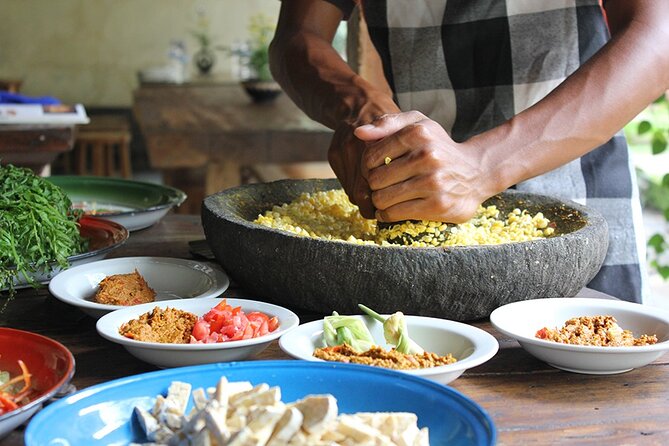
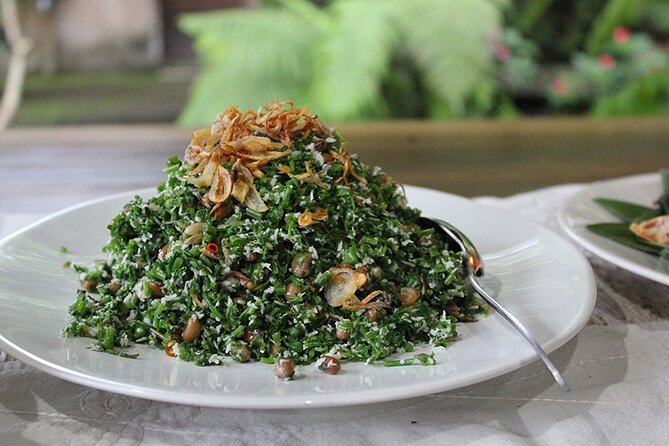
- A homecooked menu that can include pepes ikan, bumbu kuning, bregedel, and jukut urab
- Private hosting by Dewa and Jero (or an equally lovely family member) just for your group
- A spiritual dining style where hosts don’t eat at the table with you
Ubud dinner starts with their compound, not a restaurant
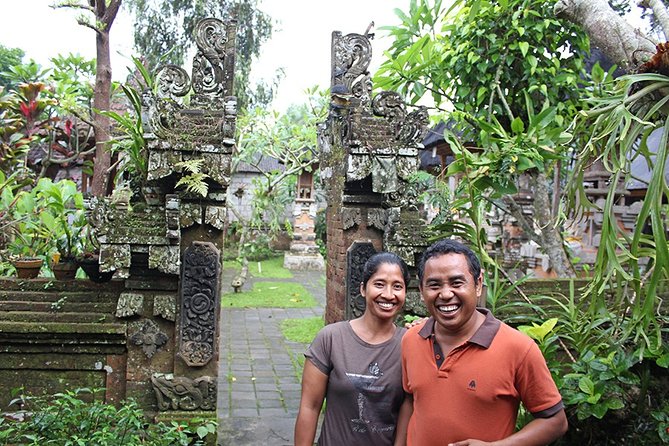
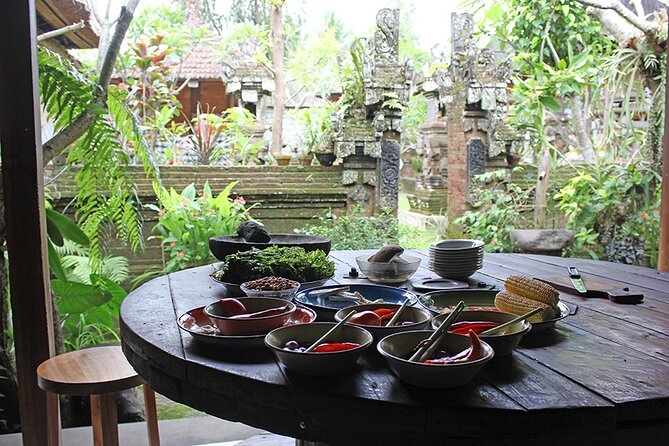
This experience is built around the idea that food begins before the kitchen. You start in the lush green of Dewa and Jero’s family compound—open pavilions clustered around a central courtyard—then you work your way from plants and spices into the meal itself.
I like that the focus isn’t just on what’s on the plate. It’s on how the family lives with flavors day to day, including herbs and ingredients with medicinal associations in Balinese tradition. Even if you’re not trying to memorize every spice name, you’ll walk away with a better feel for why these dishes taste the way they do.
The setting also matters. Ubud can be touristy fast, but here you’re in a village environment tucked into terraced hills, not in a curated dining hall. It’s the kind of dinner that helps you understand Bali in a human scale—people, routines, and rituals—rather than just scenery.
You can also read our reviews of more tours and experiences in Ubud.



Getting there: pickup in Ubud and where to meet if you’re outside it
Logistics are pretty straightforward if you’re staying in Ubud. The experience offers hotel pickup and drop-off for Ubud hotels only, and you should expect pickup to make timing painless.
If you’re not staying in Ubud, you meet Dewa at Alam Sari Resort, Jl. Raya Keliki, Keliki. The activity also lists a general meeting point at Rumah Makan Jero Nini (G7X7+Q9M, Jl. Arjuna, Keliki, Kec. Tegallalang, Kabupaten Gianyar, Bali 80561), which can be useful if you’re self-arranging.
One practical thing: confirm whether your hotel is in the pickup list when you book. The tour description is clear that pickup is limited to Ubud, and it’s not the kind of experience where you want to scramble at the start.
Touring the gardens: fruits, herbs, and the ingredients behind the flavors
Before you eat, you’ll spend time around the compound discovering what’s growing and what’s used. The experience specifically calls out learning about Balinese fruits, herbs, and spices such as galangal, cloves, cacao, and nutmeg, including their medicinal properties.
This isn’t a museum lecture. You’re guided in a way that matches how these plants show up in real cooking and household routines. If you like food culture, this part is often the glue that makes the meal memorable—because you’re tasting with context, not just eating to be fed.
Then you walk about 10 minutes to your hosts’ home area for a tour of the family compound. Expect to see how the household is organized: multiple open pavilions, a central courtyard, and space that supports both daily living and family worship.
From the experience angle, this is also where you’ll feel the pace of village life. It moves slower than most tourist schedules, which is exactly why it’s worth it.
The Balinese meal: what you might get on your plate
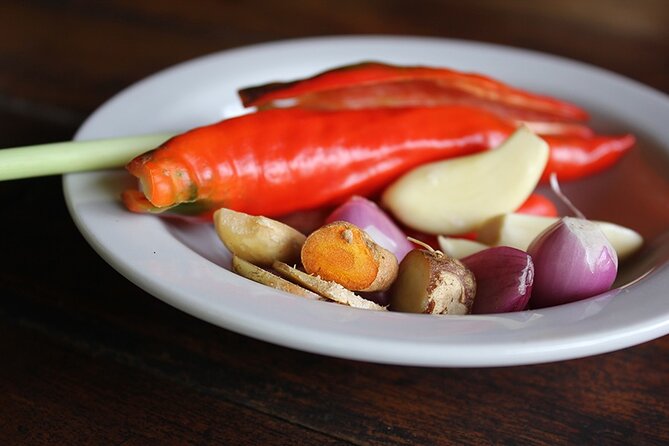
You’ll join Jero for a traditional Balinese homecooked meal. The menu can vary, but the experience lists a set of standout dishes that are worth understanding so you know what to watch for.
Here are the types of dishes you may see:
- Pepes ikan (grilled tuna in banana leaves): fragrant, steamed/grilled flavors sealed in banana leaves. Expect a tender fish with aromatic notes.
- Bumbu kuning (chicken in turmeric and coconut milk sauce): warm yellow color from turmeric, creamy from coconut milk, and usually layered in spice.
- Bregedel (corn fritters): a comforting, golden bite that balances the saucier dishes.
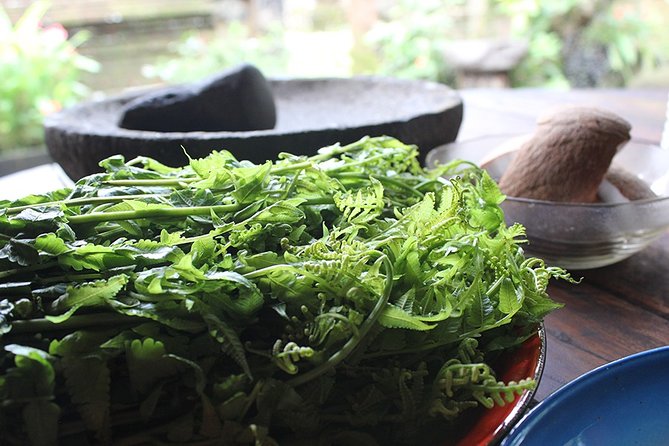
- Jukut urab (seasonal vegetables with grated coconut and fried shallots): bright, savory vegetables with a sweet-salty coconut topping and crunchy shallots.
You’ll also have beverages included with the meal, and since this is an in-home setting, the flow of the evening is more personal than regimented.
A quick consideration: some dishes are fish-based and the food may include spices that are strong by Western standards. If you have dietary restrictions beyond vegetarian—like shellfish, dairy, or strong spice limits—tell your host as early as possible, since you’re relying on a real household kitchen.
Why you eat apart from the family table
This is the part that surprises many people at first: the hosts follow a Balinese family tradition with a spiritual approach to eating. They won’t share the meal at the dining table with you. Their preferred approach is to eat on their own and focus on personal meditation to keep a positive state of mind.
So instead of a back-and-forth dinner conversation, you’ll experience a calmer rhythm. You eat with your group, while your hosts step back and maintain their ritual space.
I actually see this as a plus once you adjust your expectations. It means the evening isn’t performative. You’re not being treated like an audience. You’re being included in a private moment with respect for what matters to the household.
The only drawback is that if you’re hoping for a lively shared table story session, you might feel a little less interaction than you’d expect from a cooking class style evening. The trade-off is authenticity and a quieter, more thoughtful vibe.






Dewa and Jero’s family hosting: private, personal, and recipe-focused
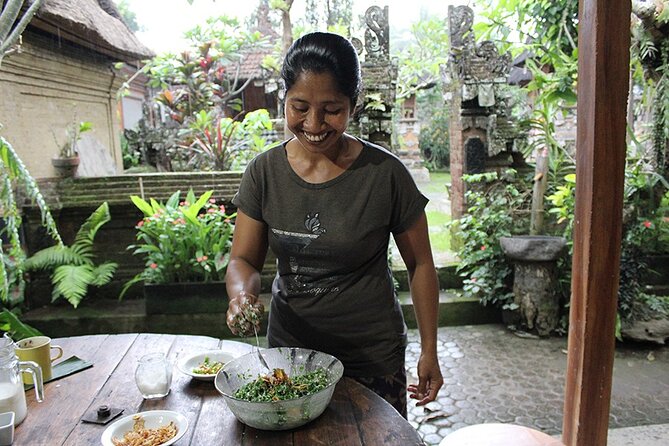
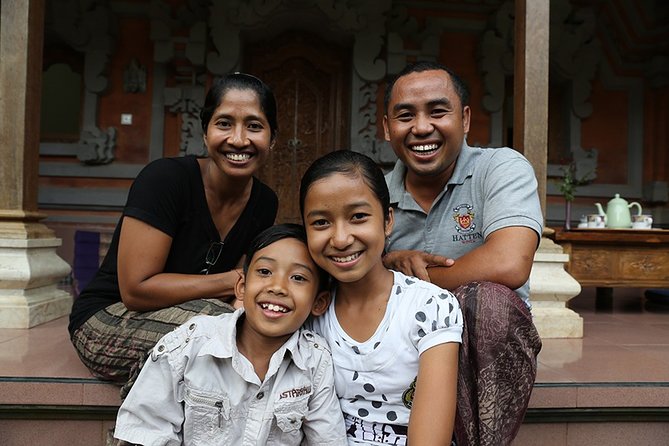
One of the best parts is the human scale of the hosting. The experience says you’ll be hosted by Dewa (or an equally lovely family member) and Dewa’s wife Jero, and it’s a private tour/activity—so it’s only your group.
That privacy changes the tone. You’re not competing for attention, and you can ask questions in a way that feels natural. In the reviews that reflect this style, the standout detail is how welcoming hosts can be when they guide you through their home and food culture.
You can also expect to leave with family recipes. That’s a practical souvenir, not just a photo. If you cook at home, this gives you a way to recreate flavors later and remember the evening beyond the meal itself.
If you’re traveling with someone who wants more than sightseeing, this is a strong match. It’s social, but not loud—and it centers on food as culture.
Price and value: is $56 fair for a home dinner in Ubud?
At $56 per person, this sits in the “serious cultural dinner” category. It’s not a low-cost meal deal, but it also isn’t overpriced when you look at what’s included.
You get:
- pickup and drop-off from Ubud hotels
- in-home meal with beverages
- the host time and guidance through the compound and ingredients
- gratuities included (so you’re not doing math at the end)
The biggest value factor is the setting. You’re not just paying for food. You’re paying for access to a private family compound, ingredient context, and a carefully handled dining tradition. That’s hard to replicate outside a hosted experience.
Is it worth it if you just want to eat something tasty? Probably not. But if you want a grounded Ubud night that feels like you touched daily life—not only tourist life—this price starts making sense.
Tips to get the most from your evening
A few practical things will help you enjoy this more, even if your plans are already tight.
- Wear comfortable shoes. You’ll walk inside the compound area and between parts of the home visit.
- Ask about your diet when you book. The experience notes a vegetarian option is available, but you must advise at the time of booking.
- Go in ready for a quieter dinner style. The hosts don’t share the dining table with you, so conversation pacing will be different.
- Bring a curious mindset for the spices. Knowing the names—galangal, cloves, cacao, nutmeg—makes the meal feel like a story you can follow.
Also, check your pickup details. Pickup is offered for Ubud hotels only, and if you’re staying outside Ubud you’ll meet at Alam Sari Resort.
Who should book this and who might skip it
This experience is best for you if:
- you want an authentic home dinner in Ubud’s village belt
- you’re interested in how Balinese families use herbs and spices
- you like quiet cultural experiences more than staged performances
- you’d enjoy a menu that includes turmeric coconut chicken, banana-leaf fish, and vegetable dishes with coconut
It may not be ideal if:
- you need heavy hands-on cooking instruction (this is primarily a hosted meal and ingredient education)
- you want your hosts sitting and chatting at the table the whole time
- you’re traveling only for quick hits with minimal walking
If you’re a foodie and you like getting the story behind ingredients, this fits nicely.
Should you book this traditional Balinese home meal in Ubud?
Book it if you want a true Ubud night that connects food to family life. For the price, you’re getting a real setting, host guidance, and a menu that represents home cooking rather than restaurant imitation.
Skip it only if your priority is a loud group activity or if you strongly prefer a shared dinner where hosts sit with you. The spiritual dining style is central here, and it’s not something they’ll change.
FAQ
How long is the traditional Balinese meal experience?
It runs about 2 hours.
What is the price per person?
The price is $56.00 per person.
Does the tour include hotel pickup?
Yes, hotel pickup and drop-off are included for Ubud hotels only.
Where do I meet if I am not staying in Ubud?
You should meet Dewa at Alam Sari Resort, Jl. Raya Keliki, Keliki.
Is the meal private for my group?
Yes. It’s a private tour/activity, and only your group participates.
Is there a vegetarian option?
Yes. A vegetarian option is available, and you should advise at the time of booking.
What dishes might I eat?
The menu may include pepes ikan (grilled tuna in banana leaves), bumbu kuning (chicken in turmeric and coconut milk sauce), bregedel (corn fritters), and jukut urab (seasonal vegetables with grated coconut and fried shallots).
Can I cancel and get a full refund?
Yes. You can cancel up to 24 hours in advance for a full refund.
Is it suitable for most travelers and are service animals allowed?
The experience notes that most travelers can participate, and service animals are allowed.