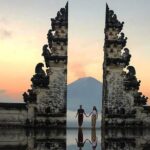
Stories hit harder when they dance. At ARMA Museum in Ubud, the ticket is cheap, focused, and packed with Balinese storytelling through performances like Kecak, Barong, Legong, and Ramayana.
I love the small, intimate audience feel and how every segment turns myth into movement with costumes and choreography you can actually follow. One drawback: this is for the selected performances only, not a full ARMA museum-gallery visit, so don’t plan it as your whole culture day.
In This Review
- Key things to know before you go
- ARMA Museum dance tickets: why $9 feels like a steal in Ubud
- Museum Seni Agung Rai in Ubud: where to be and how to plan your timing
- The 45-minute show block: what you actually see with your ticket
- Kecak and Sang Hyang Jaran: divine horses and the power of the chant
- Barong Prakpak and Barong Dance: nature, humans, and the beats behind it
- Legong and Ramayana Ballet: romance, battles, and the epic on stage
- Price and value: why $9 for a Balinese dance block makes sense
- Practical tips: how to watch, what to skip, and how to avoid a hassle
- Who should book ARMA cultural dance tickets (and who should rethink it)
- Should you book ARMA Cultural Dance Performance Tickets?
- FAQ
- Where is the meeting point for ARMA Cultural Dance Performance Tickets?
- How long is the experience?
- How much are the tickets?
- What’s included with the ticket?
- Is general admission to ARMA Museum galleries included?
- Is food and beverage included?
- What languages are supported?
- Is wheelchair access available?
- Can I bring pets or alcohol?
Key things to know before you go
- Small, intimate vibe makes the 45 minutes feel personal instead of rushed.
- You get selected cultural performances at ARMA Museum, not general entry to the galleries.
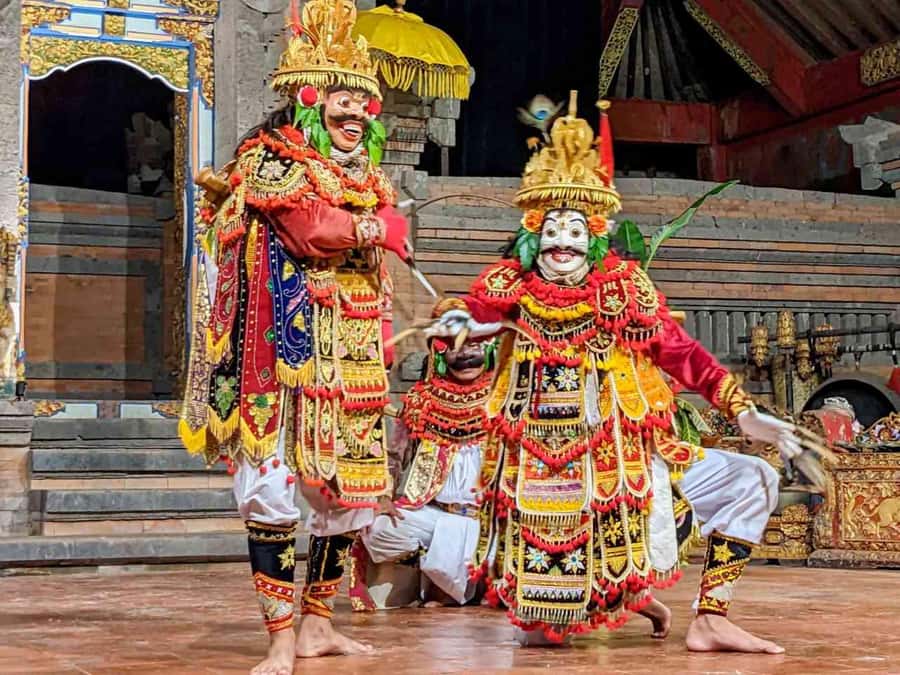
- Expect iconic shows, including Kecak (with its chant-style tradition), Barong, Legong, and Ramayana Ballet.
- Stories range from divine quests to romance and environmental harm—each told through dance.
- Your ticket runs about 45 minutes, so plan to arrive in time and stay through the whole block.
ARMA Museum dance tickets: why $9 feels like a steal in Ubud
For Ubud, dance shows can swing from painfully touristy to genuinely meaningful. ARMA Museum sits in the second category. The focus here is the performance, and the result is a compact, story-driven evening that fits real itineraries.
What I like most is the range of themes packed into one ticket: you can go from trance-like chanting styles to royal drama, then land on nature-and-humans morality tales. And because it’s only about 45 minutes, you’re not stuck sitting through long, wandering entertainment blocks.
At $9 per person, it also works as a smart try-if-you’re-curious option. You’re paying for the core cultural experience—dance storytelling—without the big museum time commitment some people end up regretting.
You can also read our reviews of more tours and experiences in Ubud.



Museum Seni Agung Rai in Ubud: where to be and how to plan your timing
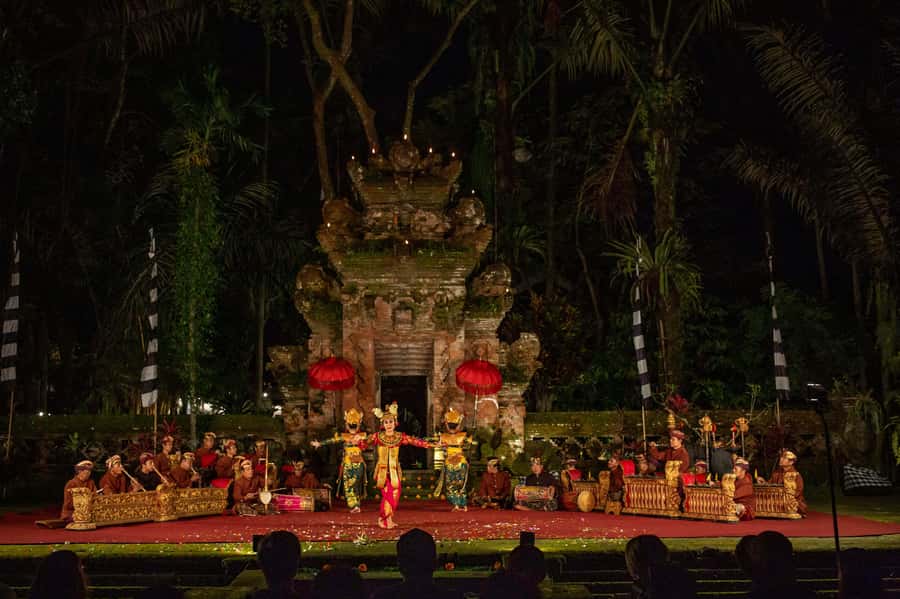
The meeting point is Museum Seni Agung Rai, Ubud. That matters because you want to arrive with enough slack to get seated before the performance starts. With a 45-minute duration, “close enough” timing can turn into “late enough to miss the setup.”
There’s also a host or greeter in English and Indonesian, which helps if you’re not sure where the show area is once you get inside. And yes, this is wheelchair accessible, so if you’re navigating mobility constraints, this option is set up for it.
Plan your day so you can linger afterward. The ticket covers the dance performances, but you’ll likely want a short walk around Ubud afterward for a breather—especially since you’re watching stories that are emotionally intense in places.
The 45-minute show block: what you actually see with your ticket
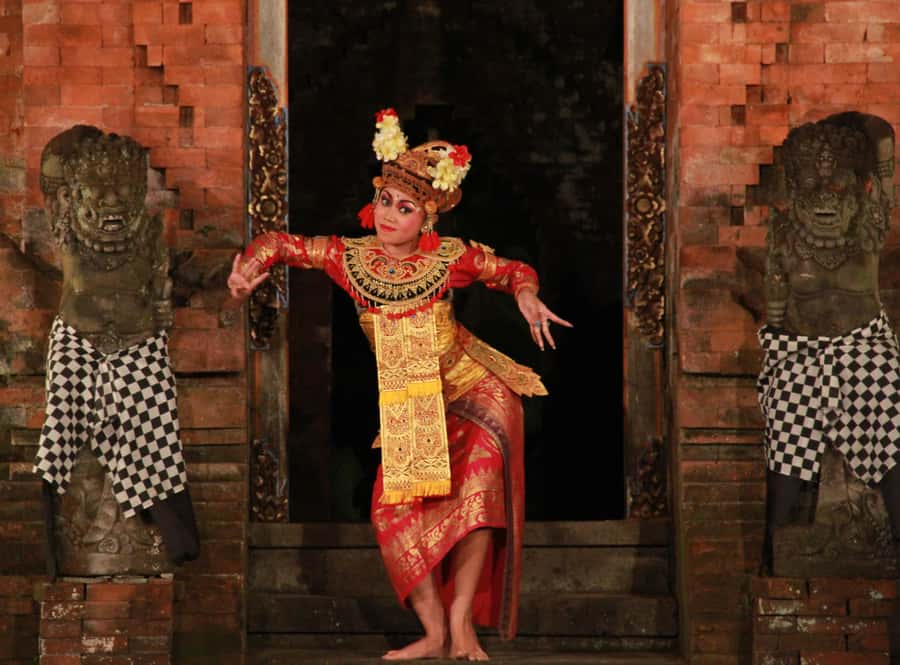
Your ticket includes entry to selected cultural performances at ARMA Museum. The program is designed around six well-known Balinese dance works, and the descriptions give you a sense of how each one thinks and talks through choreography.
Because the duration is listed as 45 minutes, think of this as a tight, performance-first experience. You won’t have time for a slow, museum-style meander between segments. If you want galleries too, you’ll need a separate plan since general admission isn’t included.
In other words: book this when you want to watch dance, not when you want an all-day museum crawl. That’s why it works so well as a value play—your time and money go into the actual stage time.
Kecak and Sang Hyang Jaran: divine horses and the power of the chant
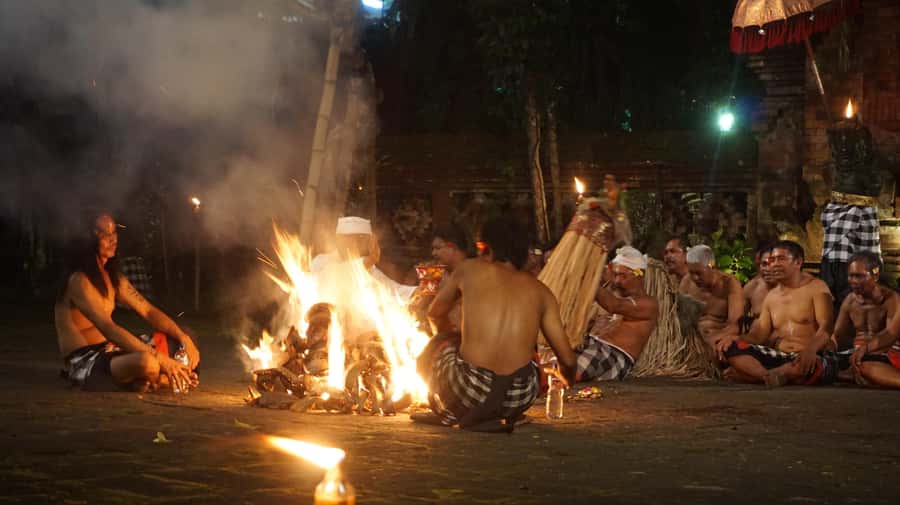
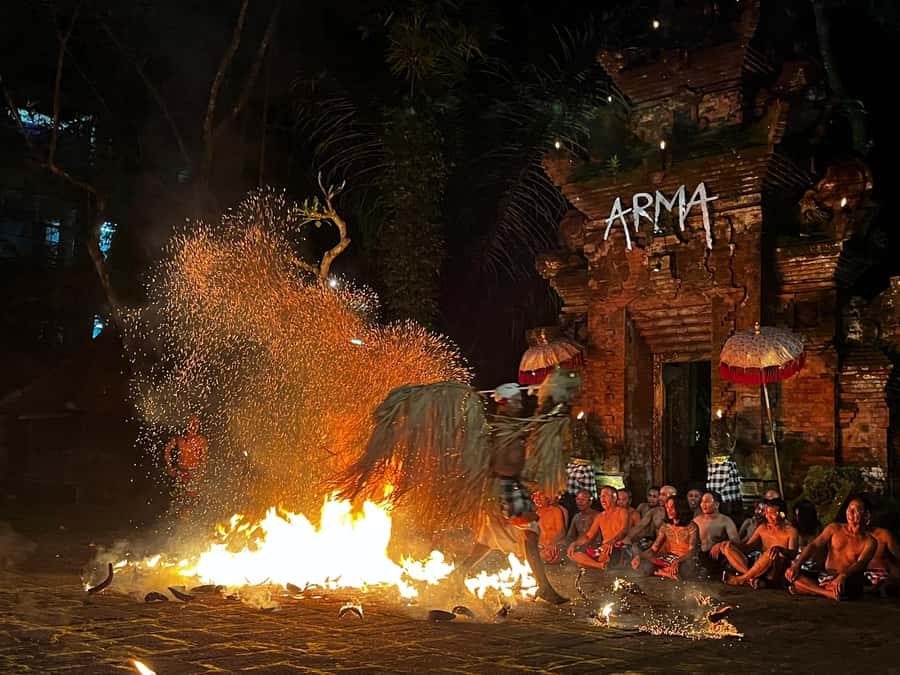
If you’ve heard of Kecak, this is a great way to see why. One of the dances linked to this ticket is Kecak Sang Hyang Jaran Dance, which draws on the myth of the Turning Mandara Giri and features a divine horse, Sang Hyang Jaran.
What I appreciate in the story setup is the emotional stakes: the gods become confused and worried as disasters, disease outbreaks, and world destruction pile up. Then the performance gives you a way to feel that tension without needing narration.
Another major highlight is Kecak Dance itself. It’s originally based on a Balinese ritual trance dance, and in the 1930s, Western artist Walter Spies collaborated with local dancer Limbak. The result is the famous chorus style with around 100 men and no musical accompaniment—just voices and rhythm doing the work.
If you’re the kind of viewer who likes to understand what you’re seeing, pay attention to how the chorus creates momentum. It’s not background noise; it’s the engine of the whole show.
Barong Prakpak and Barong Dance: nature, humans, and the beats behind it
Barong shows bring a different kind of energy: strong character work, dramatic storytelling, and movement that signals power. Here, you’ll see Barong Prakpak, which focuses on the destruction of nature by humans and how it harms the environment. The performance description is direct: animals such as monkeys, birds, and frogs are harmed by deforestation.
That’s not a small theme. It’s an uncomfortable one, but it’s also one of the reasons Balinese performance can feel more grounded than “just entertainment.” You’re watching a moral story told through dance, and it lands better when you let it stay serious.
There’s also Barong Dance, which begins with Tabuh Penegak Bebarongan. Even if you don’t know the musical terms, you’ll feel the structure: it’s the kind of opening that cues you in that the performance has an order and purpose, not random pacing.
My practical tip: don’t rush your attention. Barong segments often reward viewers who watch the whole pattern—character entry, rhythm shifts, and the way dancers respond to story beats.





Legong and Ramayana Ballet: romance, battles, and the epic on stage
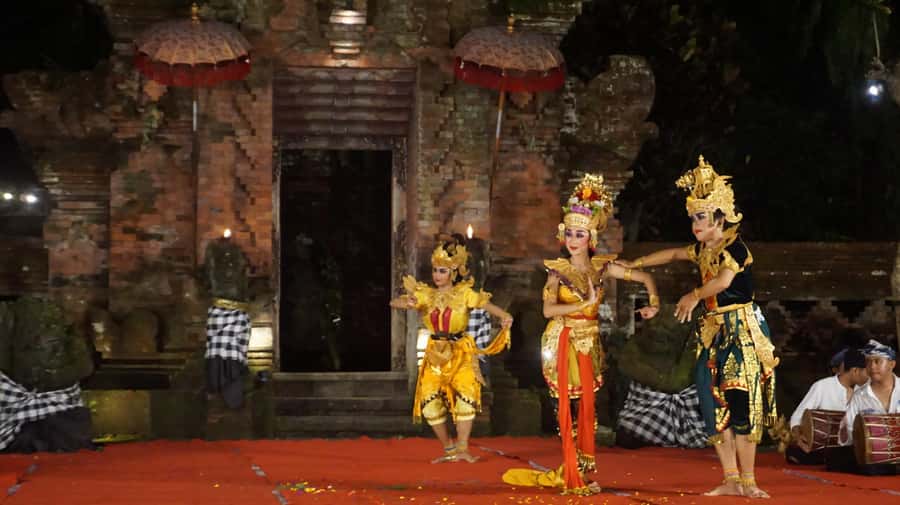
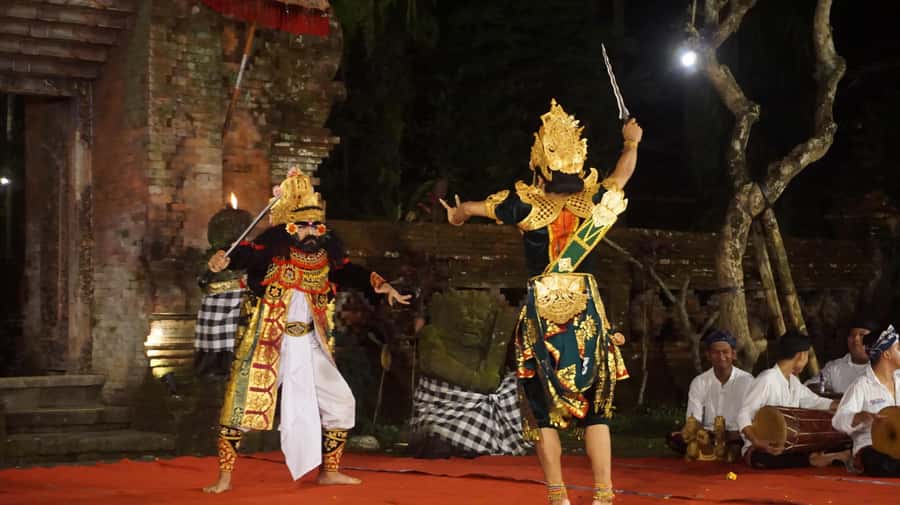
If you’re hoping for a show that mixes elegance with drama, Legong Dance Lasem Peliatan is a great match. It tells the story of King Lasem wanting to marry Princess Rangkesari of Gegelang. When the princess refuses, King Lasem attacks Gegelang, leading to a battle where Prince Panji appears.
What you’ll likely notice (even if your vocabulary isn’t Indonesian) is how dance communicates conflict. Expressions, hand shapes, and timing help you track who has the advantage—even when the plot is complicated.
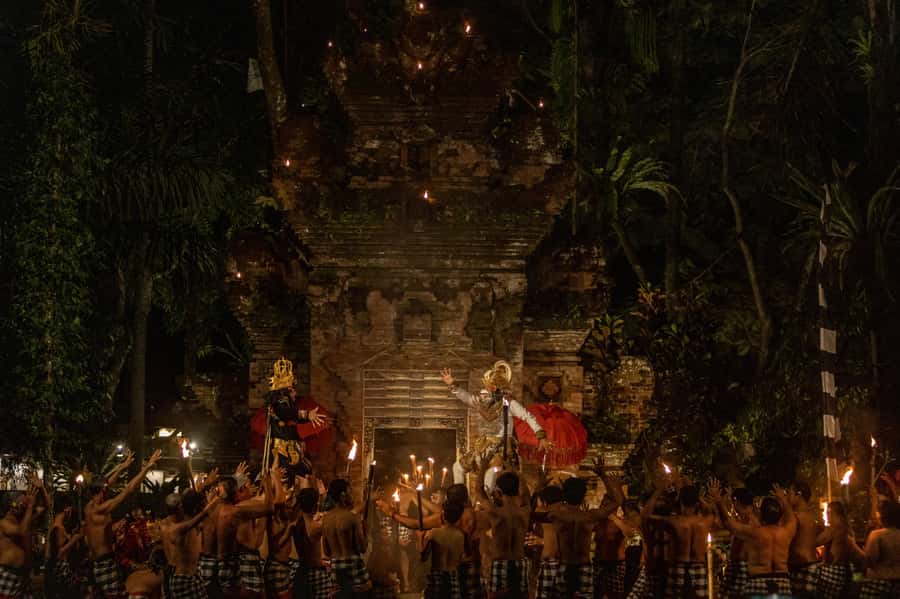
Then there’s Ramayana Ballet (Sendratari Ramayana), based on the epic Ramayana saga originally written by Valmiki in Sanskrit. This version uses a highly stylized dance art form to visualize the saga. It’s one of those stories people think they already know, but watching it as performance helps you catch how stylization can turn a long epic into clear emotional chapters.
I like pairing these in my head: Legong gives you a personal, relationship-driven narrative with battle energy. Ramayana gives you myth-scale drama with ritualized movement.
Price and value: why $9 for a Balinese dance block makes sense
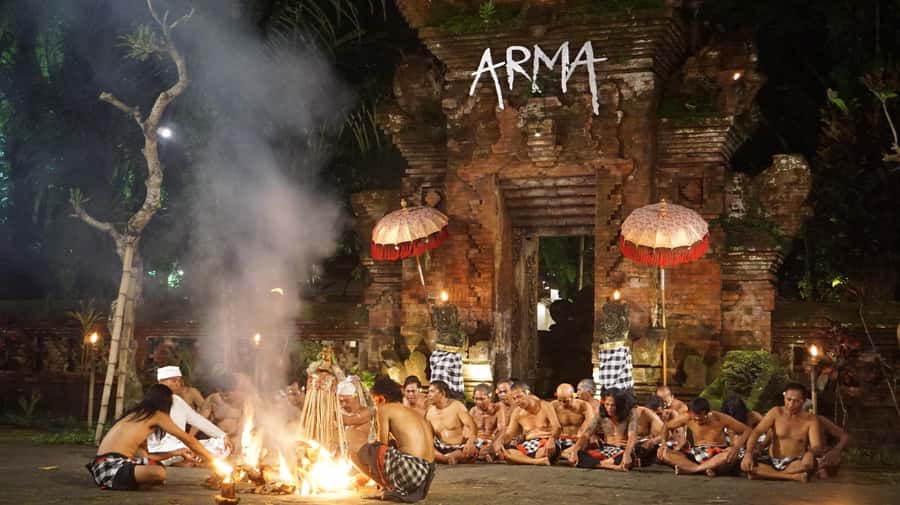
At $9 per person, you’re paying for something you can’t easily replicate on your own—stage storytelling that uses cultural language through movement. And because it’s 45 minutes, the cost-per-minute is unusually reasonable for a performance that’s designed to be the main event.
You’re also not stuck in a long queue. The ticket includes skip-the-ticket-line entry to the performances, which helps when you’re mixing this with other Ubud plans.
Just keep your expectations aligned: food and beverage aren’t included, and general ARMA gallery entry isn’t included. So if you want snacks and a full museum visit, plan a little extra time and money.
That’s the value equation here: you buy the performance, then build the rest of your day around it.
Practical tips: how to watch, what to skip, and how to avoid a hassle
This is where you make the experience smoother. Here are the moves that make a difference:
- Show up early enough to settle in. With a 45-minute performance block, late arrivals cost you real story time.
- Bring water only if you can. Food and beverage aren’t included, but the data also doesn’t say what’s allowed inside beyond the general restrictions. If in doubt, keep it simple and follow on-site rules.
- Plan around the no-alcohol-and-drugs rule. Alcohol is not allowed, along with drugs.
- Leave pets at home. Pets aren’t allowed.
- Don’t treat it like a gallery ticket. If you want art rooms too, you’ll need separate museum entry.
Also, the reviews highlight that the audience experience is small and intimate, which usually means better viewing than you’d expect for a low-cost ticket. If you can, pick a seat where you have a clear view of dancers’ upper-body expressions and handwork—that’s where a lot of the storytelling lives.
Who should book ARMA cultural dance tickets (and who should rethink it)
Book this if you want an authentic Ubud night that’s:
- Performance-first, not a whole-day museum project
- Short enough to fit tight schedules
- Focused on iconic Balinese dance styles like Kecak, Barong, Legong, and Ramayana Ballet
- Worth it even at the budget end, thanks to the low $9 price and included performance entry
Rethink it if you’re looking for:
- A full museum galleries experience (not included)
- Any food plan bundled into the ticket
- A long, slow cultural program (the duration is 45 minutes)
Should you book ARMA Cultural Dance Performance Tickets?
Yes—if your goal is to watch Balinese dance storytelling without spending a fortune or losing half your day. The price-to-time ratio is strong, and the performance format hits the sweet spot: clear themes, iconic names, and a show that’s close enough to feel personal.
Skip it only if you want galleries included or you need a more extended program. Otherwise, this is a smart add-on to an Ubud itinerary—and it’s the kind of cultural stop that actually feels like it deserves the time you give it.
FAQ
Where is the meeting point for ARMA Cultural Dance Performance Tickets?
The meeting point is Museum Seni Agung Rai, Ubud.
How long is the experience?
The experience is 45 minutes.
How much are the tickets?
The price is $9 per person.
What’s included with the ticket?
Your ticket includes entry to selected cultural performances at ARMA Museum.
Is general admission to ARMA Museum galleries included?
No, general admission to the galleries is not included.
Is food and beverage included?
No, food and beverage are not included.
What languages are supported?
The host or greeter is available in English and Indonesian.
Is wheelchair access available?
Yes, the activity is wheelchair accessible.
Can I bring pets or alcohol?
Pets are not allowed, and alcohol (along with drugs) is not allowed.