Follow the spices from market to your plate. What makes this Ubud day special is the mix of shopping, farming, and cooking, taught in a small group. I love how Subak irrigation comes alive in the rice fields, and I love the hands-on sauce work with Base Gede that anchors many Balinese dishes.
Plan on a bit of walking and sun, and remember the afternoon class skips the market because it is already closed. A good pair of shoes makes a big difference.
Most departures include hotel transfer within Ubud, and the English-speaking guide can be someone like Ari, Ery, or Padma based on past groups. Expect a small group (up to 6), a full 5 hours, and you’ll leave with a real sense of how Balinese food links to daily life.
In This Review
- Key Highlights Worth Booking For
- A Ubud Cooking Class That Starts Long Before the Kitchen
- Traditional Market Tour: Spices, Fruits, Fish, and the Daily Work Behind It
- Rice Fields and the Subak System: Water Control as a Way of Life
- A Balinese Home Visit: Architecture, Family Life, and Canang Sari
- Cooking Class: Building Dishes From Scratch (Including Base Gede)
- What You’ll Eat, and Why the Meal Feels Different
- Time, Pickup, and What to Bring for a Smooth Day
- Price and Value: What $23 Buys in Ubud
- Who Should Book This and Who Might Want Another Option
- Should You Book This Ubud Cooking Class Tour?
- FAQ
- How long is the Ubud Balinese cooking class and tour?
- Is hotel pickup included?
- Will I have to walk during the tour?
- Does the market stop happen every time?
- What will we learn about during the market and cooking?
- What should I bring with me?
Key Highlights Worth Booking For
- Traditional market walkthrough with ingredient tastings of fruits, spices, vegetables, and more
- Subak water system explained on the ground during the rice-growing and harvesting story
- Balinese home architecture + daily offerings (Canang Sari) and what the rules mean in family life
- Cooking from scratch and learning Base Gede/Base Rajang for multiple dishes
- You eat what you make, and some groups are given a recipe guide to take home
A Ubud Cooking Class That Starts Long Before the Kitchen
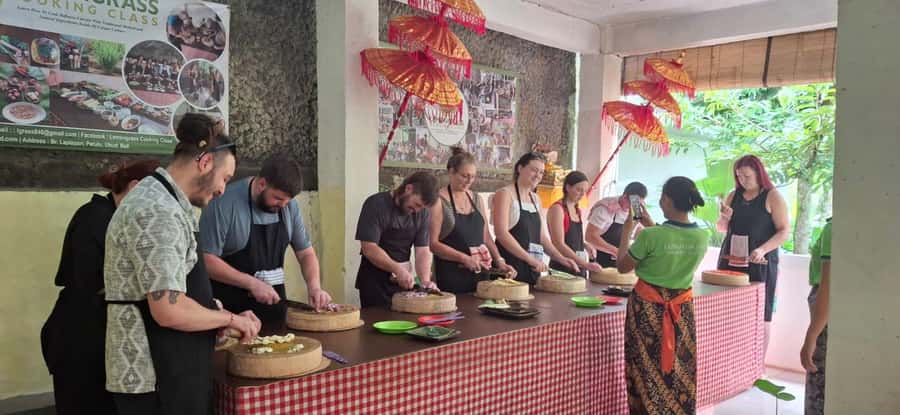
A typical Bali cooking class often begins when you step into the kitchen. This one starts earlier, with the ingredients and traditions that shape the food. That timing is the difference: you get the story behind the flavor, not just the recipe.
The day runs for 5 hours and stays small, limited to 6 people. That means more Q&A, more back-and-forth in English, and less time waiting around while others chop.
And yes, the food part is the payoff. But the real “wow” comes from seeing how Balinese life, farming, and offerings all connect to what ends up on your plate.
You can also read our reviews of more tours and experiences in Ubud.



Traditional Market Tour: Spices, Fruits, Fish, and the Daily Work Behind It
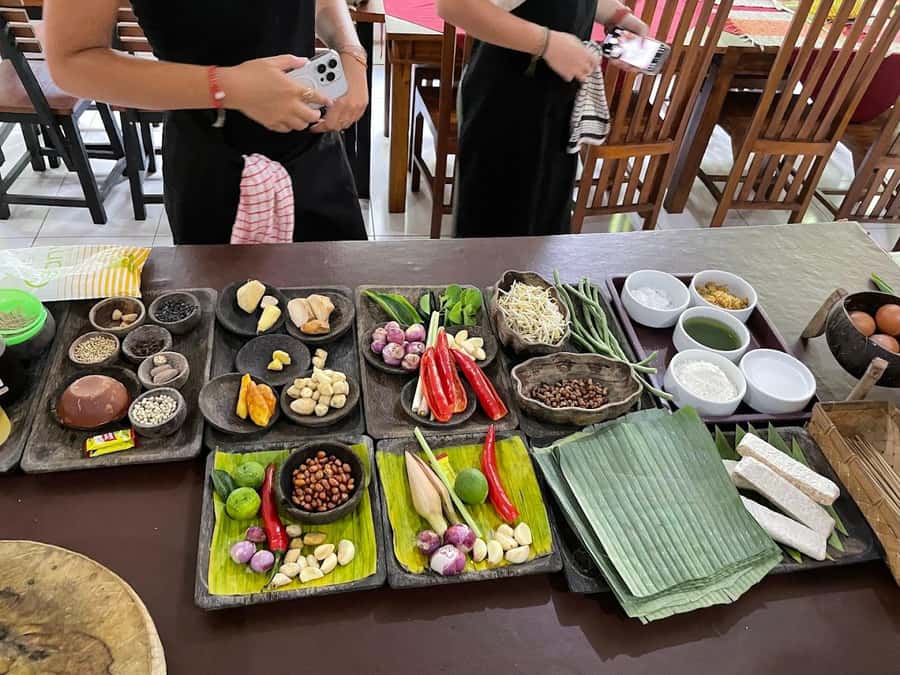
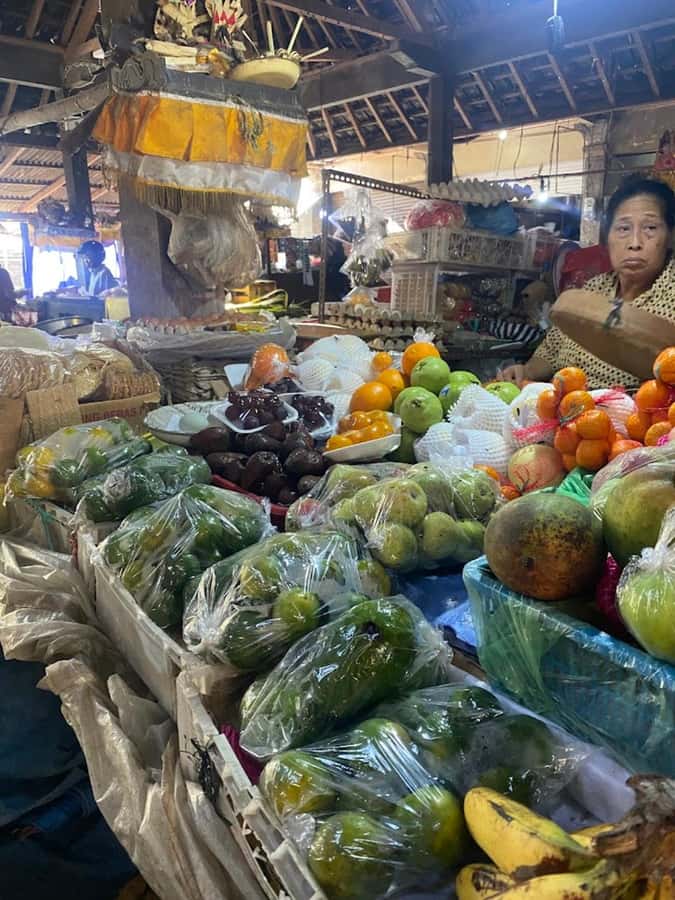
You kick off at a traditional Balinese market where you learn what people actually buy and use. You’ll look at local staples like rice, fruits, vegetables, spices, and also fish and meat. It’s not theory. It’s product-by-product, with the guide explaining what each ingredient does in everyday cooking.
This market stop also helps you learn how to taste with context. When you understand what something is, and how it is commonly used, your brain pays attention during the cooking class later.
A practical tip: if you’re doing the afternoon option, you should know the market may not happen because the market closes. If you want that market ingredient foundation, choose the morning slot.
Rice Fields and the Subak System: Water Control as a Way of Life
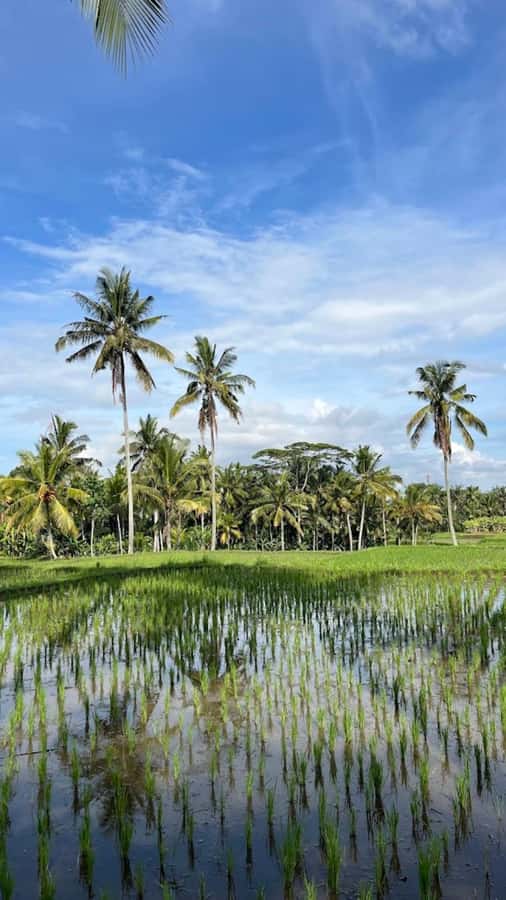
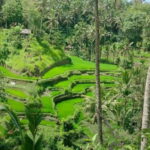
After the market, you head to the rice fields where the guide explains the traditional Subak water system. This is the part I like most if you enjoy real-world details. Instead of vague “rice grows here,” you learn how rice cultivation depends on shared water management.
You’ll also get a clear look at the rice planting and harvesting process in Bali. The goal isn’t to turn you into a farmer. It’s to show why farming is tied to community decisions, timing, and respect for the land.
If you’re the kind of traveler who loves photos, this stop delivers. But even without the camera, the explanation gives you something to carry into the rest of the day: Balinese food isn’t just tasty. It’s connected to water, work, and long-term rhythms.
A Balinese Home Visit: Architecture, Family Life, and Canang Sari
Next comes a Balinese home visit, where the focus shifts from ingredients to family and beliefs. You learn the concept of Balinese buildings and how traditional households structure life inside the home.
This is also where Canang Sari enters the story. You’ll learn the idea behind the daily offering made as a symbol of thankfulness to the gods. It’s not presented as a performance for visitors. It’s explained as part of normal life—something that happens regularly because it matters.
Then you get to make a traditional offering yourself. That hands-on moment is usually the part people remember most, because you’re not just hearing about it. You’re creating it, piece by piece, and learning why the offering matters in that everyday routine.
Cooking Class: Building Dishes From Scratch (Including Base Gede)
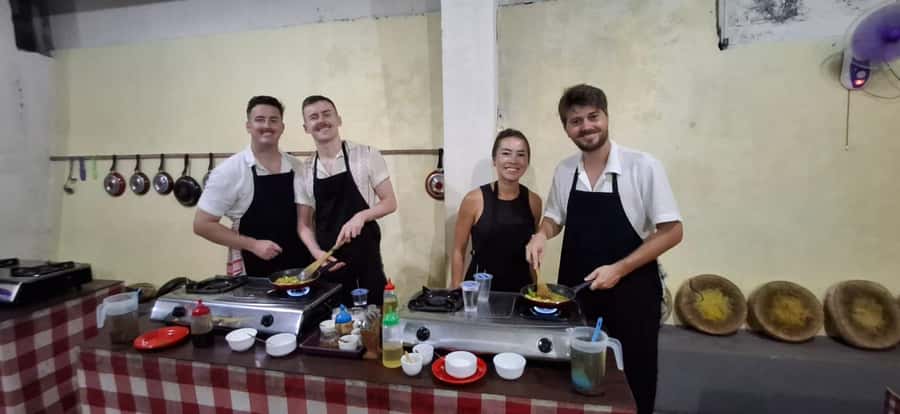
Finally, you move into the cooking class with the ingredients and concepts already fresh in your mind. The guide walks you through traditional Balinese dishes and gives a detailed explanation of the ingredients you’re using.
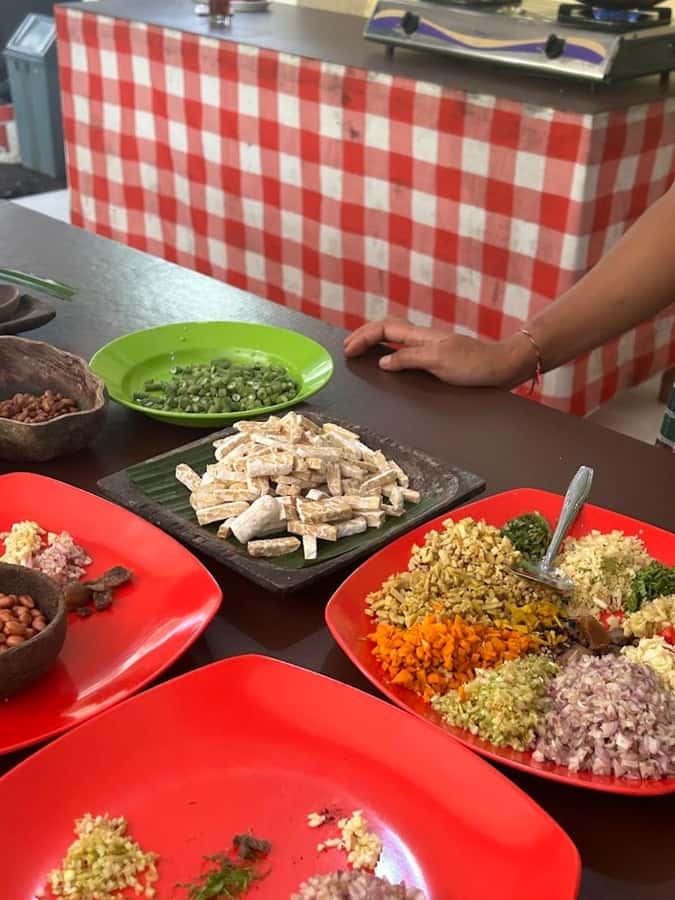
One of the most important learning points is the traditional sauce called Base Gede / Base Rajang. This sauce is used as a base for many dishes, so once you understand it, the rest of the cooking makes more sense. You’re not just mixing random spices—you’re building a flavor foundation that repeats across the menu.
In several past groups, the day also included working through a multi-dish menu (one group reported making around 10 dishes). That kind of quantity is usually a sign the class is more than a quick demonstration. You get real practice—chopping, grinding, mixing, and adjusting as you go.
When it comes to the people side of the class: some groups have been hosted by chefs like Padma, with guides such as Ari or Ery taking the lead earlier in the day. The common thread in the experience is clear, patient English guidance and step-by-step explanations you can actually follow.



What You’ll Eat, and Why the Meal Feels Different
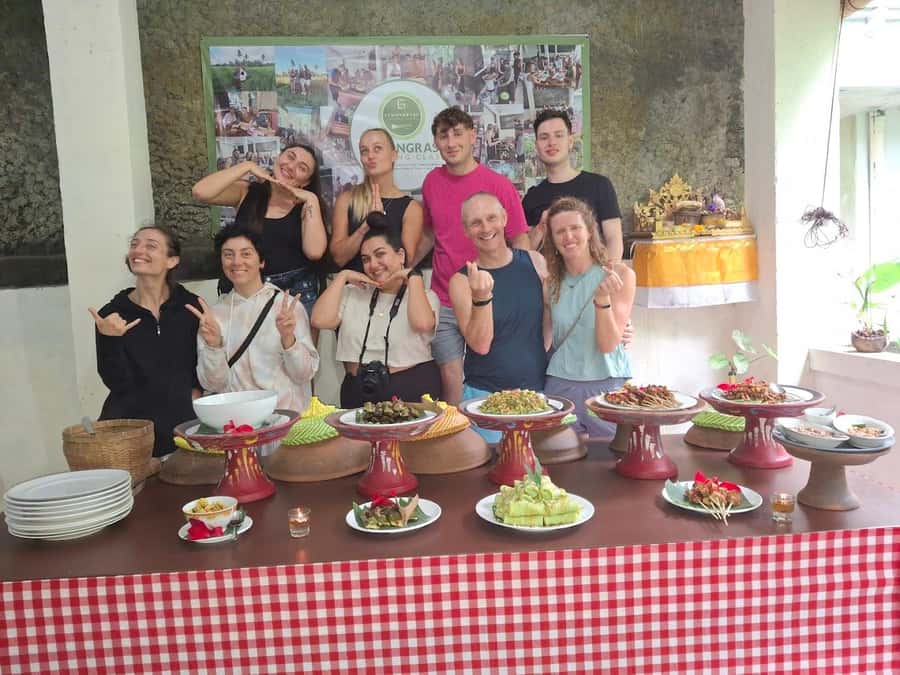
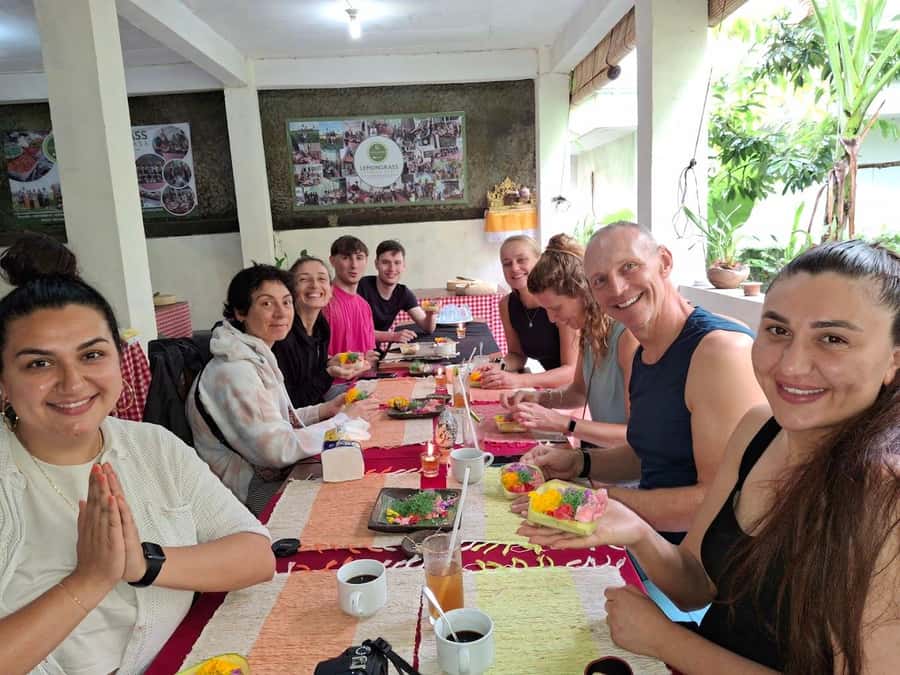
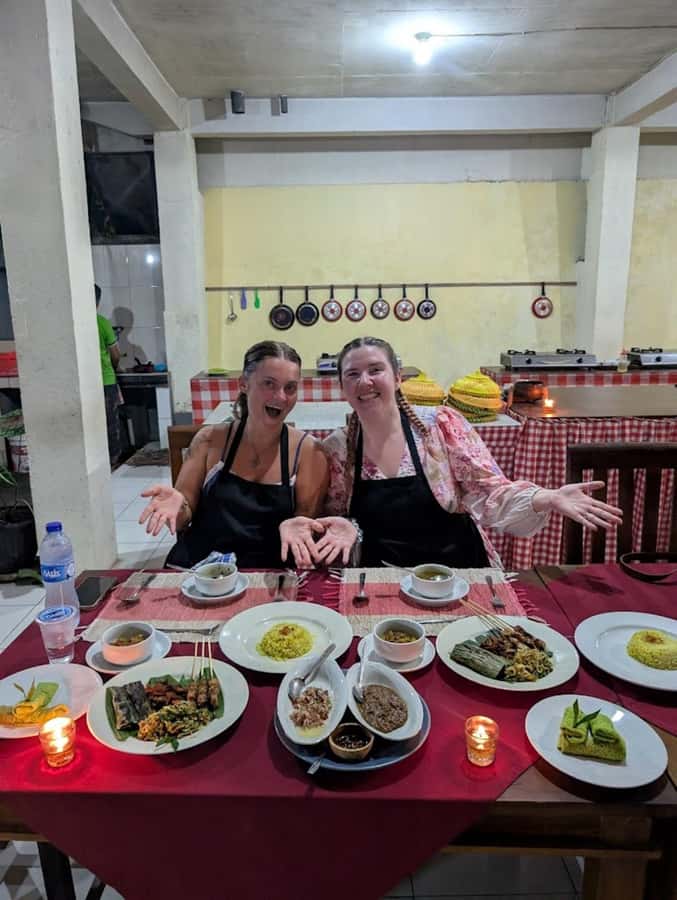
You don’t just cook and then leave. You get to enjoy the food you prepared. Eating your own dishes turns this from a class into a full experience.
I like that the day ties ingredients → culture → technique → meal. You taste with context. For example, after learning about market ingredients, then rice cultivation, and then daily offerings, the meal stops feeling like a standalone activity. It feels like the final chapter of a story.
Many groups describe the food as genuinely good, not just “nice for a tour.” And if you’re lucky, you might even receive a recipe guide that matches what you cooked, which helps you recreate the flavors later.
Time, Pickup, and What to Bring for a Smooth Day
The tour runs about 5 hours. Pickup is included only within the Ubud area, so if you’re staying outside Ubud (Sanur, Kuta, Nusa Dua, or other areas), you’ll need to arrange your own transport to meet at the designated meeting point in Ubud.
You should also be ready on time. The tour expects you to be waiting at your hotel lobby or meeting spot at pickup time. If you’re even a little late, it can throw off the rest of the day, since everything is scheduled.
Bring:
- Comfortable shoes (you’ll do walking)
- Hat and sunscreen (the sun in Bali is real)
- Water (keep it close during the rice field part)
- Camera (you’ll want it for market and rice views)
Price and Value: What $23 Buys in Ubud
At $23 per person for about 5 hours, this is strong value if you want more than a basic cooking demo. You’re paying for several different experiences bundled together: market tour, rice field visit, Balinese home and offering making, plus the cooking class with a focus sauce like Base Gede/Base Rajang.
Also, you’re not just getting “instructions.” You get transportation within Ubud, English explanation, and a small group setup that helps the teaching actually land.
If your main goal is only to learn a few dishes with minimal walking and minimal culture stops, you might feel the day is packed. But if you like tying food to place, this pricing structure makes the whole experience feel fair.
Who Should Book This and Who Might Want Another Option
This experience fits best if you enjoy hands-on learning and cultural context. If you want to cook, yes. But you also want to understand how Balinese people connect food to land, family, and daily offerings.
It’s suitable for all ages, with one important exception: it is not suitable for children under 10. So if you’re traveling with younger kids, you’ll need a different option.
Choose this tour if:
- you’re interested in Balinese spices and how they’re used
- you want the Subak story, not just pretty rice terraces
- you like making something yourself (offerings, sauce, dishes)
Consider skipping or switching if:
- you don’t want any walking in the sun
- you’re staying well outside Ubud and don’t want to self-arrange transport
Should You Book This Ubud Cooking Class Tour?
I’d book it if you want an actual Balinese food day, not a kitchen-only activity. The best part is the pacing: market first, rice fields second, home and Canang Sari third, and cooking as the natural payoff. That structure makes you remember what you learned.
If you can, pick the morning version so you get the market stop. Pack for walking, bring water, and wear shoes you can handle on uneven ground.
One last check: confirm your pickup location. The tour includes transfers within Ubud, but staying outside the area means you’ll handle transport to meet in Ubud.
If that matches your travel style, this one is a great use of time—and it’s easy to justify at the price.
FAQ
How long is the Ubud Balinese cooking class and tour?
The experience lasts about 5 hours.
Is hotel pickup included?
Yes, hotel transfer is included, but only within the Ubud area. If you’re staying outside Ubud, you’ll need to arrange your own transportation to meet at the designated meeting point in Ubud.
Will I have to walk during the tour?
Yes. The activity involves walking, so comfortable shoes are recommended.
Does the market stop happen every time?
No. There is no market visit in the afternoon class because the market already closes.
What will we learn about during the market and cooking?
You’ll learn about local ingredients such as rice, spices, fruits, vegetables, fish, and meat. In the cooking class, you’ll make traditional Balinese dishes and learn the sauce called Base Gede/Base Rajang.
What should I bring with me?
Bring comfortable shoes, a hat, camera, sunscreen, and water.