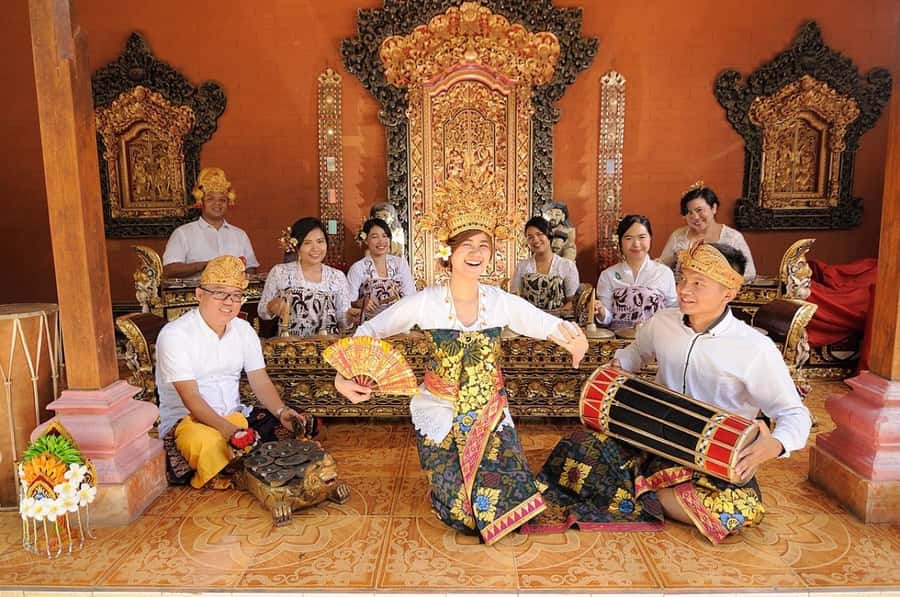
One hour can still change how you hear music. This Balinese traditional gamelan class in Bali teaches you how to play the intricate ensemble style while tying the rhythms to everyday life—religious ceremonies, festivals, and community gatherings. I love that it stays accessible even if you are not a musician, and I love that you get real hands-on playing with the instruments, not just listening. One consideration: it is only 1 hour, so you’ll leave with a feel for the music and your part, but not full mastery of a complete piece.
As a private group with an English-speaking, local instructor, you can ask questions and move at a comfortable pace. Just plan to arrive about 15 minutes early so you start on time and don’t feel rushed. Also note the class is not set up for very young babies or pregnancy.
In This Review
- Key takeaways before you book
- Why Balinese gamelan is more than a music lesson
- What you’ll actually do during the 1-hour gamelan class
- Private group pacing: how it changes the feel of the class
- The culture and ecology you’ll hear while you learn
- Price and value: does $20 make sense here
- What to bring, and simple rules that prevent problems
- Who should take this gamelan class (and who might skip it)
- A quick reality check on learning gamelan in one hour
- Should you book this gamelan class in Bali?
- FAQ
- Is this gamelan class beginner-friendly?
- Where is the class located?
- How long is the class?
- What is the price per person?
- What language is the instruction?
- What’s included in the price?
- Is food included?
- What should I bring?
- Are there any rules I should know?
- Is there a cancellation policy?
Key takeaways before you book
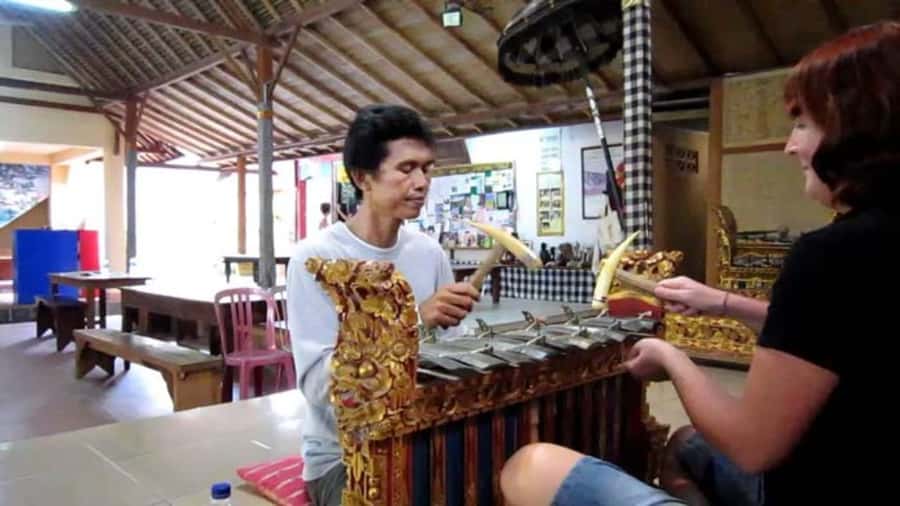
- Beginner-friendly: you do not need to read music or already play
- Hands-on gamelan practice: you’ll play using the provided equipment, not just watch
- Cultural context included: the class connects playing to Balinese community life and ceremonies
- Ecology + music connection: you’ll hear how the music links to the way people relate to their environment
- Private group comfort: English instruction and more personal pacing
- Quick, focused format: 1 hour makes it easy to fit into a day
Why Balinese gamelan is more than a music lesson
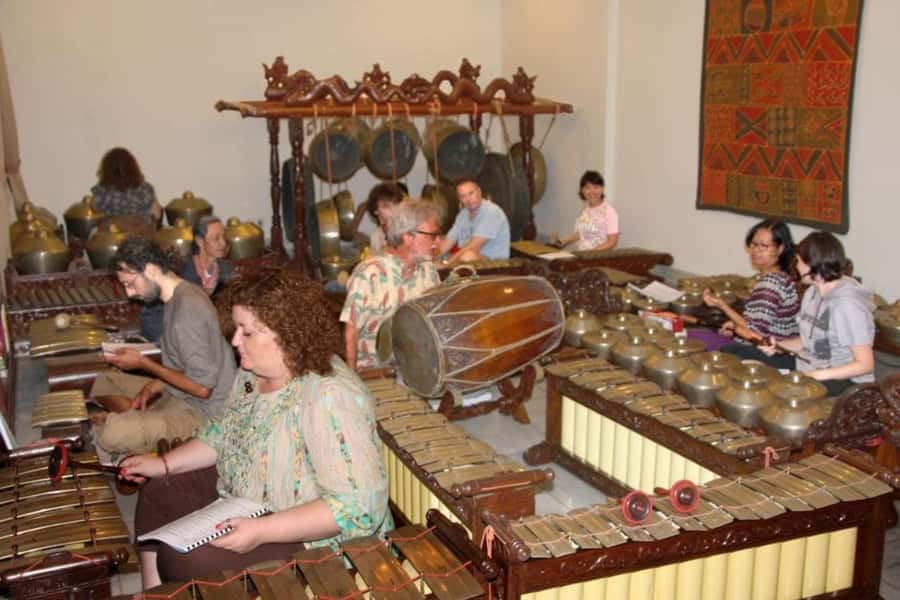
Balinese gamelan is not background music. It is a living part of community rhythm. In Bali, these ensembles show up around religious ceremonies, festivals, and public events, so the music often feels tied to real moments—not staged performances.
What makes this class worth your time is that you are learning the sound and the meaning. The idea is simple: when you understand why people play gamelan together, you play differently. You catch how the parts relate to each other, and you start listening for balance and timing instead of chasing one perfect note. That “everyone matters” feeling comes through in the way the ensemble works, with harmony and interdependence at the center.
I also like that the teaching approach is practical. The experience is designed so a complete beginner can enjoy it. If you are the type who gets nervous in music classes, this is the safer bet: you are learning by doing, with a local instructor guiding you.
You can also read our reviews of more tours and experiences in Ubud.



What you’ll actually do during the 1-hour gamelan class
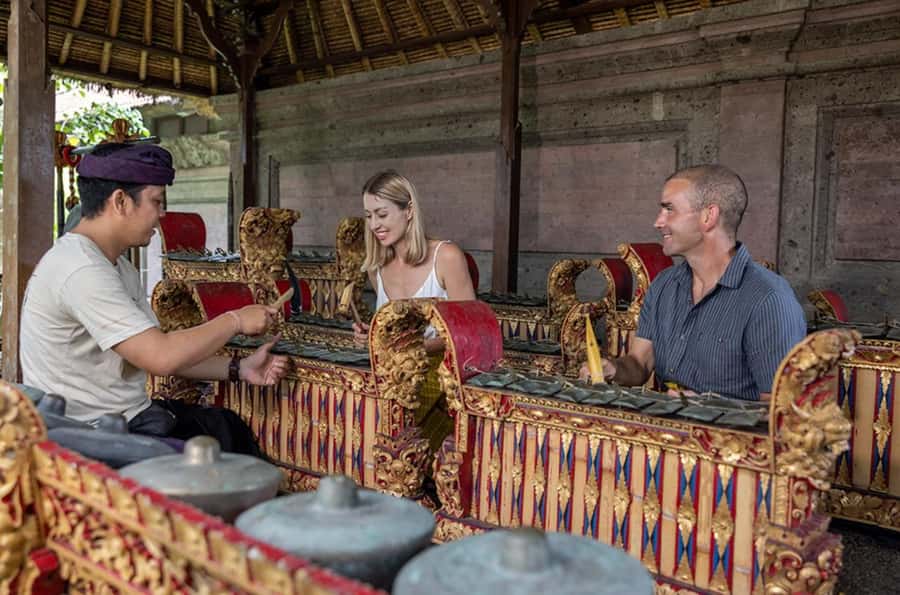
This is a 1-hour traditional music session, and it moves fast in a good way. You will spend the time learning how to play the Balinese gamelan style using the gamelan music equipment provided. The goal is not perfection. It is understanding the structure enough to participate and enjoy the process.
Here is what you can reasonably expect within that hour:
- you start with an explanation of how the ensemble’s parts fit together
- you get hands-on practice playing your assigned part
- you learn through short, repeatable exercises so you can build confidence quickly
- you listen and adjust so your part locks in with the group sound
The highlights also promise cultural and ecology context alongside musical training. That matters because gamelan is not just technical. The way it is played connects to shared values—togetherness, harmony, and how the community organizes events around music.
One more practical detail: English instruction is part of the package. If you worry about language gaps, that helps. You can ask for clarity right when something doesn’t click.
Private group pacing: how it changes the feel of the class
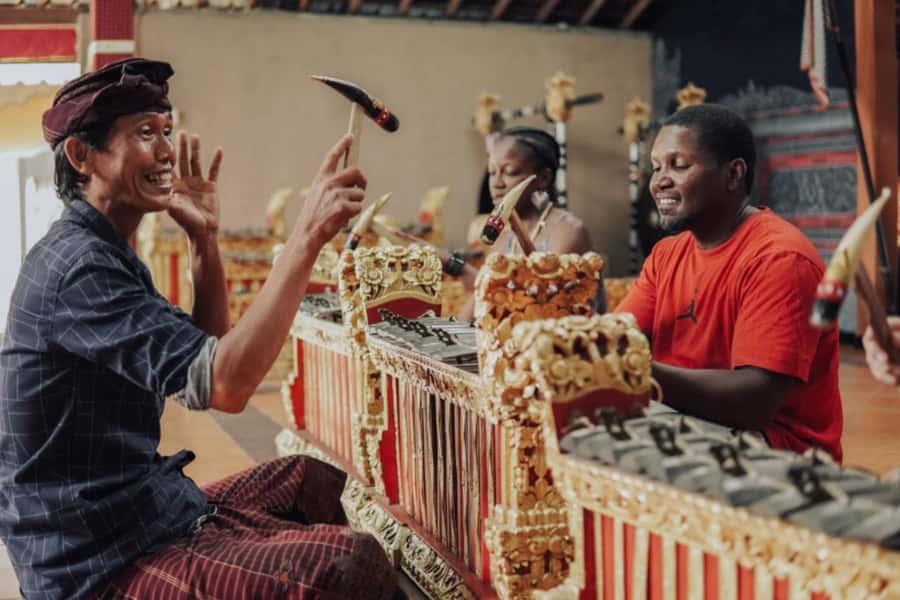
This class is listed as a private group, so the experience does not feel like you are squeezing into a big crowd. In a small group, you usually get more direct feedback from the instructor. That can be the difference between leaving confused and leaving confident.
The instructor is local and professional, and the class runs with provided instruments and equipment. That removes a common travel-class problem: you show up and realize you have no idea what you are supposed to touch. Here, the setup is ready for you.
Also, the experience is marked as skip the ticket line. That is a small thing, but it helps you keep your day smooth. If you are bouncing around Ubud and trying to fit cultural activities between meals and temple visits, fewer delays means more time doing the thing.
A quick note on the “private group” angle: even though it is private, you still should come ready to participate. Bring a camera if you want to document the moment, but expect the hour to be mostly about playing and listening, not filming.
The culture and ecology you’ll hear while you learn
Balinese gamelan is deeply tied to how people mark the calendar and how communities gather. This class explicitly frames the music in that context: it is often played during ceremonies, festivals, and community events. That matters because it helps you understand why the ensemble emphasizes alignment and togetherness.
You are also told the music reflects values of harmony and interdependence. In plain terms, you learn that no single part carries the whole sound alone. Your timing matters because it supports the group’s blend.
Then there is the ecology component. The class description says you’ll get a deep dive into Balinese culture and ecology alongside musical training. You might hear how local life and the natural setting shape community rituals and shared events. Even if you don’t catch every detail, the point is to give you a bigger picture than “this is a cool instrument.”
I like that this is not a lecture-only experience. It connects cultural explanation to what you are doing in real time. You play a rhythm, then you understand why the music is treated as a community practice. That connection makes the sounds stick.
Price and value: does $20 make sense here
At $20 per person for a 1-hour class, the value is all about what’s included. You get:
- a 1-hour traditional music class
- a professional/local instructor
- gamelan music equipment
That is a solid bundle for a short session. The equipment piece is the key value driver. In many places, you pay for instruction but you still have to arrange instruments. Here, the class provides the tools, so you can show up and start.
Food is not included, which is normal for a class that is only an hour. If you plan to do this after a temple visit or before dinner, just schedule a snack or meal separately.
Also, the cancellation and pay-later approach can be financially smart if your Bali schedule is fluid. If your plans shift due to weather or other bookings, you are not locked in immediately.






What to bring, and simple rules that prevent problems
You don’t need travel gear for a gamelan class—just the basics and a little comfort.
Bring:
- a camera if you want photos
- comfortable clothes you can move in
And follow the rules:
- no smoking
Arrive on time. The guidance is to get there 15 minutes before the activity starts. With music lessons, late arrivals can throw off the group rhythm and your own start.
There are also clear “not suitable for” notes: it is not listed for pregnant women and it is not listed for babies under 1 year. If any part of that applies, you’ll want to choose a different activity so you and the instructor can keep the session comfortable and safe.
Who should take this gamelan class (and who might skip it)
This is best for you if:
- you want a hands-on cultural activity in Bali
- you are a beginner and want structured help
- you like understanding the story behind what you do
- you prefer a small, guided experience over big group tours
It is also a great option if you like practical learning. The class setup is built for doing, not just observing.
You might consider skipping it if:
- you strongly prefer longer sessions where you build skills over multiple hours
- you need an activity that is specifically designed for people with pregnancy considerations or for babies under 1 year
The format is focused. In one hour, you’ll gain an appreciation for the music and learn how it feels to participate. You won’t walk out as the next gamelan star, and that’s okay.
A quick reality check on learning gamelan in one hour
One hour can feel short for any instrument. The good news is that the class is structured around what beginners can realistically learn quickly: coordination, listening, and participating.
If you treat this like a skills workshop, you’ll get the most out of it. If you show up expecting full mastery of a Balinese piece, you may leave slightly frustrated. A better mindset is: you’re here to understand how the ensemble works and experience the culture through active music-making.
That matches what I’d look for in your shoes. The joy is in the shared sound and the instant feedback loop. You hear it, you try it, you adjust. That cycle is the real “learning” even faster than memorizing notes.
Should you book this gamelan class in Bali?
If you want a meaningful, beginner-friendly music experience in Bali with hands-on playing and cultural context, I’d say yes. At $20 for a professional/local English instructor plus equipment in a 1-hour format, it is a practical buy—especially when your schedule in Ubud is tight.
Book it if you:
- want to experience Balinese culture through music, not just watch from the sidelines
- value an English-speaking guide in a private group setting
- like the idea of learning the connections between music, community events, and ecology
Skip it if you need a longer workshop to build serious technique, or if the listed “not suitable for” guidance affects you.
FAQ
Is this gamelan class beginner-friendly?
Yes. The class is described as accessible even if you are not a musician, and it’s designed for musical training with hands-on equipment.
Where is the class located?
The experience is in Bali, Indonesia.
How long is the class?
It lasts 1 hour.
What is the price per person?
The price is $20 per person.
What language is the instruction?
The instructor teaches in English.
What’s included in the price?
Included items are the 1-hour traditional class, a professional/local instructor, and gamelan music equipment.
Is food included?
No. Food is not included.
What should I bring?
Bring a camera and wear comfortable clothes.
Are there any rules I should know?
Smoking is not allowed. Also arrive about 15 minutes before the activity so you can start on time.
Is there a cancellation policy?
You can cancel up to 24 hours in advance for a full refund, and you can also reserve now and pay later.