Cooking with locals beats any food lesson. This Ubud morning market + cooking combo is a practical way to learn Balinese flavors using fresh ingredients you actually see and pick up.
I love the way the class starts with a real market stop, not just a photo moment. You’ll taste local fruits and get a feel for how ingredients move from stalls to your cutting board.
The one catch: the meal is great, but portions may not feel like a full lunch—so it pays to eat a little before or plan a snack after.
In This Review
- Key highlights worth your time
- Morning market in Ubud: where ingredients start to make sense
- From market to kitchen: hands-on cooking that doesn’t babysit
- Inside the Balinese compound and rice fields
- The menu: 8+ Balinese signature dishes you’ll cook yourself
- Dietary needs and allergies: where this class earns trust
- Taste, portions, and how to plan your day
- Price and value: what $24 buys you in Ubud
- Pickup and timing: how the schedule plays out
- What to bring (and what to skip)
- Who should book this Ubud cooking class
- Should you book it?
- FAQ
- How long is the Ubud cooking class?
- Do I visit a market during the class?
- Will I cook the food myself?
- Is the class taught in English?
- Are vegan or vegetarian diets accommodated?
- What should I bring?
- Is pickup included in the price?
- Can I cancel for a full refund?
Key highlights worth your time
- Morning market walk and fruit tasting so you start with flavor context
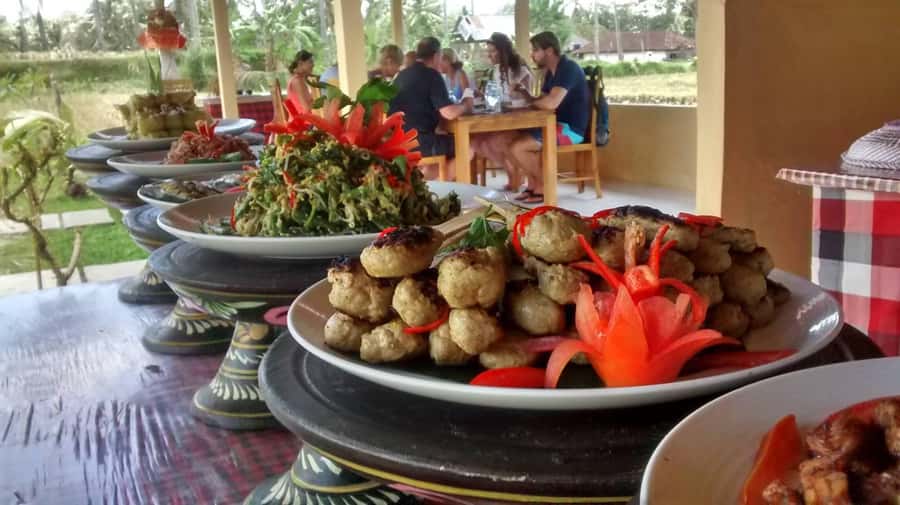
- Hands-on cooking of 8+ Balinese signature dishes with step-by-step guidance
- Cook, taste, and keep moving while the food is hot and fresh
- Rice-field/paddy-field time inside a real Balinese compound setting
- English instruction plus vegan/vegetarian support (and even peanut-allergy care)
Morning market in Ubud: where ingredients start to make sense
The whole experience makes more sense once you’ve seen where ingredients actually come from. The class begins with a short visit to a local market (about 30 minutes), timed for the morning flow—when you’re more likely to notice how locals shop and how many different items show up for everyday cooking.
You’ll also taste local fruits during this stop. It’s a small moment, but it’s useful because it trains your palate for what Balinese food leans on: fresh produce, bright spice mixes, and flavors that aren’t built around one single ingredient.
This part is also a good reset from Bali’s usual “grab a scooter and hope” rhythm. Instead of wandering, you get a guide who can point out what matters for cooking, not just what looks interesting for pictures. That’s the difference between a market you pass through and a market that actually teaches you.
You can also read our reviews of more tours and experiences in Ubud.



From market to kitchen: hands-on cooking that doesn’t babysit
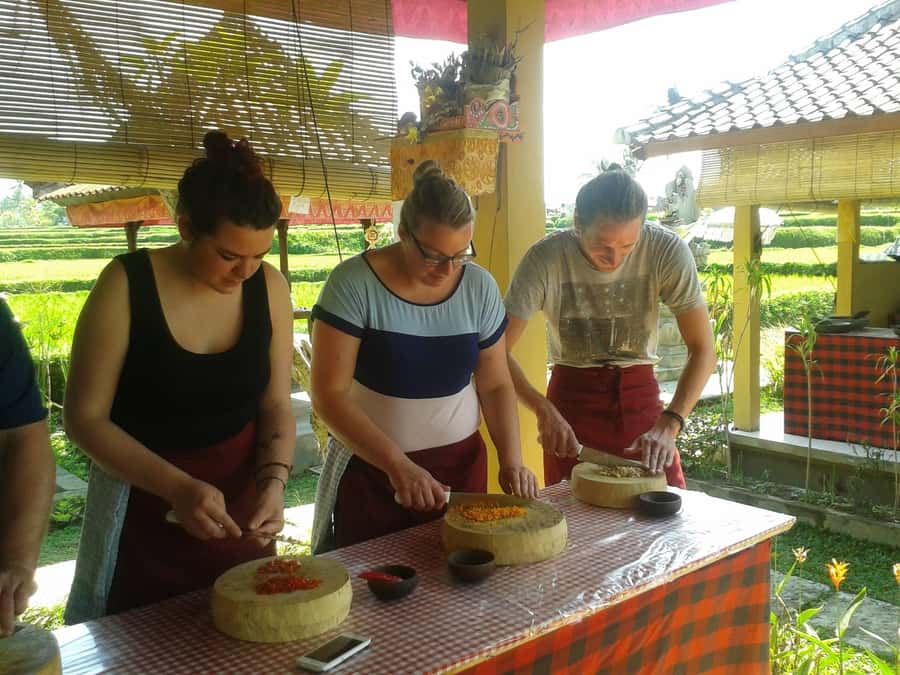
After the market, you head into the cooking portion (about 2 hours). This is not a sit-and-watch show. The class is structured so you make the menu items yourself, guided through processes step-by-step.
I like that you’re active most of the time. You’re chopping, mixing, and assembling, which means your brain is learning as your hands work. That’s how recipes actually stick once you’re back home and trying to repeat them for friends.
You also taste what you’re making as you go. That matters because many Balinese dishes depend on balance—salty, spicy, sweet, and fresh elements have to line up. Tasting during prep helps you catch things early, instead of guessing at the end.
An added plus: the class runs in English, so you won’t be left piecing together explanations with gestures. And the vibe is playful. Multiple people point out how fun the class is, including laughing a lot while learning.
Inside the Balinese compound and rice fields
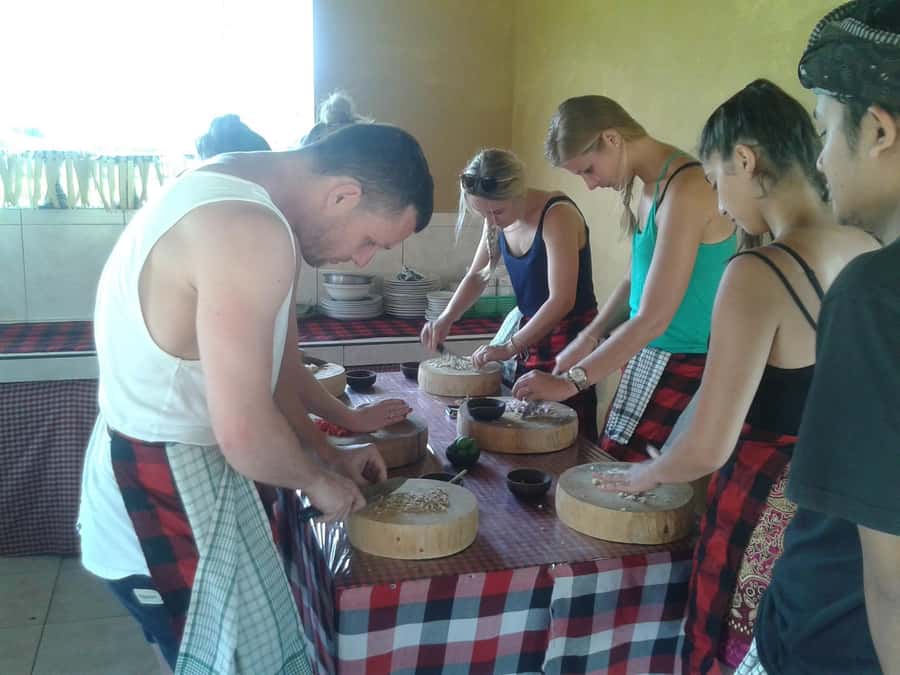
One reason this class feels more “Bali” than a generic cooking demo is the setting. You don’t just cook in a kitchen. You explore beautiful paddy fields and spend time in a real Balinese compound environment.
Even if you’ve seen rice terraces from a viewpoint, the effect is different when you’re in the middle of the agricultural landscape and connecting what you’re cooking to what the region grows. It also helps the schedule feel like a mini morning outing, not only a classroom.
If it’s raining in Ubud, this is a strong pick. It gives you culture, movement, and food all in one plan, without being dependent on good weather for long outdoor hikes.
The menu: 8+ Balinese signature dishes you’ll cook yourself
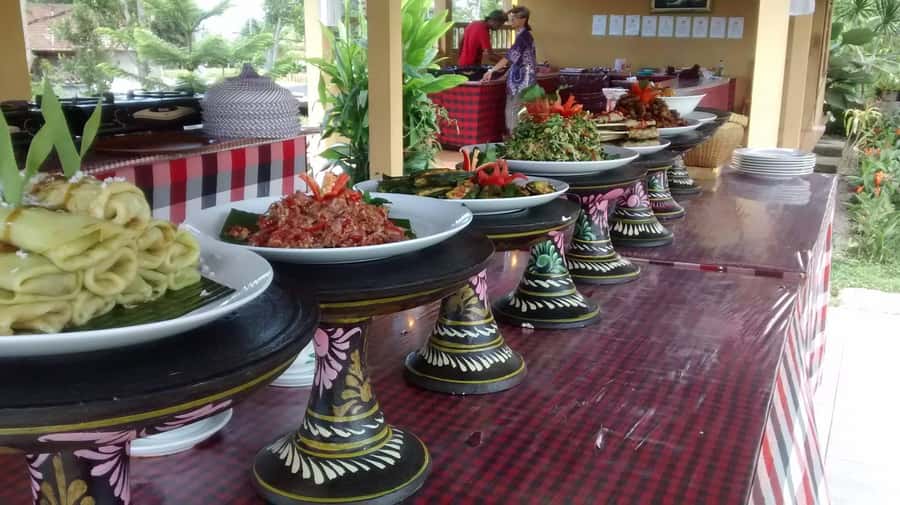
The promise here is clear: you’ll learn Balinese cooking through at least 8 dishes. The exact lineup can vary by class flow, but the structure stays consistent: you follow the chef/guide through multiple recipes, you do the work, and you get a recipe copy at the end.
You’ll also leave with a PDF recipe book, which is practical. Most cooking classes stop at the taste. A PDF gives you something to reference later, especially when you’re trying to remember spice combinations and the order of steps.
One detail to keep in mind: some people describe making around 6–7 dishes, while the overall offering talks about 8+ recipes. Either way, the day is designed to hit multiple recipes, not just one or two. If you’re the kind of person who loves variety, you’ll be happy here.
Dietary needs and allergies: where this class earns trust
If you’ve cooked before, you know dietary changes are rarely just a swap. They require adjusting spice mixes, ingredients, and sometimes technique.
This class is set up to handle that. People report that it accommodates vegan and vegetarian cooking, and one reviewer specifically mentions peanut-allergy care. That’s the kind of information you want to hear before you book, because it suggests you won’t be forced into a one-size-fits-all menu.
My practical advice: if you have allergies or a strict diet, communicate clearly at the start. Even with good accommodation, details matter—especially for nut allergies.
Also note the rules: alcohol and drugs aren’t allowed. If you’re thinking of turning the class into a full booze-and-snacks outing, it’s not that kind of experience. It’s cooking-focused, and that helps the energy stay focused on food skills.





Taste, portions, and how to plan your day
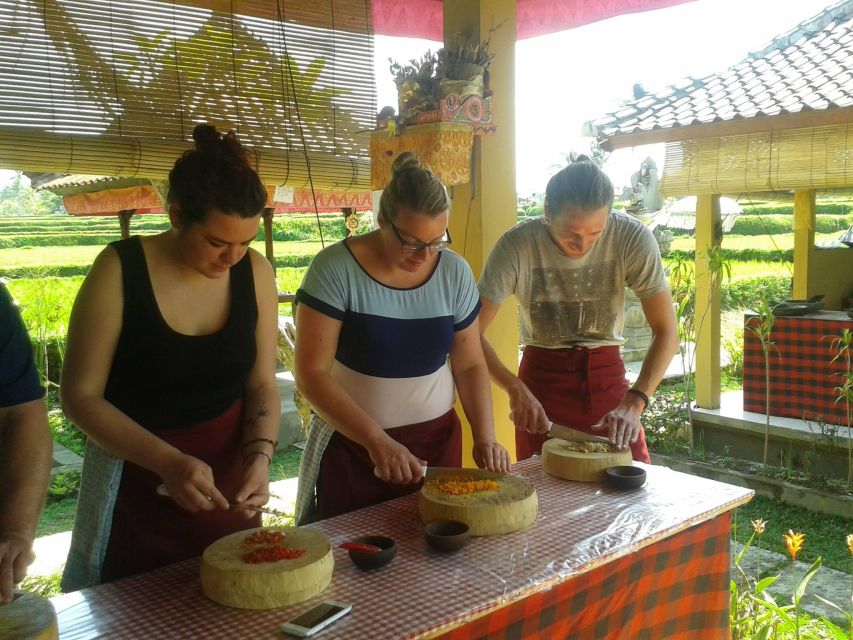
The food is the point, and you’ll taste what you cook during the session. Still, one important reality check: a couple of comments suggest the class meal might not be enough to fill you up like a heavy lunch.
So I’d plan your day like this:
- Eat a light breakfast before pickup (or bring a small snack).
- Treat the cooking as both a meal and a learning workshop.
- If you’re hungry after, plan dinner nearby rather than assuming you’ll be perfectly set.
This matters because $24 is inexpensive for a hands-on class with market time and recipe materials. You want to maximize the value by not also being “hangry” while you’re trying to learn.
Price and value: what $24 buys you in Ubud
At $24 per person for a 5-hour experience, this is strong value—especially because it’s not only cooking. You get:
- hotel pickup/drop-off within the Ubud area
- a local guide who accompanies you
- a market visit in the morning
- cooking instruction for multiple Balinese dishes
- a welcome drink
- time around rice fields
- a recipe PDF to take home
The only cost note that can change the math is pickup location. Hotel pickup/drop-off is included only in the Ubud area. If you’re staying farther out, there’s an extra fee for pickup outside the area.
So the smartest way to judge value is simple: check how close you are to the included pickup zone. If you’re in central Ubud, $24 can feel like a steal for the hands-on cooking and local context.
Pickup and timing: how the schedule plays out
The experience runs about 5 hours total. You’ll have a pickup window using several options in Ubud:
- Kantor Kecamatan Ubud
- Dewangga Ubud
- Coco Supermarket
- Yulia Village Inn
- Bintang Supermarket Ubud
Drop-off uses the same general set of Ubud locations. That reduces stress because you’re not trying to map out transport while you’re hungry and carrying food notes.
The timing is also key: the class includes a morning market visit (about 30 minutes). If you want to see the market flow and taste local fruit, mornings are the point. Many cooking classes skip that step and just throw you into the kitchen. Here, you start earlier and connect the food to the ingredients.
What to bring (and what to skip)
This is a class where small practical things help you enjoy it more.
Bring:
- Cash (you’re specifically asked to have it)
Don’t bring:
- alcohol and drugs (not allowed)
Also, it isn’t suitable for people with altitude sickness. Ubud sits at a higher elevation than some beach areas, so this is worth taking seriously if you’re sensitive to altitude.
Who should book this Ubud cooking class
This is a great fit if you:
- want a hands-on cooking experience, not a demonstration
- care about authentic Balinese flavors and ingredient context
- like morning plans that include markets and then real-world cooking
- travel with someone who learns differently (some people enjoy the teaching; others enjoy the activity)
It’s less ideal if you:
- want a big, guaranteed buffet-style meal
- dislike being active for most of the class
- need an experience that’s fully adaptable to complex restrictions without prior communication
If you’re on a rainy-day schedule in Ubud, this also works well because the core activities are structured and food-focused.
Should you book it?
I think it’s a yes if you want Bali food skills you can repeat at home. The combo of a morning market walk, learning multiple dishes, cooking everything yourself, and getting a PDF recipe makes it feel like more than a one-time activity.
Before you book, do two quick checks:
- Confirm you’re within the included pickup area (so the $24 stays the real deal).
- Plan for food but don’t assume you’ll eat a full meal worth of calories during the class.
If those fit, you’ll end the day with recipes, tasting memories, and the confidence to cook Balinese-style dishes long after you leave Ubud.
FAQ
How long is the Ubud cooking class?
The experience lasts about 5 hours.
Do I visit a market during the class?
Yes. You’ll visit Pasar Pejeng local market for about 30 minutes in the morning option, and you’ll also taste local fruits.
Will I cook the food myself?
Yes. You’ll cook the menu items yourself with step-by-step guidance, and you also taste the food as you make it.
Is the class taught in English?
Yes. The instructor/guide provides instruction in English.
Are vegan or vegetarian diets accommodated?
Yes. The class can cater for vegan and vegetarian cooking.
What should I bring?
Bring cash. Also note that alcohol and drugs are not allowed.
Is pickup included in the price?
Hotel pickup and drop-off are included only in the Ubud area. Pickup outside Ubud has an extra cost.
Can I cancel for a full refund?
Yes. You can cancel up to 24 hours in advance for a full refund.