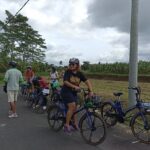
Cycling here is a real-world snapshot of Bali. You’ll ride through rice fields for most of the route, then layer in visits to a school, a family compound, and a village temple—so it’s not just a scenic loop. You finish with Balinese lunch and time to swim, which makes the day feel complete rather than rushed.
I especially like the private-group feel and the way the guide connects the dots as you go. In the reviews, guides such as Wayan (and the owner, Dewa) come across as genuinely friendly, talkative, and good at explaining what you’re seeing—plus the bikes are high-quality mountain bikes with helmets provided.
The main consideration is that pickup and timing can vary depending on where you stay, especially if you’re outside the Ubud area (extra charges may apply), and the trip assumes you’re comfortable biking and visiting on the day’s schedule.
In This Review
- Key highlights that make this tour worth your time
- A private bike day that starts with proper bike setup in Ubud
- Riding through rice fields for most of the route
- The school visit: learning Bali through education, not just temples
- Family compound visit: the most human part of the day
- Village temple stop: what it means and how to act there
- Traditional village sections and guided walking breaks
- Lunch at a local restaurant, then a pool reset
- Price and value: why it costs $33 and what you actually get
- Logistics that matter: pickup area, group type, and timing
- What kind of traveler this fits best
- Practical tips so your day goes smoothly
- Should you book this Ubud private bike tour with meal and a pool?
- FAQ
- How long is the bike tour in Ubud?
- Is pickup included, and where does it cover?
- What’s included in the price?
- Do I need to pay for breakfast?
- Can I choose a private or sharing option?
- Is there free cancellation?
Key highlights that make this tour worth your time
- 80% rice-field riding: a day where the views are the point, not a bonus.
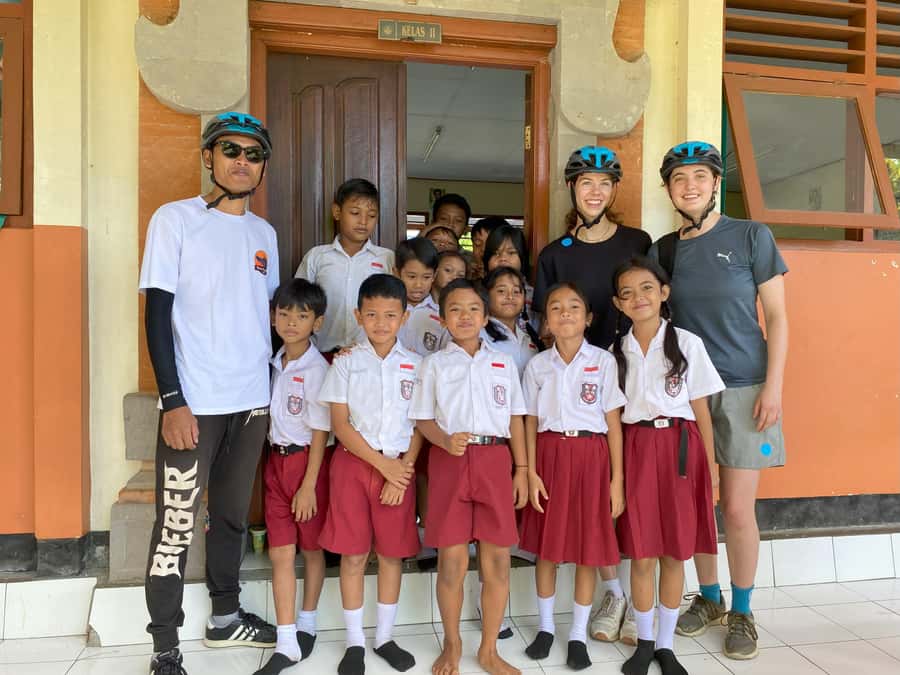
- School + family compound access: you get context on daily life, not just photos.
- Village temple stop: spirituality is treated as part of the community, with guided meaning.
- High-quality mountain bikes: solid for dirt paths and comfortable enough for a longish session.
- Balinese lunch + pool swim: the payoff at the end is food and a real break.
- Small-group / private options: easier conversation and less waiting around.
A private bike day that starts with proper bike setup in Ubud
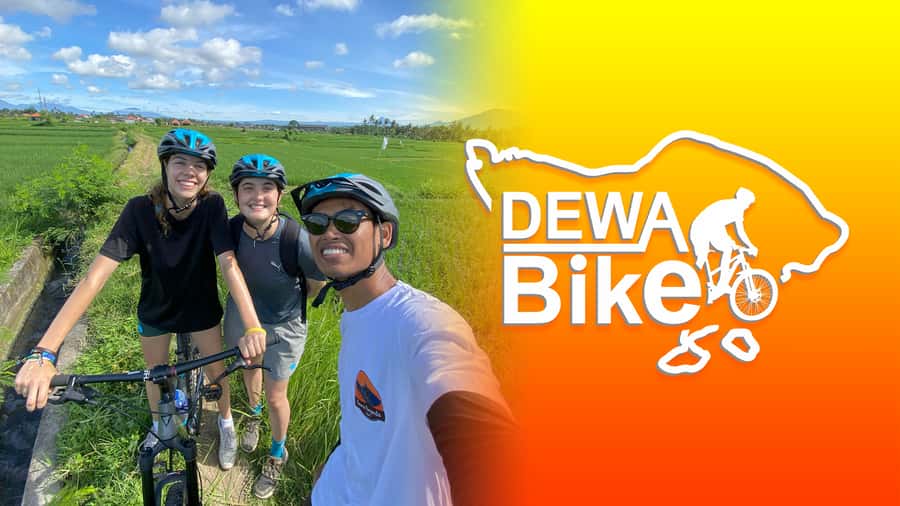
This tour begins with hotel pickup in the Ubud area, then you meet the team and get time to check out the bike before you head out. It’s a simple but smart start: you can get your bearings early, ask quick questions, and avoid that first-10-minutes awkward wobble.
I like that you aren’t thrown straight onto a ride without support. In the reviews, the welcome at Dewa Bike Tour comes across as warm and organized, and you’ll also get an English (and sometimes Indonesian) live guide who knows how to keep the day moving.
If you’re traveling far from Ubud, factor in that pickups outside Ubud may cost extra. That’s not a dealbreaker, just something to confirm so the day stays comfortable instead of logistically annoying.
You can also read our reviews of more tours and experiences in Ubud.

Riding through rice fields for most of the route
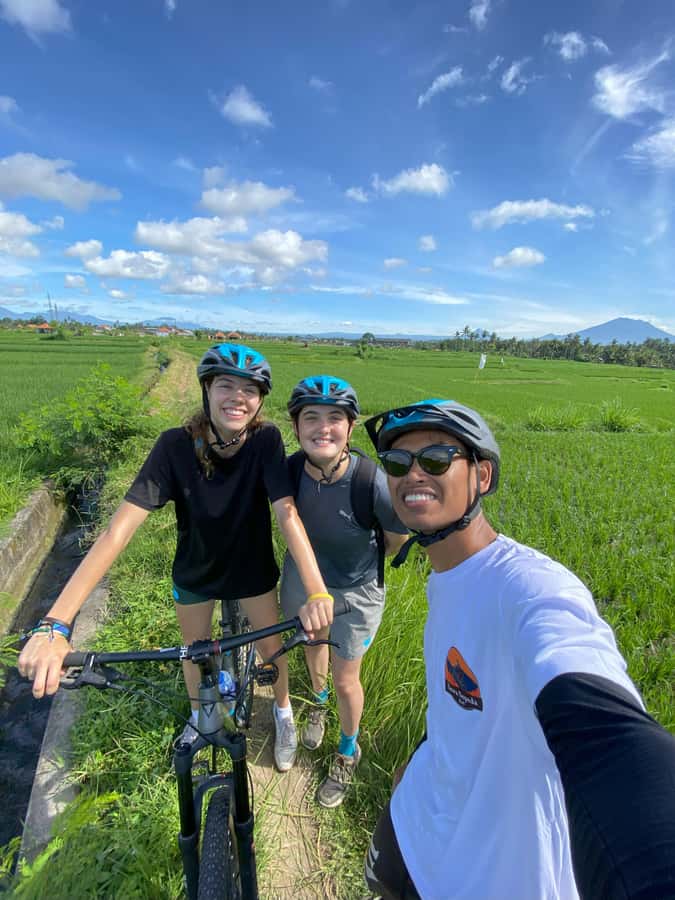
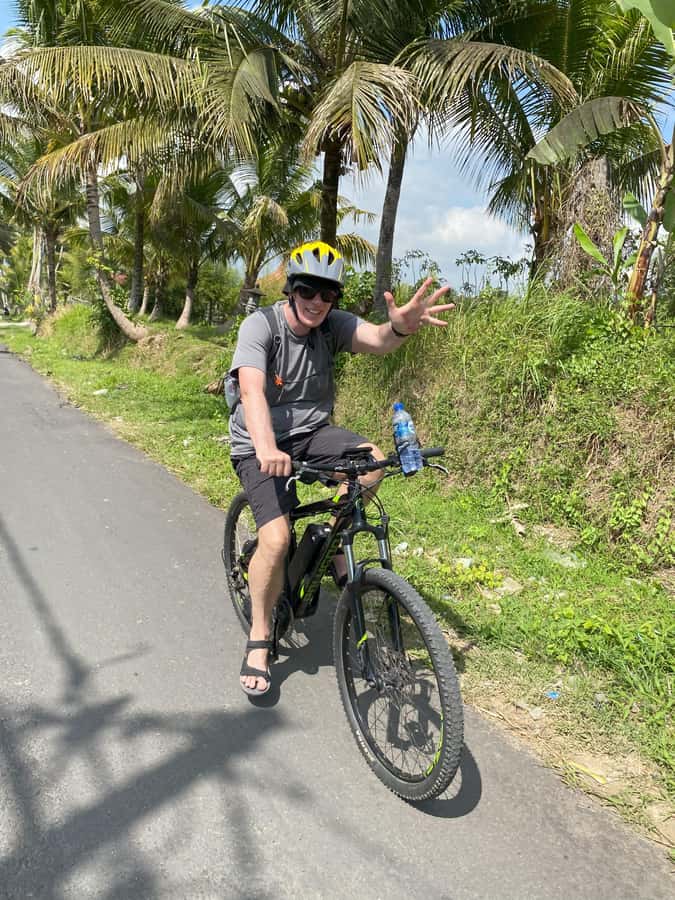
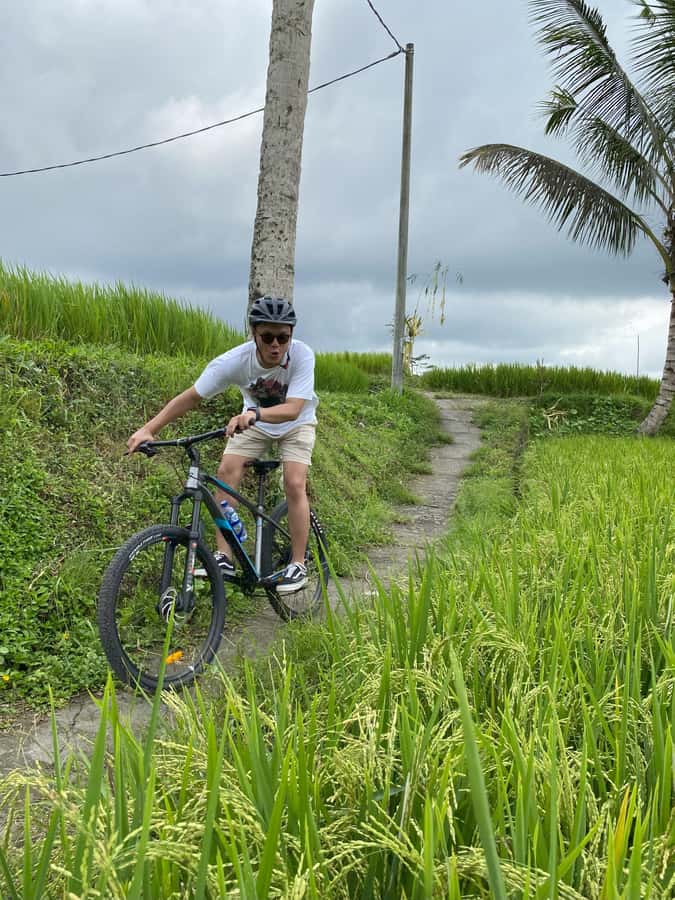
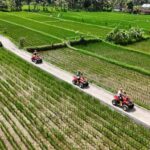
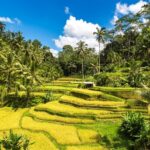
The big reason people book this is the long stretch of rice-field scenery. The tour is designed so that around 80% of the biking is surrounded by rice views, which changes the whole tone of Bali for you: less “look at this from a scooter stop,” more “watch the world as you pass through it.”
There are also built-in pauses for photos and breaks. Expect a viewpoint stop early on (with a guided bit and time to enjoy the scene), plus additional short breaks as the ride continues.
Bikes are provided with helmets, and the route is guided rather than a DIY scramble. In the feedback, the mountain bikes are described as high quality, and that matters when you’re riding for hours and you want the experience to feel smooth rather than tiring.
The school visit: learning Bali through education, not just temples
One of the most meaningful parts is the stop at a nearby school. You’re not just looking at kids from a distance; you’re there to gain insights into Bali’s education system through the guide’s explanations.
This stop is valuable because it gives you a framework for understanding what you see elsewhere. When you later meet people in homes and communities, education shapes daily routines, opportunities, and how families think about the future—so the school visit helps the rest of the day click into place.
Keep expectations realistic: it’s a cultural learning moment inside a normal day-to-day setting. Be respectful, keep your interactions calm and friendly, and let the guide handle the pace.
Family compound visit: the most human part of the day
This is the stop that most affects how you remember the tour. You’ll be welcomed into a family compound where you can interact with residents and see how life works beyond the tourist trail.
I like that the day includes this kind of access instead of only sightseeing. It’s one thing to visit a temple and take pictures; it’s another to see where people eat, gather, and live as a family in their own space (with the guide helping you understand what you’re seeing).
Practical note: compound visits can involve uneven surfaces and close-quarters conversation. Wear shoes you’re comfortable in, and go in with a curious but low-key attitude.
Village temple stop: what it means and how to act there
You’ll visit a village temple as part of the guided route. The guide explains the cultural significance, so you’re not just treating it like another viewpoint with gates.
This matters because Balinese temples aren’t only about architecture or photo angles; they’re tied to daily life and community spirituality. With a guide talking you through what you’re looking at, the visit tends to feel more grounded and less like a checklist.
Since the tour description emphasizes cultural significance, follow the guide’s instructions on behavior and movement. If you’re given specific guidance, take it seriously—this is one of those moments where small respect goes a long way.


Traditional village sections and guided walking breaks
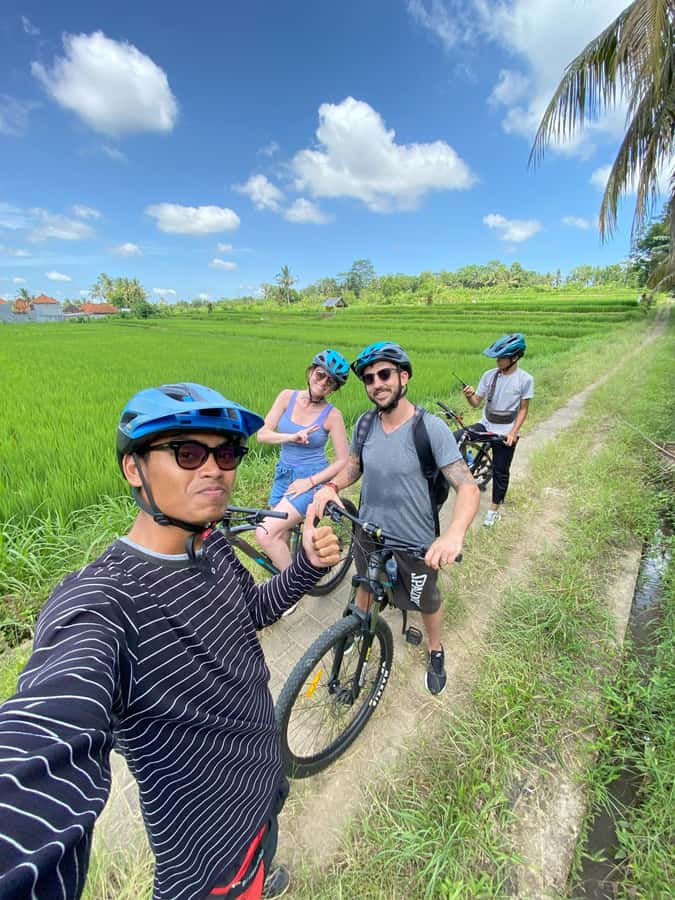
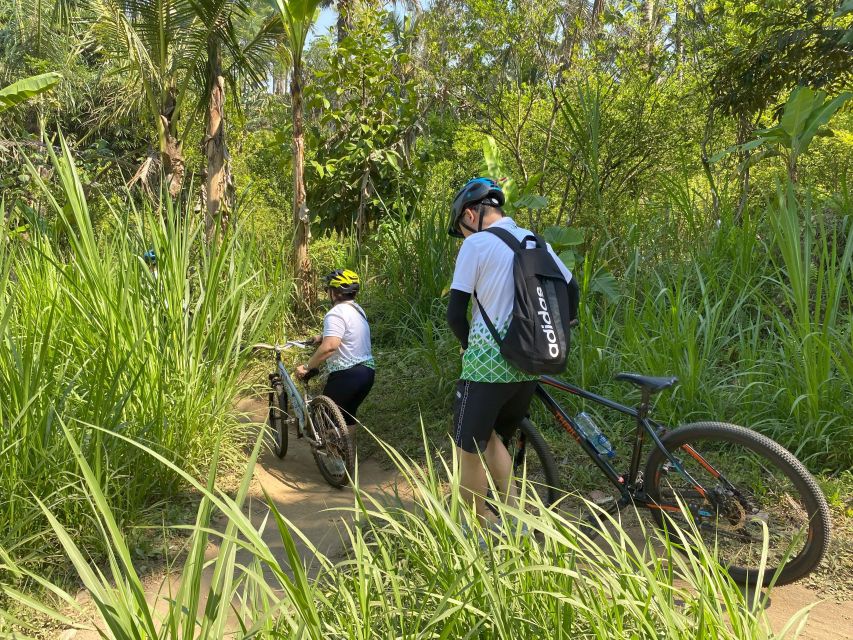
Between the major stops, the tour includes time in traditional village areas with guided tours and breaks. You’ll have a mix of biking and slower segments, including walking moments.
One of the village sections includes a longer guided stop (time to look around, take photos, and absorb what’s happening), while another is framed more as a shorter pass-through with a guided segment. Either way, these breaks are there to slow the day down so you can actually notice details.
A good part here is that you’re not just passing by buildings and rice terraces. The guided approach helps connect daily routines to what you see—so the day feels like a story rather than a string of stops.
Lunch at a local restaurant, then a pool reset
After the ride and cultural visits, the day ends with an Indonesian lunch at a local restaurant. You’ll also get time to swim in the restaurant pool, which is a smart recovery move after biking.
I love this structure: you don’t have to choose between food and a break. The lunch is part of the tour, and the swimming time turns the afternoon into something you’ll remember for comfort, not only culture.
Expect Balinese food, plus refreshments and mineral water along the way. If you’re sensitive to heat, plan to hydrate and take the towel refreshers seriously—small things like that make the difference between a fun day and a drained day.
Price and value: why it costs $33 and what you actually get
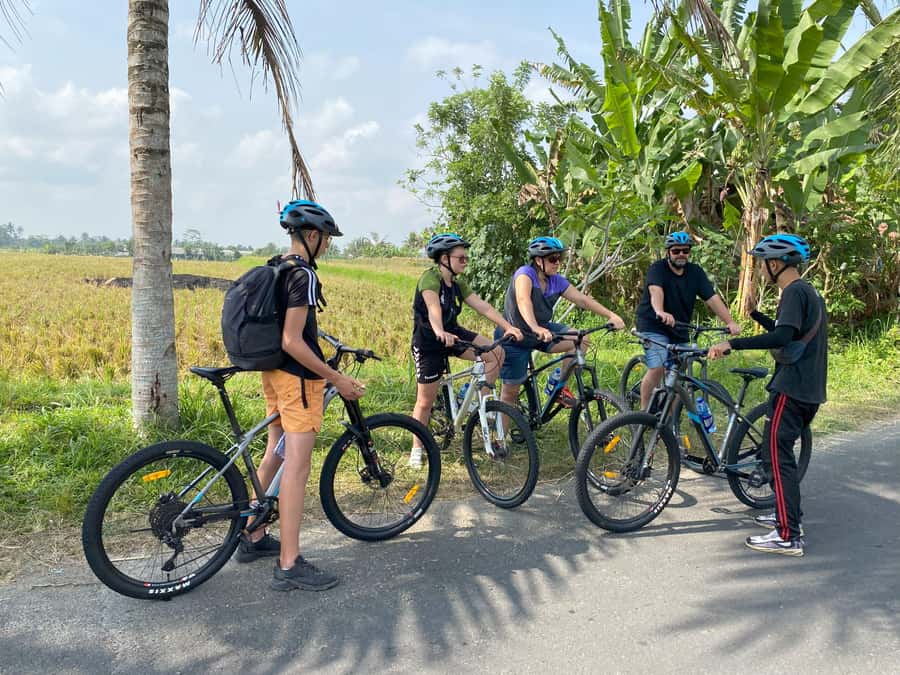
At about $33 per person for a 6-hour experience, the value comes from bundling the practical essentials. You’re getting hotel pickup and return within Ubud, a bicycle and helmet, an English-speaking guide, mineral water, lunch, and even a pool swim.
On top of that, you’re paying for cultural access that would be harder to DIY: a school stop, a family compound welcome, and a village temple guided visit. You’re also covered with an insurance amount listed for ages 5 to 65, which adds peace of mind for a day with biking.
Your main “cost” isn’t money—it’s time and energy. You’ll want to be comfortable riding and walking a bit, and you’ll want to be ready for a day that mixes sightseeing with interaction.
If you want a pure beach day, this isn’t that. If you want Bali that feels lived-in and explained, this price is unusually workable.
Logistics that matter: pickup area, group type, and timing
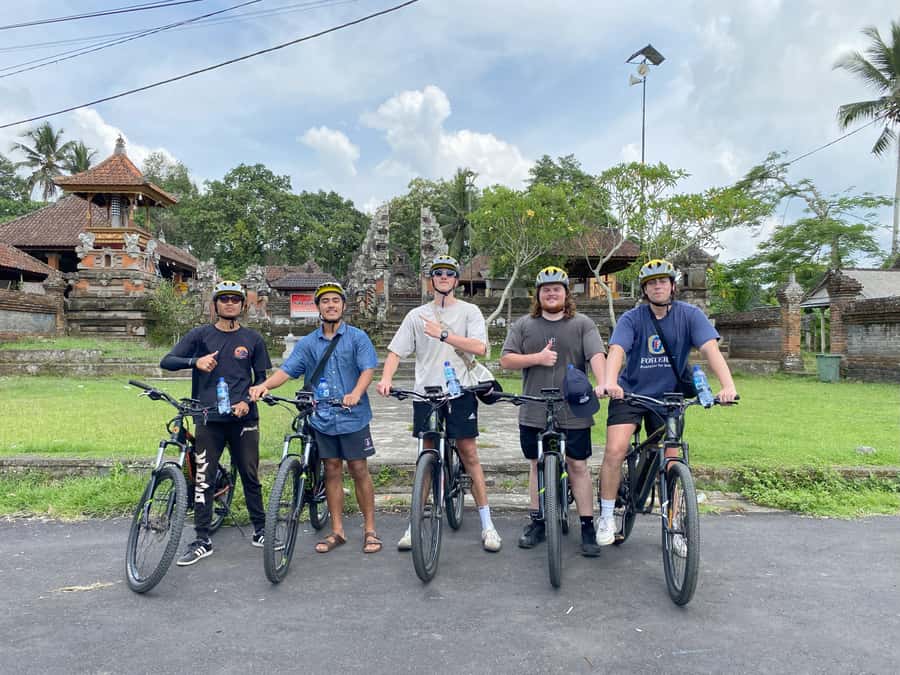
Pickup is included for the Ubud area, with multiple pickup locations available across Bali. If you’re outside Ubud, the tour notes extra pickup/drop-off charges by area, and it uses a per-car max arrangement (up to 5 people per car).
Before you book, choose between the private and sharing group options. A private setup tends to be better if you want more direct conversation and fewer pauses, especially when you’re visiting community spaces like a school or family compound.
The tour runs about 6 hours total, with the main biking portion listed as roughly 2.5 hours. That means you’re not spending the whole day stuck on the seat—most of the time is balanced with guided stops, breaks, and walking.
What kind of traveler this fits best
This is a strong pick if you want a meaningful Ubud day that goes beyond temples-and-cafes. It’s especially good for people who like meeting locals and learning through conversation, not just observation.
I also think it suits families and mixed-age groups because the insurance is stated for ages 5 to 65. Still, the biking pace and village walking segments mean you should choose the private option if you have anyone who prefers a more controlled pace.
If you’re an experienced cyclist looking for a tough training ride, this might feel more like an easy-to-moderate cultural cycling day. But if your goal is Bali with context and good scenery, it’s a smart fit.
Practical tips so your day goes smoothly
Bring closed-toe shoes you can walk in comfortably. You’ll do short walking segments and likely step on uneven ground around temples and compounds.
Wear something light but respectful for temple areas, and follow whatever your guide asks you to do on-site. Also, keep your phone handy for photos, but remember you’re doing more than sightseeing—you’re being shown daily life.
When you get a moment in the school or compound stop, ask your guide questions. In the reviews, the guides are the kind of people who enjoy explaining, and those answers tend to make the day feel personal rather than scripted.
Should you book this Ubud private bike tour with meal and a pool?
If you want rice-field riding plus real cultural stops in a single day, I’d book it. The mix of school + family compound + temple gives the day structure, and the lunch with pool time turns it into a satisfying ending instead of a “now what?” scramble.
Book it especially if you like your travel with context, and you appreciate guides who can explain what you’re seeing (Wayan and Dewa come up in the feedback as standout examples). Just make sure your pickup logistics match Ubud area inclusion, and choose private if you want the smoothest pace for your group.
FAQ
How long is the bike tour in Ubud?
The activity duration is 6 hours total, including pickup, biking, guided visits, lunch, and the pool time.
Is pickup included, and where does it cover?
Pickup and return transfers are included for the Ubud area. Pickup and drop-off outside Ubud may require an extra charge depending on where you’re staying, and it’s listed by area.
What’s included in the price?
You get bicycle and helmet, mineral water, English guide, refreshments, cold fresh towel, Balinese lunch, and swimming pool access at the restaurant. Insurance is also included for ages 5 to 65.
Do I need to pay for breakfast?
Breakfast is not included. It’s listed as Rp. 40,000 per person, paid as rupiah cash or directly through GetYourGuide.
Can I choose a private or sharing option?
Yes. You need to choose between the SHARING or PRIVATE group option.
Is there free cancellation?
Yes. You can cancel up to 24 hours in advance for a full refund.