Fruit becomes a rose in three hours. In Ubud, you learn Balinese decorative carving at WS Art Studio with a social, patient teacher, guided for beginners and focused on a finish you can show off. You’ll work with a small group and leave with your first carved piece from the session at WS Art Studio Balinese Handicrafts.
I love that the class is built around safe knife basics and a practical result you can copy later at home. You also get clear English/Indonesian guidance, which matters when you’re trying to follow exact cuts. The one thing to consider is pacing: if you grasp the technique quickly, the session may feel like it ends a bit sooner than you expect unless you ask for extra practice.
In This Review
- Key highlights at a glance
- Why This Ubud Fruit Carving Class Is So Much More Than a Snack Show
- Getting to WS Art Studio: The Practical Side of Ubud Logistics
- What You Start With: Drinks, Snacks, and Knife Safety Basics
- The Core Skill: Turning Melon Into a Flower You Can Replicate
- More Designs and Table Decor: What You Might Make Beyond One Flower
- How Long It Really Takes: The 3-Hour Window and Real Pacing
- Price and Value: Is $24 Worth It for Skill Time?
- Who Should Book This Class in Ubud (And Who Should Skip)
- Likely Drawbacks, and How to Avoid Them
- Should You Book This Ubud Fruit Carving Class?
- FAQ
- Where is the meeting point for the class?
- How long is the Balinese decorative fruit carving class?
- What does the class cost?
- Is transportation included?
- What’s included in the price?
- What languages does the host or greeter use?
- How big is the group?
- Is this class wheelchair accessible?
- Who is the class not suitable for?
- Is free cancellation or pay-later available?
Key highlights at a glance
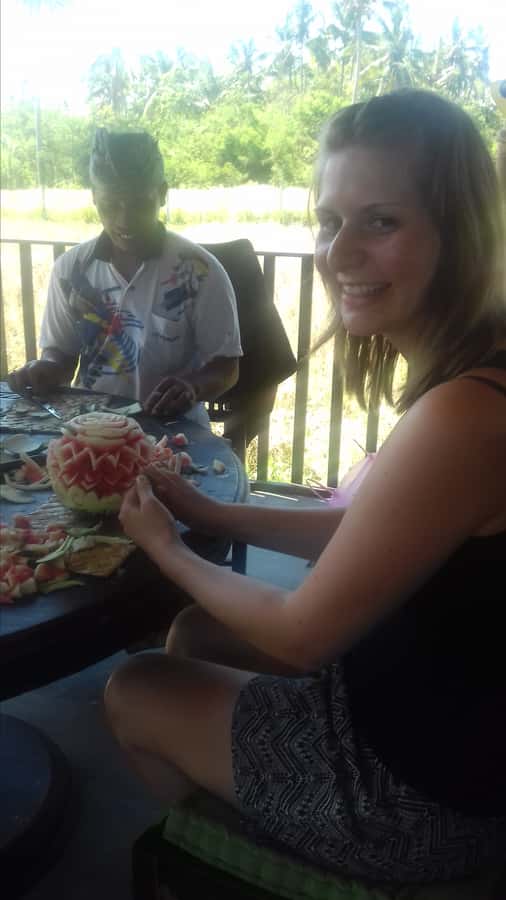
- A real take-home carving: you’re aimed to leave with a first melon flower (and more, if you keep practicing).
- Beginner-friendly technique: the class is designed to be mistake-proof and confidence-building in a short time.
- You can ask questions: smaller groups mean you’re more likely to get hands-on help when you get stuck.
- Fun host energy: the instructor is described as social and funny, and comfortable teaching newbies.
- Included drinks and snack: you get tea/coffee/water plus a Balinese cake during the 3 hours.
- Hands-on home entertainment: the end goal is turning fruit into table decor you can repeat for family and friends.
Why This Ubud Fruit Carving Class Is So Much More Than a Snack Show
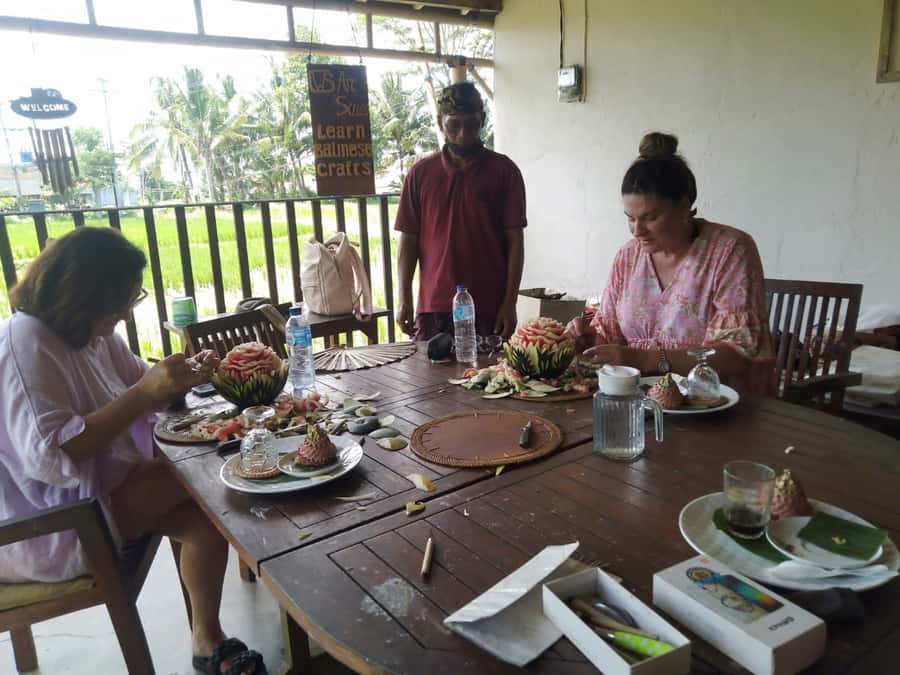
Fruit carving sounds like a gimmick until you see how fast it clicks. This 3-hour Balinese decorative fruit carving class is set up for one clear purpose: you learn the cuts and confidence to make something pretty enough to serve as a conversation starter at your own table back home.
The fun part is that you’re not just watching. You’re actively learning the technique that turns a plain melon (and other simple produce) into decorative shapes. The teacher’s vibe matters too. You’ll be taught by a friendly, social guy who enjoys working with beginners, which makes it easier to slow down and get the details right.
Value-wise, the $24 price isn’t mainly about a souvenir photo. It’s about buying time with a person who can correct your knife angle and teach you what matters. That’s what makes it worth doing even if you’re not a foodie or an art person.
One more reason this class feels worth it: you come away with something you can repeat. Most crafts fail at the “now I can do it at home” step. Here, the goal is exactly that—so you aren’t left with a memory and a half-learned idea.
You can also read our reviews of more tours and experiences in Ubud.



Getting to WS Art Studio: The Practical Side of Ubud Logistics
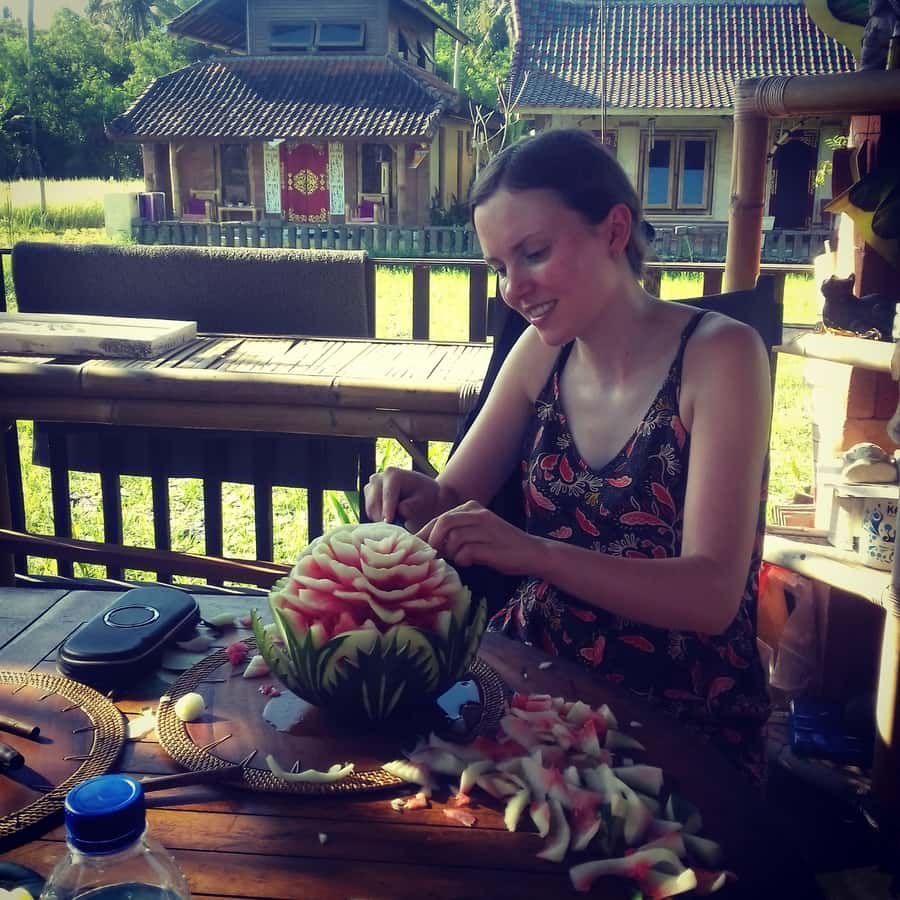
The meeting point is WS Art Studio Balinese Handicrafts. That’s a real detail worth planning for, because you’re responsible for your own transport.
Ubud can be tricky for walking times, especially in heat. The simplest approach is to use a ride-hailing motorbike taxi from your hotel and head straight to the studio. One traveler’s tip that’s useful in real life: Grab or Gojek motorbike taxis work well in Ubud, while some visitors find that certain car options can be restricted inside the area.
What I’d do if I were you: build in a little extra margin time. When you’re heading to a class where your hands and knife safety matter, arriving calm is better than arriving rushed.
Inside, you’re in good hands with a small group limited to 10 participants. That’s the sweet spot where you’re not stuck in a large classroom haze. You can usually ask for help fast, especially with the instructor demo-ing cuts and walking you through what to change.
Language support is English and Indonesian, so you won’t be forced to guess what’s happening with the technique.
What You Start With: Drinks, Snacks, and Knife Safety Basics
The class includes a welcome drink (water, tea, or coffee) and a Balinese cake snack. It’s a small touch, but it matters because fruit carving needs steady focus, not low energy. You’ll be ready to learn without feeling like you’re rushing between meals.
Before you cut anything, the structure is aimed at helping you handle the process safely. The class is appropriate for anyone old enough to safely use a small, sharp carving knife, and the course isn’t meant for very young kids. If you’re bringing a child, double-check the limits: it’s not suitable for children under 9, and it’s also not suitable for children under 3 ft (90 cm).
Early on, you’ll learn how to hold the knife and how to approach the fruit so cuts look intentional rather than accidental. This is where the class earns its beginner-friendly reputation. Decorative carving isn’t just talent—it’s angles, pressure, and repetition.
And once you get past that first step, the rest becomes easier. Most people don’t need to be “good at arts.” They need a coach who can correct one small thing, like how deep to go or how to keep the cut line clean.
The Core Skill: Turning Melon Into a Flower You Can Replicate
The centerpiece experience is learning decorative fruit carving basics, with the goal of leaving with your first carved melon flower.
A flower shape is a smart learning target because it forces you to master the key moves: shallow cuts, consistent spacing, and careful lifting. Those are the building blocks behind a lot of other decorative designs. So even if your first attempt isn’t museum-perfect, the technique is still real and transferable.
You’ll practice enough to build confidence, not just enough to say you tried. In one account, an instructor’s pace ran fast at first, but the teacher gave additional help after a question came up, plus extra practice time. That’s a useful reminder: ask when you don’t understand, and don’t just nod and move on.
Also, be prepared for the class to feel hands-on and a little intense. You’re learning knife work in a limited window. You’ll get more value if you treat it like a skill session, not a casual sightseeing stop.
More Designs and Table Decor: What You Might Make Beyond One Flower
The course is focused on basics, but your final output can vary depending on pace and how much you practice.
The promise is that once you learn the basics, the carving possibilities are endless—and that you’ll leave with the start of your own set of techniques to experiment with later. Some people manage to carve more than one item during the 3 hours, and you may also see simple additional table decor ideas taught alongside the main design.
One traveler described carving watermelon and carrots. Another mentioned learning a simple table decoration after the main carving, and the instructor’s added guidance helped the participant feel more satisfied with the time spent.
So here’s the practical expectation-setting: if you want more than one design, you’ll get more value by staying engaged and asking about extra variations while you still have time. Don’t wait until the end.






How Long It Really Takes: The 3-Hour Window and Real Pacing
On paper, you’re booking a 3-hour class. In practice, that time can feel tight, depending on how quickly you pick up the cuts.
One traveler reported finishing their carving with a lot of time still available, then asking for extra instruction and getting more practice. That suggests the teacher can flex if you show curiosity and ask for the next step.
But here’s the balanced note: another account mentioned the instructor arriving late and the session feeling like it wrapped up early, even though the course duration was longer. That kind of timing difference can affect how many designs you finish or how much extra decor you get.
How to protect your experience:
- Go in ready to ask specific questions as you carve.
- If you finish the first piece early, don’t assume the class will naturally expand—prompt the teacher for the next technique.
- If something feels off-time, stay polite but direct. The best results come when you ask.
Even with that pacing uncertainty, the overall rating is strong. Most people come away feeling like they learned a usable skill, not just a brief demonstration.
Price and Value: Is $24 Worth It for Skill Time?
$24 for a 3-hour workshop sounds reasonable, and the inclusions make it feel more grounded than a pure ticket price.
You get:
- A drink (water, tea, or coffee)
- A Balinese cake snack
- Instruction geared toward carving basics
- A small-group format (up to 10 participants)
Value comes from what you’re paying for: guided practice with a teacher who can help you make the right kind of cuts. If the class were just a quick tutorial, it wouldn’t be worth it. But because the goal is a finished carving you can take home and repeat, you’re buying a skill you can use at home.
The main thing to consider is your personal expectation for volume. If you’re hoping for a lot of different carving styles and multiple elaborate designs every time, the class may not always deliver that, especially if the instructor’s pacing runs fast or materials run limited. Still, for most beginners, learning the foundational flower cuts is the important win.
Think of it like this: you’re paying for a technique that unlocks future creativity. Not magic, just the kind of instruction that makes the next attempt easier.
Who Should Book This Class in Ubud (And Who Should Skip)
This is a great match if you want:
- A beginner-friendly activity you can handle without prior carving experience
- A hands-on souvenir that you’ll actually use later
- A calm, focused change from temple hopping and scooter time
- A skill you can show friends back home
It’s also a solid option if you travel with others and want a shared, low-stress challenge. Small group classes are often better for conversation than big tours, and fruit carving naturally turns into friendly problem-solving.
It may be less ideal if:
- You want transportation provided (you’ll need to arrange your own ride)
- You’re expecting guaranteed extra designs beyond the main piece
- You’re traveling with a child who doesn’t meet the height or age requirements
Likely Drawbacks, and How to Avoid Them
No class is perfect, so here are the realistic issues to plan around.
1) Transport is on you.
You need your own way to WS Art Studio. If you don’t want to coordinate with hotel staff, book a ride early rather than assuming you’ll find something instantly.
2) Pacing can vary.
Some people finish early and may need to ask for additional practice to fill the full time. Others might find the session runs shorter or starts off slower. To reduce stress, go in with a flexible mindset: you’re learning fundamentals, not chasing a rigid production schedule.
3) You may need to speak up.
Because you’re learning by cuts and technique, questions are power. If you’re unsure, ask. If you want an extra design idea, ask. The class is set up so the instructor can respond to what you need.
If you handle those three points, the experience tends to land well. The overall rating suggests most people walk away happy, especially because the instruction and friendliness are repeatedly praised.
Should You Book This Ubud Fruit Carving Class?
If you want an activity in Ubud that feels practical and personal, I’d book it. For $24, you’re getting guided basics you can use at home, plus drinks and snack included during the 3 hours. The small group setup means you’re not stuck watching from the sidelines.
I’d especially recommend it if you like learning a “do this, then this” skill and you’re the kind of person who enjoys entertaining. This class is built for that exact use case: you’ll make something pretty enough to share, then repeat it later.
If you’re the type who needs a big variety of carvings guaranteed, or you dislike anything that depends on timing and instructor flow, you might feel a bit more uncertainty. But if you stay engaged—ask questions, ask for the next technique—you’ll get more out of the time you’re given.
FAQ
Where is the meeting point for the class?
The class meets at WS Art Studio Balinese Handicrafts.
How long is the Balinese decorative fruit carving class?
The class duration is 3 hours.
What does the class cost?
The price is $24 per person.
Is transportation included?
No. Transportation is not provided, so you’ll need to arrange your own way to the studio.
What’s included in the price?
The class includes a welcome drink (water, tea, or coffee) and a Balinese cake snack, plus instruction on decorative fruit carving basics.
What languages does the host or greeter use?
The host or greeter speaks English and Indonesian.
How big is the group?
The class is a small group with a limit of 10 participants.
Is this class wheelchair accessible?
Yes, it is listed as wheelchair accessible.
Who is the class not suitable for?
It is not suitable for children under 9, and it is also not suitable for children under 3 ft (90 cm).
Is free cancellation or pay-later available?
Yes. You can cancel up to 24 hours in advance for a full refund, and it also offers reserve now & pay later.