Fireflies over Ubud’s rice fields are not guaranteed magic. This Pemulan Bali Village Night Tour pairs rural farm learning and dinner prep with a Balinese house visit and a rice-field firefly outing.
I love the organic farm walk, especially how it explains the plants used in daily Balinese cooking and life. I also like that you help prepare the traditional dinner, so the evening feels hands-on instead of like a show.
One consideration: the wild fireflies part is nature-dependent, and even the best-looking trip can be less dramatic if sightings are limited.
In This Review
- Key things that make this tour worth your time
- From Pura Dalem to the Rice Fields: how the 5-hour flow works
- The organic farm walk: plants you’ll actually recognize in cooking
- Cooking dinner with locals: not just watching, actually making it
- A Balinese home visit: learning the meaning behind the buildings
- Understanding the house system without a “museum vibe”
- The rice fields at night: wild fireflies and realistic expectations
- Price and value: is $45 for a 5-hour night tour a fair deal?
- Logistics that actually matter: pickup, meeting point, and planning your evening
- Who should book this Village Firefly Night Tour (and who might skip it)
- Should you book Pemulan Bali’s Village Firefly Night Tour?
- FAQ
- What is the price of the Village Firefly Night Tour in Ubud?
- How long does the tour take?
- How many people are in the group?
- Is pickup offered?
- What does the tour include besides the fireflies?
- Where is the meeting point, and where do you end up?
- Do I get a mobile ticket and confirmation?
- What is the cancellation policy for a full refund?
Key things that make this tour worth your time

- Organic farm walk focused on the plants behind Balinese cooking
- Cook-with-locals dinner where you team up to prepare a traditional meal
- Real home visit with a family and an explanation of how the house system works
- Small group limit (max 10) for more personal attention than big buses
- Rice-field firefly outing that prioritizes getting close to wildlife, not just taking photos
From Pura Dalem to the Rice Fields: how the 5-hour flow works
Your evening starts in Ubud near Pura Dalem Puri Peliatan (Petulu/Tebesaya area). The tour is listed for about 5 hours, and you return back to the meeting point at the end, so you’re not stuck figuring out late-night transport.
What makes this day work well is the pacing. You begin with daytime-style learning (farm + plants), then shift into active work (cooking dinner), and only after that do you move into a more contemplative night setting (a Balinese home, then the rice fields). That order matters. It helps you understand what you’re seeing instead of treating the fireflies as the only “wow.”
Also, this is built around a small group experience, with a maximum of 10 travelers. In practice, that usually means fewer bottlenecks and more chances to ask questions when someone is explaining how things function back home.
If you’re wondering about the time of day, it’s listed as running daily (Mon–Sun) across a broad window. Still, plan to confirm your actual start time when you book and treat the evening timing as something you’ll want to manage closely.
You can also read our reviews of more tours and experiences in Ubud.


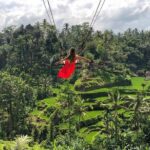
The organic farm walk: plants you’ll actually recognize in cooking
The first major stop is an organic farm. Instead of a generic nature walk, the emphasis is on the plants used in Balinese cooking and everyday life. You get to see how these plants grow, and you learn why local people treat them as important, not just decorative.
This is one of my favorite types of tour moments because it changes what food tourism usually does. Instead of only hearing about flavors after the fact, you learn where ingredients come from. In Bali, that matters. A lot of what makes Balinese dishes taste the way they do starts with the same plants you might spot in the garden.
From a practical standpoint, the farm segment sets you up for the next part. When you move into the cooking phase, the herbs, leaves, and plants you saw earlier become usable knowledge. You can connect the plant names to what you’re doing with your hands.
One more thing: this kind of farm activity tends to be quieter than the headline attractions in Ubud. If you’re tired of crowded viewpoints and endless selfie lines, this section gives you a calmer pace—still active, but not hectic.
Cooking dinner with locals: not just watching, actually making it
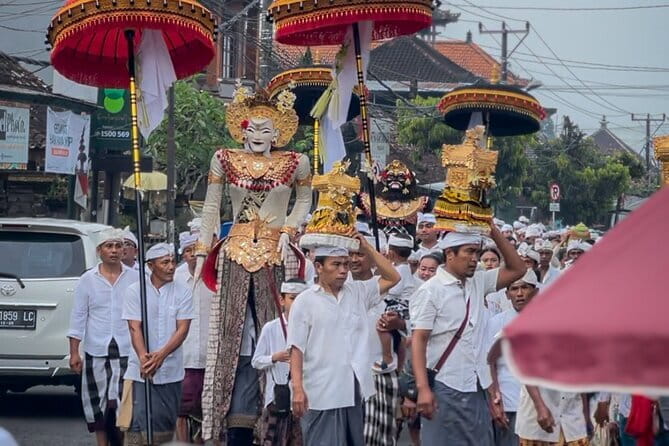
After the farm, the tour shifts into the best “learn by doing” part: you team up with locals to prepare a traditional Balinese meal. You’re not only tasting your way through Bali. You’re participating in the process, which is the difference between remembering a plate and remembering a system.
Even with no recipe details listed in advance, you can expect the cooking to be practical. The guiding idea here is that you’ll use what you learned about farm plants and local ingredient roles. Then you’ll cook together, and you’ll eat together—at a setting that’s described as enchanting in feedback from people who took the tour.
There’s also a real comfort advantage to this style of experience. A cooking class with structure reduces decision fatigue. You’re not guessing what to order, where to sit, or whether you’re doing things correctly. Someone is guiding the flow, and your job is to join in at the right moments.
And because the group is kept small, the cooking doesn’t turn into a scramble. It’s more likely you get a chance to participate than to stand to the side while others do the work.
If you’re the type who loves food but hates food tours that feel like a checklist, this is the sweet spot. It’s cultural learning through basic actions: chopping, mixing, assembling, and tasting as you go (based on the way these cooking experiences are structured, even if specific dishes aren’t listed here).
A Balinese home visit: learning the meaning behind the buildings
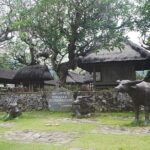
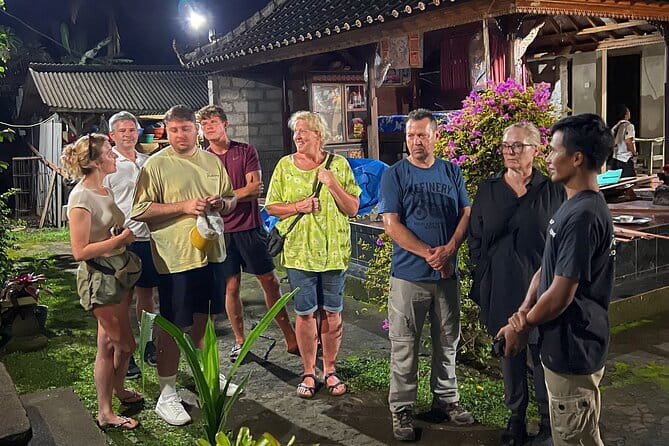
Next comes the traditional Balinese house visit, where you meet and interact with a real Balinese family. You’re also there to observe daily activities up close, which is often where cultural tours either succeed or fall flat.
The key difference here is that the home visit isn’t framed as a staged walk-through. The focus is on learning the Balinese house system—the functions and structure of each building, and the meaning behind it. When a tour explains what you’re seeing and why it’s arranged that way, the home becomes more than a background detail.
This matters more than you might think. A Balinese compound is tied to family life and community beliefs. If you only get photos, you miss the logic. If you learn what each building represents, you start seeing how culture can be built into architecture.
In your head, this might connect the dots back to the earlier farm stop. When you understand the living space as part of daily life, you also start appreciating that food ingredients, household routines, and tradition aren’t separate themes. They’re connected.
A possible emotional note: because you’re entering a private family space, you’ll want to be respectful with your attention. Listen first, ask questions when invited, and keep your pace slow. That’s the best way to make the experience feel comfortable for everyone.
Understanding the house system without a “museum vibe”
A lot of cultural tours give you facts but not understanding. This one aims for the opposite: it gives you a guided explanation so you can actually make sense of the house layout.
You’ll learn the functions and structure of each building, and you’ll understand how the family’s daily life uses that layout. That means you’re not just hearing about tradition in abstract terms. You’re seeing it mapped onto space.
What I like about this approach is that it turns a short visit into something you can carry home mentally. You come away knowing that there’s meaning in where people place things, how they live within the compound, and how the system supports family needs over time.
It’s also a reminder that Bali isn’t only about temples and scenery. It’s about how people organize life, inside the spaces they live in daily.




The rice fields at night: wild fireflies and realistic expectations

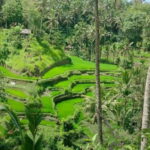
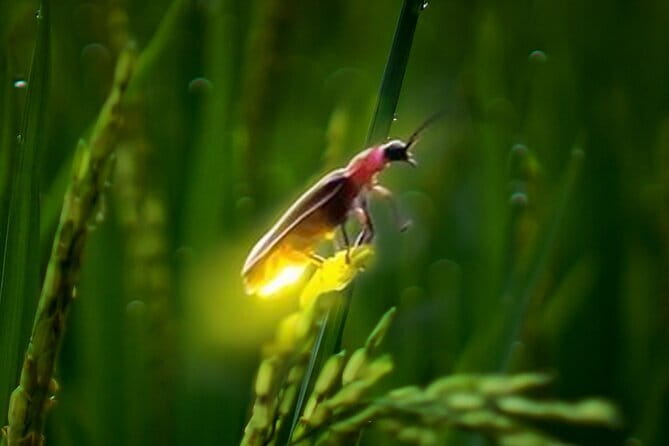
Then comes the headline moment: a trip into the rice fields to see wild fireflies up close. This is described as magical, and the fireflies are clearly the reason many people book.
Here’s the reality check you should keep in mind. Because these are wild fireflies, sightings depend on conditions. One of the tour’s own explanations for variability is that firefly habitats in Bali are decreasing due to development and environmental changes. That means the show isn’t something you can 100% control.
So how do you plan for that? Treat the fireflies as the peak experience, not a guaranteed event. If you go in expecting a nature moment that might be brief, dim, or surprisingly intense depending on the night, you’ll be happier either way.
That also means your night will still be valuable even if the firefly part isn’t the loudest moment. You’ve already built context: farm learning, cooking, and the home visit. In other words, your evening isn’t just waiting for a single scene.
If the fireflies are your top priority, I’d set a reasonable mindset: you’re going to see them if nature allows it, and you’re going to appreciate the environment and the process either way.
Price and value: is $45 for a 5-hour night tour a fair deal?
At $45 per person, this isn’t the cheapest thing to do in Ubud, but it also isn’t a luxury-priced “one dinner and a photo” event. The value comes from how many different cultural components you get in one evening:
- Organic farm learning tied directly to ingredients used later
- Hands-on dinner preparation with locals
- A Balinese home visit focused on meaning, structure, and function
- A rice-field night outing built around wildfire observation
That combination is the reason the price can make sense. You’re not paying only for the fireflies. You’re paying for the whole rural-life experience, including time with locals and guided context.
Another practical value point: the tour limits the group to 10 travelers. Small-group pricing is typically higher than big-bus tours, but for many people it’s worth it because it reduces waiting and improves the ability to ask questions.
If you’re traveling as a couple or small group, you may also like that it offers group discounts (exact discount levels aren’t specified, so check at booking).
In plain terms: if you want the rice fields fireflies plus the cultural groundwork that makes them feel meaningful, $45 is a reasonable gamble. If you only want the fireflies and nothing else, you may feel the price is too high when nature is quiet.
Logistics that actually matter: pickup, meeting point, and planning your evening

This tour includes pickup offered, which can save time if you’re staying in central Ubud and don’t want to navigate late-day traffic on your own. It ends back at the meeting point, which keeps things simple once the night activity wraps.
The start location is specific: Pura Dalem Puri Peliatan near Jl. Sukma Kesuma / Jl. Raya Ubud, Tebesaya, Petulu, Ubud, Gianyar, Bali 80571. If you’re using a map app, drop in that spot or paste the address exactly. Ubud streets can feel like a fun maze in daylight, but at night it’s easier to just follow the exact starting point.
Duration is listed as about 5 hours, so treat it like a block you plan around. If you have another dinner reservation, keep it flexible.
Also, you’ll receive confirmation at booking, and the tour uses a mobile ticket. That’s helpful if you’re trying to keep your documents tidy and you prefer not to print things.
Finally, this is described as suitable for most travelers. If you’re managing mobility issues, the only smart move is to check with the provider at booking, because the presence of farm and rice-field paths can mean uneven ground.
Who should book this Village Firefly Night Tour (and who might skip it)
You should book if you want rural Bali life with a real-world feel. The farm-to-food-to-home sequence is a strong fit for travelers who care about how people live, not just what they can photograph.
It’s also ideal if you:
- enjoy cooking and ingredient learning, not only eating
- prefer small groups (max 10) over crowded tours
- like culture that includes everyday spaces like homes, not just big attractions
You might think twice if:
- your entire plan revolves around a guaranteed fireworks-style firefly spectacle
- you dislike nature variability and want predictable, brightly lit entertainment
- you prefer a single-focus activity like only a temple visit or only a night walk
My take: the tour is best when you treat it as a story. The fireflies are the last page, not the whole book.
Should you book Pemulan Bali’s Village Firefly Night Tour?
I’d book it if you want a thoughtful rural Bali evening: farm learning, cooking with locals, a meaningful home visit, and a chance to see wild fireflies in the rice fields. The $45 price makes sense when you value the full cultural sequence, not just the final light show.
I’d hesitate if fireflies are your only goal and you’ll be disappointed by nature’s limits. Keep expectations flexible, and you’ll likely leave with more than just a few flashes of light in your photos.
If your schedule allows it, this is the kind of tour that turns Ubud from a sight-seeing base into a place you actually understand a bit more.
FAQ
What is the price of the Village Firefly Night Tour in Ubud?
The tour costs $45.00 per person.
How long does the tour take?
The experience lasts about 5 hours.
How many people are in the group?
The tour has a maximum of 10 travelers.
Is pickup offered?
Yes, pickup is offered.
What does the tour include besides the fireflies?
You visit an organic farm, learn about plants used in Balinese cooking, prepare a traditional Balinese dinner with locals, and visit a traditional Balinese home to meet the family and learn about the house system. The tour ends with a trip to the rice fields to see wild fireflies.
Where is the meeting point, and where do you end up?
The tour starts at Pura Dalem Puri Peliatan (listed at the address near Jl. Sukma Kesuma / Jl. Raya Ubud, Tebesaya, Petulu, Ubud). It ends back at the same meeting point.
Do I get a mobile ticket and confirmation?
Yes. You receive confirmation at the time of booking, and a mobile ticket is used.
What is the cancellation policy for a full refund?
You can cancel up to 24 hours in advance for a full refund. If you cancel less than 24 hours before the experience start time, the amount paid is not refunded.