Rice terraces teach faster than any photo. This 3-hour guided hike in Kerobokan is all about how Bali’s rice landscapes actually work, from irrigation to everyday farming.
What I like most is the focus on subak—the ancient irrigation system that still shapes village life—and the way your guide connects that system to biodiversity in the paddies. I also really enjoy the temple stop at a subak agricultural site farmers use, plus the simple reward afterward: coconut water or coffee at a small café.
One thing to consider: if you’re chasing dramatic mountain views, don’t count on them here. Some of the scenery can feel more “village and houses” than “big panorama.”
In This Review
- Key things to look forward to
- Rice Terraces in Kerobokan: More Than a Pretty Walk
- Meeting at Starbucks Kerobokan and Getting Your Bearings
- Subak Irrigation: The System That Shapes Farming and Culture
- A Subak Temple Stop Farmers Use (Not Just a Tourist Photo Stop)
- The 2–3 Kilometer Terrace Walk: Walls and Bamboo Bridges
- What Grows Here and Why the Ecosystem Matters
- Coconut Water or Coffee Break: The Quick Reset After the Trek
- Value at $39: What You’re Really Paying For
- Who Should Book This (and Who Might Want to Rethink)
- Should You Book the Bali Rice Terraces Guided Hiking Experience?
- FAQ
- Where is the meeting point for this tour?
- How long is the guided rice terrace hike?
- Are there multiple starting times?
- Is this tour shared or private?
- How far do we walk?
- What drinks and snacks are included?
- What else is included besides the guide and drinks?
- What do we visit and learn about during the hike?
- What should I bring, and is it suitable for kids?
- Is the tour carbon neutral, and what about cancellation?
Key things to look forward to
- Subak irrigation, explained clearly: you’ll see how water management ties people, land, and ecosystems together
- A farmer-use temple stop: a subak agricultural temple that’s not a typical tourist checkbox
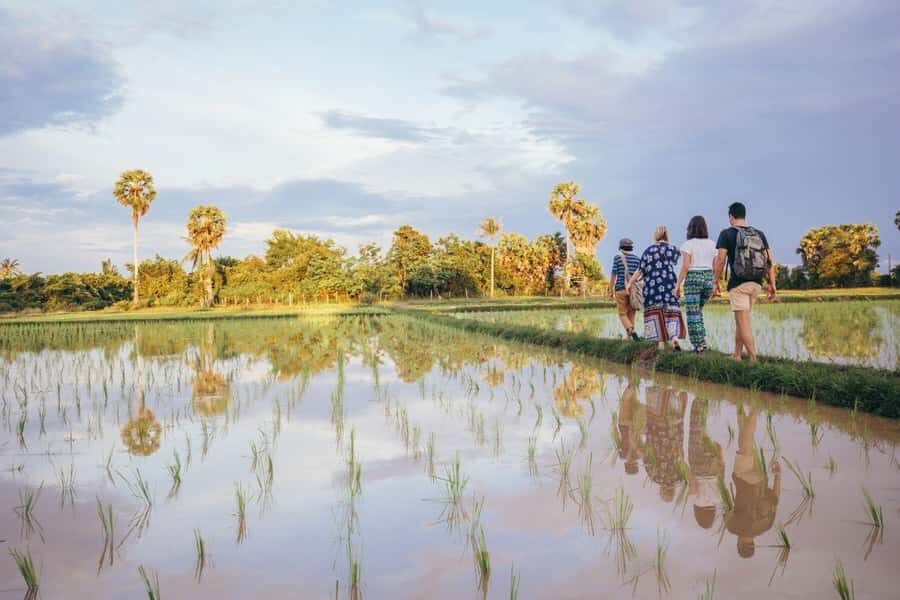
- A real terrace trek: about 2–3 km across paddies, using terrace walls and bamboo bridges
- Biodiversity beyond rice: you’ll learn about frogs, fish, crabs, snails, and more
- A cool-down reward: coconut water or coffee with light snacks at a small café
- Guided by an eco-focused operator: the tour is carbon neutral and run by an eco-certified, B Corp–certified company
Rice Terraces in Kerobokan: More Than a Pretty Walk
Bali’s rice terraces are famous for a reason, but this hike is built around something more useful than sightseeing. You’re not just looking at emerald steps on a hillside—you’re learning how farmers keep water moving, how crops fit into the system, and how the paddies support more than rice.
You’ll start away from the main beach crowds and head toward Kerobokan, where the paddies feel part of normal life. The vibe is quieter. The talk is better. And you come away with a mental map of how the terraces function.
The tour also helps you shift your focus from “photo” to “place.” When your guide talks about why water is handled the way it is, you start noticing details you’d otherwise miss, like how paddies connect across small rivers.
You can also read our reviews of more tours and experiences in Denpasar.



Meeting at Starbucks Kerobokan and Getting Your Bearings
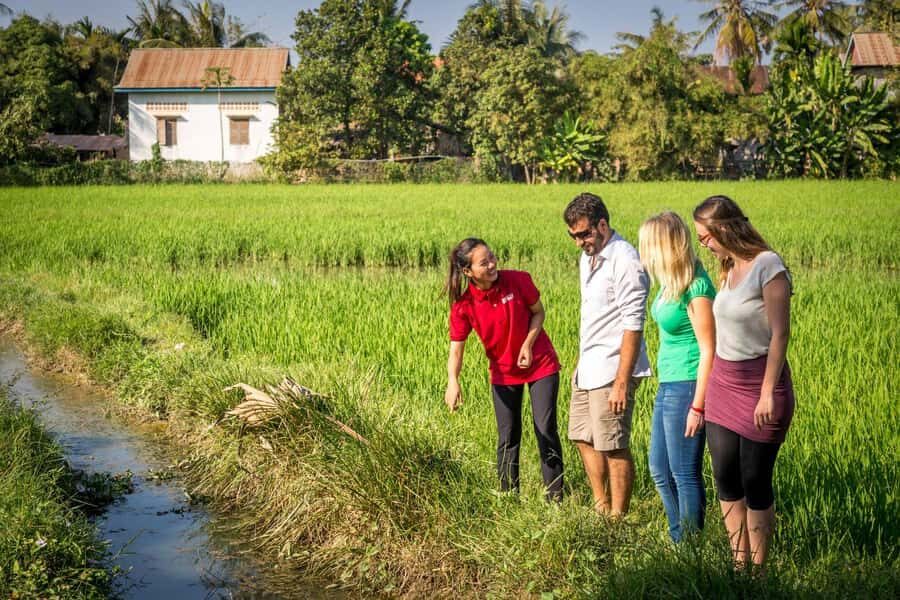
You meet at Starbucks Kerobokan, and that matters more than it sounds. It’s a clear, easy-to-find reference point, and it keeps the tour start from feeling chaotic.
From there, the group heads toward the rice fields. Your guide is local and speaks English, and the tone is practical—less performance, more explanation. Tours like this work best when you walk with questions, so be ready to listen as you go.
Expect the hike to last about 3 hours. Starting times depend on availability, so check what’s offered when you book. If you want a day that’s low-stress and not too long, this fits well.
Subak Irrigation: The System That Shapes Farming and Culture
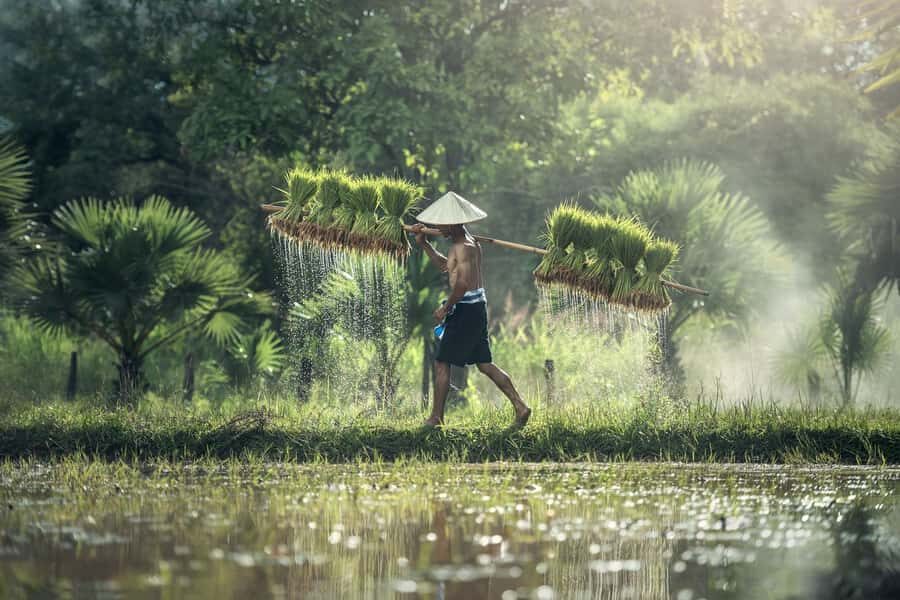
The main lesson here is subak, Bali’s ancient irrigation approach still in use today. Your guide will explain how it works—water isn’t just “sprayed and done.” It’s managed through shared rules and coordination that keep agriculture functioning and communities aligned.
Subak also isn’t only technical. It’s cultural. It’s social. It’s spiritual. You’ll hear how water management connects humans, the Earth, and the gods, and why this system creates the kind of environment where life can thrive in and around the paddies.
This is the part that turns the hike from scenic into meaningful. If you’ve visited temples in Bali before and wondered how people’s daily routines connect with religion and environment, subak is one of the clearest ways to see the connection.
A Subak Temple Stop Farmers Use (Not Just a Tourist Photo Stop)
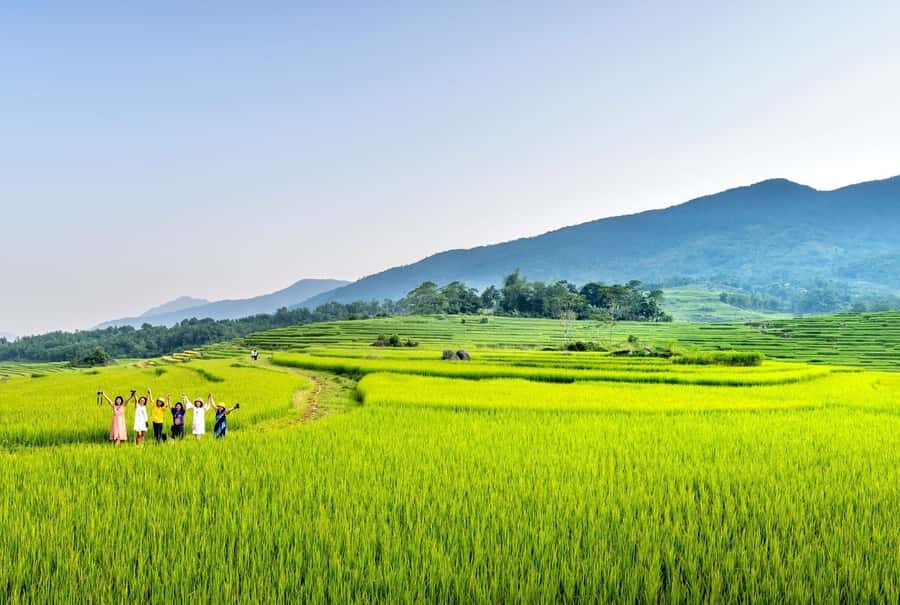
Between the explanation and the walking, you’ll visit a subak agricultural temple. This is the kind of stop you’re unlikely to find on the usual tourist circuit because it’s tied to farming life rather than entertainment.
Your guide talks about the role of farmers and the community gathering at these temples. And you’ll learn about the idea of water priests honoring the relationship between humans, land, and the gods.
This stop also changes how you view the terraces themselves. Instead of seeing fields as scenery, you start seeing them as a working landscape with responsibilities, rituals, and schedules—just the kind of framework that helps a system survive for centuries.
The 2–3 Kilometer Terrace Walk: Walls and Bamboo Bridges
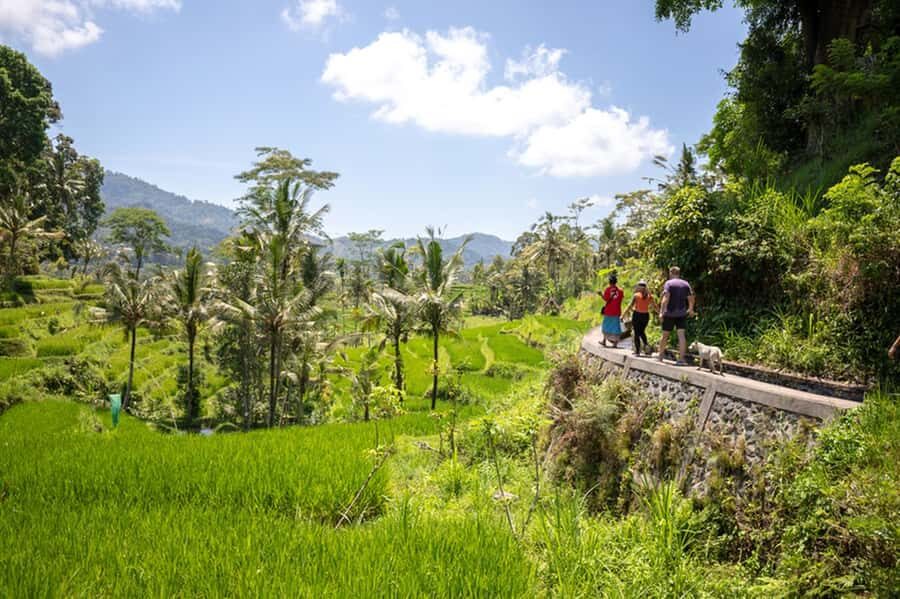
Now for the feet part. The hike covers about 2 to 3 kilometers through the terraces. A key detail: you’ll use the tops of terrace walls as a pathway, which means you’re not just walking on dirt paths.
You’ll also cross rivers carefully, stepping over bamboo bridges from one rice field to the next. It’s not a stunt, but it does require attention. If you tend to rush, slow down here. Good shoes help you stay confident with each step.
What makes this trek satisfying is that it feels varied. You move between paddies, pass small water channels, and get repeated glimpses of how terraces connect. You’re also far from the tourist zones, so the whole thing feels more like moving through a working farm than touring a park.





What Grows Here and Why the Ecosystem Matters
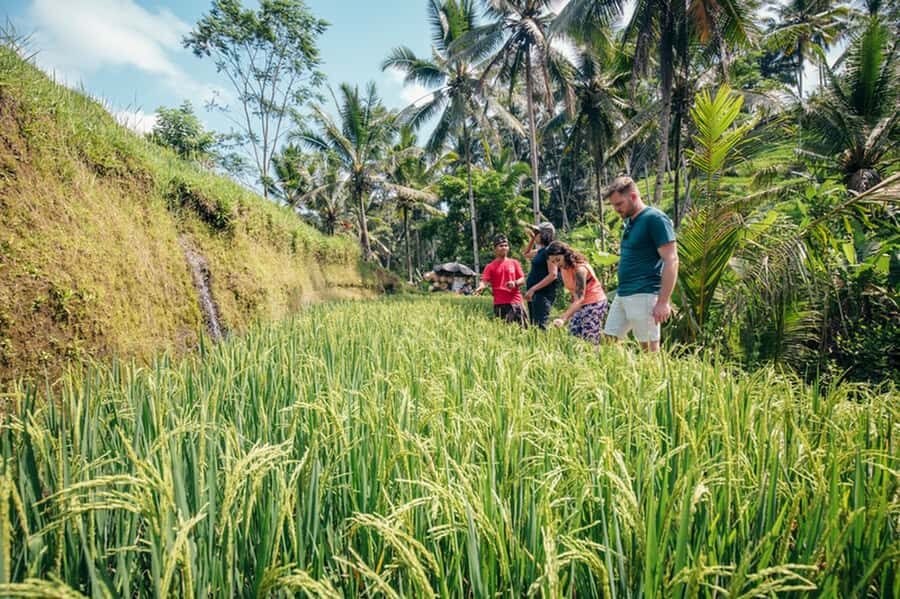
Rice is the headline, but the paddies support a lot more. Your guide explains that local farmers don’t only grow rice—they also grow tomatoes, beans, bananas, eggplant, chilies, corn, sugar cane, and even water snails.
Then comes the biodiversity lesson that makes the fields feel alive. You’ll hear about aquatic species that call the system home, including frogs, fish, crabs, and snails. The big takeaway is that the terraces aren’t isolated puddles—they’re connected ecosystems influenced by how water is controlled.
This is where the subak explanation pays off. Once you understand water management, you can see why certain animals and plants can survive in these environments. It’s not random. It’s part of a system working as a whole.
Coconut Water or Coffee Break: The Quick Reset After the Trek
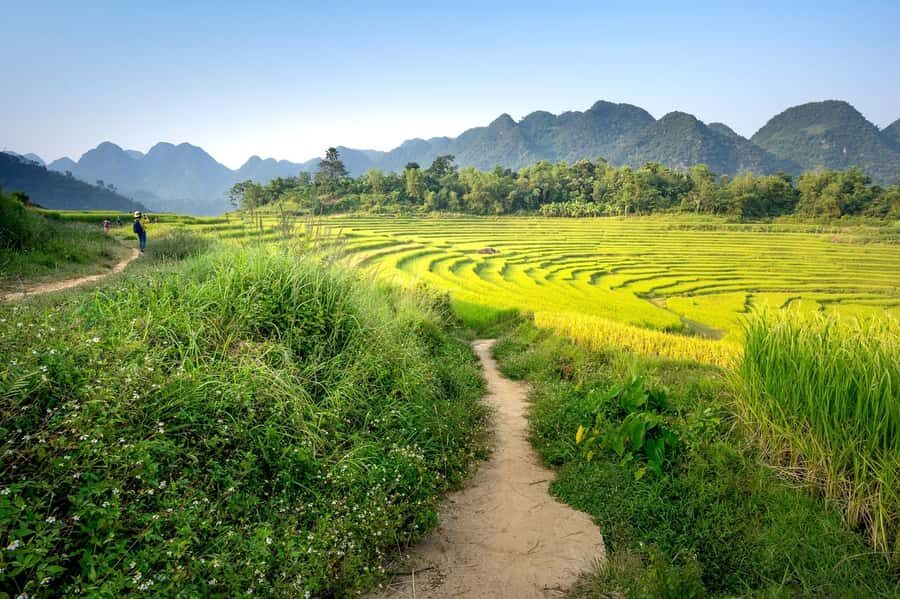
After the walking, you’ll stop at a small café for a cooling break. The tour includes coconut water or coffee, plus light snacks. It’s a simple reward, but it’s placed right when you need it.
This is also the time to slow down and take in what you’ve just learned. When your guide has pointed out irrigation details, crops, and wildlife, the drink break feels less like a pause and more like a chance to connect the dots.
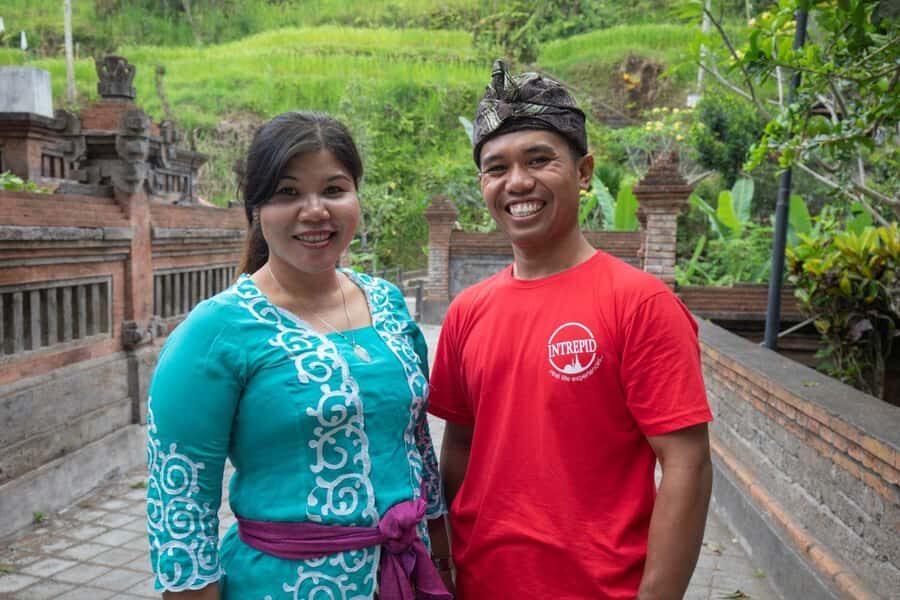
You also get a small gift during the tour: an udeng for men or a sash for women. It’s not a big souvenir, but it adds a respectful touch that matches the cultural tone of the hike.
Value at $39: What You’re Really Paying For
At $39 per person for a 3-hour guided experience, you’re paying for more than access to rice terraces. You’re paying for interpretation—someone local explaining subak, farming patterns, and biodiversity in a way that helps you understand what you’re seeing.
You also get a solid bundle of included extras:
- local English-speaking guide
- mineral water
- coconut water or coffee
- light snacks
- udeng or sash gift
- rice field donation
If you’ve ever done “walk around and take photos” tours, you know how quickly those can feel expensive. Here, the value comes from the education and the cultural visit, not just the view.
And there’s the environmental angle. This tour is carbon neutral and organized and led by an eco-certified operator under a B Corp–certified company commitment to using travel as a force for good. That won’t replace quality in your experience, but it does matter when you’re choosing between tours that ignore their footprint.
If you’re the kind of traveler who likes flexible plans, you can typically book with a pay-later option, and you have free cancellation up to 24 hours in advance for a full refund.
Who Should Book This (and Who Might Want to Rethink)
This hike is a great match if you:
- want rice terrace views with real context
- like guided explanations over self-guided wandering
- enjoy learning about how agriculture ties into culture
It’s also a good fit if you’re staying near central Bali and want to get off the usual beach loop for a few hours. The terrain is active, but it’s not described as extreme—more of an easy-to-moderate walking experience on terrace walls and bamboo bridges.
Two notes to keep in mind. First, the experience isn’t suitable for children under 6. Second, if your top priority is wide open mountain scenery, temper expectations; some surroundings can include houses rather than uninterrupted mountain lines.
If you end up with a guide like Lena (noted for clear explanations and a warm approach), you’re likely to get that “I learned a lot, and it didn’t feel like a lecture” feeling.
Should You Book the Bali Rice Terraces Guided Hiking Experience?
If you want rice terraces that come with understanding—subak irrigation, a farmer-use temple, and an ecosystem lesson—then yes, book this. It’s one of those tours where the memories stick because the guide connects details to how the land actually works.
But if your sole goal is dramatic landscape views and nothing else, you might feel a bit underwhelmed. Here, the best payoff is educational and cultural, not pure panorama.
My rule of thumb: if you enjoy asking why things are the way they are, you’ll love this. If you just want the easiest pretty walk, save your time and do something more photo-focused.
FAQ
Where is the meeting point for this tour?
You meet at Starbucks Kerobokan.
How long is the guided rice terrace hike?
The tour lasts about 3 hours.
Are there multiple starting times?
Yes, starting times vary, so you need to check availability when you book.
Is this tour shared or private?
You can choose between a shared tour (with other travelers) or a private tour for just your group.
How far do we walk?
You’ll trek roughly 2 to 3 kilometers through the rice terraces.
What drinks and snacks are included?
You’ll receive coconut water or coffee, plus light snacks.
What else is included besides the guide and drinks?
Included items are mineral water, a udeng for men or a sash for women, and a rice field donation.
What do we visit and learn about during the hike?
You’ll learn about the subak irrigation system and visit a subak agricultural temple. You’ll also walk through rice fields where your guide explains crops and wildlife.
What should I bring, and is it suitable for kids?
Bring comfortable shoes and comfortable clothes. It’s not suitable for children under 6 years.
Is the tour carbon neutral, and what about cancellation?
The tour is carbon neutral and run by an eco-certified operator from a B Corp–certified company. You can cancel up to 24 hours in advance for a full refund.