Elephants set the pace at Bali Zoo. The attraction here isn’t about riding or tricks; it’s a guided, ethical elephant-care session focused on Sumatran elephant behavior and welfare. You’ll learn what the mahouts do all day, then you’ll spend real time watching elephants choose their own routines.
Two things I really like: first, the experience is elephant-led. You’re not meant to chase, force, or control—close-range moments happen only with mahout approval. Second, the program is structured like education, not a “photo-and-go” stop, with a calm briefing on daily care and why elephants enjoy activities like mud bathing.
One consideration: this isn’t a sit-and-watch show. It involves getting wet and handling muddy conditions, so you’ll want to come prepared with swimwear and a change of clothes and be ready for some walking around the zoo.
In This Review
- Key things that make this elephant experience special
- Kampung Sumatra start: the calm briefing that sets expectations
- The ethical core: how the mahout keeps elephants comfortable
- Mud spa and river time: the part you’ll remember (and get wet for)
- Feeding and elephant-led participation without the chaos
- Lunch, showers, and zoo time beyond elephants
- Optional upgrade: guided breakfast with the orangutans
- Price and value: is $89 fair for a 7-hour day?
- Getting there, timing, and what to pack so you’re comfortable
- Who should book this (and who should skip it)
- Should you book Bali Zoo’s ethical elephant care?
- FAQ
- How long is the Bali Zoo guided elephant care experience?
- Where is the meeting point?
- What’s included in the price?
- Is hotel pickup available?
- Is the breakfast with Orangutan upgrade offered?
- Do guests force elephants to interact?
- What should I bring for the day?
- What are the age and height requirements for children?
- Who shouldn’t take part?
- Is free cancellation available?
Key things that make this elephant experience special
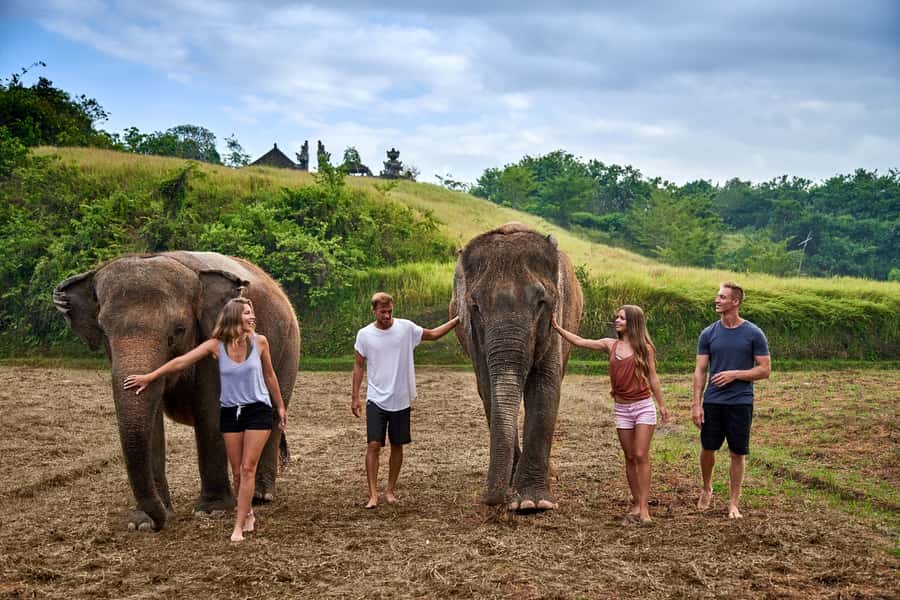
- Elephant-led interactions: activities adjust to comfort and condition, with mahouts supervising every step
- Mud spa + natural behavior time: see why mud bathing supports skin health and temperature control
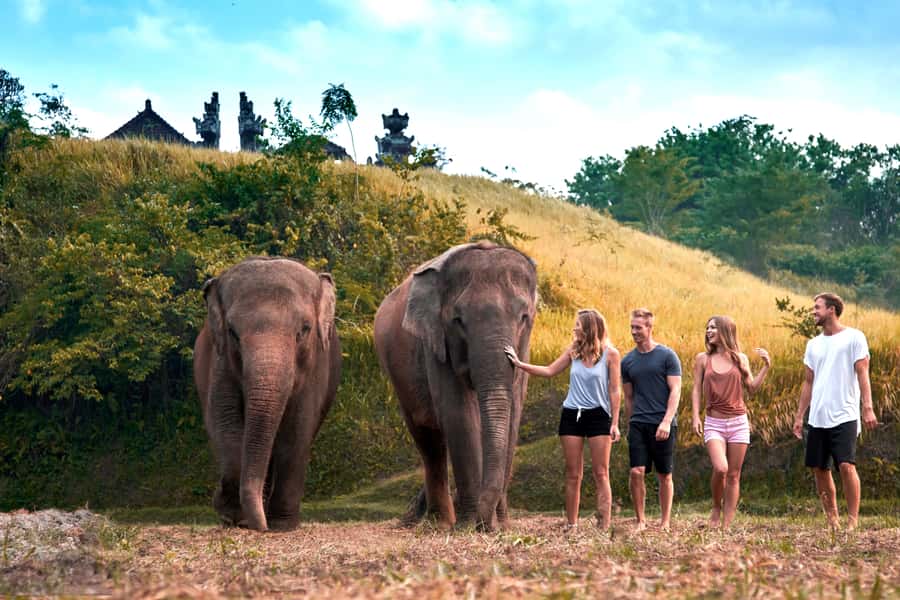
- Close viewing without forcing: you get proximity, but only within strict welfare rules
- River area moments: you may get splashed and even step into the water as part of the day’s flow
- Optional orangutan breakfast: a supervised upgrade that adds another conservation-focused encounter
Kampung Sumatra start: the calm briefing that sets expectations
Your day begins with hotel pickup optional (if you’re in areas like Kuta, Seminyak, Canggu, Nusa Dua, Jimbaran, Sanur, or Ubud). Most morning pickups are 06:30 AM, while Ubud and Sanur are 07:00 AM. If you’re not on the pickup list, you’ll meet at Bali Zoo’s main entrance in Singapadu.
Once you arrive inside Bali Zoo, you’ll head to Kampung Sumatra for the welcome refreshment and then the briefing. The English-speaking mahout explains elephant behavior, what daily care looks like, and the welfare guidelines that keep the program respectful.
This matters more than it sounds. When you understand what you’re seeing—trunk gestures, body language, why elephants choose to move toward or away from people—you stop treating it like a performance and start treating it like animal care.
The program also emphasizes that elephants decide. That single point changes the whole vibe. You’ll notice it in how staff talk to elephants, how they position you, and how they pause when an elephant isn’t interested.
You can also read our reviews of more tours and experiences in Bali.


The ethical core: how the mahout keeps elephants comfortable
This is billed as guided, supervised ethical elephant care, and the rules are pretty direct. You’re there to observe, learn, and participate in limited ways that are still elephant-led. Physical interaction is not “free for all,” and you’re not supposed to chase, harass, or control the animals.
You’ll get clear guidance on close-range viewing. If an elephant comes toward you naturally, the mahout decides when it’s appropriate to move in closer. If the elephant prefers space, you watch from the safer viewing distance and focus on learning what the elephant is telling you.
In the best moments, it feels more like sharing space than “working with” an animal. People in the program even mention how some elephants seem genuinely engaged—mud bathing, scrubbing, and moving around on their own schedule—rather than following a command.
Names of guides show up in reviews too, which hints that the staff are often doing more than “manage the crowd.” You might hear information delivered by mahouts such as Purna and Nicki, and you could be guided by people named Nike Hero (as an example from one group). Either way, the goal is consistent: teach you what you’re doing and why the elephants benefit.
Mud spa and river time: the part you’ll remember (and get wet for)
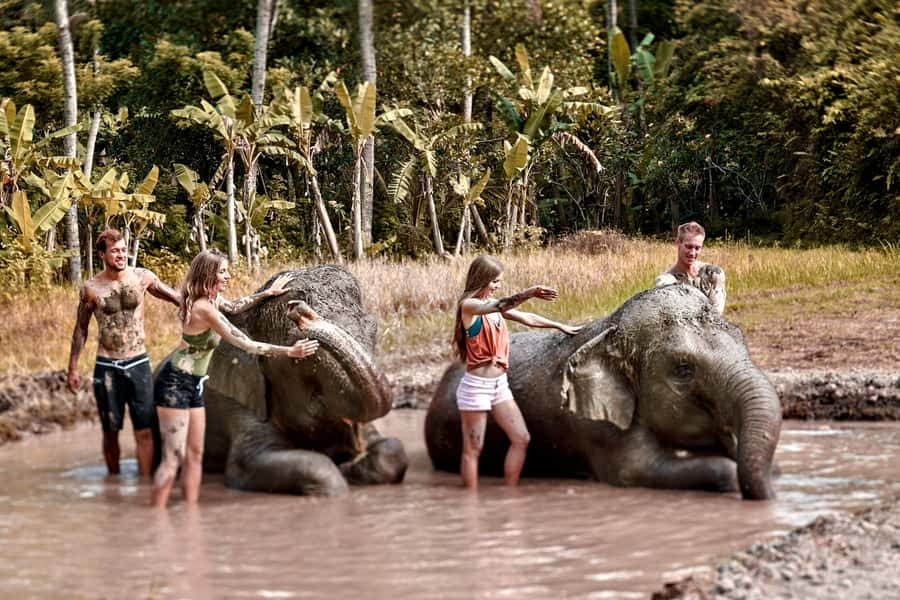
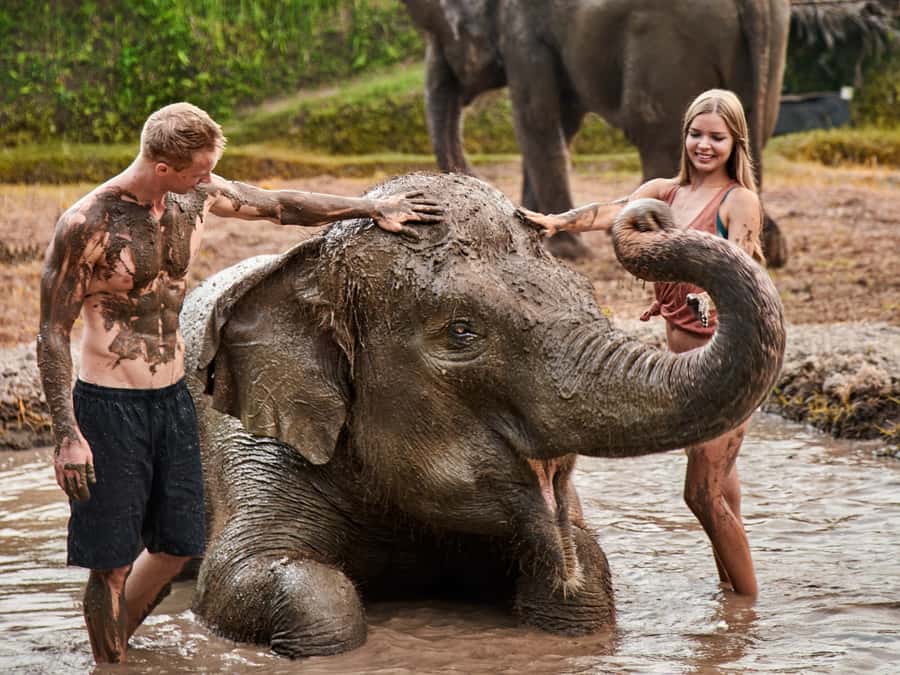
The centerpiece is the mud spa and bathing experience. The mahouts explain why mud bathing is normal elephant behavior: it helps regulate temperature and supports healthy skin. Then you’ll see the routine unfold with elephants moving at their own pace.
This is also where you’ll feel the difference between ethical interaction and entertainment. The elephants aren’t forced into the mud or pushed into contact. You’re guided toward appropriate participation while the elephant’s comfort drives the timing.
A lot of the fun comes from the sensory reality. You’ll likely get splashed, especially around the river areas, where elephants may squirt water with their trunks. Think of it as “wet fun with supervision,” not chaos.
Then comes the scrubbing stage. In multiple accounts, people mention brushing and cleaning after mud, with elephants responding by offering their trunks or staying calm during the process. If you’ve ever wondered whether elephants tolerate this kind of attention, the answer you’ll see is: it depends on the elephant’s willingness, and staff match their approach to that.
Practical tip: bring sandals you don’t mind getting muddy, and don’t plan on keeping your day bag dry. The tour gives you a towel, but you’re still starting the day wet-friendly.
Feeding and elephant-led participation without the chaos
You’ll also participate in feeding during the supervised session. The tour includes food for feeding, and the mahout explains the right way to do it. The welfare rule stays the same: you don’t rush in, and you don’t try to override an elephant’s mood.
The experience is designed to spread attention across people in the group, so you aren’t all pressed into a single rush point. Even when there are quite a few people, the better-organized groups seem to keep things calm and not overly crowded—more like a guided slow-moving interaction zone.
Another subtle good thing: the emphasis on consent shows up in how staff handle refusals. If an elephant doesn’t want to engage, the program shifts. That’s a key part of what makes it feel ethically grounded rather than “make it happen for the photos.”
Also, one of the nicest elements is that the zoo encourages you to take your own pictures. Several people mention a photographer can take photos while you use your phone too, which helps you avoid feeling pressured into buying everything later.
Lunch, showers, and zoo time beyond elephants
After the elephant-care portion, the day continues with time to refresh and enjoy lunch. Lunch is included, and the tour also provides snacks and welcome drinks earlier. A lot of people praise the food selection as satisfying after getting wet.
One small note: if you’re vegetarian, your options might vary. One account described a limited vegetarian buffet choice (salad and boiled rice). So if your diet is strict, it’s worth planning for that possibility.
Then you get the best “value add” for your time: zoo access to explore Bali Zoo. The experience doesn’t end with elephants; you can wander and see other animals and conservation programs within the zoo grounds.
Practically, you’ll want to use the included time wisely. The elephant portion is the emotional peak, but the zoo walk helps you reset your senses before you head back.
And yes—showers matter. Multiple people highlight that showers are available and the facilities feel clean, which makes the “7-hour wet day” much more bearable.




Optional upgrade: guided breakfast with the orangutans
If you add the optional upgrade, you’ll include breakfast with Orangutan inside the zoo. It’s guided and supervised under the same general ethical viewing rules, and it’s a popular way to turn one elephant day into a whole morning of animal encounters.
People who did the upgrade describe it as memorable and note there can be good variety at breakfast and photo opportunities. It’s also a great way to balance the day if you want more than one species-focused moment.
Possible drawback: after breakfast, you may need to check where to go next for the elephant portion setup. At least one account mentioned confusing directions and a lack of clear signage. So if you’re doing the upgrade, I’d treat it as a “confirm your next stop” moment—ask staff immediately where you’ll meet the next guide.
Price and value: is $89 fair for a 7-hour day?
At $89 per person for about 7 hours, the value is strongest because the price isn’t only buying elephant time. Your ticket typically includes:
- zoo admission
- welcome drinks and snacks
- an experienced English-speaking mahout
- food for feeding
- lunch
- towel
- insurance
- optional return transfers (based on your pickup option)
That’s a lot bundled into one day, and it helps justify the cost if you’re planning to do more than the elephant interaction alone. Also, the transport quality is rated highly, which matters in Bali where timing can get tricky.
One more way to think about it: the program includes supervision, welfare rules, and structured learning. That reduces the risk of it turning into a “just stand next to elephants” experience. It’s not the cheapest attraction in Bali, but it aims to be the kind that respects animal welfare while still letting you see real behavior.
The one extra cost you should expect: photos. A recurring complaint is that on-site photographer images are expensive. Some people also noted the cost can be higher than the tour itself. You can still get plenty of shots by using your own phone, so treat photographer packages as optional add-ons.
Getting there, timing, and what to pack so you’re comfortable
You’ll meet at Bali Zoo’s main entrance at Jl. Raya Singapadu, Singapadu, Kec. Sukawati, Kabupaten Gianyar, Bali 80582. If you use pickup, your morning starts early.
Bring:
- change of clothes
- swimwear (you’ll likely get wet)
- sandals you can rinse or walk in (mud will happen)
- sunscreen
- a towel won’t replace all your needs, so use your own judgement for comfort
Also keep in mind the ground can be slick. One person specifically warned that entrance slopes were very wet and slippery, so watch your step before the elephant-care area.
If you want to look nice for photos afterward, wear quick-dry clothes for the ride, and plan to rinse off before you explore the zoo.
Who should book this (and who should skip it)
This experience is ideal if you want:
- education that explains behavior (not just proximity)
- a supervised, calm interaction format
- a hands-on day where mud spa and bathing are elephant-led
- an optional upgrade that adds orangutan breakfast
It’s listed as suitable for adults and children aged 12 and above. There’s also a minimum height requirement of 120 cm for children. Anyone under that height isn’t eligible for participation in the program, and children meeting the height rule are charged adult price.
It is not suitable for:
- pregnant women
- people with mobility impairments
That makes sense given the wet surfaces and the active movement around the elephant-care areas.
Should you book Bali Zoo’s ethical elephant care?
I’d say book it if you want a structured, supervised way to learn about elephants and you’re comfortable with the reality of getting wet, walking around, and following staff instructions. The strongest selling point is the elephant-led approach—no forced behaviors, and close contact only when it’s appropriate.
I’d pause before booking if:
- you strongly dislike wet activities
- you’re sensitive to slippery ground
- you’re hoping for a low-cost day with no extras (photo packages can add up)
If your goal is an ethical, behavior-focused elephant experience in Bali—with mud spa, river moments, lunch, and the option for orangutan breakfast—this is a solid choice for a one-time splurge. Just come prepared, ask staff where to go after any upgrade, and plan to take your own photos too.
FAQ
How long is the Bali Zoo guided elephant care experience?
It runs for about 7 hours.
Where is the meeting point?
You’ll meet at Bali Zoo’s main entrance, Jl. Raya Singapadu, Singapadu, Kec. Sukawati, Kabupaten Gianyar, Bali 80582, Indonesia.
What’s included in the price?
Included items are zoo admission, welcome drinks and snacks, an experienced English-speaking mahout, food for feeding, lunch, a towel, insurance, and return transfers depending on your selected option. Orangutan breakfast is included only if you choose that upgrade.
Is hotel pickup available?
Yes, pickup is available for Kuta, Seminyak, Canggu, Nusa Dua, Tanjung Benoa, Jimbaran, Sanur, and Ubud. Pickup times are listed as 06:30 AM for most areas and 07:00 AM for Ubud and Sanur. Pickup outside these areas may cost extra in cash.
Is the breakfast with Orangutan upgrade offered?
Yes, it’s an optional upgrade and takes place within the zoo under staff supervision.
Do guests force elephants to interact?
No. Interactions are guided and supervised, and elephants must be willing. You’re not allowed to force, chase, or control them.
What should I bring for the day?
Bring a change of clothes, sandals, sunscreen, and swimwear.
What are the age and height requirements for children?
The program is suitable for children aged 12 years and above. A minimum height of 120 cm is required; children meeting the height requirement are charged the adult price.
Who shouldn’t take part?
The experience is not suitable for pregnant women, people with mobility impairments, and anyone under 120 cm tall.
Is free cancellation available?
Yes, you can cancel up to 24 hours in advance for a full refund.