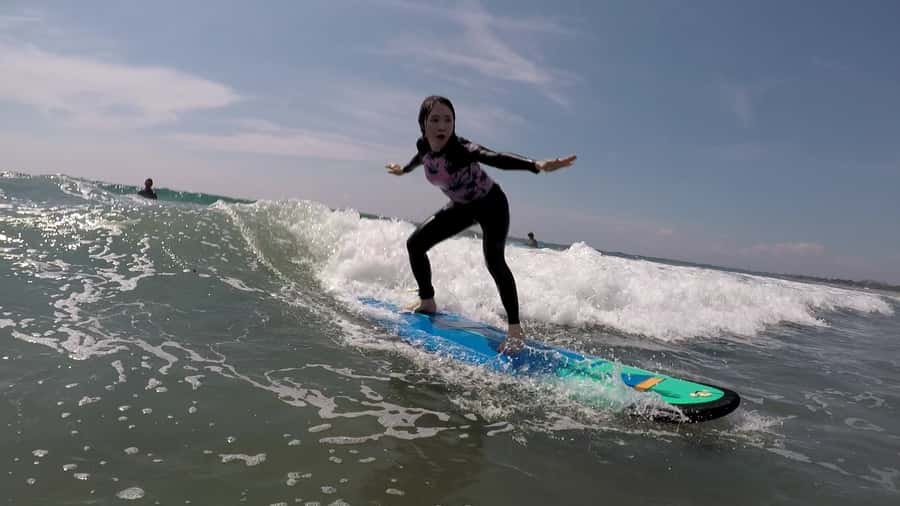
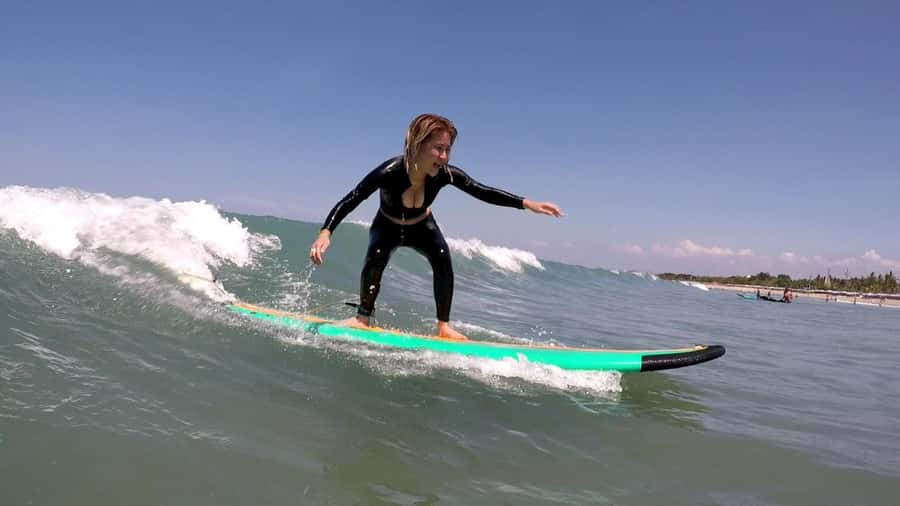
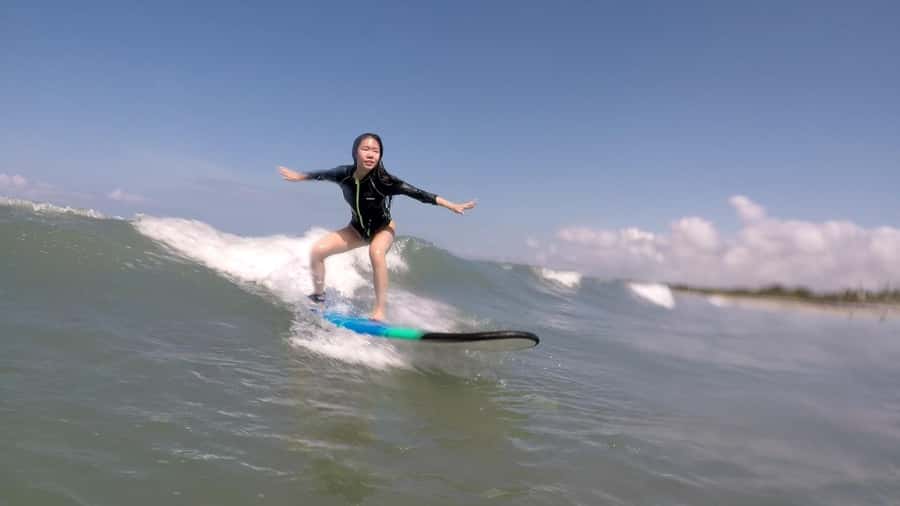
Catching your first wave starts with good coaching. Near Pullman Bali Legian Beach Resort, I like how these lessons keep it small-group (1:3 max), with instructors staying close while you practice. I also like that you get photos taken with a Nikon camera, so you leave with proof beyond just sore legs.
One thing to plan for: the lesson timing depends on the tide and waves, so your session start can shift based on conditions rather than a fixed clock time.
In This Review
- Key takeaways before you go
- Where You Meet, What You Get, and Why It Matters at Legian Beach
- Beginner vs Intermediate Surf Lessons: What Actually Changes
- The Land Lesson: Safety Rules, Board Control, and Wave Reading Setup
- Into the Water: Timing Your Takeoff and Catching Your First Wave
- Intermediate Coaching: Paddle Out Skills and Technique Tweaks
- Equipment, Photos, and the Small Inclusions That Make It Feel Like Value
- What to Bring: The Simple Packing List That Prevents Problems
- Getting There and Meeting Up Without Hotel Pickup
- Safety Notes and Who Should Skip This Lesson
- Making the Most of Your Session: Small Tips That Help
- Price and Value: Why $16 Can Make Sense Here
- Should You Book Legian Beach Surf Lessons (Pulau Biru Surf)?
- FAQ
- Is this surf lesson for beginners, intermediates, or both?
- Are surfboards provided?
- What gear and extras are included with the lesson?
- Are photos included, and are they part of the price?
- Do I need to bring a towel?
- Where do I meet, and is hotel pickup provided?
- How big are the groups?
- Does the session run at a fixed time?
- Is a massage included?
Key takeaways before you go
- Small-group coaching (max 1:3) near the Pullman Bali Legian Beach Resort
- Beginner or intermediate level options depending on your current skills
- A short land safety lesson first, then straight to the water when you’re ready
- Technique focus: board control, reading waves, and timing your takeoff
- All key gear included: softboard, rush guard, and mineral water
- Optional full-body massage if you choose that add-on
Where You Meet, What You Get, and Why It Matters at Legian Beach
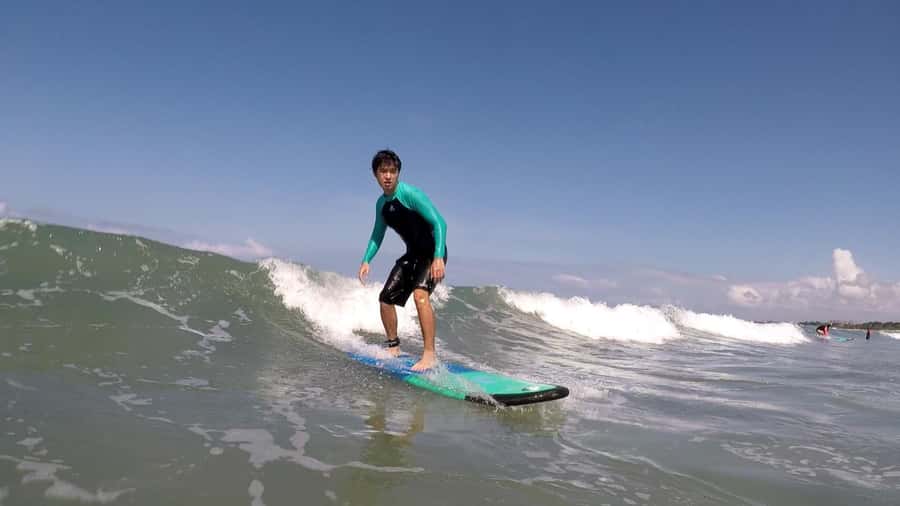
This is a Legian Beach, Bali surf lesson built around one practical goal: get you into waves with real coaching, not just board rentals. The lesson is run near the Pullman Bali Legian Beach Resort, and the meeting point can vary depending on the option you book.
For getting there, you don’t need to plan like a local. If you’re without a car, taxis, Grab, or Gojek can get you to the meeting point. And if you’re worried about the logistics, remember: hotel pickup and drop-off are not included, so you’ll want to handle your own transport.
The big value piece here is what’s included before you even think about skill. You’ll be provided a softboard and a rush guard, plus mineral water during the session. That takes away two common trip headaches: tracking down gear and paying extra at the last minute.
You can also read our reviews of more tours and experiences in Bali.



Beginner vs Intermediate Surf Lessons: What Actually Changes
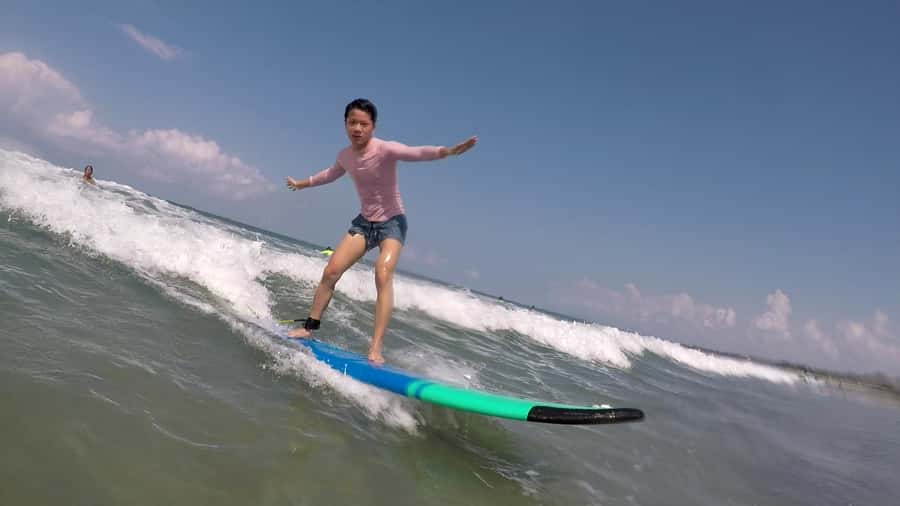
You’ll choose between beginner and intermediate-level lessons based on what you can already do. If you’re starting from zero, the lesson is designed to help you get comfortable step-by-step—starting on land and moving to the water once the basics click.
If you’re already intermediate and you can paddle out on your own, the instructor can still help you get better. The lesson doesn’t stop at confidence; it’s set up to refine technique so you can move toward your next level.
That difference is important because a one-size-fits-all surf class is usually frustrating. Beginners often need safety, positioning, and repeated practice. Intermediate surfers usually need corrections—small timing changes, better takeoff rhythm, and cleaner technique when the waves don’t cooperate.
The Land Lesson: Safety Rules, Board Control, and Wave Reading Setup
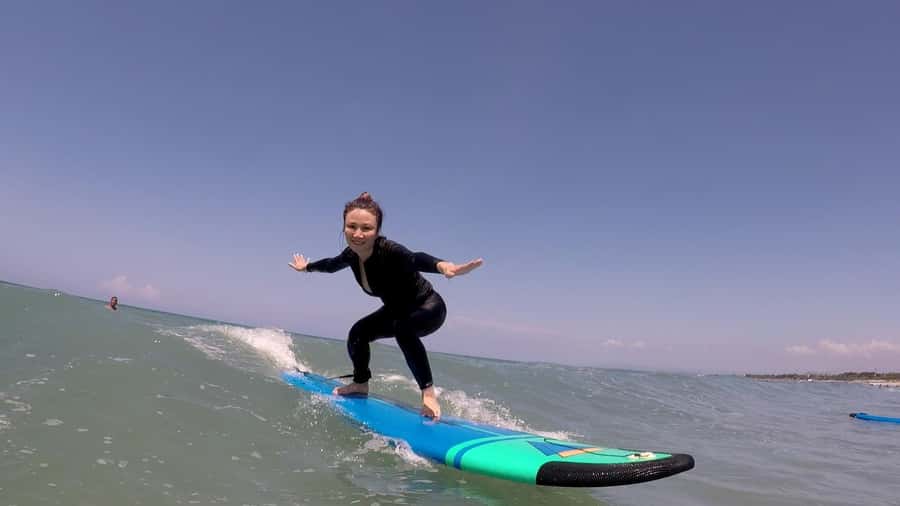
Before you hit the water, you’ll start with a brief land lesson. It’s not just a formality. The instructors go over safety procedures so you understand how to act in and around the surf zone.
Then comes the coaching groundwork that actually helps your first session feel less chaotic. You’ll learn how to keep your surfboard under control and how to read the waves. This matters because the ocean doesn’t grade you on effort. It grades you on timing and positioning.
During the land session, you’ll also get focused guidance on what to watch for. Reviews repeatedly mention instructors staying close, correcting technique, and keeping the energy fun—so even when you’re wobbling, you aren’t doing it alone.
Into the Water: Timing Your Takeoff and Catching Your First Wave
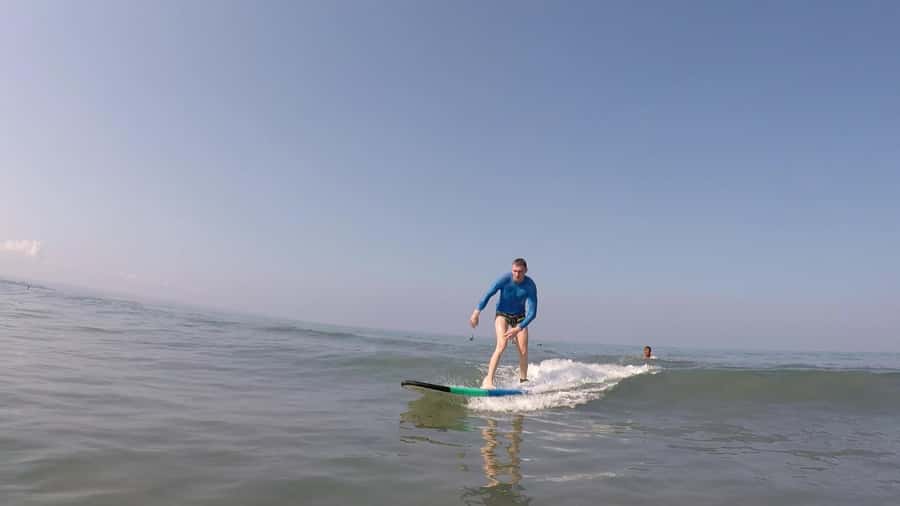
Once you’re ready, you grab your surfboard and take to the water. This part is where you usually get humbled fast—which is also why it’s so satisfying when it clicks. The waves can be challenging, and one review called them no joke, so expect some struggle and plenty of salt water tasting.
But the coaching is the point. You’ll learn how to time your take-off, how to catch your first wave, and how to keep your board from turning into a runaway door. The instructors provide personalized attention, and the small group format (max 1:3) helps a lot here.
This is also where names like Uncle Bob, Pak Mamad, and Jason keep showing up in positive feedback. People describe instructors as patient, professional, and encouraging—especially for first-time surfers. You’re not just told what to do. You’re usually shown, corrected, and sent off again with quick, usable tips after each attempt.
Intermediate Coaching: Paddle Out Skills and Technique Tweaks
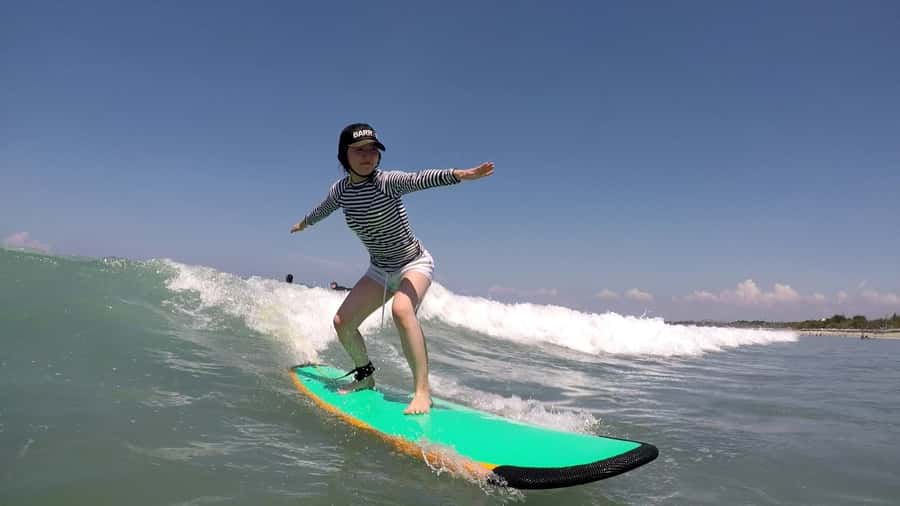
If you’re already comfortable paddling out, don’t assume the lesson will be repetitive. The intermediate option is still coached. The instructor can help you develop your surfing skills further as you take things to the next level.
Practically, that usually means technique refinement while you’re actually on the water—things like takeoff timing and improving how you handle your board once you’re moving. If you know how to get out there independently, you can spend more energy on correction instead of survival.
From the reviews, a recurring theme is that instructors stay close and judge what waves are safe for your confidence level. That’s a big deal for intermediate surfers too, because even experienced people can get overconfident when conditions feel good.





Equipment, Photos, and the Small Inclusions That Make It Feel Like Value
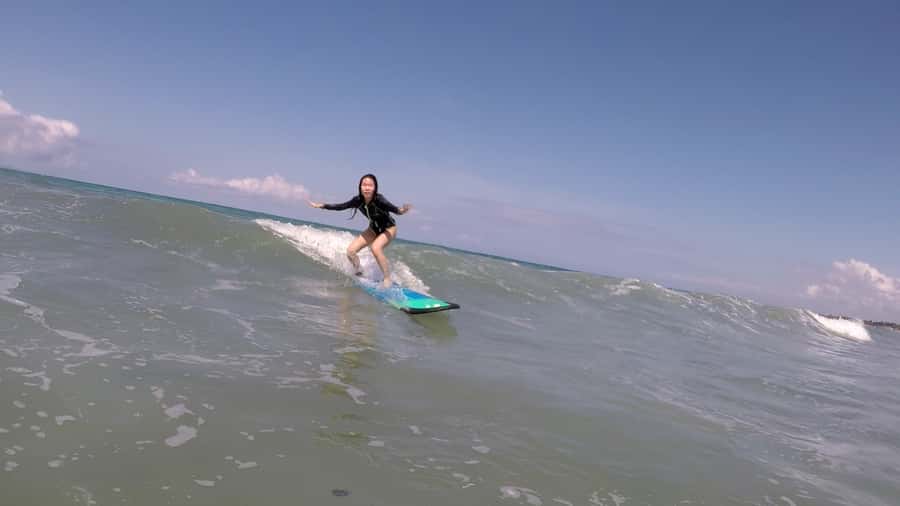
You don’t need to bring your own surfboard. The surf school provides a softboard and a rush guard, plus mineral water. It’s a simple setup, but it adds up: you avoid the rental hassle and you start focused on learning.
The other value add is the photos. Included in the lesson are photos taken with a Nikon Camera DX 55-300m. Multiple reviews mention that photos were sent afterward (some people specifically noted WhatsApp delivery), and people praised the photos as part of why the experience feels like a great deal.
That’s not a minor thing. When you’re learning, you rarely remember the exact moment you caught a wave. Good photos turn a foggy session into something you can actually re-live—and share—without guessing.
If you choose it, there’s also an optional full-body massage. It’s not required for the lesson, but it’s a nice “recover without thinking” option after you’ve used muscles you didn’t plan to use.
What to Bring: The Simple Packing List That Prevents Problems
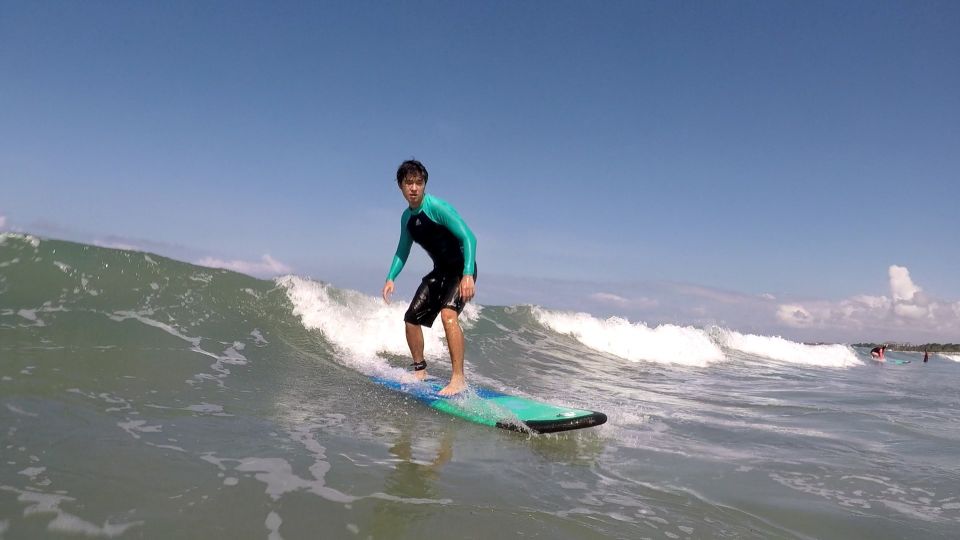
This lesson is casual, but you still want to show up prepared for sun, salt, and getting wet.
Bring:
- Sunglasses
- Sun hat
- Swimwear
- Towel
- Cash
One detail to take seriously: towels are listed as not included, and there’s also a shower fee of IDR 5,000. So if you want to freshen up afterward, plan for that. If you don’t bring a towel, you’ll be improvising in a place where salt and sand love to cling.
Also, lesson timing depends on tide and waves, so bring a mindset that this isn’t a perfectly fixed appointment. You’ll do better if you give yourself a little buffer rather than rushing in, rushing out.
Getting There and Meeting Up Without Hotel Pickup
Hotel pickup and drop-off aren’t included. That means you’ll want to plan your own route to the meeting point near Pullman Bali Legian Beach Resort.
Because the meeting point may vary depending on what you book, don’t assume the exact spot until you have your specific option details. If you’re staying nearby, taxi, Grab, or Gojek are the easiest approaches.
The upside of meeting close to Pullman is that you can keep the day flexible. You don’t have to build a whole transport plan around a long pickup window. You just show up, gear up, and get coached.
Safety Notes and Who Should Skip This Lesson
This activity isn’t suitable for:
- children under 5
- pregnant women
That’s not meant to be limiting for no reason. Surf learning involves water conditions, board handling, and physical activity. The instructors also coach safety procedures in the initial briefing, and the lesson structure is meant for people who can actively participate and follow directions.
Also remember: waves can be tough, and reviews mention needing to be ready for some falls. If you’re dealing with mobility concerns, balance issues, or medical limitations, you should be cautious and consider checking with the provider before booking—especially since there’s no pickup service to help you plan around physical needs.
Making the Most of Your Session: Small Tips That Help
Here’s how to turn your lesson into a real skill-building day, not just a fun splash.
First, treat the land lesson like the shortcut. The safety procedures and wave-reading basics are what help you catch waves sooner. If you’re listening while everyone else is watching the water, you’ll likely stand up and ride sooner.
Second, let the instructor correct you in the moment. Reviews mention instructors staying close and giving tips after each go. That feedback loop is what speeds up progress, especially for first timers.
Third, don’t fight the learning curve. Several reviews describe lots of laughs and falls. That’s not failure. It’s practice with saltwater physics. When you stop resisting and start adjusting, the odds of catching a wave improve.
Finally, protect yourself from the Bali sun and salt. Sunglasses and a sun hat aren’t optional if you want to stay focused. After enough glare, even simple instructions feel harder.
Price and Value: Why $16 Can Make Sense Here
At $16 per person for a 1-day surf lesson, this can be strong value—mainly because key items are included. You get a softboard, rush guard, mineral water, safety coaching, and included photos taken with a Nikon camera.
Many “cheap” activities fall apart when you add what you forgot: equipment fees, photo charges, and small extras like towels. Here, photos are built in. That shifts the value from only the teaching to the full experience you’ll remember.
Optional add-ons like a full-body massage are there if you want recovery time. And the small group ratio (max 1:3) suggests you’re not just paying for access—you’re paying for attention.
The main cost-related caution is what’s not included: hotel pickup/drop-off, towel, and the shower fee. If you plan those basics, the total experience remains straightforward.
Should You Book Legian Beach Surf Lessons (Pulau Biru Surf)?
Book it if you want beginner-to-intermediate surf coaching in Bali with small-group attention, clear instruction, and included photos. This lesson fits well if you’re traveling with friends or family and want a shared activity that feels safe, guided, and genuinely fun.
You should think twice if:
- you need a fixed start time (because timing depends on tide and waves)
- you don’t want to handle your own transport to the meeting point (no hotel pickup)
- you’re not able to participate in a water-based activity (not suitable for children under 5 or pregnant women)
If you’re on the fence, go anyway—then come with a simple goal: learn the basics of board control and takeoff timing. That’s how you turn a first session into a reason to return.
FAQ
Is this surf lesson for beginners, intermediates, or both?
It offers options for both beginner and intermediate level lessons. You choose based on your current surfing skills.
Are surfboards provided?
Yes. Softboards are included, so you don’t need to bring your own surfboard.
What gear and extras are included with the lesson?
The included items are a softboard, rush guard, mineral water, and photos taken with a Nikon Camera DX 55-300m.
Are photos included, and are they part of the price?
Yes. Photos taken with the Nikon Camera DX 55-300m are included in the activity.
Do I need to bring a towel?
Yes. A towel is listed as not included, and you’re also told to bring a towel.
Where do I meet, and is hotel pickup provided?
The meeting point may vary depending on the option booked, and hotel pickup and drop-off are not included. You can reach the meeting point by taxi, Grab, or Gojek if you don’t have a car.
How big are the groups?
Lessons are conducted in small groups with a maximum ratio of 1:3.
Does the session run at a fixed time?
Timing depends on the tide and waves, so the start time can vary.
Is a massage included?
A full-body massage is included only if you choose the option.